
20 Retro Living Room Ideas for 2026

This article may contain affiliate links: read full affiliate disclosure.
You search for retro living room because you love the vibe but you’re also stuck.
One page shows bold colors, another shows dark furniture, and suddenly you’re wondering if retro just means old.
You don’t want a living room that feels dated or messy. You want something warm, stylish, and livable.
In this article, you will see what a retro living room actually looks like, which details matter, and 21 ideas to try.
Let’s jump in!
What Does A Retro Living Room Look Like?
If you want your living room to feel retro, you can focus on capturing styles from past decades, usually the 1950s through the 1970s.
You’ll notice that retro spaces are bold, playful, and slightly quirky, with colors, patterns, and furniture that really stand out compared to modern minimalist designs.
You can use bright and vibrant colors like mustard yellow, orange, teal, avocado green, or bold reds, and you’ll see how they instantly make the room pop.
You might add geometric patterns, funky prints, and textured fabrics on your wallpaper, rugs, or cushions to create visual interest for you.
You’ll want low-profile sofas, curved chairs, and pieces with tapered wooden legs to get that distinctive retro feel.
Materials like plastic, vinyl, chrome, and polished wood can be combined, and you’ll notice that they really reflect the design trends of the era.
You can also include decorative elements like vintage posters, record players, lava lamps, rotary phones, or mid-century artwork, and you’ll instantly add character and authenticity to your space.
Lighting matters just as much. You can use statement pieces like arc floor lamps, sputnik chandeliers, or colorful table lamps, and you’ll see how they complete the retro vibe.
Overall, if you pull these elements together, your retro living room will feel lively, expressive, and nostalgic, blending old-school charm with bold design choices for you.
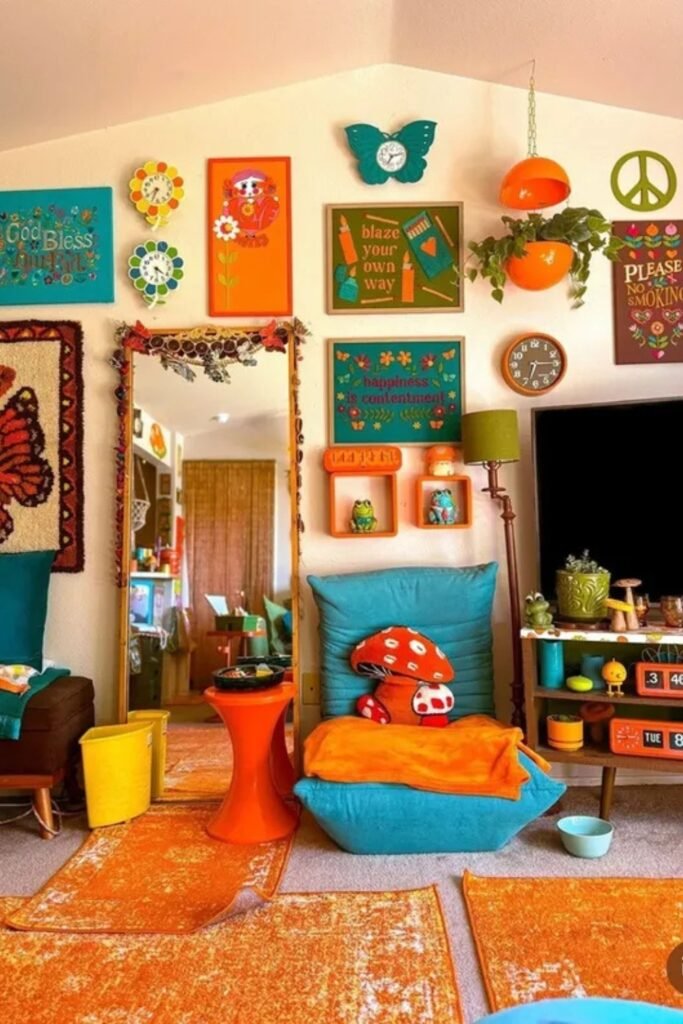
Retro Joy Explosion
Walking into this living room feels like stepping into a good mood.
Bright oranges and teals energize the space, while low seating and soft textures keep it comfortable.
This style works best in living rooms meant for relaxing, creating, and showing off personality without worrying about rules.
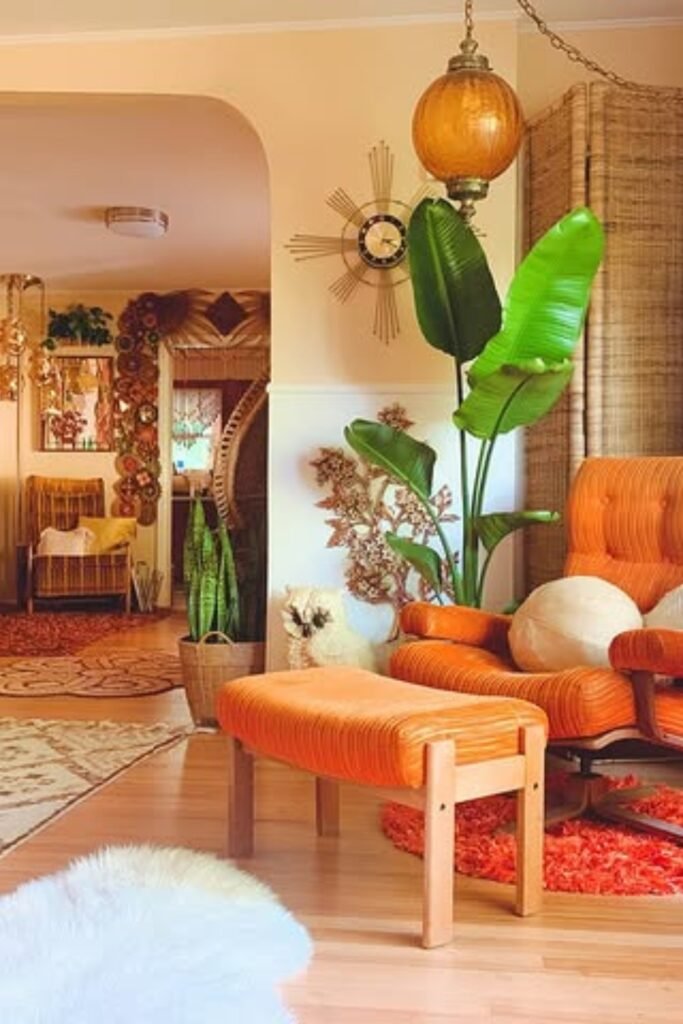
Warm Retro Lounge
Soft curves and warm textures give this living room its retro soul.
The burnt-orange chairs set the tone, while natural wood and indoor plants keep the space grounded and calm.
To recreate this look, start with one retro armchair in a rich color, then layer in organic elements like plants and woven textiles.
This style works beautifully in living rooms with good natural light, especially if you want a cozy, laid-back space that still feels bold and intentional.
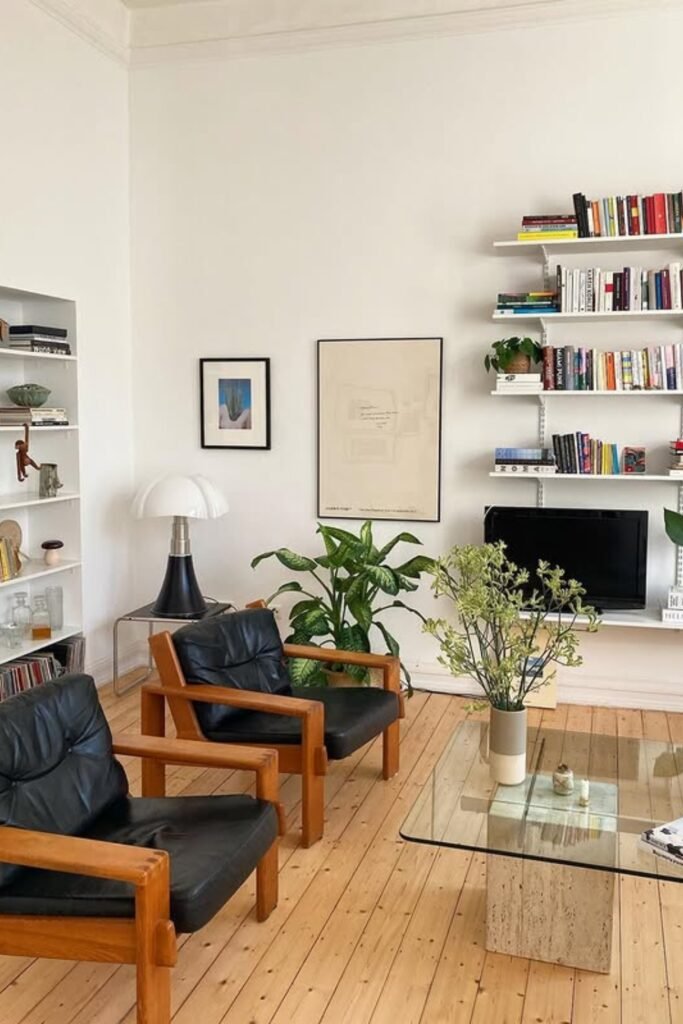
Calm Retro Minimalism
Retro doesn’t always need loud color to feel right. This living room leans on clean lines, warm wood, and classic mid-century chairs to create a quiet retro mood.
If you want this look, focus on furniture shape first, solid wood frames, low seating, and simple silhouettes do the work.
This approach fits small living rooms and apartments where you want retro character without visual clutter.
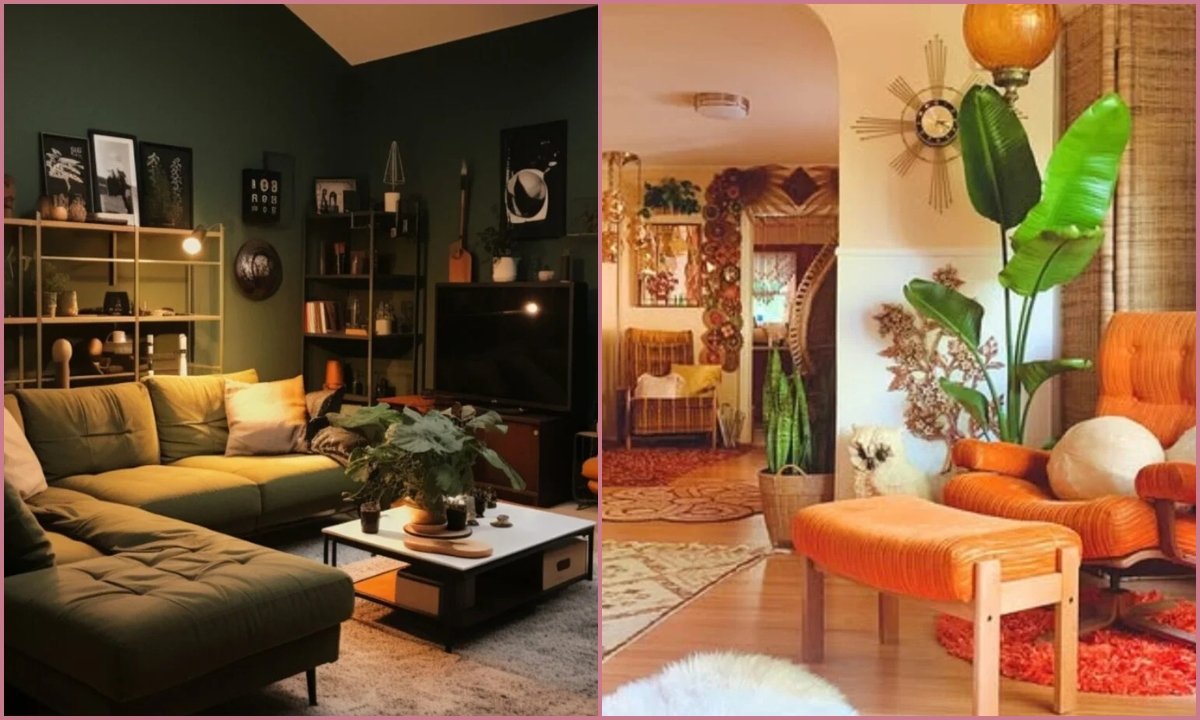
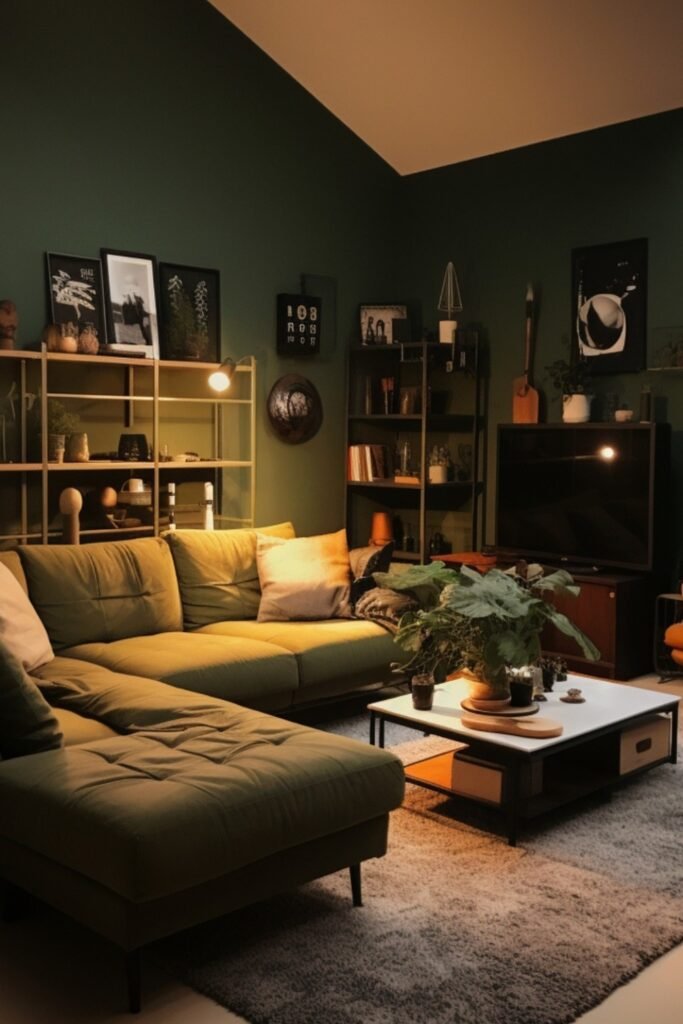
Moody Retro Depth
Dark green walls instantly change how this living room feels, cozy, dramatic, and grounded.
The retro mood comes from the low sectional, warm lighting, and wood accents that soften the darker palette.
To recreate this look, commit to one deep color first, then balance it with lighter textiles and warm lamps.
This style works best in living rooms used mostly in the evenings, where you want the space to feel intimate rather than bright.
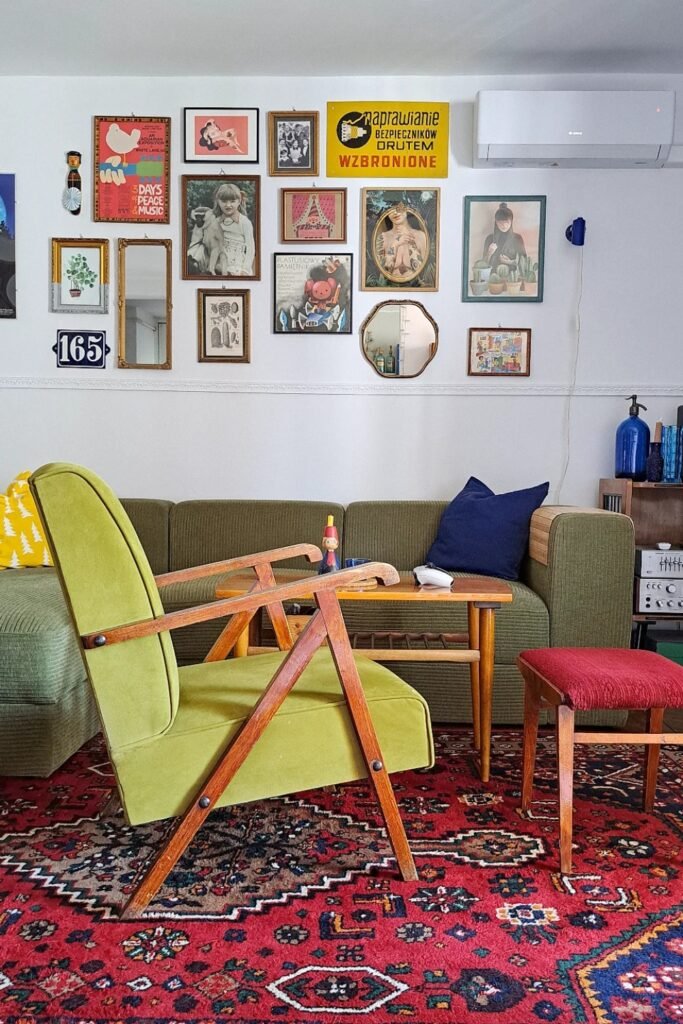
Gallery Wall Retro
Art takes control of this living room and turns it into a personal time capsule.
The retro feel comes from mixing framed posters, vintage photos, and mismatched sizes instead of perfect symmetry.
To recreate this, start with one long wall and build your gallery slowly around the sofa.
You can keep furniture low and simple so the wall stays the focus. This approach works best in living rooms where you want storytelling and character to lead the design.
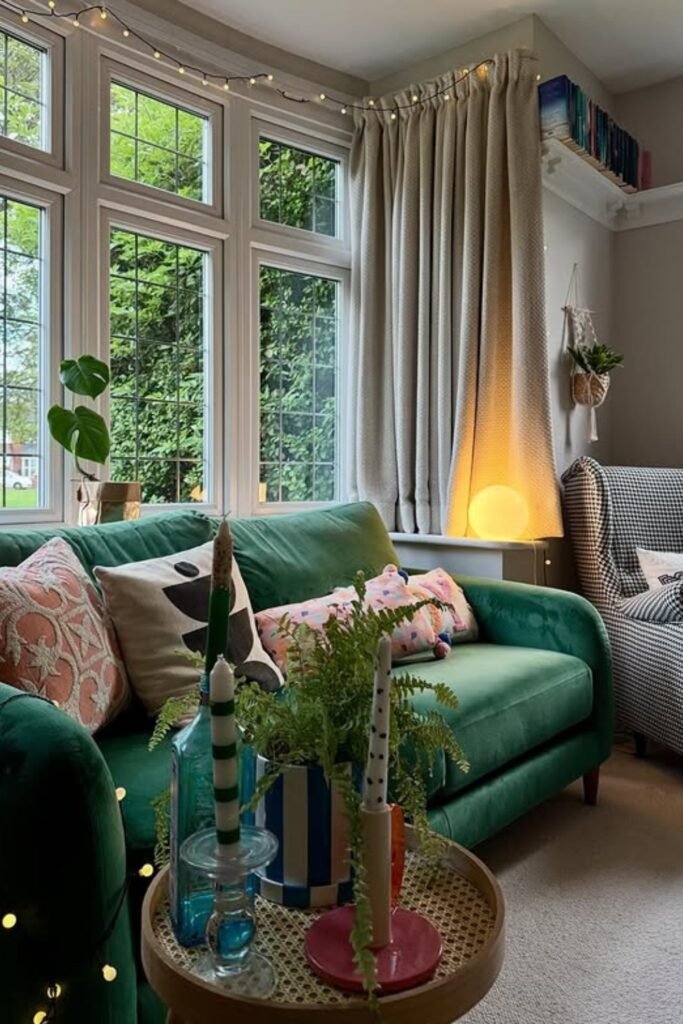
Soft Retro Charm
A plush green sofa sets the retro tone here without making the living room feel heavy.
The look works because softness leads the design, rounded seating, warm lighting, and gentle patterns keep everything inviting.
To recreate this, choose one retro-colored sofa, then balance it with light curtains and cozy lamps.
This style fits living rooms with good natural light, especially if you want retro warmth without bold or dramatic colors.
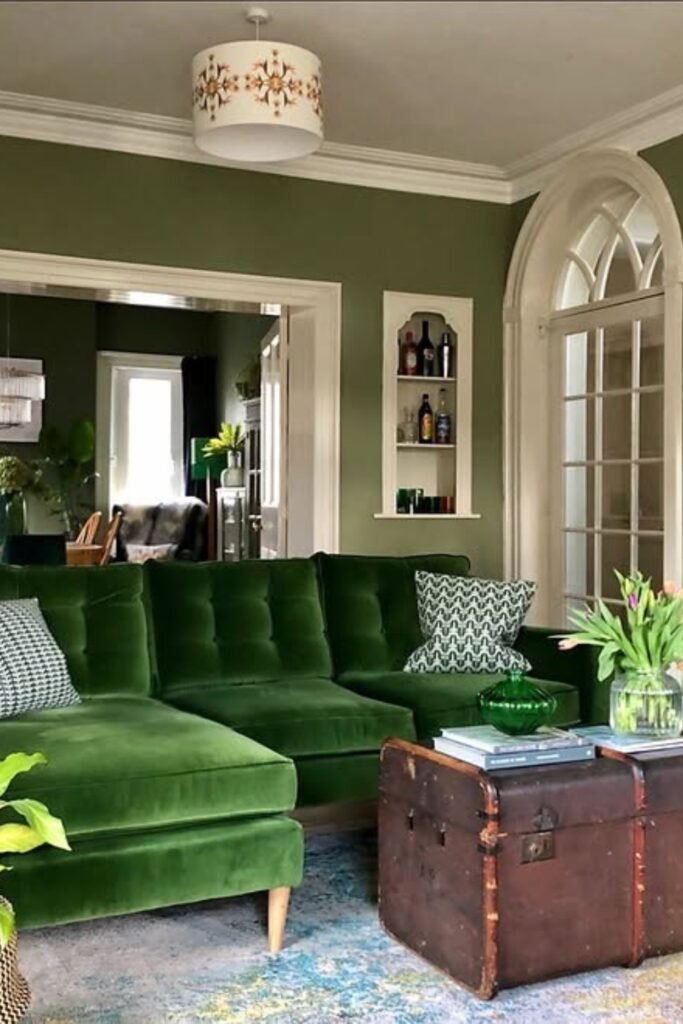
Green Velvet Statement
Green velvet instantly pulls this living room into retro territory without needing extra decoration.
The sofa does the talking, while classic shapes and warm wood keep it grounded.
You can invest in one bold velvet piece and keep the rest of the room calm, neutral walls, simple cushions, and natural textures.
This works best in living rooms where you want a strong focal point that feels rich, cozy, and timeless rather than trendy.
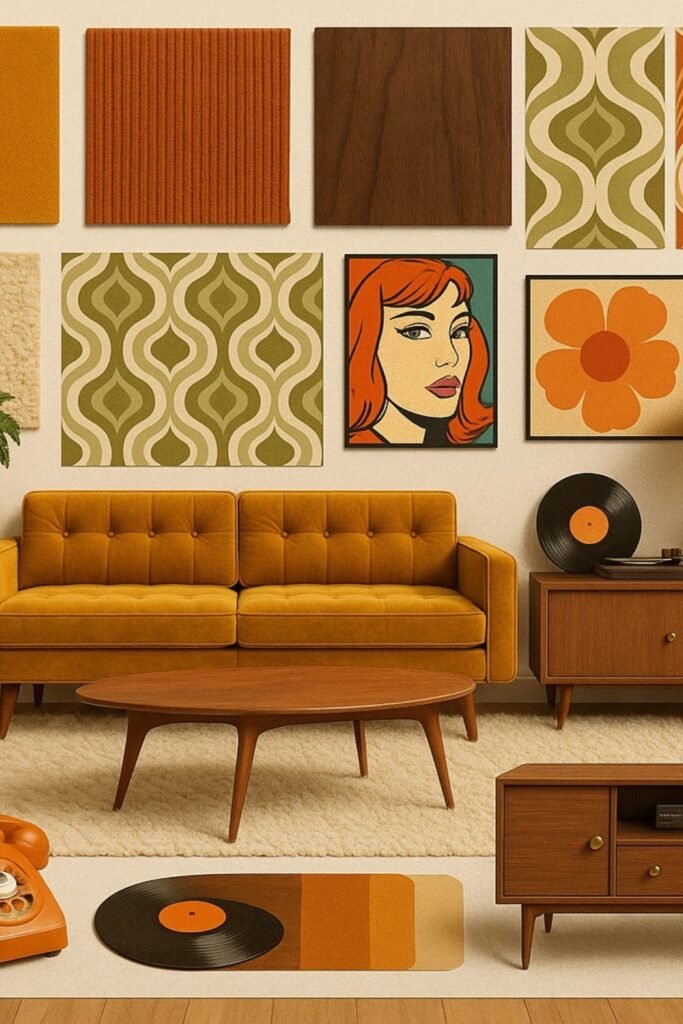
Graphic Retro Balance
Pattern takes the lead in this living room, but nothing feels overwhelming because everything stays controlled.
The mustard sofa grounds the space, while wall art and textiles repeat the same color family instead of introducing chaos.
To recreate this look, choose one bold color, then let patterns echo it across the room.
You can keep furniture shapes simple and low. This works best in living rooms where you want strong retro energy without visual noise.
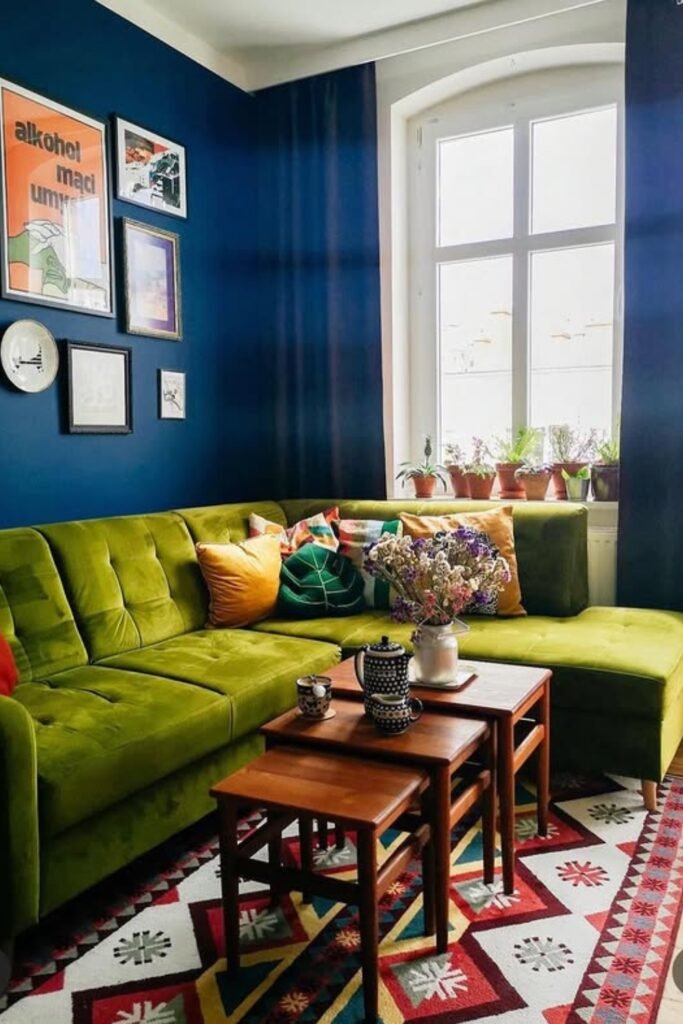
Bold Color Contrast
Deep blue walls and a green sectional push this living room straight into retro territory.
The contrast works because the colors stay rich, not bright, and the furniture stays low and simple.
To recreate this look, pair one saturated wall color with a velvet or fabric sofa in a different retro shade.
You can add patterned rugs to soften the contrast. This setup works best in living rooms with good daylight to keep the space from feeling heavy.
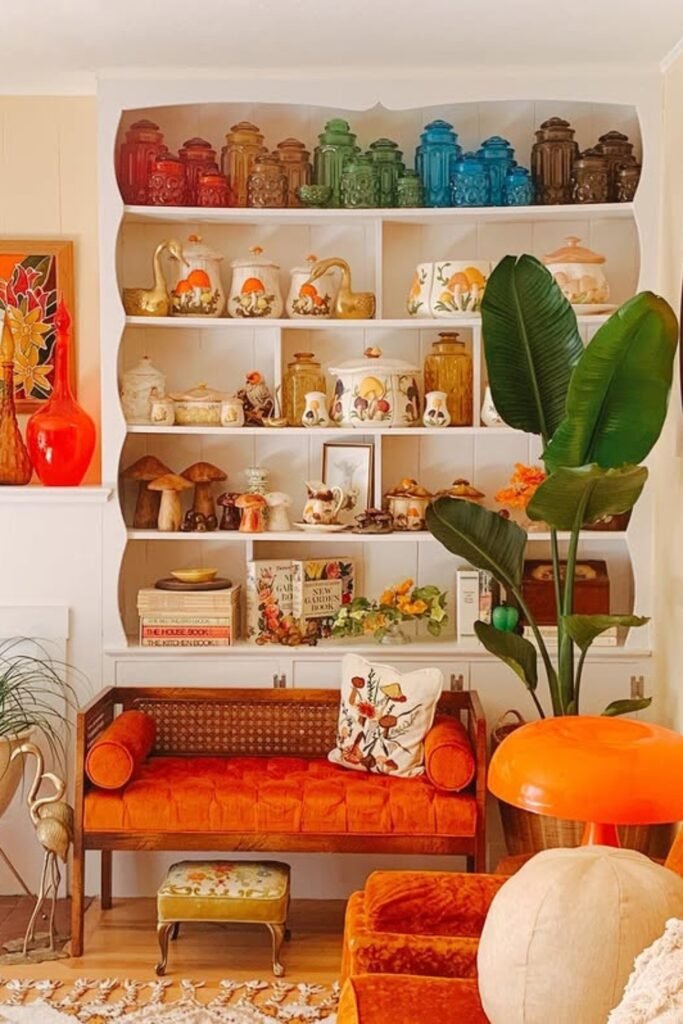
Curated Retro Display
The retro feel comes from turning everyday objects, glass jars, ceramics, and warm-toned decor, into a collected display instead of hiding them away.
To recreate this look, dedicate one wall to open shelves and stick to a tight color family like amber, green, and cream.
You can keep seating low and simple so the display stays dominant. This works best in living rooms where decor tells your story, not just fills space.
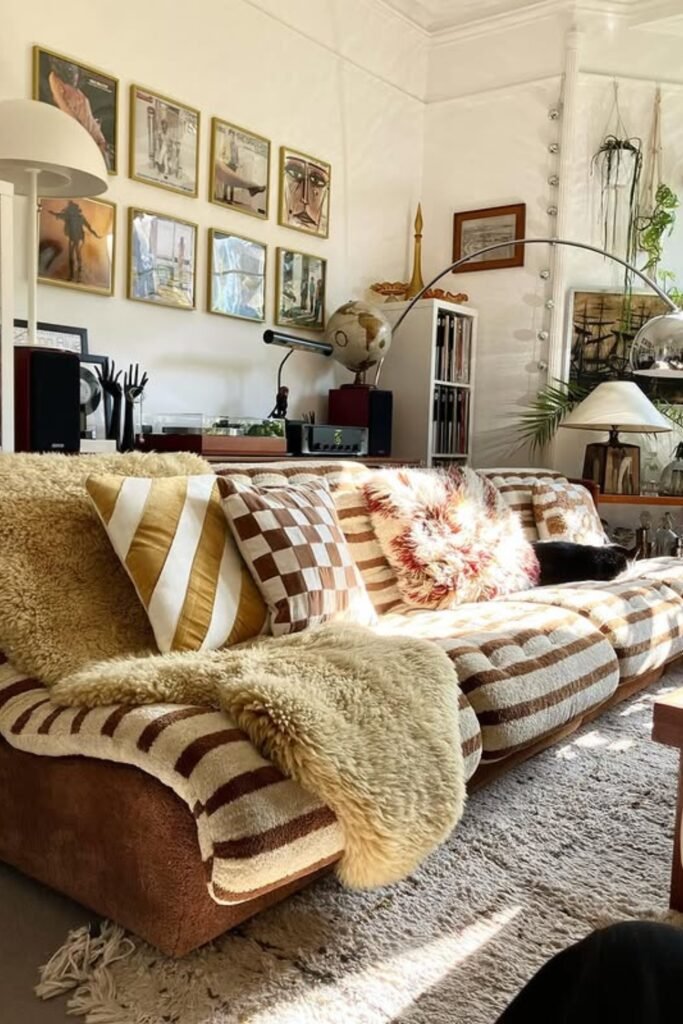
Textured Retro Layering
Texture sets the mood in this living room before color even gets a chance.
A low, deep sofa wrapped in layered throws and patterned cushions creates that relaxed retro feel from the 70s.
To recreate it, start with a simple, wide sofa and build comfort using tactile fabrics, wool, shag, and woven textiles.
This approach works best in living rooms meant for lounging, reading, and slow evenings rather than formal seating.
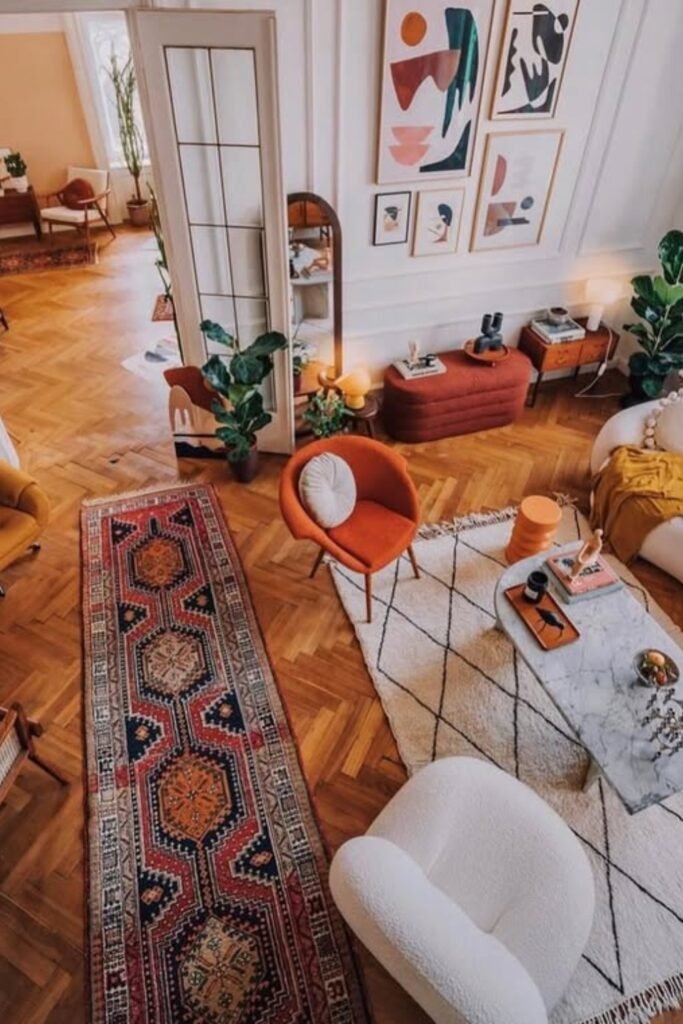
Warm Retro Flow
Movement defines this living room more than furniture. Curved seating, layered rugs, and warm tones guide the eye naturally through the space, giving it that effortless retro feel.
To recreate this, avoid pushing everything against the walls. Let chairs float, layer rugs to zone the living room, and mix soft curves with clean wood pieces.
This setup works best in open or long living rooms where flow matters as much as comfort.
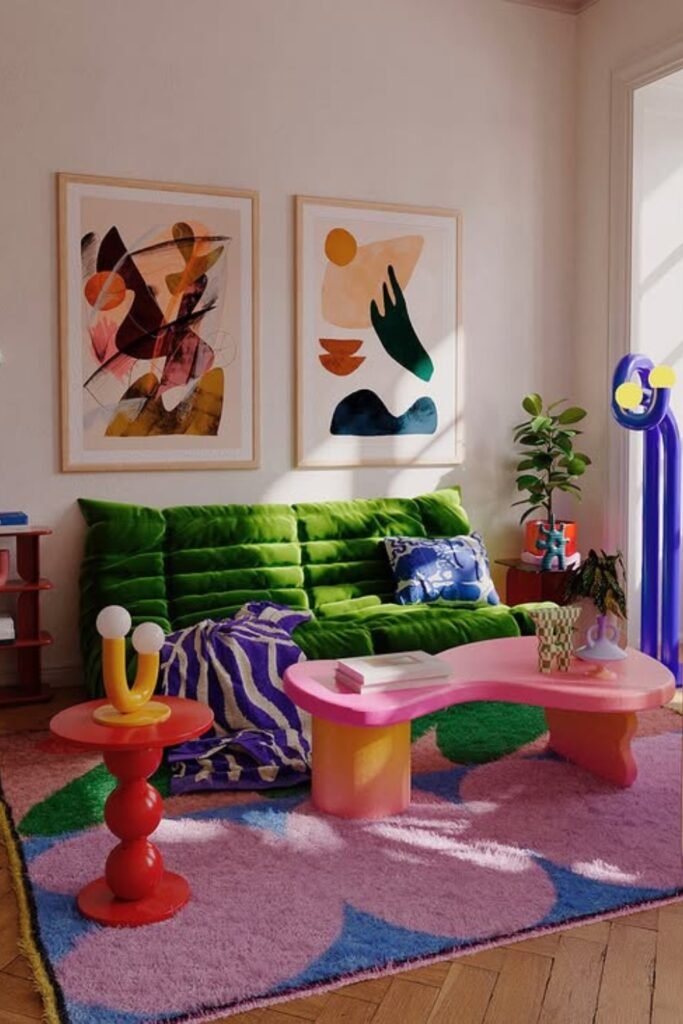
Playful Retro Curves
Curves steal the spotlight in this living room and instantly soften the retro look. Rounded furniture, sculptural tables, and bold color blocks keep the space fun without feeling chaotic.
To recreate this, swap sharp edges for curved pieces and keep your color palette tight.
Let one or two playful shapes stand out. This style works best in living rooms where you want energy, creativity, and a modern take on retro design.
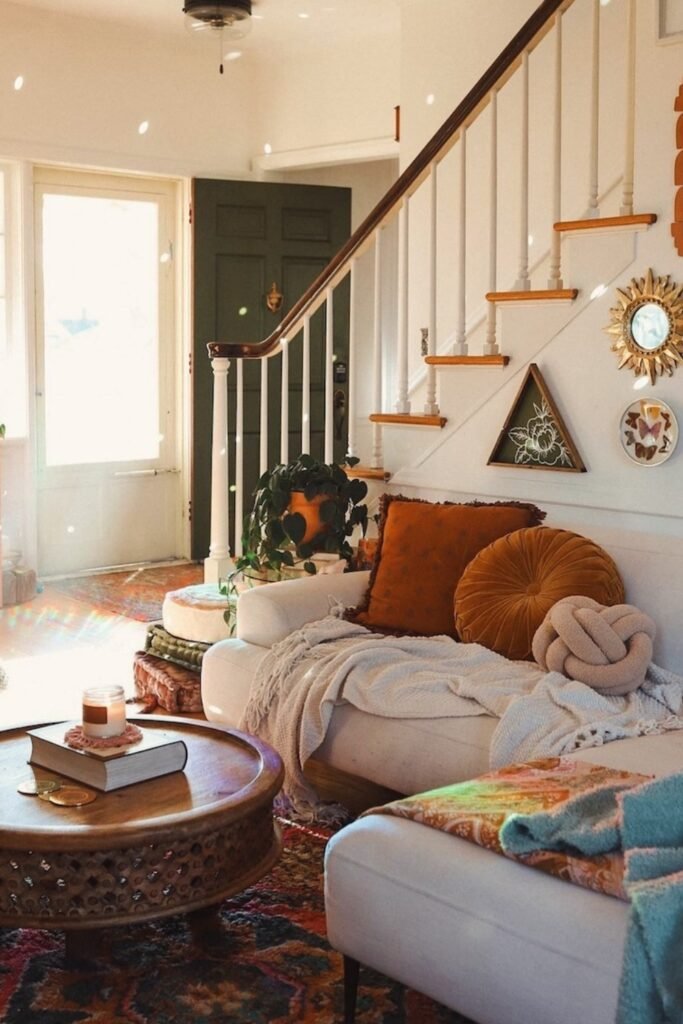
Cozy Retro Nook
Comfort leads every choice in this living room. Soft seating, layered throws, and warm wood details create a retro feel that invites you to slow down.
The round coffee table keeps the layout relaxed, while wall decor adds quiet character.
You can focus on texture first, knits, rugs, and cushions, then add vintage-style accents slowly.
This setup works best in living rooms where you want a welcoming, lived-in space rather than a polished showpiece.
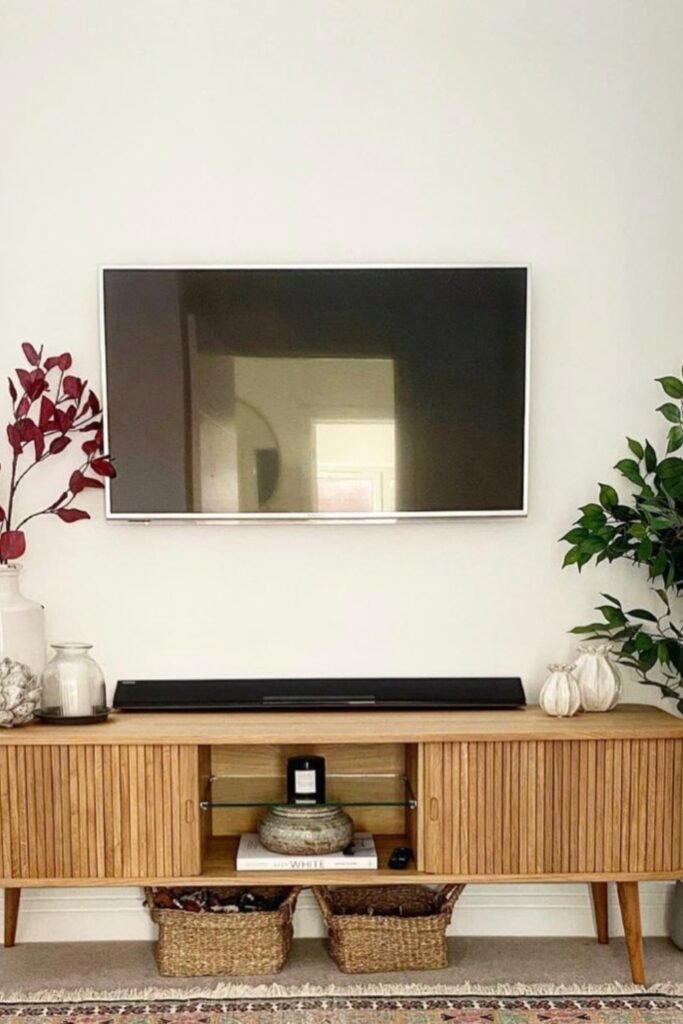
Clean Retro Media
A slatted wood console gives this living room a retro backbone without adding visual clutter.
The warmth of the wood softens modern tech, so the TV blends in instead of taking over.
To recreate this look, choose a low-profile media unit with visible grain and simple legs, then keep styling minimal – plants, ceramics, and one or two neutral accents.
This works best in living rooms where you want a calm, retro-inspired feel that still looks modern and tidy.
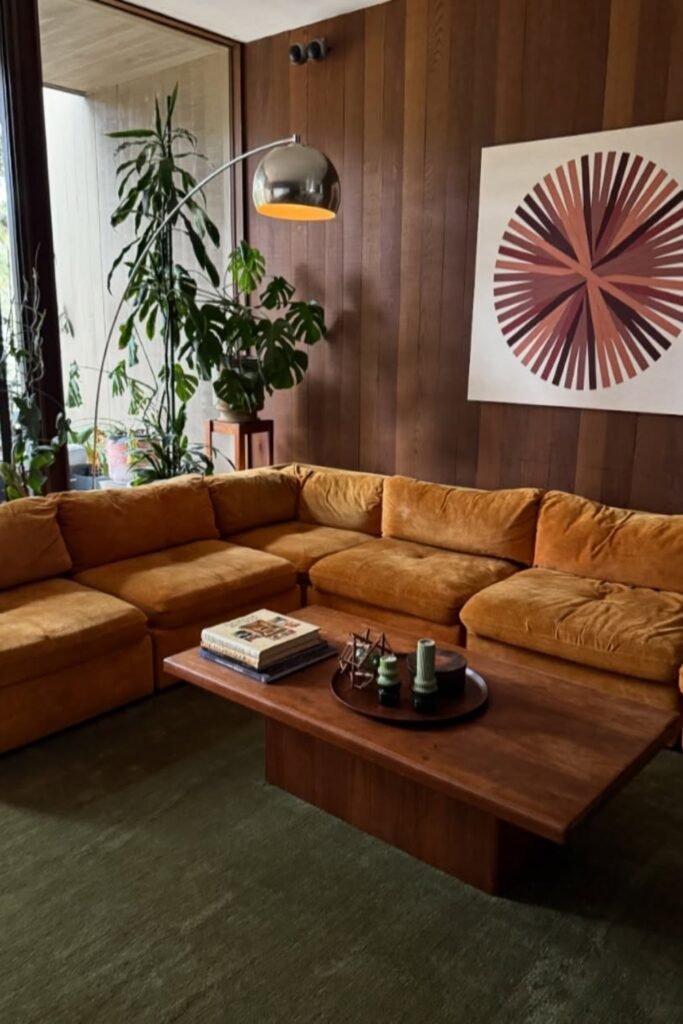
Wood-Heavy Retro
Wood sets the mood in this living room long before color does. Paneled walls, a chunky coffee table, and warm tones create that grounded retro feel from the 70s.
You can lean into wood finishes first, walls, furniture, or both, then soften them with a deep-colored sofa and plants.
This style works best in living rooms where you want warmth, depth, and a calm, nostalgic atmosphere.
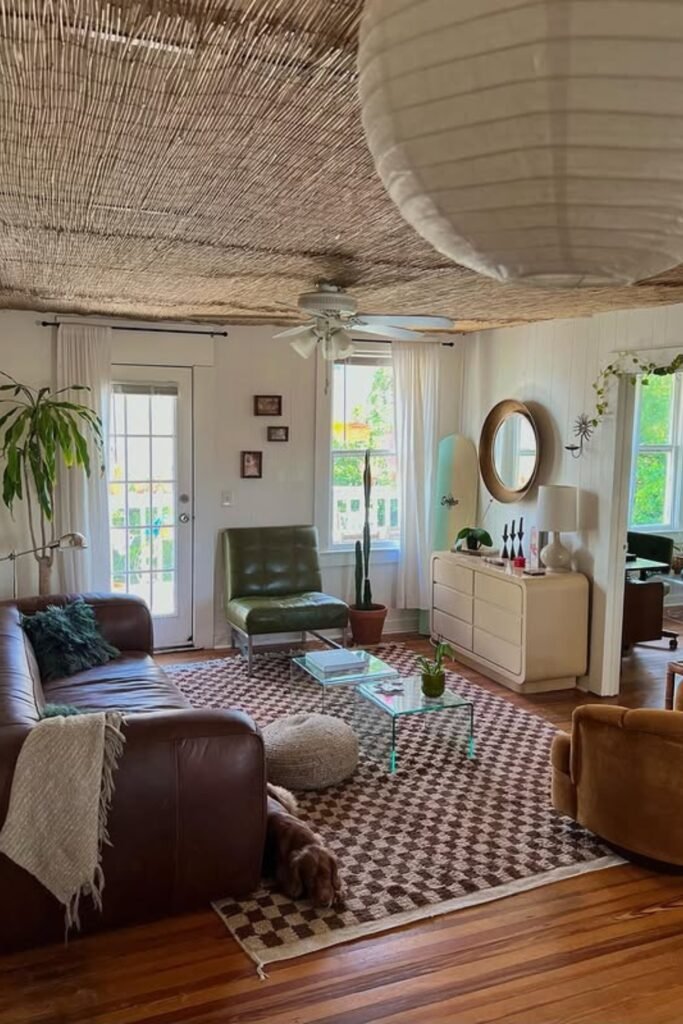
Relaxed Retro Mix
Nothing feels forced in this living room, and that’s exactly why it works. Leather seating, a patterned rug, and soft lighting come together to create an easy retro mood that feels lived-in.
To recreate this look, mix materials instead of matching sets, pair leather with fabric, glass with wood. Keep the layout open so the room can breathe.
This style works best in everyday living rooms where comfort and character matter more than perfect coordination.
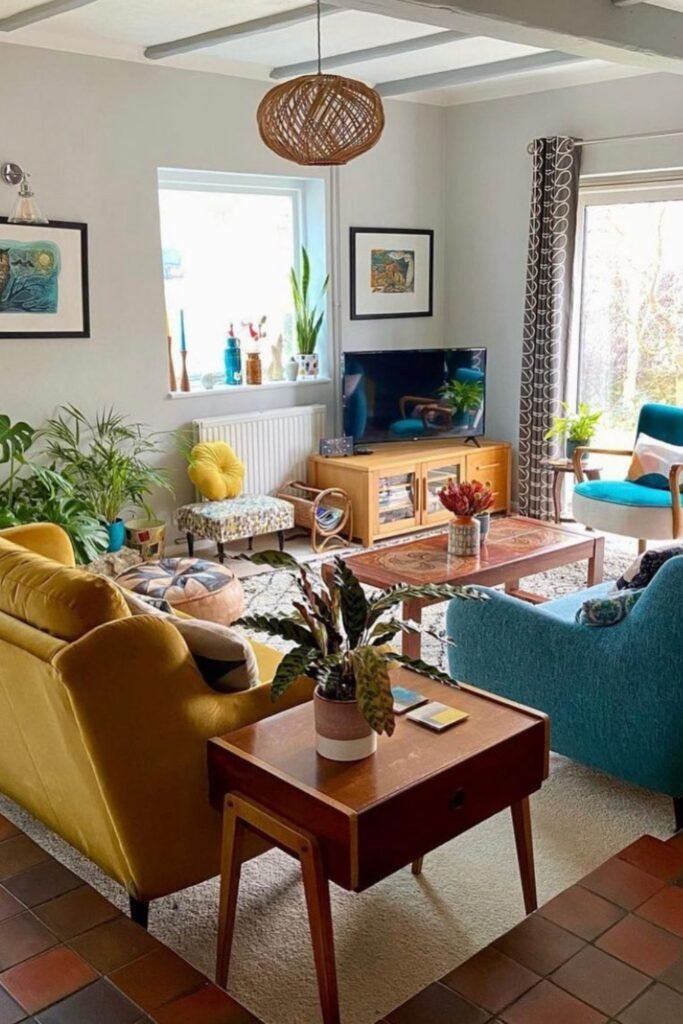
Balanced Retro Seating
Opposite sofas set up this living room for conversation, not just watching TV.
The retro feel comes from mixing warm wood, colorful upholstery, and simple mid-century shapes instead of matching sets.
To recreate this, place seating to face each other, then anchor the layout with a low wooden table.
You can keep colors earthy but playful. This setup works best in medium to large living rooms where you want the space to feel social, cozy, and thoughtfully arranged.
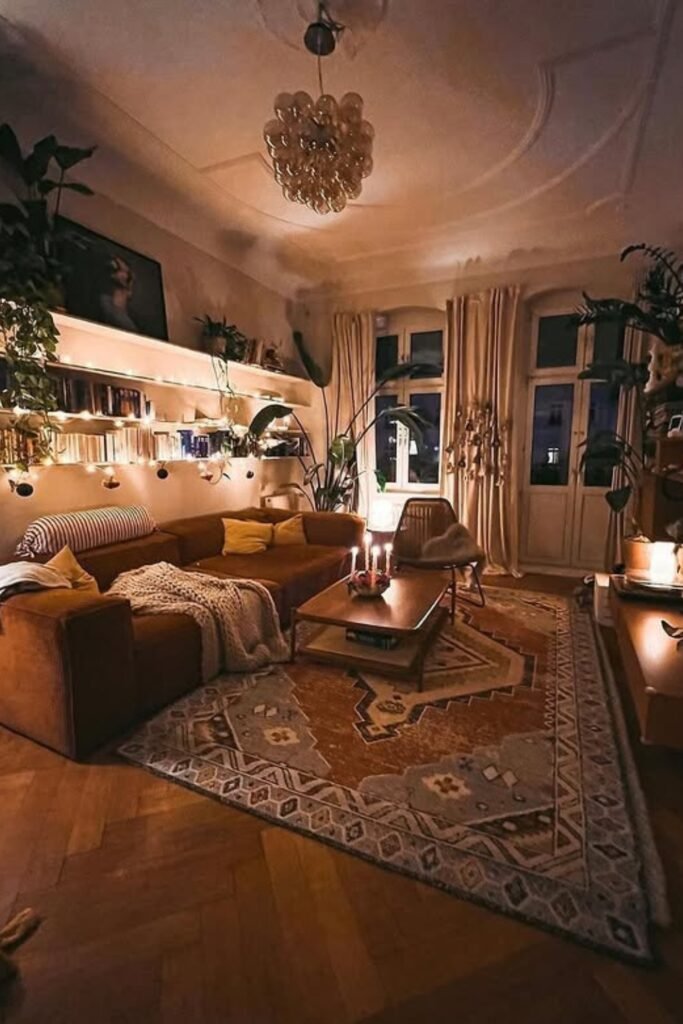
Evening Retro Glow
Lighting carries this living room into retro territory more than furniture ever could. Warm lamps, soft string lights, and a low sofa turn the space into something calm and intimate.
To recreate this mood, avoid bright overhead lighting and layer multiple warm light sources instead.
You can keep colors earthy and textures soft so the glow feels intentional.
This style works best in living rooms used mostly at night, where comfort, atmosphere, and slow evenings matter most.
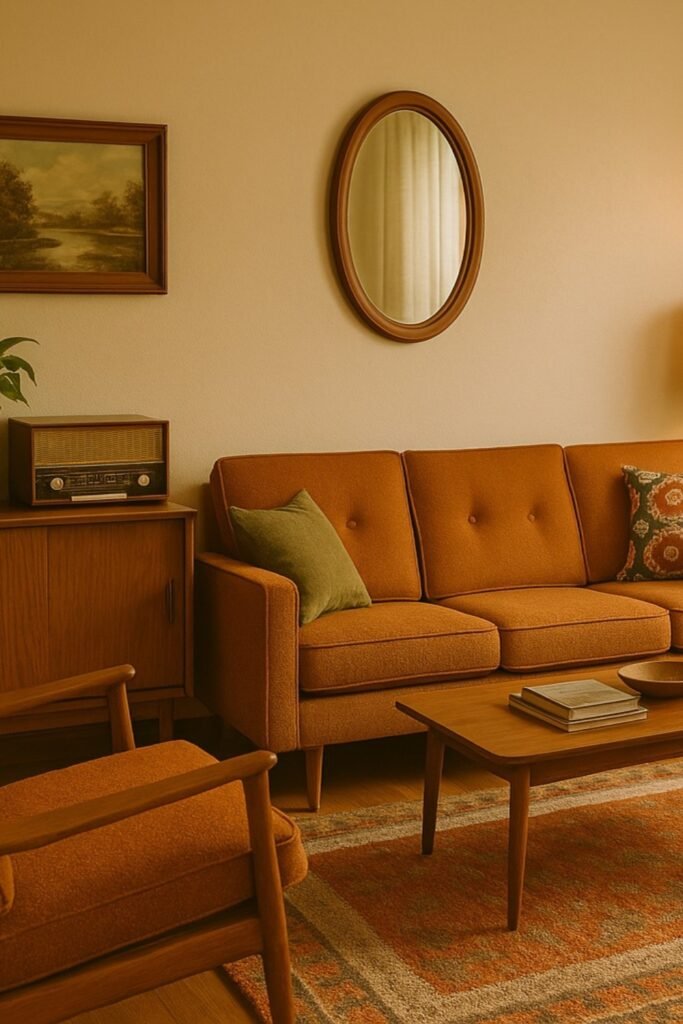
Timeless Retro Warmth
Everything in this living room feels calm, grounded, and intentional.
Warm brown upholstery, simple wooden furniture, and soft lighting do all the retro work without needing bold patterns or color clashes.
You can stick to one warm color family and repeat it across seating, rugs, and wood tones. Keep decor minimal and functional.
This style fits living rooms where you want a classic retro feel that stays comfortable, quiet, and easy to live with for years.
FAQs
Is retro the same as vintage in a living room?
Not exactly. Retro living rooms take inspiration from past decades, mainly the 1950s to 1980s, but they don’t aim to recreate them perfectly.
You can use modern furniture, lighting, and materials as long as the shapes, colors, and mood feel nostalgic.
Vintage, on the other hand, usually means using original old pieces. Retro is more flexible and easier to live with.
How do you make a retro living room look modern?
You can start with one or two retro elements like a bold sofa, warm wood furniture, or patterned rugs.
Then keep walls simple, layouts open, and accessories minimal.
You can mix retro shapes with modern lighting and clean lines prevents the room from feeling dated while still keeping that classic retro charm.
You may like to read!
