
14 Open Layout Living Room Dining Room for 2026

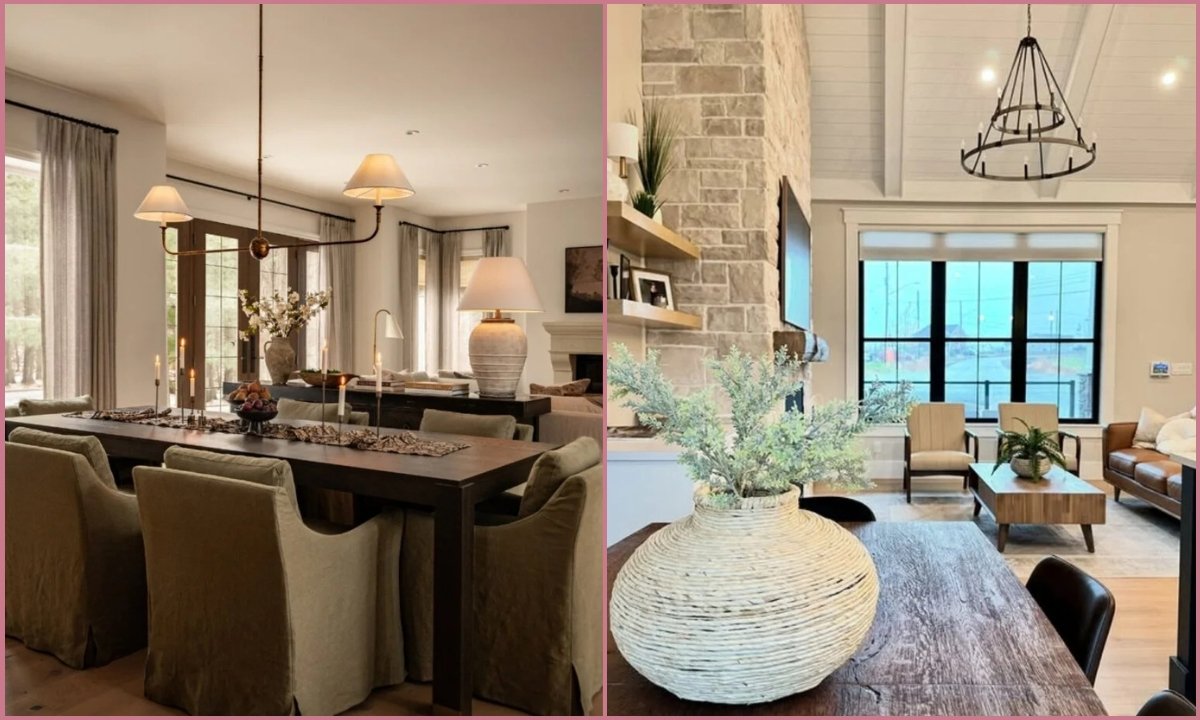
This article may contain affiliate links: read full affiliate disclosure.
When you look at your open living room and dining room on paper, everything might seem fine, but in real life, it can feel confusing.
You might notice that furniture feels misplaced, the space lacks clear boundaries, and the room never feels finished.
This isn’t a style problem, it’s a layout problem. You can’t rely on open spaces to come with built-in rules, and most people never learn how to create them.
In this article, you will see what an open-plan living-dining room really is and exactly how you can separate the two areas without walls, so the space finally works for you in everyday life.
What Is An Open-Plan Living Room Dining Room?
An open-plan living room and dining room is one space doing two jobs at once, without walls in between.
When you look at it, you will see your sofa, TV, and seating area sharing the same room with your dining table and chairs.
It feels open and bright, but you can also notice that it removes the natural boundaries that tell you where to sit, eat, or walk. That’s why these spaces often feel awkward or unfinished.
The moment you understand that this layout needs structure, not more furniture, you can stop guessing and start planning the space properly.
How Do You Separate Dining And Living Room In Open Concept?
You can separate an open-concept living and dining room by creating clear zones, not by adding walls.
When you start with furniture placement, turn the sofa so it faces the living area and backs the dining space. This alone gives you a natural boundary.
You can add a rug under the seating area to anchor it, then use lighting to mark each zone, a pendant over the dining table and softer lights in the living area.
When each area has a clear purpose, the whole space feels organized instead of chaotic.
Furniture Sets Zones
You can let seating placement do most of the heavy lifting when separating your open space.
When you turn the sofa and chairs inward, you create a social zone that feels separate even without walls.
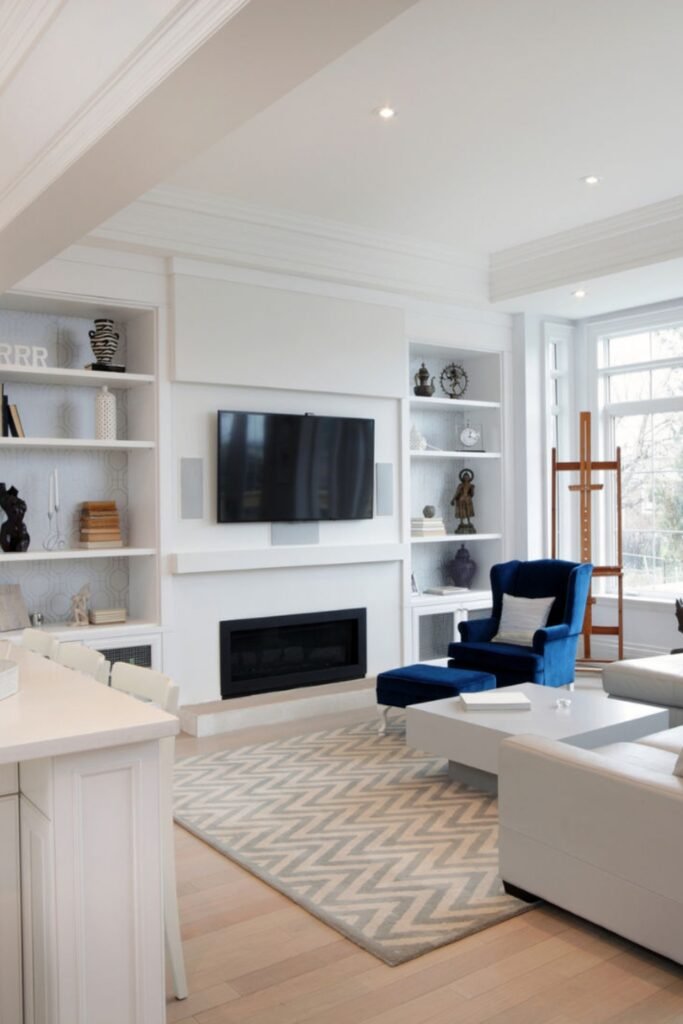
Zones Feel Layered
The living zone feels calmer because it’s not immediately on display the moment you enter. This works well in homes where you want the seating area to feel private and relaxed.
You can recreate it by keeping the dining table in the foreground, pulling seating a step back, and softening the living area with warmer textures and lower lighting.
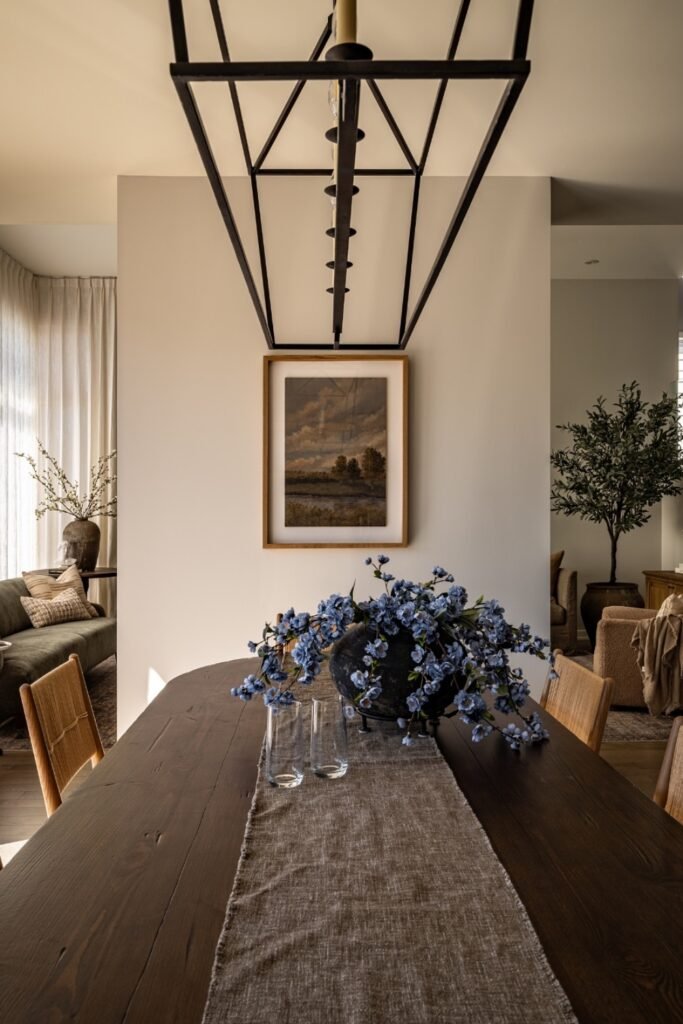
Focal Points Align
You can ground the seating area by lining it up with strong architectural features. This works best in open plans with one strong wall you can build around.
When the fireplace wall or a big window acts as a natural anchor, your seating doesn’t float or drift toward the dining table.
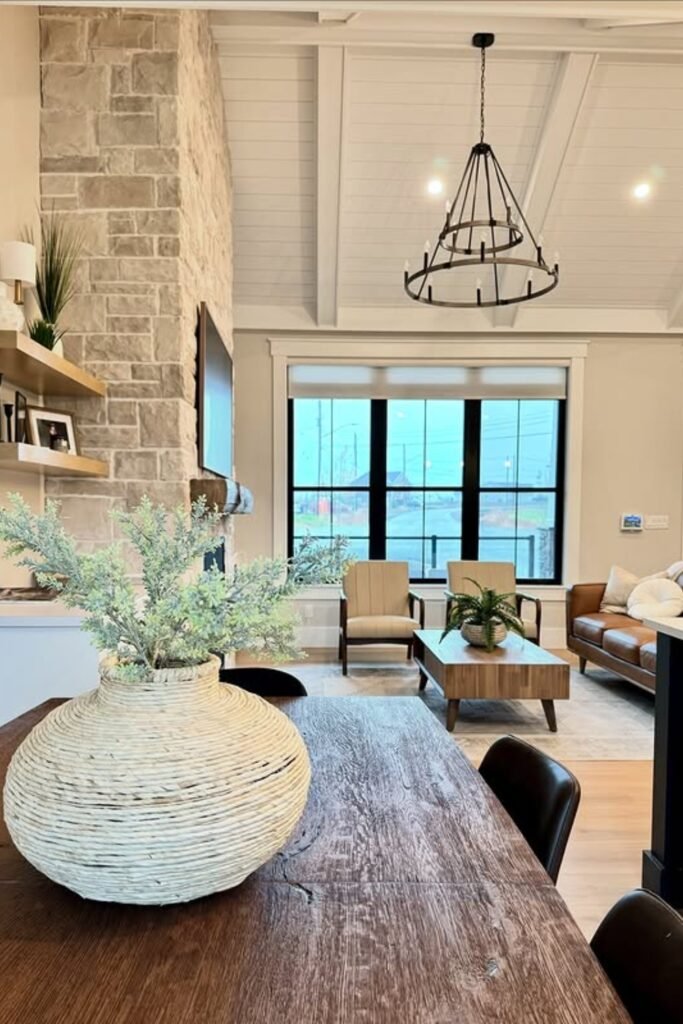
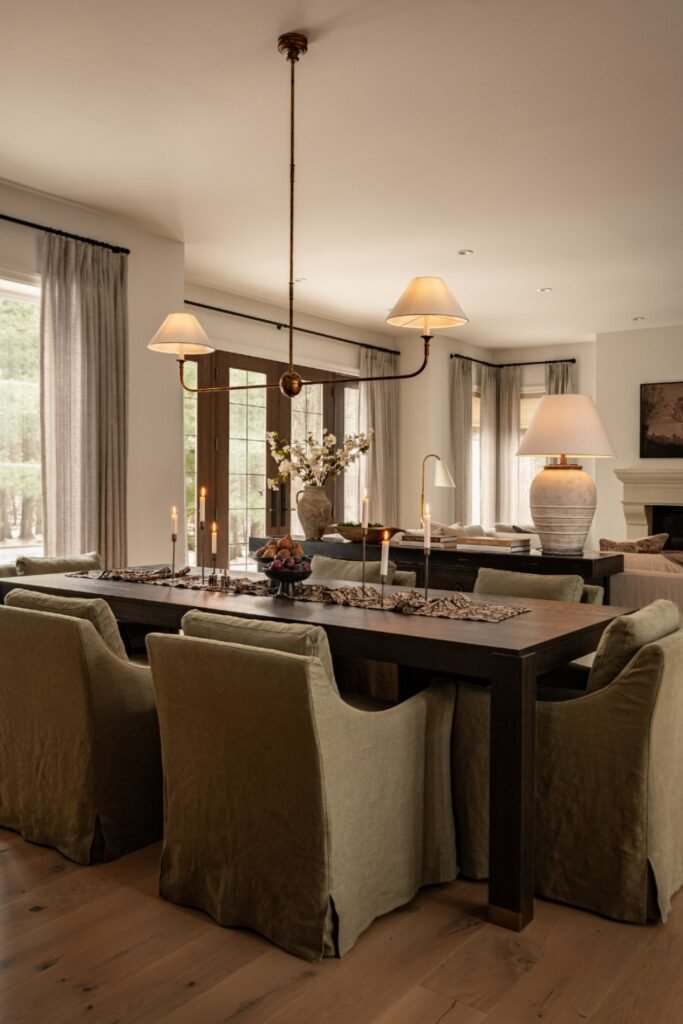
Lighting Draws Lines
When a hanging fixture lights the table, it does more than just illuminate, it quietly marks where dining ends and lounging begins.
You can let the visual drop from the ceiling create a boundary without adding anything to the floor.
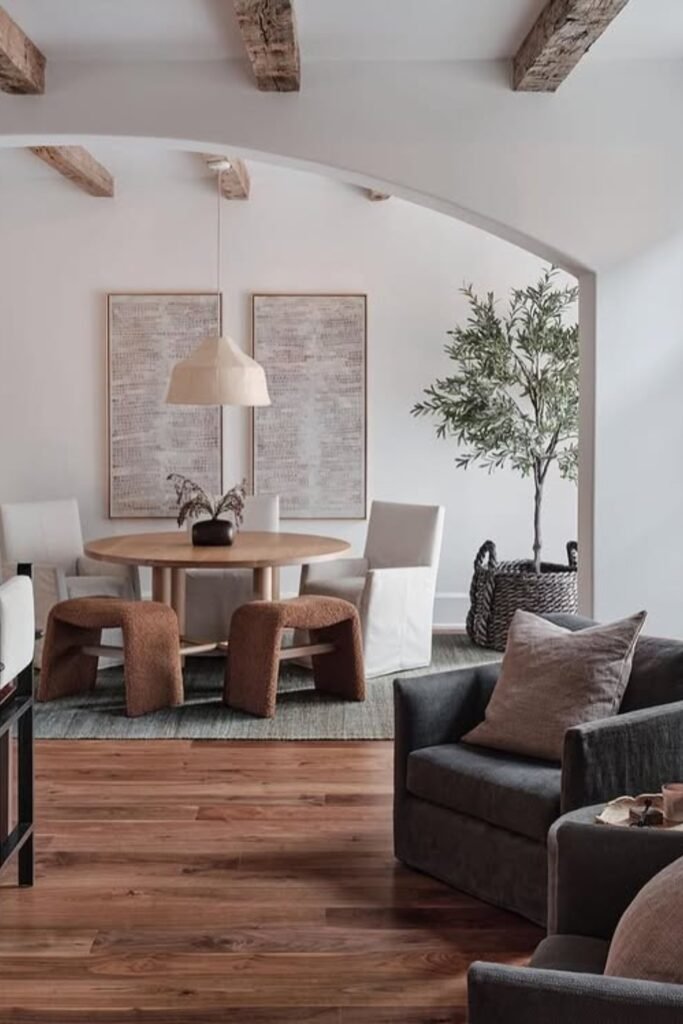
Architecture Creates Pause
You can let architectural features do the separating without trying too hard. That slight visual break tells your brain you’re moving from one zone to another.
When an arch or beam is present, it gives the seating area a sense of enclosure while keeping the dining space open and social.
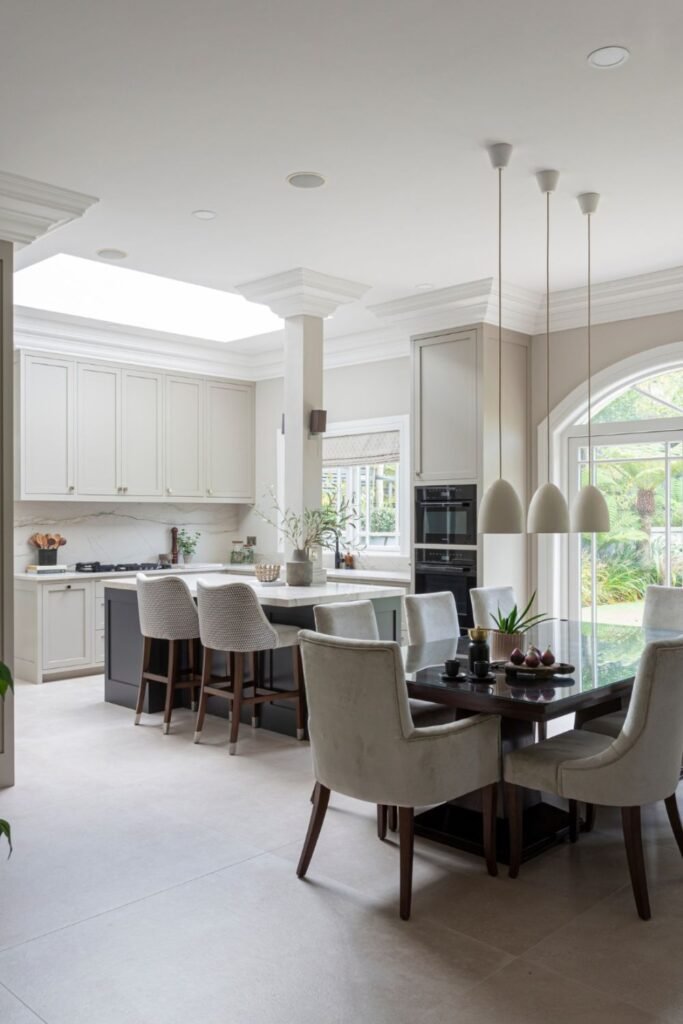
Kitchen Holds Line
When you move around the space, each zone knows exactly where it belongs. This works especially well in open plans where the kitchen sits between living and dining.
You can recreate it by using the island as a visual stop, keeping dining furniture on one side, and letting the seating area start only after that clear break.
Doors Create Control
You can use glass doors to give yourself flexibility instead of commitment. When open, the space feels connected and social.
When closed, the seating area feels quiet and contained without losing light. This works well if noise or focus is an issue but you still want an open feel most of the time.
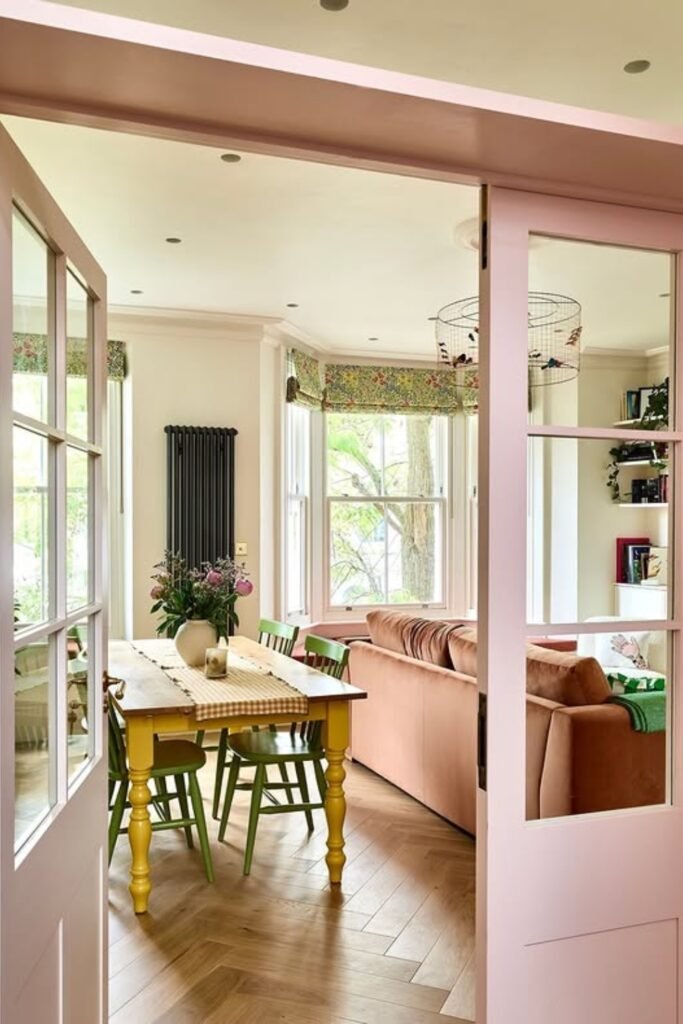
Table Sets Boundary
You can let the dining table act like a soft stop between zones. When it sits close enough to the seating area, the space still feels connected, but far enough apart to keep both areas functional.
You can let the pendant above reinforce that boundary without adding clutter. This works best in smaller open layouts where you can’t afford wasted space.
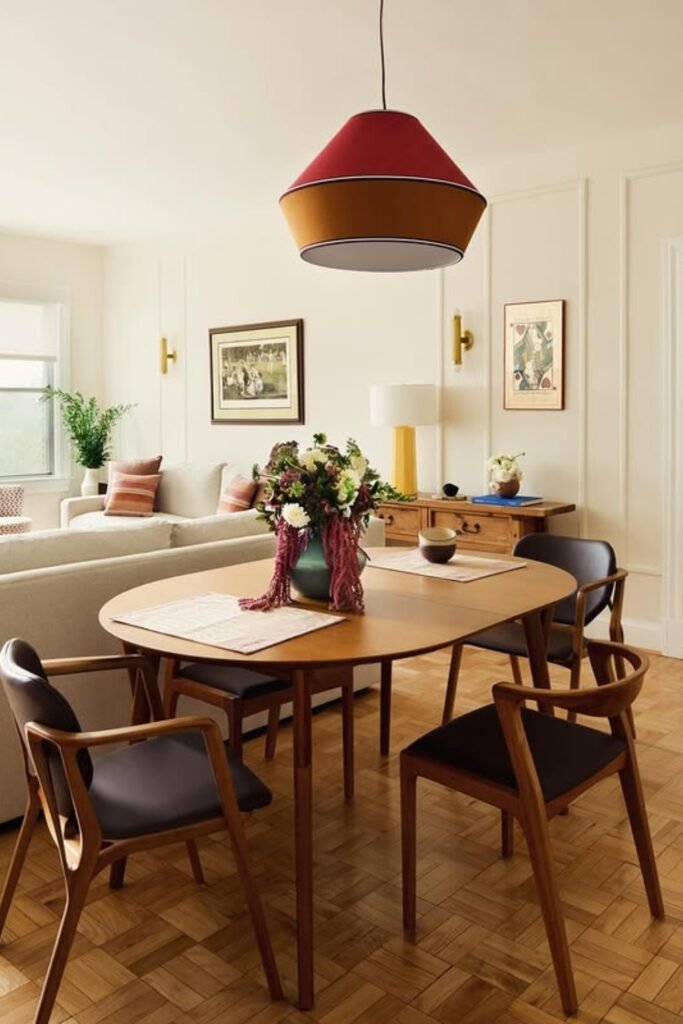
Depth Creates Distance
When the seating area doesn’t compete for attention, it automatically works. You can let it sit closer to the foreground, while the dining space lives deeper in the room.
You can recreate it by pulling seating closer to the entry, pushing dining further back, and letting empty floor space do the separating instead of furniture.
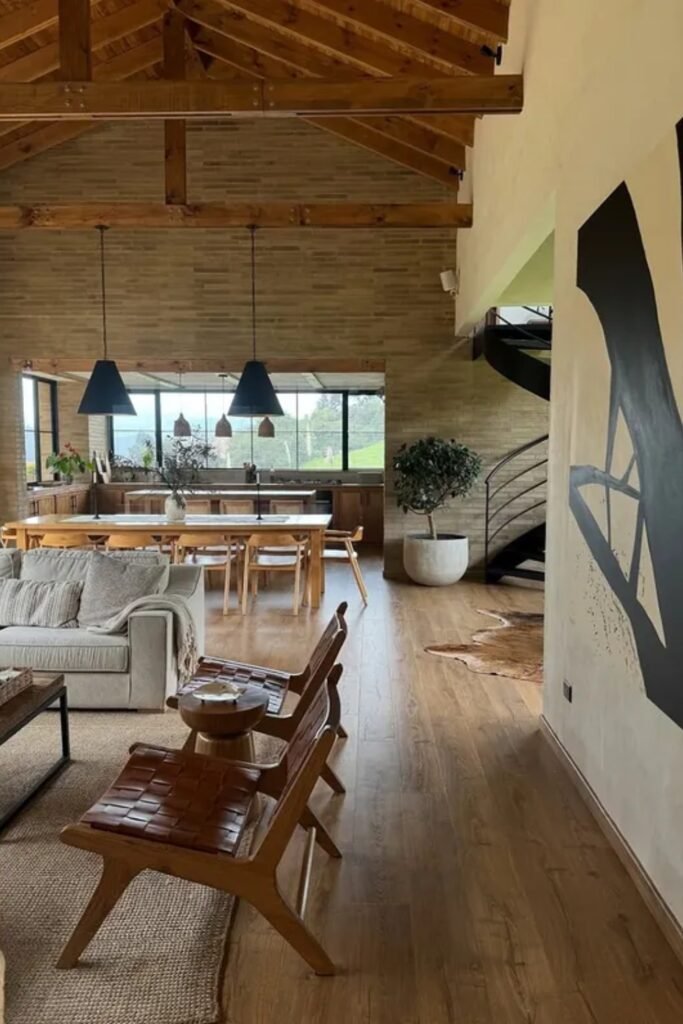
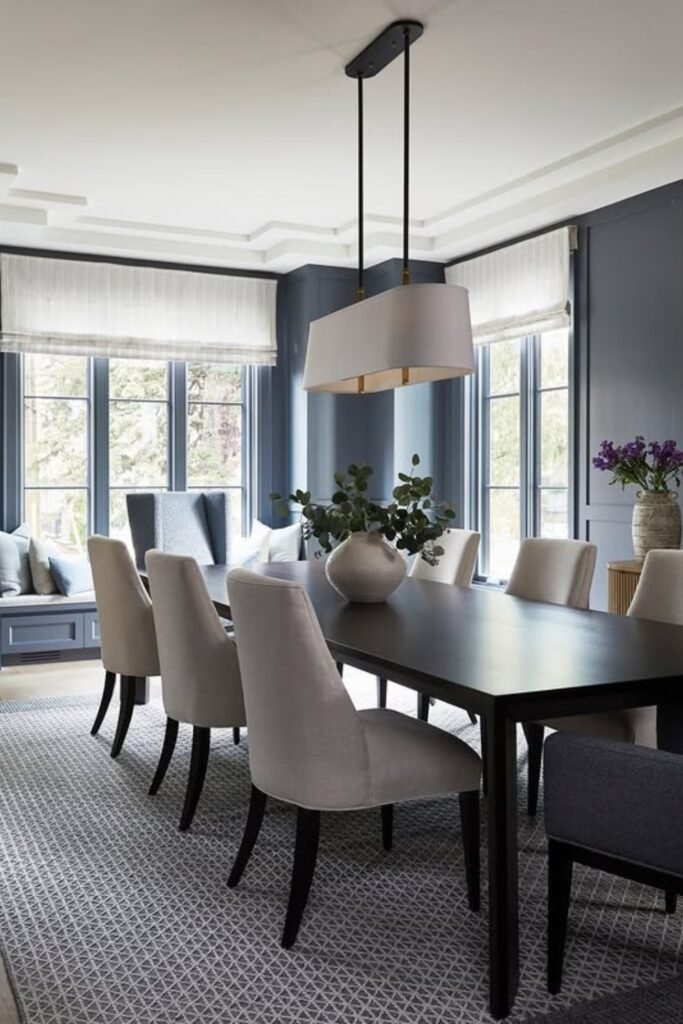
Color Sets Boundary
You can use dark walls to pull the dining area into its own zone without adding anything physical.
When the color shifts, it naturally separates the dining area from the rest of the open space. This works best if you want definition but don’t want to break the flow.
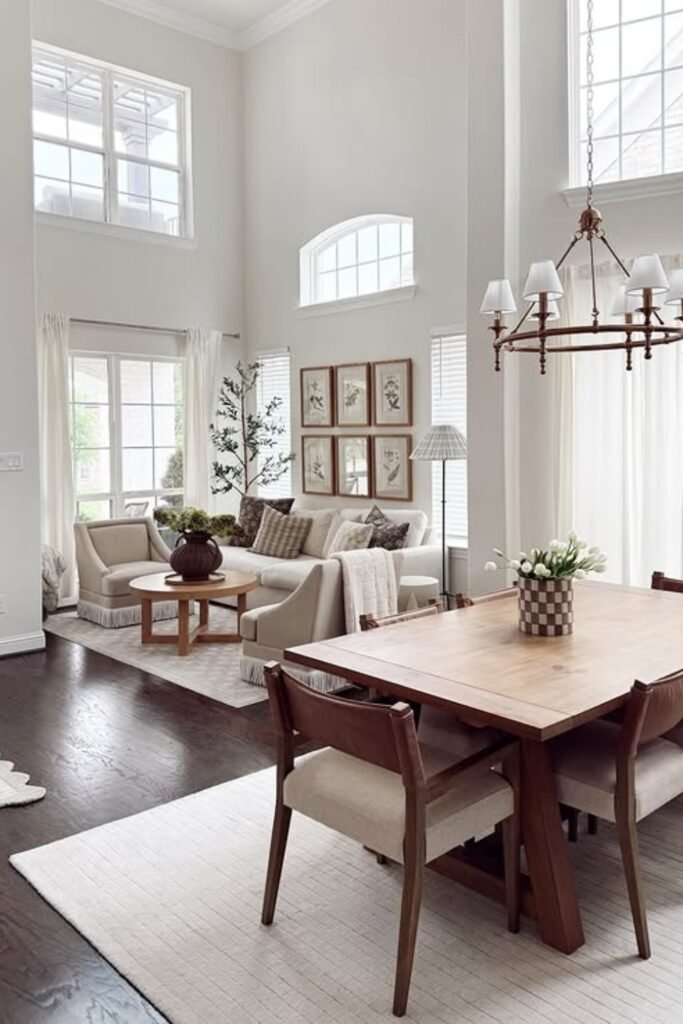
Rugs Split Function
When each area sits on its own rug, the flooring does all the zoning work for you. You can let your eye understand where dining ends and lounging begins without thinking about it.
You can recreate it by choosing rugs that fit the furniture fully, leaving a visible gap between them, and keeping colors related so the space still feels connected.
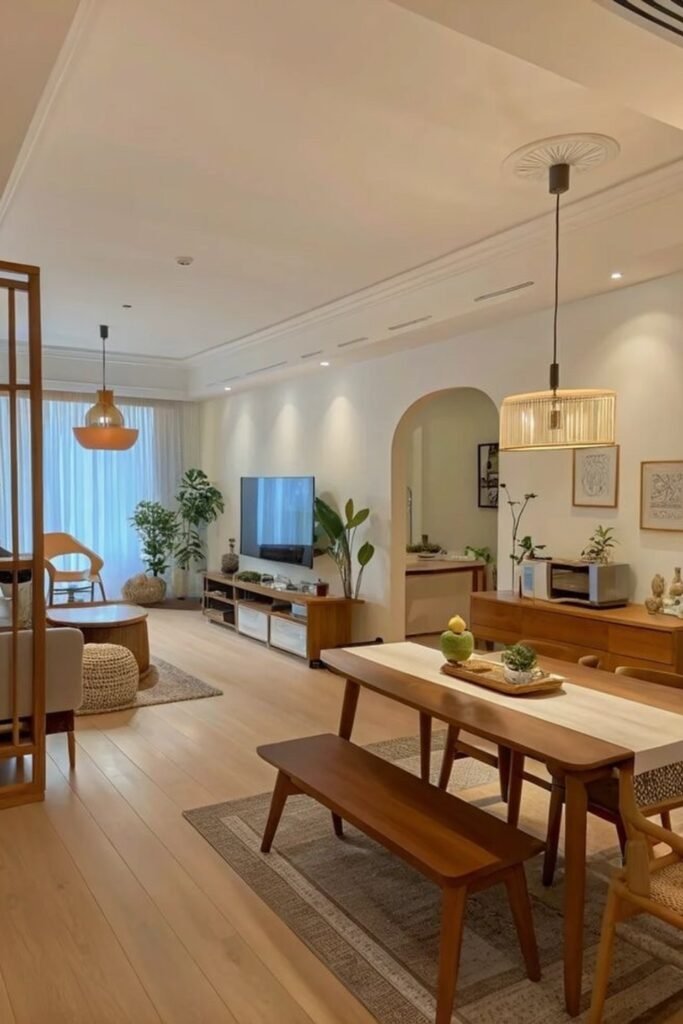
Divider Adds Flow
You can use an open wood divider to separate zones without cutting the space in half. This works well if you want definition without losing openness.
When it’s slatted or see-through, it slows the transition just enough to make each area feel intentional.
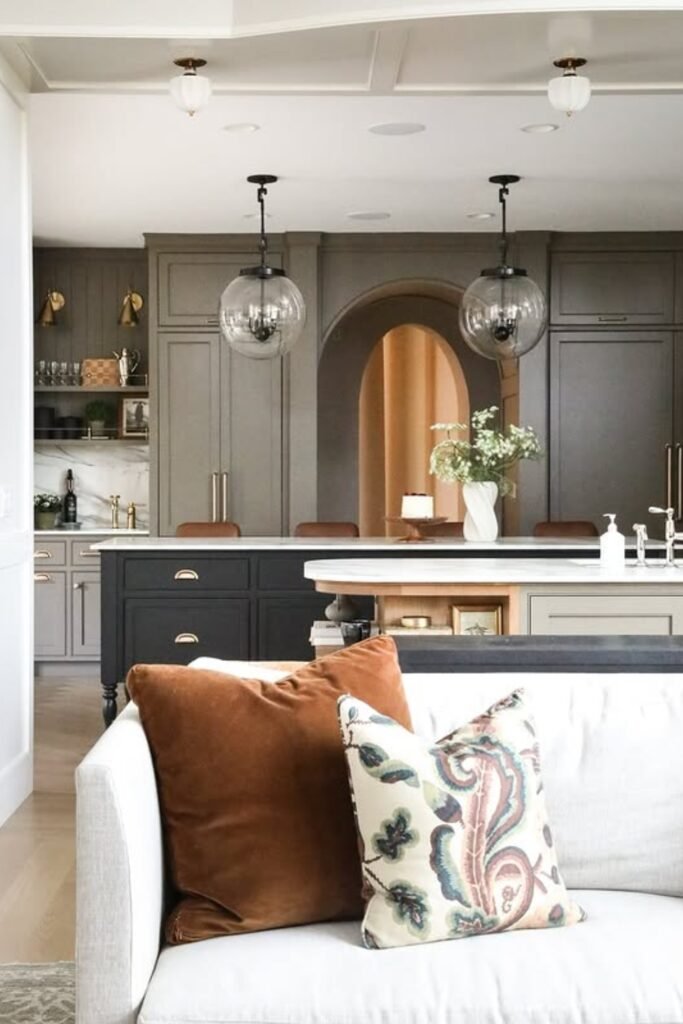
Back Creates Boundary
When the sofa faces away from the kitchen and dining area, it quietly signals where the seating zone begins.
You can let it separate the areas without trying to be a wall. This works well when the kitchen sits directly behind the seating zone.
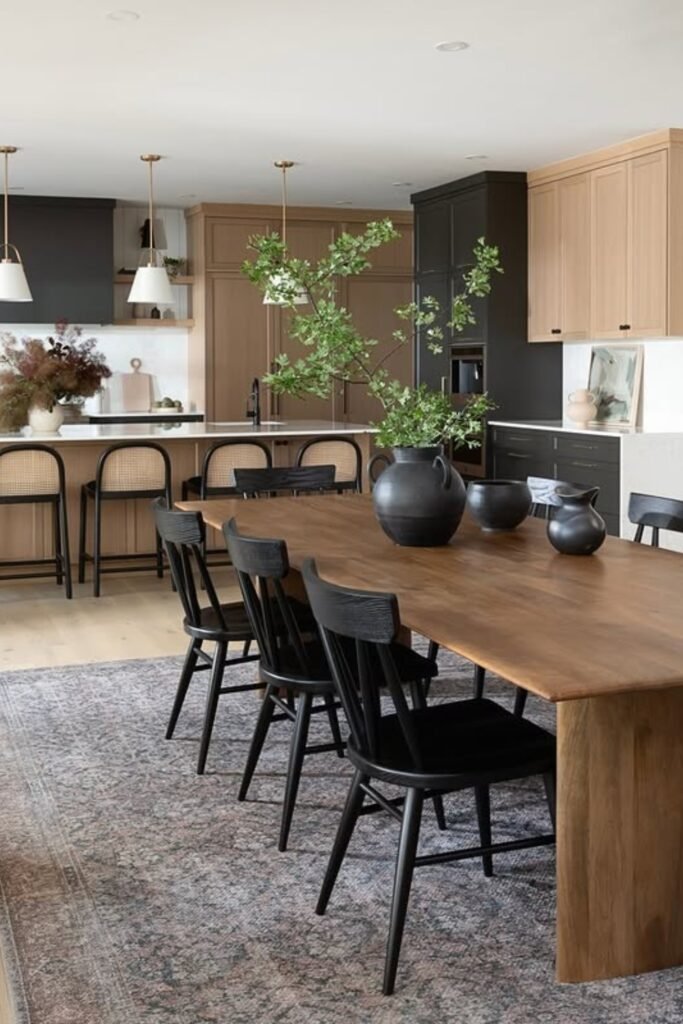
Dining Takes Focus
You can let the table become the anchor of the space, pulling attention before anything else.
When its size, material, and placement are clear, it defines where gathering happens, while the kitchen stays supportive in the background.
FAQs
Can you separate spaces without walls?
Yes and you can make it work. When you have an open layout, furniture, rugs, lighting, and placement do the job walls used to do.
You can let a sofa back, a dining rug, or a pendant light clearly define zones without blocking light or flow.
The goal isn’t to close the space off, it’s to give each area a clear role so your room feels organized instead of scattered.
What is the biggest mistake in open layouts?
When you treat the space like one big room, everything can blend together, and nothing feels intentional.
You can give the living and dining areas their own anchors, seating groups, tables, rugs, or focal points.
If you skip that step and just place furniture wherever it fits, your layout will always feel unfinished, no matter how nice the pieces are.
You may like to read!
