
26 Narrow Living Room Layout Ideas for 2026

This article may contain affiliate links: read full affiliate disclosure.
If your living room feels more like a hallway than a place to relax, you should know you are not doing anything wrong.
A narrow living rooms are tricky, and you will notice it as soon as you place the sofa, then the TV suddenly feels awkward.
You can add a coffee table, and before you know it, there’s hardly any walking space. Even after decorating, the room can still feel tight and uncomfortable.
In this article, you will see where to place the TV and how you can make a narrow living room feel wider, with 26 unique ideas.
Let’s jump in!
Where To Put TV In A Narrow Living Room?
In a narrow living room, where you place the TV can either fix the space or make it feel worse.
If you put the TV on the long wall, your eye travels the full length of the room, which can make it feel even narrower.
You can try placing the TV on the short wall, if you have one, because it visually widens the space.
If that’s not possible, you can mount the TV on the long wall and place your sofa directly across from it, not off to the side.
This keeps the layout balanced and helps you avoid awkward walking paths.
How To Make A Narrow Room Seem Wider?
If your room feels narrow, it’s usually because you’ve lined everything along the long walls. When you do that, you stretch the space visually and turn it into a tunnel.
You can make the room feel wider by pulling key furniture slightly away from the walls and keeping clear walking paths.
You can use one main seating area instead of spreading furniture from end to end.
When your layout breaks the long lines and keeps the center open, you will notice the room immediately feels wider, even without changing colors or decor.
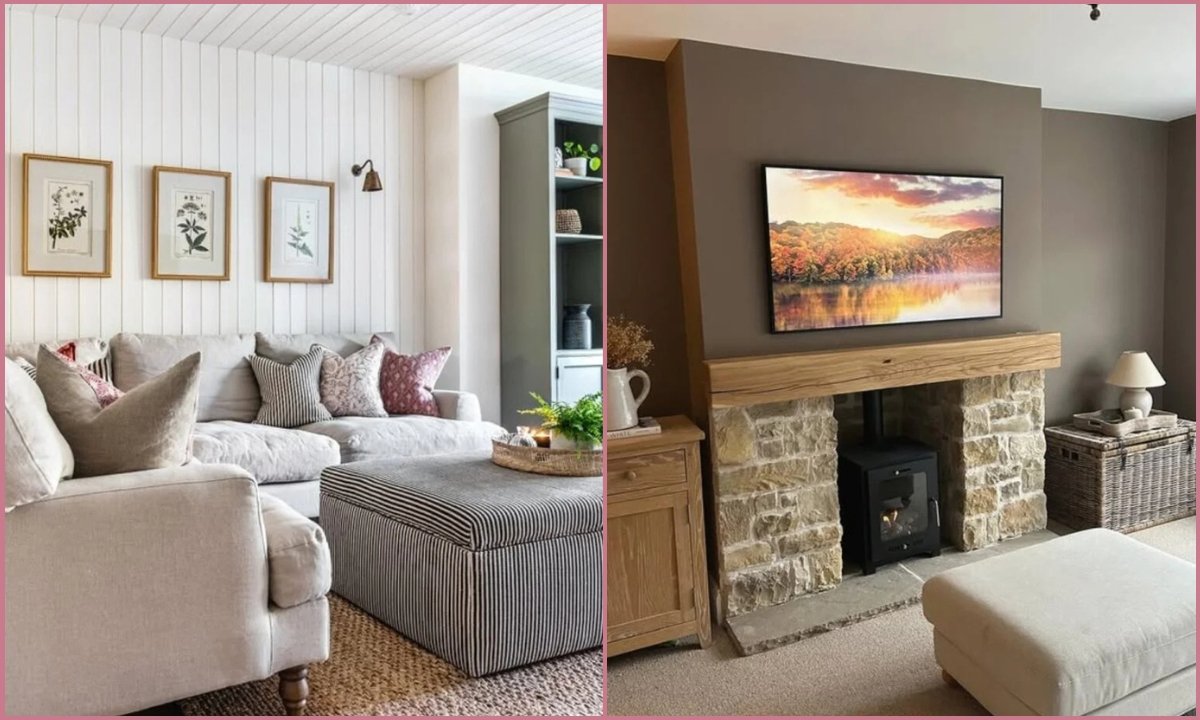
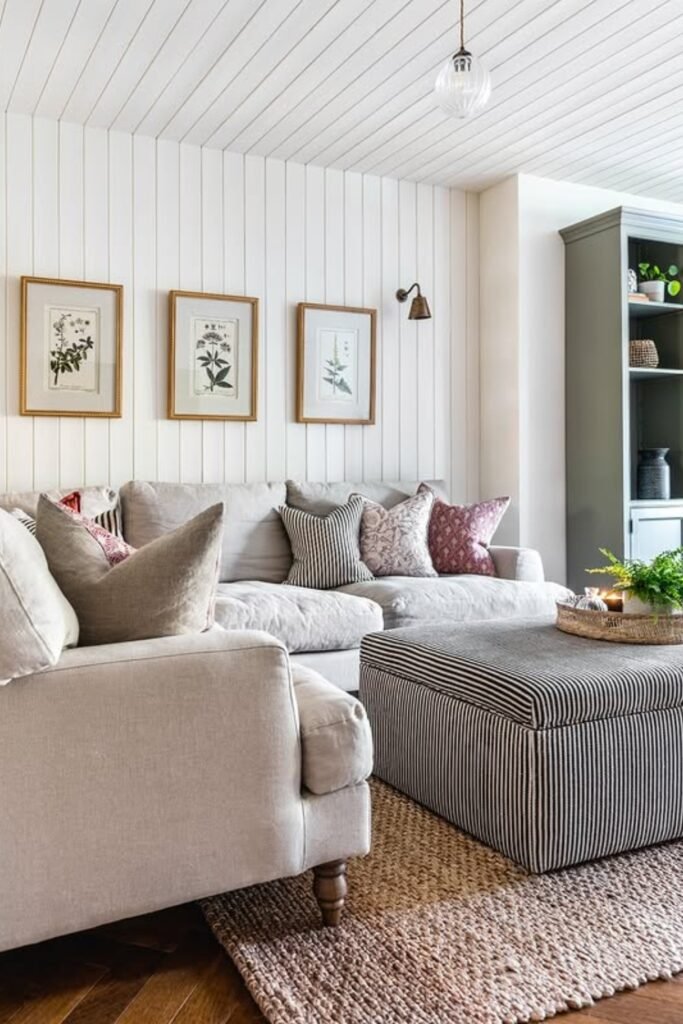
Corner-First Seating
When you start with the corner, you solve two problems at once in a narrow living room: flow and balance.
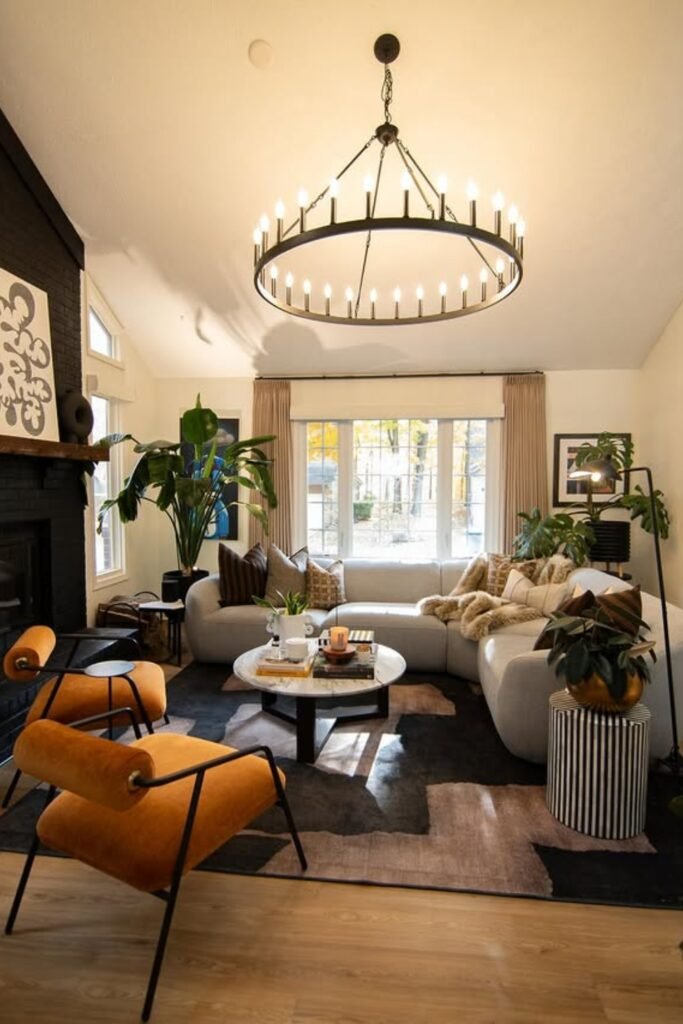
You can tuck a sectional into one end to stop the space from feeling like a straight tunnel. The ottoman keeps the center soft and flexible instead of crowded.
Stack TV Vertically
If wall space is limited side to side, mounting the TV above the fireplace works perfectly in a narrow living room.
Instead of spreading elements horizontally, this setup builds upward and keeps the layout compact.

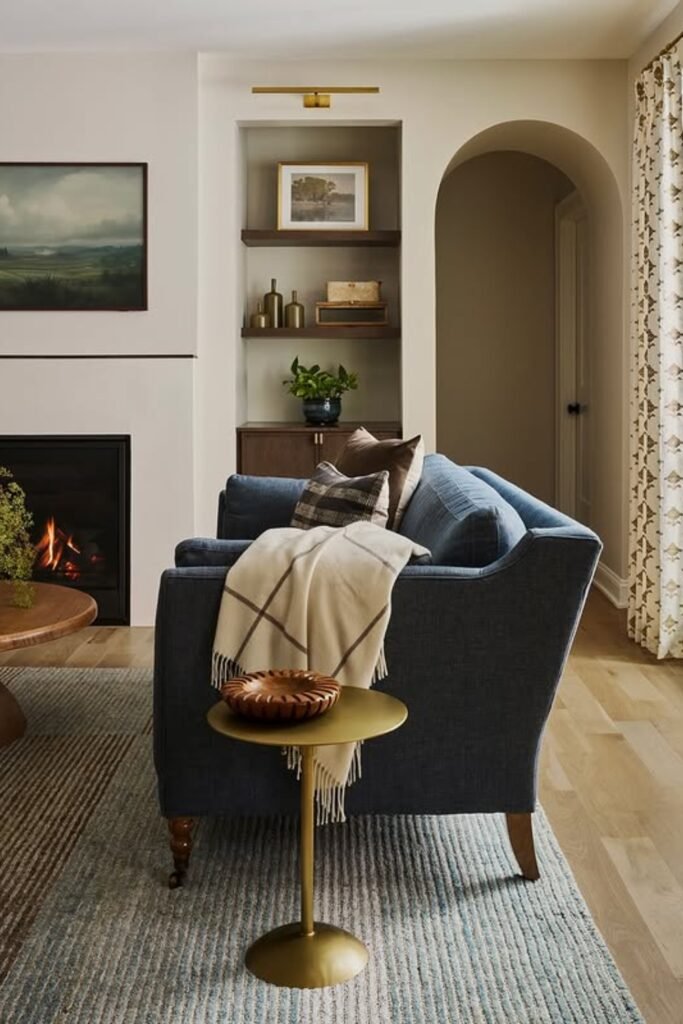
Float Single Seating
When you pull one chair away from the wall, it instantly changes how a narrow living room feels.
You can create a natural pause in the layout instead of forcing all seating into a straight line. This works best when you still need a clear walkway, like near an archway or window.
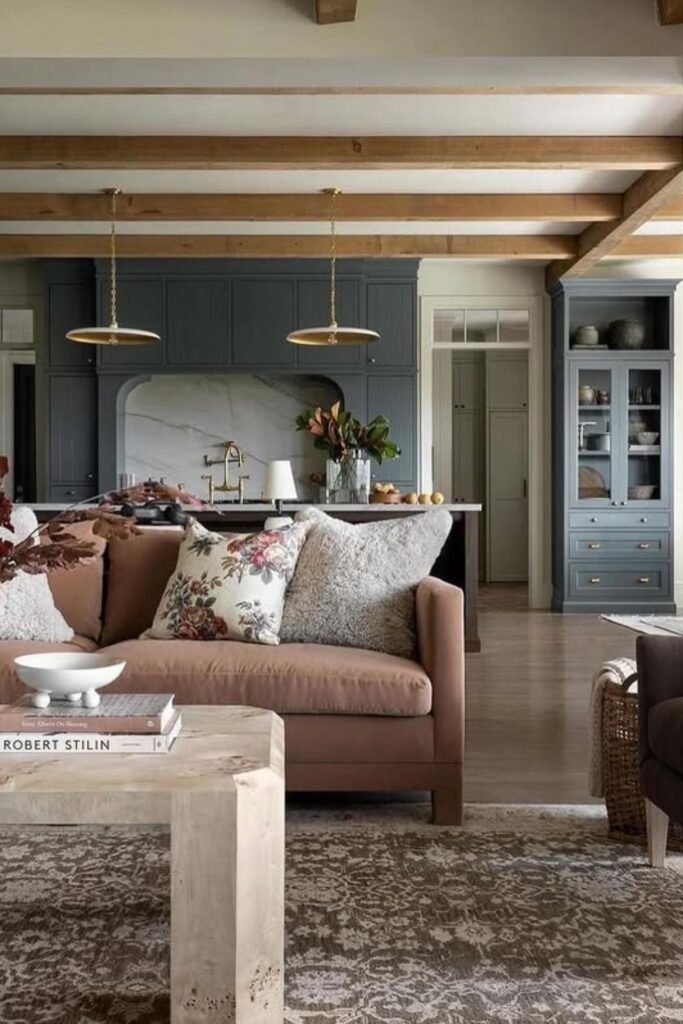
Break With Zones
You can let the living room stop before the kitchen to keep a narrow space from feeling endless.
The sofa acts as a soft divider instead of pushing seating wall to wall. This works best in open-plan homes where rooms flow into each other.
Keep Path Clear
When walking space stays obvious, a narrow living room works much better. You can keep the sofa hugging one wall while chairs face it, leaving a clean path from the entry through the room.
You can recreate this by pushing seating to one side, using slim tables, and making sure nothing blocks the natural route people take when entering the living room.
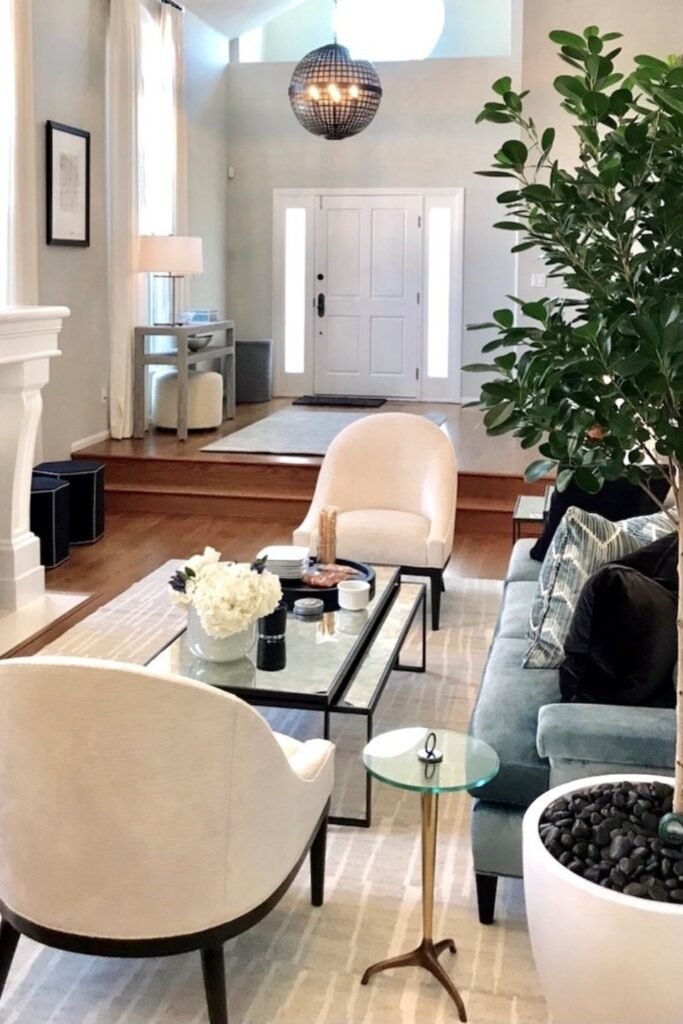
Stretch With Light
When you keep the sofa, walls, and curtains in the same soft tone, the room stops feeling boxed in.
You can recreate this by choosing light upholstery, hanging curtains high and wide, and keeping contrast low so the living room feels calm and wider.

Go Vertical Focus
You can recreate it by stacking key elements vertically, keeping furniture low-profile, and avoiding spreading décor across the walls side to side.
When floor space is tight, the living room has to grow upward. You can center the TV and fireplace on a tall vertical surface to pull attention away from the narrow width.

Face Seating Forward
You can simplify a narrow living room instantly by keeping all main seating facing the TV. It works best when the TV sits on the short wall or above a fireplace.
Instead of turning furniture sideways and stealing walking space, this layout lets everything run in one clean direction.
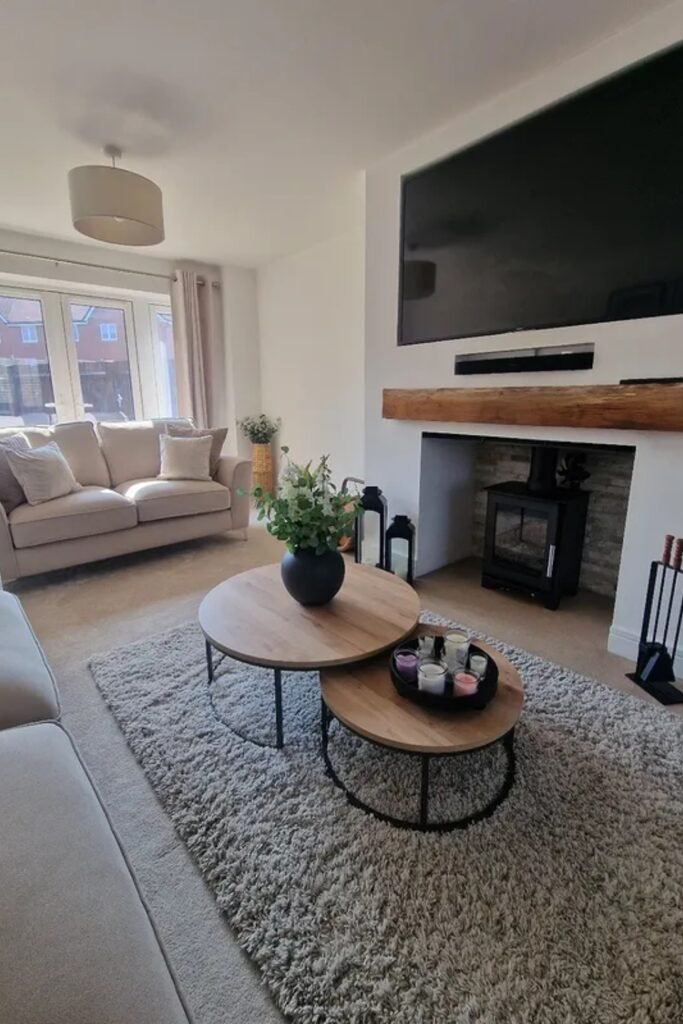
Center Visual Weight
When you give one wall a clear job, a narrow living room stops feeling scattered. This works best when your seating faces that wall, creating a cohesive and visually pleasing layout.
You can center the media unit and art perfectly to balance the room side to side instead of stretching it lengthwise.

Window-Wall Seating
When you place the sofa along the window wall, you turn a common fear into an advantage. This works best when your windows sit on the long side of a narrow room.
You can let daylight wash across the living room instead of blocking it, making the space feel wider.
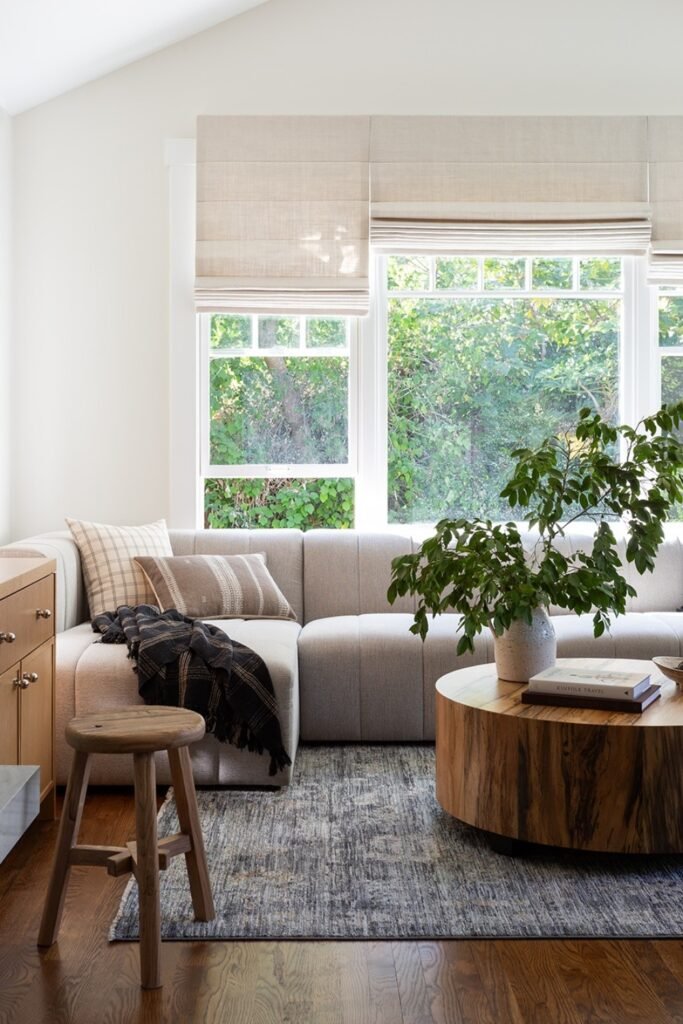
Create Seating Pocket
You can stop a narrow living room from feeling like a pass-through by creating a small seating pocket.
You can recreate it by keeping furniture compact, pulling it slightly off the wall, and letting the rug define the living room zone.
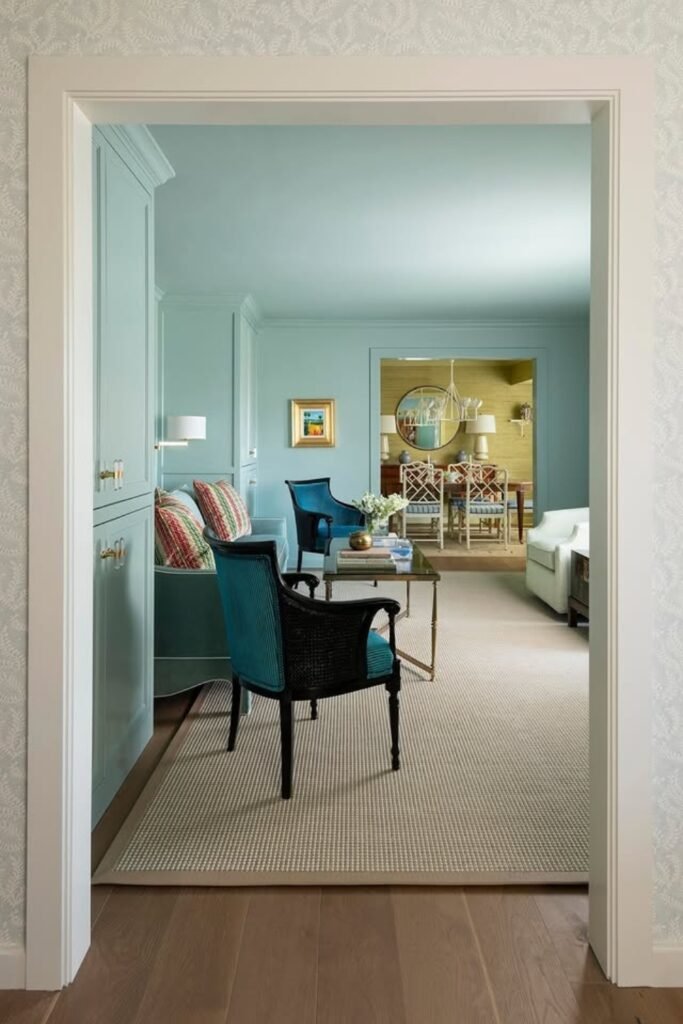
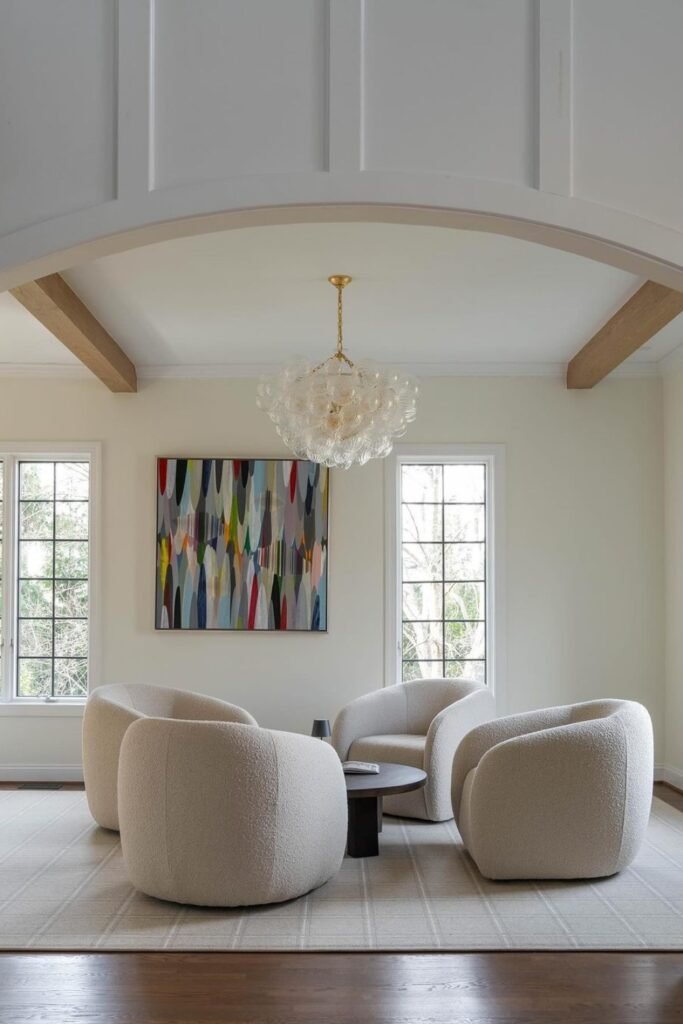
Round The Layout
When you use curved seating, a narrow living room softens instantly. This works best in rooms with an open entry or archway.
You can avoid straight lines that exaggerate length and pull the layout inward with rounded chairs, creating a natural conversation zone.
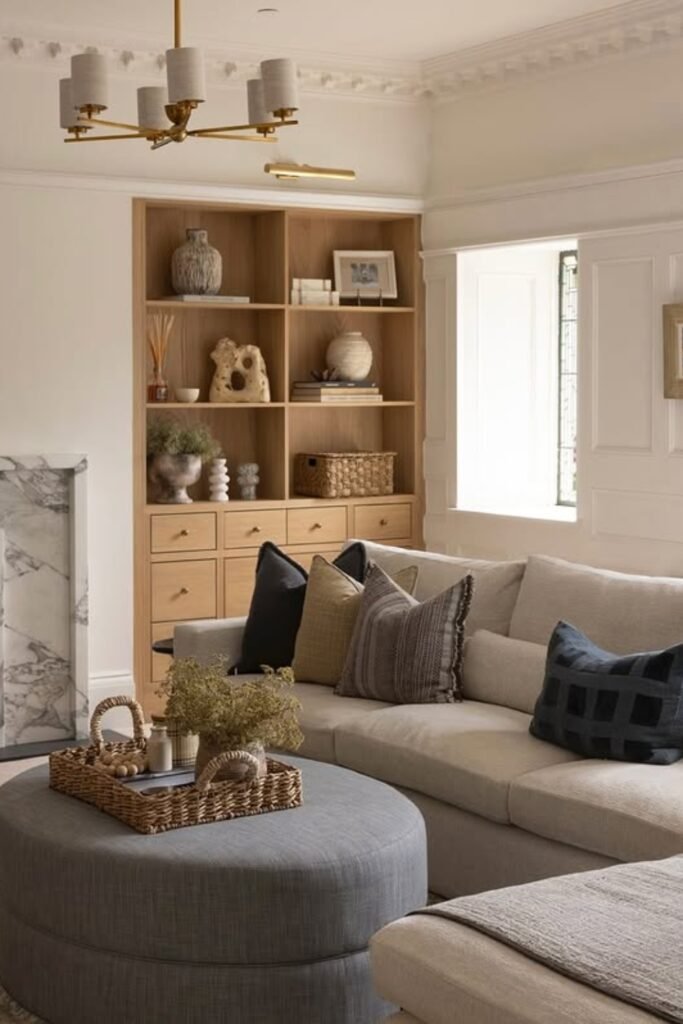
Build In Storage
You can solve clutter and wasted wall space at the same time with built-in shelves. This works best along a short wall or beside a fireplace.
By pushing storage into the wall, the seating area stays light and open instead of crowded with cabinets.
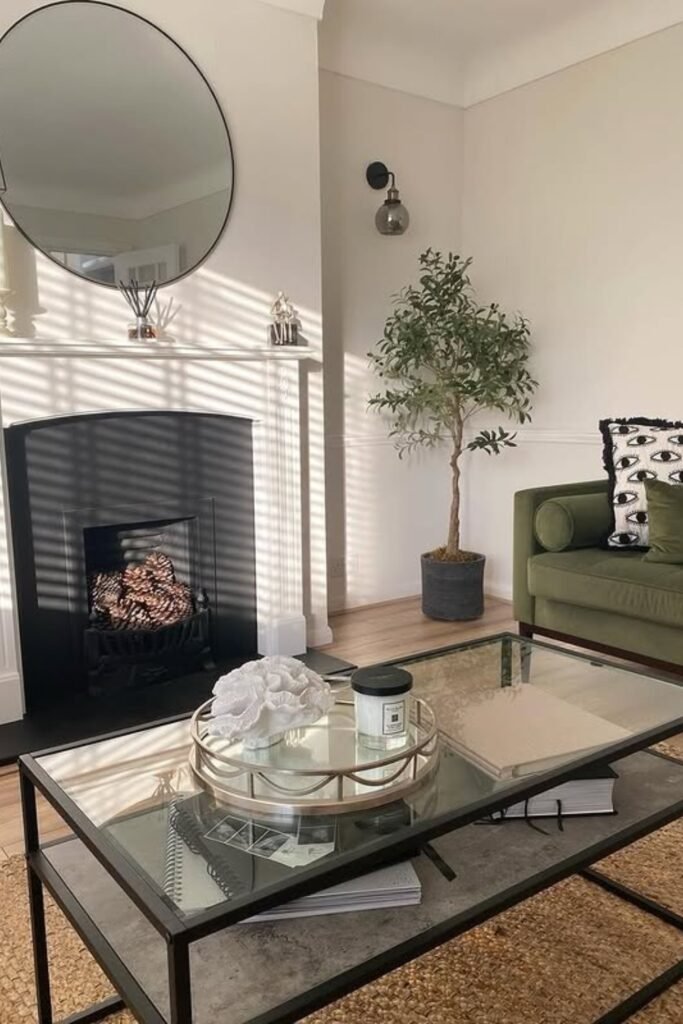
Lighten The Center
A narrow living room feels tighter when the middle gets visually heavy. You can keep the center open with a glass coffee table so light passes through instead of stopping dead.
You can recreate it by swapping solid tables for glass or slim metal pieces and keeping the center uncluttered.
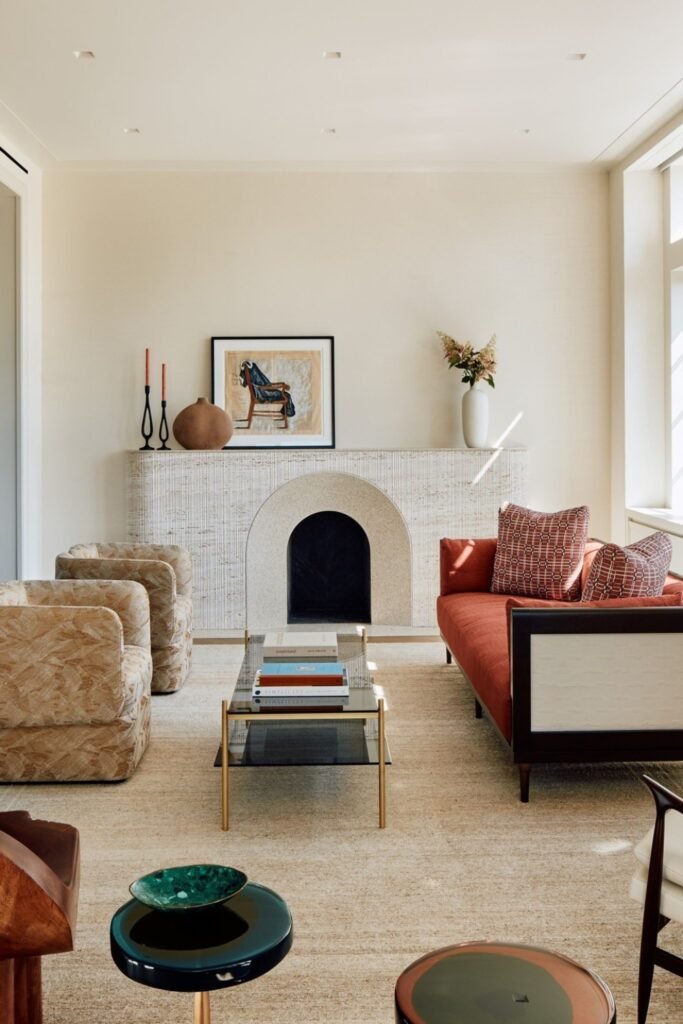
Short-Wall Focus
When you turn the short wall into the main anchor, a narrow living room stops stretching endlessly.
You can have seating face inward toward the fireplace instead of running lengthwise, which pulls the layout together.
Wrap Seating Around
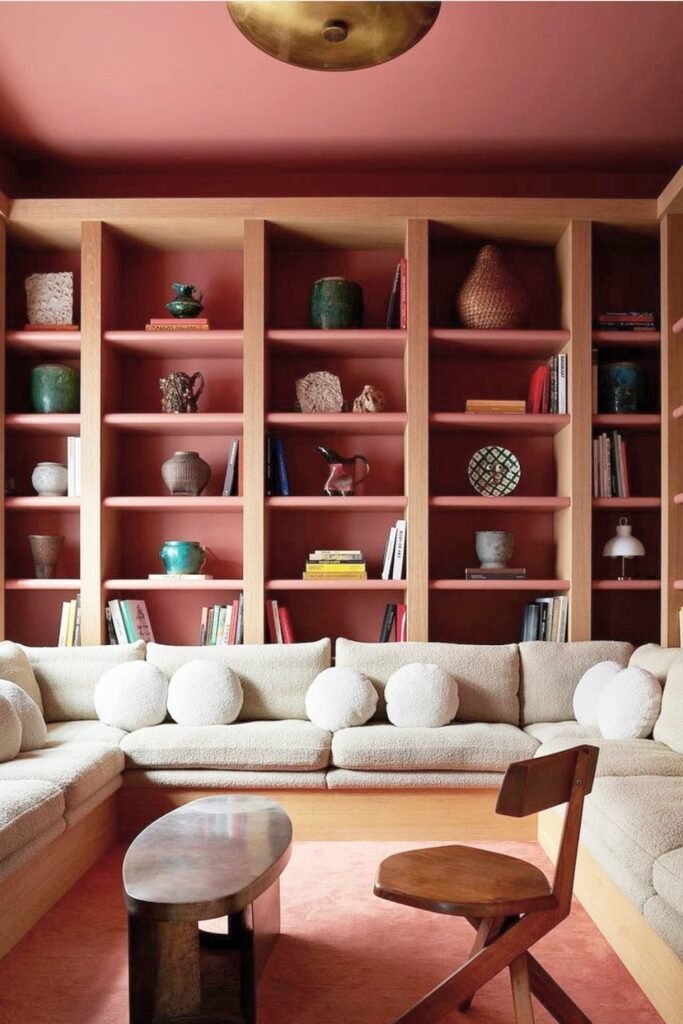
You can turn a narrow living room into a destination instead of a passage by wrapping seating along the walls.
A built-in sofa pulls people inward and makes the room feel intentional, not leftover space. This works best when one long wall can handle storage or shelving.
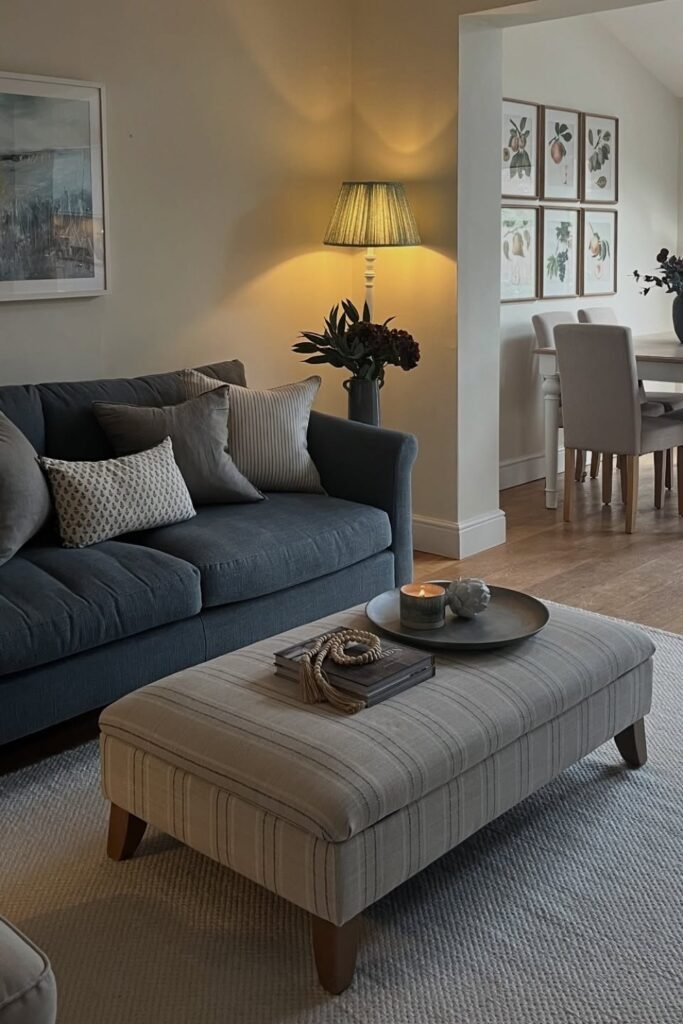
Let Sofa Lead
When a narrow living room opens into another space, you can let the sofa guide the flow.
You can recreate it by floating the sofa slightly forward and using an ottoman instead of a rigid coffee table to keep movement easy.
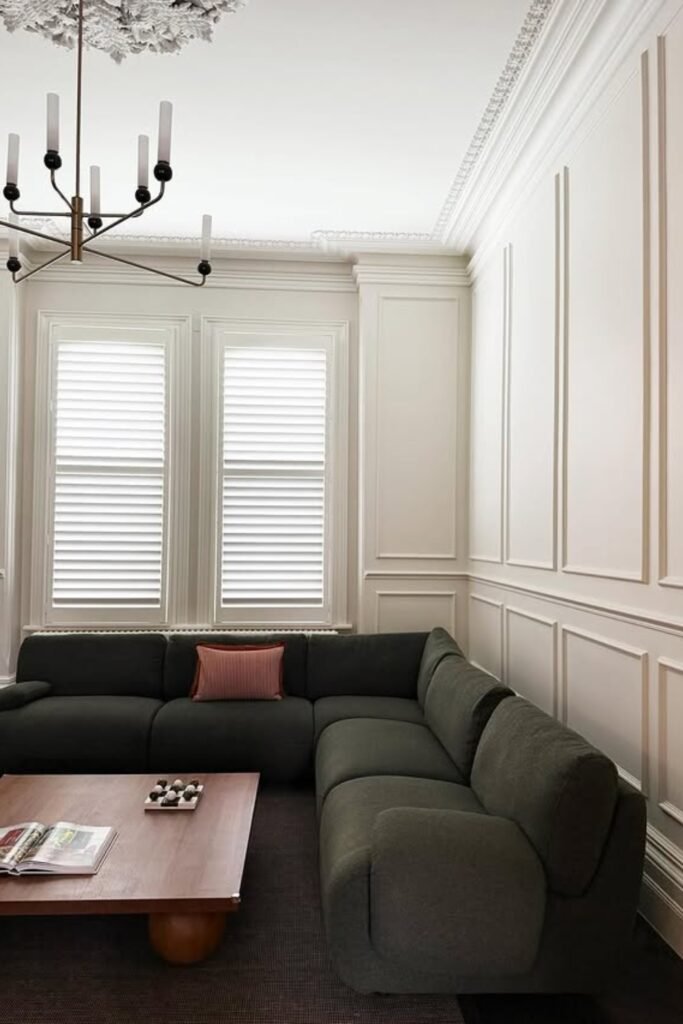
Use Wall Length
When a narrow living room has strong wall detailing, you can let the furniture follow it.
You can run the sectional along the longest wall keeps your layout clean and stops random gaps that make the room feel awkward.
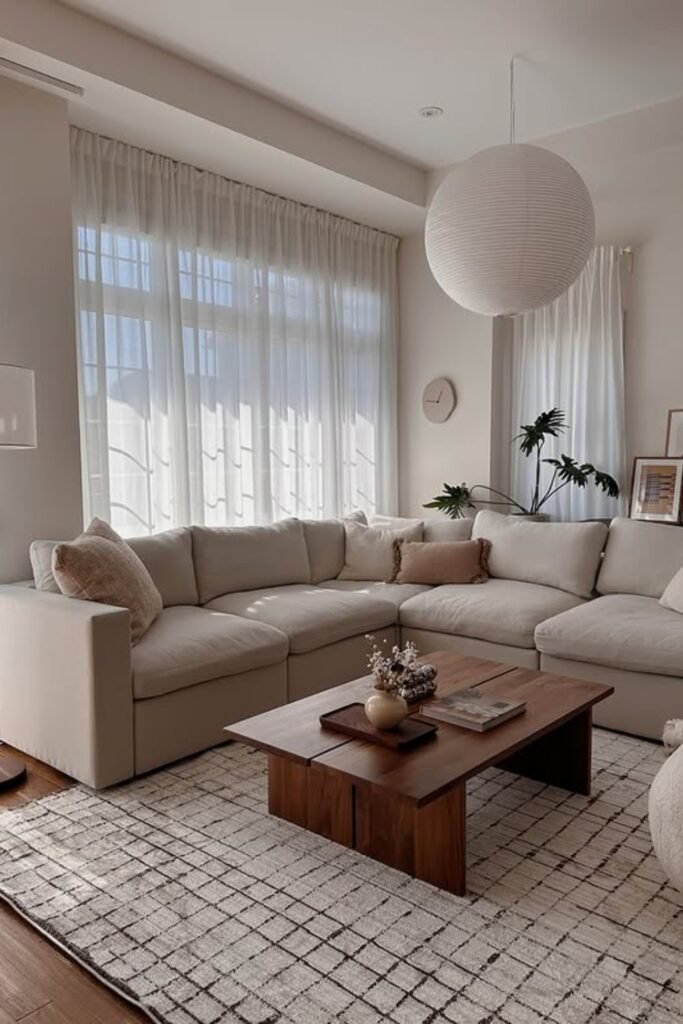
Soften With Curves
When you use a rounded sectional, it pulls your seating inward so the room feels gathered instead of stretched.
You can recreate it by choosing a curved or modular sofa, centering it on a rug, and keeping the rest of the layout simple so the shape does the work.
Angle The Seating
If you angle chairs instead of lining everything straight, you break the tunnel effect in a narrow living room.
When the seating turns slightly toward the fireplace, the layout softens and feels more relaxed.
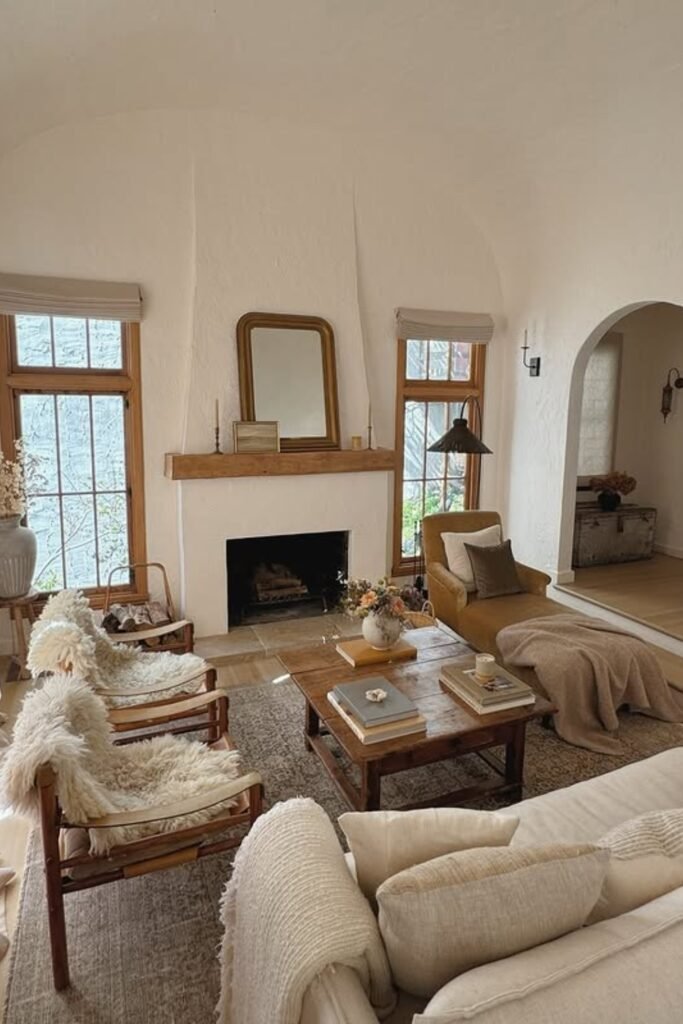
Frame The Center
When symmetry is applied, a narrow living room calms instantly. You can frame the fireplace with matching built-ins so the room feels balanced instead of stretched.
Your eye stays centered instead of pulled down the length of the space. This works best when the fireplace sits on a main wall.
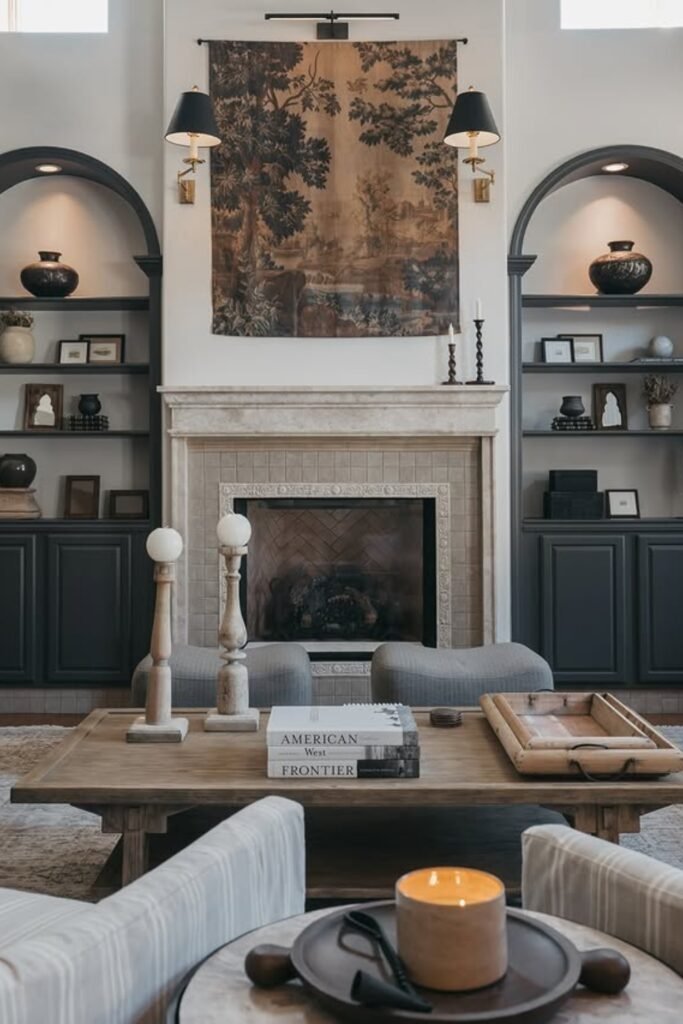
Center The Focus
A narrow living room feels calmer when everything points to one clear focal point.
You can place the TV and fireplace dead center so the seating naturally pulls inward instead of stretching down the room. That instantly shortens the space visually.
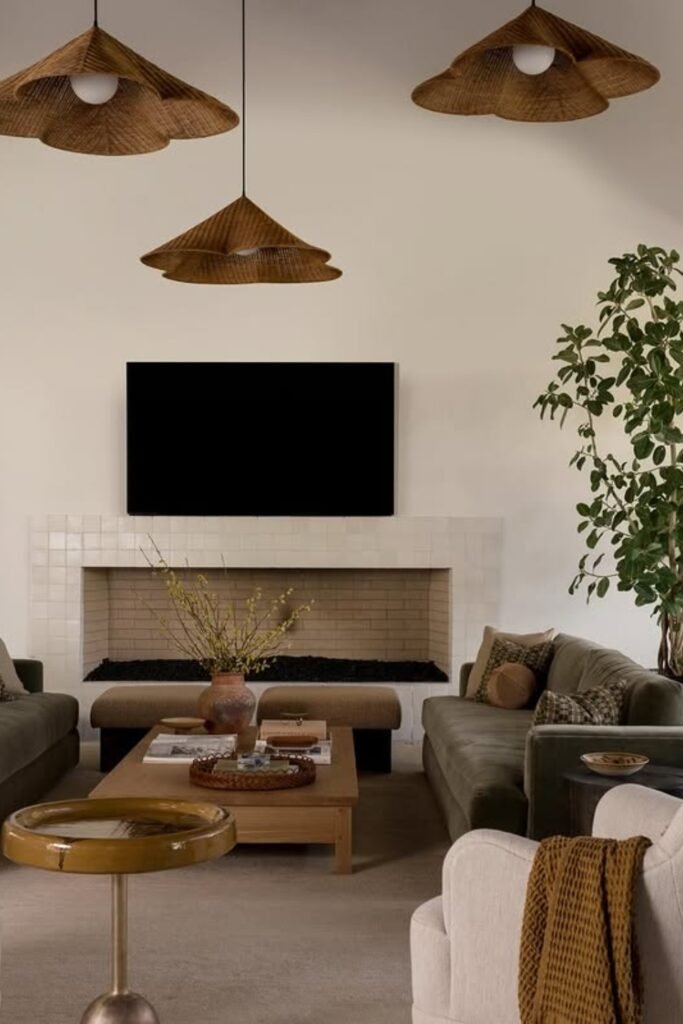
Pull Seating Inward
When a living room is long, pushing furniture to the edges only makes it feel longer.
You can move seating inward to form a clear conversation zone around the center. That shortens the space visually and makes it feel intentional.
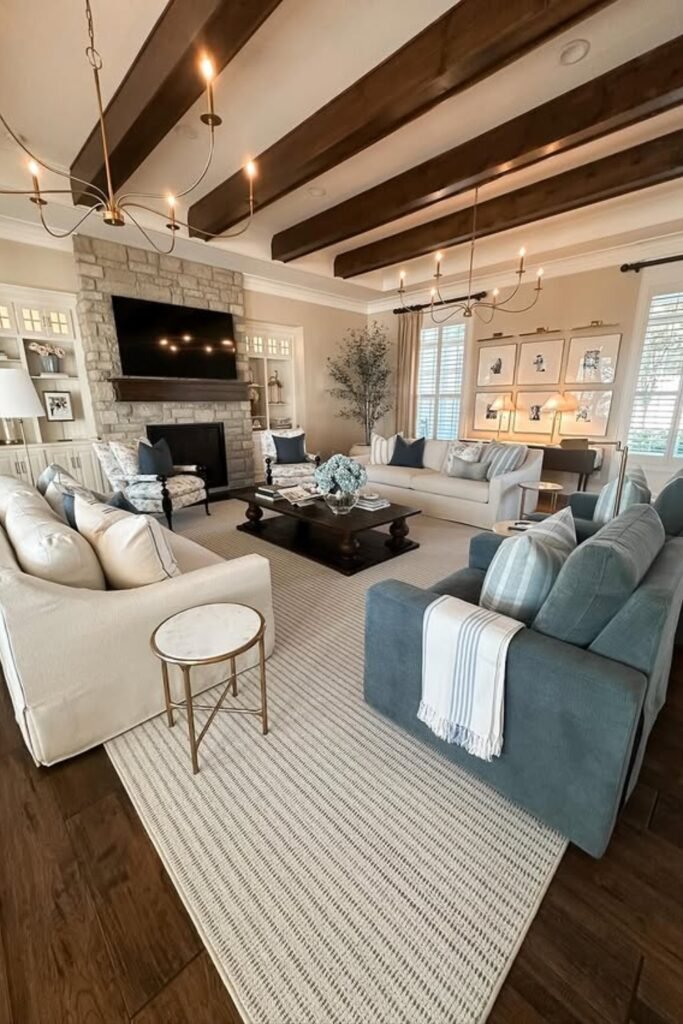
Ground With Rug
You can pull a narrow living room together faster than moving walls ever could by using a large rug. When the rug defines the seating zone, furniture stops drifting toward the edges.
You can recreate it by choosing a rug big enough to sit under all front legs and centering it under the main seating so everything feels connected.
Balance With Pairs
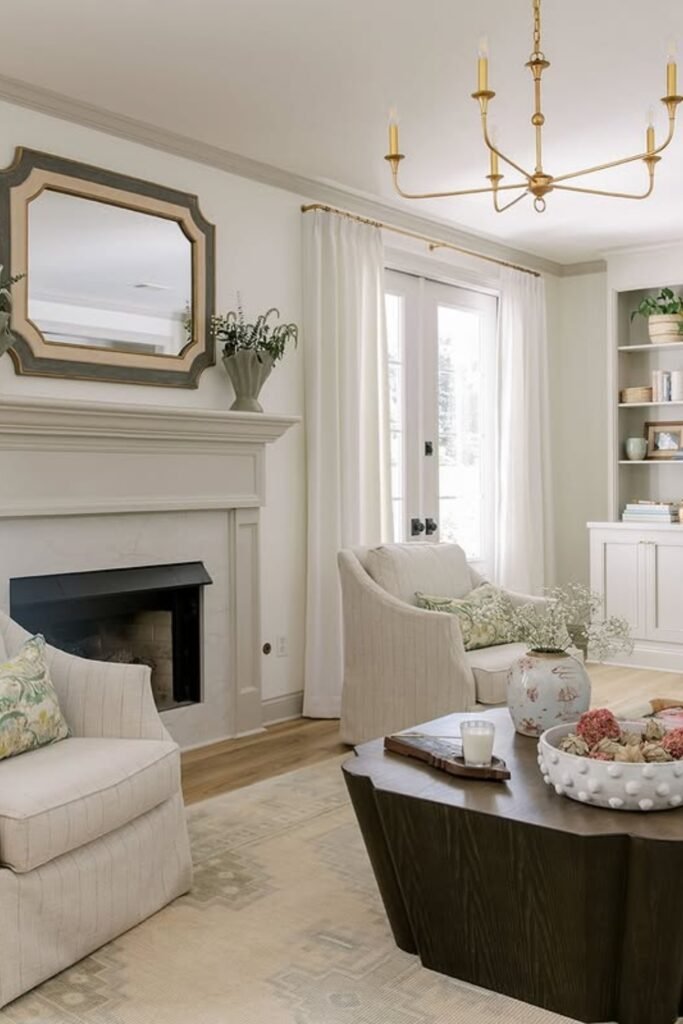
When you use pairs, a narrow living room stops feeling lopsided. The matching chairs on either side of the fireplace pull the layout inward and prevent everything from drifting to one wall.
You can recreate it by using two similar chairs, placing them symmetrically, and anchoring them with a single coffee table so the seating reads as one clear zone.
Backless Boundary
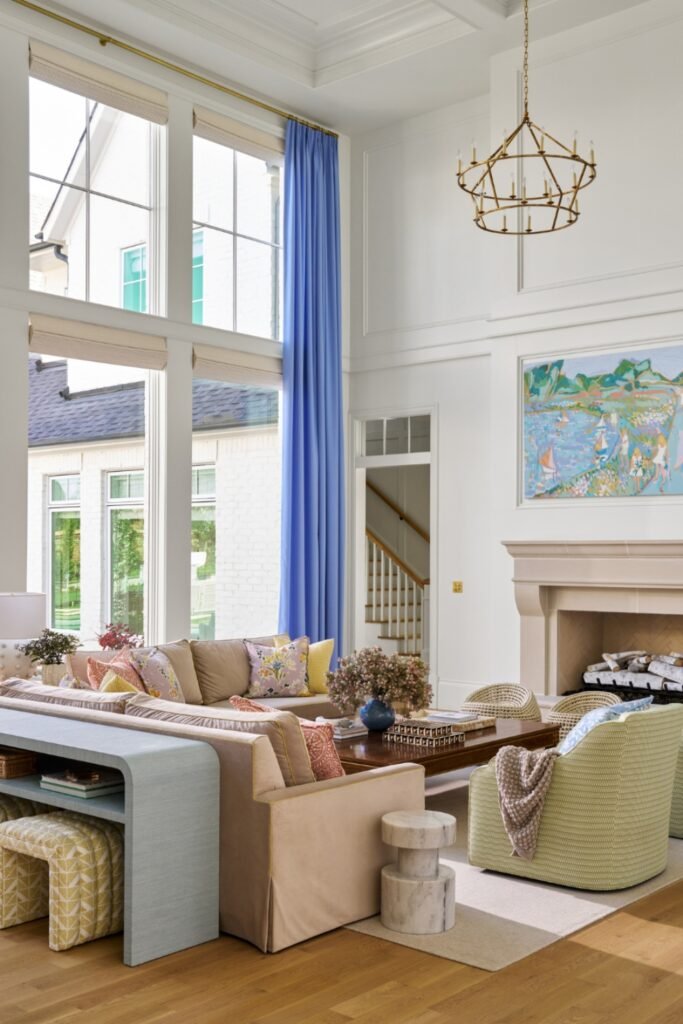
You can define the living room without closing it off by using a low, backless piece behind the sofa.
When a console marks the seating zone, it still lets light and views flow through. This works best in narrow rooms with tall windows.
FAQs
How do you make a narrow living room feel wider?
When you focus on breaking long visual lines, a narrow living room instantly feels wider.
You can keep one clear walkway, avoid pushing furniture along both long walls, and use a single, well-defined seating zone.
The low furniture, light colors, and pieces with visible legs also help your room feel open without changing the layout.
Can you use a sectional in a narrow living room?
You can use a sectional in a narrow living room, but only if it’s the right size and placed correctly.
A compact sectional works best when you tuck it into a corner or along one wall.
If the sectional blocks walking paths or forces your other furniture into the center, it’s too big for the space.
You may like to read!
