
22 Narrow Kitchen Layout Ideas for 2026


This article may contain affiliate links: read full affiliate disclosure.
If you feel like your kitchen is more of a tight hallway than a place where you can actually cook, you’re not alone.
You might bump into a cabinet every time you turn. You open the fridge and suddenly you’re blocking the whole walkway.
You try to clean, but your counters keep staying cluttered no matter what you do.
The thing is, it’s not that your kitchen is too small, it’s that you haven’t designed it for the space you actually have. You need to follow different rules for a narrow kitchen.
In this article, you’ll see how you can make your narrow kitchen work better for you, and then 22 ideas that you can try.
Let’s jump in!
How To Design A Narrow Kitchen?
When you’re designing a narrow kitchen, you need to plan smart so you can maximize space, improve flow, and stop it from feeling cramped.
You should start by picking an efficient layout, like a galley kitchen, where you can have cabinets and appliances along two parallel walls.
This way, you can reach everything easily while keeping your walkway clear.
If you have a bit more space, you might go for a single-wall layout so you can make your kitchen feel more open.
You can use light colors like white, cream, or soft gray so your kitchen feels larger and brighter.
You might add reflective surfaces, glossy finishes, or glass cabinet doors to boost the sense of space.
You should maximize vertical storage with tall cabinets that reach the ceiling, and you can try open shelving so your kitchen doesn’t feel heavy.
You can pick slim cabinets and compact appliances made for small spaces. Built-in or integrated appliances will help your kitchen stay streamlined.
You should also use smart storage solutions like pull-out drawers, corner organizers, and hidden compartments so you can keep your counters uncluttered.
Lighting is key, you must combine overhead lights with under-cabinet lighting so you can eliminate shadows and add depth.
If you want, you can even add a mirror backsplash or reflective tiles to make the space feel wider.
When you keep your design simple, organized, and cohesive, you will see your narrow kitchen become both functional and inviting.
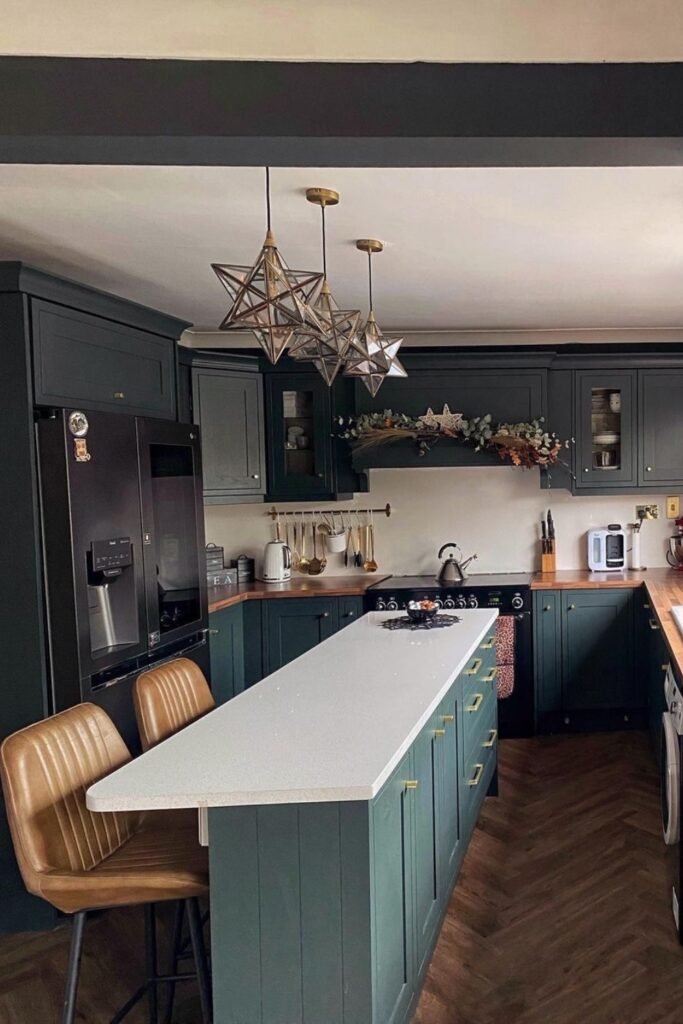
Narrow Island Balance
A narrow kitchen can still handle an island if you keep it slim and purposeful.
The island works as extra prep space and light seating without choking the walkway.
This setup fits best in long kitchens where traffic flows straight through.
To recreate it, you can stick to a shallow island depth, use built-in storage instead of bulky legs, and keep finishes cohesive so the island feels like part of the kitchen, not an obstacle.
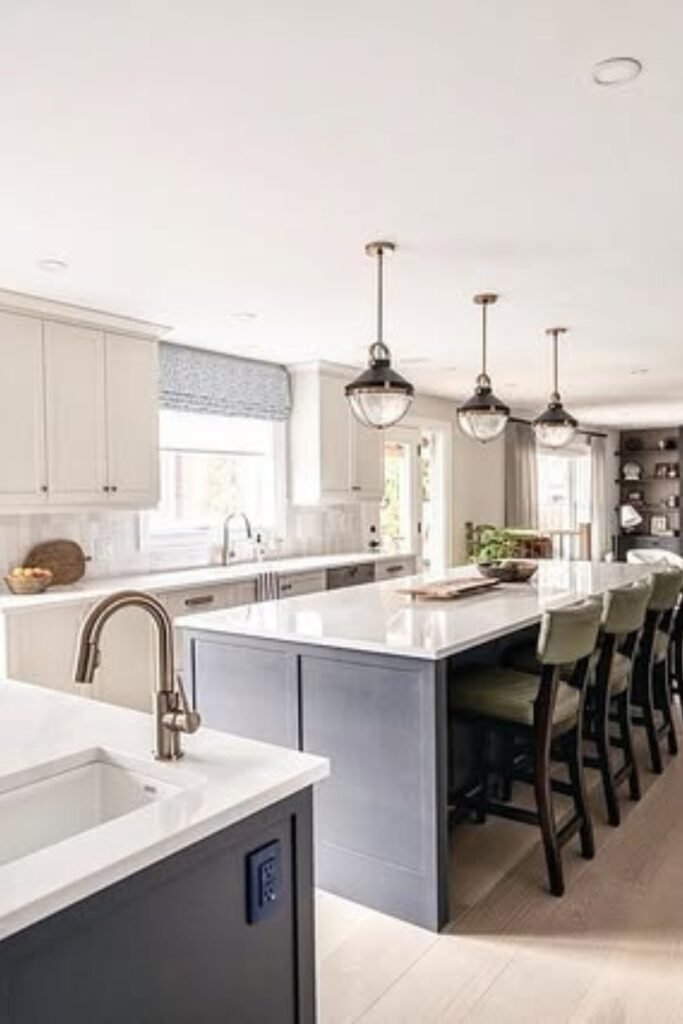
Long Run Layout
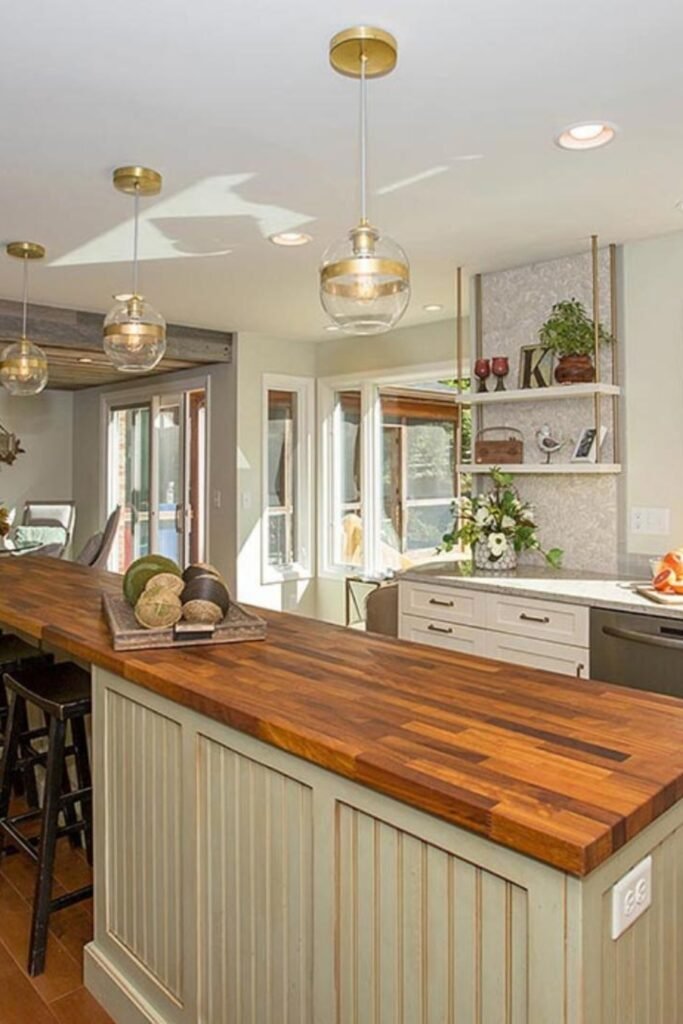
When your kitchen stretches more in length than width, a long island becomes your anchor.
It gives you continuous prep space, seating, and storage without breaking the flow.
This works best in open-plan homes where the kitchen connects to dining or living areas.
To recreate it, you can keep the island slim, align it with the main walkway, and use simple finishes so the length feels intentional, not overwhelming.
The space stays open, functional, and easy to move through.
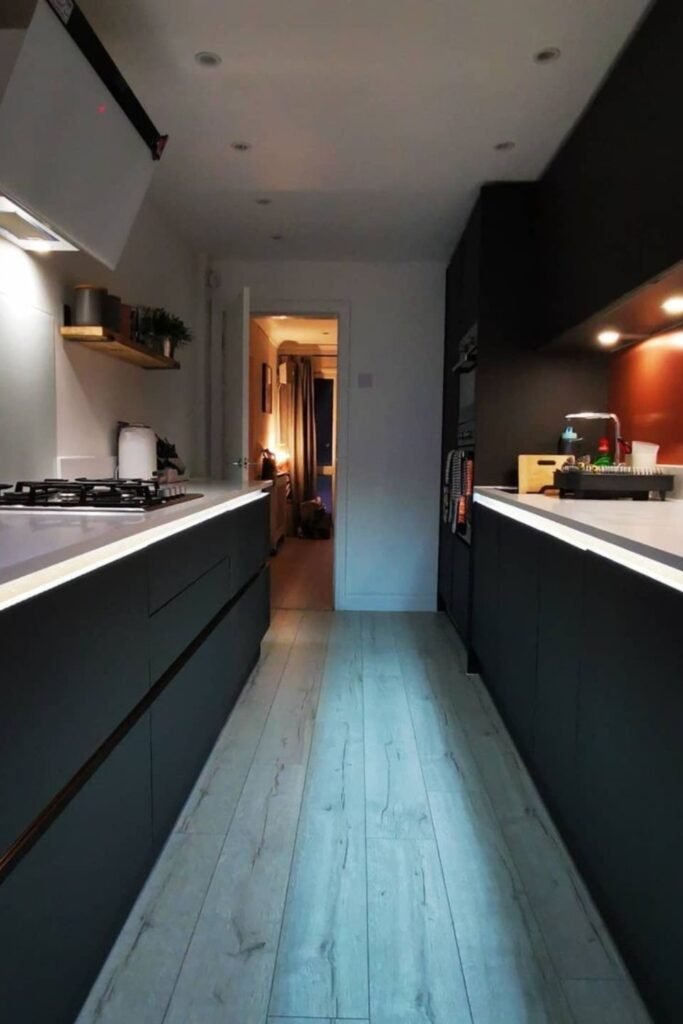
Galley Lighting Focus
Your lighting does the heavy lifting in a tight galley kitchen like this.
When cabinets run on both sides, shadows make the space feel narrower than it is.
The under-cabinet lighting keeps the counters bright and visually pushes the walls outward.
This works best in long, enclosed kitchens. You can add continuous LED strips under upper cabinets and keep overhead lights subtle so the walkway stays open and easy on the eyes.
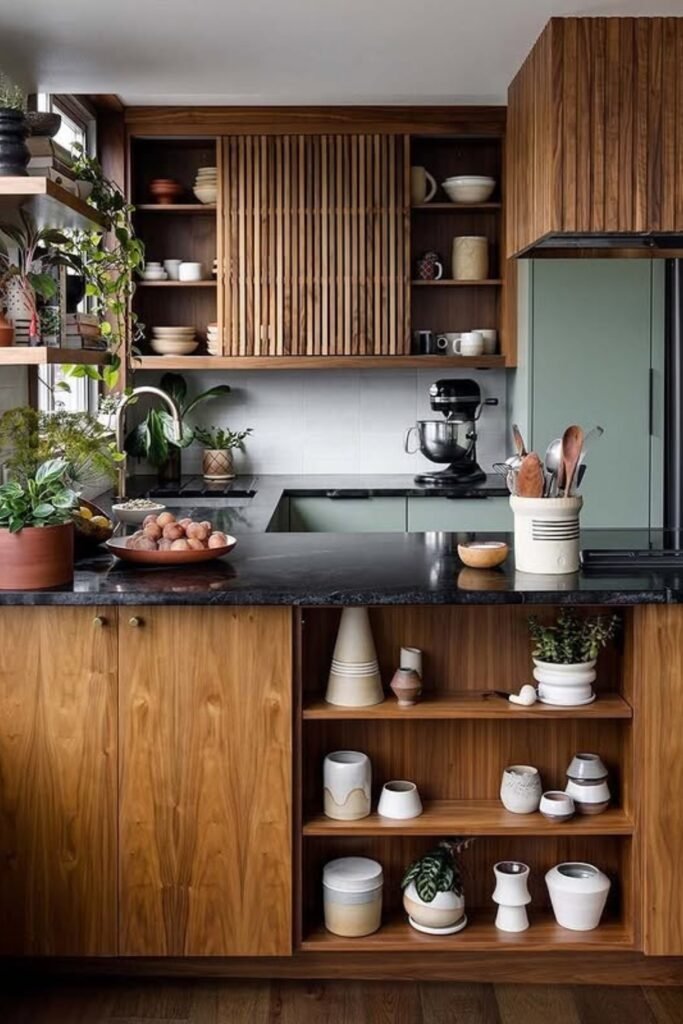
Warm Wood Flow
The warm wood tones can soften a narrow kitchen and stop it from feeling boxy.
A vertical wood cabinets and open shelving add texture without adding visual weight.
This approach works best in narrow kitchens that get natural light, where darker finishes might feel heavy.
You can use flat-front wooden cabinets, mix in a few open shelves, and keep the layout simple so the material becomes the feature, not the clutter.
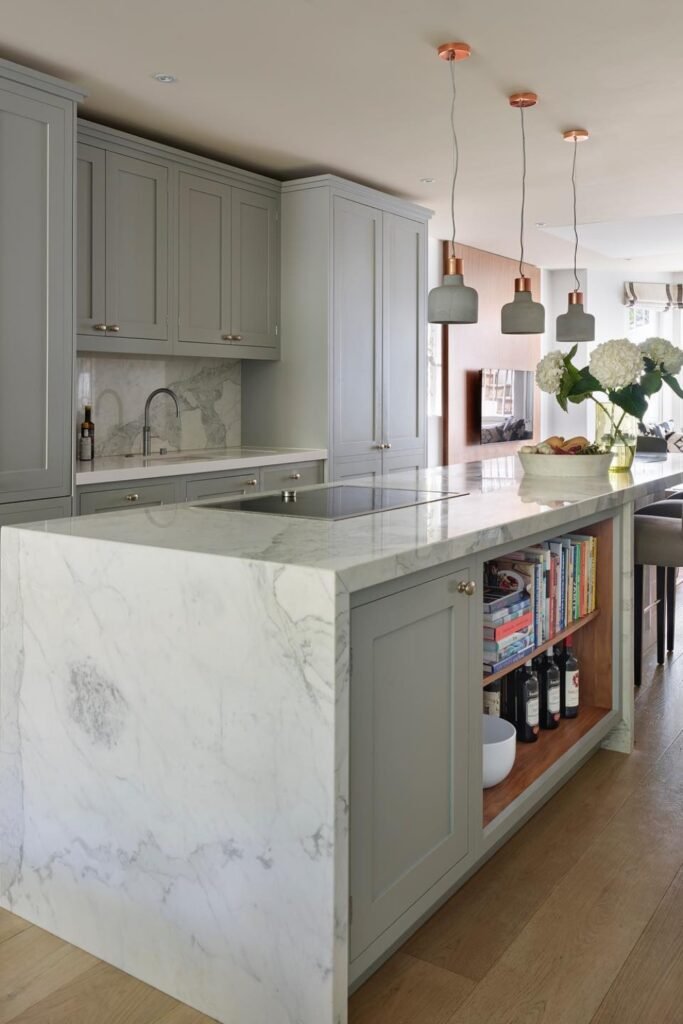
Storage-Backed Island
Your extra storage doesn’t have to live on the walls. In a narrow kitchen like this, the island pulls double duty by hiding books, bottles, and everyday items inside its base.
This works well in open-plan layouts where wall space is limited or already full.
You can design an island with open cubbies on the back side and keep the front clean, so you gain storage without making the kitchen feel heavier or more crowded.
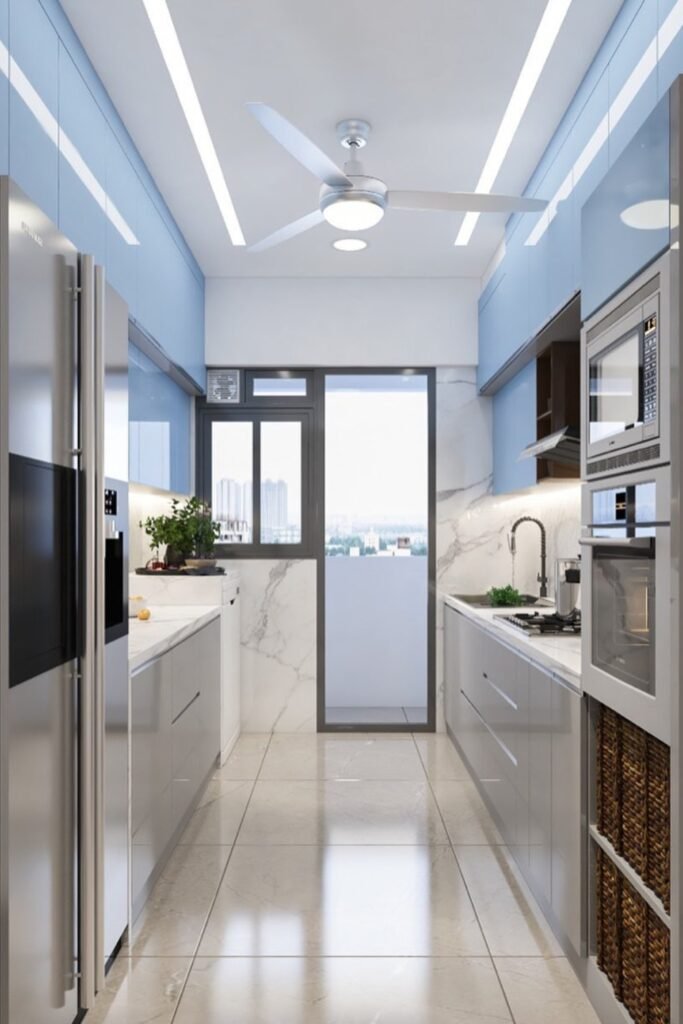
Glossy Galley Width
The glossy cabinets and polished floor bounce light back and forth, which opens up the space visually.
This approach works best in tight kitchens with limited width but decent length.
You can choose high-gloss cabinet fronts, keep colors light, and pair them with reflective flooring so the whole space feels brighter and less boxed in.
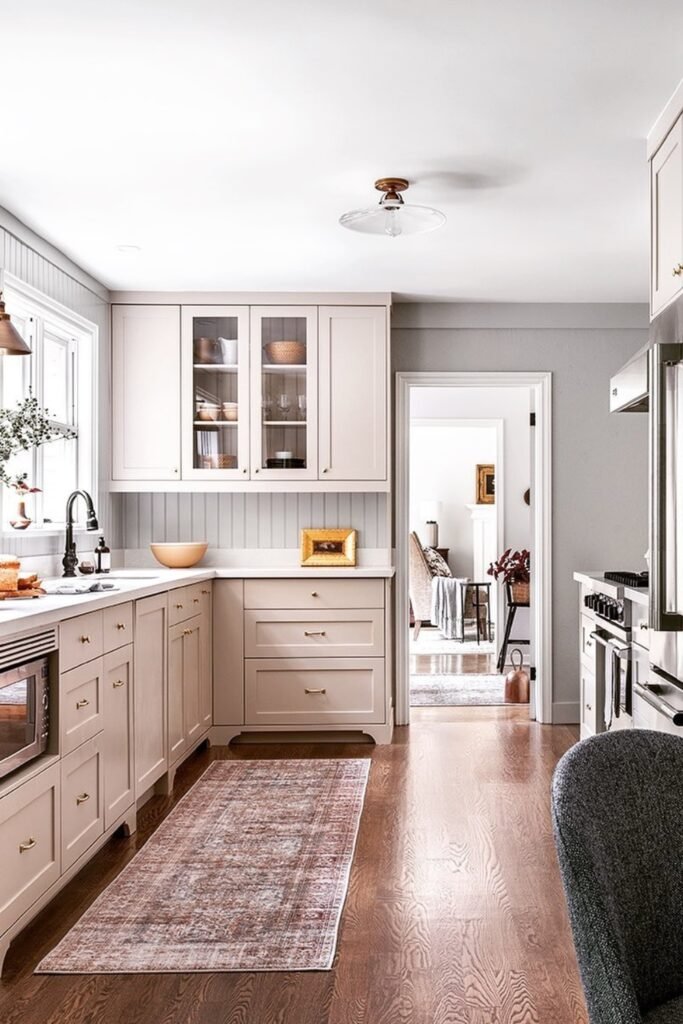
Soft Corner Layout
The corners usually become dead space in narrow kitchens, but this layout puts them to work.
The L-shape opens up the walkway while still giving you plenty of counter and storage space.
This works best when one side of the kitchen leads into another room, so the space doesn’t feel boxed in.
You can keep the corner clean, use light cabinet colors, and avoid heavy upper cabinets that crowd the turn.
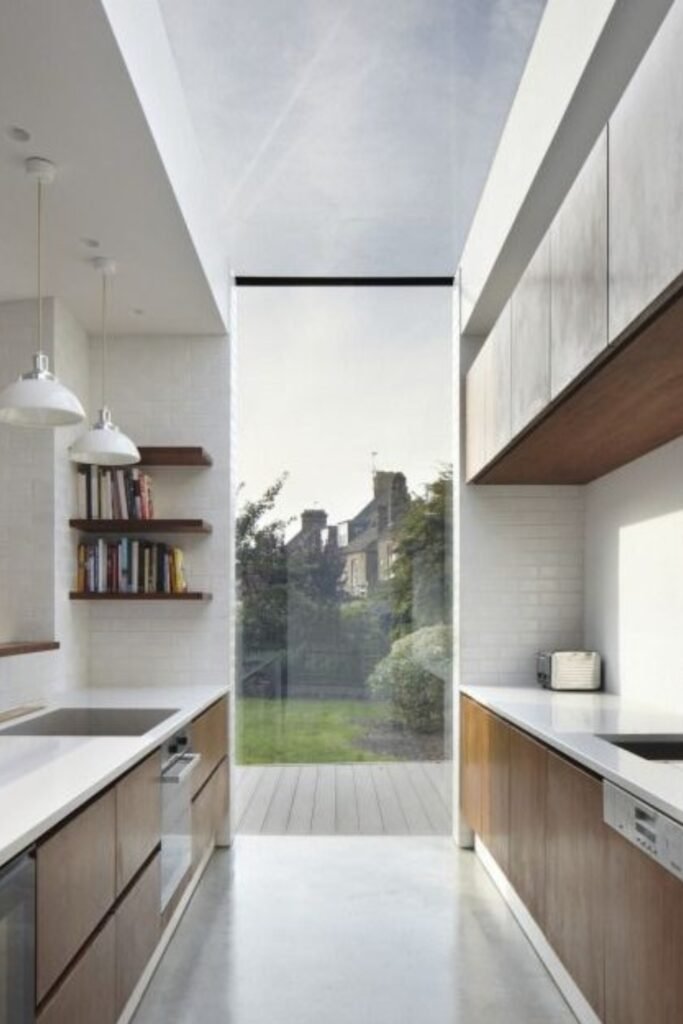
Light-Driven Galley
The natural light can completely change how a narrow kitchen feels, and this layout proves it.
The full-height glass wall pulls the outside in, making the space feel longer and less enclosed.
You can paired with a skylight, it removes the tunnel effect common in galley kitchens.
This works best in homes where one end of the kitchen can open outward.
You can prioritize large glazing, keep window treatments minimal, and use warm wood finishes to balance the light without making the space feel cold.
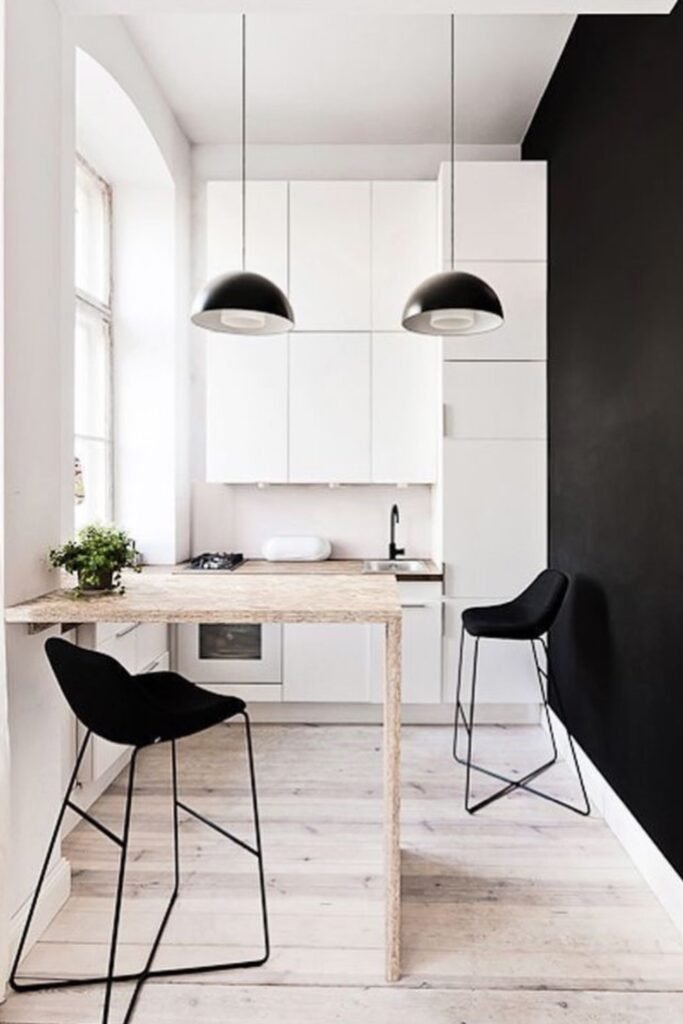
One-Wall Contrast
When width is tight, pushing everything onto one wall can free the space instantly.
This kitchen uses a clean one-wall layout paired with a bold black accent wall to keep the room feeling intentional, not empty.
It works best in narrow apartments where you still want seating without blocking movement.
You can keep cabinets flat and light-colored, add a slim table or ledge for dining, and use contrast on the opposite wall to give the kitchen depth instead of clutter.
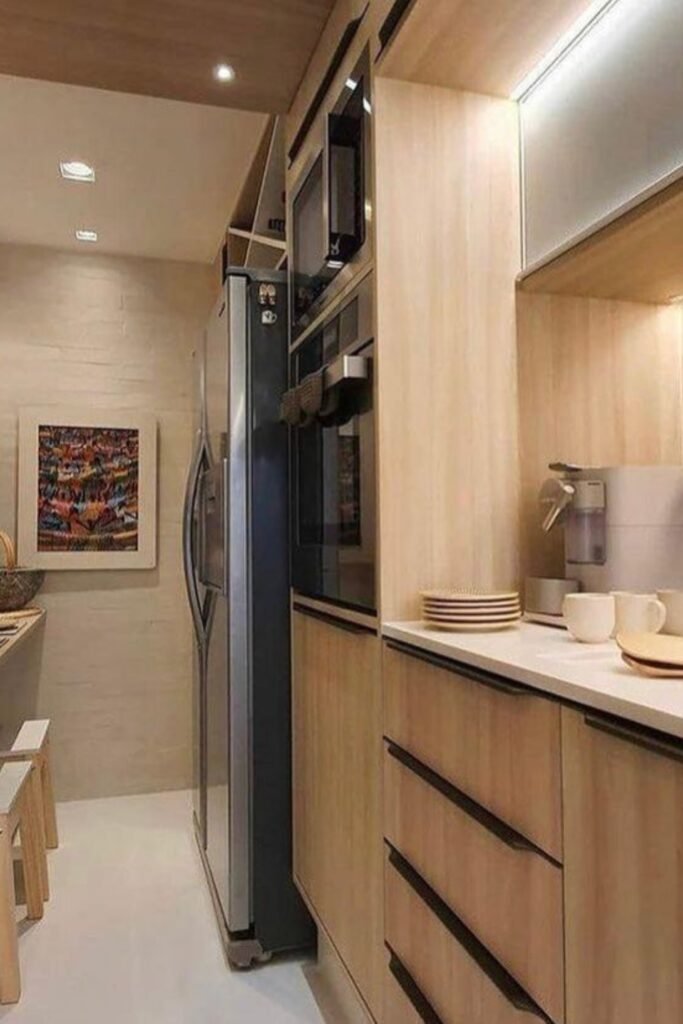
Vertical Storage Wall
When floor space is limited, height becomes your best asset.
This narrow kitchen uses a full-height storage wall to tuck appliances, cabinets, and drawers into one clean vertical zone.
It works especially well in apartment kitchens where width can’t be increased.
To recreate it, you can stack built-in appliances, extend cabinets to the ceiling, and keep finishes light or wood-toned so the wall feels streamlined instead of bulky.
You gain serious storage without stealing precious walking space.
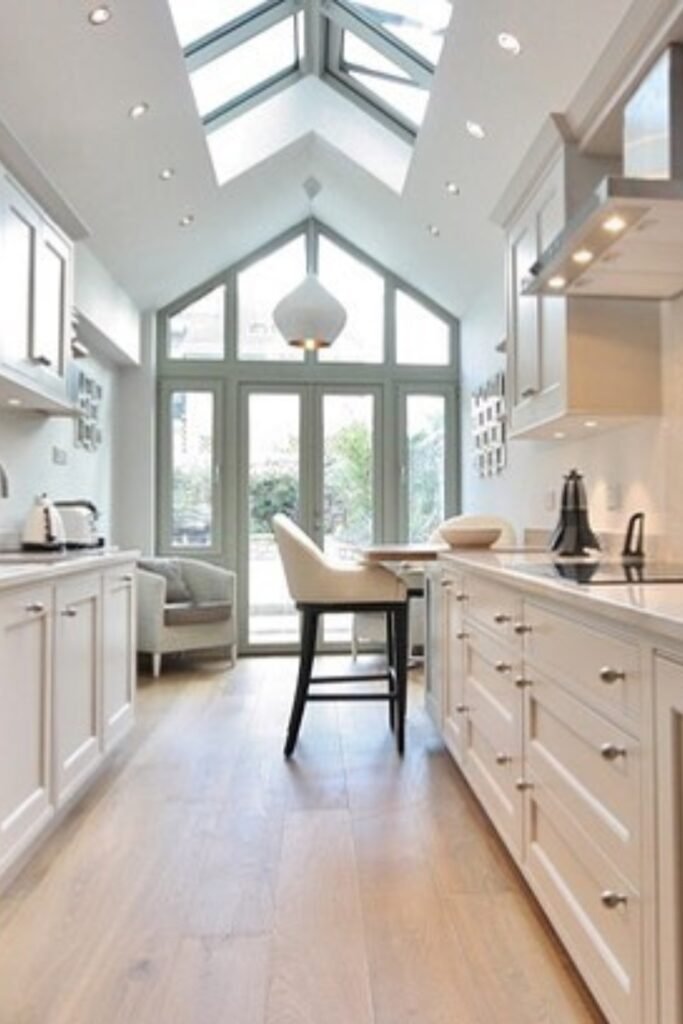
Skylight Length Boost
A narrow kitchen instantly feels larger when light comes from above instead of just the sides.
The skylight here stretches the space visually and removes that boxed-in feeling long kitchens often have.
This works best in homes where extending windows isn’t possible but roof access is.
You can add a linear skylight or roof window, keep cabinets light in color, and use simple finishes so the natural light becomes the main feature, not the cabinetry.
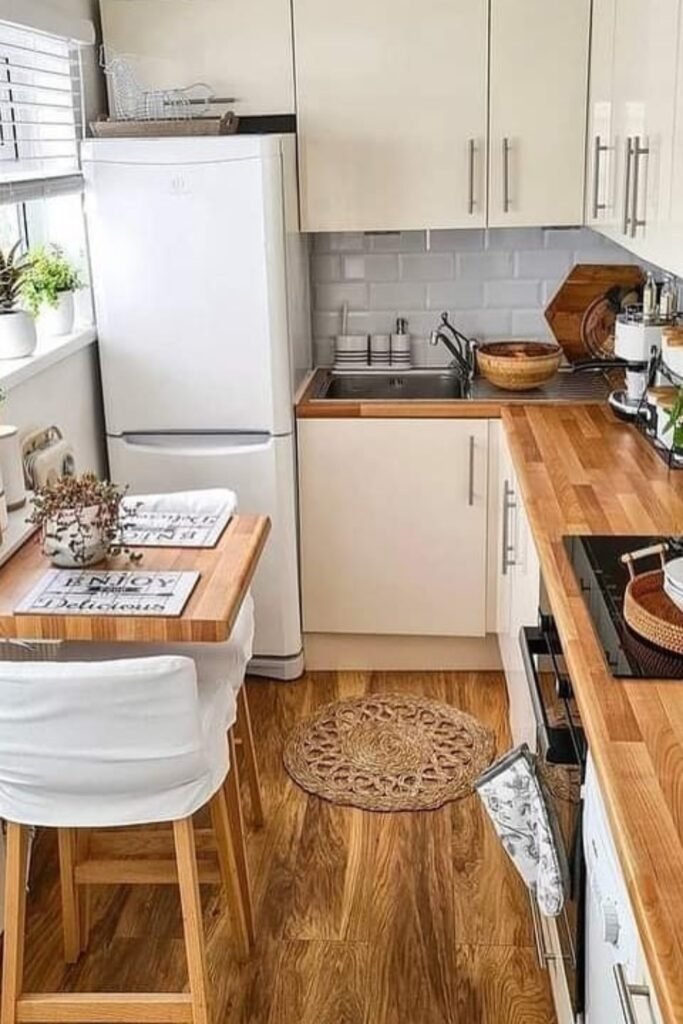
Compact Dining Nook
When your kitchen is narrow, carving out a small eating spot can feel impossible, but this setup proves it can work.
The slim table doubles as prep space and casual dining without blocking the main walkway.
This idea works best in apartment kitchens where every surface needs more than one job.
You can use a shallow countertop or fold-down table, pair it with light cabinetry, and keep seating minimal so the space stays open and easy to move through.
Symmetrical Galley Calm
The balance is what makes this narrow kitchen feel peaceful instead of tight.
You can match cabinets on both sides keep the space visually steady, while the centered window pulls your eye forward and opens everything up.
This works best in classic or older homes with a strong end wall.
You can keep both sides visually similar, use light cabinetry, and let one focal point like a window or statement floor, carry the character instead of adding clutter.

Island Flow Control
A long, narrow kitchen works best when the island guides movement instead of stopping it.
The island sits perfectly centered, creating clear walkways on both sides while still adding prep space and storage.
This layout is ideal for open-plan homes where the kitchen connects to dining areas.
You can keep the island slim, avoid oversized seating, and align it with the room’s length so people naturally move around it without congestion.
Gloss Meets Length
A narrow kitchen feels calmer when the surfaces do some of the work for you.
The glossy white cabinets reflect light from the large doors, while the long island anchors the space without crowding it.
This setup works best in kitchens that open to the outside or another room.
You can use high-gloss cabinetry, keep the island slim, and let one strong light source stretch the space visually from end to end.

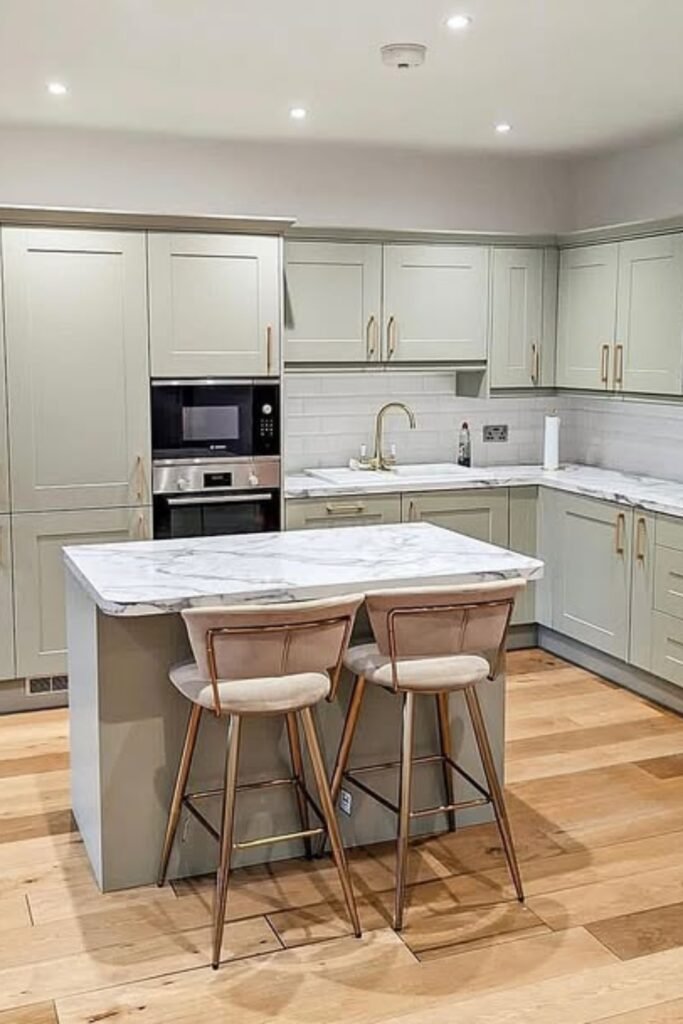
Soft U-Shape Flow
A narrow kitchen can still feel generous when the layout wraps instead of stretches.
This soft U-shape pulls storage and appliances around the perimeter, keeping everything within easy reach while leaving the center open for a slim island.
It works best in kitchens that are narrow but not too short, where a straight galley would feel restrictive.
You can keep the island compact, use light cabinet colors, and avoid heavy uppers so the space stays open, balanced, and easy to move through.
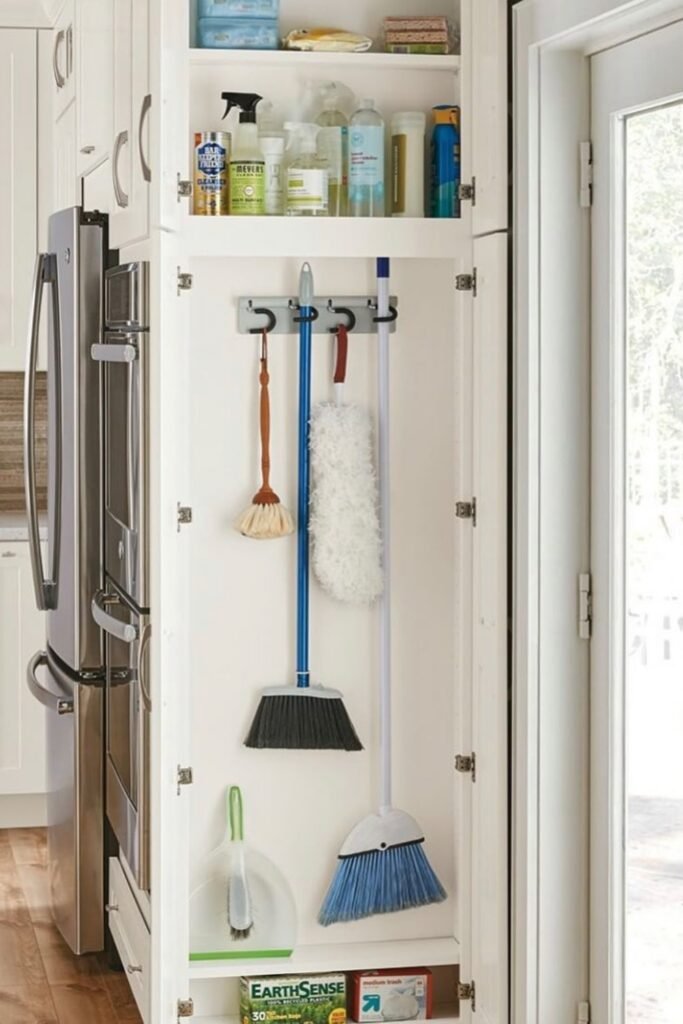
Hidden Utility Storage
A narrow kitchen quickly feels cluttered when everyday tools don’t have a proper home.
This tall pull-out cabinet solves that by hiding cleaning supplies vertically, right where you need them but never see them.
It works best in kitchens with tight walkways where floor storage isn’t an option.
You can convert a slim pantry or unused cabinet into a utility zone with hooks, shallow shelves, and door-mounted storage.
You keep the kitchen clean, functional, and visually calm without sacrificing space.
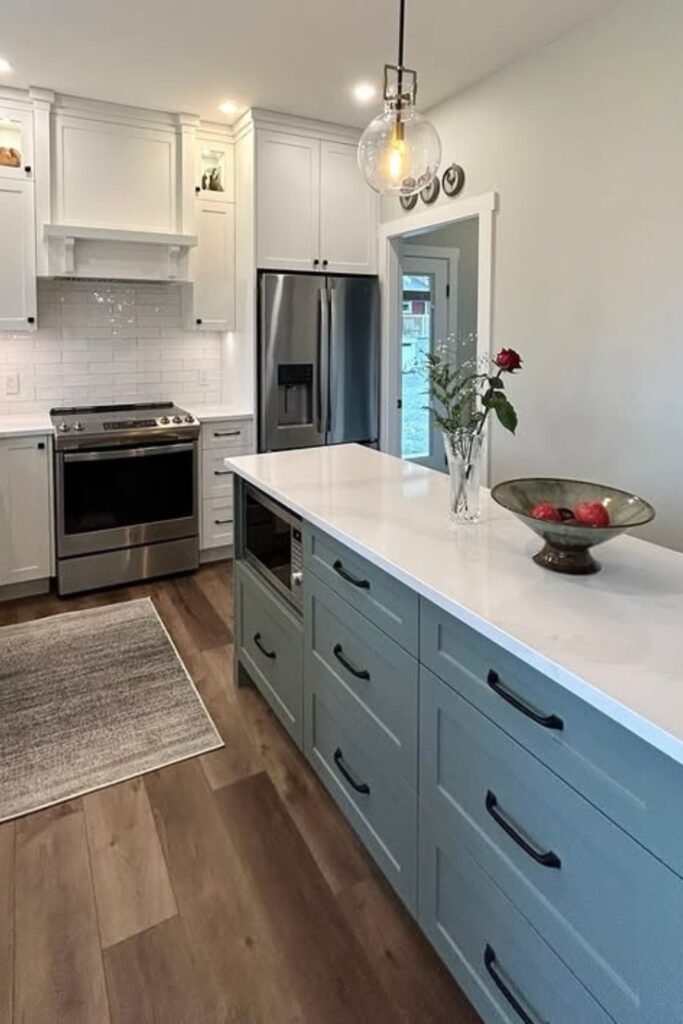
Slim Island Anchor
A narrow kitchen feels easier to use when the island stays purposeful instead of oversized.
The island adds prep space, storage, and a visual anchor without interrupting the main walkway.
This works best in long kitchens where traffic moves straight through from one end to the other.
You can keep the island narrow, skip bulky seating on all sides, and use drawers instead of cabinets so everything stays accessible without forcing you to step back constantly.
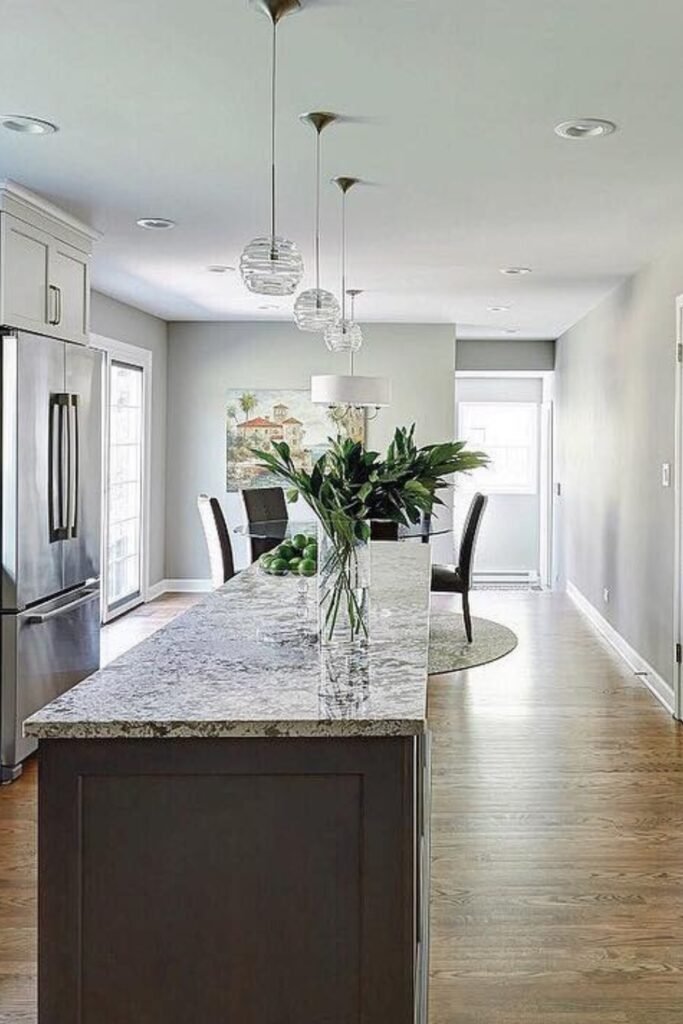
Extended Island Line
A long island works in a narrow kitchen when it replaces clutter instead of adding to it.
The island stretches the full length of the space, acting as prep zone, dining spot, and visual divider without breaking the flow.
This setup suits open kitchens that connect to dining areas or patios.
You can keep the island slim, use a single continuous countertop, and limit upper cabinets nearby so the length feels intentional and the space stays open rather than crowded.
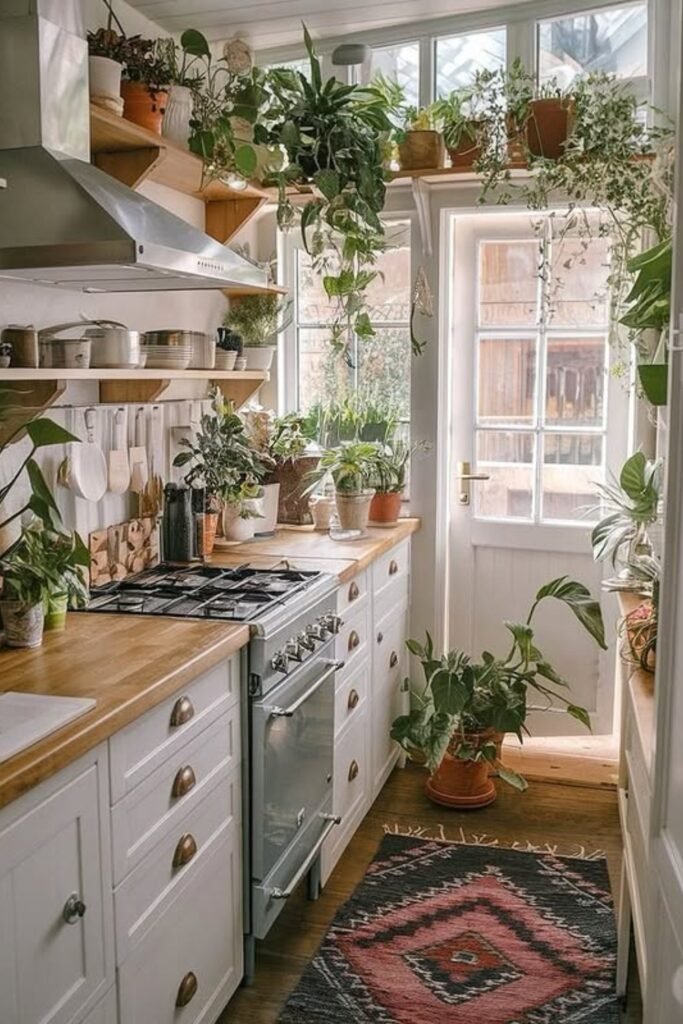
Green Galley Life
The plants do more than decorate a narrow kitchen, they soften the edges and make the space feel lived-in instead of tight.
The greenery runs along open shelves, countertops, and the window line, pulling your eye upward and forward.
This works best in narrow kitchens with good natural light and simple cabinetry.
You can keep cabinets light, use open shelves sparingly, and cluster plants vertically so you add warmth and depth without eating into precious counter space.
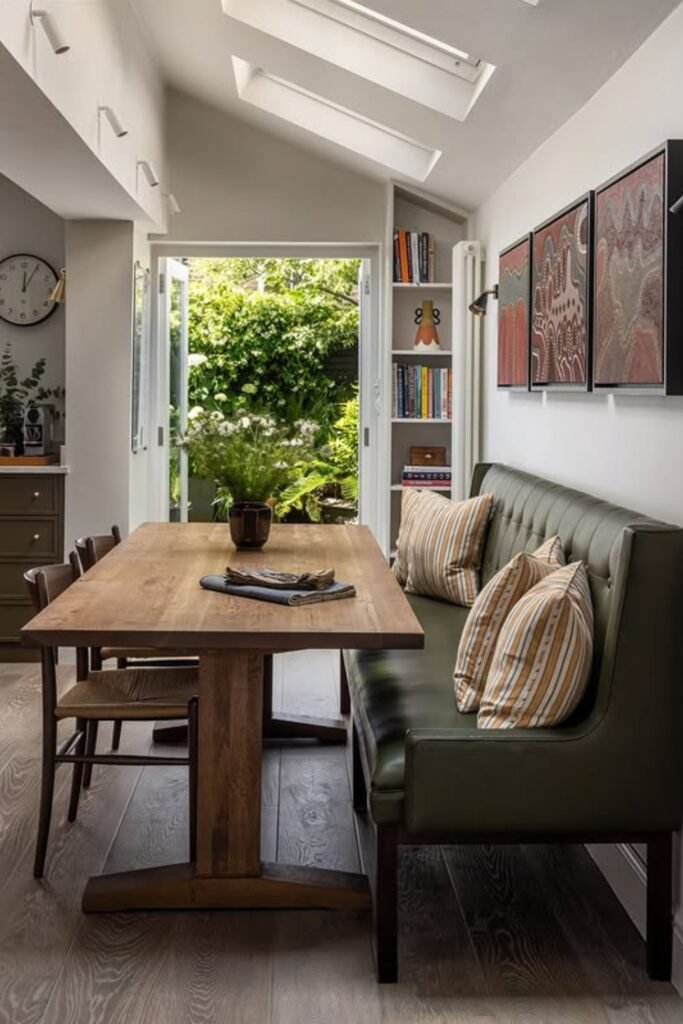
Built-In Dining Stretch
A narrow kitchen doesn’t have to stop at cooking. This built-in bench turns the end of the kitchen into a natural dining zone without widening the room.
By pushing seating against the wall, you keep the walkway clear while still gaining a full table setup.
This works best in long kitchens that flow into a garden or patio.
You can use a wall-hugging bench, slim chairs on the opposite side, and let overhead light pull the space forward instead of inward.
Glass Extension Effect
A narrow kitchen stops feeling narrow the moment you let light travel all the way through it.
The glass roof and full-height doors visually stretch the space from front to back, making the kitchen feel connected to the outdoors.
This approach works best in long, narrow homes where extensions are possible.
You can prioritize glass over solid walls, keep cabinetry minimal and light-colored, and let the floor run continuously so the eye reads the kitchen as one long, open zone rather than a tight corridor.

FAQs
Can a narrow kitchen still have an island?
You can add an island, but only if you size it correctly. You must put clear walkways first, because in a narrow kitchen, space is everything.
If you can keep enough room on both sides, a slim island will give you extra prep space and storage without making you feel stuck while you move around.
What colors work best in a narrow kitchen?
You should stick to light and neutral colors because they can reflect light and make your kitchen feel wider.
You might choose whites, soft greys, or warm wood tones so you can open up your space and stop it from feeling closed in or cramped.
You may like to read!
