
26 Moody Living Room Ideas for 2026

This article may contain affiliate links: read full affiliate disclosure.
You save moody living room photos because they look warm, deep, and cozy but when you imagine doing the same in your own home, it feels risky.
What if it looks dark? What if the room feels smaller or depressing? Most people get stuck right there.
The truth is, moody living rooms only fail when you copy the look without understanding why it works.
In this article, I will break it down in simple terms so you know exactly what to do, what to avoid, and how to create a moody living room that actually feels comfortable to live in.
What Is A Moody Living Room?
A moody living room isn’t just a dark room. It’s a space that feels calm, warm, and intentional.
You get that mood by using deeper colors, softer lighting, and enough contrast so the room doesn’t feel heavy. When everything is bright and evenly lit, a room feels flat.
When you control the light and add depth through color and texture, the space feels more relaxed and cozy.
A good moody living room should feel inviting at night, not cold or dramatic for the sake of it.
How To Make A Living Room More Moody?
You can start by fixing the lighting before you even think about the paint. If your room is lit by just one bright ceiling light, you’re never going to get that moody vibe you want.
You can add table lamps, floor lamps, or wall lights to create softer pockets of light that actually make the room feel alive.
Then, you can bring in deeper colors through paint, curtains, rugs, or furniture.
Dark colors add depth, but you have to balance them with lighter pieces and textures, or you’ll end up feeling boxed in.
If you want that moody, cozy feel, you have to control the light, you can’t just remove it.
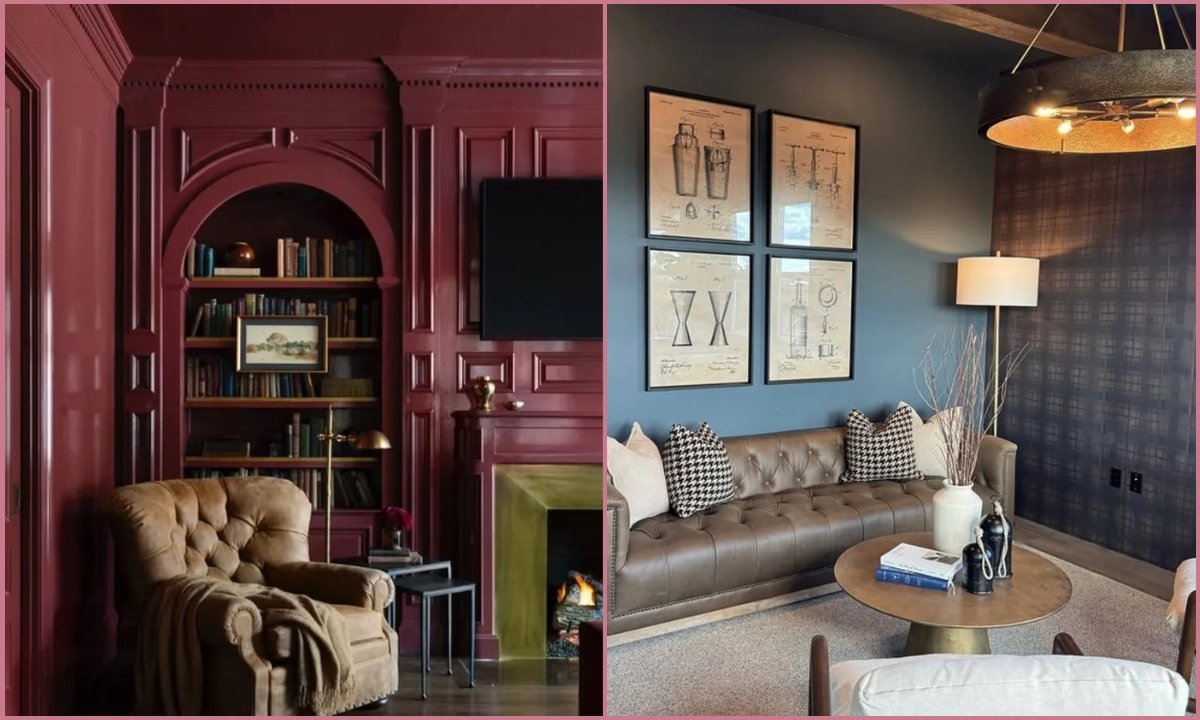
Texture adds depth
You can make the mood work by balancing smooth paint with patterned wallpaper, leather seating, and warm wood overhead.
You can use one soft surface, one structured piece, and one warm material so your room feels layered, not heavy.

Commit to color
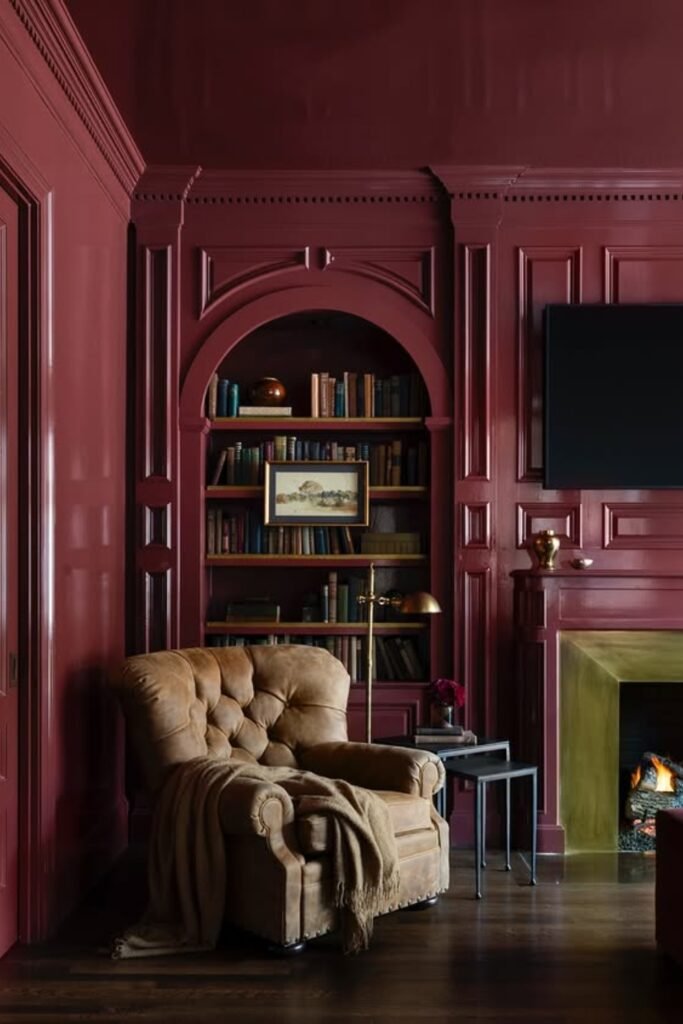
This living room works because it doesn’t hesitate. You can wrap walls, trim, and built-ins in one deep shade so the space feels intentional, not busy.
If you want a strong moody look, you should stop mixing too many wall colors. You’ll see how this approach makes your living room cozy and enclosed.
Zones change everything
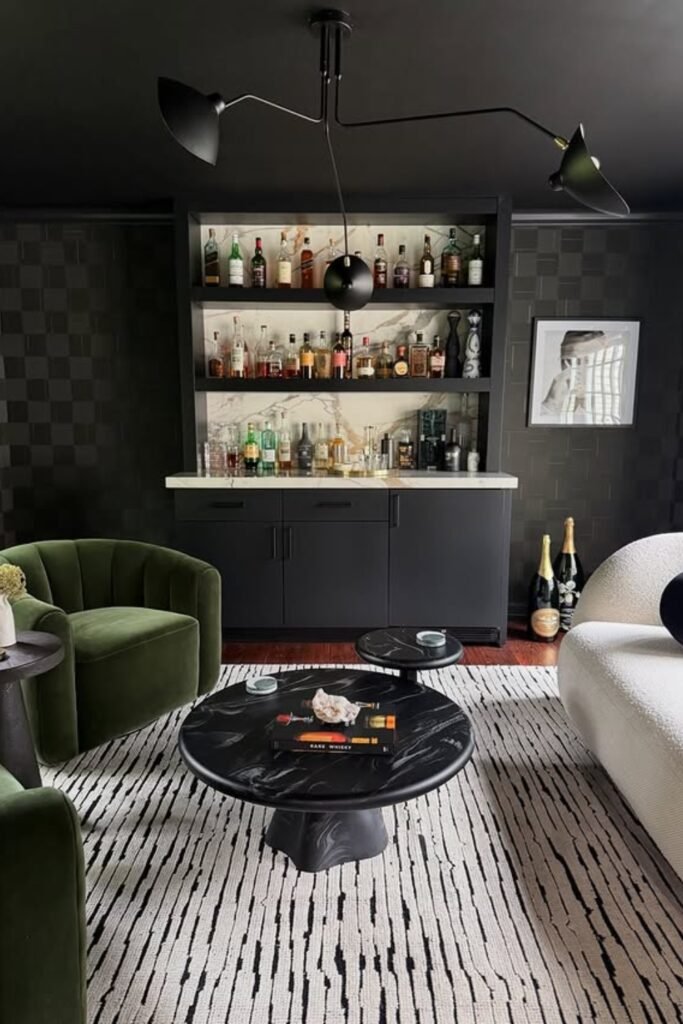
The darker bar area stays visually separate from the seating, which makes the room feel intimate instead of overwhelming.
If your living room does more than one job, use lighting and darker backdrops to define each area.
Light keeps control
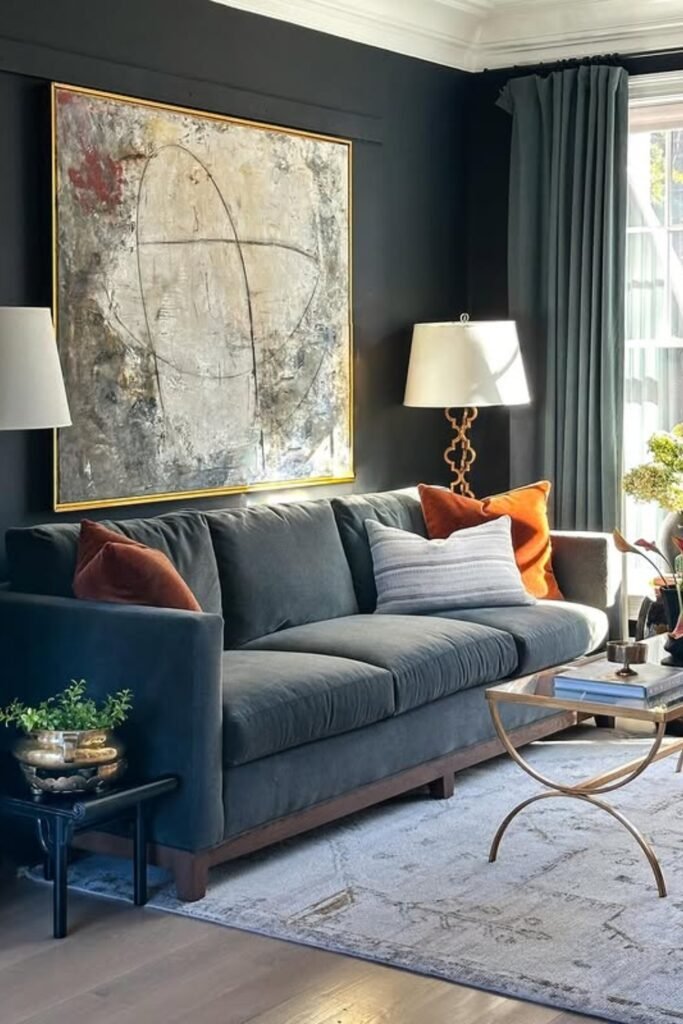
Dark walls set the tone, but the space stays comfortable because natural light is softened with curtains and balanced by lamps.
If your living room gets good daylight, don’t fight it. Frame it, filter it, and let darker colors do the grounding around it.
Soft neutral depth
If your space already feels bright, lower the energy with warm neutrals, textured fabrics, and soft lighting.
You can keep the palette tight and avoid sharp contrasts so the room feels relaxed, grounded, and easy to live in.

Night-first living
This living room is designed around how it feels after dark. Deep colors, heavy fabrics, and soft lamps make the space calm once the sun goes down.
Your lower the light levels, add richer textures, and let shadows be part of the mood instead of something you try to remove.
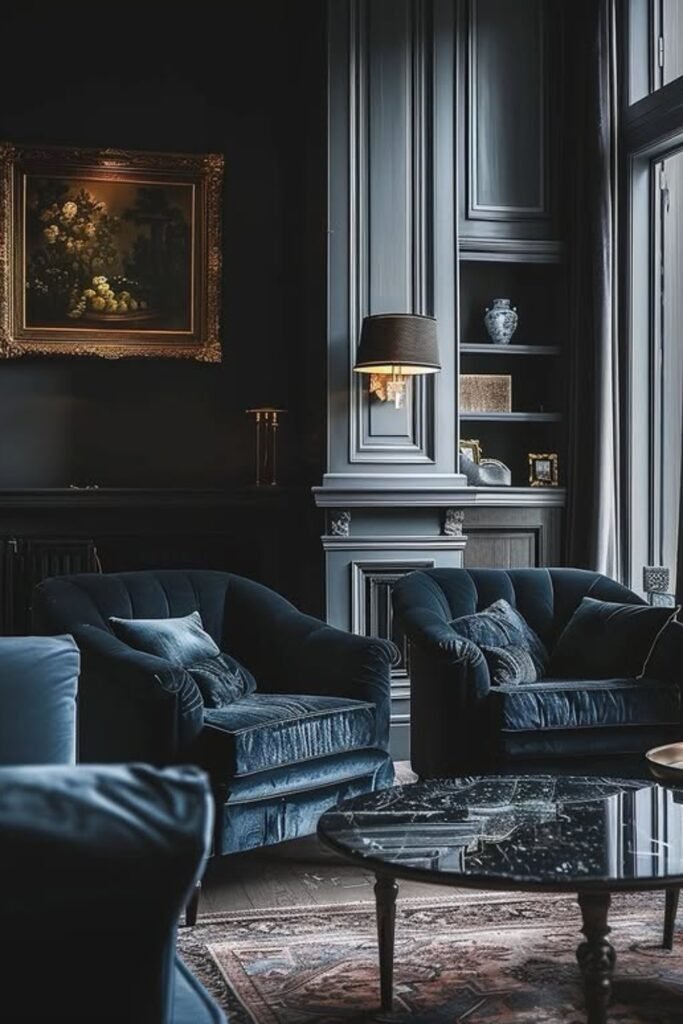
Contrast creates mood
This living room feels moody because light and dark are clearly separated. Bright walls stay clean and calm, while the dark TV wall and rich furniture ground the space.
Let that area anchor the living room, and keep everything else soft so the balance feels intentional.

One color backdrop
The shelves, fireplace, and wall blend together, so the space feels calm instead of busy.
If your living room has a lot going on, unify it with one deep shade. Then add interest through shapes, small decor, or one standout piece instead of more color.
Warm glow focus
This living room feels moody because the light stays low and warm around one clear focal point.
The fireplace, candles, and wall sconces do all the work, so nothing feels harsh. If you want instant mood, stop lighting the whole room evenly.

Sofa sets tone
In this living room, the sofa is doing most of the work. The rich color instantly adds depth, even though the rest of the space stays simple.
If you don’t want to repaint walls or add heavy decor, start with one strong furniture piece. A bold sofa can anchor the room and make everything around it feel more moody and intentional.

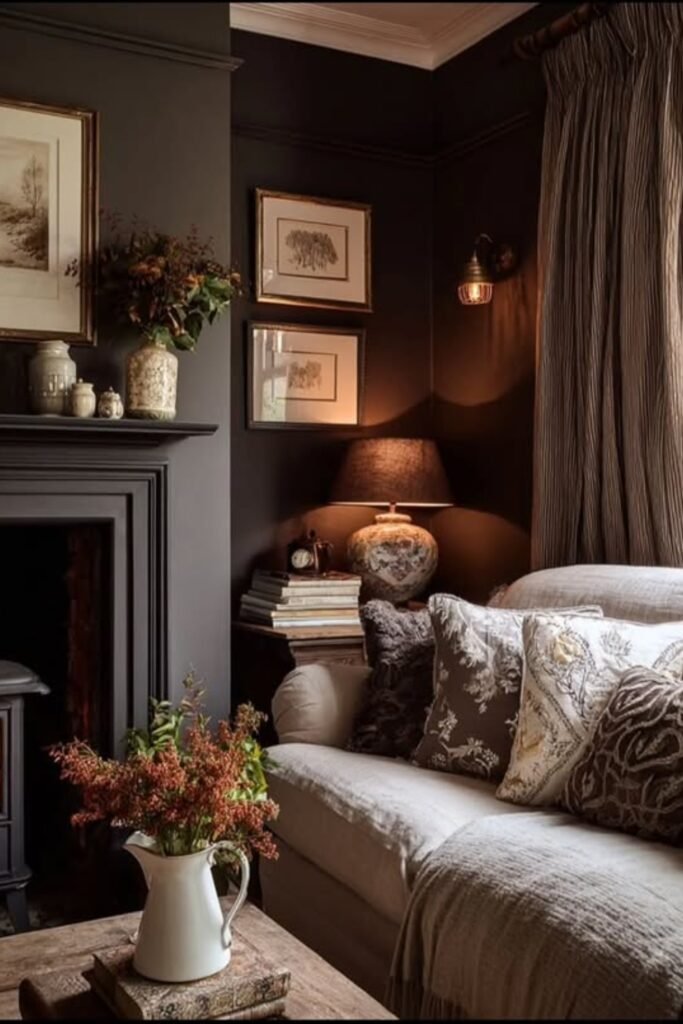
Comfort over contrast
This living room feels moody because it’s built for comfort first. Deep wall color, heavy curtains, and layered cushions slow the space down and make it feel safe to settle into.
If your living room feels cold or unfinished, stop chasing contrast and add softness instead. Texture, warm light, and cozy seating will do more for the mood than bold colors ever will.
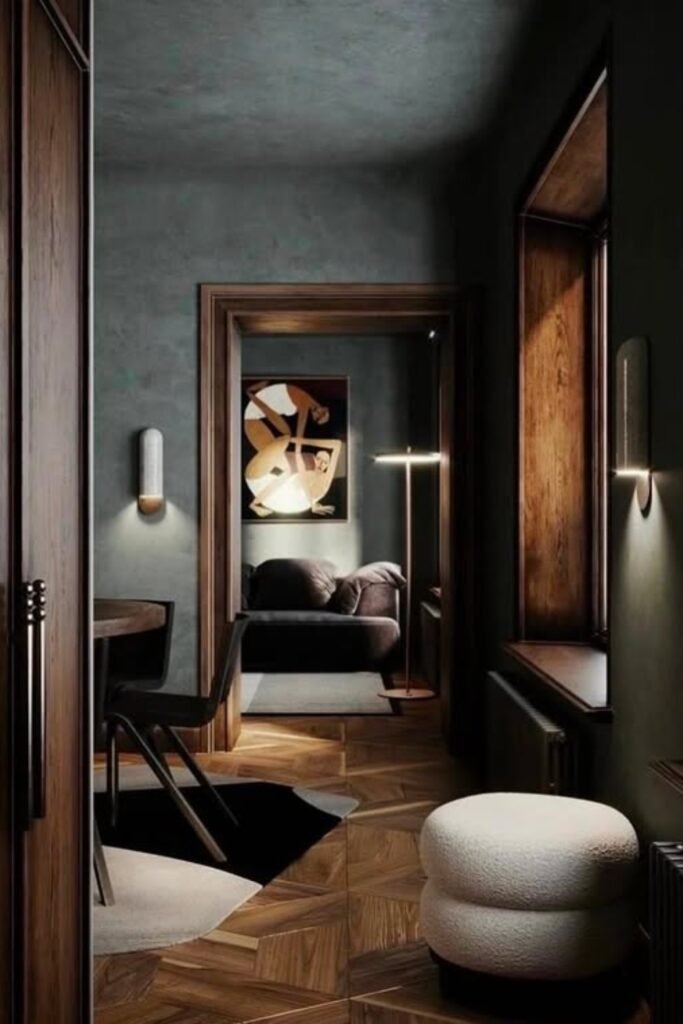
Flow matters more
Dark finishes, wood tones, and soft wall lighting guide you into the space instead of shocking you with contrast.
If your living room connects to hallways or entry areas, keep the mood consistent. When the transition is calm, the living room automatically feels more intentional and immersive.
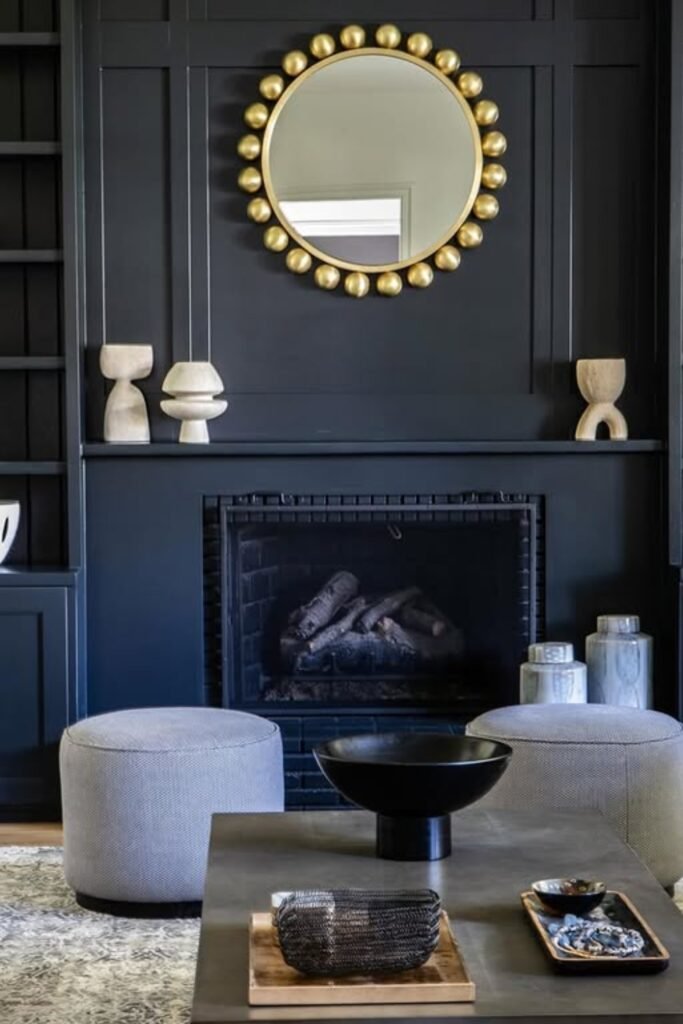
Quiet symmetry
The dark paneled wall, centered mirror, and simple furniture keep the space from feeling restless. If your living room feels visually noisy, slow it down with symmetry.
When pieces line up and nothing fights for attention, the mood becomes relaxed and intentional without adding anything extra.

Framed by contrast
This living room feels moody because the dark built-ins frame the lighter seating area instead of competing with it.
The eye naturally settles where the light is. If your living room has windows or a fireplace, use darker elements around them to create a soft frame.

Grounded from above
The darker ceiling and warm lighting make the room feel lower, calmer, and more intimate.
If your living room feels tall or echoey, stop focusing only on the walls. Darkening the ceiling or adding statement lighting can instantly change how the whole space feels.

Library-style calm
This living room feels moody because it borrows the quiet energy of a library. Dark walls, built-in shelves, and a strong central fireplace slow the space down.
If you want a living room that feels thoughtful and grounded, keep the palette deep and let books, art, and wood add warmth instead of extra decor.

Subtle depth works
This living room proves mood can be quiet. The soft palette, large artwork, and earthy textures keep the space grounded without feeling heavy.
One oversized art piece, low furniture, and natural materials can create depth while keeping the living room calm and easy to live in.

Dark walls anchor
Even with large windows and lighter furniture, the deep backdrop keeps the space grounded.
If your living room gets plenty of daylight, don’t be afraid of dark paint. It can actually make the room feel calmer by giving all that light something solid to land on.
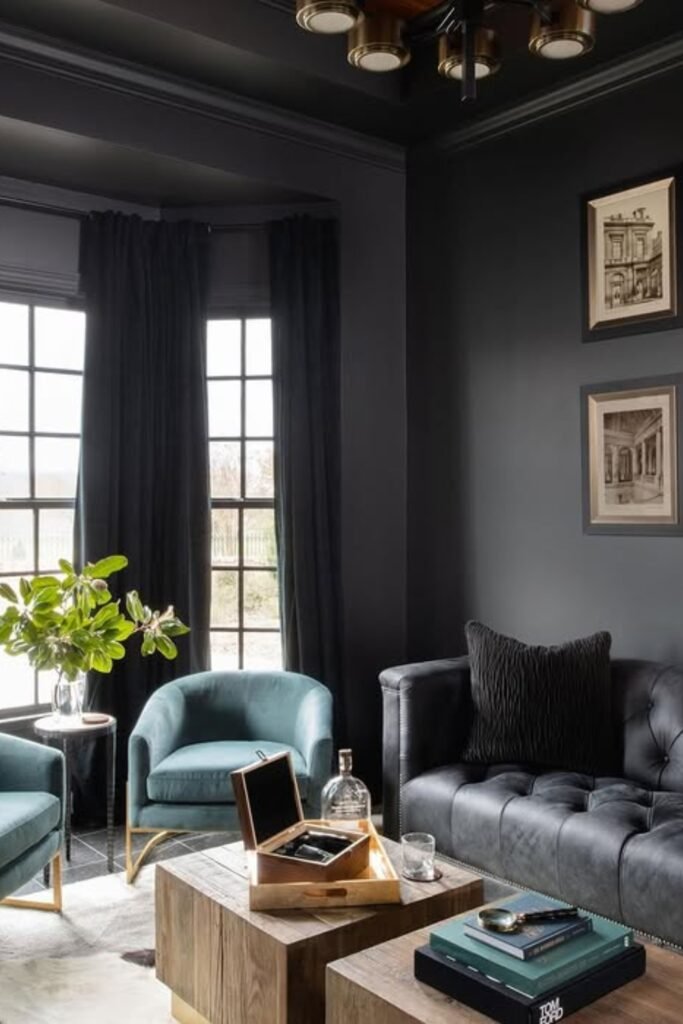
Dark frames light
This living room feels moody because the darkness is used like a frame. Deep walls and curtains surround the fireplace and seating, which makes the lighter stone and table stand out even more.
If you want drama without clutter, push the walls darker and let one bright surface become the focus.
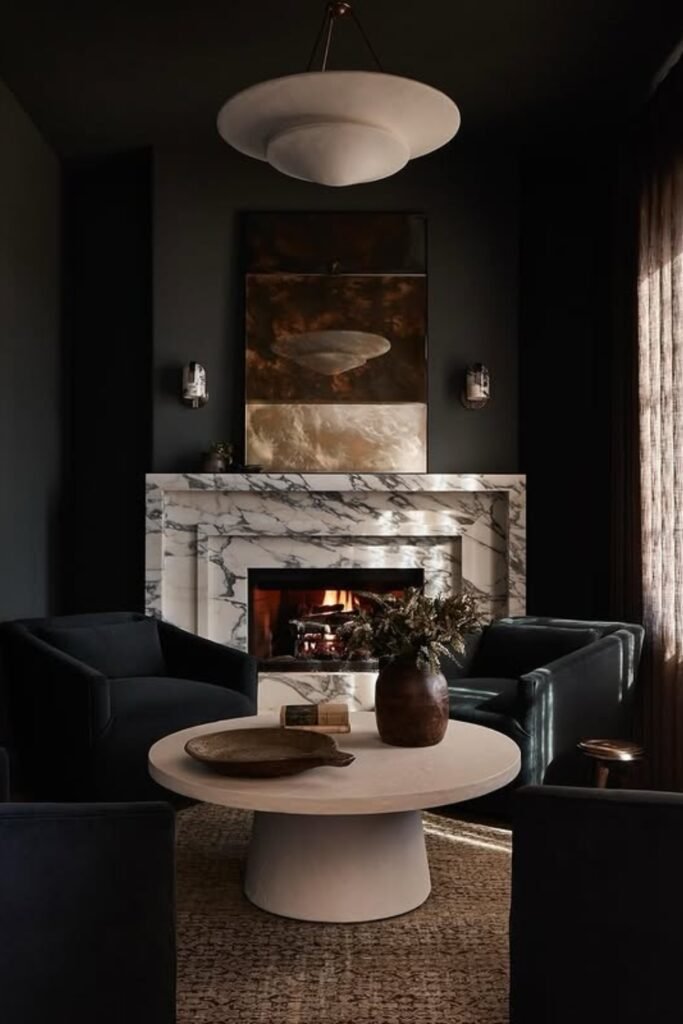
Dark frames daylight
This living room stays moody even with huge windows because the dark walls and ceiling frame the light instead of fighting it.
If your living room gets a lot of natural light, don’t default to white walls. Use darker tones around windows and openings so the light feels intentional and the space stays grounded.
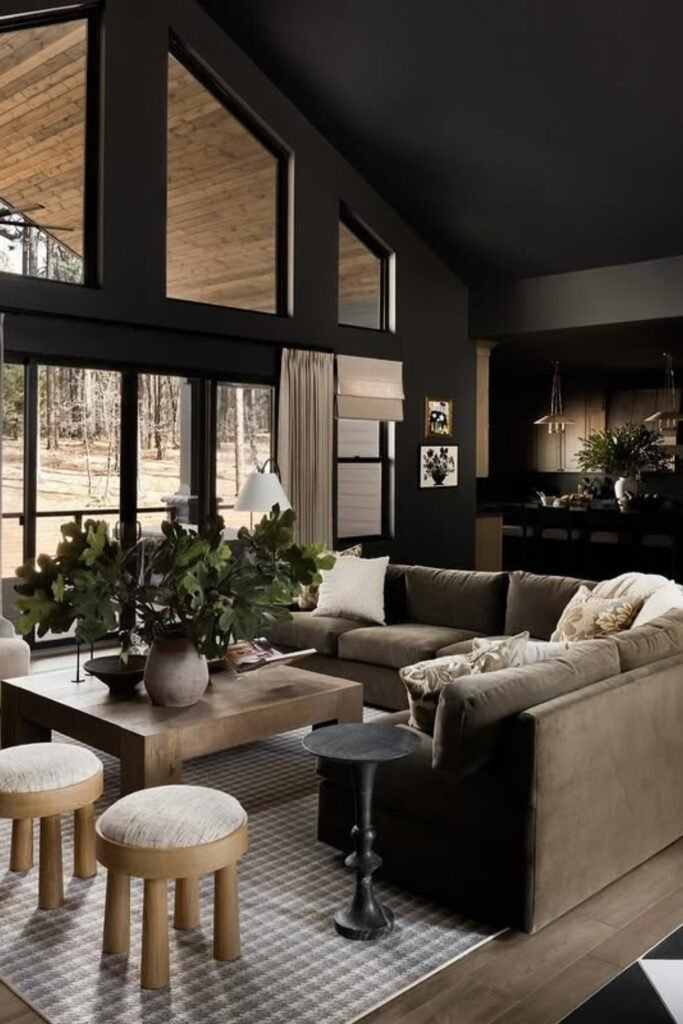
Quiet paneling effect
This living room feels moody because the walls do more than just hold color. If flat walls feel boring, adding panels or molding in a deep tone can change everything.
It works especially well in living rooms where you want a calm, classic feel without adding extra furniture or decor.
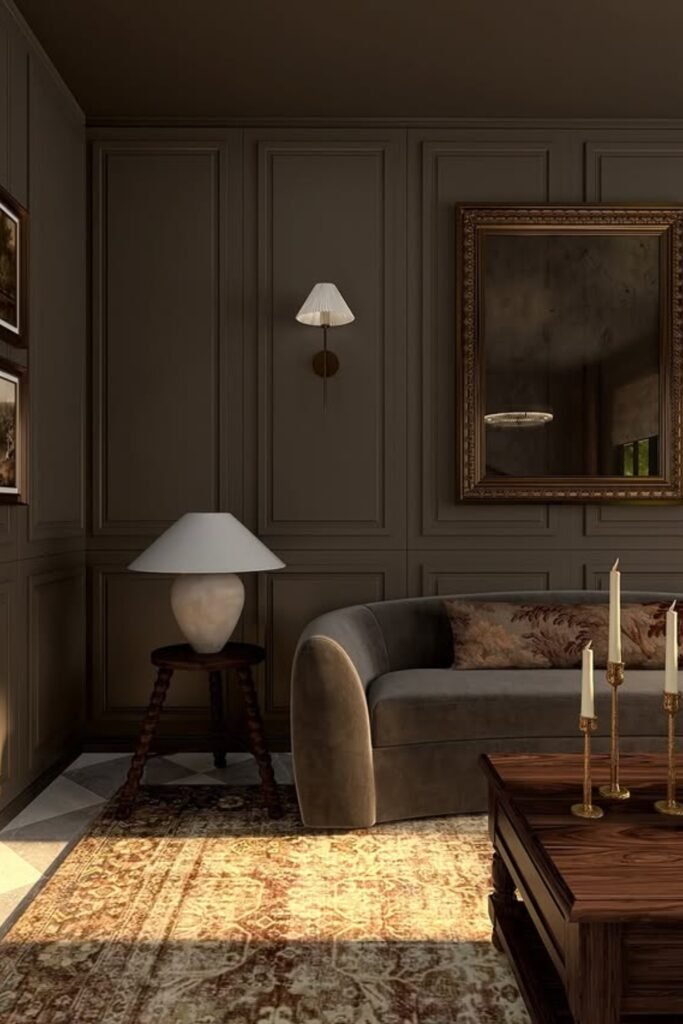
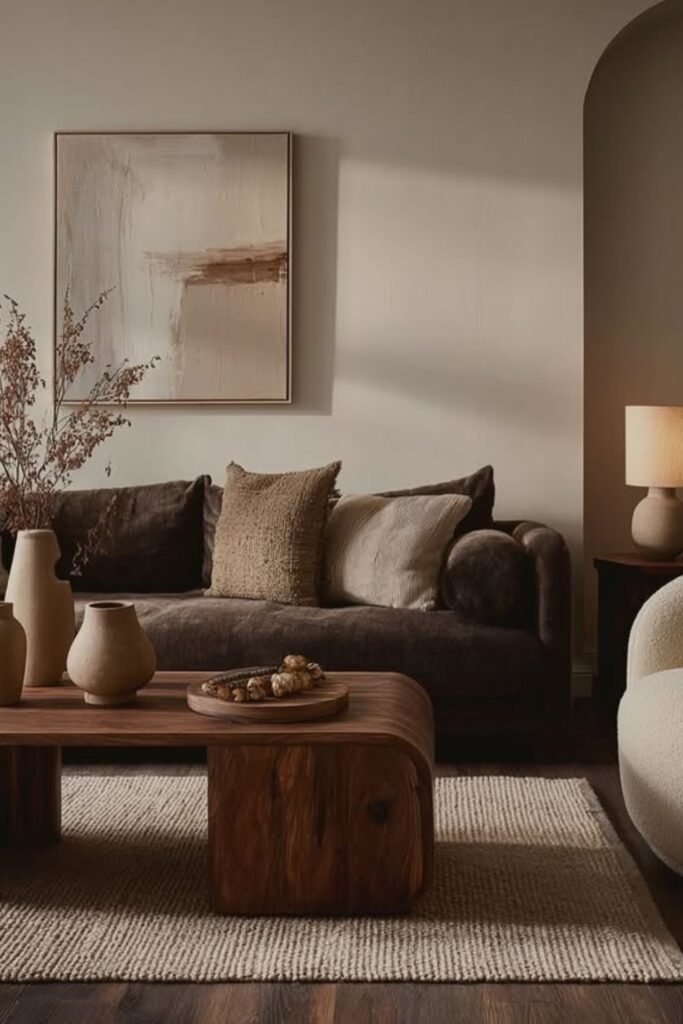
Warm tones calm
This living room feels moody because the colors stay soft and warm instead of bright. Browns, creams, and natural wood lower the energy of the space and make it feel settled.
If dark colors feel too heavy for you, lean into warm neutrals instead. You can keep the lighting low and the palette tight so the room feels cozy, not flat.
Green grounds space
This living room feels moody because green is used as a full backdrop, not just an accent.
The walls, shelving, and cabinetry all work together to calm the space. If you want depth without going dark, green is a safe choice.

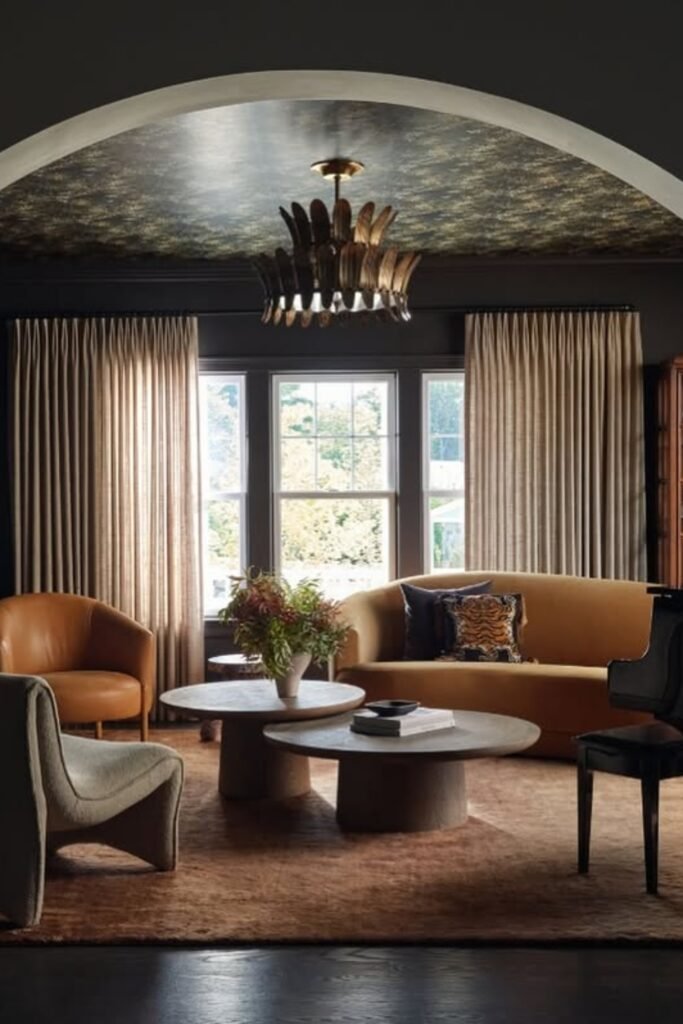
Ceiling sets mood
This living room feels moody because the ceiling becomes part of the design. The darker, textured finish pulls attention upward and makes the space feel more intimate.
If your living room feels wide or empty, stop focusing only on walls and furniture. Treat the ceiling as a surface that can add depth and instantly change how the room feels.
Natural materials lead
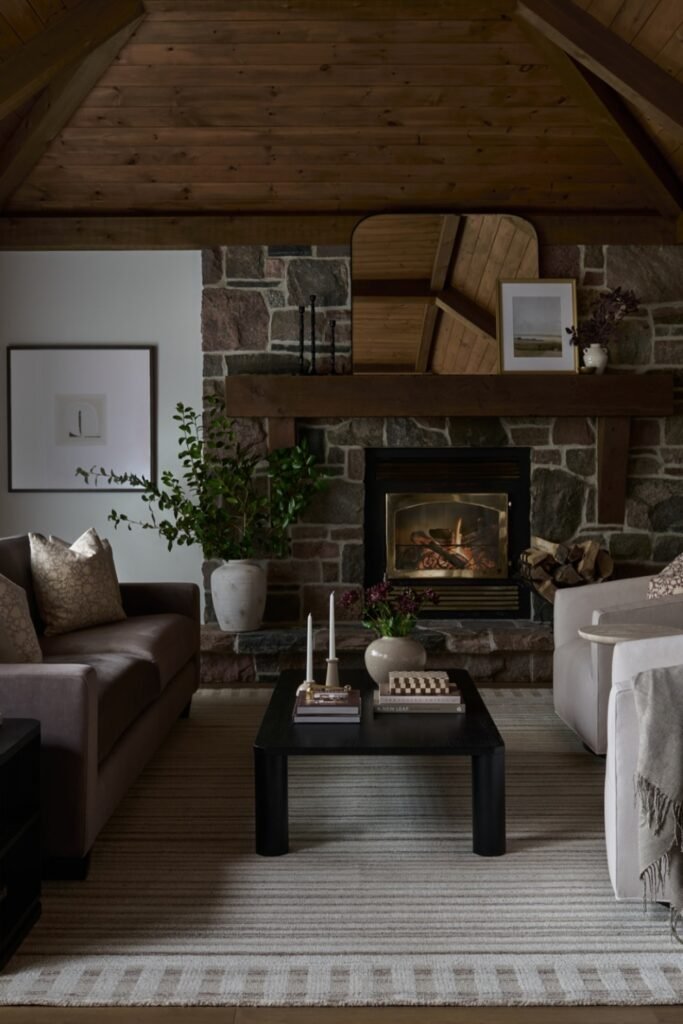
If you want a relaxed, cozy mood, focus on natural materials first. Let wood, stone, and textiles carry the atmosphere so the room feels warm, grounded, and easy to live in.
This living room feels moody because it relies on texture instead of color. The wood ceiling, stone fireplace, and soft fabrics create depth without making the space dark.
Old-world mood
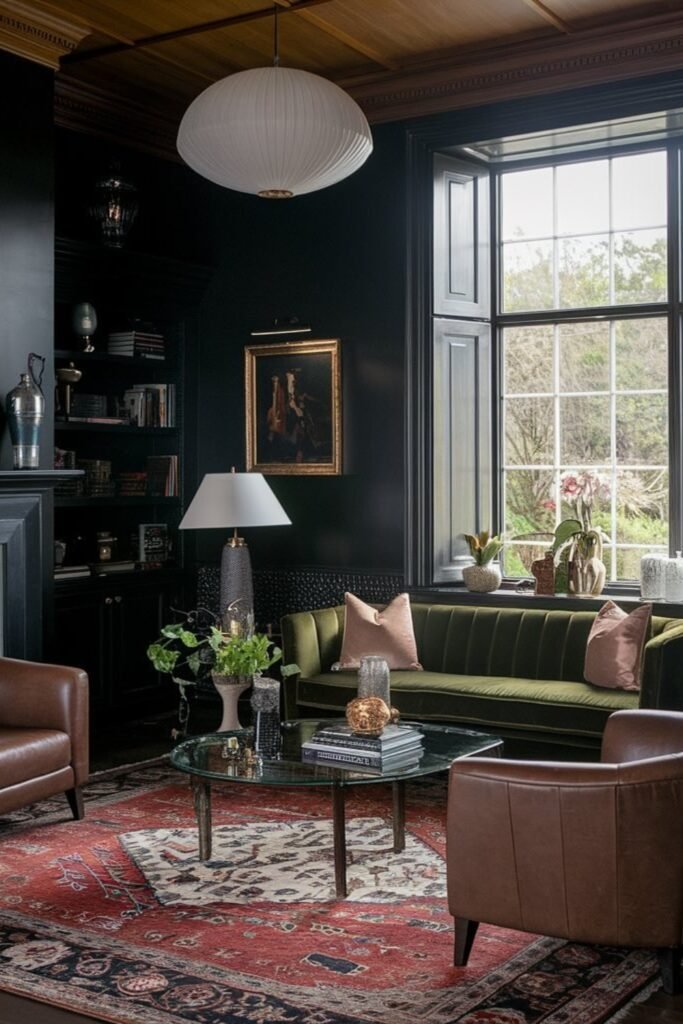
This living room feels moody because it layers time and texture. Dark walls set the backdrop, while leather seating, vintage art, and a worn rug add warmth and character.
You want a space that feels rich instead of trendy, mix classic pieces with deep colors. Let age, patina, and softness do the work rather than adding more decor.
FAQs
How do I keep a moody living room from feeling too heavy?
Balance is really the key. If you go dark on the walls or ceiling, you should bring in lighter furniture, natural textures, or warm lighting.
You don’t need to overdo it, just one or two light elements can keep your room comfortable without killing the mood.
You’ll see how a little balance lets you enjoy the dark, moody vibe while still feeling cozy and inviting.
Are moody living rooms only good for large spaces?
No. Moody designs can actually work better in smaller living rooms because you can make the space feel intentional and cozy.
If you want it to feel just right, you should focus on layering light and texture so your room feels intimate, not cramped.
You’ll notice how the right layers can completely change the vibe without making the space feel crowded.
