
24 Modern Kitchen Cabinet Design Ideas
The right kitchen cabinets can completely change how your space looks and feels, even when the rest of the kitchen stays the same.
From warm wood finishes to sleek, handleless doors, small design choices can make a surprisingly big difference.
In this article, you’ll find modern kitchen cabinet design ideas and practical tips to help you create a kitchen that suits your style.
Let’s jump in!
What Makes a Modern Kitchen Cabinet Design Stand Out?
Modern kitchen cabinets focus on simple shapes, clean finishes, and storage that makes your daily routine easier.
If you want a neat look, start with flat-panel doors, slim handles, or handleless cabinets that keep everything looking organized.
Choose colors that work with your countertops and flooring, such as warm white, natural oak, soft beige, or even deep walnut.
You can also mix two cabinet finishes, add under-cabinet lighting, or extend your cabinets to the ceiling for extra storage.
The key is to choose a design that fits your kitchen’s size and layout while making the space comfortable to use every day.
Natural Oak
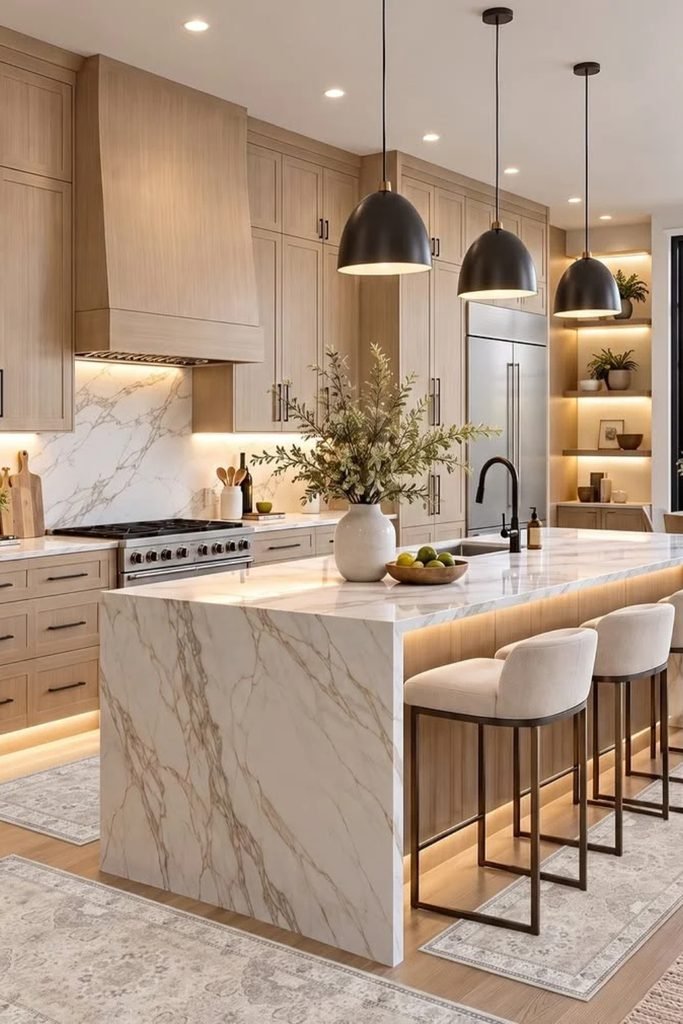
If you have a spacious kitchen with an island, light oak cabinets can bring warmth without making the overall design feel heavy.
Pair framed oak doors with white marble countertops and black hardware, keeping the backsplash simple so the natural wood grain stands out.
Add warm lighting beneath the cabinets and island seating area to highlight the wood finish while making evening cooking more comfortable.
Olive Green
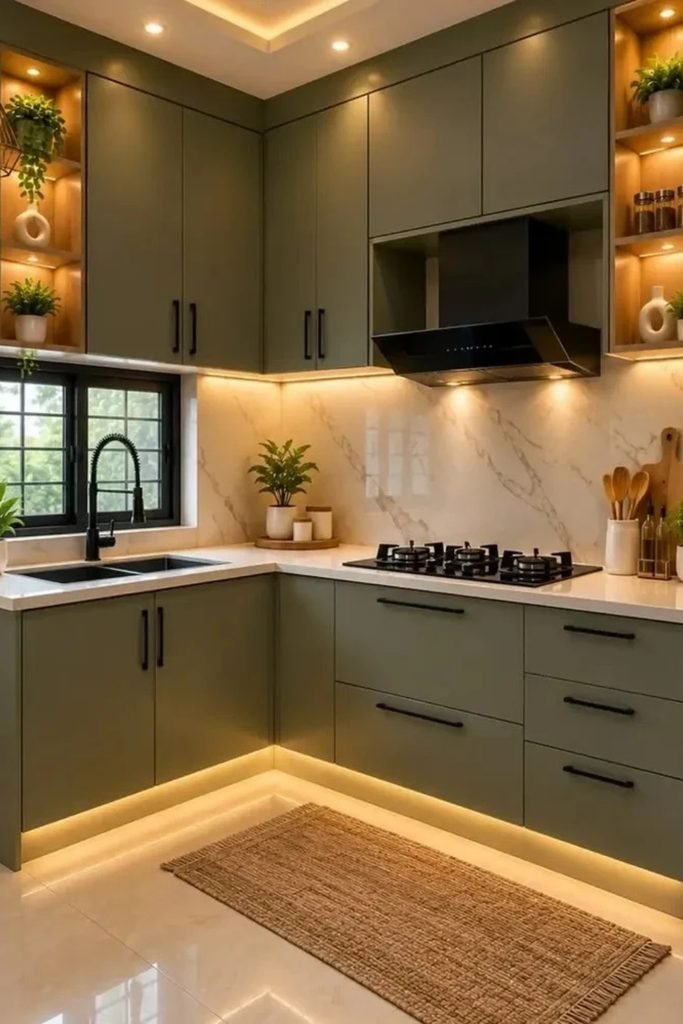
Dark olive cabinets work particularly well in L-shaped kitchens where you want rich color without making every surface feel visually crowded.
Balance the green with white countertops, a marble backsplash, and black handles, then introduce small wooden shelves for a warmer finish.
Install lighting beneath the upper cabinets to brighten your workspace, and keep decorative items minimal so your kitchen stays practical and organized.
Walnut Contrast
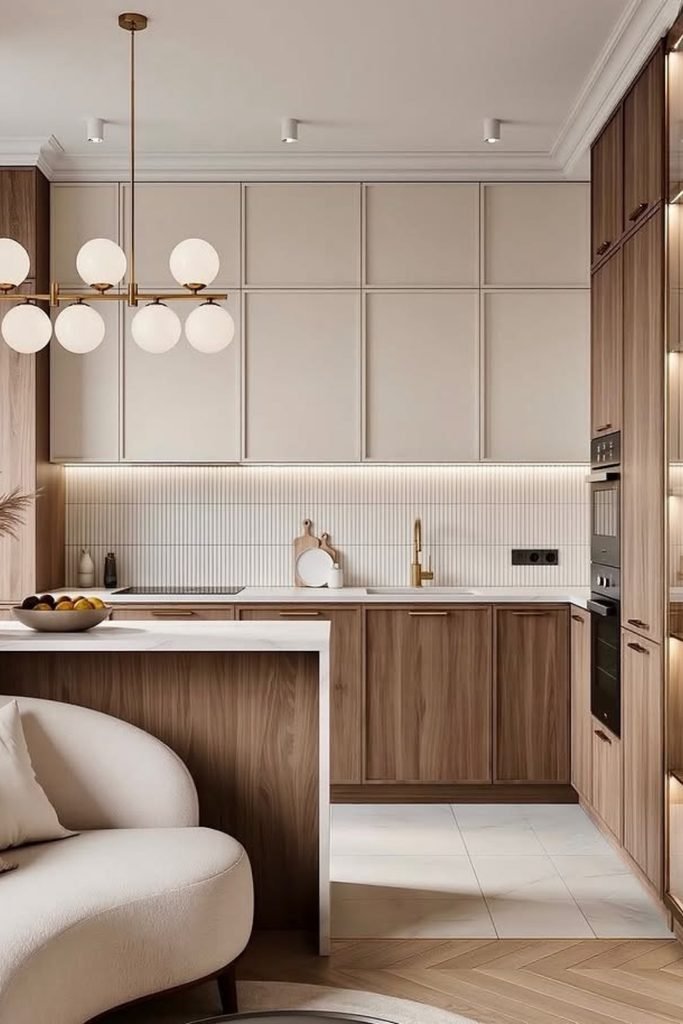
Combining cream upper cabinets with walnut lower units gives your open-plan kitchen a balanced look without relying on plain white cabinetry.
Use slim framed doors above the countertop and wood grain below, then repeat the walnut finish around tall appliances and display shelving.
This arrangement works beautifully beside a living area because the warmer lower cabinets connect naturally with wooden furniture and neutral upholstery.
Seamless Cabinetry
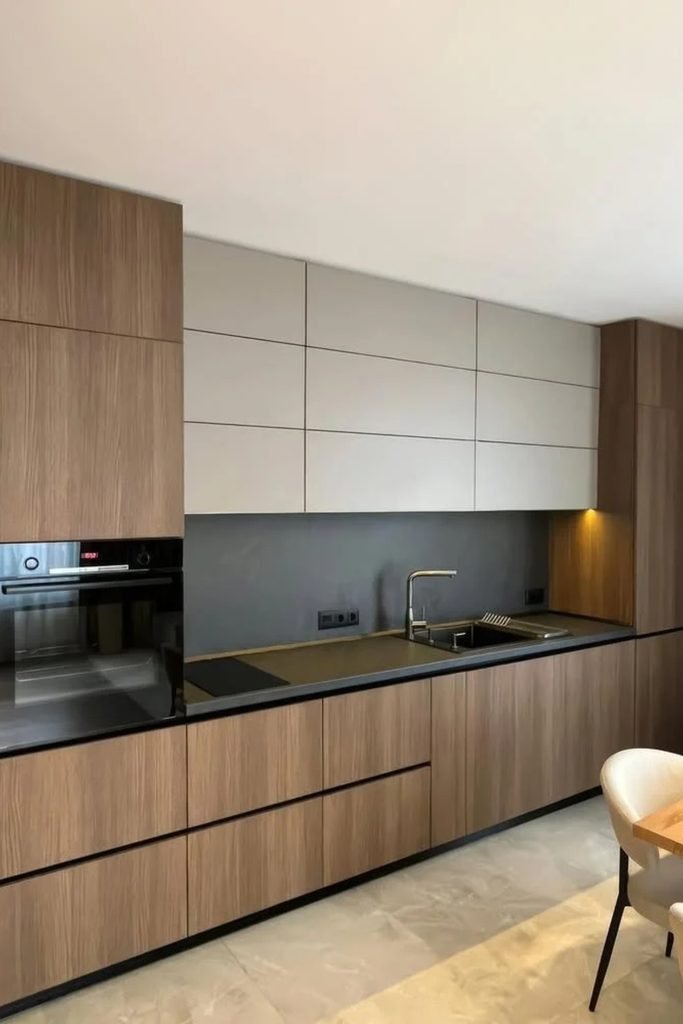
A single-wall kitchen looks much cleaner when tall wooden cabinets frame lighter upper units, keeping appliances and storage within one continuous arrangement.
Choose handleless wood fronts for the lower cabinets, then add smooth beige upper doors and a dark backsplash for contrast without extra decoration.
Keep the countertop clear and plan deep drawers near your cooking area, so everyday essentials remain accessible behind the streamlined cabinet fronts.
Slate Blue
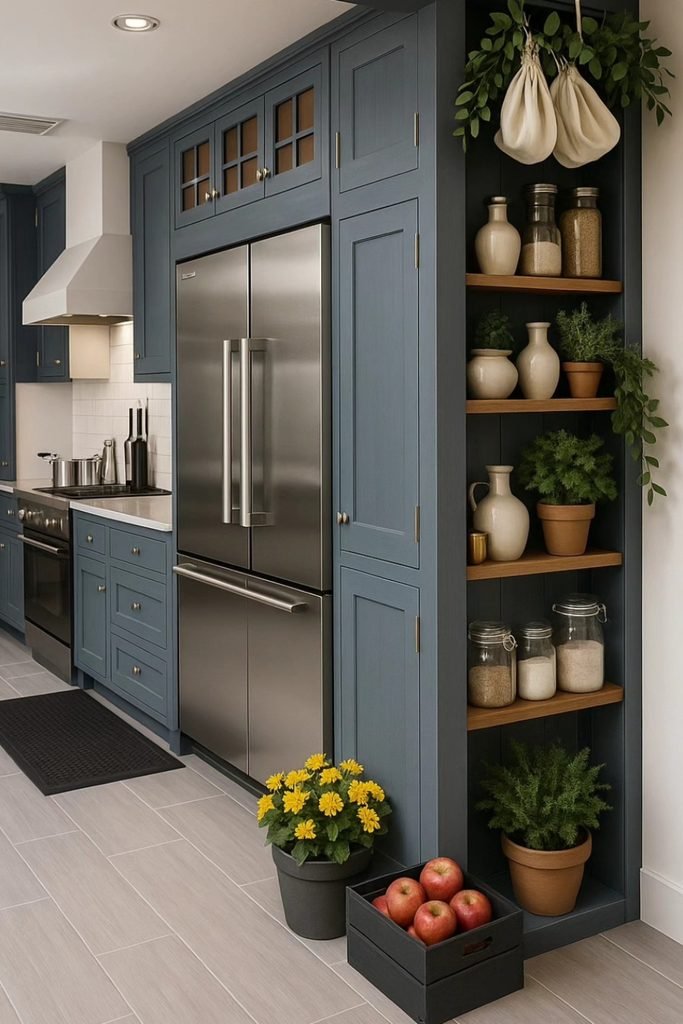
A narrow kitchen can still offer plenty of storage when you extend slate blue cabinets to the ceiling instead of leaving empty space.
Frame your refrigerator with matching tall units, then add glass-front cabinets above it and brass knobs for a slightly more traditional finish.
Reserve one end for open wooden shelves, giving frequently used jars a convenient home while keeping the main cabinet wall organized.
Fluted Island
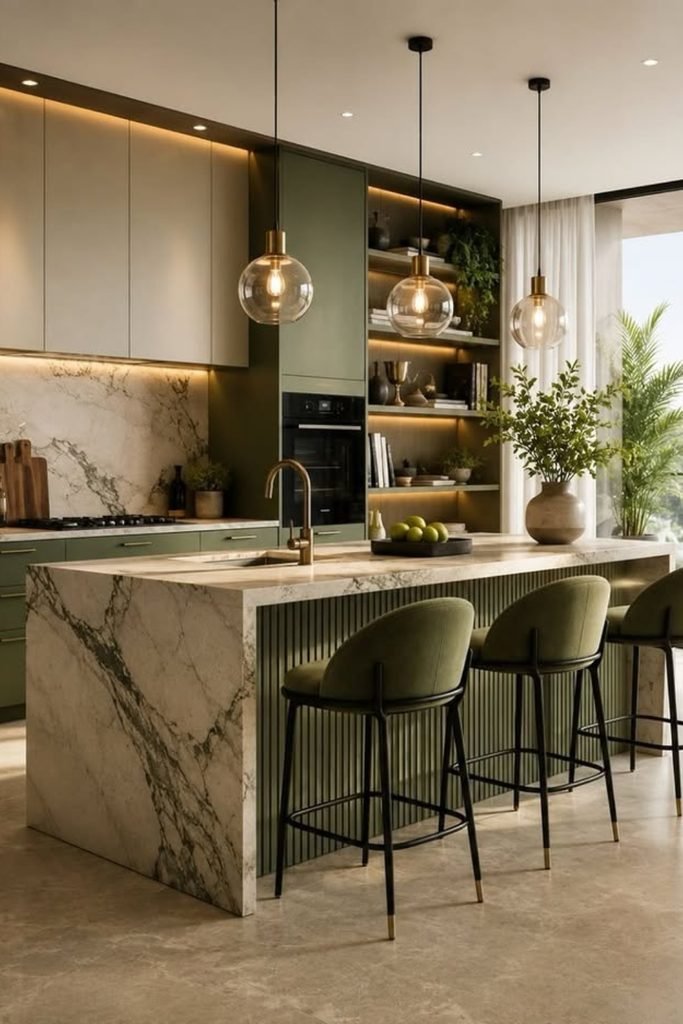
Give your kitchen island a distinct finish by adding vertical fluted panels in olive green, especially when surrounding cabinets have smooth fronts.
Pair muted green cabinetry with marble countertops and warm brass fixtures, using large windows to balance the deeper color throughout the space.
Keep the fluted detail on the seating side, where it stays visible without collecting the spills and grease common around cooking areas.
Rustic Contrast
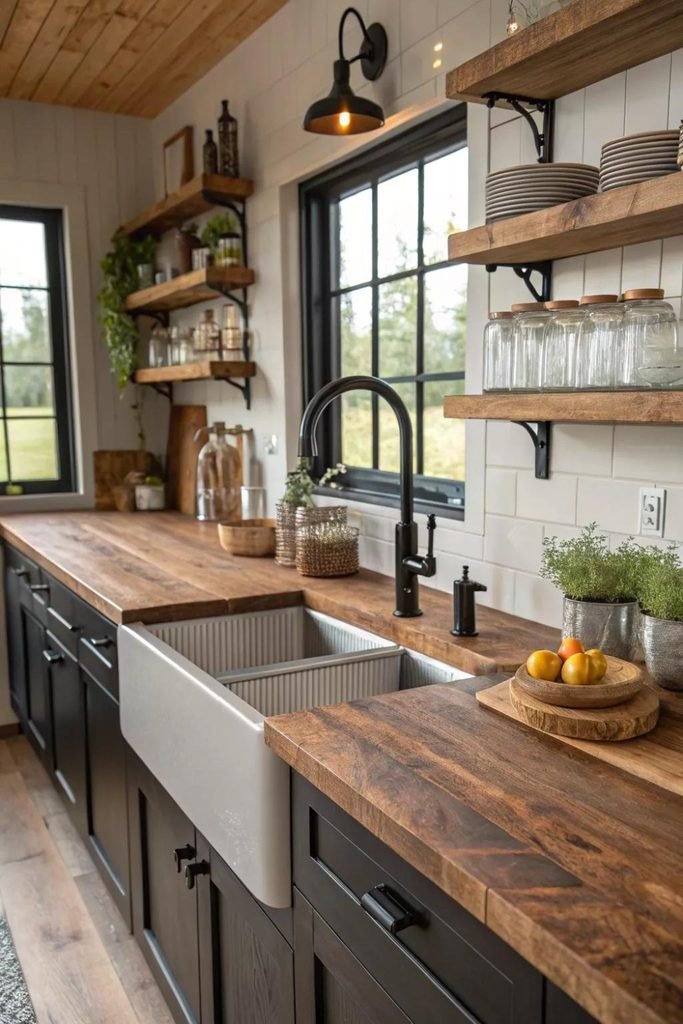
Black lower cabinets can look surprisingly inviting when you combine them with thick wooden countertops and a white farmhouse sink.
This combination suits farmhouse kitchens with modern touches, especially where open wooden shelves provide storage without covering the walls with heavy cabinets.
Choose simple black hardware and washable wall tiles, then seal the wooden countertop carefully around the sink to protect it from moisture.
Compact Harmony
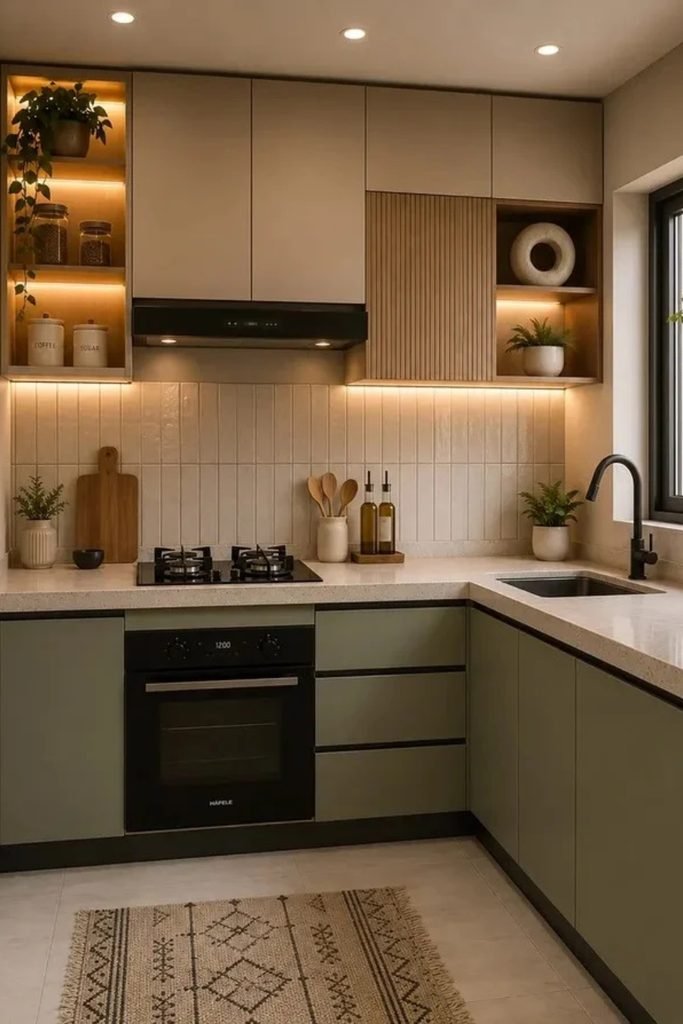
When your kitchen has limited floor space, combining olive green lower cabinets with cream upper units helps keep the room feeling open.
Choose flat cabinet fronts with integrated pulls, then introduce a small section of fluted wood and recessed display shelves for added texture.
Run the upper cabinets to the ceiling for extra storage, and install warm lighting beneath them to brighten your countertop without clutter.
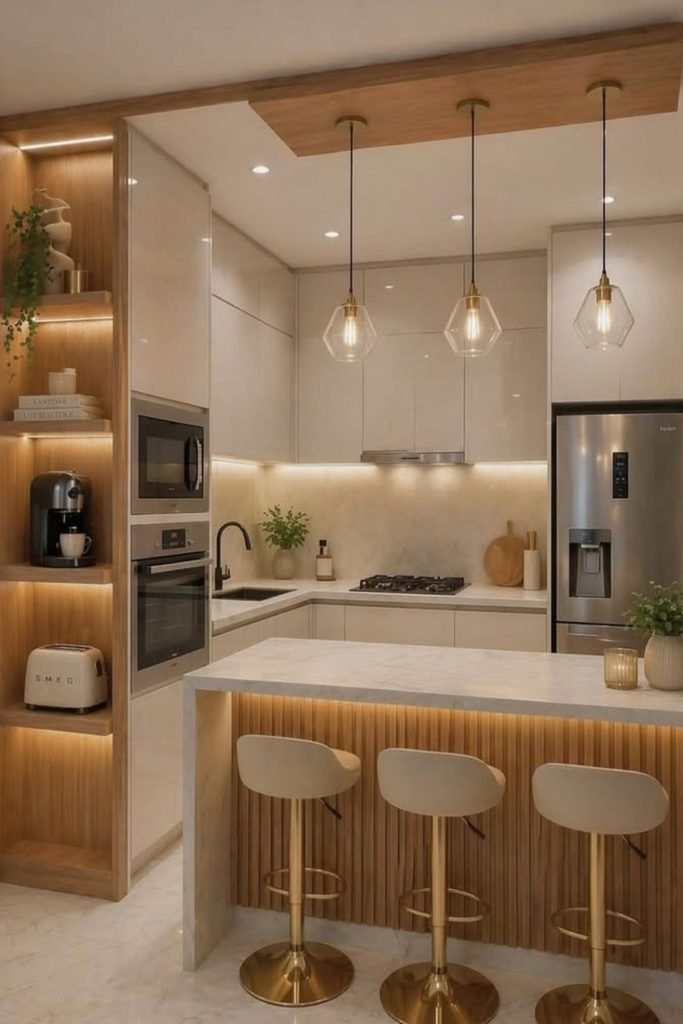
Cream Elegance
Glossy cream cabinets are a smart choice for smaller kitchens where you want a bright finish without relying on plain white surfaces.
Build tall storage around your appliances, then add a wooden display shelf for coffee essentials and matching slatted panels beneath the island.
Keep the countertops light and use warm pendant lighting above the seating area to make the cream cabinetry feel inviting rather than cold.
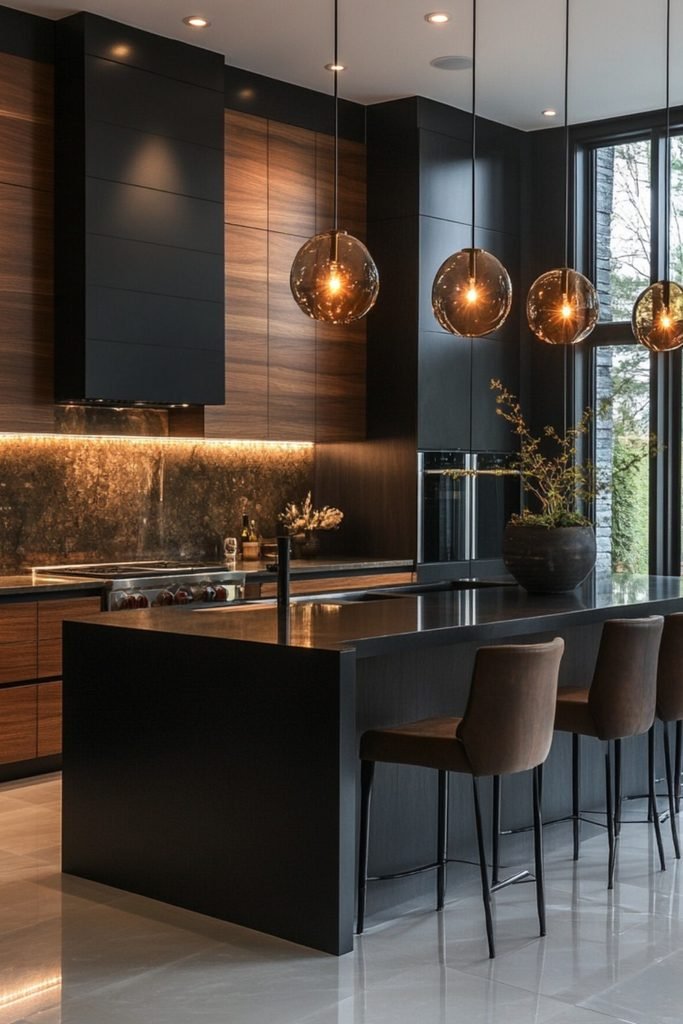
Dark Walnut
For a kitchen with large windows, combining dark walnut cabinets with matte black units creates a rich look without sacrificing natural warmth.
Choose handleless fronts and extend the cabinets toward the ceiling, keeping the wood grain consistent across your main cooking and storage areas.
Balance these deeper finishes with lighter flooring and warm backsplash lighting, especially if you want the kitchen to feel comfortable after sunset.
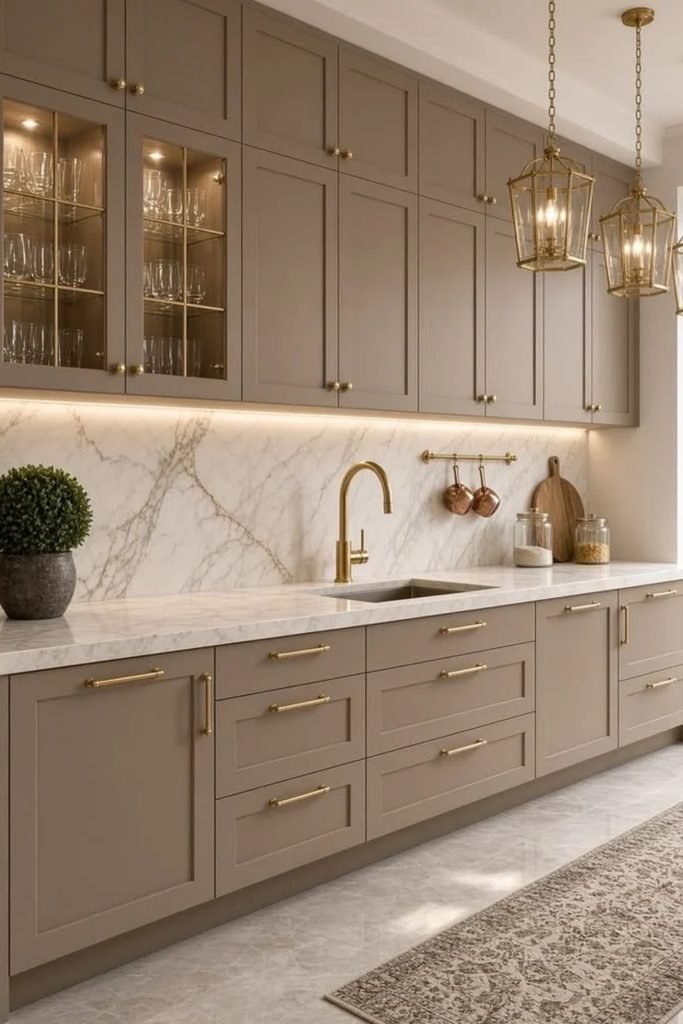
Greige Shaker
Greige Shaker cabinets give you a softer alternative to white, especially when your kitchen has marble surfaces and warm metallic finishes.
Use glass-front doors for a few upper cabinets, then add brass knobs and long drawer pulls to keep the design visually consistent.
Extend matching cabinets above the display sections for extra storage, and choose warm lighting to prevent the greige finish from appearing dull.
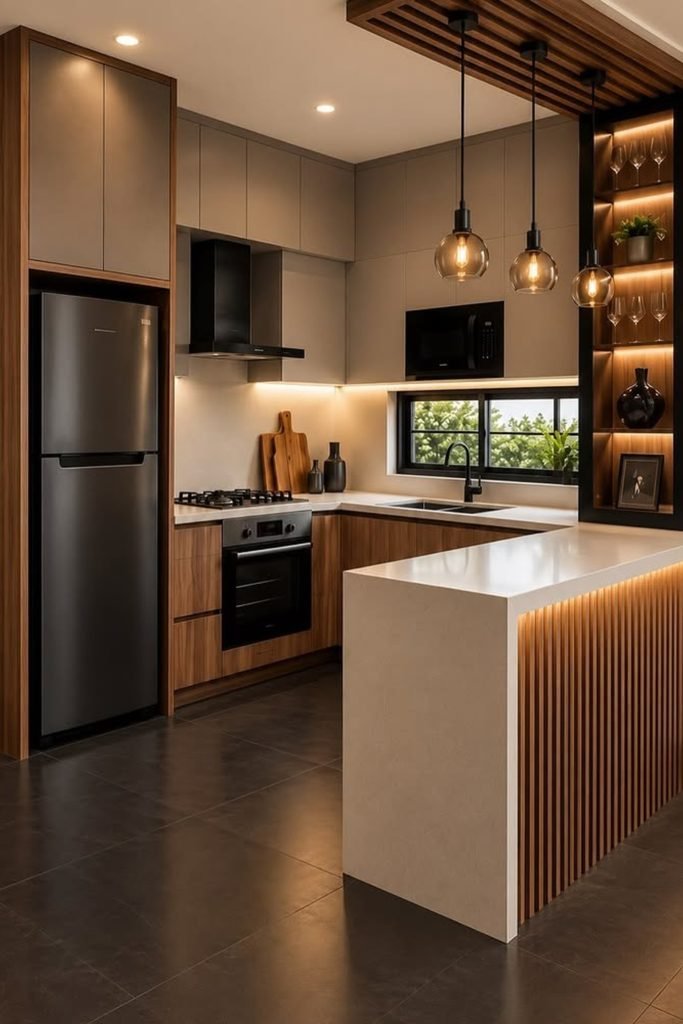
Wood Accents
You can make a compact L-shaped kitchen feel more custom by mixing smooth beige upper cabinets with natural wood lower units.
Frame the refrigerator with matching wood panels, then repeat that finish on a slatted breakfast bar to connect the different cabinet sections.
Add a slim illuminated display shelf near the island, keeping everyday storage behind closed doors so the smaller kitchen stays organized.
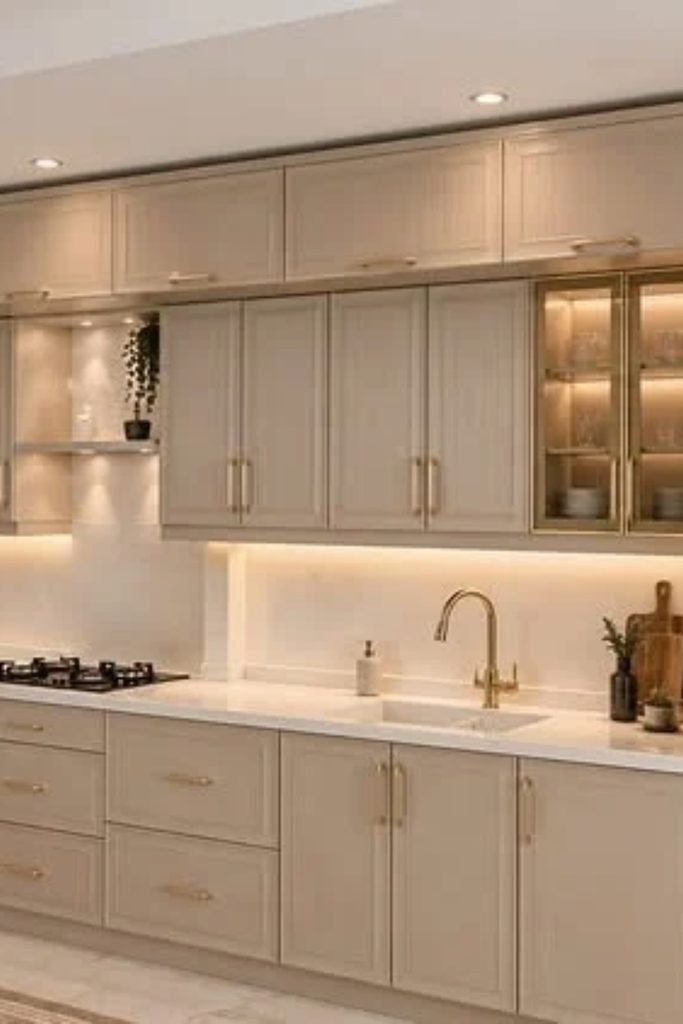
Beige Cabinetry
A long kitchen wall becomes much more useful when you combine beige Shaker cabinets with tall pantry units and built-in appliance storage.
Use glass-front sections between closed upper cabinets to display glassware, while keeping dishes and cooking supplies hidden behind matching doors.
Choose slim brass handles and warm under-cabinet lighting to complement the beige finish, making the entire arrangement feel connected and easy to use.
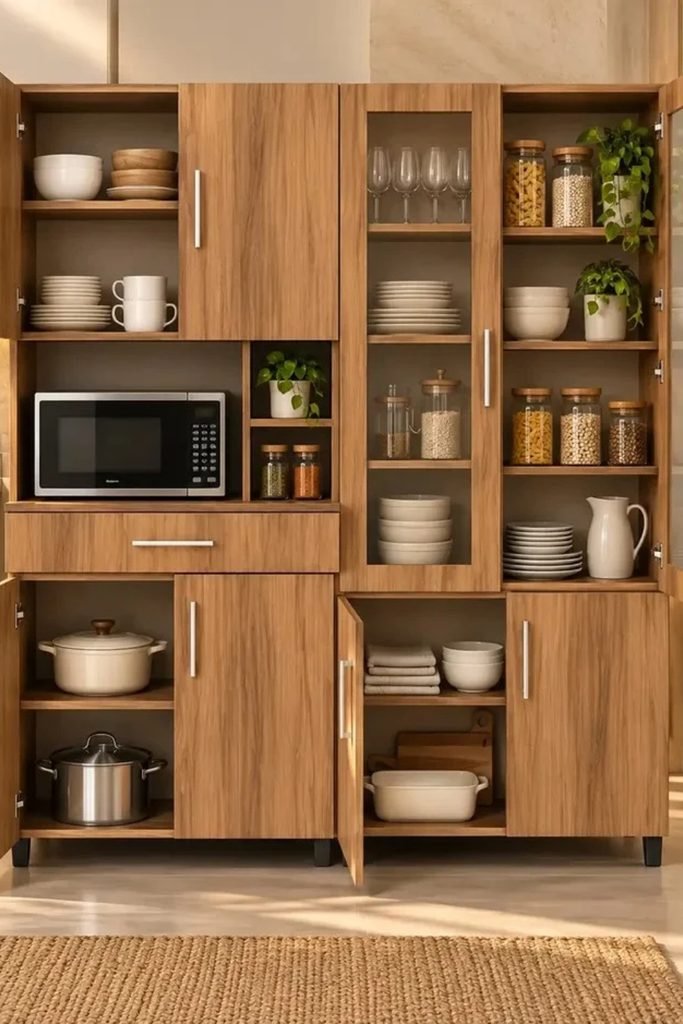
Organized Storage
Instead of squeezing everything into standard cupboards, build a dedicated wooden cabinet wall with separate compartments for dishes, cookware, and small appliances.
Place heavier pots in the lower sections, everyday plates at a comfortable height, and glassware behind clear doors for quick identification.
Add a built-in microwave shelf and deep drawers for utensils, but measure appliance ventilation requirements before finalizing your cabinet dimensions and placement.
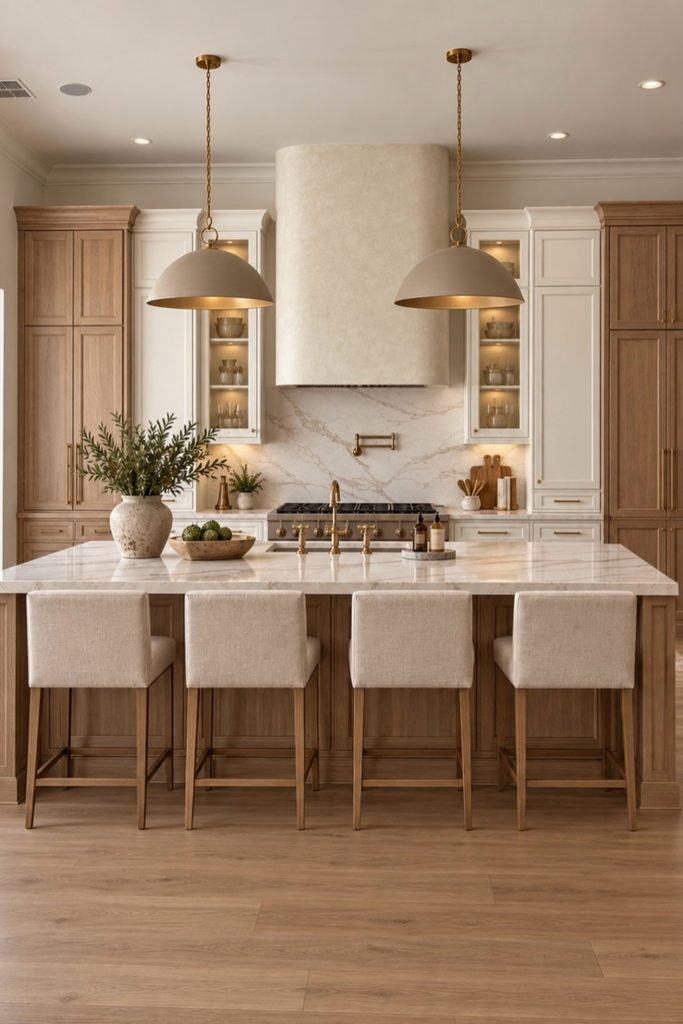
Balanced Finishes
Large kitchens benefit from mixing natural oak cabinetry with warm white units, especially when you want an inviting look without excessive color.
Place tall wooden cabinets at both ends of your cooking wall, then use white framed doors around the range to create balance.
Continue the oak finish onto your island and pair everything with light marble countertops, keeping hardware consistent for a coordinated kitchen design.
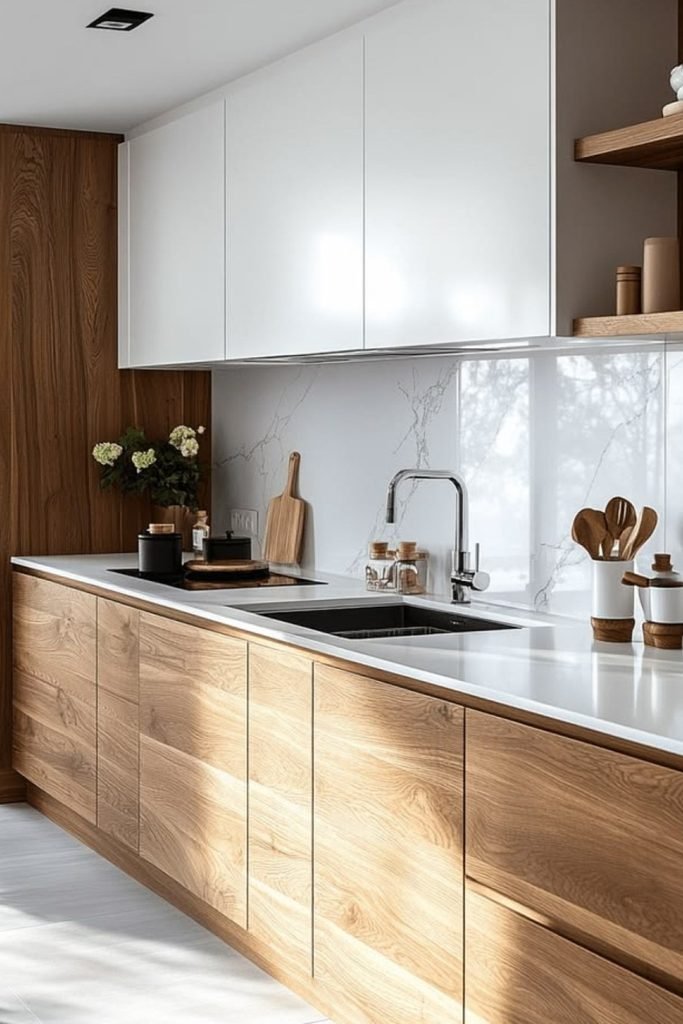
Oak Minimalism
Natural oak lower cabinets are worth considering when you want visible wood grain without covering your entire kitchen in the same finish.
Install smooth white upper cabinets above them, then connect both sections with a matching light countertop and marble-look backsplash for visual continuity.
Keep handles recessed or concealed, and reserve one end for open wooden shelves where frequently used dishes remain within easy reach.
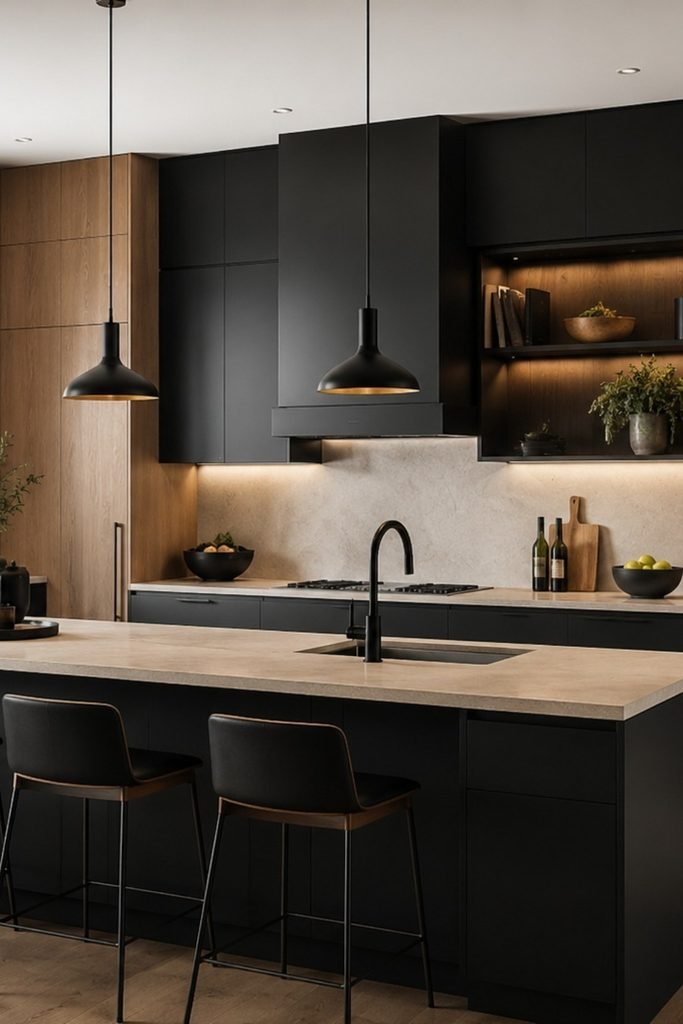
Charcoal Contrast
Matte charcoal cabinets work best in kitchens with good natural light, where dark surfaces can stand out without making the room feel enclosed.
Combine black upper and lower cabinets with tall walnut storage units, then use light stone countertops to soften the deeper finishes.
Leave one upper section open for wooden display shelves, and add warm lighting inside to break up the solid cabinet wall.
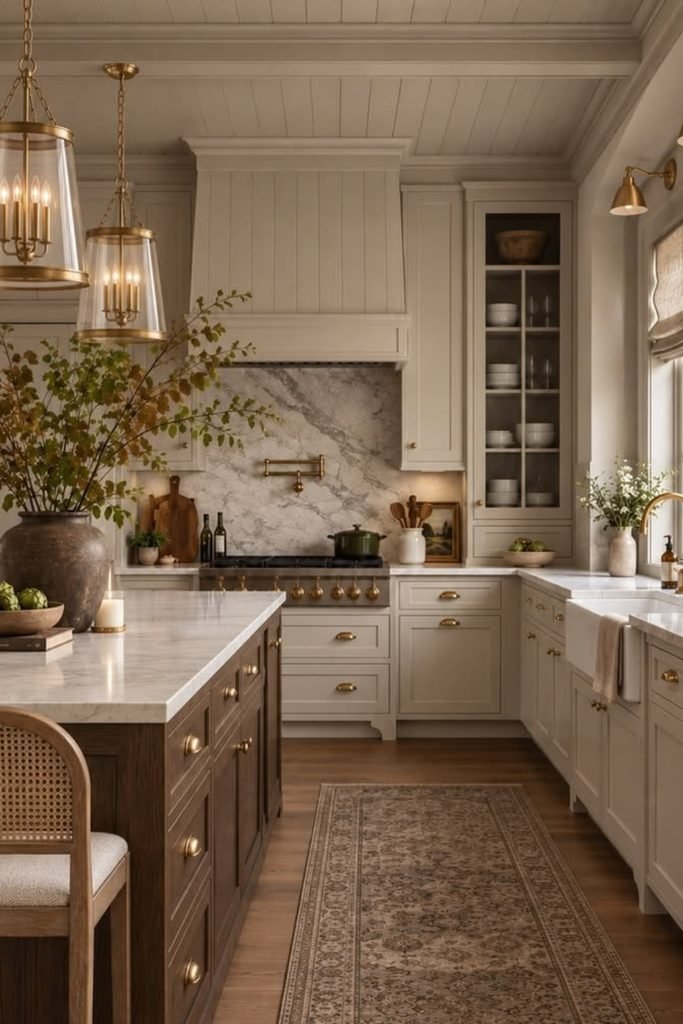
Classic Ivory
For a softer traditional look, choose ivory Shaker cabinets with decorative trim instead of completely flat doors, especially in larger family kitchens.
Frame your cooking area with matching cabinets and a tall glass-front unit, then introduce marble backsplashes and brushed brass handles.
A contrasting wooden island adds warmth, while deep drawers beneath the countertop give you convenient storage for cookware and everyday kitchen essentials.
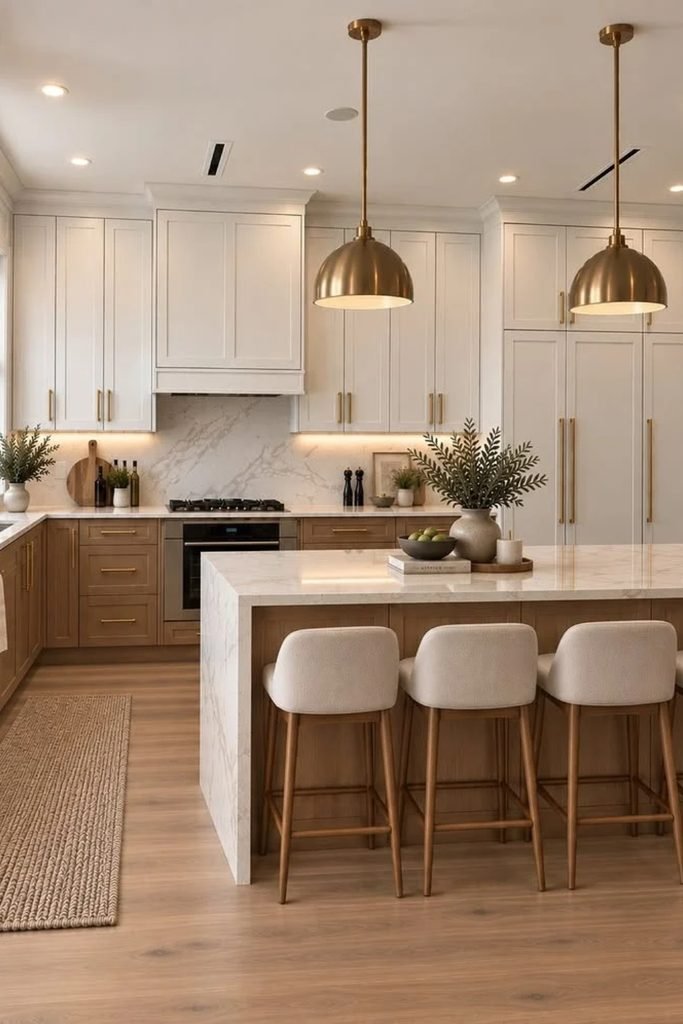
White Oak
White upper cabinets and natural oak lower units make a practical combination when you want your kitchen to feel bright but not plain.
Keep the tall pantry cabinets white, then repeat the oak finish across lower drawers and the island seating area for visual consistency.
Choose slim brass handles and light marble countertops, allowing the wood grain to add warmth while keeping your main cooking area open.
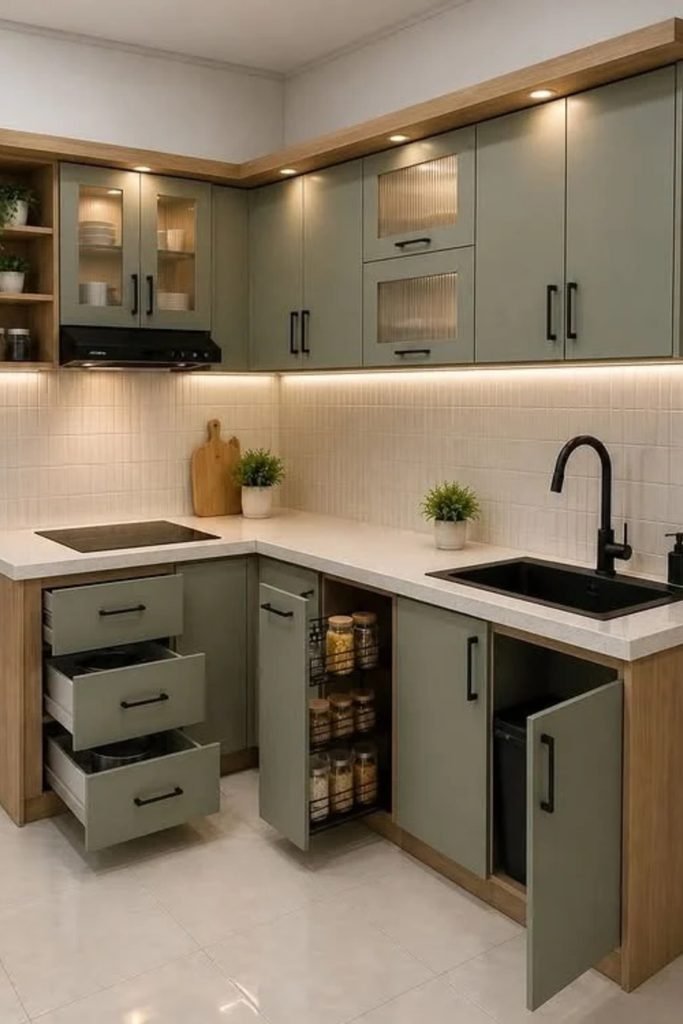
Sage Storage
Small L-shaped kitchens benefit from sage green cabinets when you combine attractive finishes with storage features that actually make cooking easier.
Install deep drawers near the stove, pull-out racks for pantry supplies, and wide cabinets beneath the sink for cleaning essentials.
Finish the upper cabinets with wood trim and glass-front sections, then use black handles and white countertops to keep everything coordinated.
Island Organizers
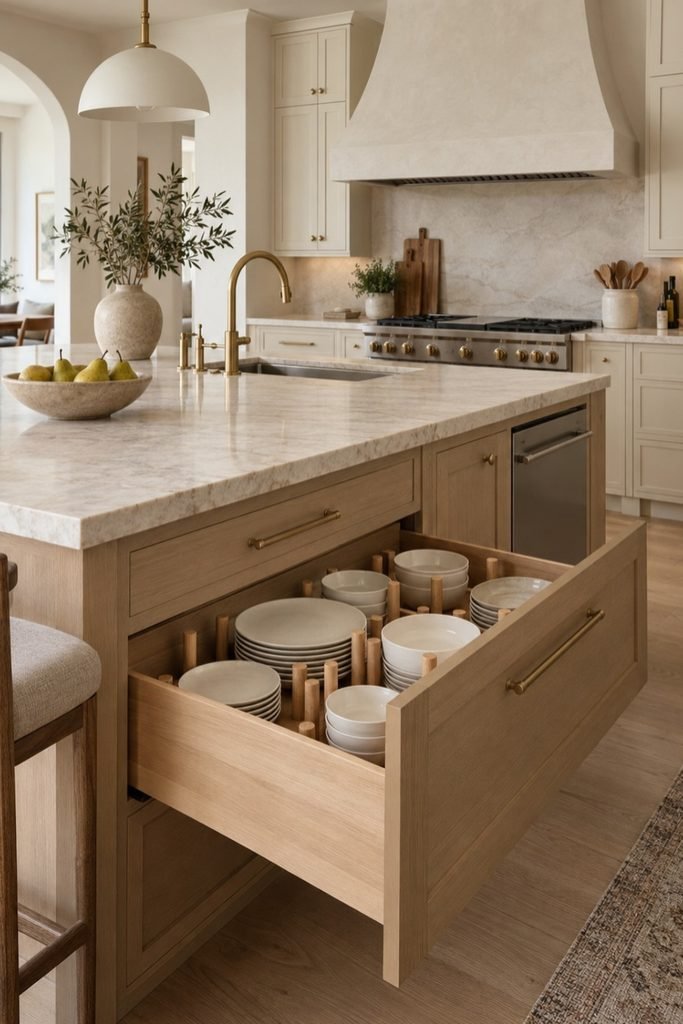
A large kitchen island becomes far more useful when you replace ordinary cupboards with deep drawers that keep your dishes organized.
Add wooden dividers inside the drawers to separate plates and bowls, making everything easier to reach without stacking items too high.
Pair natural wood island cabinets with cream Shaker units and marble countertops for a warm kitchen that also handles everyday storage needs.
Scandinavian Wood
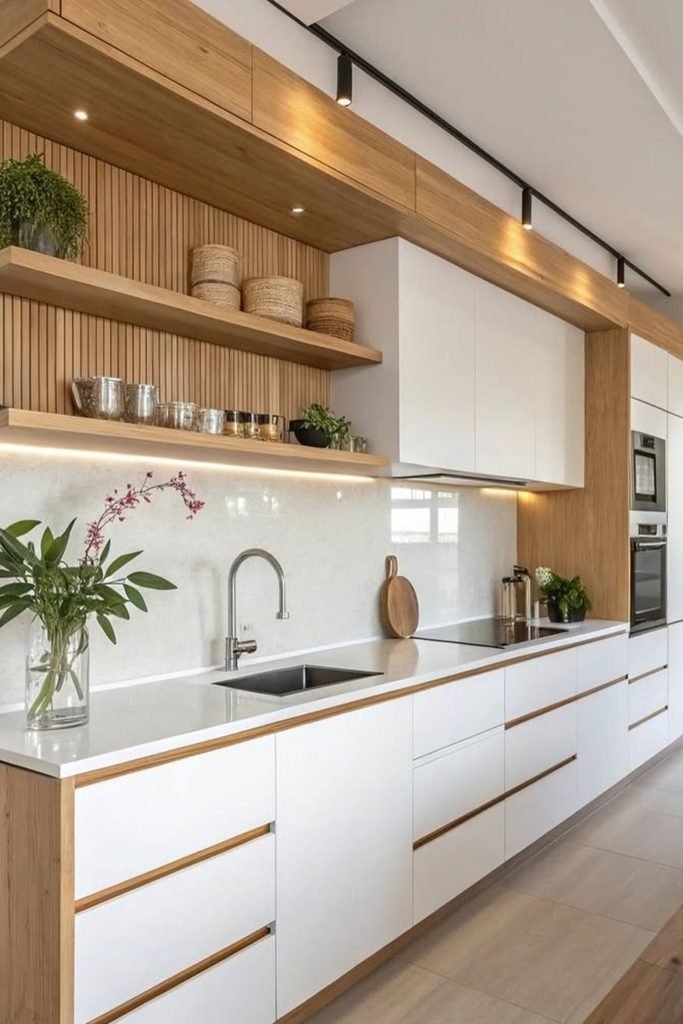
You don’t need elaborate cabinet doors to create an inviting kitchen, especially when natural wood and simple white surfaces already work together.
Frame your white handleless cabinets with light oak panels, then introduce matching open shelves and vertical wooden slats for subtle texture.
This approach suits long, narrow kitchens because continuous cabinet fronts keep everything looking neat while making good use of wall space.
Grey Minimalism
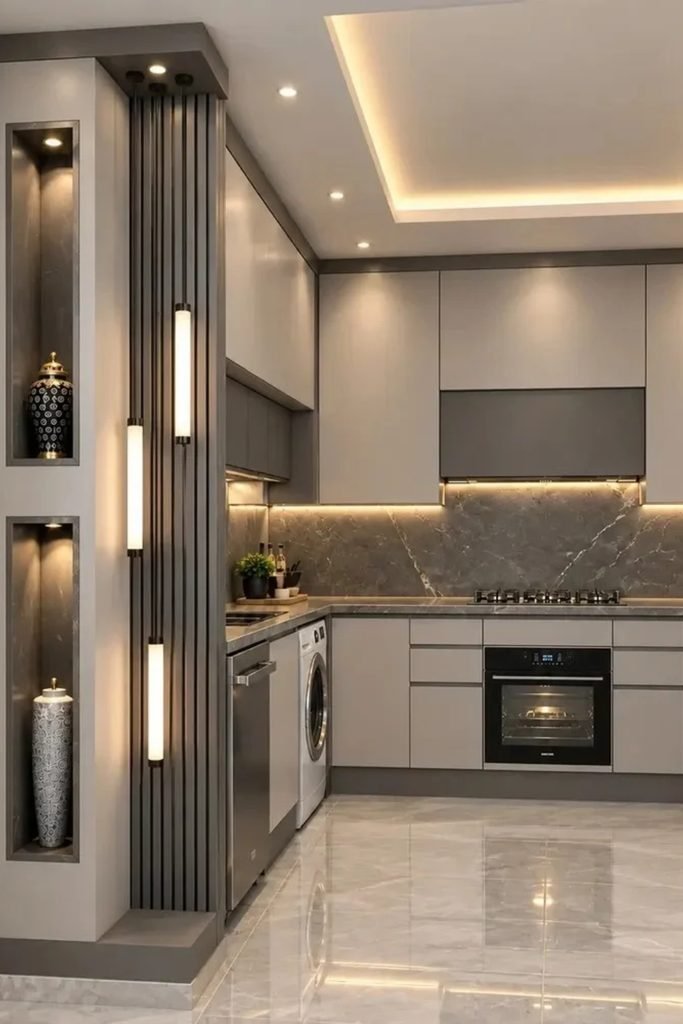
If you prefer a modern kitchen without bold colors, soft grey cabinets and a darker stone backsplash create contrast without overwhelming the room.
Choose flat cabinet doors with concealed handles, then use vertical slatted panels beside tall storage units to introduce a little architectural detail.
Add recessed display niches and warm under-cabinet lighting, keeping the countertop mostly clear so the grey finish remains the main feature.
Forest Green
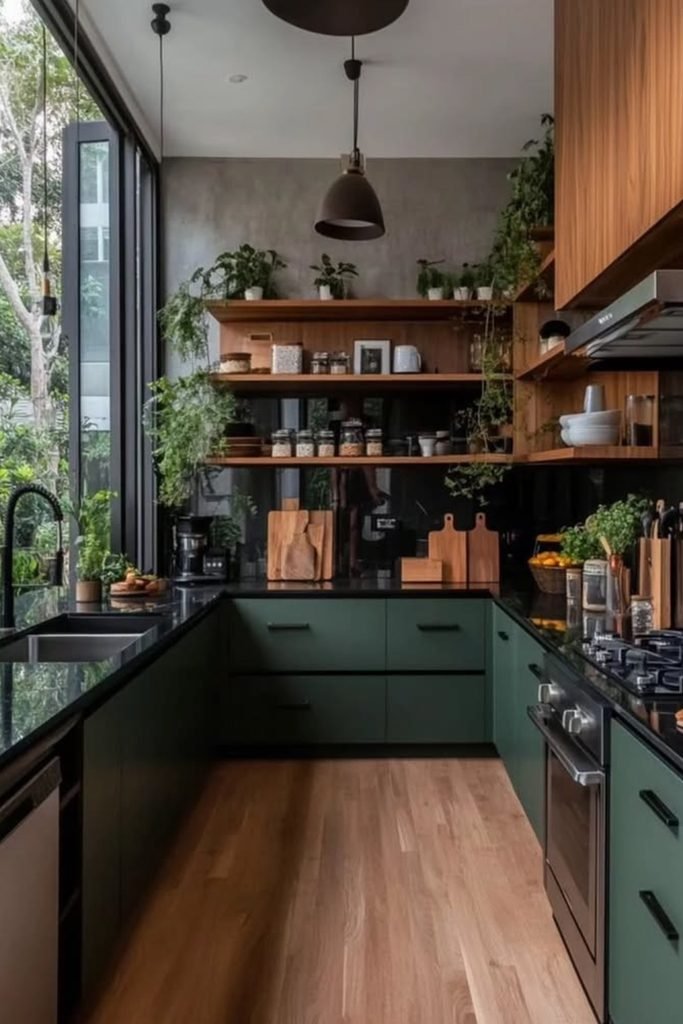
Bring a natural feel into your kitchen by pairing deep forest green lower cabinets with wooden shelves and warm timber accents.
This combination works especially well in U-shaped kitchens with large windows, where daylight helps balance the darker cabinetry and black countertops.
Keep your upper walls open with sturdy wooden shelves, but store everyday clutter inside closed drawers to maintain a practical cooking space.
FAQs
Can Cabinets Be Updated?
You don’t always need to replace your kitchen cabinets to achieve a modern look, especially when the existing frames are still strong.
Try painting the doors in warm white, sage green, or greige, then replace outdated handles with slim black or brushed brass hardware.
If the doors have heavy decorative details, consider replacing just the fronts with flat-panel designs while keeping the original cabinet boxes intact.
Which Finish Lasts?
For busy kitchens, choose cabinet finishes that can handle regular cleaning, cooking grease, and occasional splashes without showing damage too quickly.
Quality laminate and properly finished painted cabinets are practical options, but durability also depends on the materials underneath and edge protection.
Matte surfaces can hide reflections better than glossy ones, so test finish samples under your kitchen lighting before making a final decision.
