
20 Mixed Metals Kitchen Ideas for 2026

This article may contain affiliate links: read full affiliate disclosure.
You like the idea of mixing metals in your kitchen, but you might notice no one really tells you how to do it without messing things up.
You see brass, black, and stainless steel used together online, and you think you could try it too.
But when it comes to real life, you know one wrong choice can make your kitchen feel random instead of thoughtfully put together.
That’s why this idea can feel risky for you. If you are worried you might pick the wrong finishes and you could end up wasting money fixing it later, you are exactly where you should be.
In this article, you will see how you can mix metals in a way that actually makes sense and feels right in your space.
Can You Mix Metals In Kitchen Design?
Yes, you can mix metals in your kitchen design, but only when you do it on purpose. The real issue for you isn’t mixing metals at all; it’s when you mix them randomly.
When you start adding brass, black, and stainless without a clear plan, you can feel your kitchen slowly start to look confused instead of calm.
But when you choose one main metal and you support it with one or two others, everything can suddenly click for you. You don’t need to match every single finish.
What you should focus on is balance. Once you understand that, mixing metals stops feeling risky for you and starts feeling easy and natural.
Warm Brass Focus
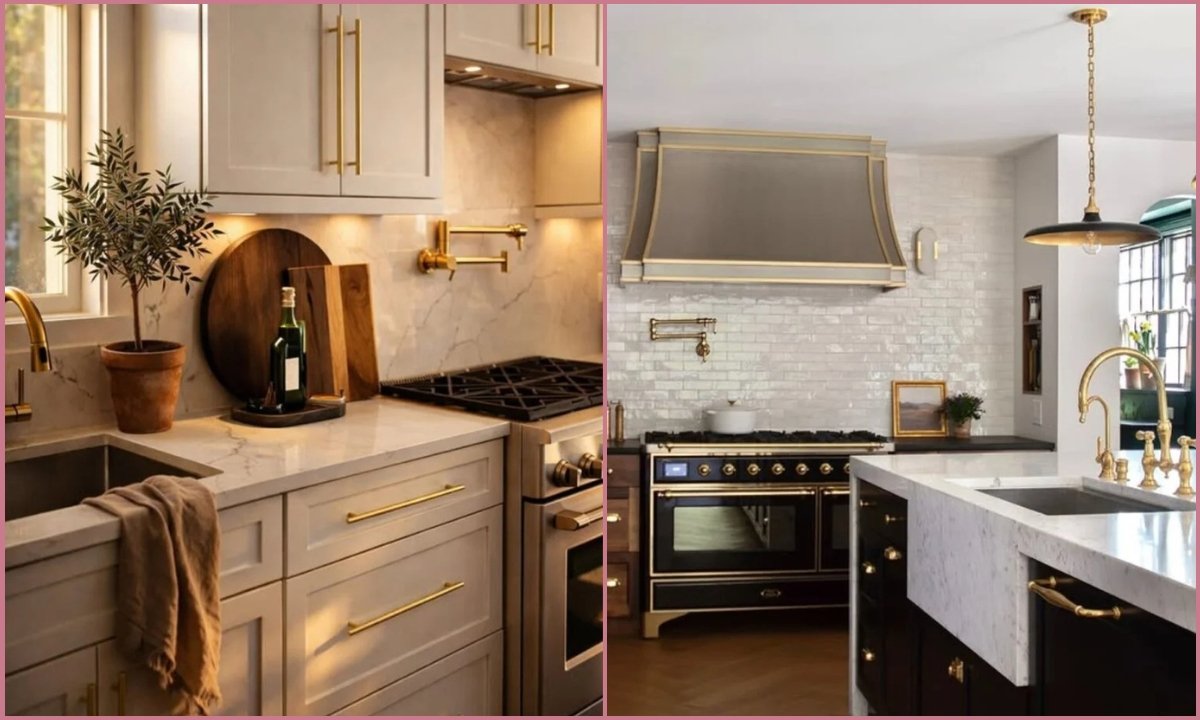
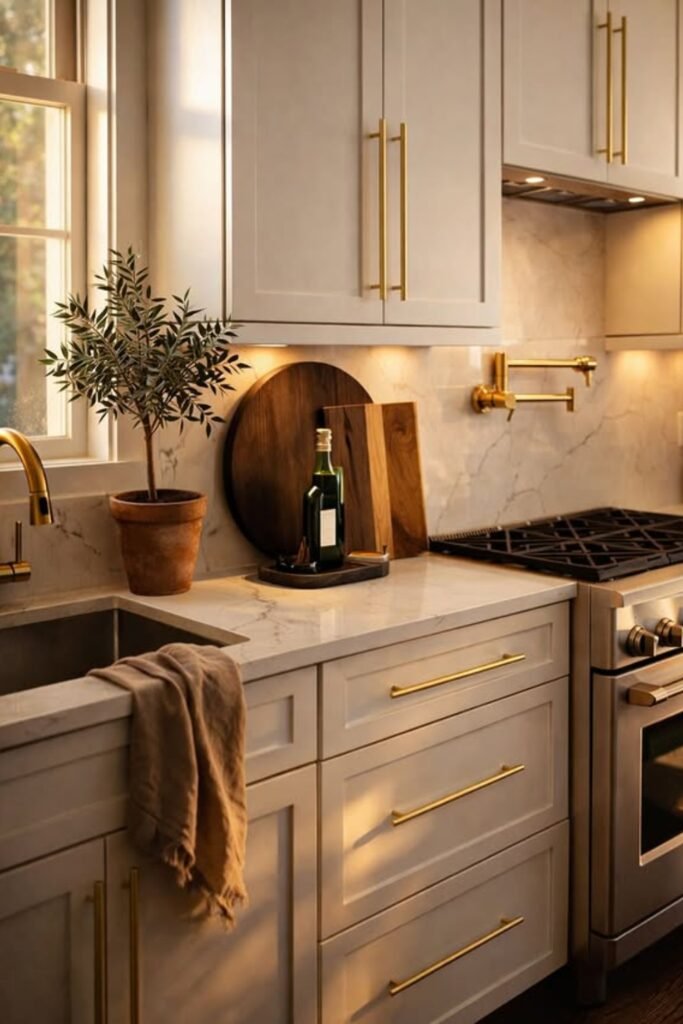
You can see in this kitchen how mixing metals works best when you clearly let one finish lead.
You notice brass showing up on the cabinet hardware, faucet, and pot filler, so you instantly feel that warmth and intention.
Black Brass Balance
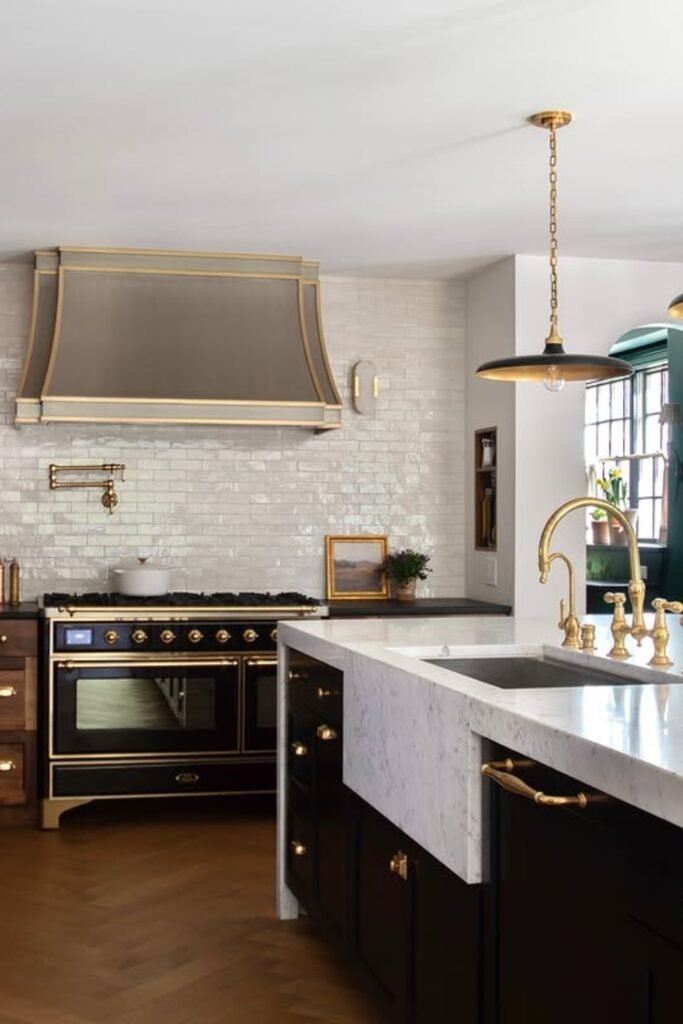
You get a strong base from black, and then you feel brass soften it through the faucet, range details, hardware, and lighting.
When you add a marble island like this, you give your eye a break so nothing feels too dark. This works best for you if your kitchen is large or well-lit.
Layered Metal Zones
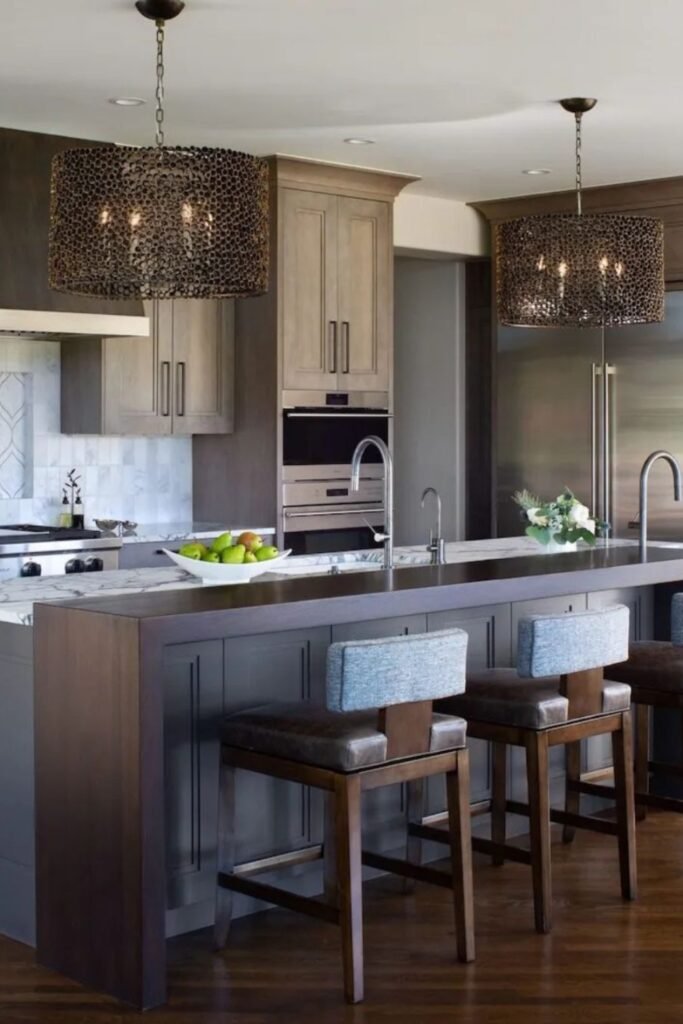
You notice darker metal staying in the pendant lights and island base, adding depth without heaviness.
This works best for you in open kitchens, where you can separate metals by zones and still keep the layout feeling calm.
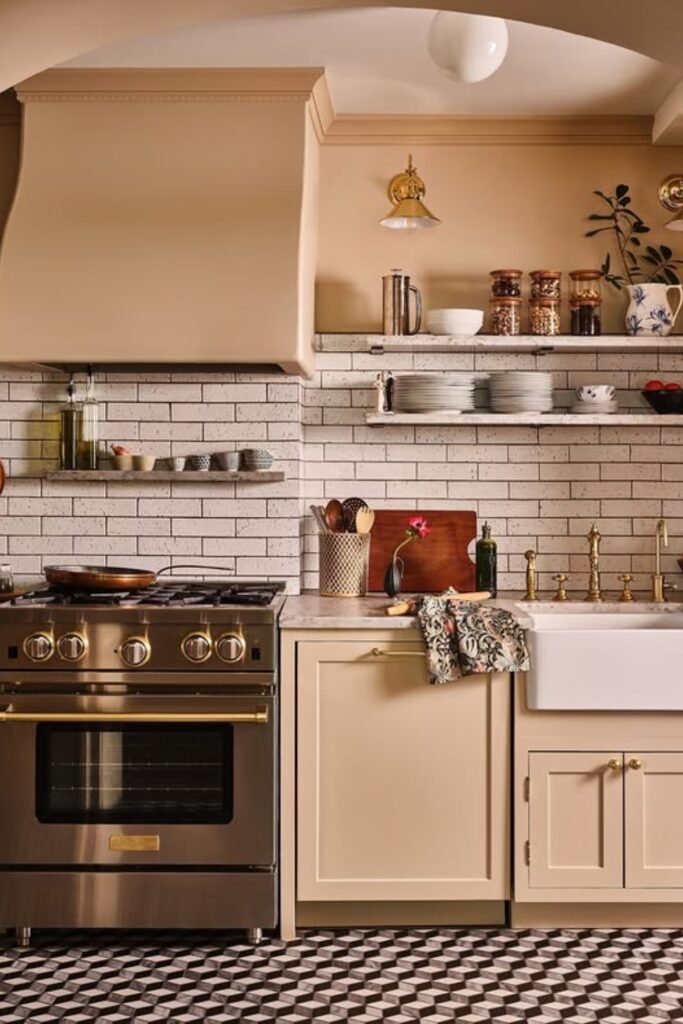
Vintage Metal Mix
When you add open shelves and warm cabinet tones, you soften the contrast so it doesn’t feel overly polished.
This idea works best if you want your kitchen to feel lived-in and collected. You can stick to warm metals and let stainless stay practical instead of decorative.
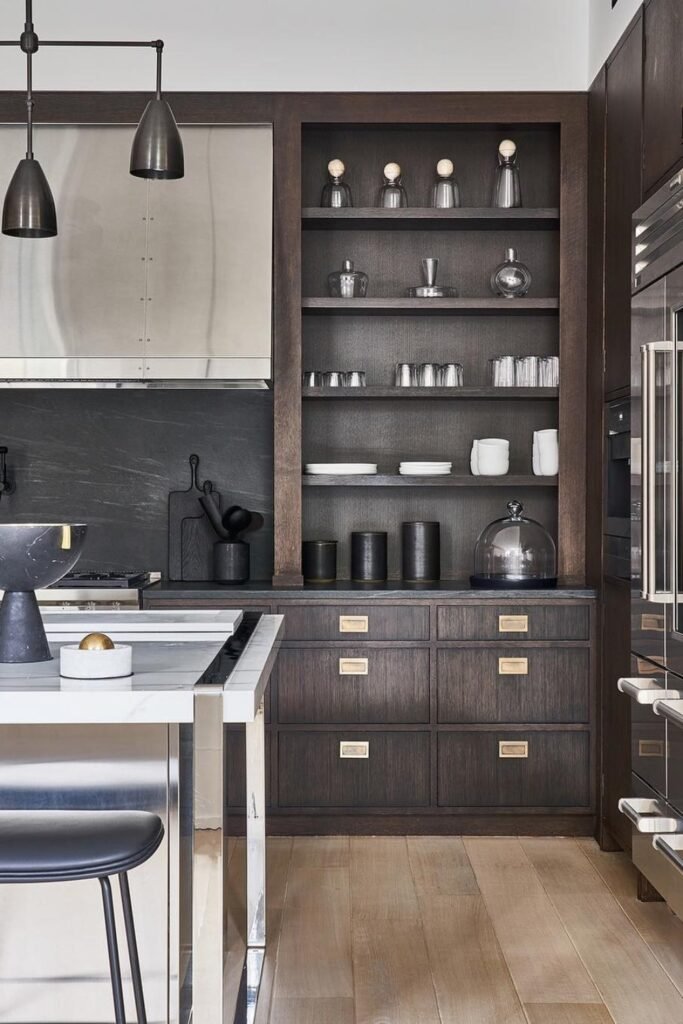
Dark Metal Layers
You see black fixtures, stainless appliances, and subtle brass hardware working together because each one has a clear job.
This works best for you in modern kitchens with dark cabinetry. If you keep finishes minimal and repeat each metal at least twice, nothing feels accidental.
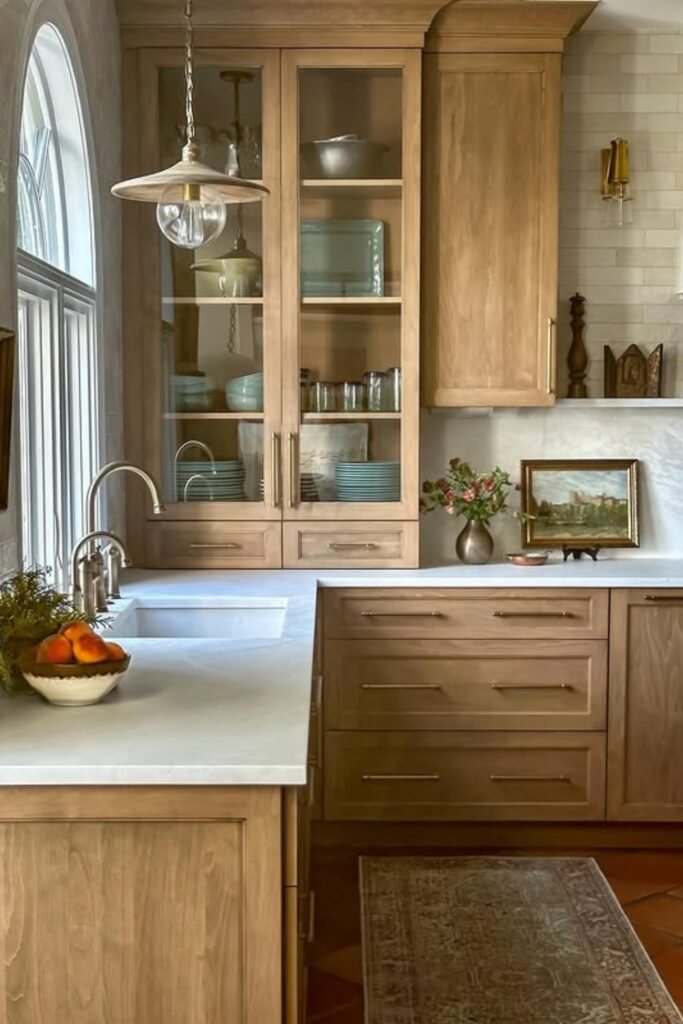
Soft Wood Metals
You see light wood cabinets setting a relaxed base, while brass hardware and wall lights add warmth without pulling focus.
When you let wood dominate first and then layer metals gently, nothing feels forced or over styled.
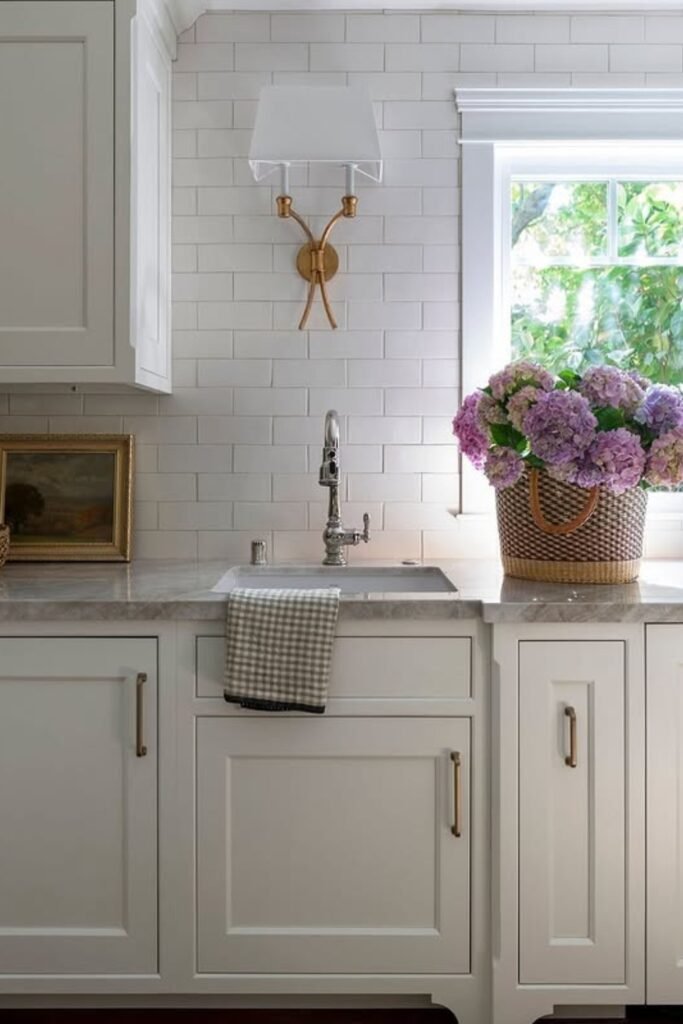
Subtle Metal Contrast
You’ll notice this kitchen keeps things calm by using contrast in small amounts. You see brass on the cabinet hardware and wall sconce, adding warmth against white surfaces.
If you limit metals to smaller fixtures and keep your palette light, nothing competes. The chrome takes over at the faucet, where you naturally expect a cleaner, cooler finish.
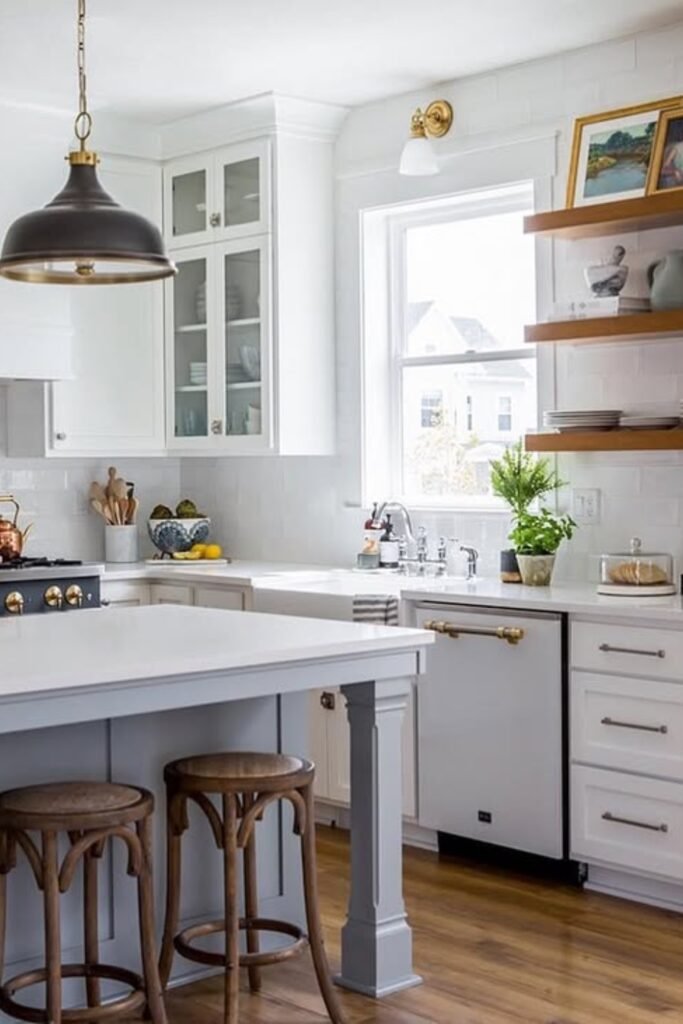
Brass Black Accents
You notice brass popping on the range knobs, pendant light, and dishwasher handle, while black grounds the space through lighting and the stove.
When you repeat brass on small focal points and use black only where you want the eye to pause, the balance feels right.
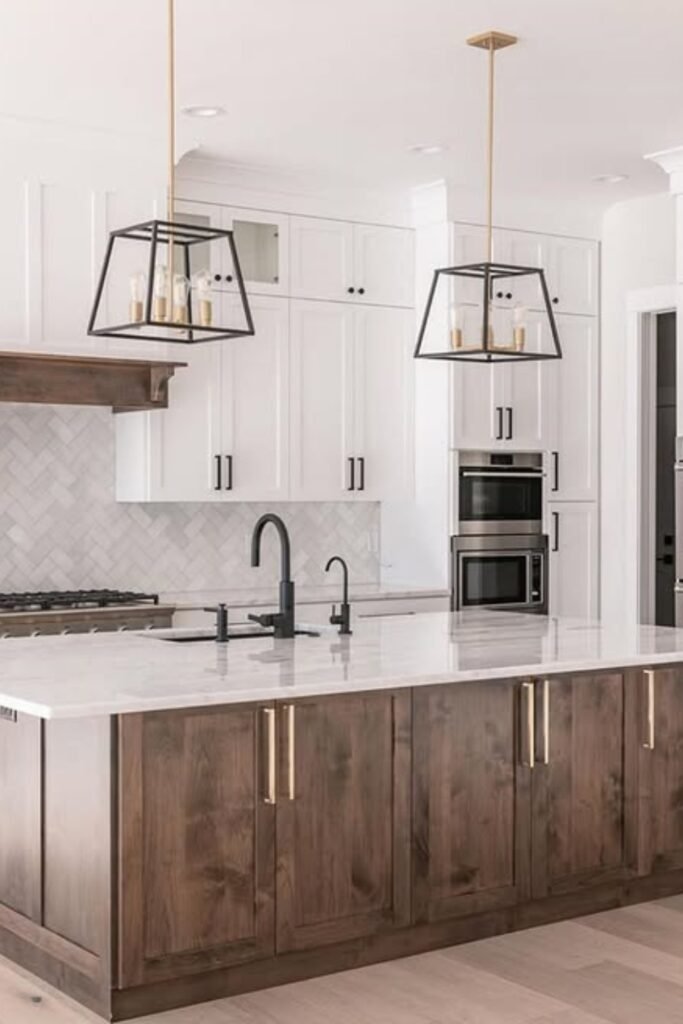
Black Brass Geometry
You might think sharp contrast would feel harsh, but this kitchen shows you control is what matters.
You see black on the faucet and pendant frames, giving structure and definition. If you keep black to bold shapes and let brass act as the bridge, everything stays clean.
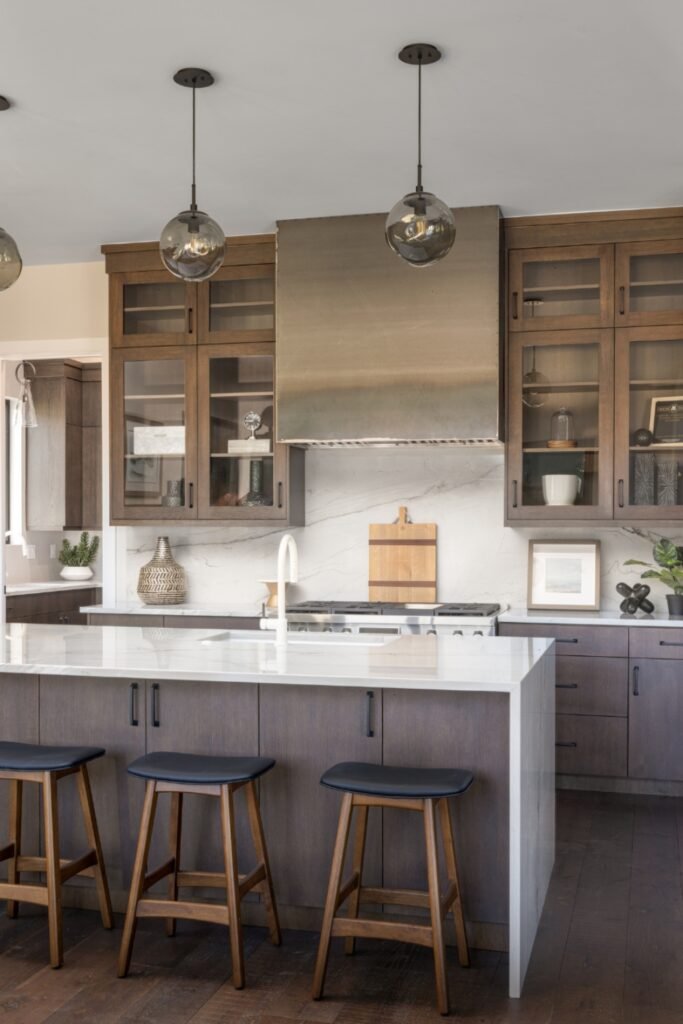
Wood Anchors Metals
You can tell this kitchen works because wood stabilizes everything first. You see warm wood cabinets and stools grounding the space, so the metals don’t feel harsh.
Because nothing is stacked on top of everything else, your eye can breathe. When you start with wood as your anchor and layer metals lightly, the space stays calm.
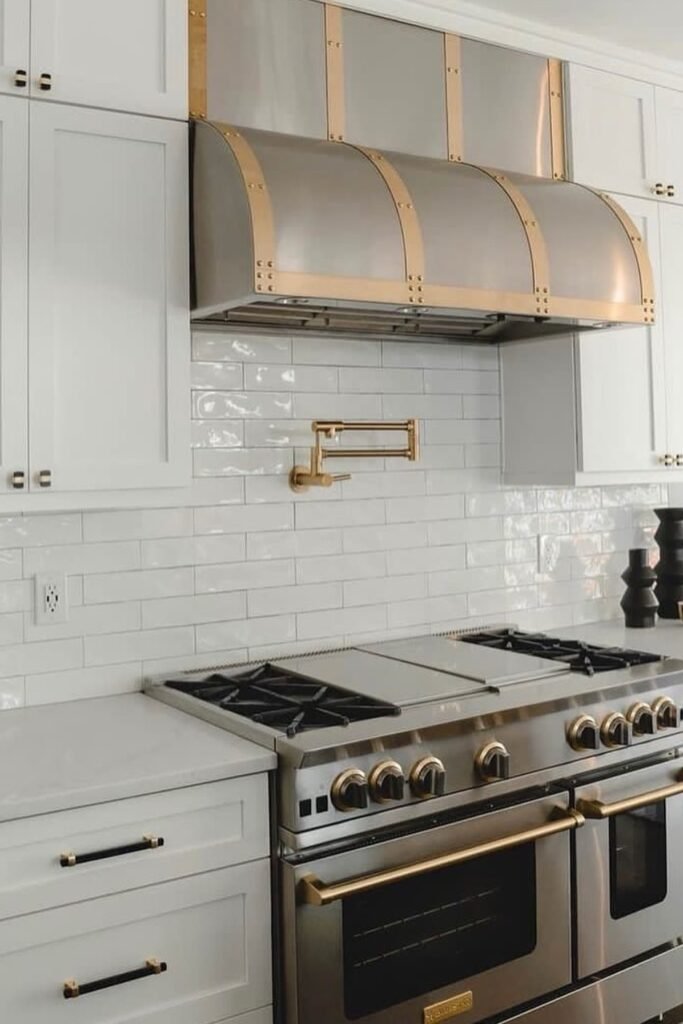
Statement Hood Moment
The stainless steel dominates the hood and range, but you see brass straps, knobs, and the pot filler instantly softening that industrial feel.
Because the cabinets stay white and simple, the metals stand out without feeling heavy. When you let the hood lead and repeat brass nearby, nothing competes.
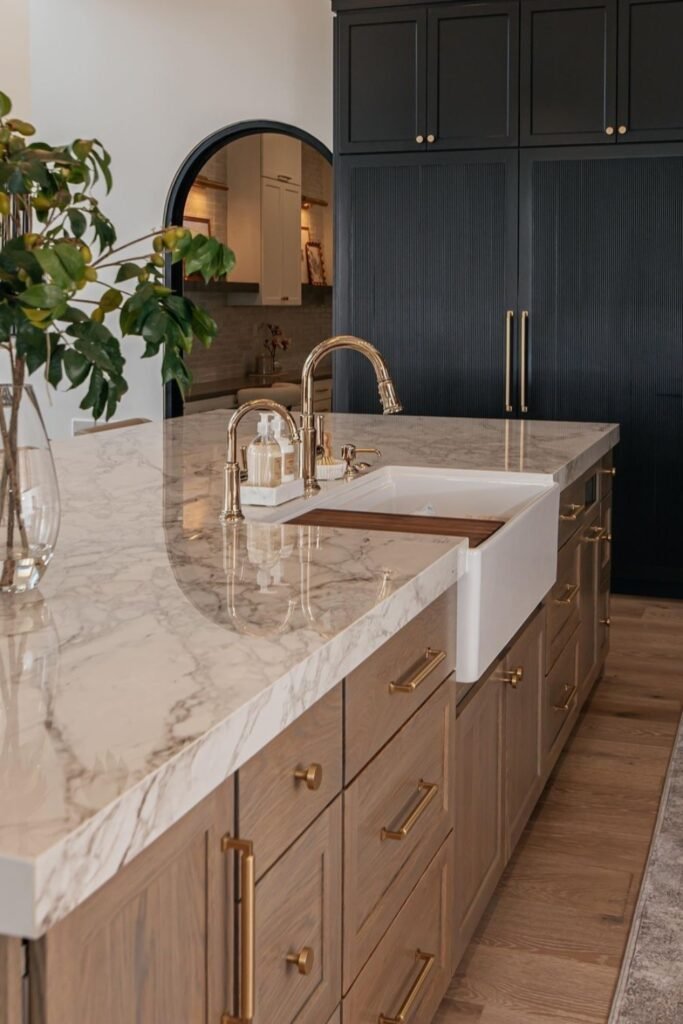
Brass Island Focus
You can see how this kitchen makes a clear decision and sticks to it.
You notice brass taking over the island through the faucet and hardware, so your eye naturally lands there first.
The marble countertop connects both tones and keeps things polished. When you feature brass in one zone and stay restrained elsewhere, the design feels intentional.
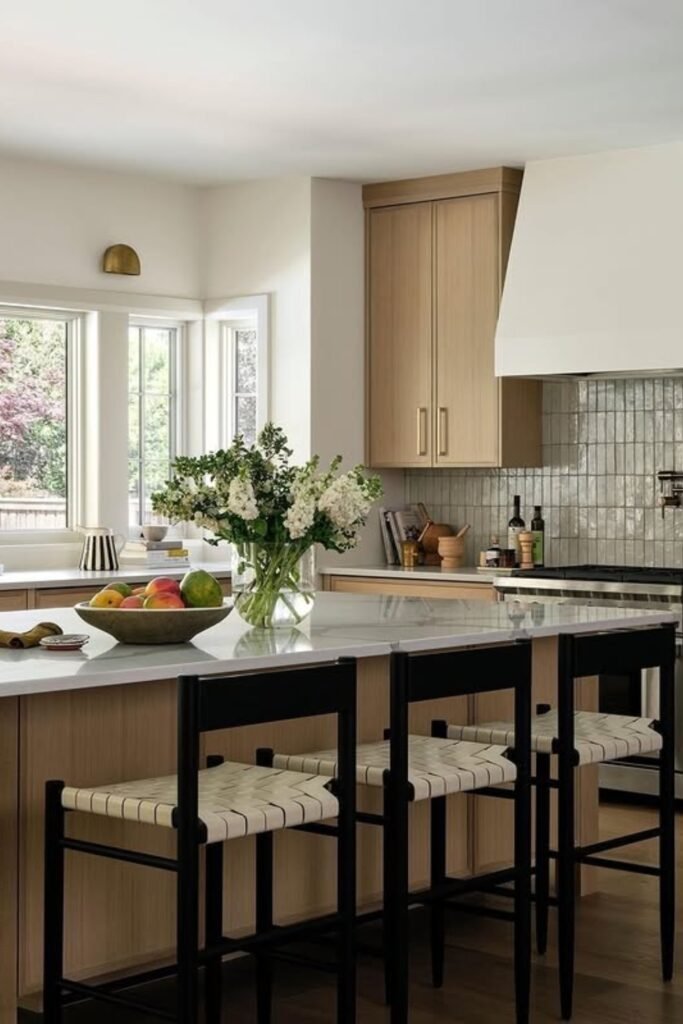
Calm Metal Balance
You see black on the stools adding contrast, brass staying subtle on the wall light and hardware, and stainless blending quietly into the cooking area.
When you start with wood and then add metals in spaced-out touches, everything feels easy.
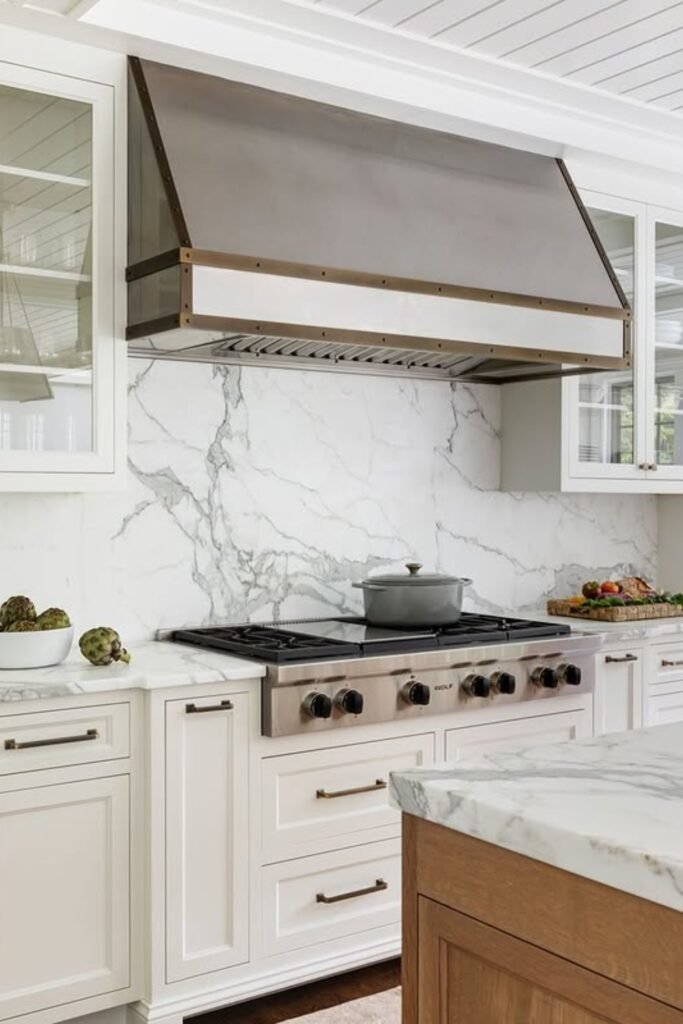
Hood-Led Mixing
You see stainless steel taking over the cooking zone, so everything feels professional and clean, while darker metal straps on the hood add depth without pulling attention away.
You will notice brass showing up quietly on the cabinet hardware, just enough to warm things up.
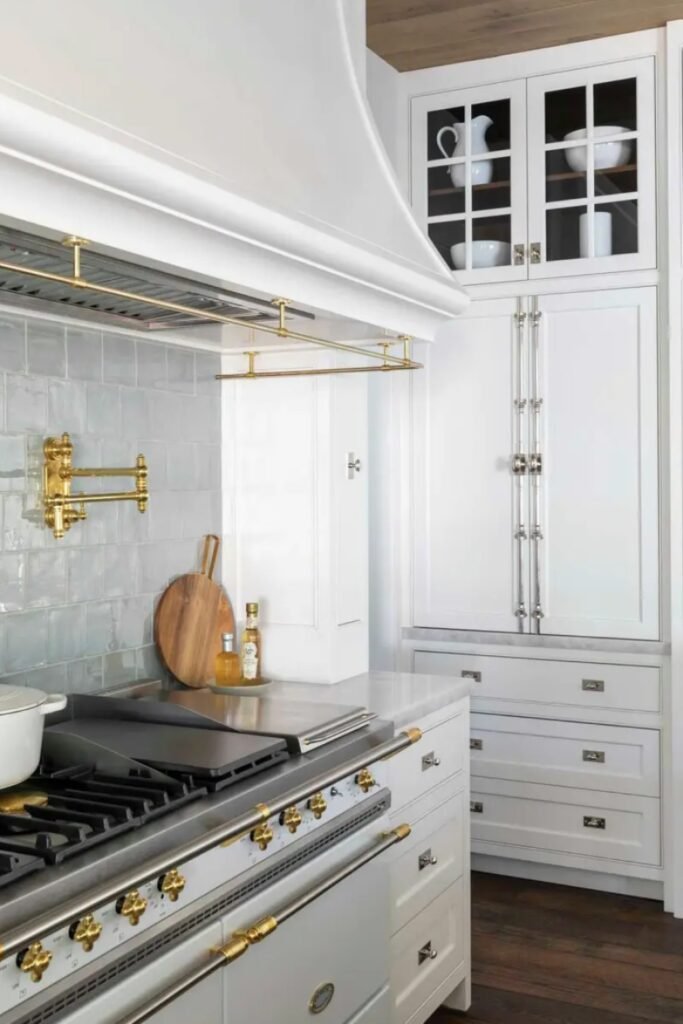
Brass Steel Harmony
You notice stainless steel handling the heavy-duty areas like the range and hood, which keeps everything practical and clean.
Then you see brass stepping in on the knobs, pot filler, and rail, adding warmth right where your eye naturally goes.
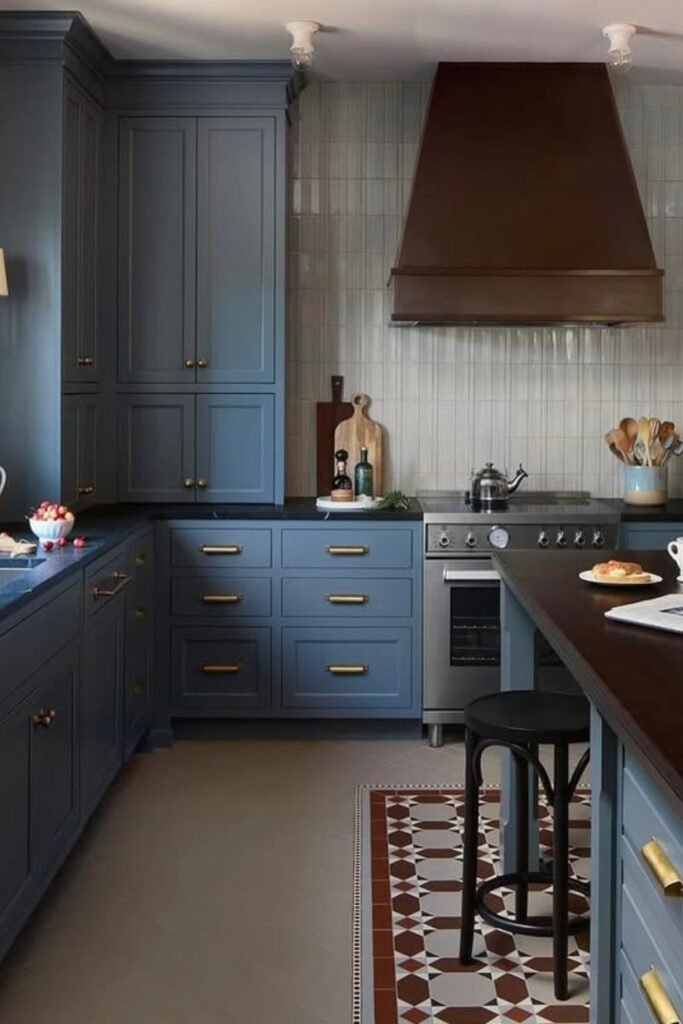
Blue Brass Depth
You can tell this kitchen works because the deep blue cabinets do most of the visual work for you.
Once you commit to a strong color like this, mixing metals starts to feel natural instead of risky.
Brass Against Dark
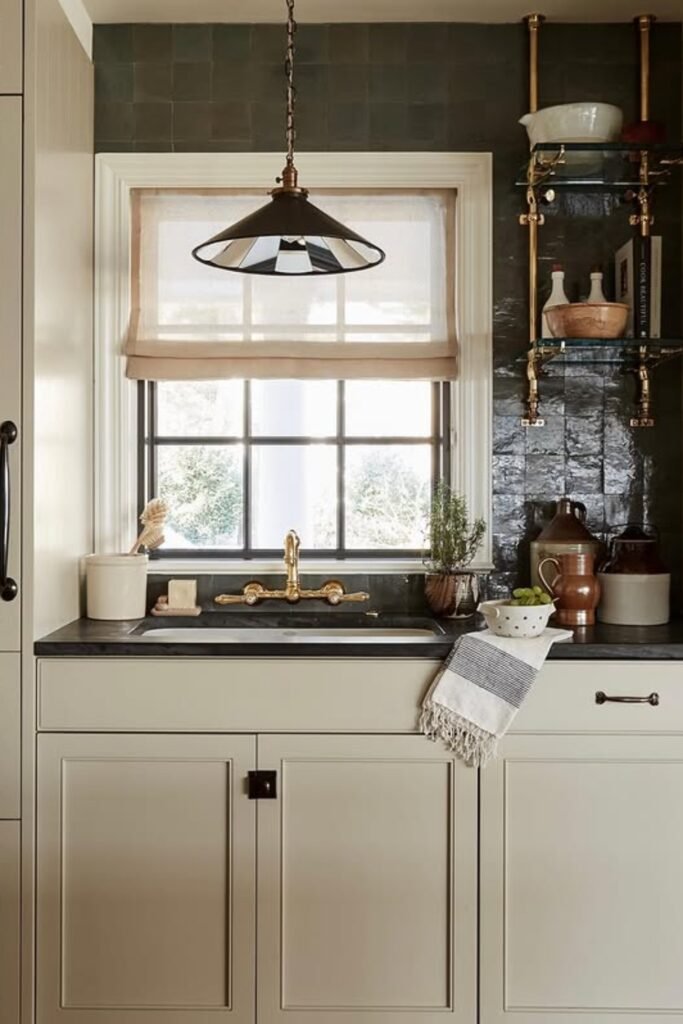
You will notice this kitchen proves darker backgrounds can make mixed metals feel richer, not busy.
The deep tile backsplash gives you a strong backdrop, so the brass faucet, shelf brackets, and lighting feel warm and intentional.
Green Cabinet Contrast
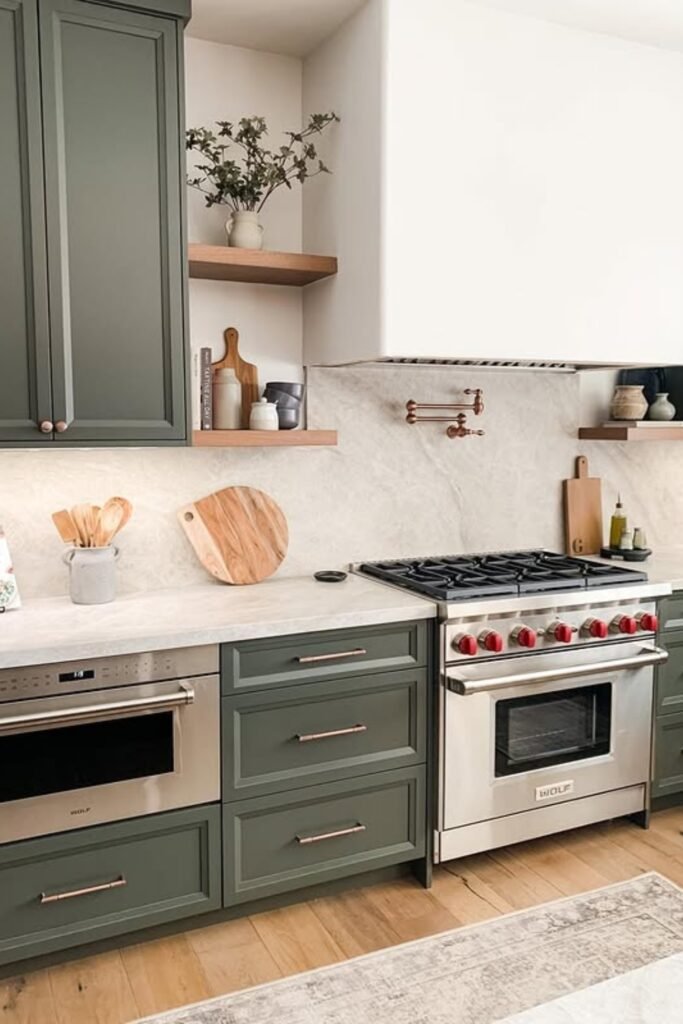
The soft green cabinets create a calm base for you, so stainless appliances don’t feel cold and brass hardware never feels flashy.
You’ll notice brass appearing on drawer pulls and the pot filler, adding warmth where your hands and eyes naturally go.
Soft Rustic Mix
You can feel what keeps this kitchen from feeling busy, the metals follow the materials, not the other way around.
When you start with wood as your anchor and add metals in small, thoughtful spots, the space feels easy and lived-in.
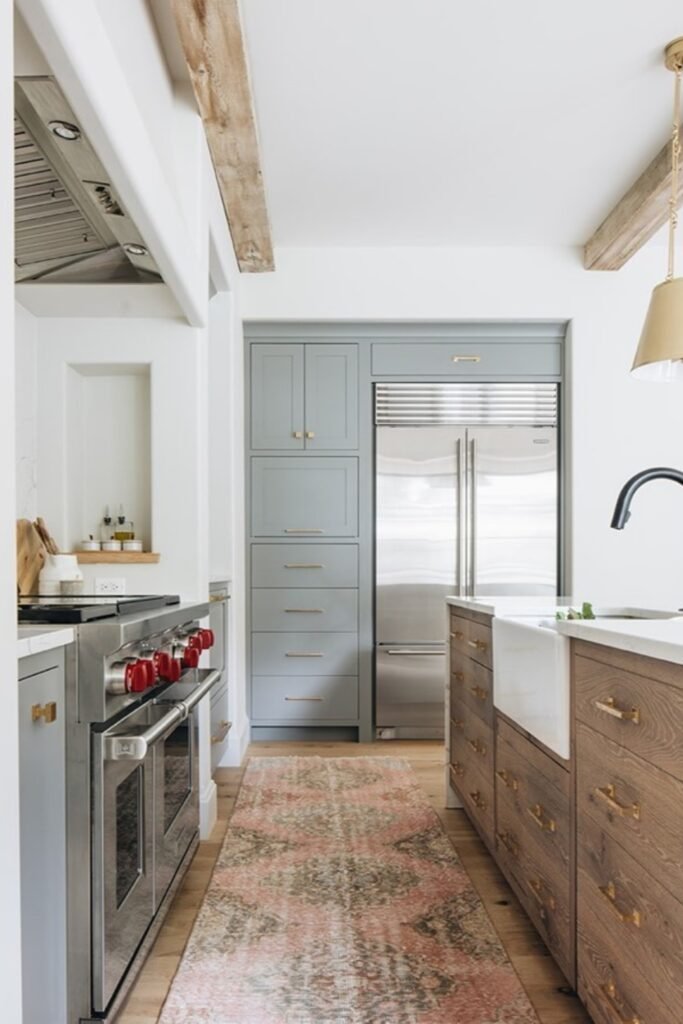
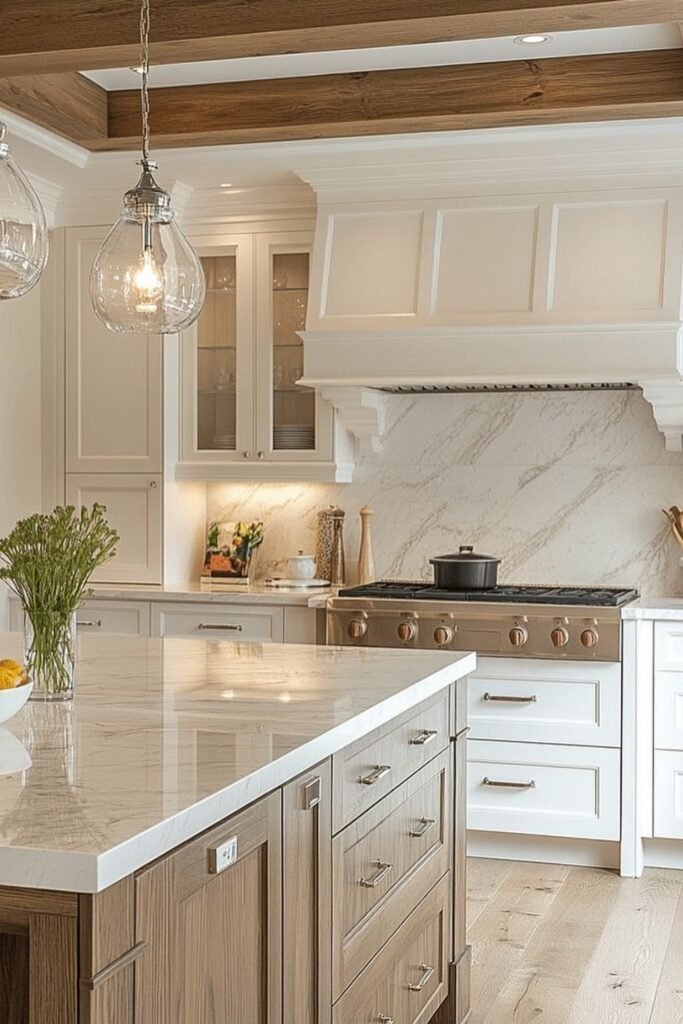
Warm Neutral Blend
You will notice how effortless mixed metals feel here because everything stays in the same warm family.
When you let wood and stone lead first and use metals to quietly support them, the whole space feels calm.
FAQs
Can you mix different metal finishes in one kitchen?
Yes, you can definitely mix different metal finishes in your kitchen, as long as you do it on purpose.
You should pick one main metal to lead the space, and then let one or two others support it.
When you give each metal a clear role, you’ll see that your kitchen feels balanced instead of random.
Should kitchen hardware match the faucet?
You don’t have to make your kitchen hardware match the faucet. What you should focus on is balance, not perfect matching.
When your faucet stands out, you can repeat that finish somewhere else, on lighting, cabinet pulls, or other details, so you will see that everything feels connected instead of out of place.
You may like to read!
