
23 Minimalist Bathroom Ideas for 2026

This article may contain affiliate links: read full affiliate disclosure.
You clean your bathroom, put everything back, and somehow it still looks messy. Your bottles crowd the sink, storage never feels enough, and your space feels smaller than it really is.
You see minimalist bathroom photos online, but they look too perfect for real life.
The minimalism isn’t about removing everything, it’s about fixing the few decisions that create clutter in the first place.
Once you get those right, your bathroom becomes easier to use, easier to clean, and calmer to walk into every day.
In this article, you will see how minimalist design actually works in real homes, with 23 minimalist bathroom ideas.
Let’s jump in!
How To Design A Minimalist Bathroom?
If you want a minimalist bathroom, you have to stop thinking about decoration and start thinking about decisions.
Every choice you make either reduces visual noise or adds to it. You can start by removing anything you don’t use daily, this alone changes how your space feels.
Next, limit your colors, materials, and finishes so your eye isn’t jumping from one thing to another.
You can choose simple fixtures, hide storage where possible, and keep surfaces mostly clear.
When you design this way on purpose, the bathroom feels bigger, cleaner, and easier to live with every single day.
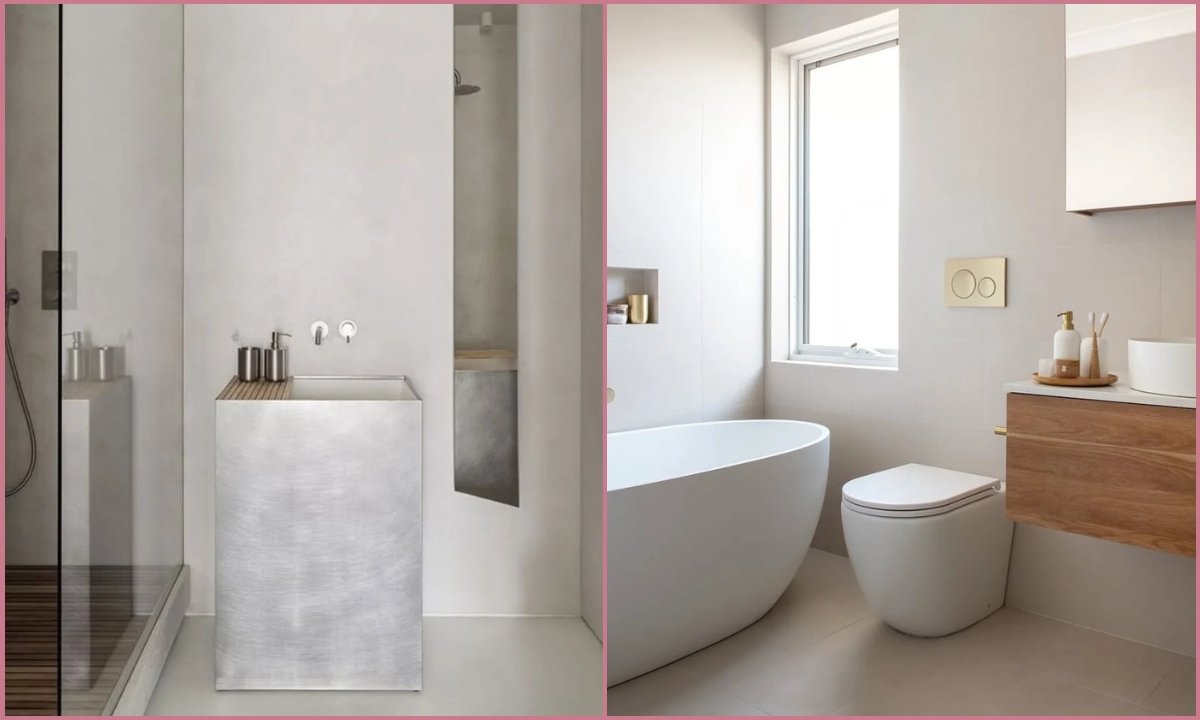
Lift The Floor
When everything touches the floor, the bathroom feels heavier than it really is. This approach works best in small or narrow bathrooms.
The floating vanity and wall-mounted fittings keep the lower half visually open, which instantly makes the space feel larger and calmer.
One Statement Piece
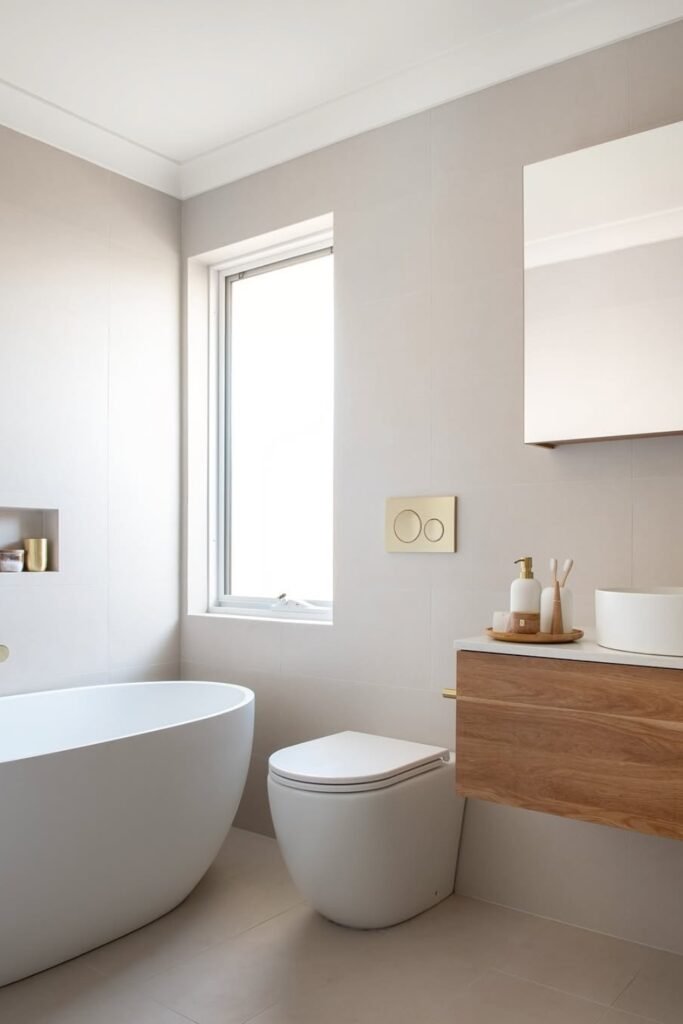
You don’t need multiple elements to make a bathroom feel designed, one strong piece can do the job.
The sculptural concrete sink becomes the focus, allowing everything else to stay quiet. This works best in minimalist homes where you want impact without clutter.
Let Light Lead
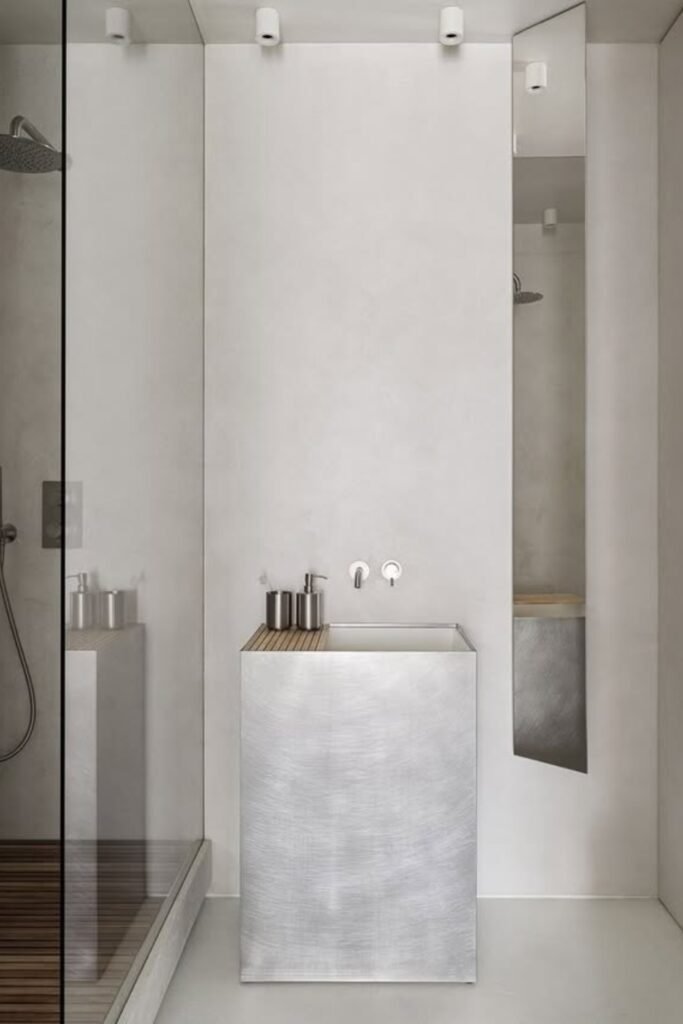
Your natural light is doing most of the work in this bathroom, and that’s why it feels calm instead of empty.
The soft curtains, warm wood vanity, and a single plant balance the clean lines without adding clutter.
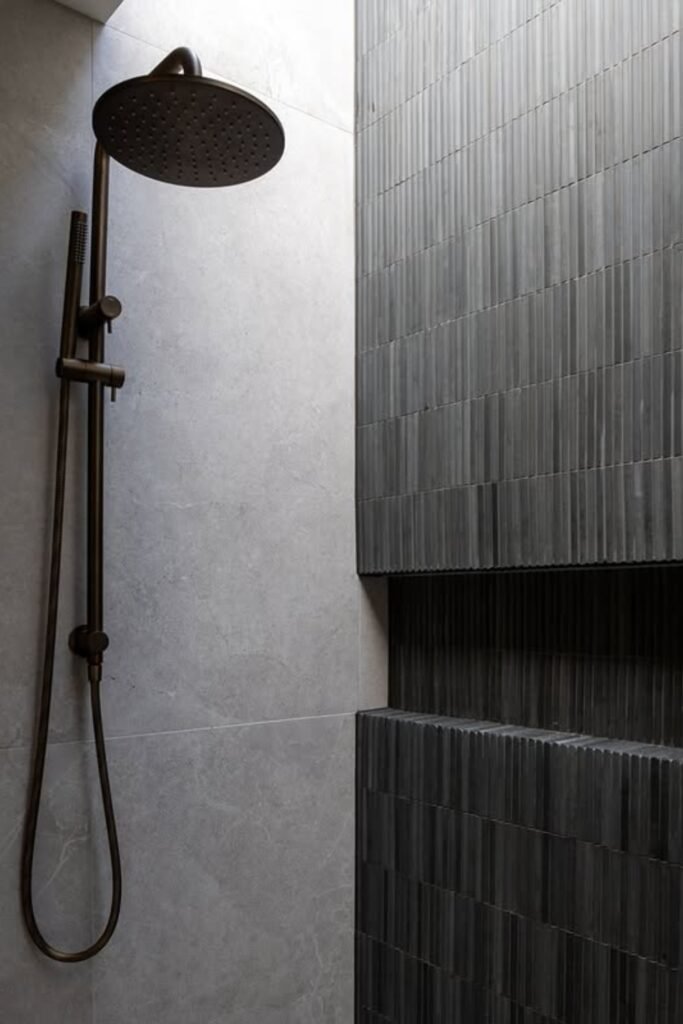
Texture Over Color
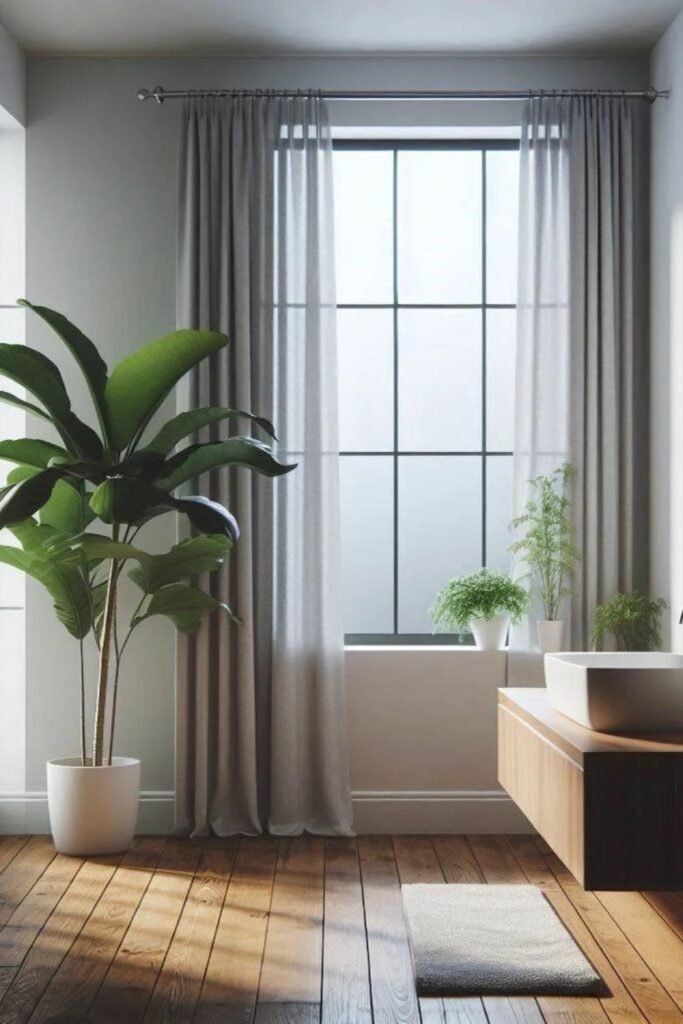
This shower proves you don’t need multiple colors to add depth. The contrast comes from texture, your ribbed tiles, matte stone, and dark metal fittings do all the work.
You can keep the palette tight and layer interest through tile finishes, surface patterns, and one bold fixture.
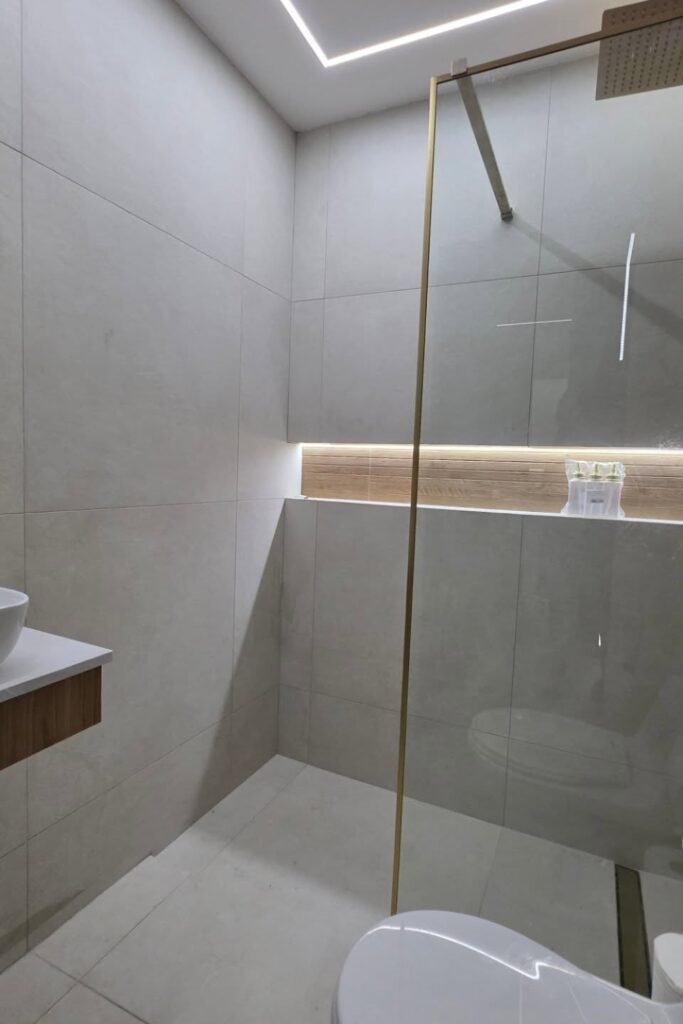
Hide Storage Smartly
Nothing breaks a minimalist bathroom faster than bottles sitting everywhere. This shower solves that by building storage into the wall, so everything stays within reach but out of sight.
It works especially well in compact bathrooms where floor space is limited.
To recreate it, you can plan recessed niches early, keep them slim, and limit what you store there to daily essentials only.
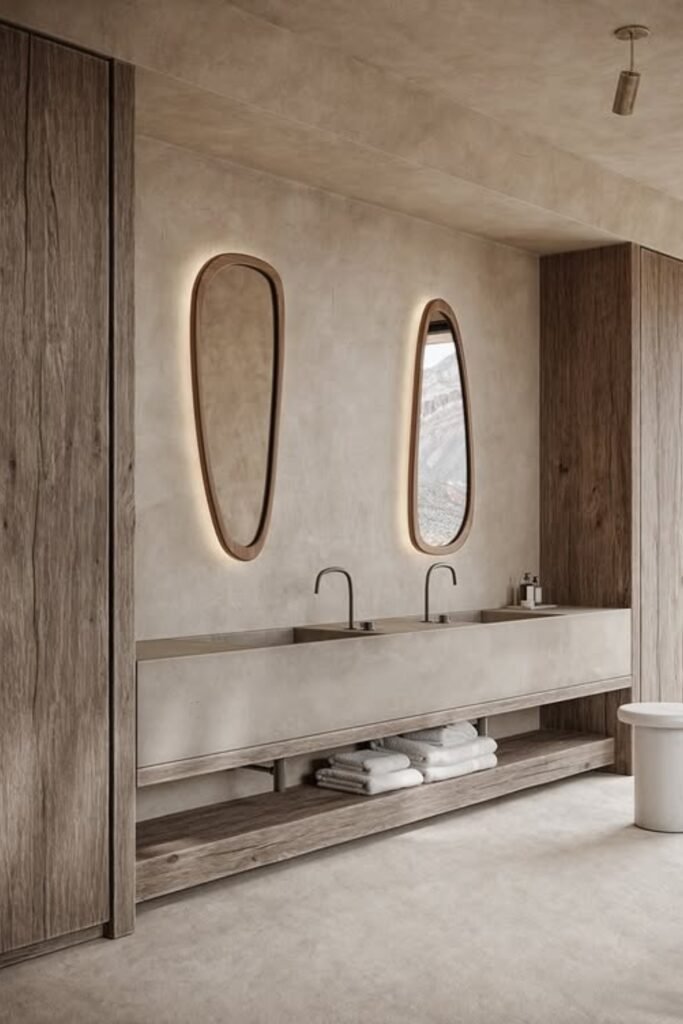
Balance With Symmetry
The double sinks, matching mirrors, and equal spacing calm the eye instantly. This approach works best in larger bathrooms or shared spaces where two people use the sink daily.
You can mirror key elements on both sides and keep materials consistent so the space feels intentional, not busy.
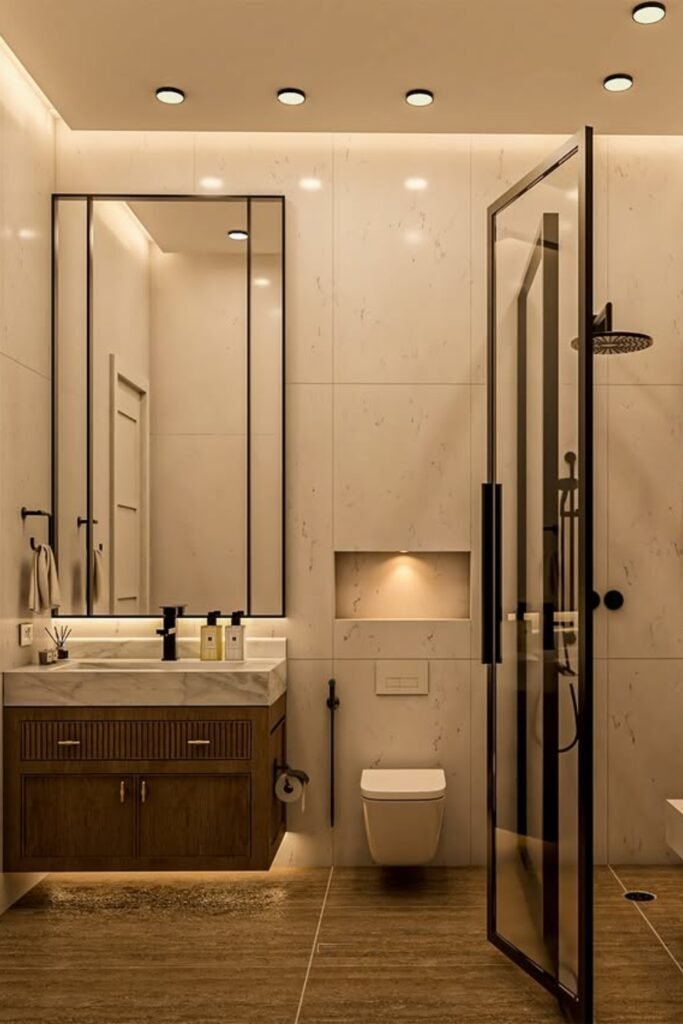
Keep Lighting Simple
The good lighting can make a minimalist bathroom feel finished without adding decor. The soft ceiling lights and warm wall lighting do the work, keeping the space calm and functional.
You can skip decorative fixtures and use layered lighting, ambient for overall glow and subtle accents where you need focus.
Let One Curve
Your straight lines dominate most minimalist bathrooms, which is why one soft curve makes such an impact here.
You can keep everything else simple and introduce one curved element, mirror, basin, or light, to soften the space naturally.
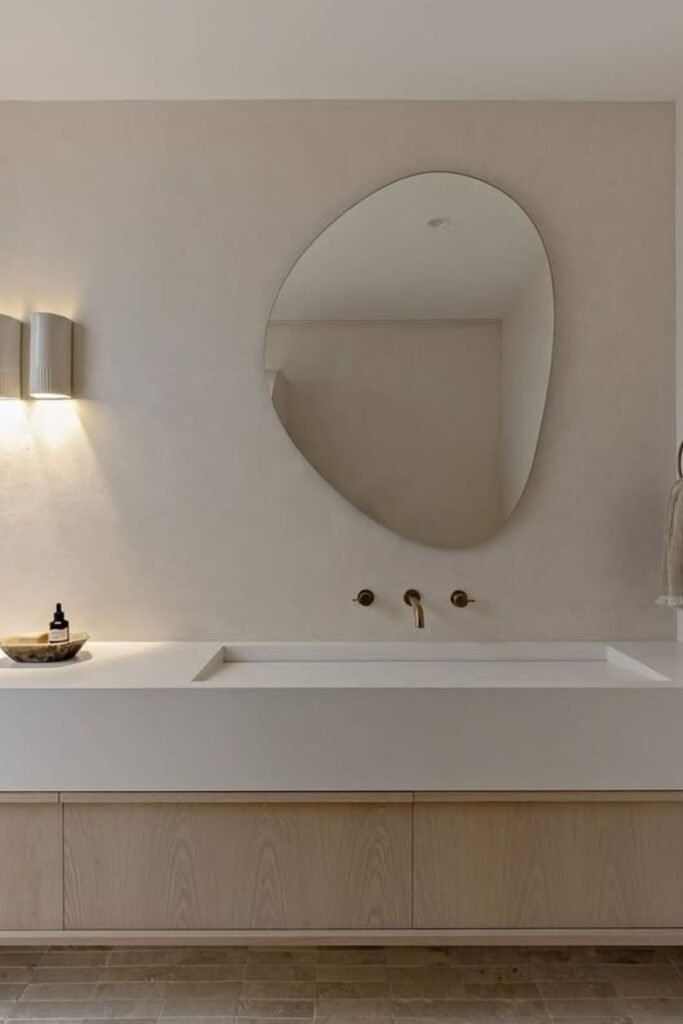
Warm Minimal Calm
This bathroom proves minimalism doesn’t have to feel cold. The soft beige walls, rounded mirror, and warm lighting create a calm, almost spa-like mood.
You can stick to warm neutrals, use black fixtures sparingly, and soften the space with curves, textured fabrics, and gentle lighting instead of decor.
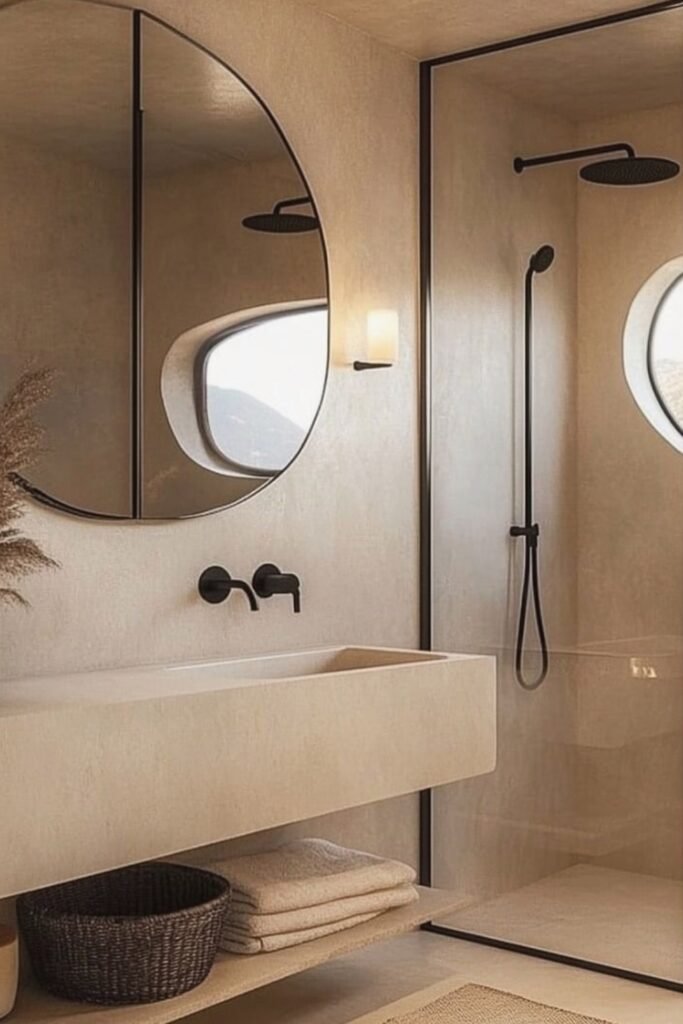
Make Tub Central
When the bathtub becomes the focus, everything else can step back. This round tub works because it sits alone, with no extra décor fighting for attention.
You can choose a simple tub shape, keep surrounding tiles quiet, and limit accessories to one or two essentials so your space feels intentional and calm.
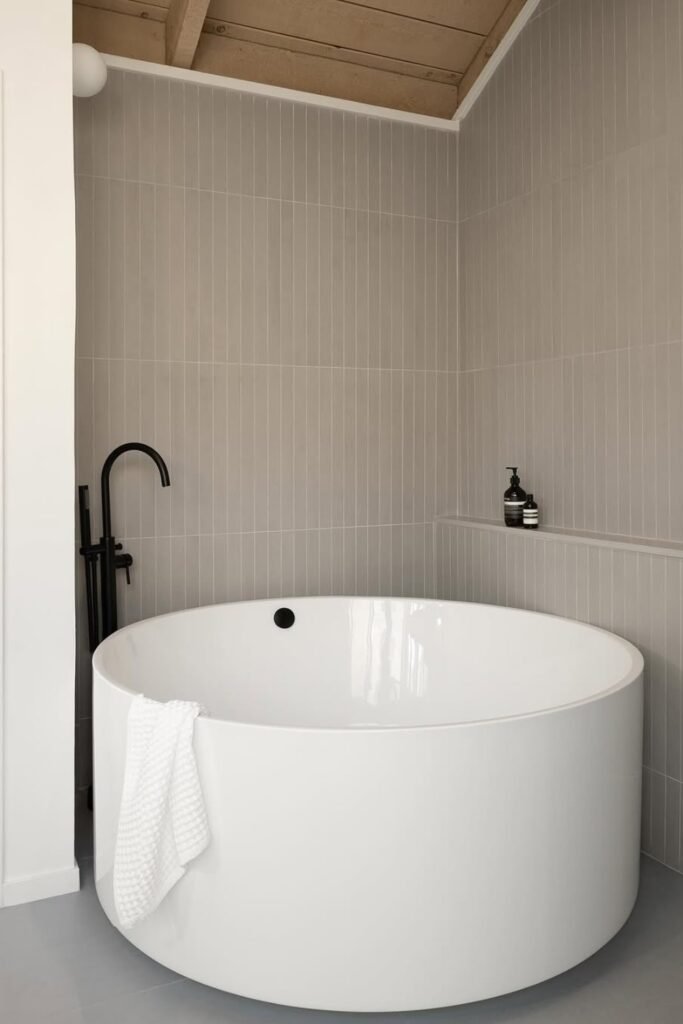
Keep It Grounded
You can pick one raw material, stone, wood, or clay, pair it with matte black fixtures, and keep countertop items limited to everyday essentials only.
The stone basin adds weight and texture, so the rest of the setup stays simple and calm. This idea works best in bathrooms where you want warmth without adding color.
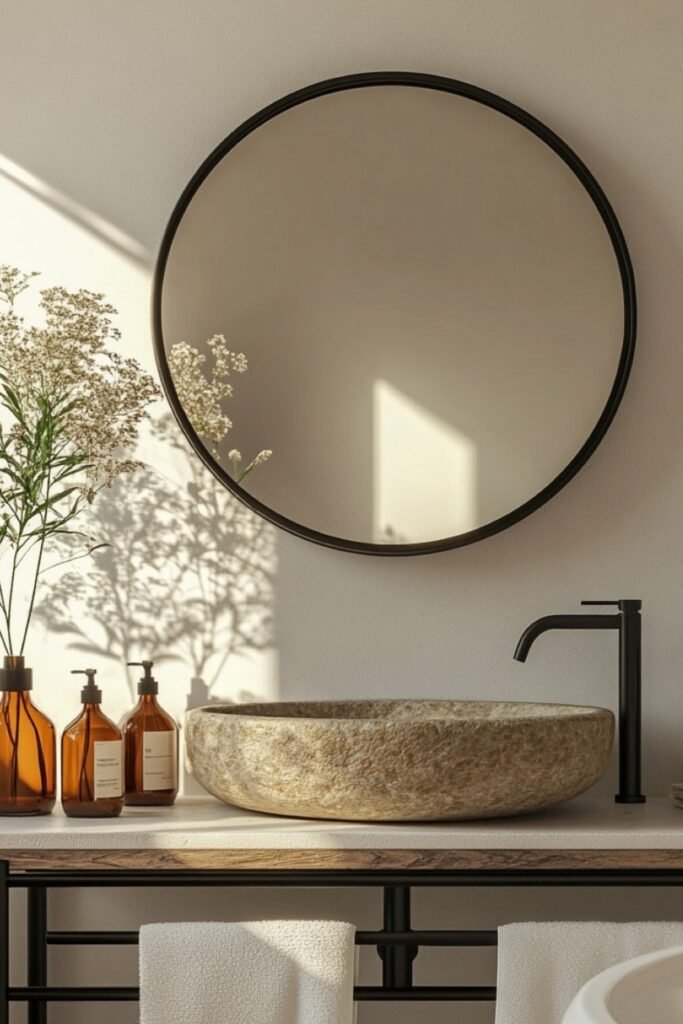
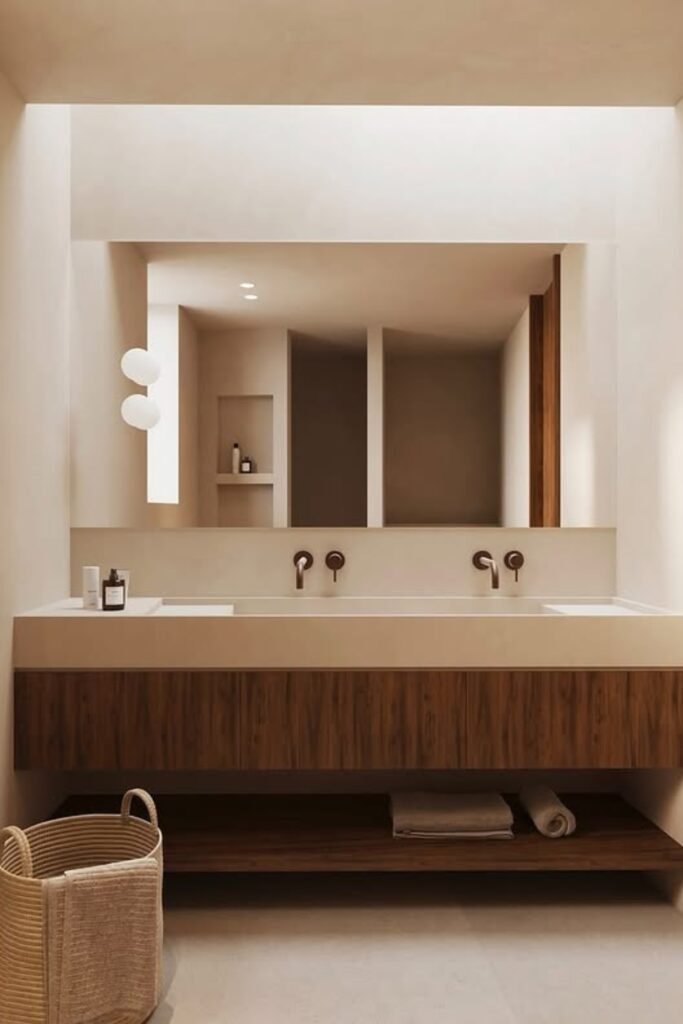
Design For Two
Your sharing a bathroom doesn’t have to mean double the clutter. This setup stays minimalist by giving each person their own sink while keeping everything visually aligned.
To recreate it, you can extend the vanity, use identical fixtures, and rely on hidden or lower storage so daily-use items don’t crowd the counter.
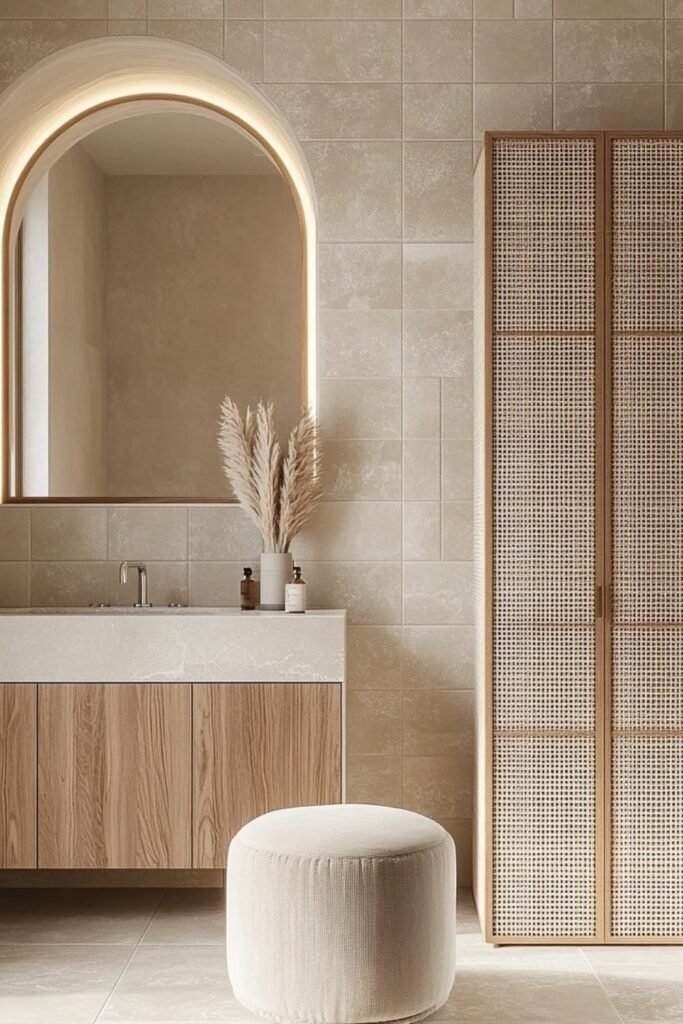
Soften With Storage
Minimalist doesn’t mean everything has to disappear behind flat, glossy cabinets. This bathroom keeps things calm by using warm wood and woven textures instead.
The tall rattan cabinet adds serious storage without feeling bulky, while the arched, backlit mirror softens the straight lines around it.
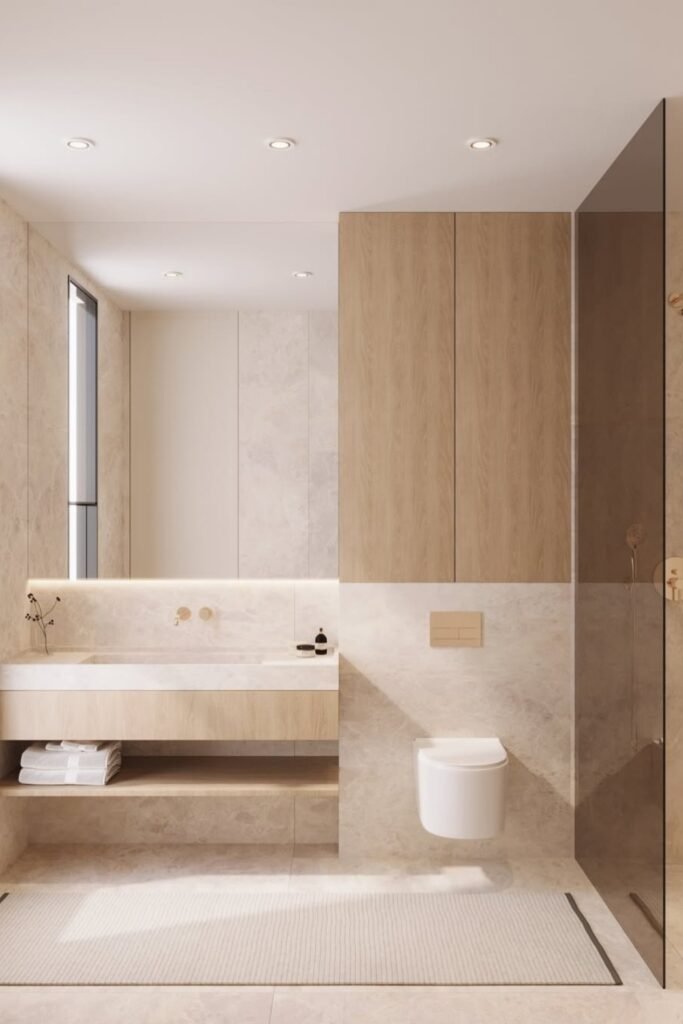
Built-In Calm
What keeps this bathroom feeling calm isn’t the color palette alone, but how everything is built into the layout.
The vanity, wall cabinets, and toilet all sit flush, so nothing sticks out visually. That’s why your space feels open even though it has plenty of storage.
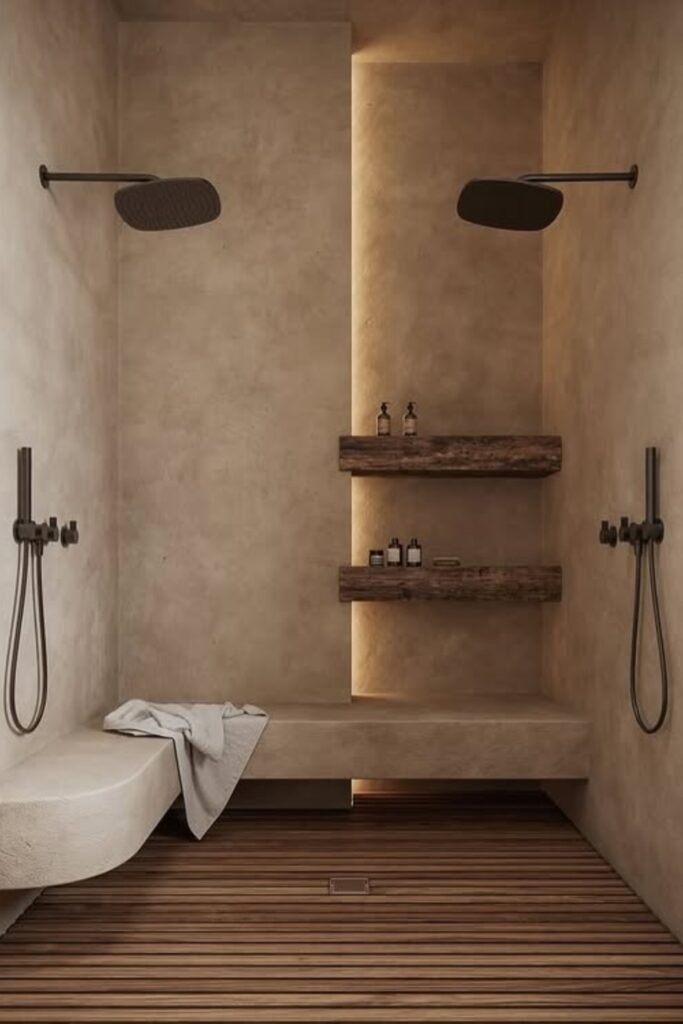
Turn Shower Ritual
This shower is designed to slow you down, not rush you out. The built-in bench, warm wall tones, and soft lighting turn a daily routine into something closer to a spa ritual.
It works best in bathrooms where you have enough depth to build inward instead of adding outward features.
Blend Everything Together
The same terrazzo finish runs across the floor and walls, so your eye doesn’t stop or break anywhere.
That instantly makes the space feel larger and calmer. This works especially well in small bathrooms where contrast can feel overwhelming.
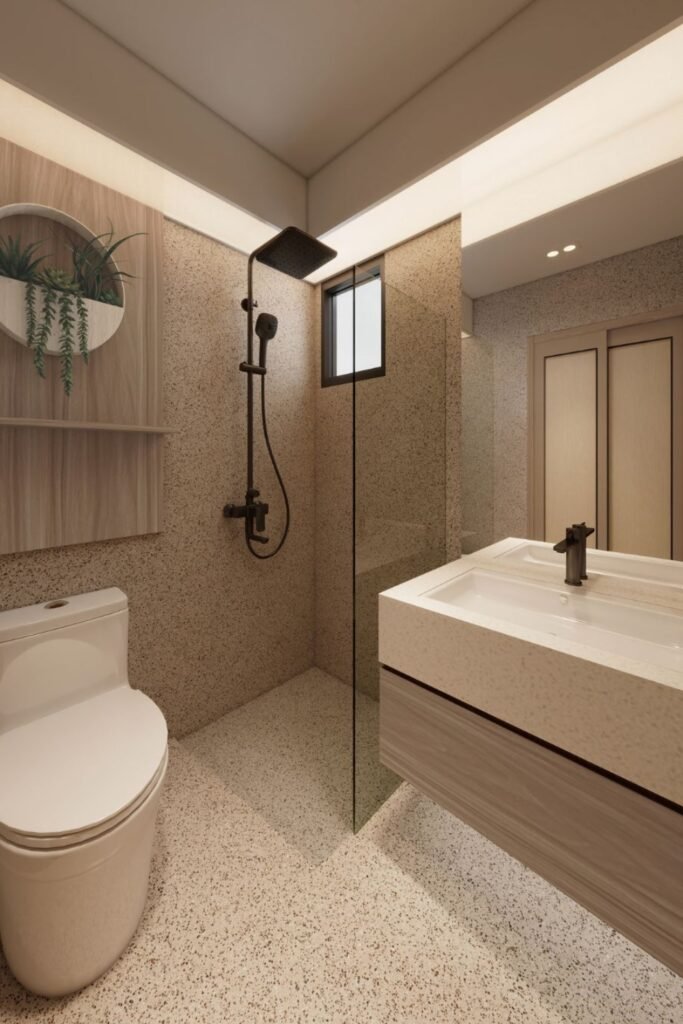
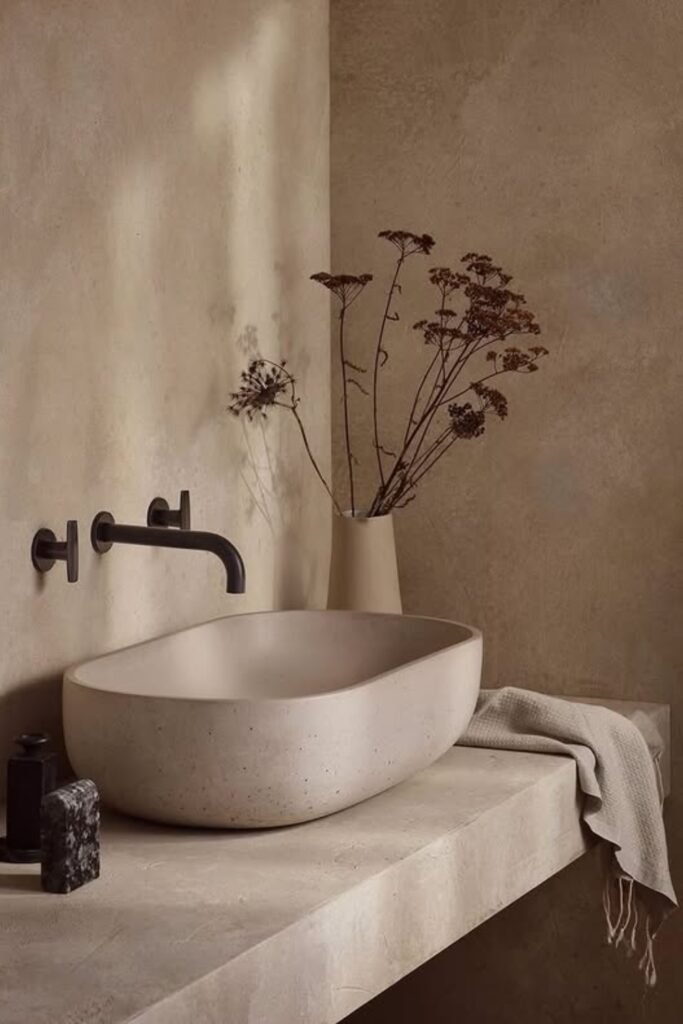
Calm Through Restraint
The soft plaster walls, stone basin, and muted tones create a space that feels quiet the moment you walk in.
This style suits bathrooms where you want calm more than contrast, especially in homes that already feel busy.
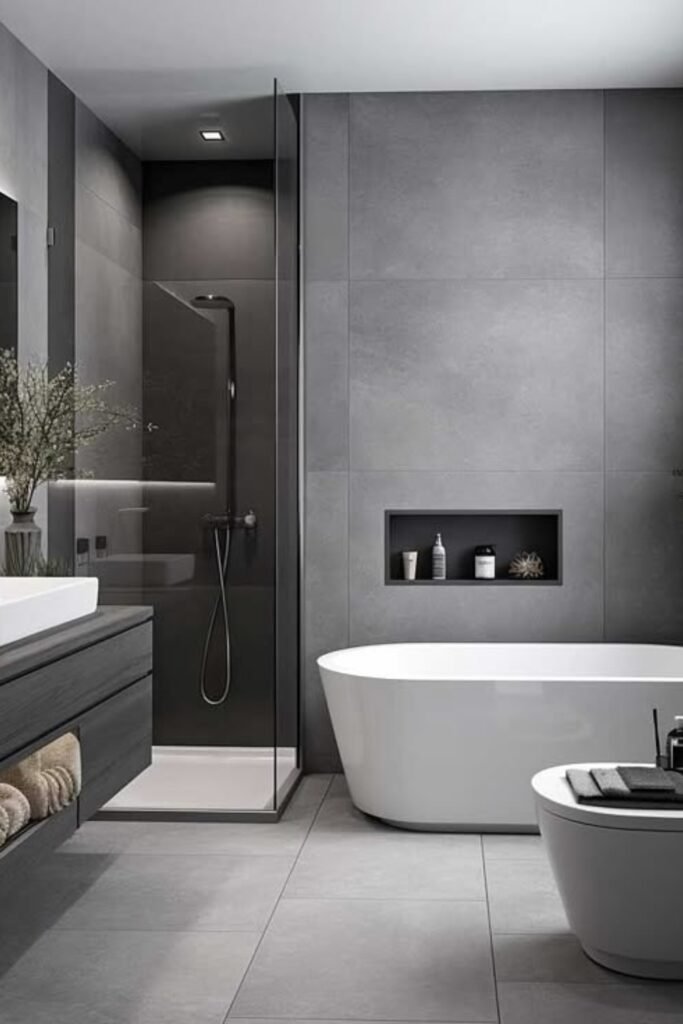
Control With Contrast
This bathroom works because contrast is used with discipline, not decoration. Dark walls ground the space, while the white tub and sink give your eyes a clear place to rest.
You can limit contrast to two tones, keep storage built-in, and let lighting soften the darker surfaces instead of adding decor.
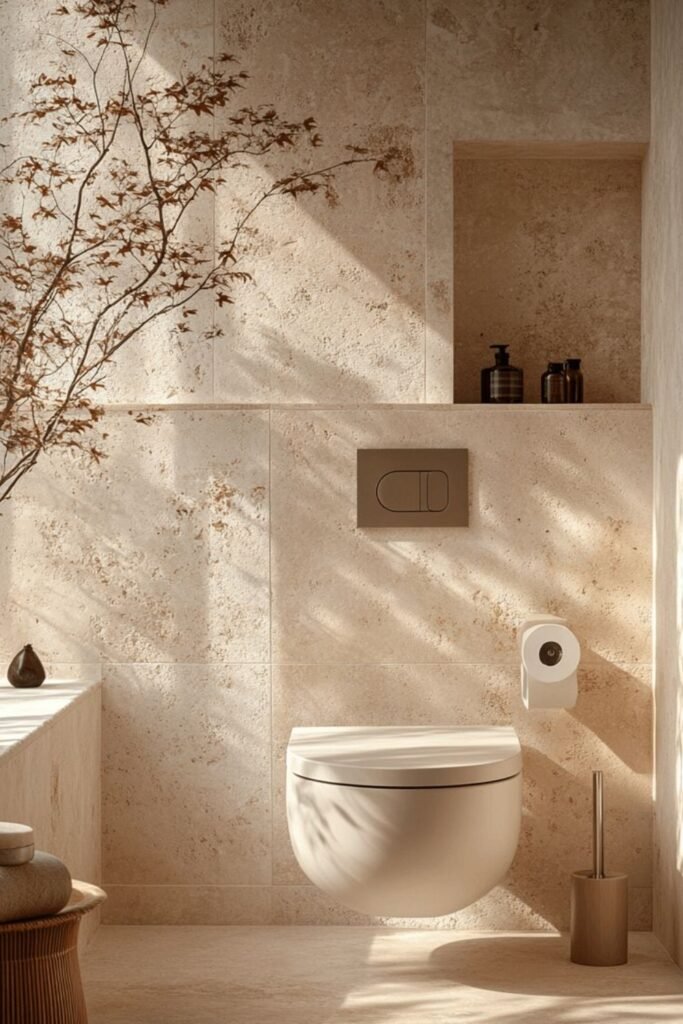
Let Walls Work
This bathroom stays minimal by letting the walls do more than just enclose the space. It works best in small bathrooms where every surface matters.
The recessed niche replaces shelves, the wall-hung toilet keeps the floor clear, and the warm stone tiles add texture without decoration.
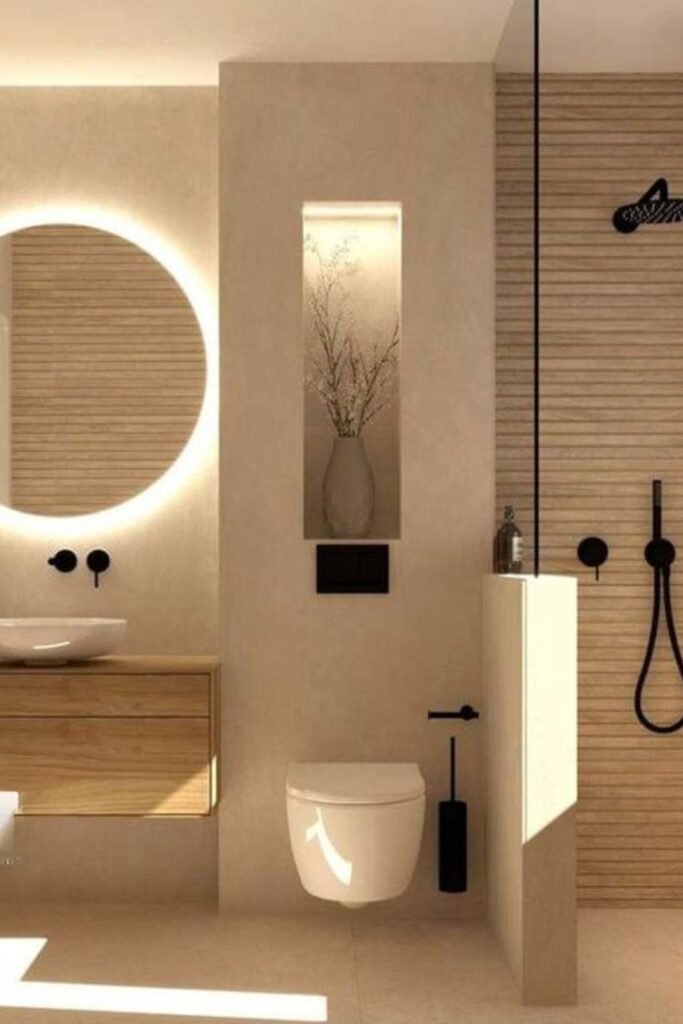
Define With Light
Lighting is doing more than just brightening this bathroom, it’s shaping the space. This works best in minimalist bathrooms where decor is limited.
The backlit round mirror creates a soft focal point, while the niche lighting adds depth without adding objects.
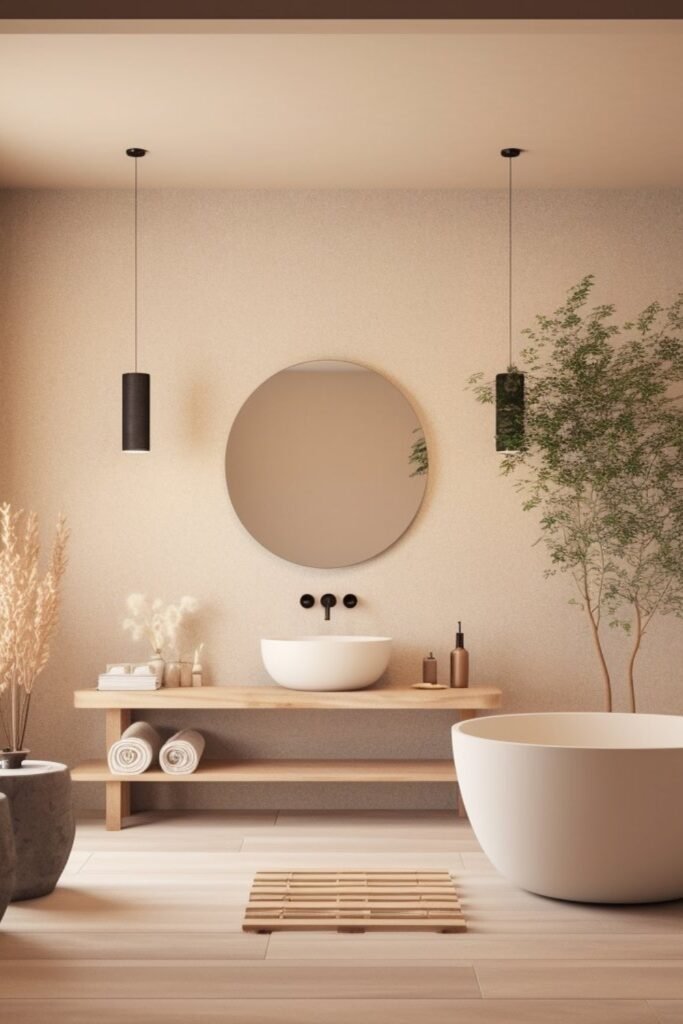
Keep It Balanced
The freestanding tub, open vanity, soft textures, and greenery are all visually light, so the room stays calm instead of crowded.
You can mix open furniture with a few grounded pieces, use warm neutrals, and let natural elements like wood and plants bring life without clutter.
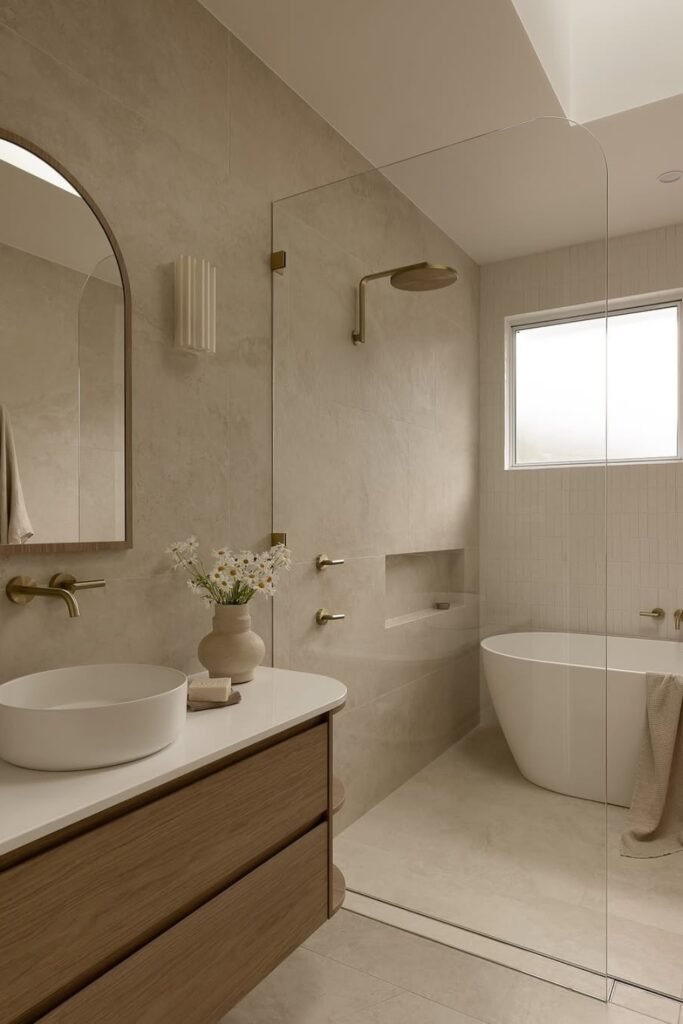
Calm With Flow
This bathroom feels calm because nothing visually interrupts the flow from one zone to another.
The glass partition keeps your shower area separate without blocking light or sightlines, so the room still feels open.
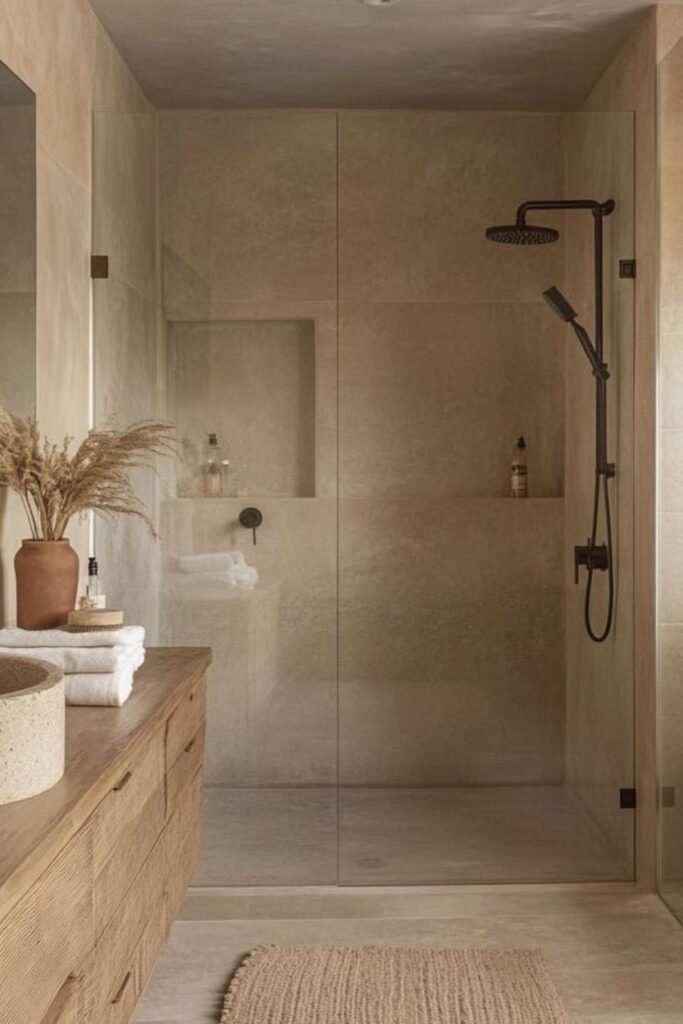
Warm Minimal Layers
The same warm stone runs across the walls and shower, so nothing visually breaks your space.
Wood cabinetry adds warmth, while the glass enclosure keeps the room open instead of boxed in.
FAQs
Is a minimalist bathroom practical for daily use?
Yes, as long as it’s designed with storage in mind. Minimalism works best when everyday items have a clear place to live.
You have built-in cabinets, recessed niches, and drawer organizers keep surfaces clear while still making the bathroom easy to use every day.
How do you keep a minimalist bathroom from feeling cold?
You can focus on warmth instead of decoration. You can use wood, textured tiles, warm lighting, and soft fabrics to balance clean lines.
Your limiting colors while layering materials helps your space feel calm and inviting, not sterile.
You may like to read!
