
24 Long Narrow Living Room Layout Ideas for 2026

This article may contain affiliate links: read full affiliate disclosure.
If you have a long, thin living room, you already know the struggle. No matter how many times you move the sofa, the room still feels off.
One side turns into a walkway, the other feels cramped, and the whole space starts looking more like a hallway than a place to relax.
In this article, you will see how to plan the space step by step, place furniture with purpose, and 24 ideas that you can try.
Let’s jump in!
How To Layout A Long, Thin Living Room?
You might feel designing a long, thin living room is tricky, but when you use the right layout strategies, you’ll see the space can feel balanced, comfortable, and functional.
You’ll want to break the room into purposeful zones while keeping a natural flow so you can move freely.
You should start by dividing the room into sections. When you create separate zones like a main seating area, a reading corner, or a small workspace, you’ll notice the room feels organized instead of like a narrow hallway.
You can place your main seating arrangement in the center of the room.
When you position a sofa along one of the longer walls and add chairs opposite or at an angle, you’ll see how it creates a conversation area.
If you add a coffee table in the center, you’ll give the seating zone a clear focal point.
You might also use area rugs to define spaces. When you place a rug under your sofa and coffee table, you’ll see how it separates the seating area visually from the rest of the room.
If the room is very long, you can even use two rugs to mark different zones.
You shouldn’t line all your furniture against the walls. When you pull pieces slightly inward, you’ll notice the space feels wider and more intentional.
You can also place a console table behind the sofa, and you’ll see how it adds depth and creates a subtle visual divider.
You can add vertical elements to balance the long proportions. When you bring in tall bookshelves, floor lamps, or large artwork, you’ll notice your eyes move upward and the space feels more interesting.
Wall-mounted shelves can also give you storage without taking up floor space, which you’ll find very practical.
Lighting matters too. You should avoid relying on just one overhead light.
When you layer multiple sources—floor lamps, table lamps, and wall sconces, you’ll see how light spreads evenly, making the room feel warmer and more inviting.
In the end, when you plan your layout this way, you’ll feel your long, narrow living room transform into a space that’s cozy, functional, and visually balanced.
You’ll see how a few thoughtful moves can make the room feel stylish and comfortable every day.
One-Wall Seating
Running the main sofa along one long wall is one of the safest ways to fix a long, thin living room.
It gives the room a clear structure and prevents furniture from floating awkwardly in the middle. This works especially well when your living room also acts as a passageway.
You can keep the sofa streamlined, anchor it with a rug to define the seating zone, and leave the opposite side open for walking.
You can add small, lightweight chairs near the window end to soften the length without blocking movement.
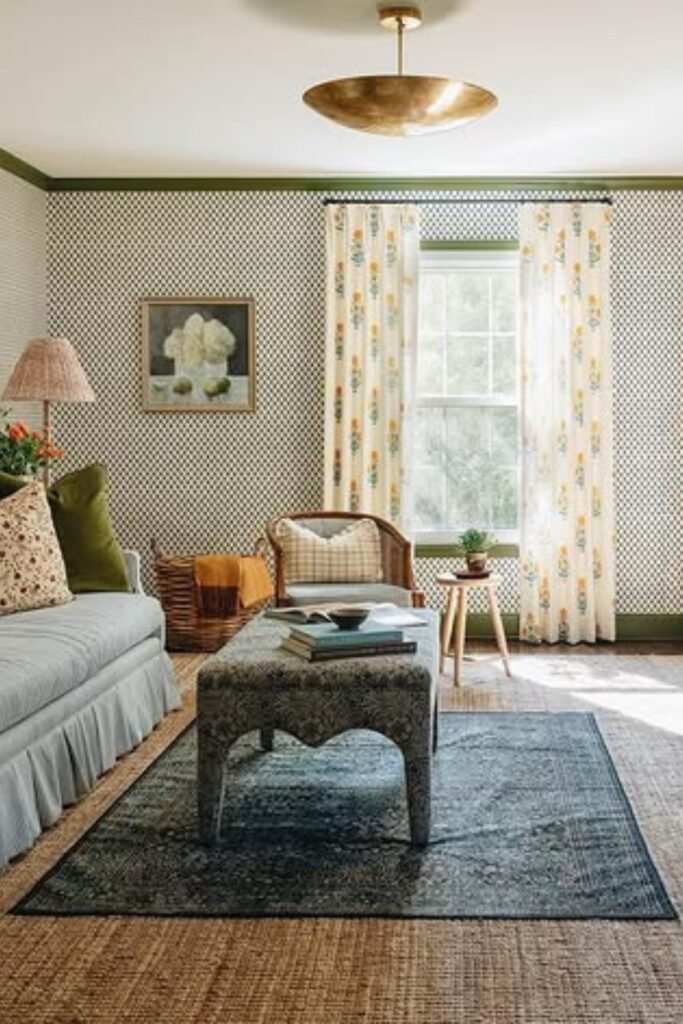
Floating Seating Zone
Pulling the sofa away from the walls is what stops a long living room from feeling like a corridor.
The seating floats in the center, creating a clear conversation zone instead of stretching the room end to end.
This works best when your space is wide enough to allow walking paths around the furniture.
You can use a sectional to define the zone, keep equal clearance on both sides, and anchor everything with a large rug so the layout feels intentional, not random.
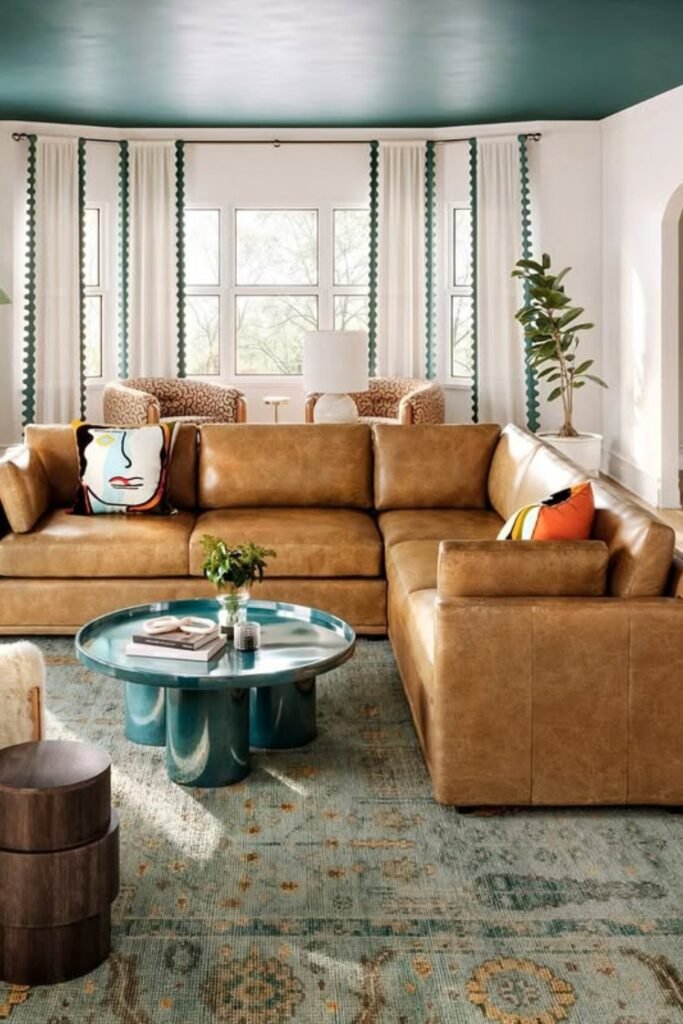
Centered Conversation Zone
Instead of pushing furniture to the edges, this living room pulls everything inward to form a clear seating core. That move shortens the feel of a long space and makes it more social.
This layout works best when the room is wide enough to support furniture on all sides.
You can place sofas facing each other, keep walkways along the perimeter, and use a large rug to lock the living room into one defined zone instead of letting it sprawl.
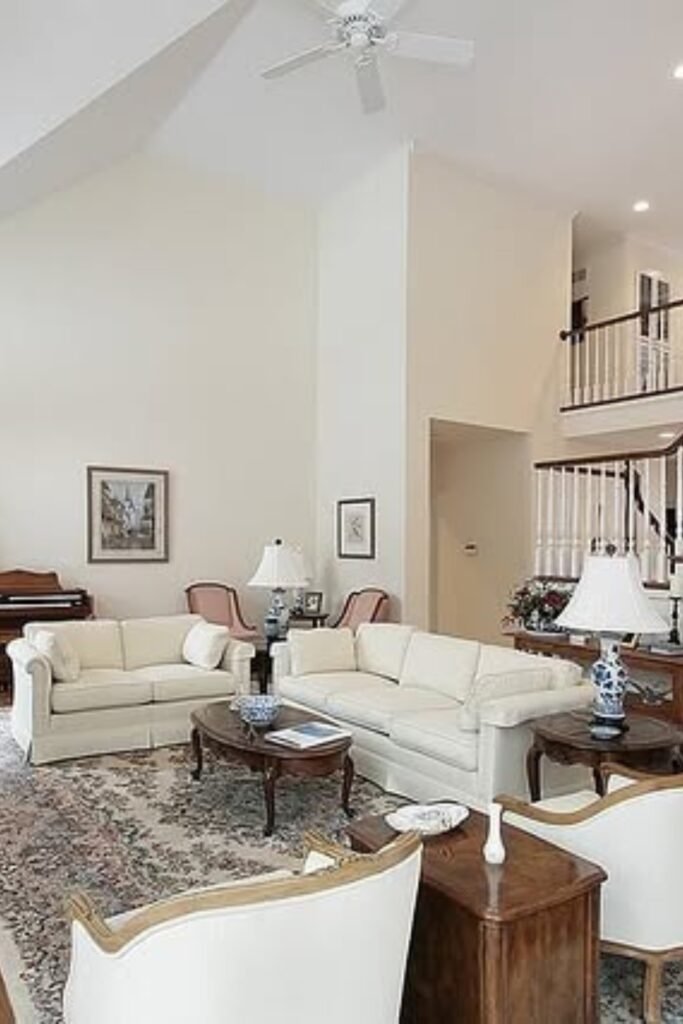
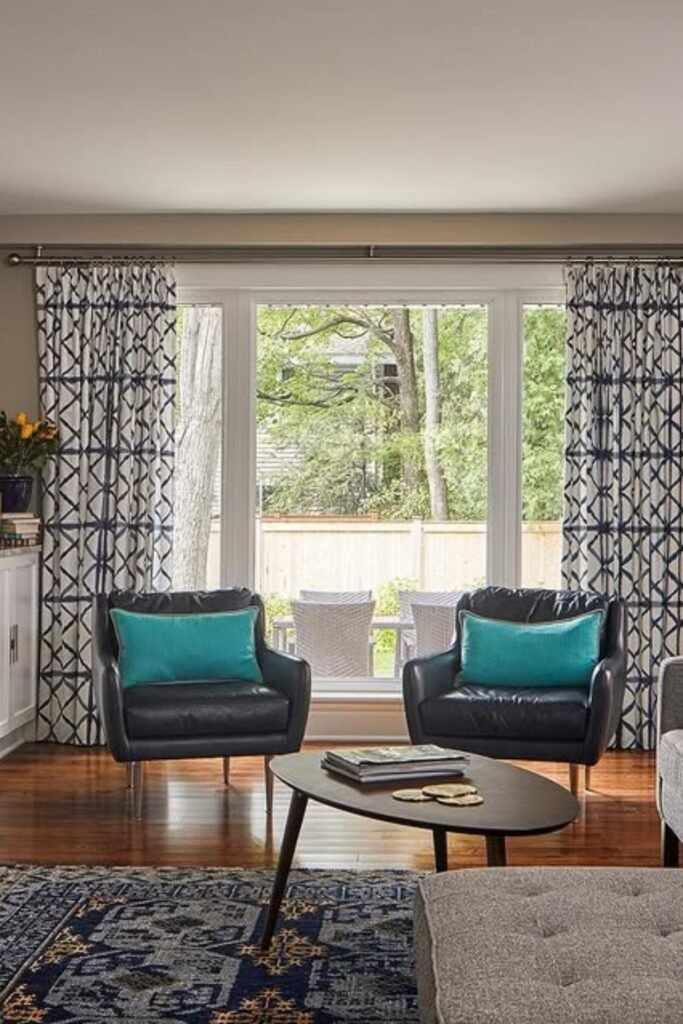
Window-Focused Seating
Letting the living room face the window instead of the TV instantly changes how a long space feels.
The chairs pull attention sideways, which visually widens the room and breaks the tunnel effect. This works best when you have a strong window or patio door at one end.
You can recreate it by placing two accent chairs near the glass, keeping the sofa slightly offset, and leaving the center open so light and movement flow through the living room naturally.
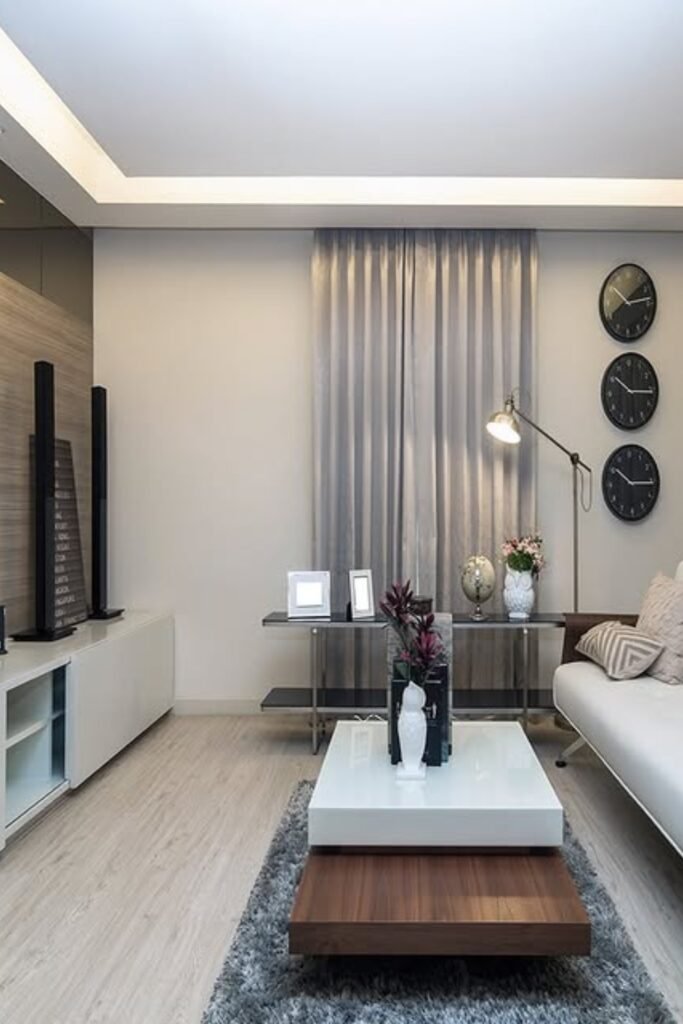
Straight-Line Layout
When a living room is very narrow, fighting symmetry usually makes things worse. This layout accepts the room’s shape and works with it instead.
The sofa and TV face each other along the length, which keeps everything clean and predictable.
You can recreate this by using low-profile seating, wall-mounted storage, and a slim coffee table so the center stays open and the room doesn’t feel boxed in.
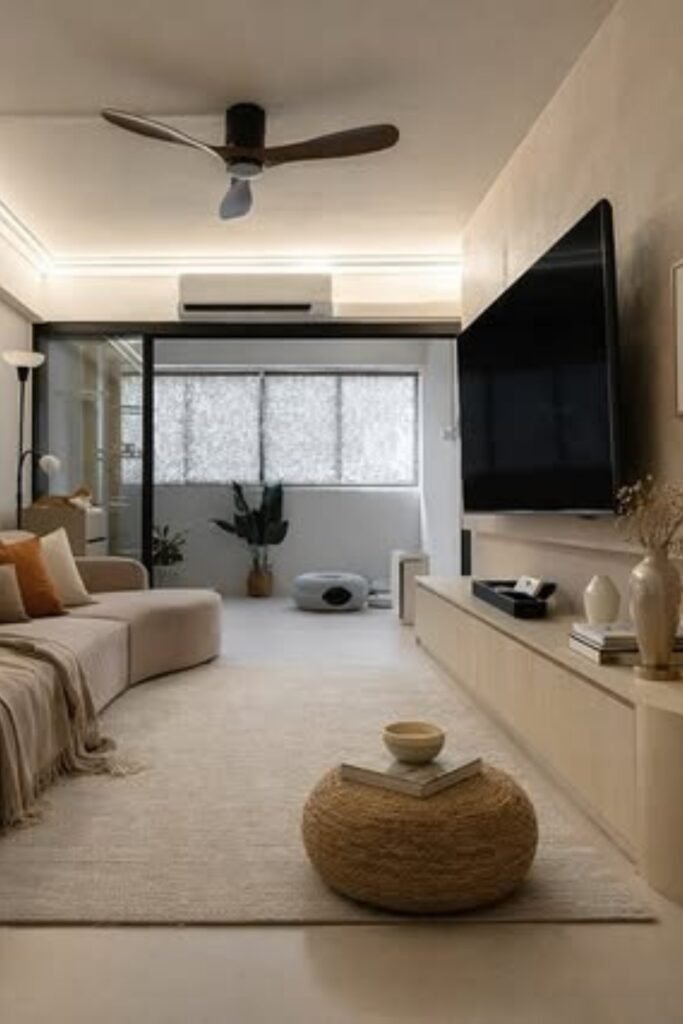
Wall-Led Layout
Letting the TV wall lead the layout keeps a long living room feeling calm and controlled.
Everything runs in one direction, which makes the space feel longer but not messy. This approach works best in narrow apartments where floating furniture would block movement.
You can mount the TV, use built-in or low storage underneath, and place the sofa directly opposite.
You can keep side furniture minimal so the living room stays open and easy to move through.
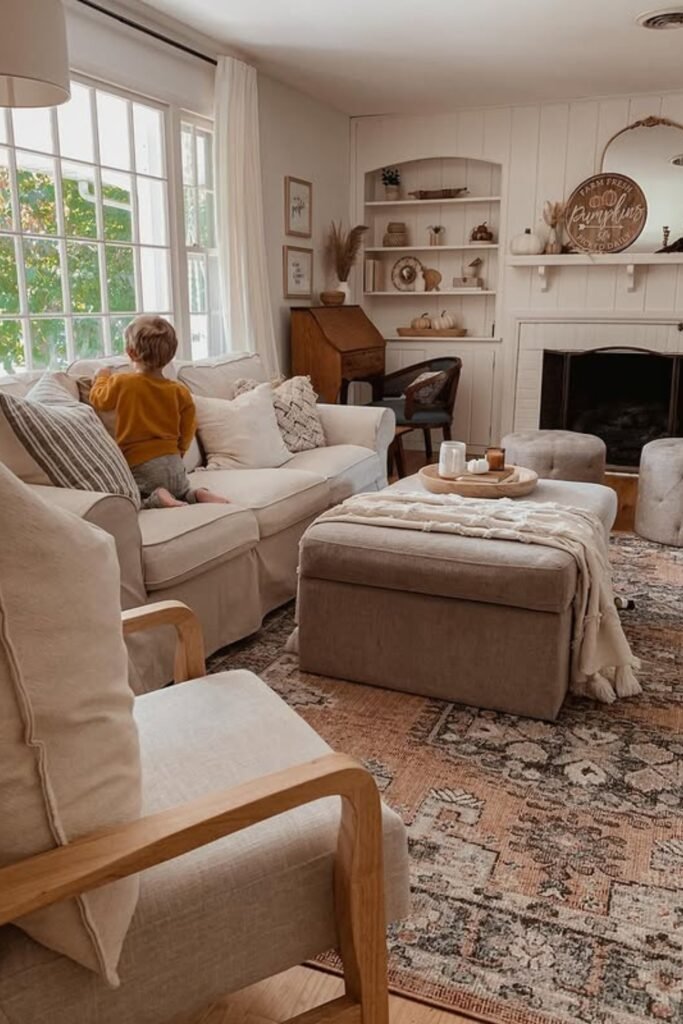
Fireplace-Centered Seating
When a fireplace sits along the long wall, letting it anchor the living room instantly gives the space purpose.
Instead of stretching furniture end to end, this layout pulls seating inward and turns the fireplace into a natural focal point.
It works best in narrow rooms that need warmth and definition.
You can face the sofa toward the fireplace, use an ottoman instead of a long coffee table, and keep side seating compact so the living room feels cozy, not crowded.
Layered Seating Depth
Stacking seating front to back is a smart way to handle a long living room without letting it feel stretched.
One sofa sits closer to the window while another anchors the center, which visually shortens the space and builds a strong living room zone.
You can place your main sofa facing inward, add a second seating layer behind it, and keep walkways along the sides clear.
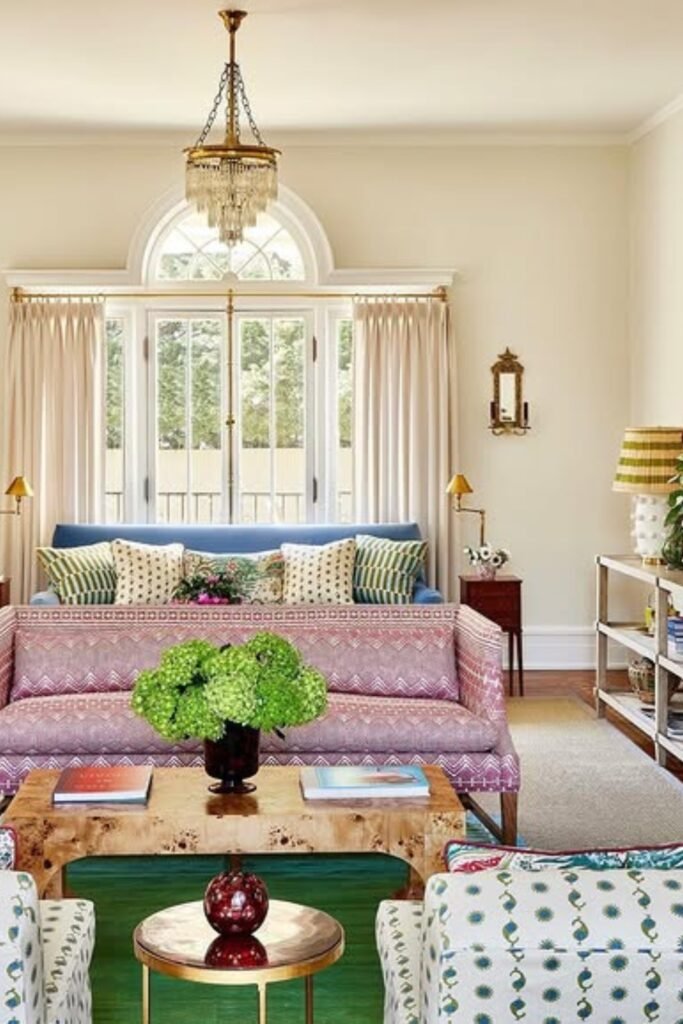
Side-Zone Living
Not every long living room needs all the seating pushed into one line.
This setup carves out a smaller living room moment along the side, which helps break up the length of the space.
It works well when your room feels too long to treat as one zone.
You can recreate this by placing a lounge chair or chaise near the window, adding a small table for function.
And letting the main seating area sit elsewhere so the living room feels layered, not stretched.
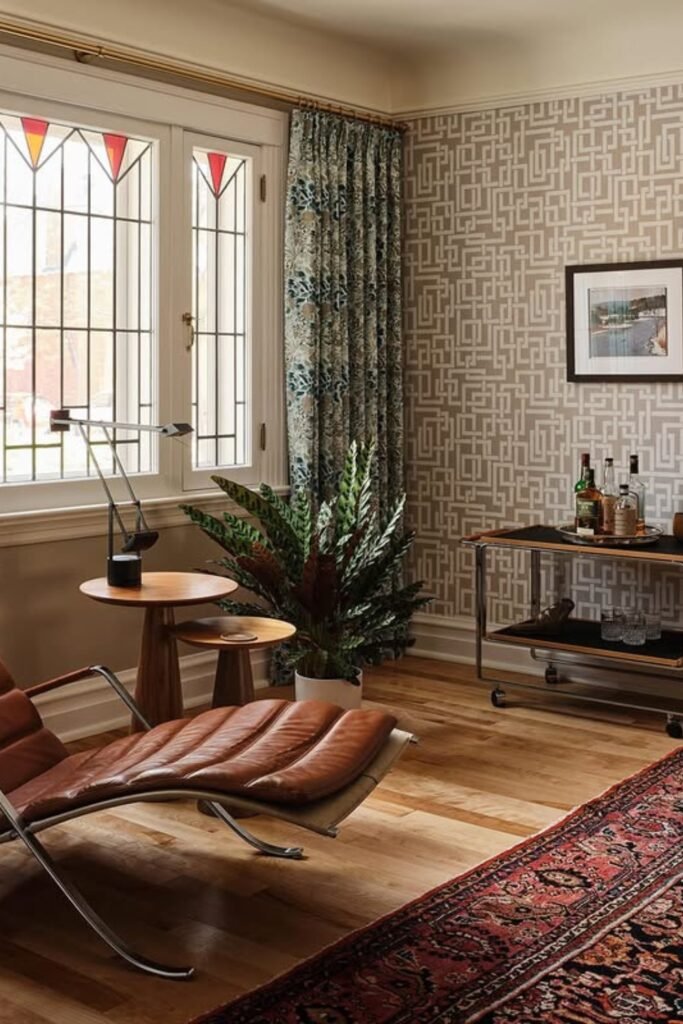
Split Seating Zones
Breaking a long living room into two smaller seating areas makes the space feel intentional instead of stretched.
One seating group sits closer to the window while another lives slightly forward, which visually shortens the room.
This works best when your living room feels too long to function as a single zone.
You can recreate it by using two compact sofas or chairs, keeping a clear walkway between them, and anchoring each zone with its own rug or side tables so both areas feel connected but distinct.
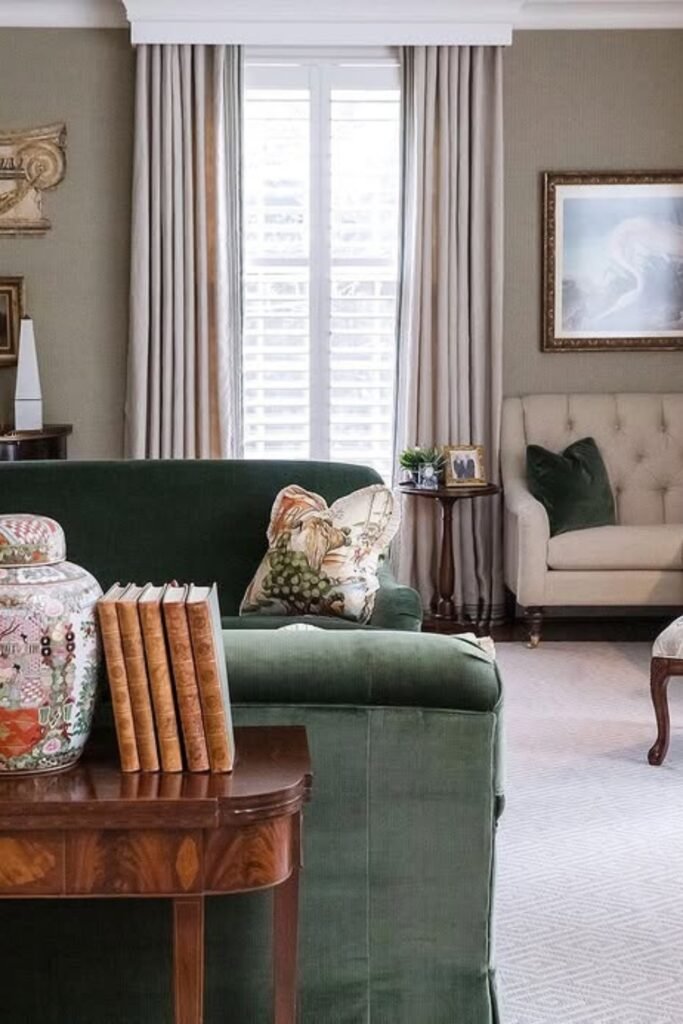
Built-In Banquette
Turning part of a long living room into a built-in seating nook instantly fixes wasted width.
This setup works well when your living room connects to dining or entry space and feels too stretched to furnish traditionally.
The bench hugs the wall, keeping the center open while still adding usable seating.
You can use a fixed bench or banquette along one side, pair it with a round table to soften lines, and let the main living room seating stay lighter and more open.
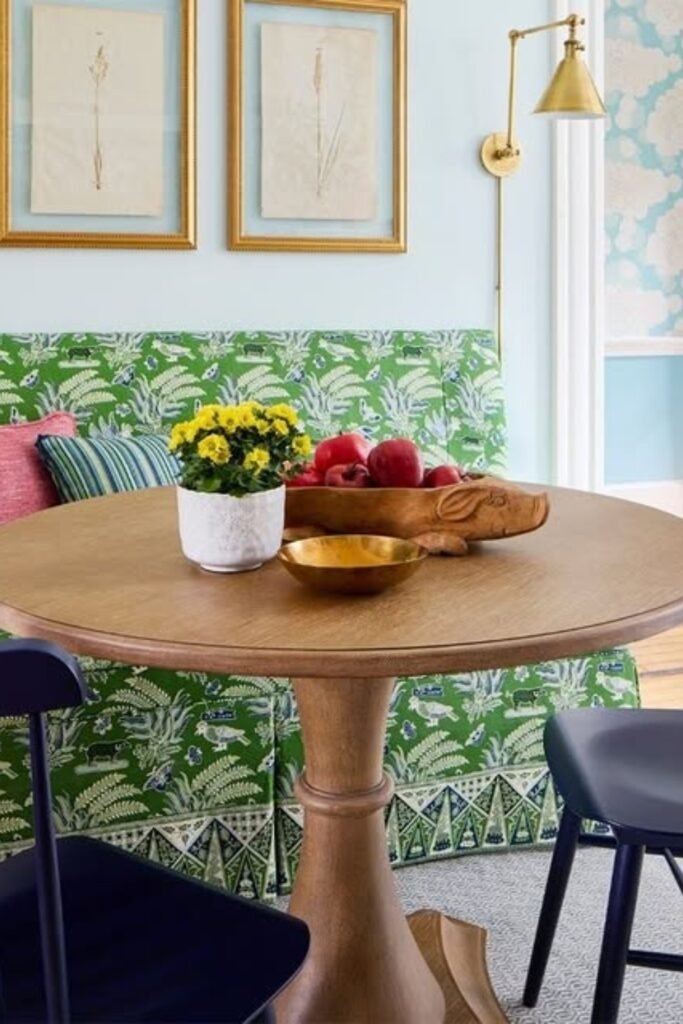
Deep Sectional Anchor
A deep sectional like this pulls the living room inward and stops a long space from feeling stretched end to end.
Instead of spreading furniture along the walls, everything gathers around one strong seating piece.
This works best when your room has enough width to handle depth without blocking movement.
You can choose a sectional with a chaise, keep it slightly off the wall, and leave a clear walkway behind or along one side so the room still flows easily.
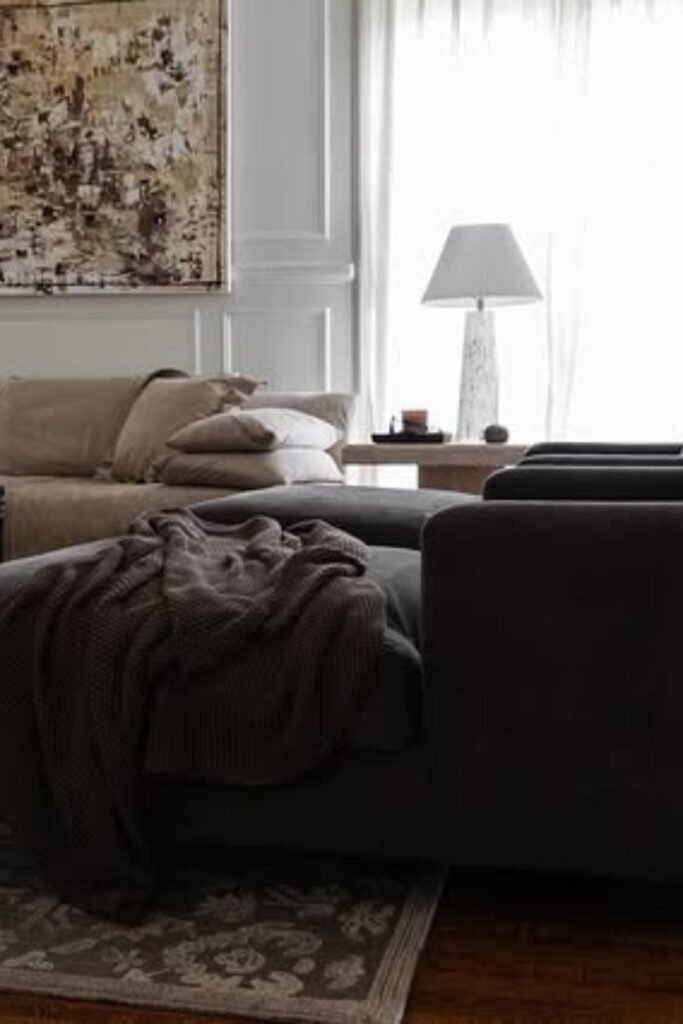
Balanced Floating Layout
This kind of living room works because nothing is pushed to the edges. The sofa floats just enough to break the long, narrow feel without blocking movement.
It creates a clear seating zone in the center while keeping walkways open around it. This approach is ideal if your room has windows along one side and enough width to spare.
You can pull the sofa off the wall, center it on a rug, and use a round coffee table to soften the straight lines and improve flow.
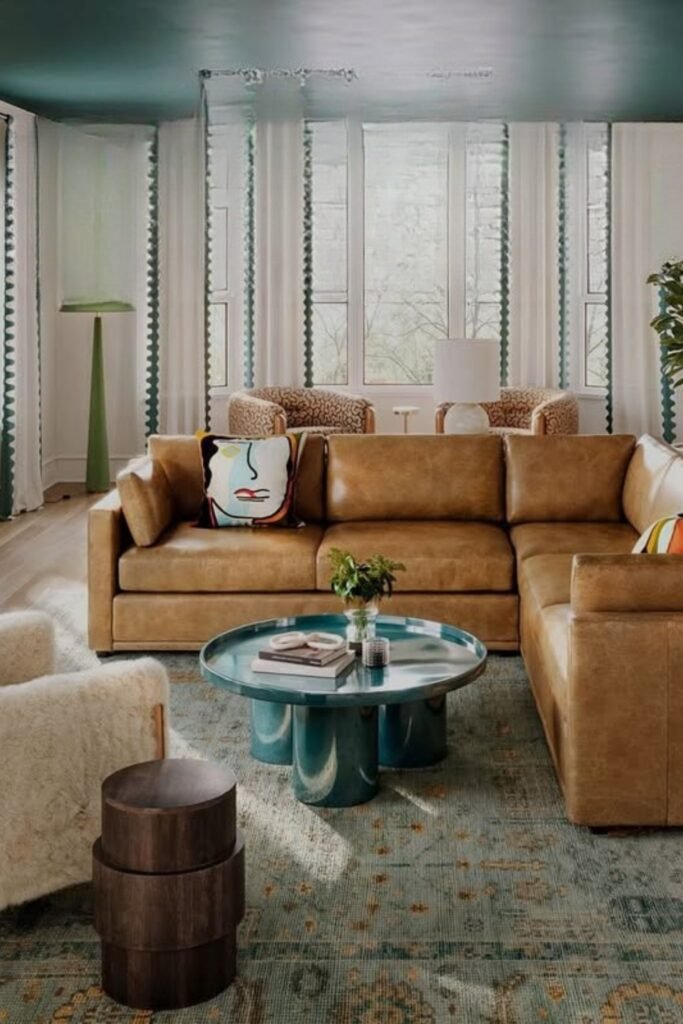
Chair-Focused Layout
Sometimes the living room works better when the sofa isn’t the star. This setup uses two chairs to form a compact seating zone, which is perfect for long rooms that feel too tight for bulky sofas.
It keeps the layout flexible and prevents the space from feeling clogged.
You can place a pair of chairs facing each other near a focal wall or built-in, add a central coffee table, and keep the rest of the room open so the living area feels intentional, not squeezed.
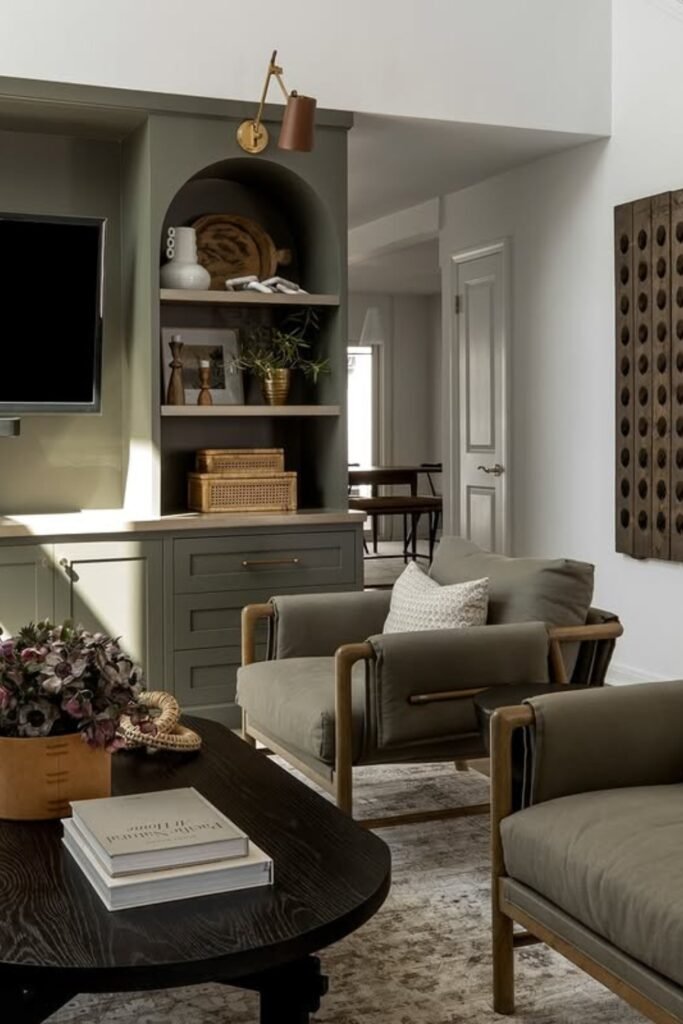
End-Zone Seating
Using the far end of a long living room for seating helps stop the space from feeling endless.
The sofa anchors one side while chairs sit closer to the window, naturally pulling the room inward.
This layout works well when your living room opens to a patio or garden.
You can place your main sofa along the long wall, add chairs near the end wall or window, and keep the center path open so the room flows without feeling stretched.
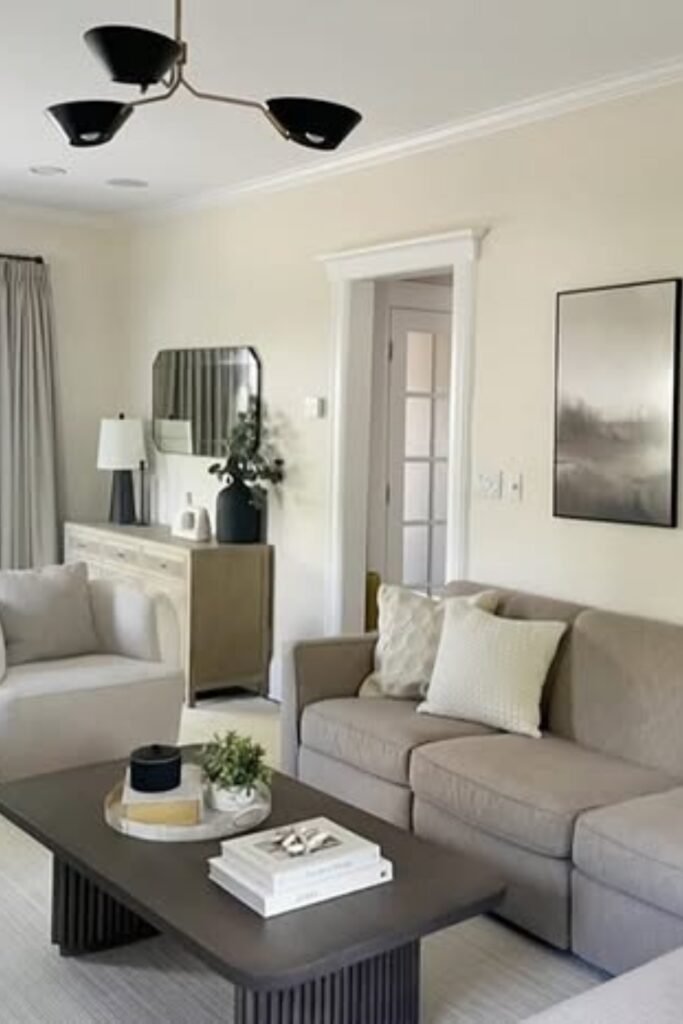
Symmetrical Seating Balance
Symmetry is doing the heavy lifting in this long living room. Matching chairs, lamps, and side tables pull attention to the center instead of the length of the space.
That visual balance keeps the room from feeling like a straight hallway. This works best when your living room is narrow but formal.
You can place seating in pairs on both sides, anchor everything with a centered rug and coffee table, and keep furniture aligned so the eye reads the room as wide and structured, not stretched.
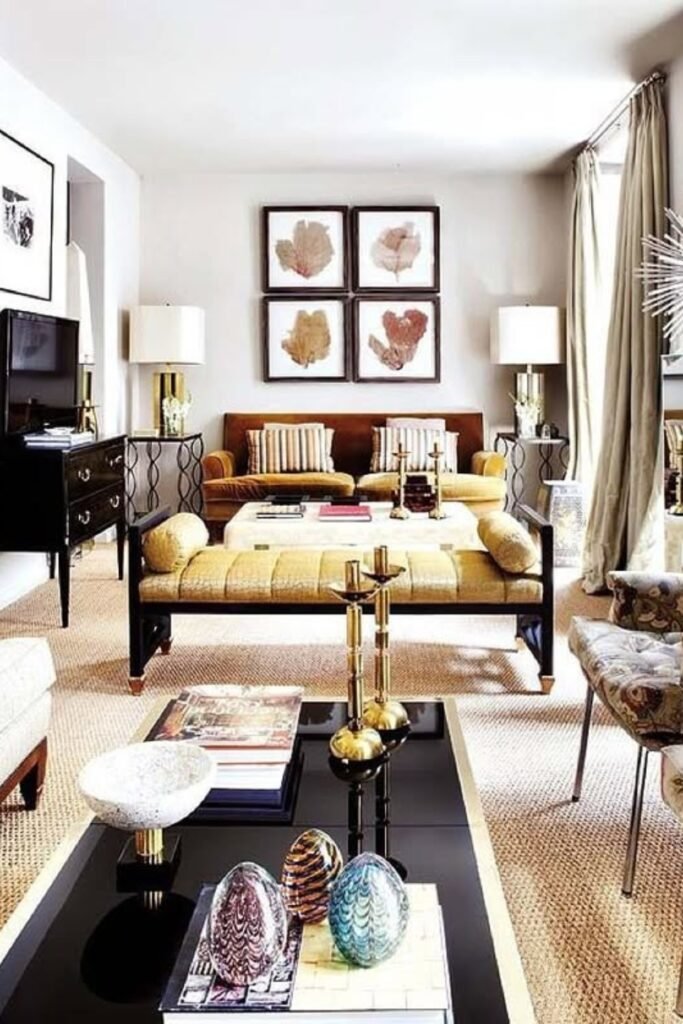
Wall-to-Wall Focus
This living room works because everything follows one clear line. The TV wall sets the direction, and the sectional runs parallel to it, which keeps the space clean and easy to read.
This layout is ideal for very narrow living rooms where extra furniture would block movement.
You can mount the TV, choose a low-profile sectional, and keep the center open with a small round table so walking through the room feels natural, not tight.
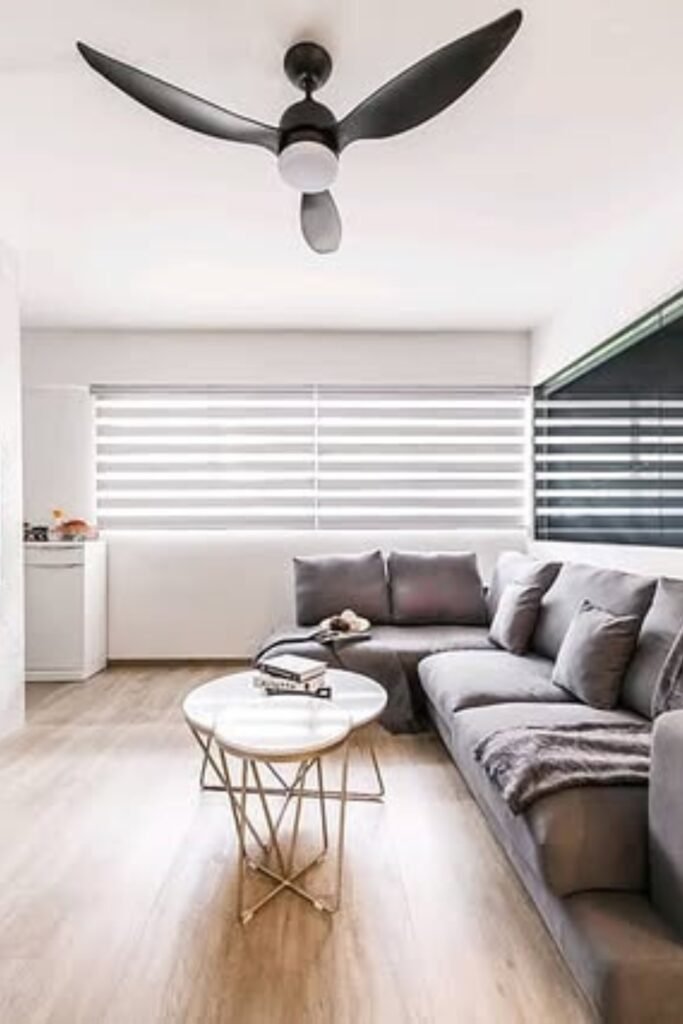
Central Sofa Block
Placing a large sofa right in the middle flips the usual long-room problem on its head.
Instead of emphasizing length, this layout blocks it on purpose and creates a strong living room core.
It works best in long spaces with good width and a clear focal point like a fireplace.
You can float a deep sofa in the center, face it toward the focal wall, keep walkways on both sides, and let art and lighting pull attention inward instead of down the room.
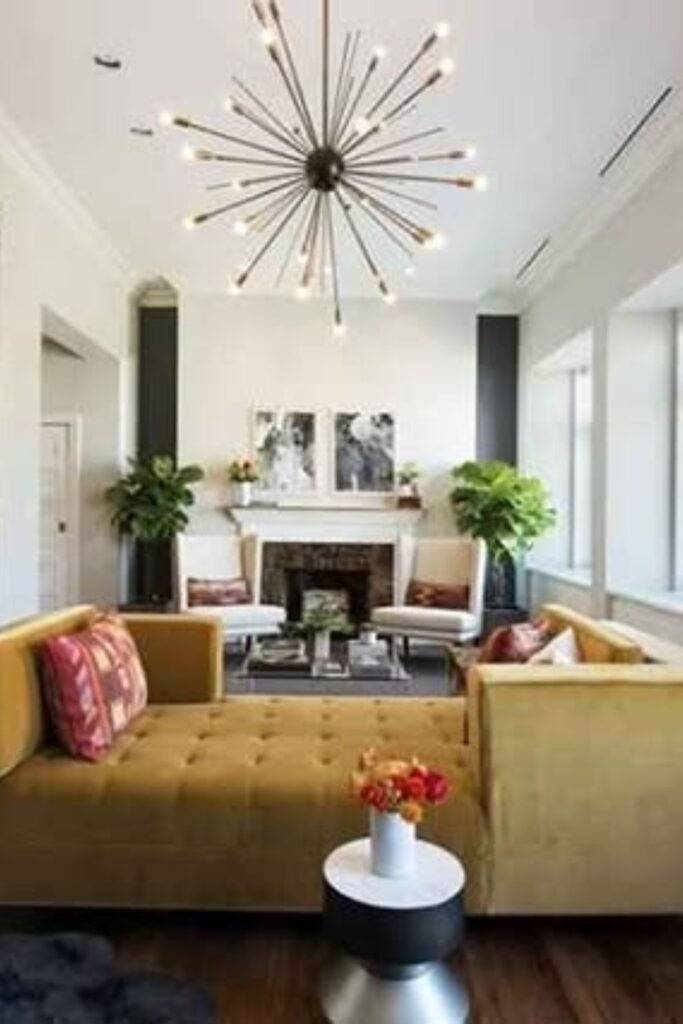
Window-End Lounge
Using the far end of a long living room as a quiet seating spot helps the space feel intentional instead of stretched.
The chairs sit directly in front of the windows, turning an awkward end wall into a destination. This works best when your living room has strong natural light and extra length to spare.
You can place two chairs facing inward, add a small table between them, and let the rest of the room stay open so the living area feels calm and balanced.
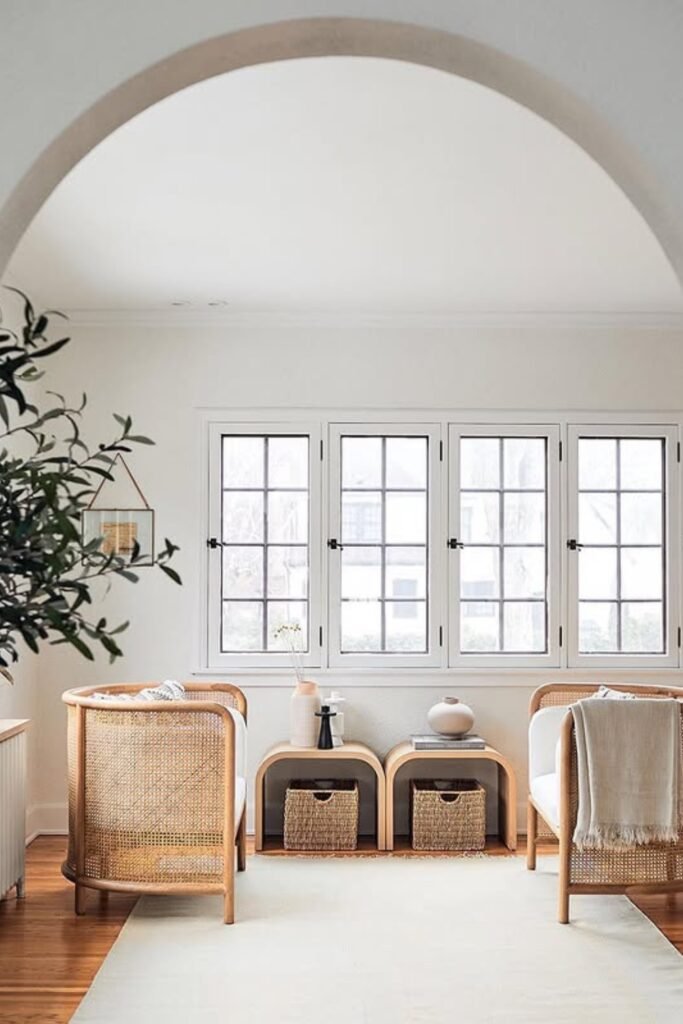
Balanced Fireplace Flow
Letting the fireplace guide the layout keeps this long living room from feeling scattered.
Seating faces inward instead of lining the walls, which pulls the space together and makes it feel more social.
This works well when the fireplace sits off-center or along the long wall.
You can arrange sofas opposite each other, use ottomans instead of bulky tables, and leave clear walkways around the seating so the room stays open and easy to move through.
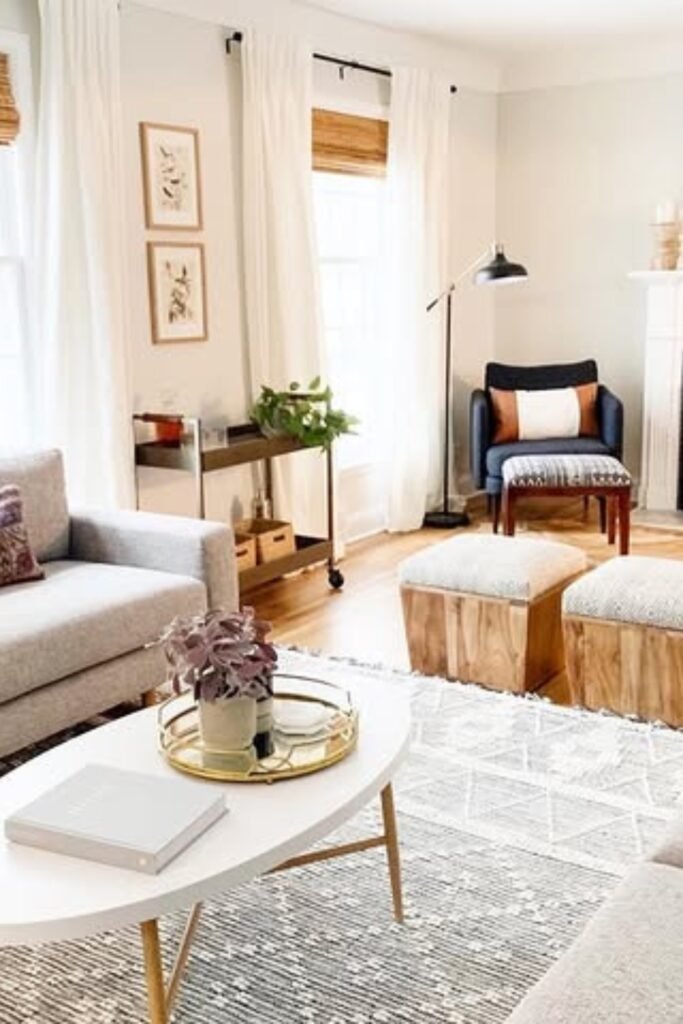
Rear-Focused Seating
Pulling the main seating toward the back of a long living room helps rebalance the entire space.
Instead of spreading furniture from wall to wall, this layout creates a clear destination at the far end.
It works especially well when the room opens from a hallway or entry.
You can float chairs in a tight grouping, place a console or sofa behind them, and keep the front portion open so the living room feels layered, calm, and intentional rather than stretched.
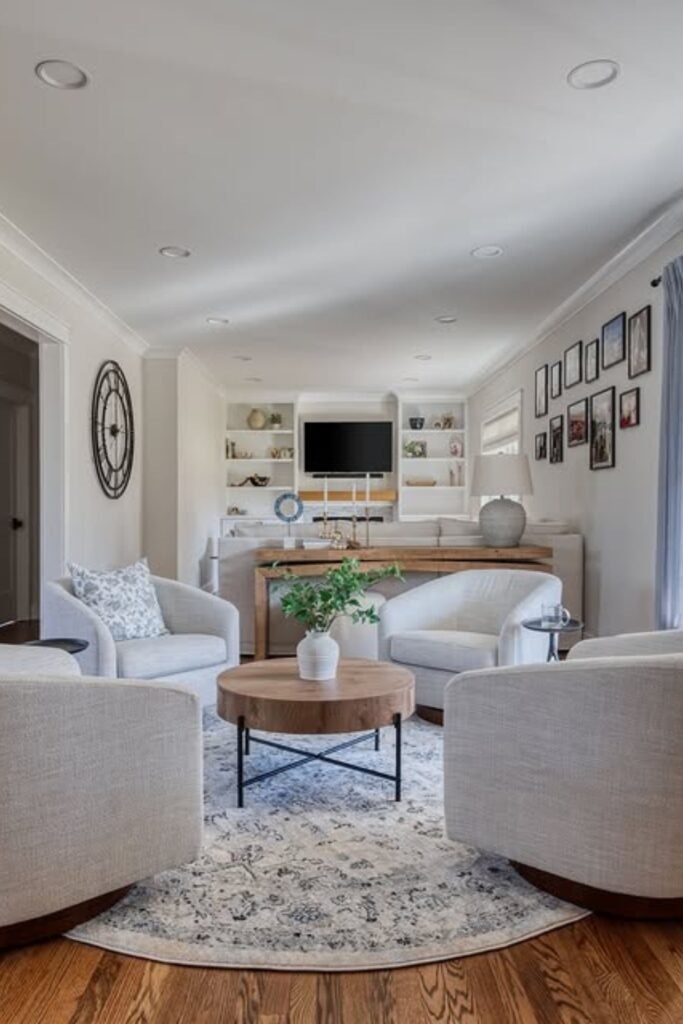
Centered Sofa Focus
This living room works because the sofa doesn’t hide against a wall, it takes the lead.
Centering the sofa instantly breaks the long, narrow feel and turns the space into a proper seating zone.
This approach is ideal when your room has windows on multiple sides and enough width to float furniture.
You can pull the sofa forward, anchor it with a large rug, use an ottoman instead of a long table, and keep side chairs light so the room stays open and balanced.
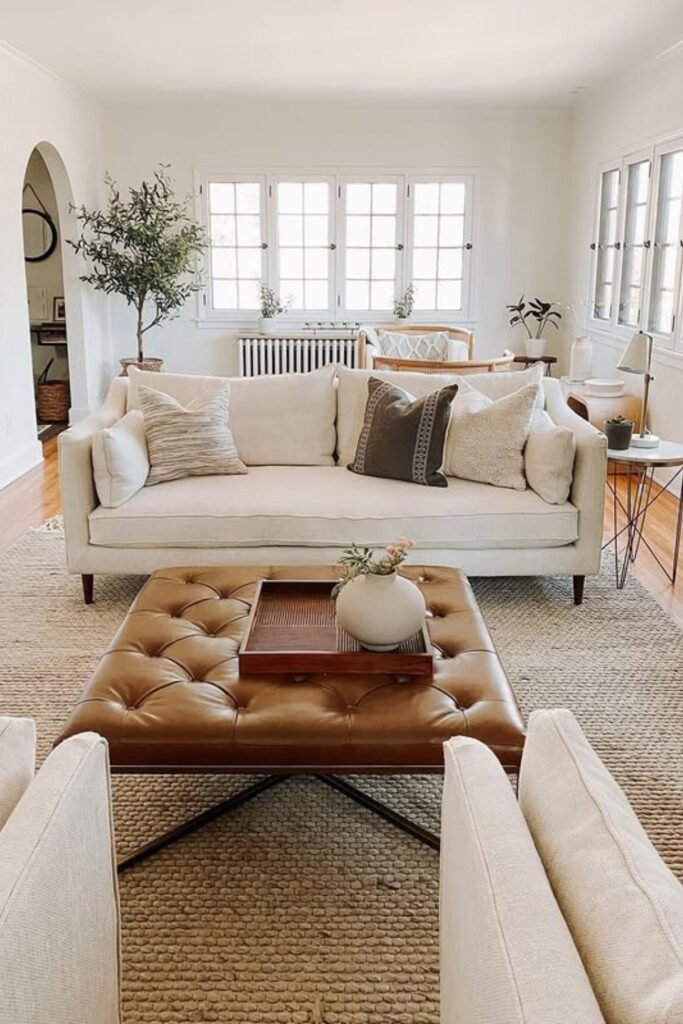
Living–Dining Flow
This layout works because the living room doesn’t try to own the entire length of the space.
Seating stays compact at the front, leaving the rest of the room free for dining and movement. That separation keeps the living room from feeling stretched or crowded.
You can anchor the sofa and coffee table with a rug, keep furniture scaled slim, and let the dining area start naturally where the living room ends without overlapping zones.
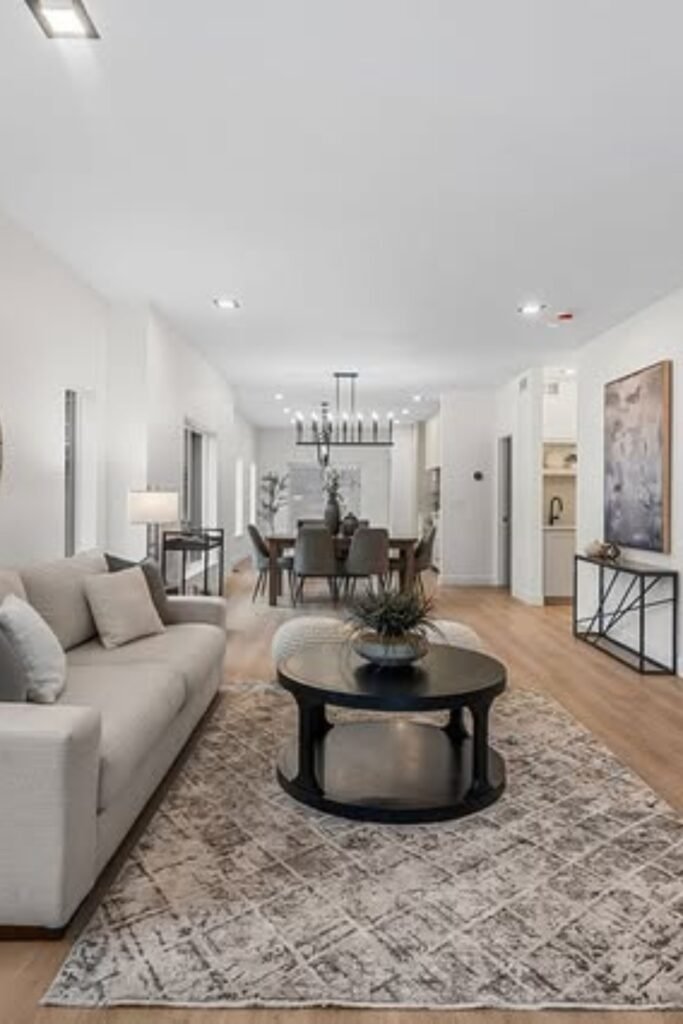
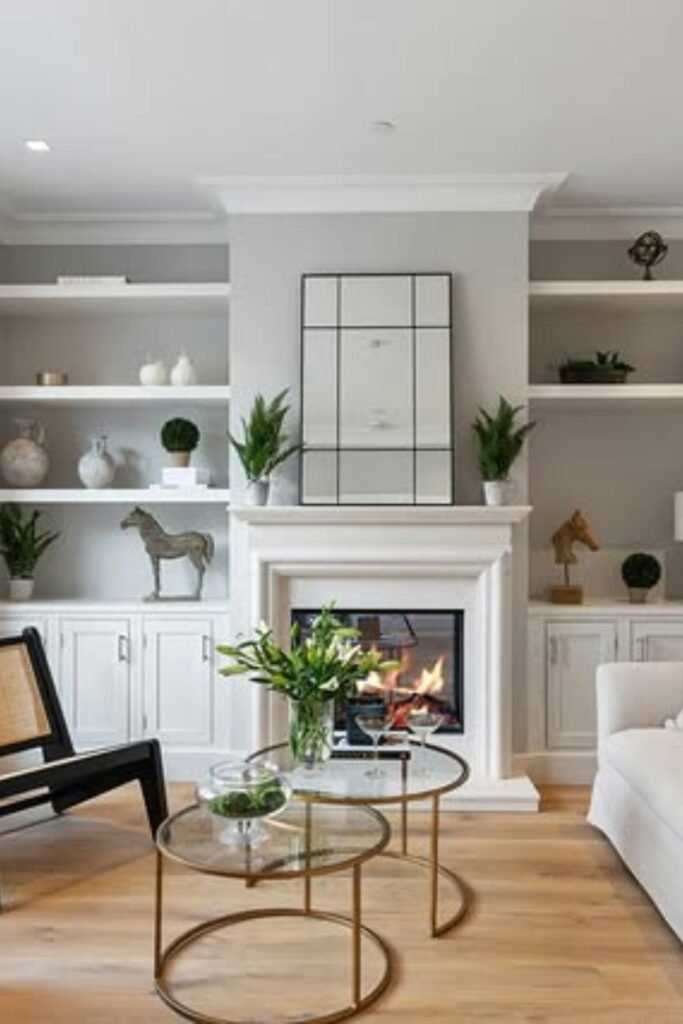
Fireplace Side Anchor
This living room works because the seating stays tight to one side while the fireplace does the visual anchoring.
That move keeps the room from stretching out and gives it a clear center of gravity. This layout is ideal when your fireplace sits between built-ins or along a long wall.
You can place the sofa parallel to the fireplace, use chairs to balance the opposite side, and keep the center open so the living room feels grounded, not narrow.
FAQs
How do you arrange furniture in a long, narrow living room?
You should start by planning the walkway first, not the furniture. When you decide where people will naturally walk through the room, you’ll know exactly where to place your seating area.
You can keep bulky pieces along one side, or float them only if you have enough width.
If you focus on this, you’ll see how you create one clear living zone instead of stretching furniture from wall to wall.
Should furniture be placed against the walls in a narrow living room?
You shouldn’t always push everything against the walls. When you do, you’ll notice the room can feel longer and almost tunnel-like.
If you have the space, you can pull the sofa slightly off the wall or float key pieces, and you’ll see how it breaks that hallway effect.
When you do this, you’ll feel your living room is more balanced and comfortable.
You may like to read!
