
20 Long Narrow Bathroom Layout for 2026

This article may contain affiliate links: read full affiliate disclosure.
If you have ever walked into your bathroom and felt like you might be stepping into a narrow hallway, you’re not the only one.
You can find long, skinny bathrooms tricky doors seem to hit something, fixtures might fight for space, and no matter what you do, it can still feel tight.
If you choose the right layout and design moves, you will be able to turn that tunnel into a space that actually feels open.
In this article, you will see smart tricks and ideas that can make even your narrowest bathroom work beautifully.
Let’s jump in!
What Is The Narrowest Width For A Bathroom?
When you’re working with a tight floor plan or a small home, you might find yourself asking how narrow a bathroom can really be and still function well.
In most cases, you’ll see that the narrowest practical width lands around 30 to 36 inches, but you should know this is extremely tight.
At this width, you can usually make it work only for a half bathroom or powder room, and even then, you’ll feel how limited your movement is.
You’ll need to place fixtures very carefully so you can meet building codes and still use the space comfortably.
When you want more than just a toilet and a sink, like a shower or a tub, you’ll notice the minimum width needs to increase.
Most designers will tell you that you should aim for at least 36 to 40 inches so you can fit fixtures properly and still have enough clearance in front of them.
Because building codes often require about 21 inches of clear space in front of toilets and sinks, you may find that going narrower quickly becomes uncomfortable or not allowed at all.
Even though you technically can design a very narrow bathroom, you should always think about how it will feel to use every day.
When you choose wall-mounted fixtures, sliding or pocket doors, and lighter finishes, you can make a narrow space feel more open and easier to move through.
In most situations, you’ll be safer aiming for a width of 36 inches or more, because it helps you balance saving space with the comfort and practicality you’ll need long-term.
What Are The Three Types Of Bathroom Layouts?
When you start thinking about bathroom design, you’ll notice that most spaces fall into three main layout types.
Once you understand them, planning suddenly feels much easier, especially when you’re working with limited space.
The first layout you’ll come across is the single-wall layout, and you’ve probably seen it more often than you realize.
In this setup, you place the sink, toilet, and shower or tub all along one wall, which helps you save space and keep plumbing simple.
If you’re dealing with a very small or narrow bathroom, you might find this layout works best for you, especially in apartments or compact homes where efficiency matters more than extra features.
The second option you might consider is the galley, or corridor, layout, where you place fixtures on two opposite walls and leave a walkway in the middle.
This layout can work really well when you have a long, narrow bathroom and one wall just isn’t enough.
You’ll often see the sink and toilet on one side and the shower or tub on the other, which helps you create a balanced flow so you can move around without feeling boxed in.
If you live in an older home, you might already have this layout, because it works well without needing a wide room.
The third layout you’ll see is the L-shaped, or zoned, layout, and this one gives you the most flexibility.
When you divide the bathroom into zones like a wet area for the shower or tub and a dry area for the sink and toilet, you can improve both privacy and function.
This setup can make the space feel more organized and comfortable, which is why you’ll often see it in modern homes or master bathrooms.
Related: 18 Guest Bathroom Ideas
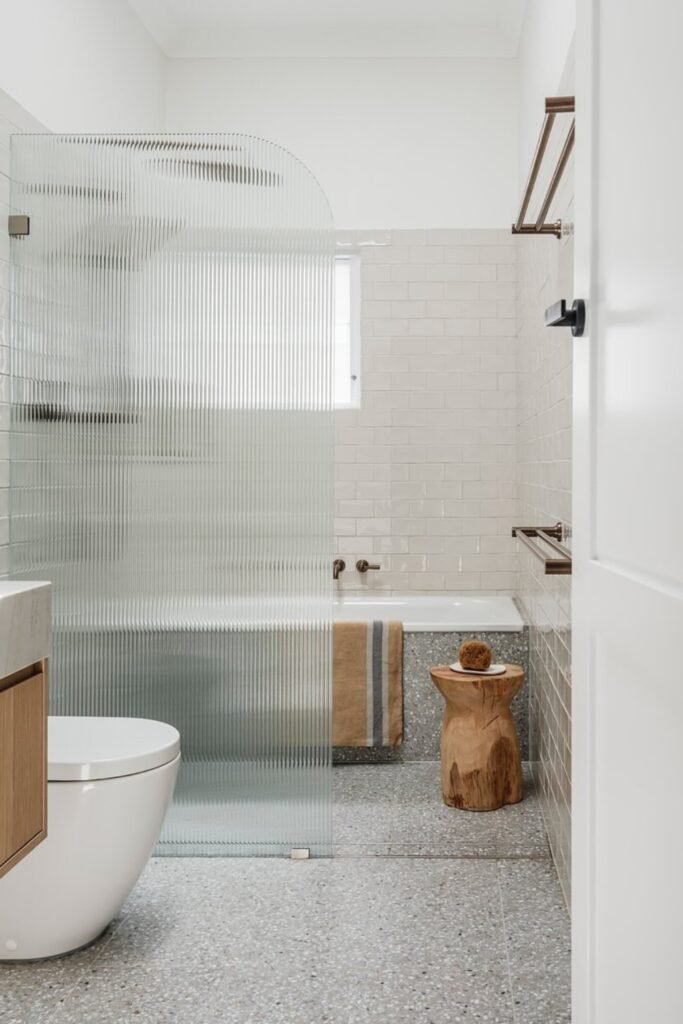
Ribbed Glass Divider
You can instantly soften the tunnel effect of a narrow bathroom by using ribbed glass, which lets in light while keeping your privacy intact.
This layout works best when you place the shower at one end and line the toilet and vanity along one wall.
A ribbed glass divider is a smart solution for long, narrow bathrooms where you want light without sacrificing privacy.
The textured glass gently diffuses natural and artificial light, softening the tunnel-like effect that tight layouts often create.
By placing the shower at one end and aligning the toilet and floating vanity along one wall, the space feels more organized and easier to move through.
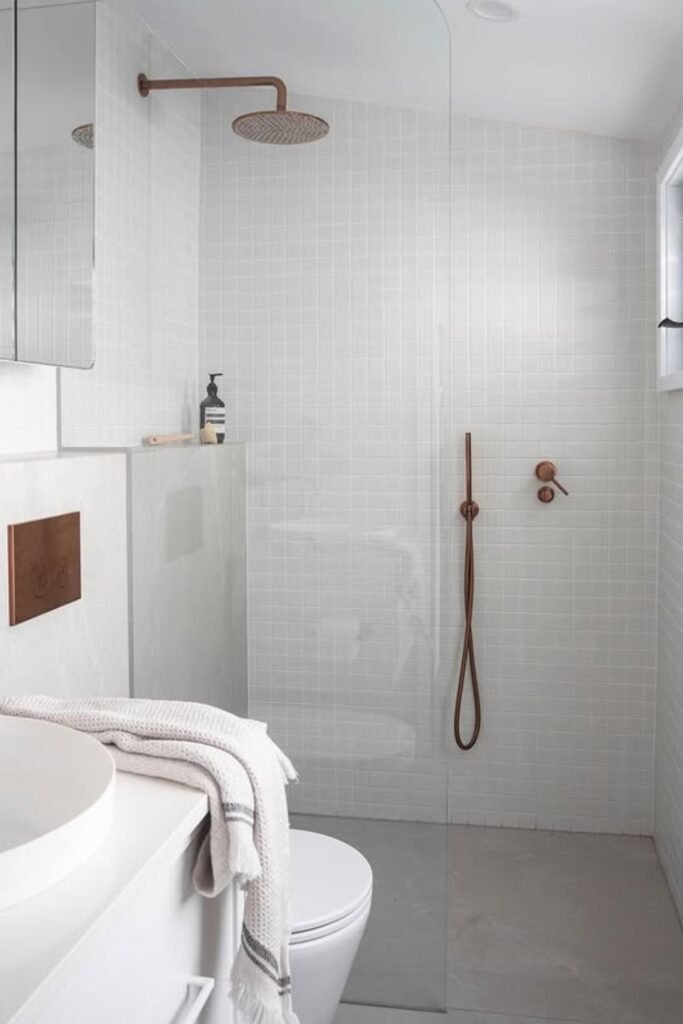
Walk-In Shower
You might find that frameless glass and a clean wall-to-wall tile layout visually stretch a narrow space, making it feel taller and wider.
You should keep the shower open with a single glass panel, use wall-mounted fixtures to free floor space, and pick soft white tiles that reflect light and brighten the room.
A walk-in shower with slimline fixtures is a great choice for long, narrow bathrooms where every inch matters.
A clean, wall-to-wall tile layout creates visual continuity, which further stretches the room and keeps it feeling calm.
Using a single glass panel instead of a full enclosure maintains an open flow, while wall-mounted fixtures free up valuable floor space.
Floating Vanity and Tub End
You can create a natural focal point with a freestanding tub at the far end, which also breaks up a long, narrow feel.
When you have a bit more length to play with but still want to keep the flow simple.
A floating vanity paired with a tub-at-the-end layout works beautifully in long, narrow bathrooms.
You can place a freestanding tub at the far end creates a natural focal point that draws the eye forward, helping to break up the tunnel-like feel of the space.
The floating vanity keeps the floor visually open, which maintains a sense of lightness and flow along the length of the room.

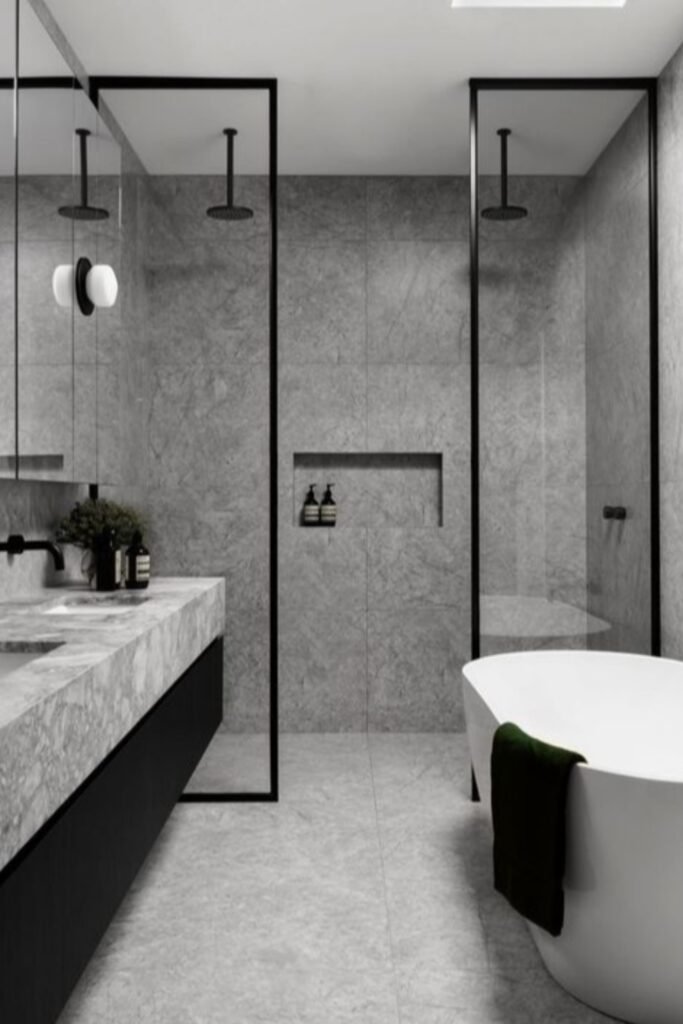
Bold Framed Shower with Centered Tub
You could use black-framed glass to create clean structure that organizes a long space visually.
It places the freestanding tub at the center helps balance both shower zones and adds a spa-like feel.
Using bold black-framed glass in a long, narrow bathroom adds instant structure and visual clarity.
By centering a freestanding tub between two framed shower zones, you create balance and symmetry that prevents the space from feeling stretched or awkward.
The strong lines help define each area without closing the room off, while the open glass keeps light flowing freely.
Related: 24 Kids Bathroom Ideas
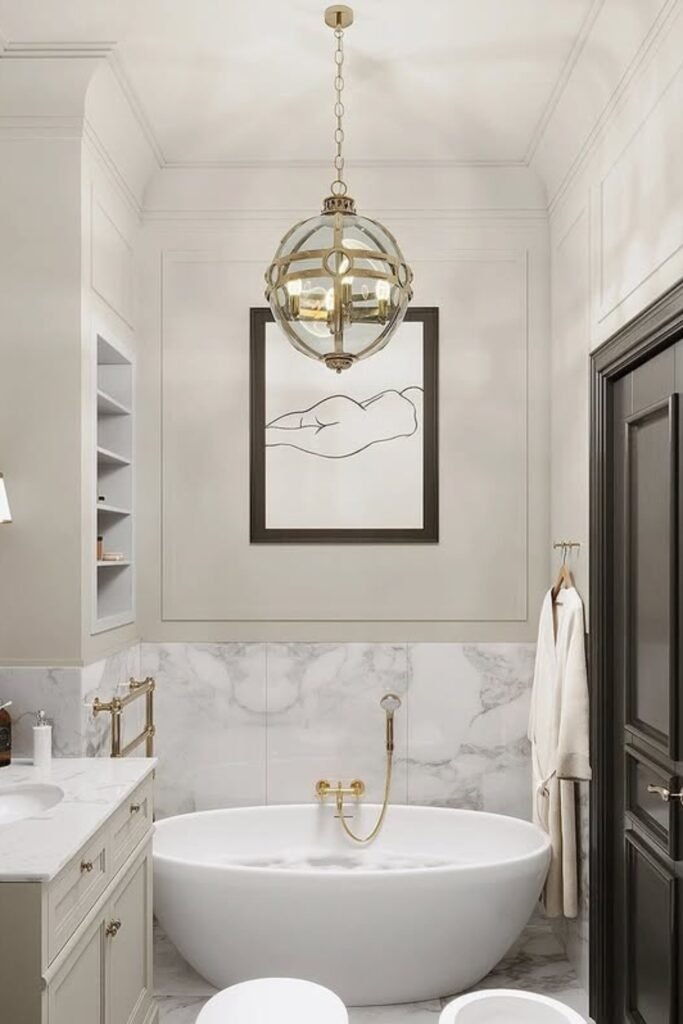
End-Wall Tub with Luxe Detailing
You can make a narrow layout feel intentional by placing the tub directly against the end wall, creating a clean focal point that pulls the eye forward.
You should center a freestanding tub, add wall sconces for soft lighting, and use polished finishes or gold fixtures to elevate your look without crowding the space.
This approach draws the eye forward, making the space feel more deliberate instead of stretched.
You have the center tub creates symmetry, while polished gold fixtures add a refined, hotel-style touch without overwhelming the layout.
You can pair with marble or light-toned walls, this setup feels elegant and calm, proving that even a slim bathroom can feel thoughtfully designed and indulgent rather than cramped.
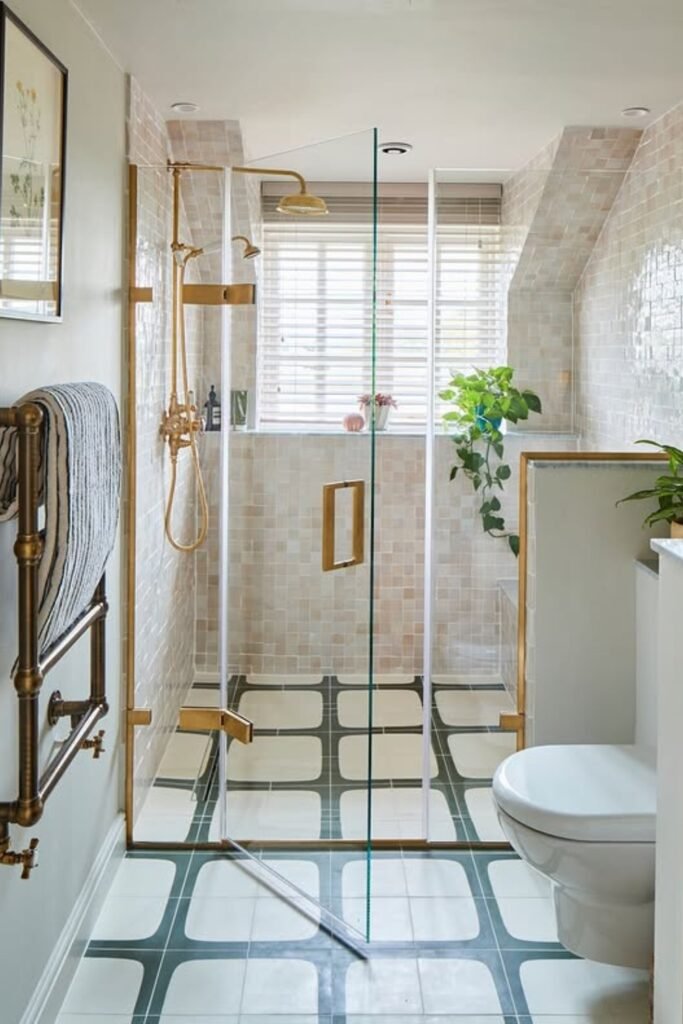
Glass Entry Shower with Framed Details
A clear glass entry at the end draws light through your whole room, turning a narrow footprint into a bright, open space.
You should use slim glass panels with minimal framing, keep the tiles light to reflect natural light, and add bold floor patterns to guide the eye down the length of your room.
A glass entry shower placed at the end of a long, narrow bathroom helps pull natural light through the entire space, instantly making it feel brighter and more open.
Using clear glass with slim, refined framing keeps the layout visually light while still defining the shower zone.
To add interest and movement, a bold patterned floor works beautifully, guiding the eye along the length of the room.
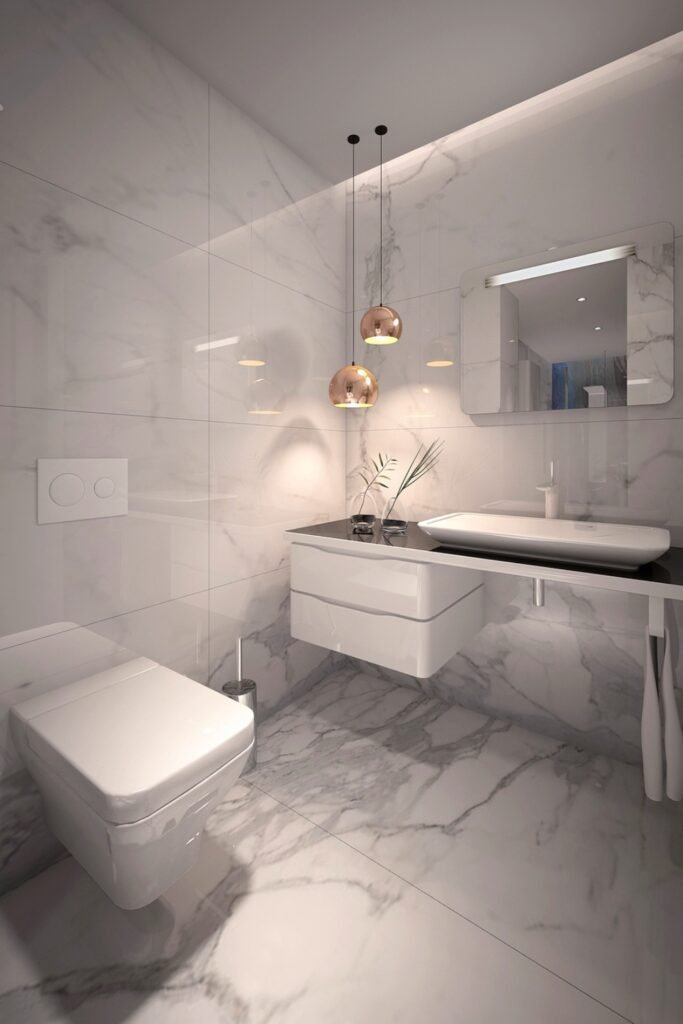
Marble Wrap with Floating Fixtures
You might find that wrapping the space in full marble creates a seamless effect, tricking the eye into seeing more width than there actually is.
You can pick large-format tiles, keep grout lines minimal, and add soft pendant lighting to warm up your clean surfaces.
Wrapping a narrow bathroom in full marble instantly creates a smooth, continuous look that visually expands the space.
The large-format marble tiles with minimal grout lines reduce visual breaks, making the walls and floor feel wider and more open.
Together, these elements create a refined, modern bathroom that feels spacious, elegant, and effortlessly cohesive despite its compact layout.
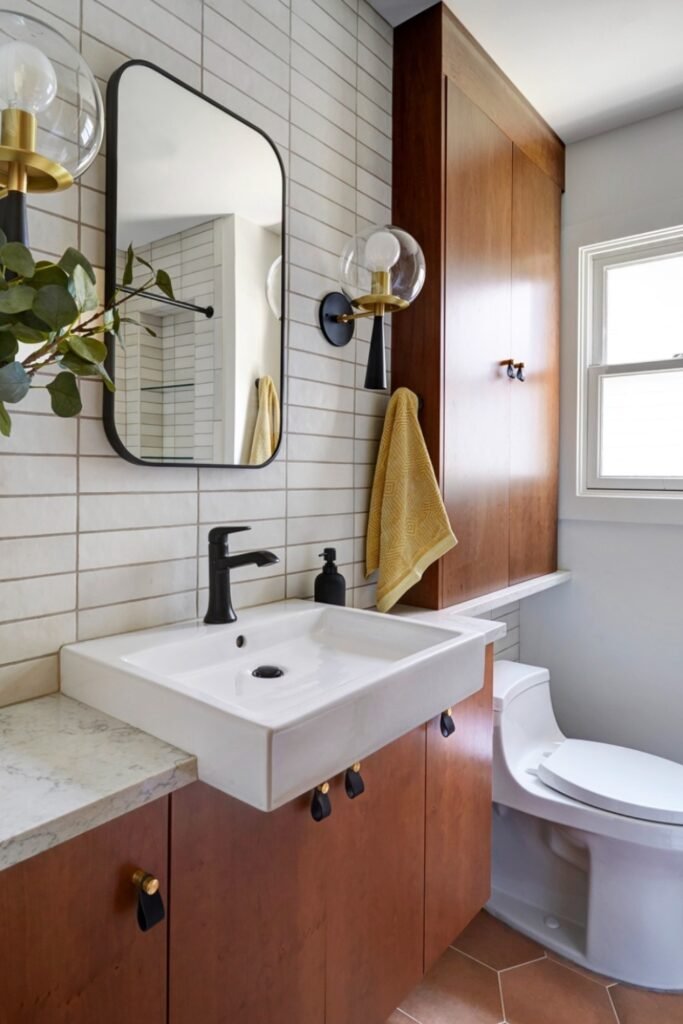
Wood Accents with Built-In Storage
Warm wood cabinetry instantly softens your tight feel of a narrow bathroom and adds depth without crowding your walkway.
You can work best when storage runs flush along one wall, keeping everything sleek and practical.
The natural wood tone adds depth and warmth, balancing out the crisp tile and modern fixtures.
By keeping everything streamlined and wall-aligned, you avoid visual clutter and maintain a smooth flow.
This approach works especially well in tight bathrooms where function and style need to work together effortlessly.
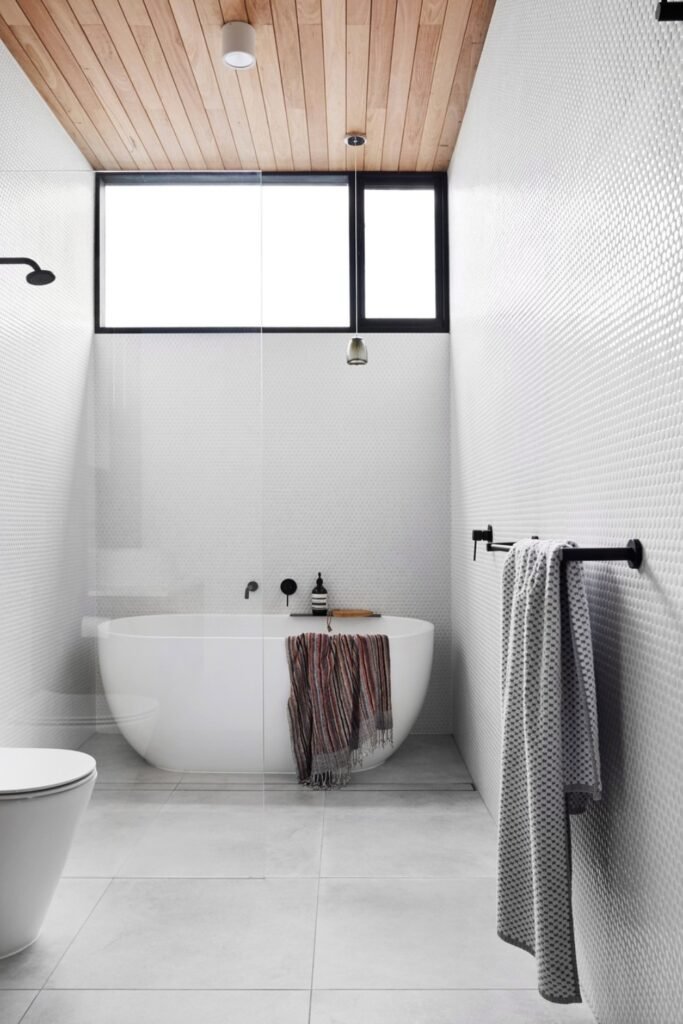
End-Focused Tub with Warm Ceiling Accent
You could make the room feel longer and more inviting by pairing a wooden ceiling with clean white walls, which pulls your eye forward.
You should use light wall tiles, match the ceiling tone to warm finishes, and keep fixtures minimal so the architecture does most of your talking.
An end-focused tub paired with a warm wooden ceiling is a clever way to add character to a long, narrow bathroom.
The wood ceiling naturally draws the eye forward, making the room feel longer and more welcoming, while clean white walls keep everything bright and airy.
By matching the ceiling tone with subtle warm finishes and keeping fixtures minimal, the design feels balanced and intentional.
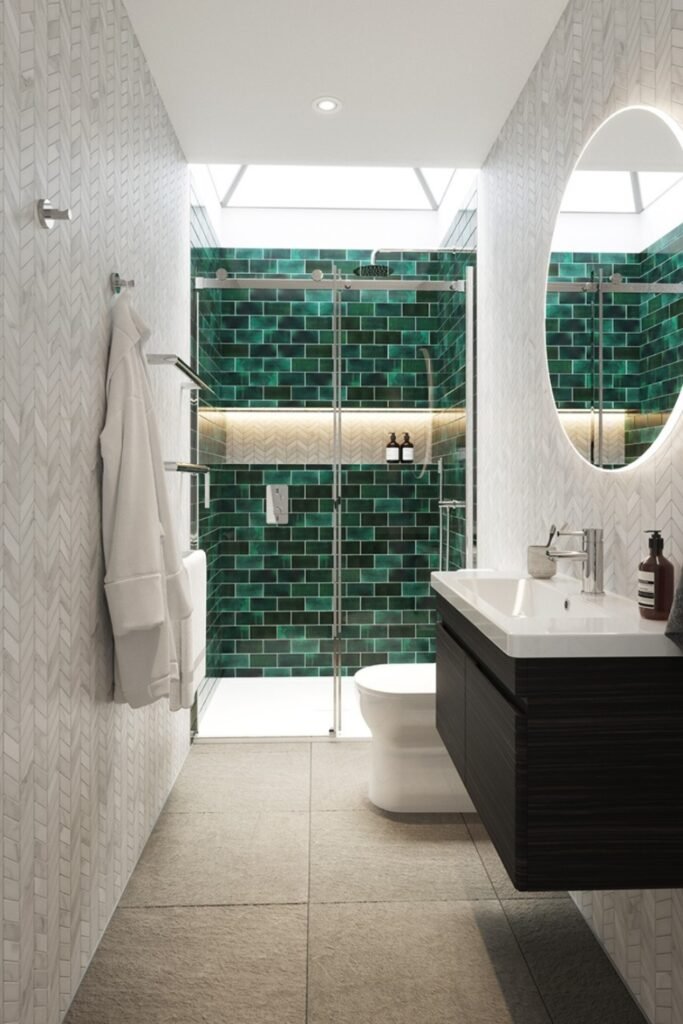
Emerald Tile Accent Shower
You can give a narrow bathroom a bold, intentional feel with deep green tiles framed by bright walls, which naturally pull the room forward.
This setup works best when you place the shower at the far end. Keep your fixtures minimal, and use under-shelf lighting to add depth and drama without crowding your space.
An emerald tile accent shower is a striking way to add personality to a narrow bathroom without overwhelming it.
The deep green tiles add richness and contrast beautifully against bright, light-colored walls, keeping the space balanced.
This combination delivers drama and elegance while still keeping the layout open, modern, and easy to navigate.
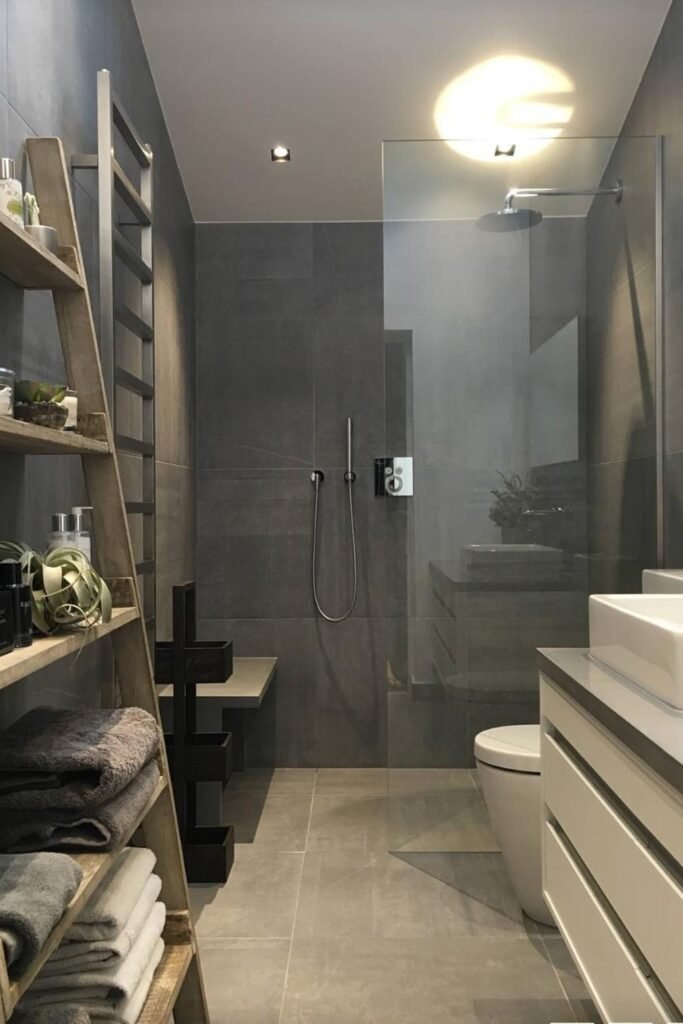
Dark Tile Walk-In with Open Storage
You can create a cozy cocoon in a narrow bathroom by using dark tiles paired with open shelving.
If you place the shower at the far end, you will keep the pathway clear and uncluttered.
A dark tile walk-in shower combined with open storage can make a narrow bathroom feel warm and intentionally designed rather than tight.
The deep-toned tiles add depth and create a cozy, cocoon-like atmosphere, especially when balanced with soft lighting.
You can place the shower at the far end keeps the main walkway open, helping the space feel organized and easy to move through.
Related: 21 Bathroom Wallpaper Ideas
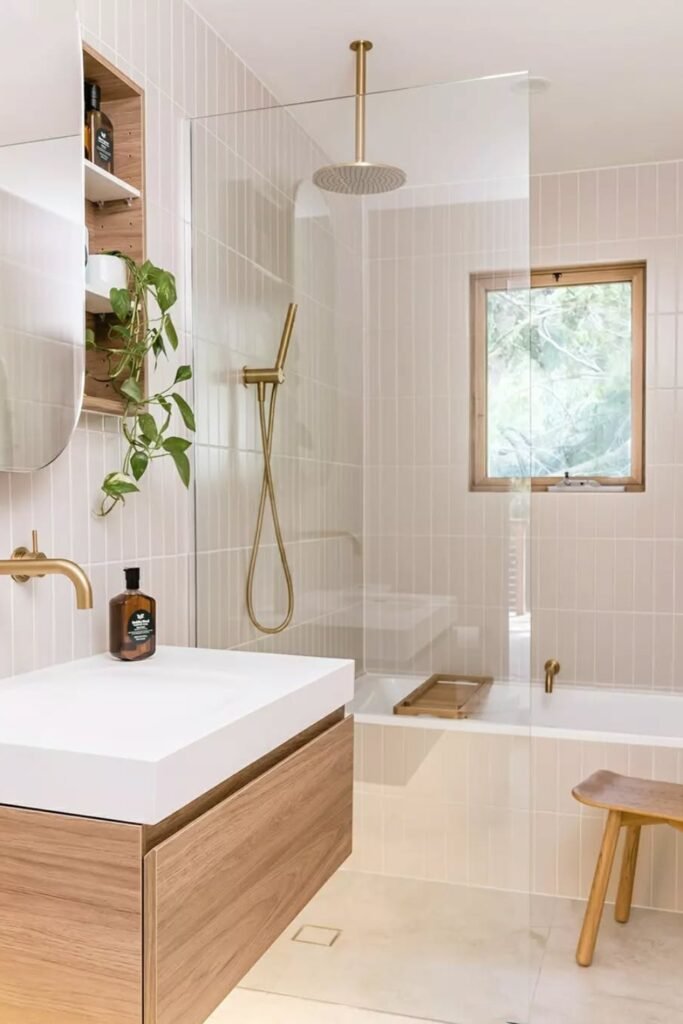
Warm Wood and Brass Combo
When you position the vanity and tub along the same wall, you will get a clean, open layout.
You might notice how light wood tones and soft brass accents can instantly make a narrow bathroom feel inviting instead of cramped.
The light wood cabinetry softens the space, while brass fixtures add just enough warmth and elegance to keep it from feeling plain.
You can pair with pale vertical tiles and a clear glass screen, the whole room feels brighter, taller, and more relaxed rather than tight or boxed in.
This kind of setup works especially well if you want a spa-like feel that’s cozy, natural, and effortlessly balanced.
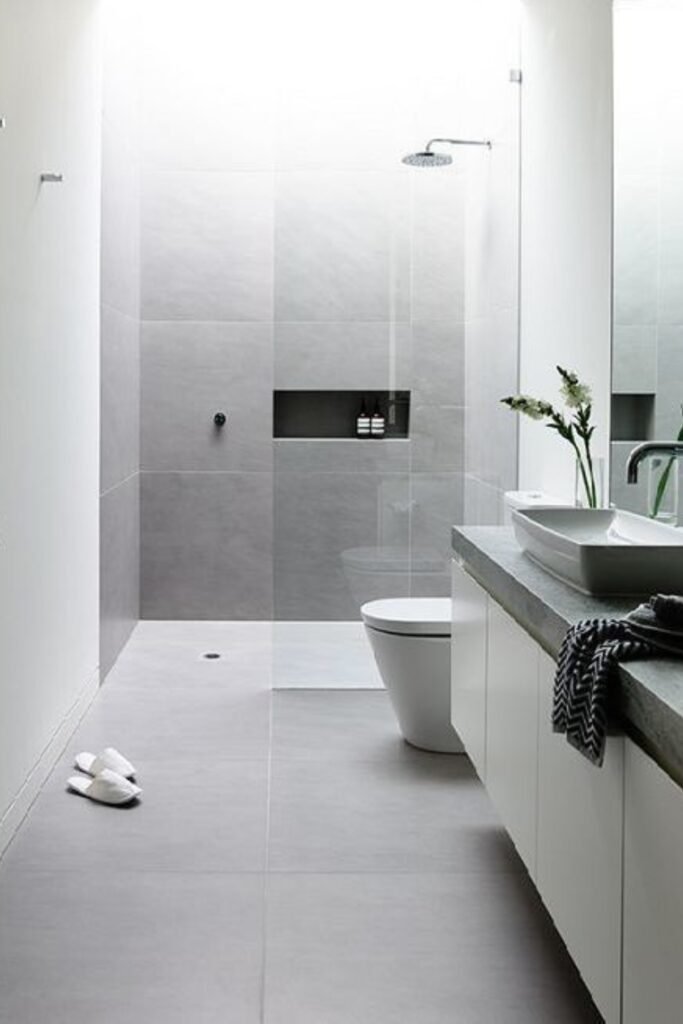
Seamless Grey with Hidden Storage Niche
If you keep the open shower at the end, you will visually extend the room, while a recessed shelf lets you hide clutter.
You can give a slim bathroom a calm, uninterrupted flow by using soft grey tiles from floor to ceiling.
The recessed niche is doing a lot of quiet work, it keeps toiletries off the floor and ledges, so nothing breaks that clean visual line.
Using the same soft grey tile from floor to ceiling blurs boundaries, removes contrast breaks, and creates that seamless, uninterrupted flow you’re aiming for.
If you want to elevate this look even more, subtle details like concealed drains, wall-mounted fixtures, or integrated lighting inside the niche can add depth without disturbing the calm, minimalist vibe.
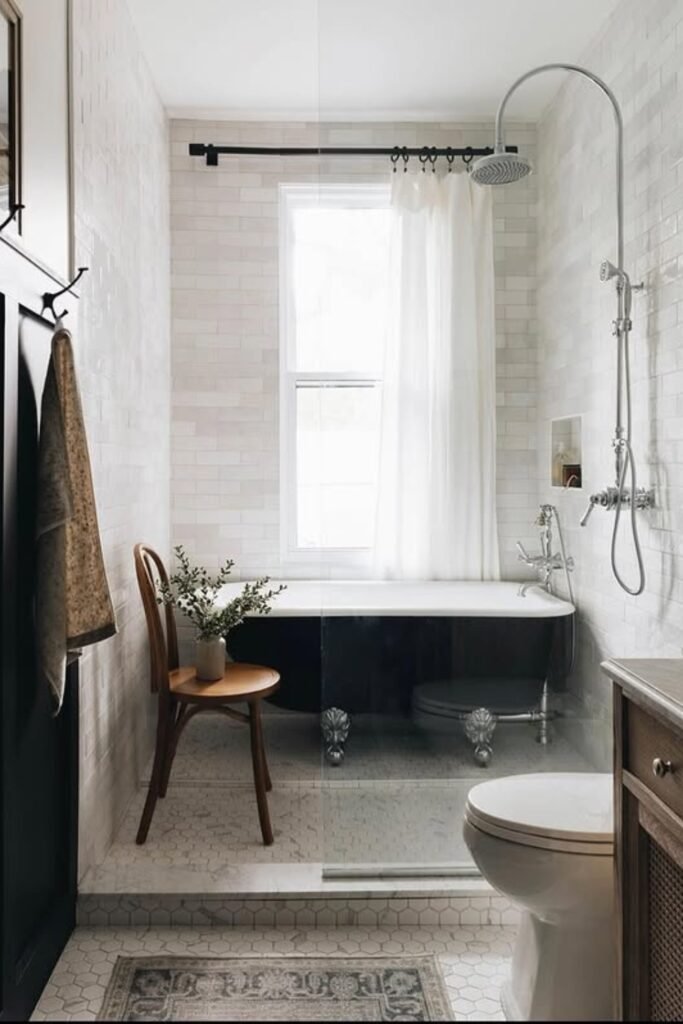
Clawfoot Tub with Shower Curtain Frame
You can add instant charm in a narrow space with a classic clawfoot tub at the end.
You should place the tub at the far wall, use light tiles to reflect brightness, and choose a simple curtain that softens the look.
This setup is a perfect reminder that narrow doesn’t have to mean modern-only, classic details work beautifully here.
You can place the clawfoot tub at the far end gives the room a strong focal point and naturally draws you forward, which helps counter the tunnel effect.
The light tile palette keeps everything airy, while the shower curtain frame adds vertical interest without visually boxing the space in.
Soft Neutrals with Walk-Through Shower
When you place a walk-through shower at the end, you will keep everything open and airy.
You might find that muted tones and a clear line of sight from the entrance to the window can stretch a tight bathroom effortlessly.
This layout shows how simplicity can completely transform a narrow bathroom into something calm and spacious.
A floating vanity with rounded edges softens the layout and prevents the room from feeling boxy.
Overall, this design works beautifully when you want a minimal, airy bathroom that feels longer, brighter, and effortlessly balanced.
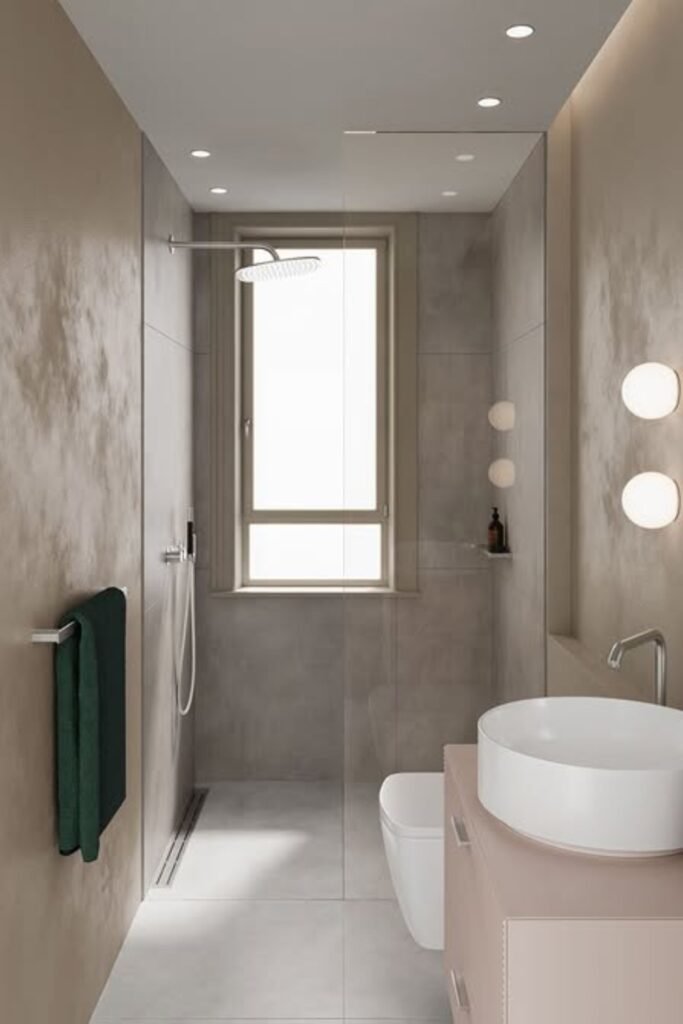
Glass-Enclosed Shower with Light Grey Finish
You can make a narrow bathroom feel longer and more open by placing a clear glass shower at the far end.
You choose a soft grey palette, you will tie the whole space together without breaking the visual flow.
This design shows how a clean, glass-enclosed shower can completely change the feel of a narrow bathroom.
By placing the shower at the far end and using clear glass, the space feels longer and less boxed in.
The soft grey palette keeps everything calm and cohesive, so your eye moves smoothly from one end to the other without interruption.
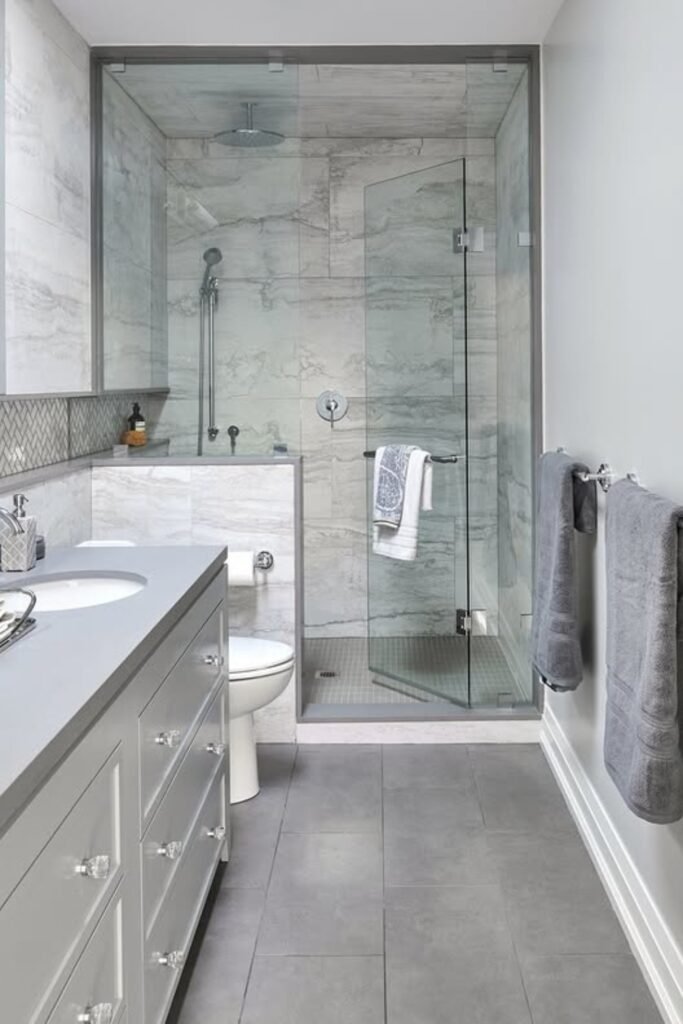
All-White Vanity with Layered Lighting
You should pick sleek white cabinetry, install a large wall mirror, and layer overhead lights with sconces so you can keep the space bright from every angle.
You might notice that an all-white palette paired with oversized mirrors can instantly make a narrow bathroom feel airy and bright.
The oversized wall mirror visually doubles the room, while layered lighting from overhead fixtures and wall sconces eliminates shadows and keeps everything evenly bright.
This all-white vanity setup is a smart way to make a narrow bathroom feel open, polished, and timeless.
Altogether, this design works perfectly if you want a bright, airy bathroom that feels elegant, spacious, and effortlessly put together.
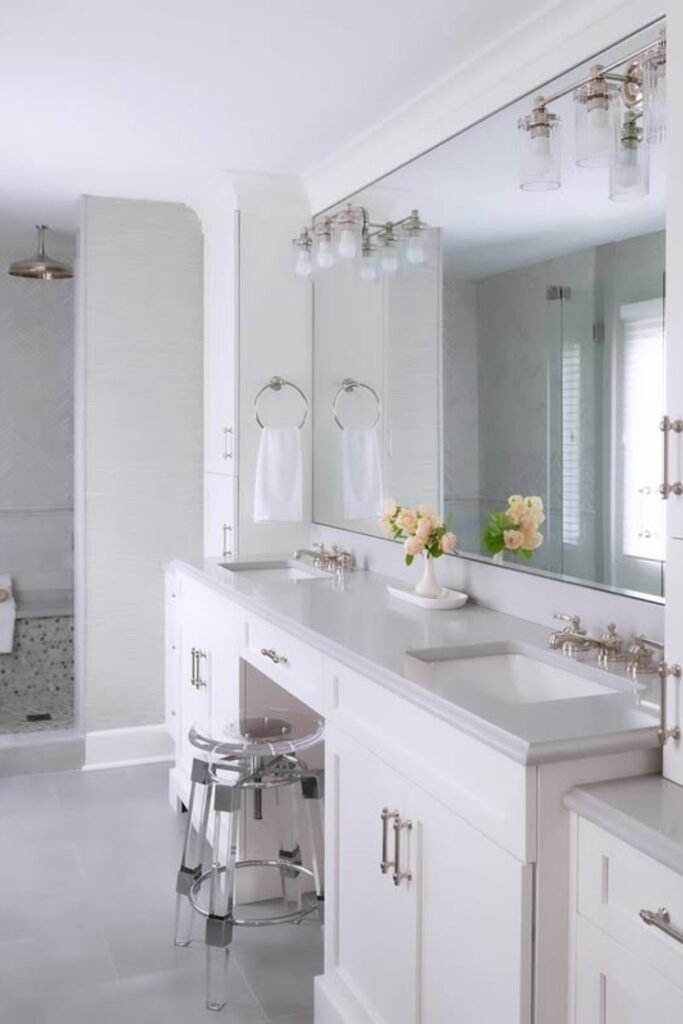
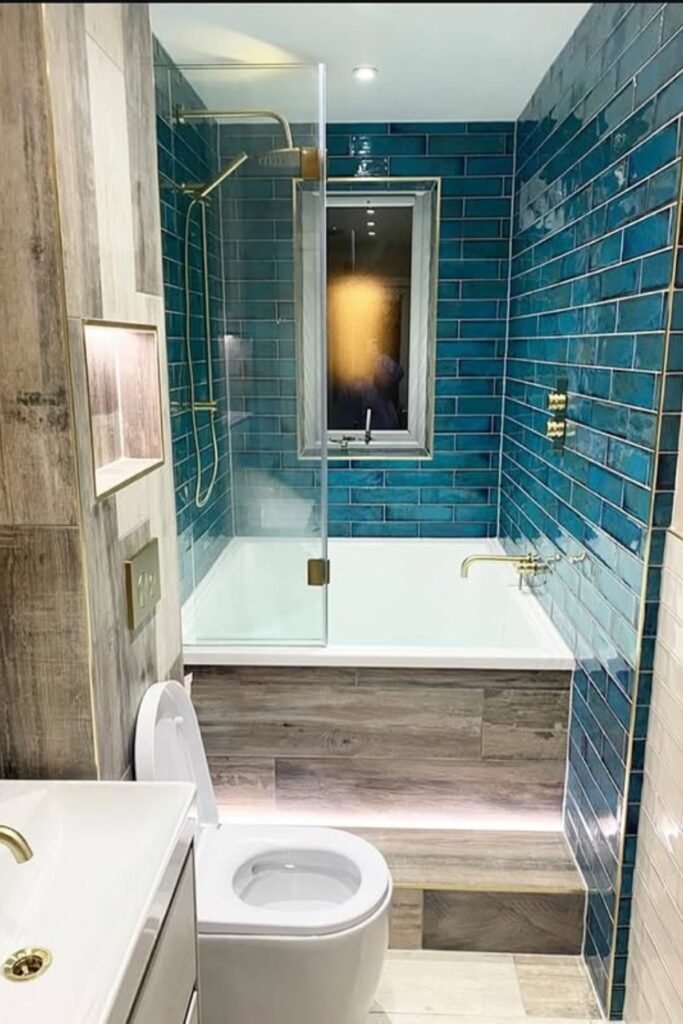
Teal Tile Accent with Raised Tub Platform
You can create a dramatic focal point in a slim bathroom by using rich teal subway tiles that draw the eye straight to the back wall.
When you add a raised tub platform, you will break up the narrow footprint in a smart, stylish way.
The glossy subway tiles catch the light beautifully, helping the space feel more dynamic instead of confined.
By placing the tub on a raised platform, you visually break up the long, straight layout, which makes the room feel more intentional and layered.
This design works perfectly if you want a slim bathroom to feel dramatic, stylish, and thoughtfully designed.
Dark Hex Tiles with Bright Contrast
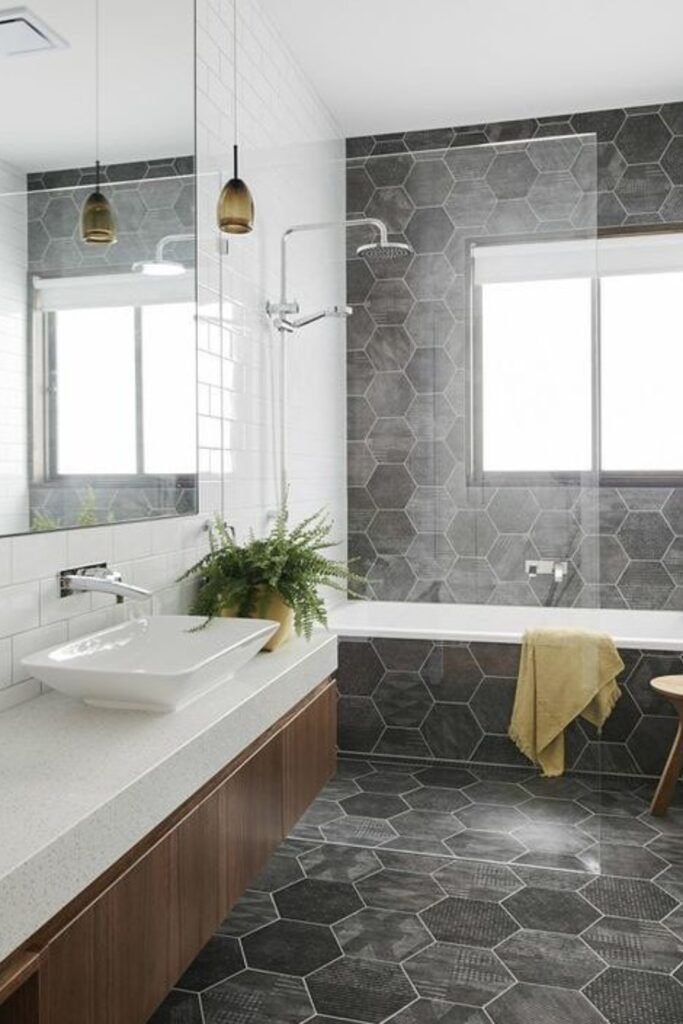
You might find that bold dark hex tiles can ground a narrow bathroom and guide the eye to the far wall.
If you pair them with a bright white vanity and wall tiles, you will balance the look while keeping it fresh.
The geometric pattern creates visual interest without overwhelming the room, especially when balanced with a bright white vanity and light wall tiles.
The natural light bouncing off the lighter surfaces softens the darker flooring, while warm wood accents add a subtle, welcoming touch.
Altogether, this layout proves that bold flooring can work beautifully in slim bathrooms when paired thoughtfully.
Minimal Vertical Tile with Brass Touch
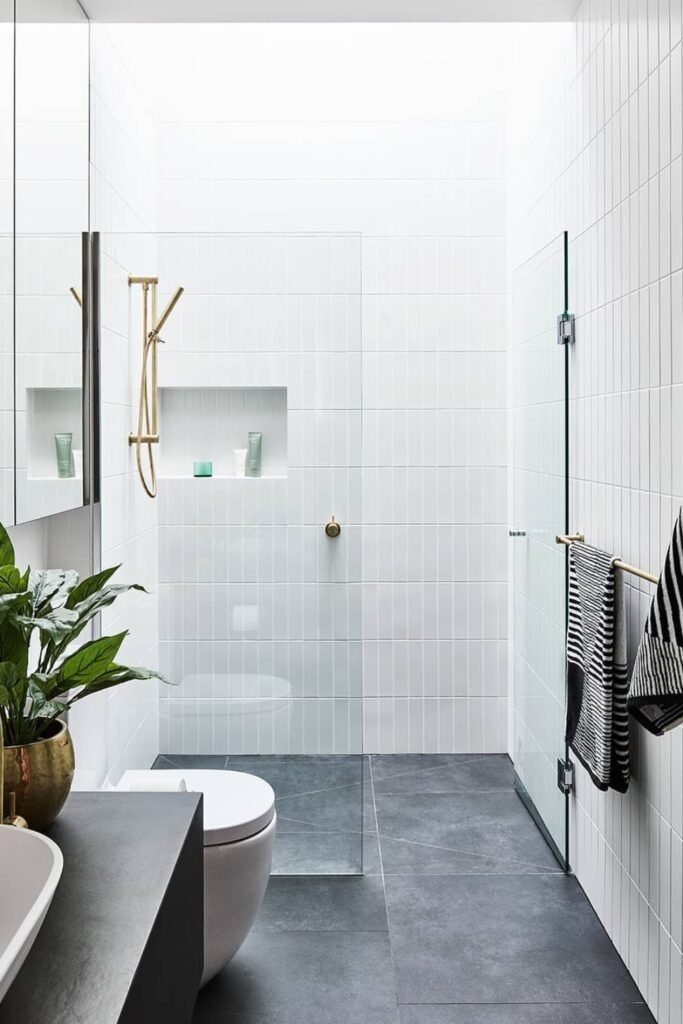
You can make a bathroom feel sleek and open by pairing tall, narrow tiles with frameless glass.
You should use vertical tiles to exaggerate height, keep the floor dark for contrast, and stick to clean, minimal lines so the space feels bigger and more airy.
The slim tile profile draws the eye upward, while frameless glass keeps sightlines clear and uninterrupted.
A darker floor grounds the room, adding contrast without closing it in. The subtle brass fixtures introduce warmth and a touch of elegance against the clean white palette.
By limiting ornamentation and focusing on proportion, texture, and light, this layout feels calm, modern, and airy.
FAQs
What’s the best layout for a long narrow bathroom?
For most narrow bathrooms, you will find that a one-wall or two-wall layout works best.
If you line the vanity, toilet, and shower along one wall, you can keep the aisle open and easy to move through.
You might notice that placing the shower at the far end draws your eye forward, making the space feel longer.
When you have extra room, a two-wall layout can give you better flow without making the space feel cluttered.
How narrow can a bathroom be without feeling cramped?
You can technically fit a bathroom into a 30-inch width, but you will quickly notice it doesn’t feel comfortable.
When you aim for at least 36 inches, you will give yourself enough breathing room, and around 5 feet lets the layout truly flow.
If you are working with a tight space, you should use smart fixture placement and open sightlines, because you can make a huge difference in how roomy it feels.
