
23 L Shaped Kitchen With Island Ideas for 2026


This article may contain affiliate links: read full affiliate disclosure.
You’re probably here because you love the idea of an L-shaped kitchen with an island, but you are wondering if it will actually work in your space.
You scroll through endless photos online, and every single one looks perfect, yet none of them answer the question that really matters to you.
Will this layout make your kitchen easier to use, or just make it worse? The truth is, an island can either solve your workflow problems or completely block you at every turn.
In this article, you need to know when an island actually makes sense, when it doesn’t, and what you should do instead so you don’t end up regretting your layout later.
Let’s jump in!
What Is An L-Shaped Island Called?
An L-shaped island is something you’ve probably heard called a peninsula or just a peninsula in kitchen design terms.
Unlike a freestanding island, you can see that a peninsula is attached to your existing cabinetry or a wall on one side, creating that familiar L shape that extends into your kitchen.
The designers might also call it an attached island, extended island, or breakfast peninsula, depending on what you want it to do.
If you include seating, you will hear it called a breakfast bar peninsula. If your focus is on workflow, you might see it referred to as a workstation peninsula.
You will notice that L-shaped islands are growing in popularity because they give you many of the perks of a full island without taking up as much floor space.
They naturally guide how you move around, help define open-plan kitchens, and create clear zones for cooking, prepping, and dining.
In smaller or medium kitchens, you might find that a peninsula feels way more efficient and connected than a standalone island.
By now, you are probably seeing that L-shaped islands are more than just a countertop—they’re multifunctional hubs.
You can add storage, seating, charging drawers, or even banquette seating, making it a place where everyone can gather while you stay connected to your main kitchen layout.
In short, while you might hear L-shaped island used often, peninsula is really the name designers and architects rely on most.
What’s the Ideal Island Size for an L-Shaped Kitchen Layout?
The ideal island size for your L-shaped kitchen really depends on your space, how you move around it, and how you plan to use it every day.
These days, you will see that the focus isn’t on huge islands, it’s on designs that feel well-proportioned, multifunctional, and intentional.
You’ll find most designers agree that your island should be at least 2.5-3 feet wide and 4-7 feet long to stay practical without crowding your kitchen.
You also need to think about clearance, aim for 42-48 inches of walking space between the island and your counters so you can move freely without bumping into anything.
If your kitchen is on the smaller side, you might want a slim or even mobile island. These let you keep prep space and storage while making sure your kitchen still feels open.
In medium to large kitchens, you can go deeper with your island, letting it hold seating, appliances, or even a sink, turning it into the central hub you’ll spend the most time around.
Height matters too. The standard counter height, 36 inches, is still the most versatile, while raised sections for seating are becoming less common as people prefer seamless, single-level surfaces.
At the end of the day, the perfect island is one that works with your L-shape rather than competing with it.
When you get the scale right, you will notice your kitchen feels more efficient, your movement flows better, and the island naturally becomes a spot where you, your family, or your guests will want to gather, without sacrificing comfort or balance.
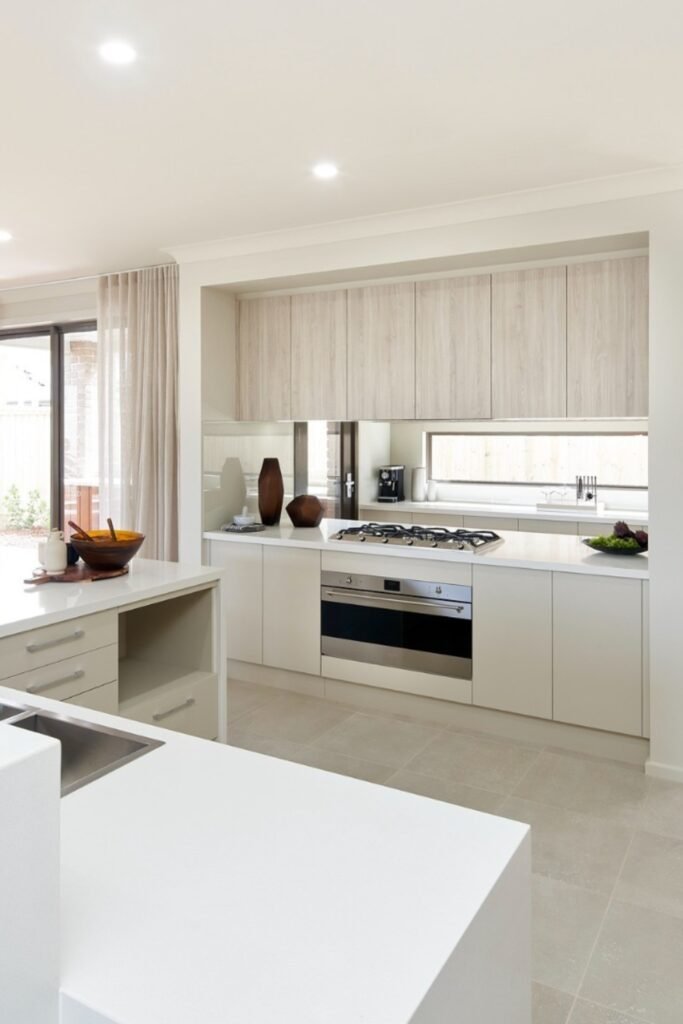
Minimal Prep Island
When you want your kitchen to flow without inviting people to hang out, this kind of island is perfect for you.
You get extra counter space for chopping, plating, and quick cleanups without feeling crowded. This works best in open-plan homes where your kitchen connects to living areas.
If you want to recreate it, keep your island compact, skip the bar overhangs, and choose light finishes so it supports your L-shaped layout instead of competing with it.
No-Island L-Shape
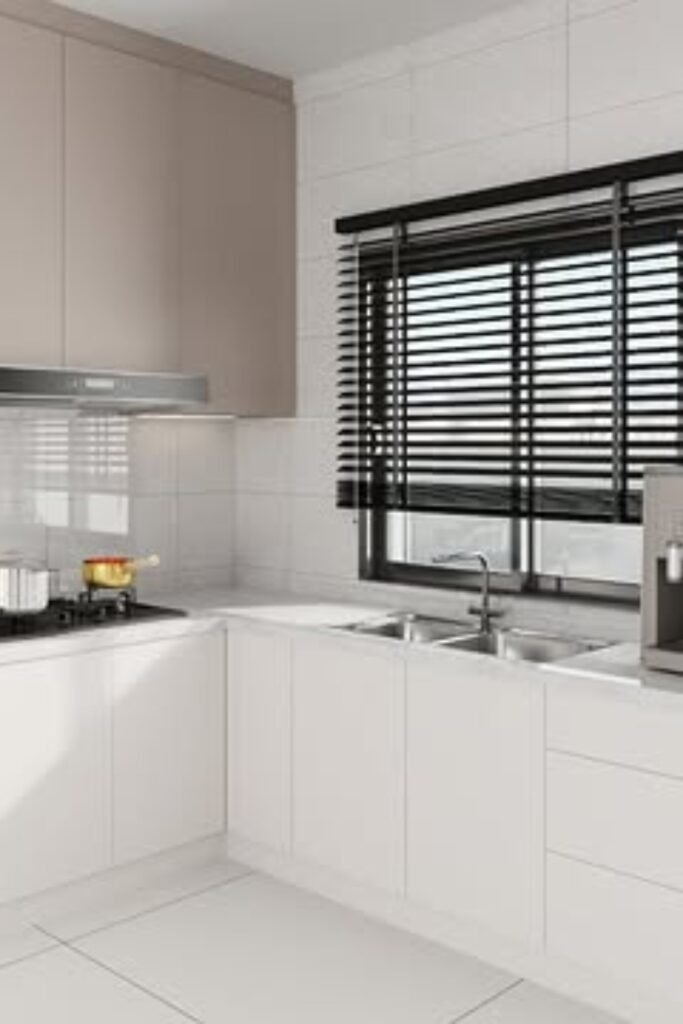
Sometimes the smartest move is knowing when you don’t need an island at all.
If your L-shaped kitchen is tight, leaving the center open can make your daily cooking faster and easier.
You will move smoothly between sink, stove, and fridge without obstruction.
Social Sink Island
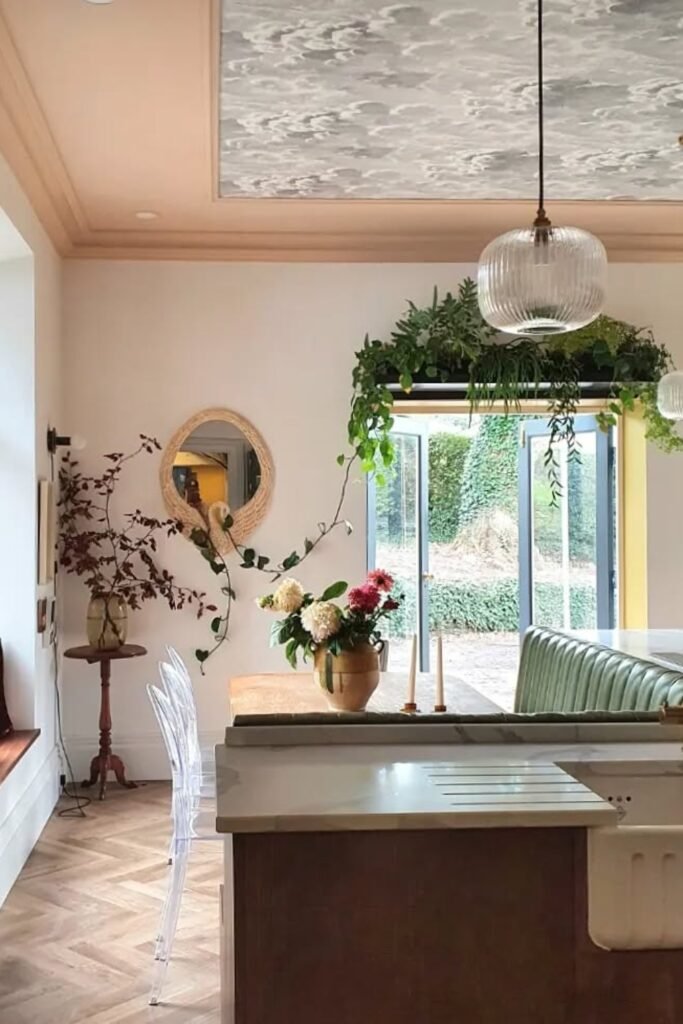
The cooking can feel less isolated when you place your sink facing the room, and that’s exactly what this setup does for you.
You can prep meals while staying part of the conversation, whether guests are seated or moving around nearby.
You can put your sink on the island, add comfortable seating, and focus the L-shaped cabinets on storage and appliances so your island stays social, not cluttered.
Curved Seating Island
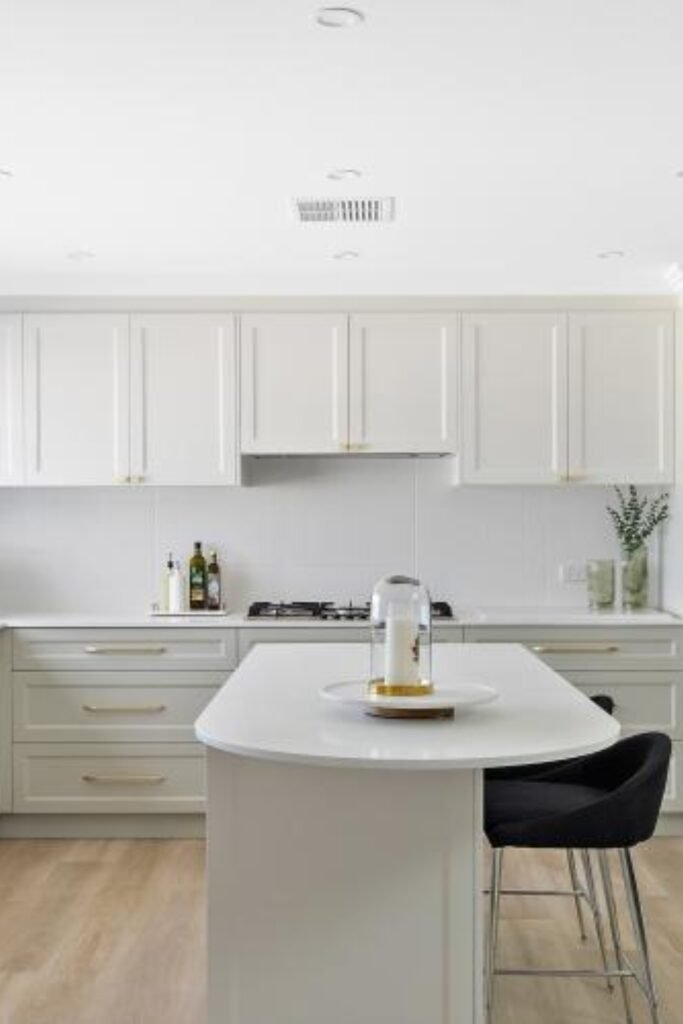
The straight islands aren’t always the answer, especially when you want softer movement through the kitchen.
A curved island like this eases traffic flow and makes seating feel more natural, not squeezed into a corner.
It works best in medium to large L-shaped kitchens where you want casual seating without sharp edges blocking paths.
Narrow Galley Island
When space feels tight but you still need prep surfaces, a slim island can save the day for you.
Its narrow shape keeps walkways clear, which is critical in galley-style kitchens. This works best if storage is already handled elsewhere.
You can keep the island long and narrow, avoid seating, and use it mainly for prep, staging meals, or light storage so your movement stays smooth.
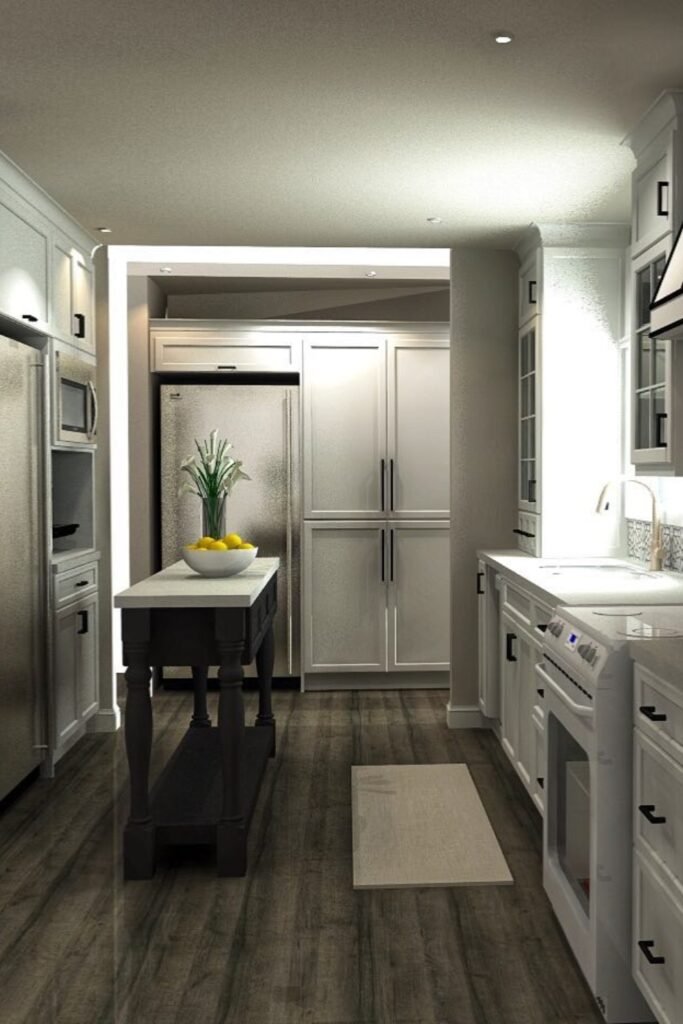
Entertainer Seating Island
You can clearly separate cooking from seating so your guests can chat, snack, or hang out without getting in your way.
This works best in open L-shaped kitchens where entertaining is a priority.
You can recreate it by leaving enough clearance behind stools, keeping appliances on the L-shaped run, and using pendant lights to mark the island as a gathering spot.
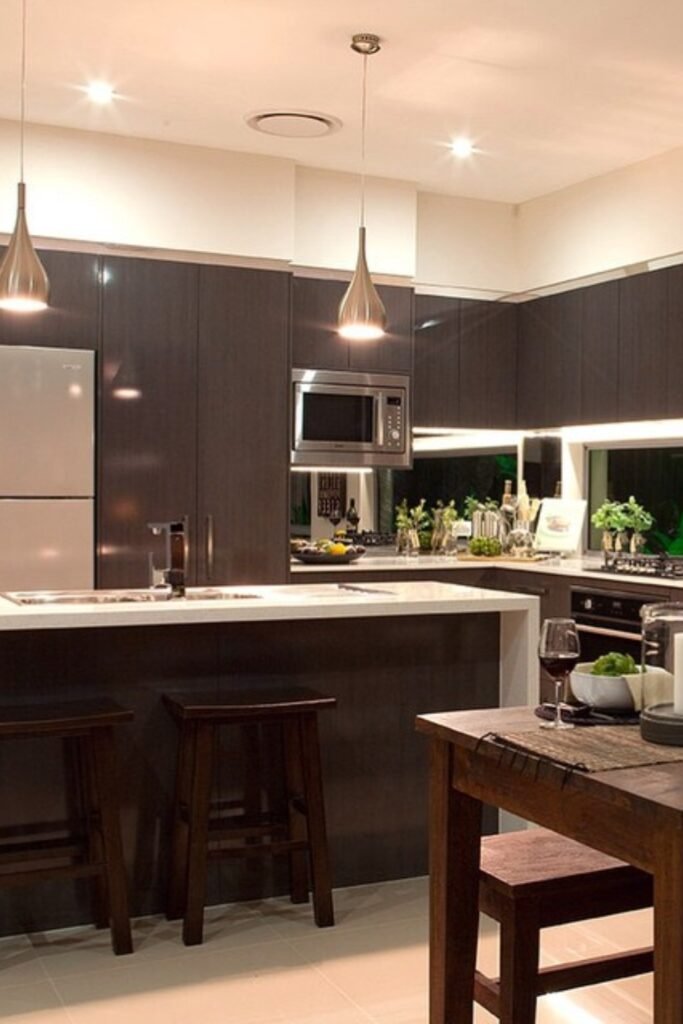
Casual Breakfast Island
You will notice your morning routine runs smoother when the island doubles as a quick eating spot.
The extended counter creates a relaxed breakfast zone without turning your kitchen into a full dining area.
This works best in L-shaped kitchens where space allows seating but not a separate table.
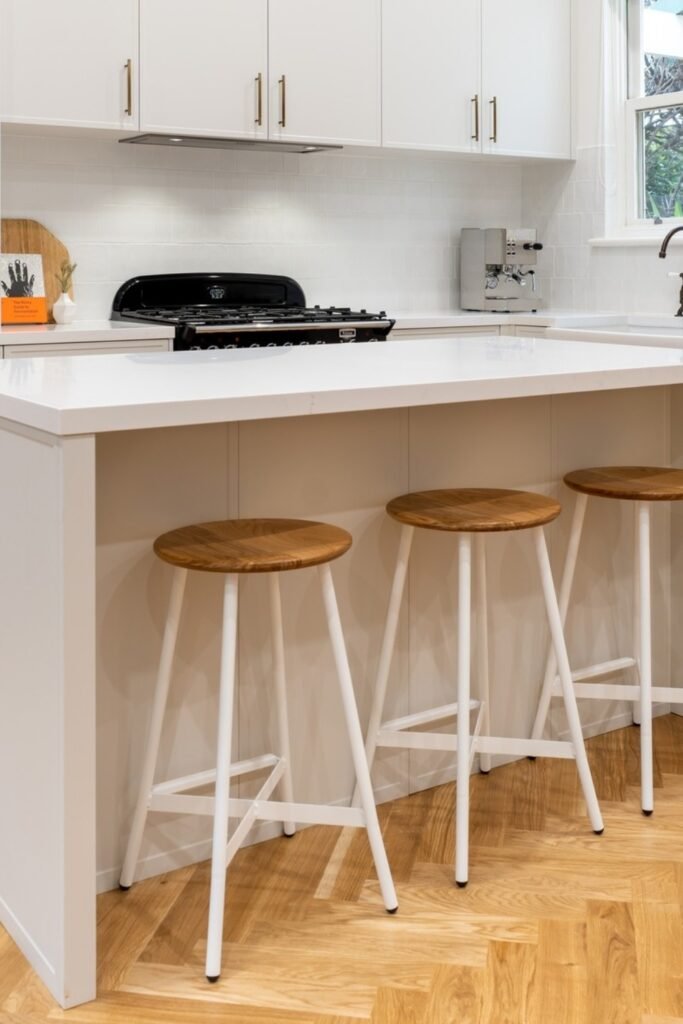
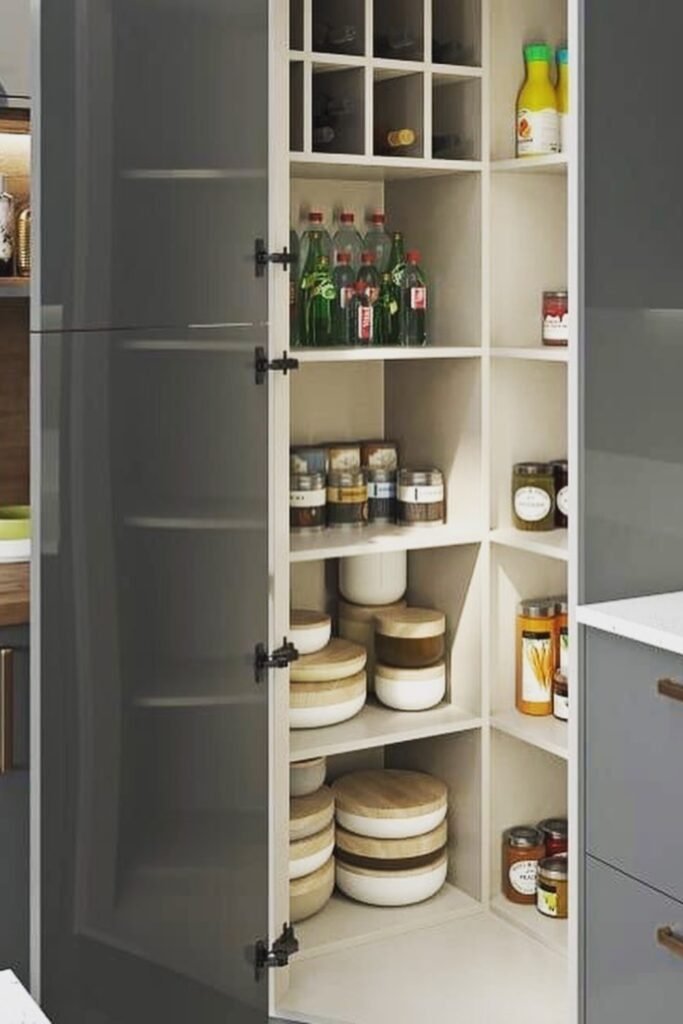
Island Storage Boost
This setup shows how smart vertical storage near an L-shaped kitchen and island can take pressure off the main workspace.
The tall pantry-style cabinets keep food, dishes, and small appliances organized without crowding the counters or island surface.
This works best in kitchens where the island is used for prep or seating and can’t be overloaded with storage.
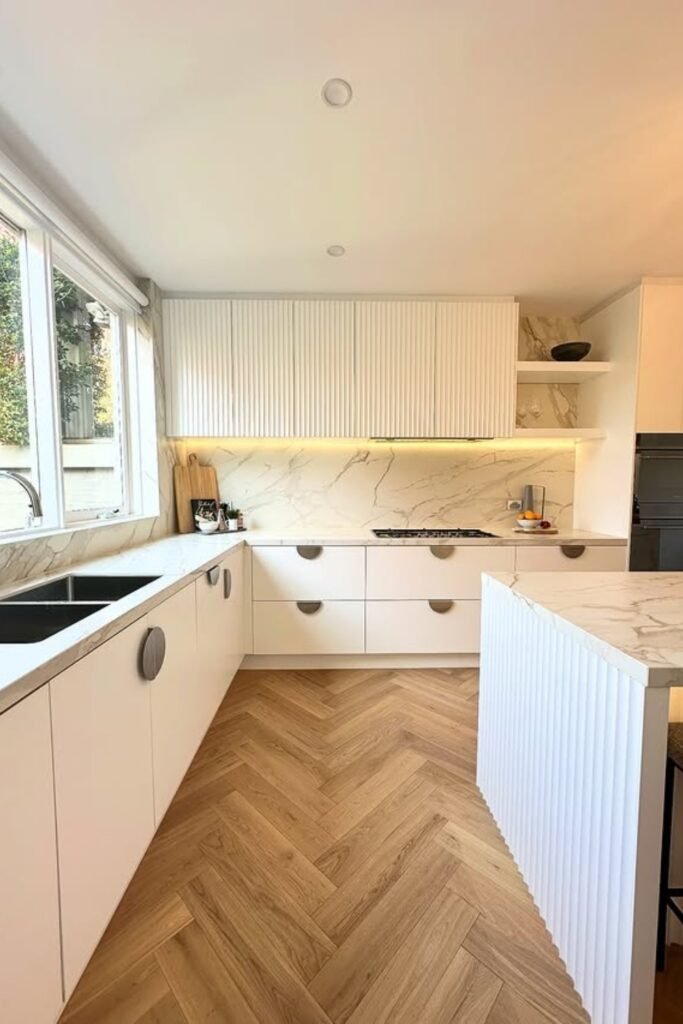
Sculpted Feature Island
You can make your kitchen feel special without adding bulk. This works well in modern or Scandinavian-style homes.
A fluted or textured island face turns a simple L-shaped kitchen into a design feature.
You can keep your island compact, add textured panels on the exposed side, and pair it with simple cabinetry so it stands out without overpowering your layout.
Gathering-First Island
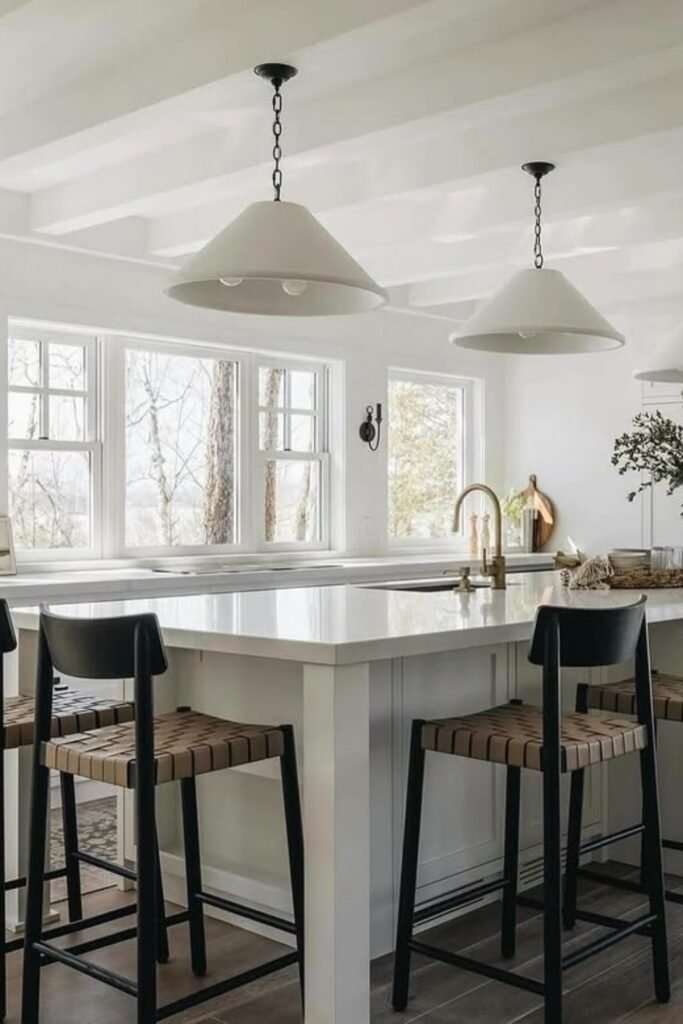
When you want the kitchen to feel like the heart of the home, an island like this sets the tone.
The wide surface and seating on multiple sides invite people to sit, talk, and stay, while the L-shaped counters behind handle the real cooking work.
This layout works best in larger, open kitchens where the island becomes a shared table, not just a prep spot.
Extended Dining Island
You can even use your island to replace the dining table if you need to. This works best in open-plan kitchens.
The extended surface creates a clear eating zone while the L-shaped run keeps cooking and cleanup separate.
You can extend one side of the island beyond the work zone, keep cooktop and sink off the seating area, and use lighting to separate dining visually from prep.
Balanced Work Island
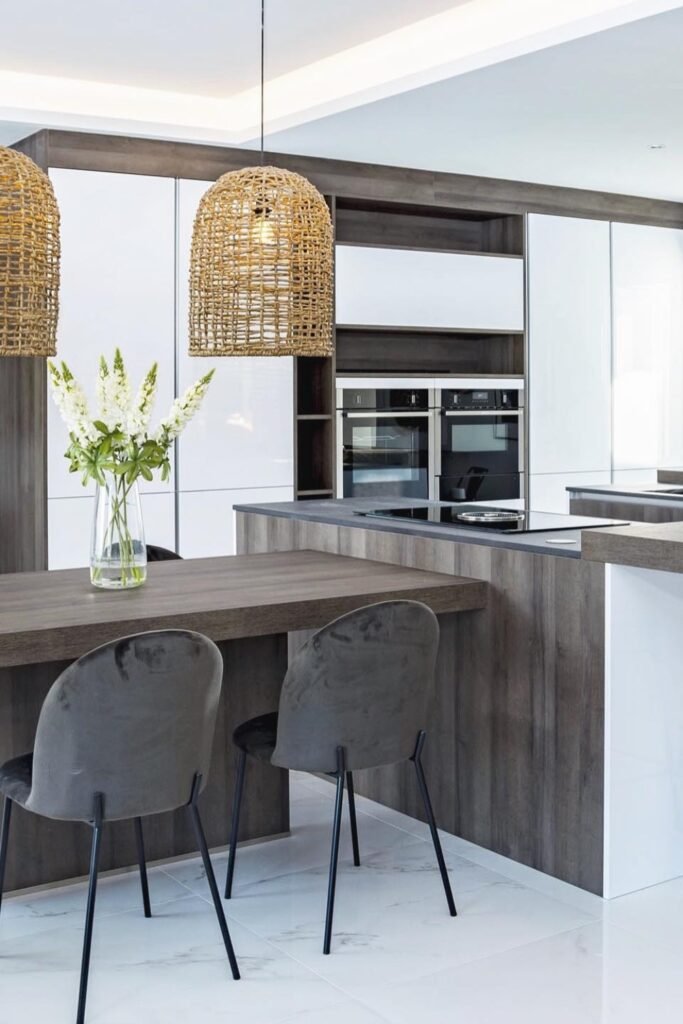
The island sits close enough to support prep and serving, but far enough from the stove to avoid crowding the main work zone.
This works best in medium-sized L-shaped kitchens where you want extra counter space without adding seating.
You can keep the island proportional, align it with the cabinet runs, and let the L-shape handle cooking while the island stays focused on prep, mixing, and everyday tasks.

Freestanding Work Island
A freestanding island like this adds prep space and storage without locking you into a permanent layout.
It’s ideal for smaller or older L-shaped kitchens where flexibility matters more than size. You can move it when you need floor space or pull it closer while cooking.
You can choose a solid worktop, add open shelving for pots, and keep it scaled smaller so it supports the L-shaped layout instead of overpowering it.

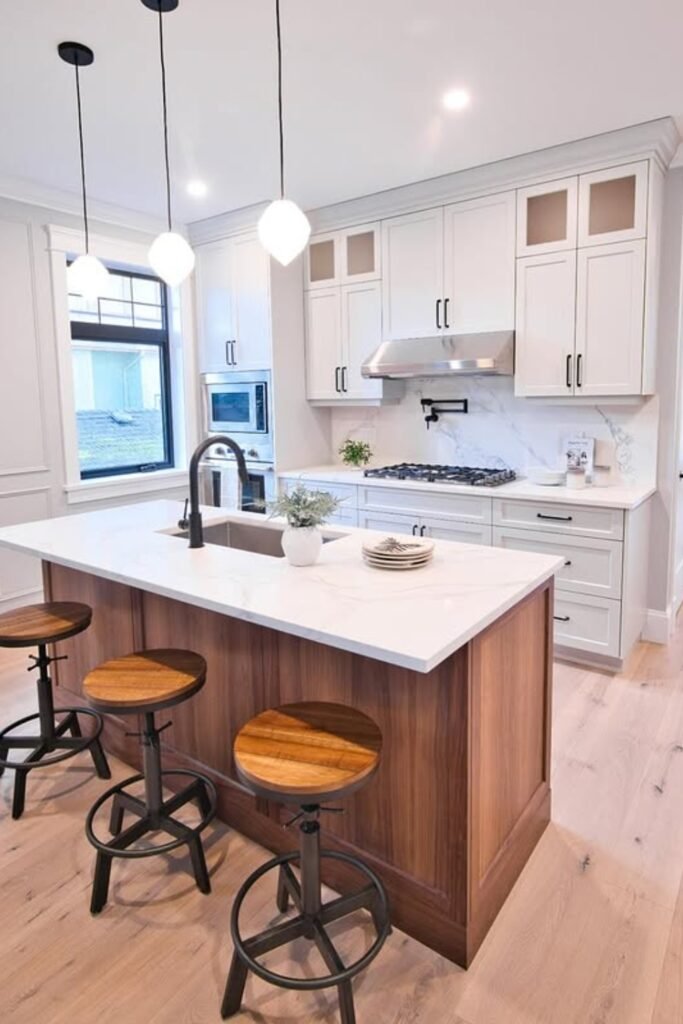
Warm Contrast Island
If your kitchen feels too white or flat, adding contrast through the island fixes that fast.
The wood-clad base here grounds the space and makes the island feel like furniture, not just cabinetry.
This works especially well in L-shaped kitchens with light cabinets where you want one strong focal point.
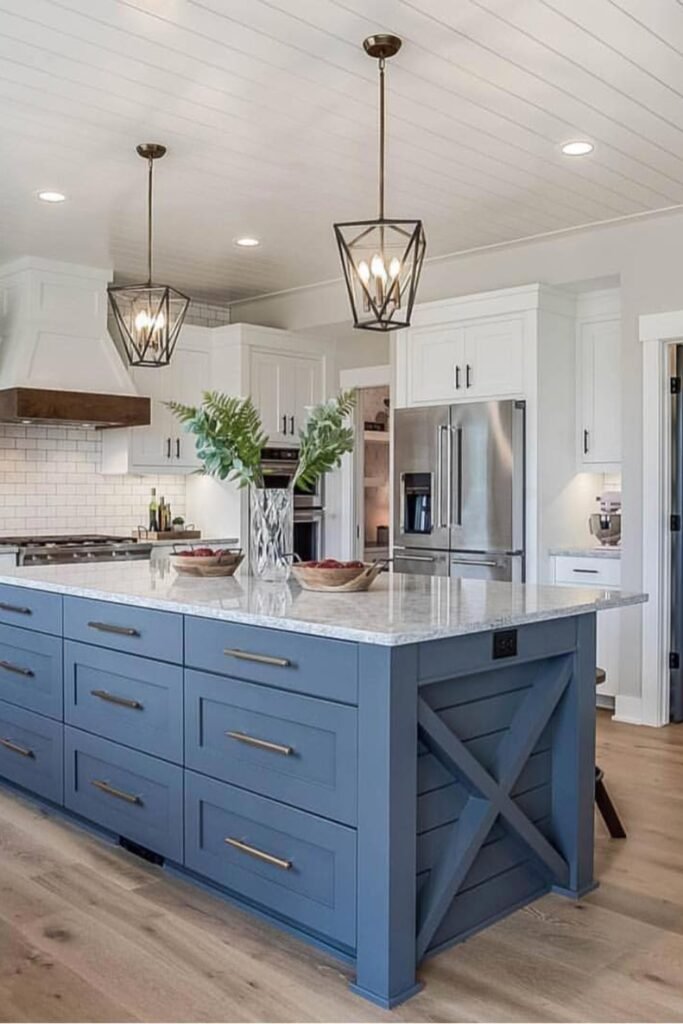
Statement Storage Island
When storage is your biggest headache, this kind of island can really save you.
You get deep drawers and cabinets that turn it into a full storage hub, not just extra counter space.
This works best in larger L-shaped kitchens where the island can hold the bulk without blocking your movement.
You should prioritize drawers over doors, use the island for items you reach for daily, and keep your L-shaped perimeter focused on appliances and prep so storage stays centralized and easy to manage.
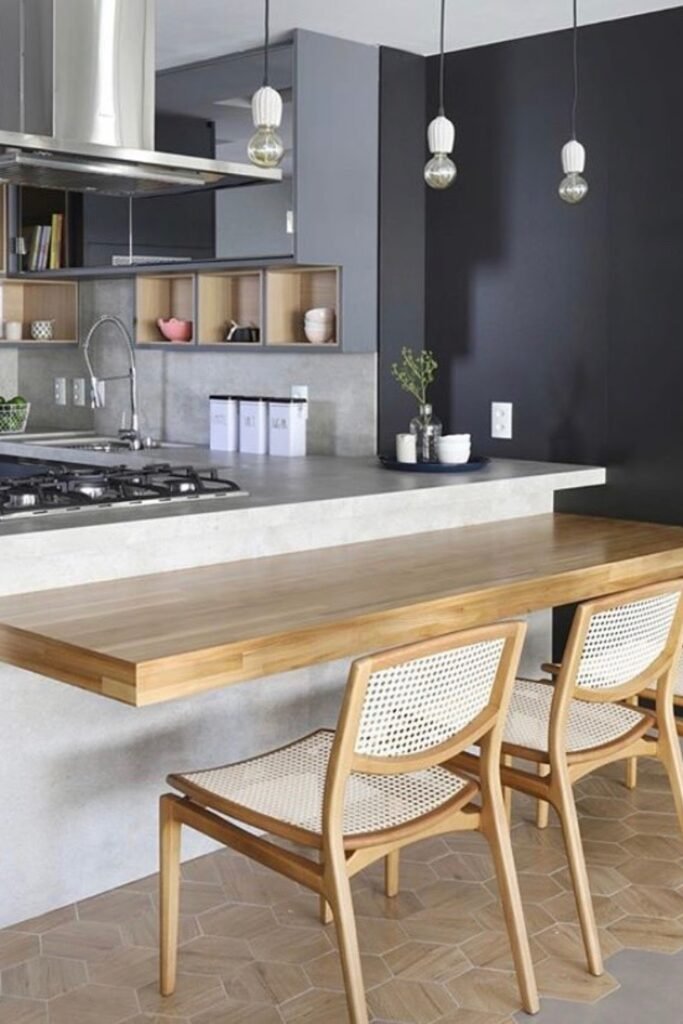
Floating Bar Island
When you want seating without turning the island into a heavy block, a floating bar does the trick.
The raised wood counter creates a clear place to sit, while the concrete-style base keeps the work surface separate and practical.
This works best in modern L-shaped kitchens where cooking and socializing need clear boundaries.
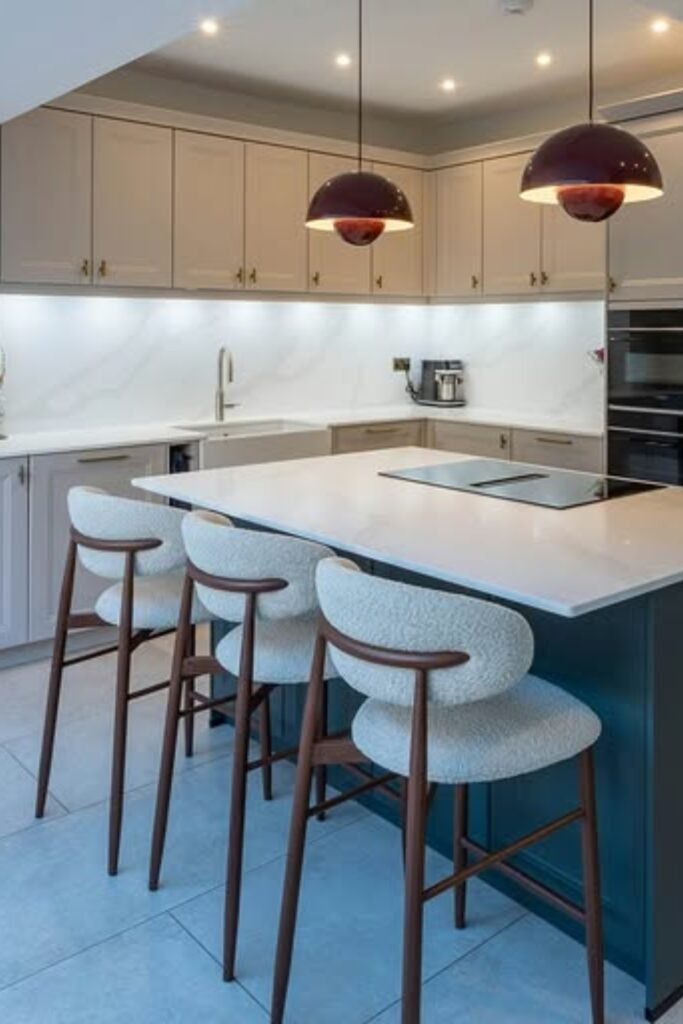
Cooktop Island Focus
When you want prep and cooking to stay connected, putting your cooktop on the island changes everything for you.
You can cook while facing the room instead of your back being turned, which instantly makes your kitchen feel more open and social.
You can keep seating on one side only, install proper ventilation, and leave enough clear counter space around the cooktop so you can cook safely and comfortably.
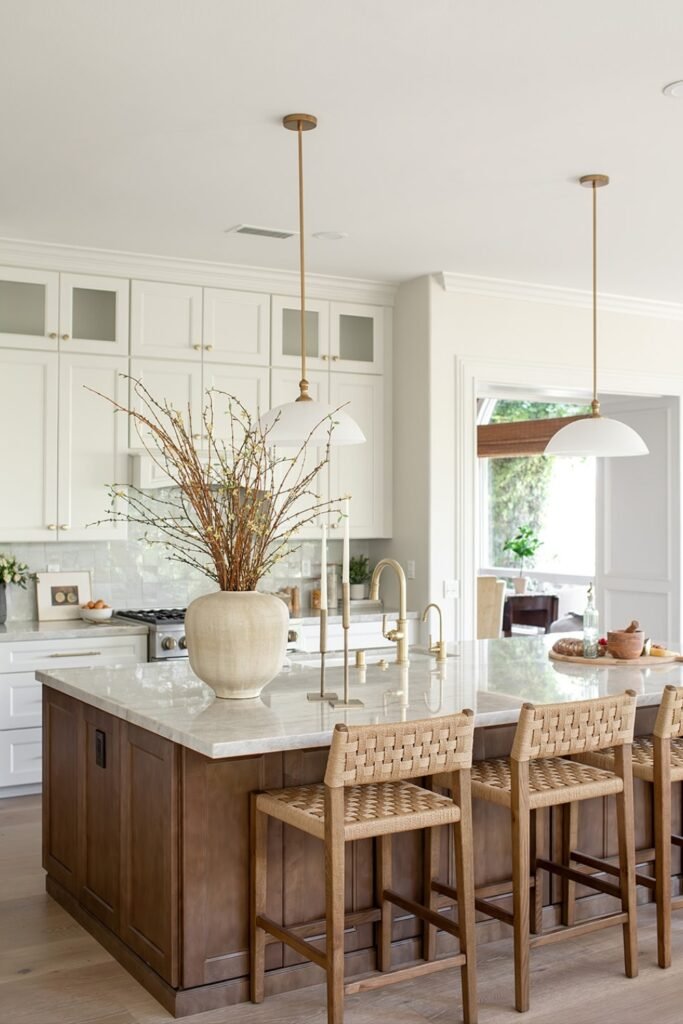
Sink-Centered Gathering Island
Your daily routine gets easier when the sink sits where people naturally gather.
By putting it on the island, you can prep, rinse, and clean while staying connected to family or guests instead of facing a wall.
This setup works best in spacious L-shaped kitchens where the island doubles as a workspace and meeting point.
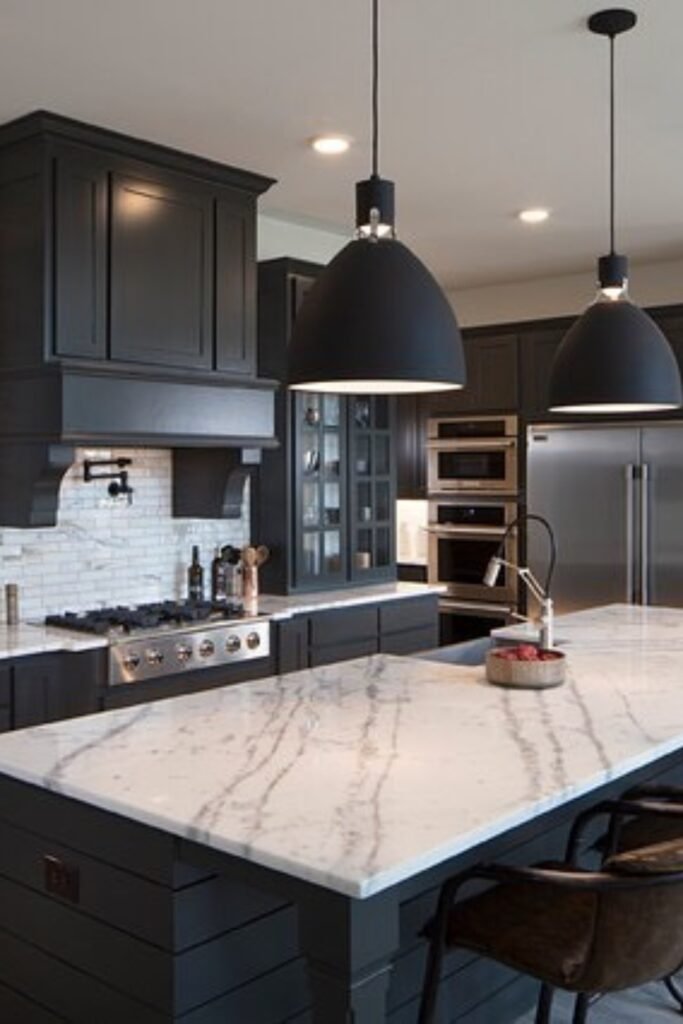
Bold Statement Island
When you want your island to anchor the entire kitchen, going bold is the way to do it.
The dark cabinetry paired with a light stone top makes it feel solid and intentional, not like an afterthought.
This works best in large L-shaped kitchens where contrast won’t shrink the space.
You can keep the perimeter quieter, use the island for seating and storage, and add oversized pendant lights so it clearly reads as the center of gravity in the room.
Island Seating Nook
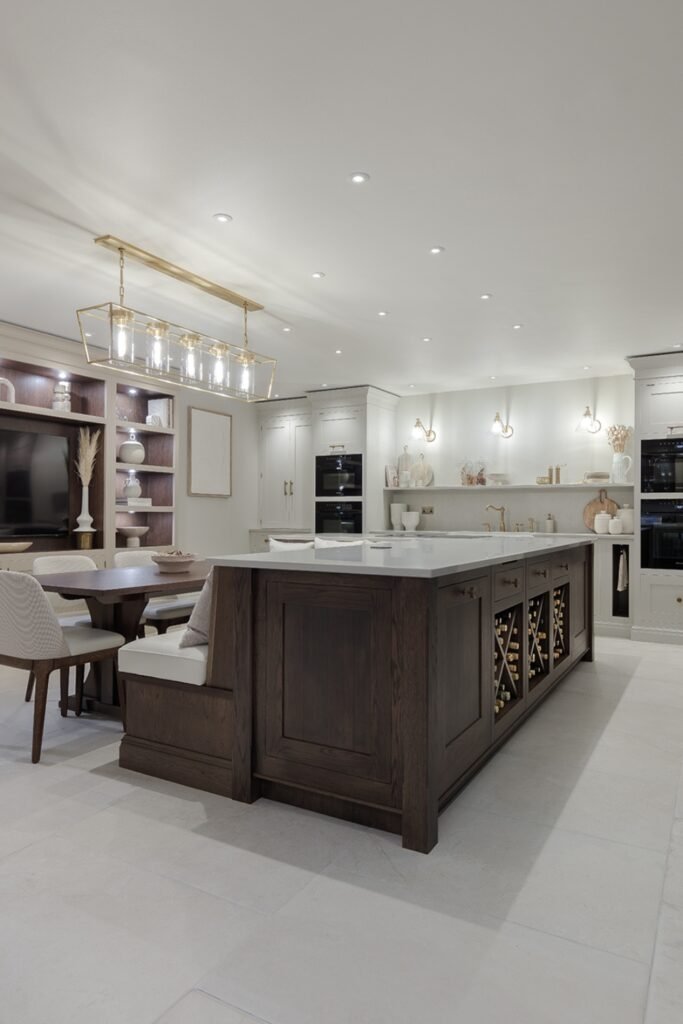
If you want your island to do more than just cook and prep, adding a built-in seating nook can totally change how you use the space.
The island becomes a casual dining spot, a storage hub, and a prep surface all at once. This works best in large L-shaped kitchens.
You can extend one side for seating, add comfy back support, and use the base for storage like wine racks or drawers so nothing feels wasted.
Live-Edge Island Top
A live-edge island instantly changes the feel of an L-shaped kitchen by adding warmth and personality without touching the layout.
The natural wood top softens hard lines and makes the island feel like a piece of furniture, not just cabinetry.
This works best in kitchens that already have simple cabinets and neutral finishes.
You can keep the base understated, use a thick solid-wood slab for the top, and let the island stand out while the L-shaped run stays clean and practical.

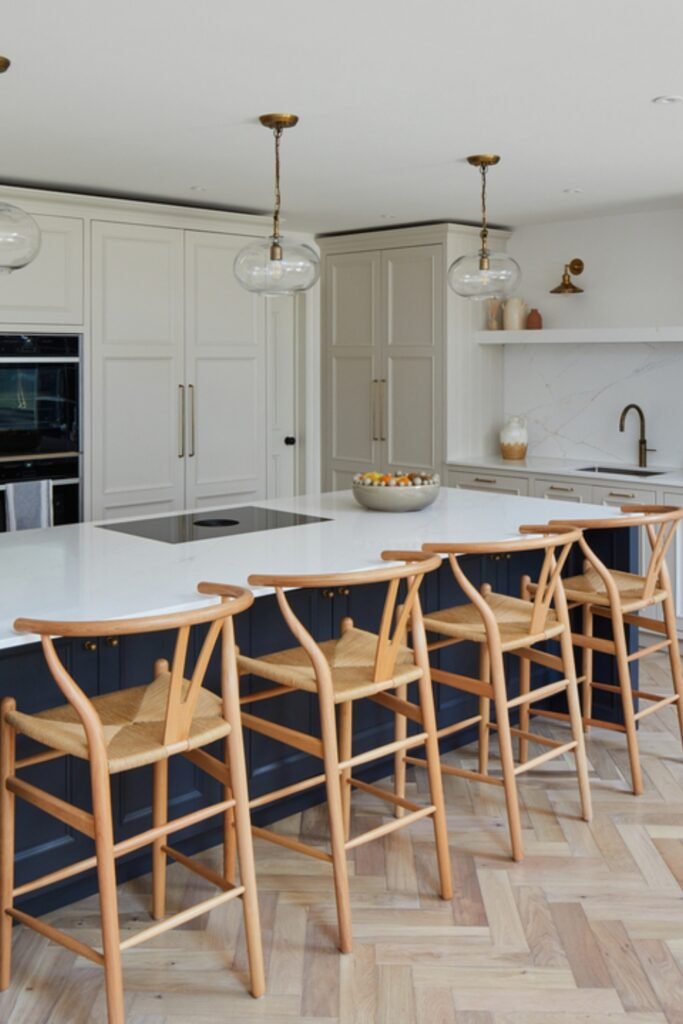
Family-Size Seating Island
The long seating run here turns the island into an everyday dining spot, homework zone, and gathering place all at once.
This works best in wide L-shaped kitchens where clear walkways can be maintained behind the stools.
You can keep seating on one long side, choose slim-profile stools, and push storage and appliances to the L-shaped walls so the island stays open, social, and easy to move around.
Color-Pop Island
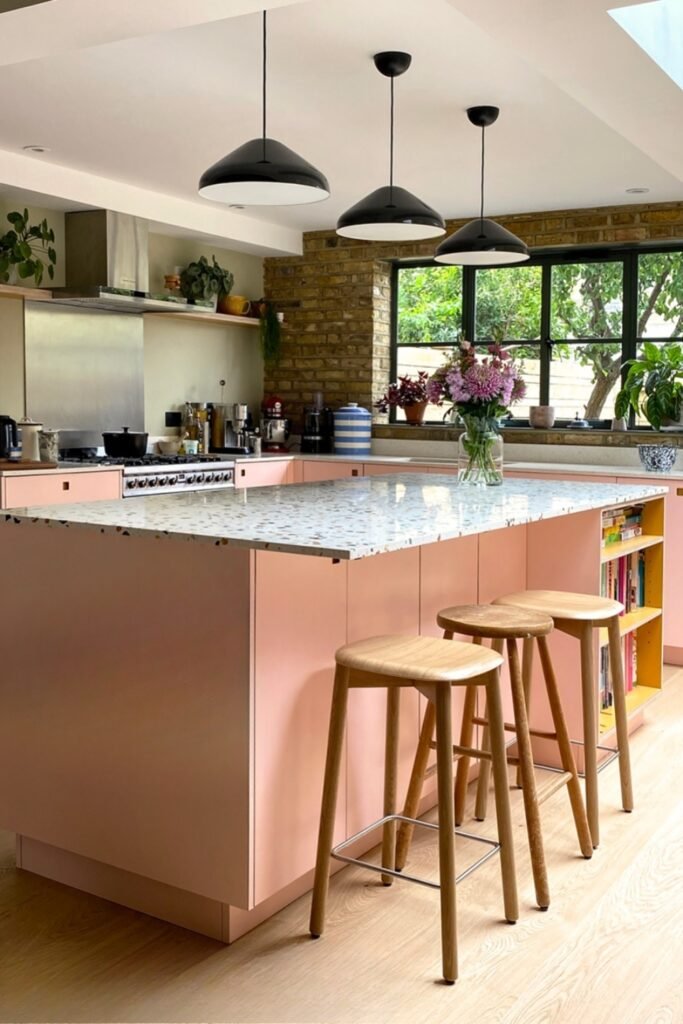
If your kitchen feels too safe or predictable, color on the island is where you can take a risk without regret.
The soft pink base here turns the island into a focal point while the L-shaped counters stay neutral and practical.
You can keep the walls and perimeter simple, choose one confident color for the island, and balance it with warm wood stools or shelving so the space feels playful, not overwhelming.
FAQs
Can you add an island to a small L-shaped kitchen?
Yes, you can go for it, but only if your space can handle it.
In a small L-shaped kitchen, you need enough clearance on all sides of the island so you don’t end up blocking your own movement.
If your walkways feel tight, you might be better off with a narrow island, a movable island, or even skipping the island altogether rather than trying to force one in.
Is a peninsula better than an island in an L-shaped kitchen?
In many cases, yes, you can get the benefits without taking up as much space.
A peninsula gives you extra counter area and seating while keeping your kitchen open.
If your kitchen feels cramped or traffic keeps crossing the center, you will find that a peninsula often delivers the same perks as an island without messing up your flow.
You may like to read!
