
25 Jewel Tone Bedroom Ideas for 2026

This article may contain affiliate links: read full affiliate disclosure.
You save jewel tone bedroom photos because they look rich, cozy, and expensive. But when you try to picture those same colors in your bedroom, it suddenly feels risky.
Will it make the room too dark? Too heavy? Too much? Most articles show pretty images but never tell you what actually works in real homes.
In this article, I’ll break down how jewel tones really behave, how to use them without ruining your space, and 25 ideas that you can try.
Let’s jump in!
Are Jewel Tones Warm or Cool?
You’ll notice that jewel tones can be both warm and cool, depending on the color you choose.
When you think of jewel tones, you’re thinking of rich, deeply saturated colors inspired by precious gemstones like emeralds, rubies, sapphires, and amethysts.
You’ll see how these colors bring vibrancy, depth, and a luxurious feel to any space, which is why you’ll find them so popular in both fashion and interior design.
You can use cool jewel tones when you want a calm, elegant atmosphere.
Shades with blue or purple undertones like emerald green, sapphire blue, amethyst purple, or teal, can make your room feel sophisticated.
You’ll notice that these colors work beautifully with neutral shades like gray, white, or silver, and they’re especially perfect if you want a modern or contemporary look.
On the other hand, you can go for warm jewel tones when you want a cozy, dramatic, and inviting vibe.
Colors with red or yellow undertones like ruby red, garnet, deep coral, or topaz gold, can instantly make your room feel richer.
You’ll see that they pair beautifully with warm neutrals like cream, beige, or gold accents, and you can use them to make your space feel intimate and luxurious.
You’ll often use jewel tones to add depth and visual interest.
When you bring them in through accent pieces like throw pillows, rugs, curtains, upholstered furniture, or decorative accessories, you’ll notice how they pop against neutral backgrounds.
You can balance bold colors with calmer tones, and you’ll see how your space feels striking yet harmonious.
In the end, you should remember that jewel tones aren’t strictly warm or cool.
You can choose from a wide range of rich colors across both temperature groups, depending on the mood and style you want in your room.
When you use them thoughtfully, you’ll notice how jewel tones instantly add a timeless, luxurious feel to your space.
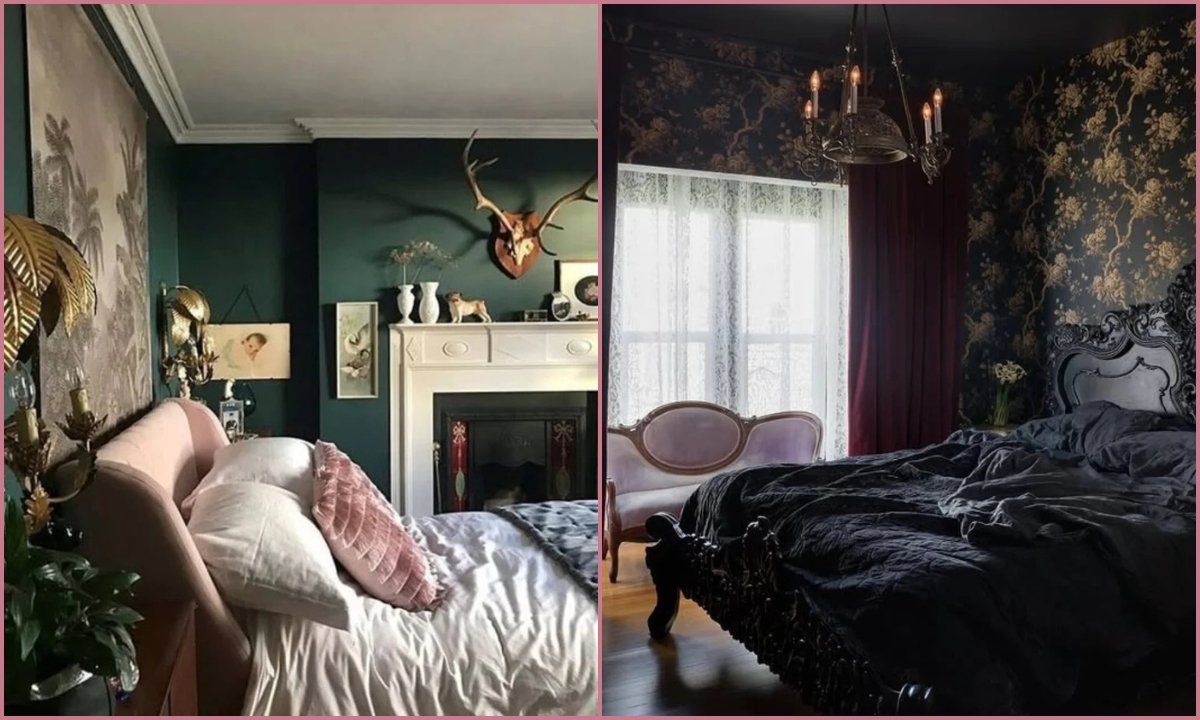
Dark Jewel Cocoon
When you commit fully to deep jewel tones, the bedroom stops feeling like a regular room and starts feeling intentional.
This kind of setup works best in bedrooms with at least one good light source, even if it’s just a single window.
You can keep the walls, bedding, and large furniture dark, then break it up with light curtains or subtle pattern work.
That contrast is what keeps the space rich and cozy instead of flat or overwhelming.
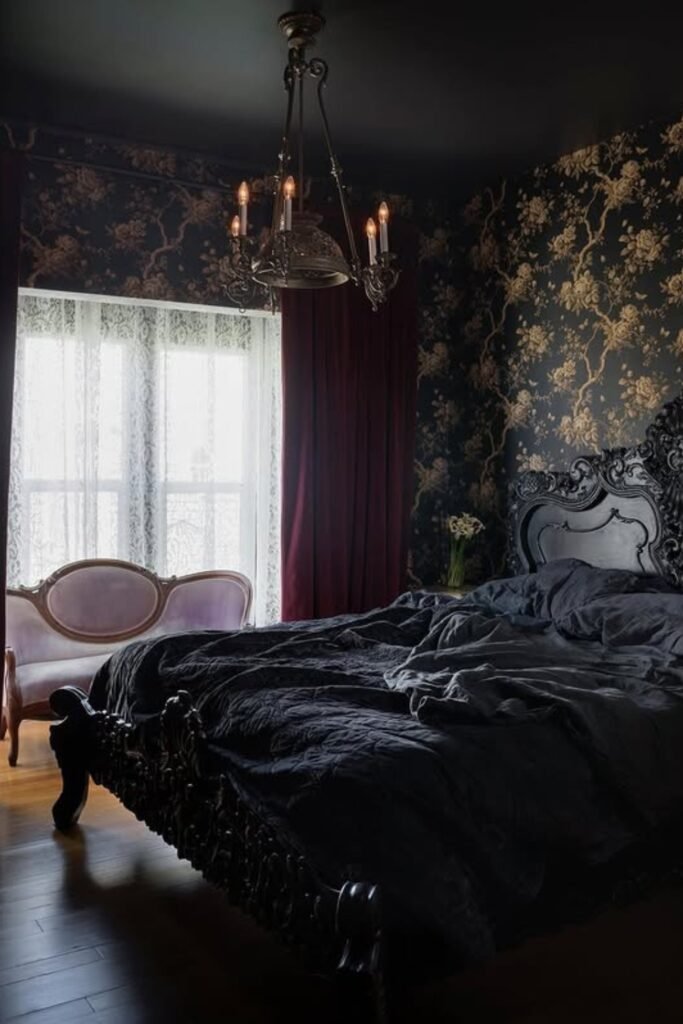
Soft Emerald Balance
It works because the color stays soft and spread out headboard, artwork, and lighting while the rest of the room stays light and calm.
This approach is ideal if you like jewel tones but don’t want a moody bedroom.
You can anchor the bed in a muted emerald shade, keep walls neutral, and repeat the color in one or two decorative elements so it feels intentional, not overwhelming.
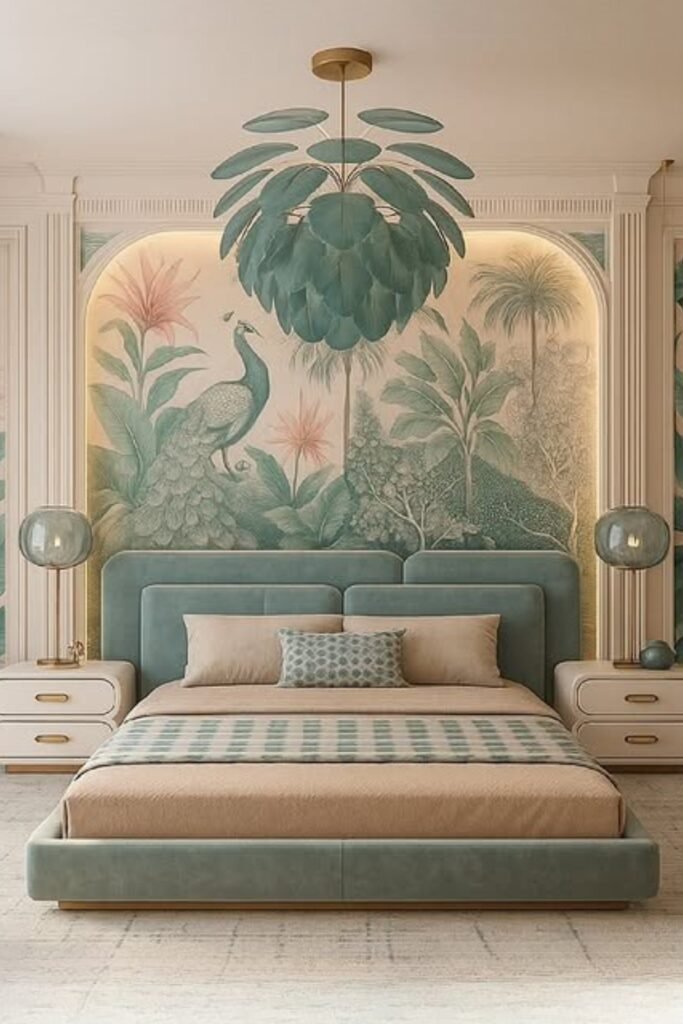
Emerald Wall Anchor
You can use emerald on the walls instead of just accents instantly grounds the whole bedroom.
This works best if you want a strong jewel tone without cluttering the space with too many colors.
You can keep the walls and headboard in the same green family, then soften the look with white bedding and warm wood nightstands.
The contrast keeps the room feeling fresh, not heavy, even though the color itself is deep and bold.
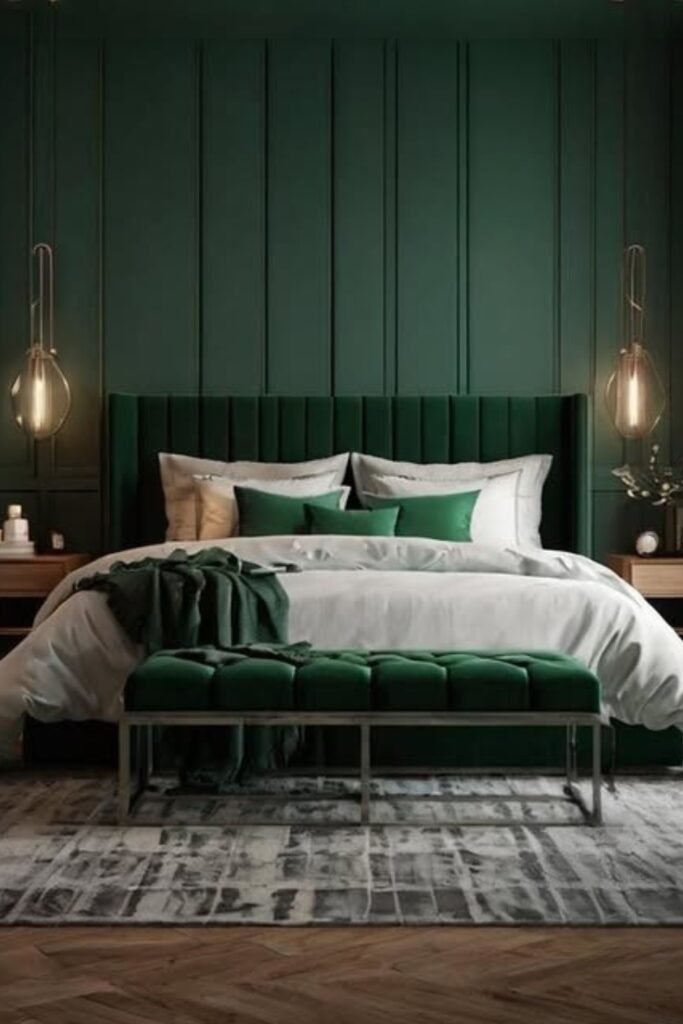
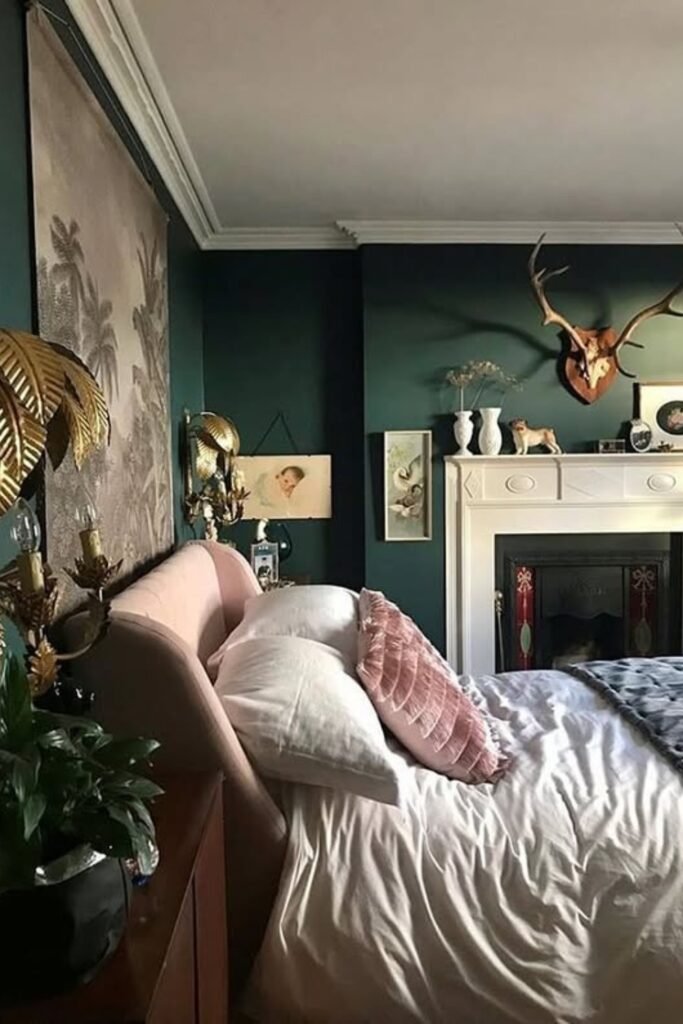
Soft Jewel Contrast
This bedroom proves you don’t need everything dark to make jewel tones work.
The deep green walls set the mood, but the light bedding and blush headboard soften the impact instantly.
This approach works best if you like color but still want the room to feel lived-in and relaxed.
You can keep jewel tones on the walls, then balance them with pale fabrics, warm metals, and one softer accent color so the space feels layered, not heavy.
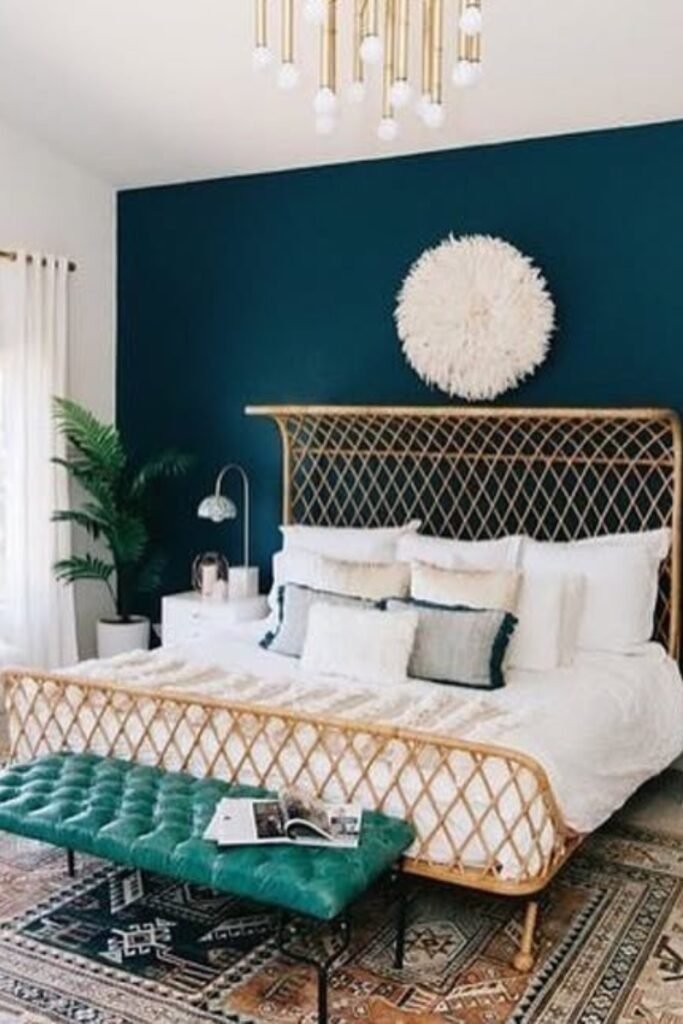
Navy Wall Focus
A deep navy wall gives you the jewel tone impact without turning the whole room dark.
It works especially well in bedrooms with white walls, light floors, or big windows, because the contrast does all the work.
You can paint just the bed wall in a rich navy, keep the bedding crisp and light, and add one small jewel-tone accent like a bench or cushion, to tie it back.
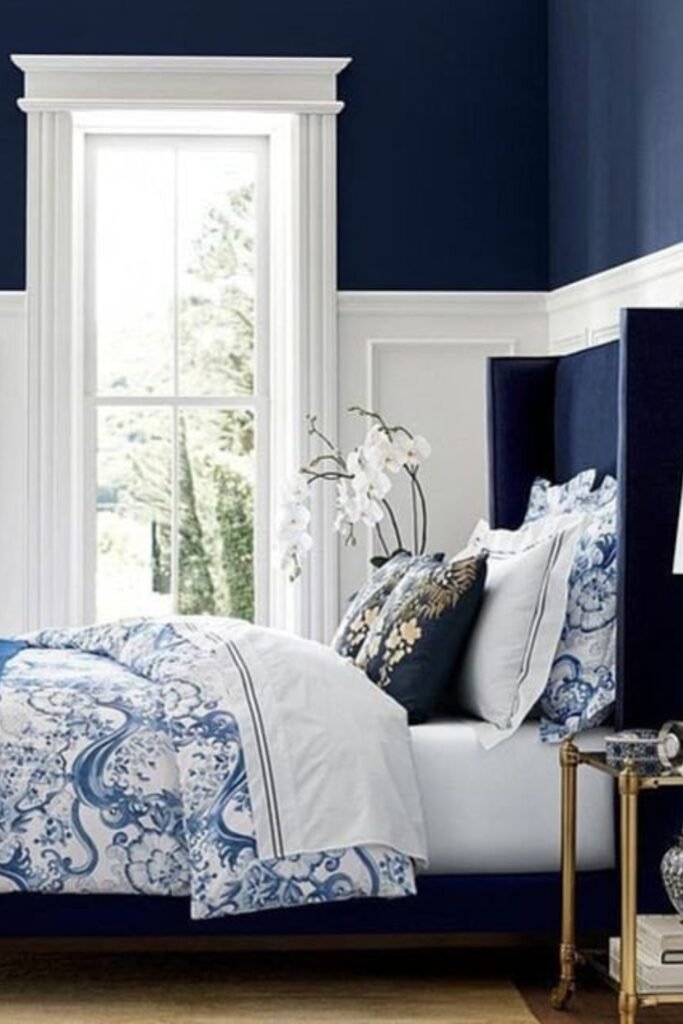
Classic Sapphire Calm
The color sits higher on the walls, which keeps the room feeling tall and airy instead of boxed in.
This works especially well in bedrooms with good ceiling height or large windows.
You can pair deep blue walls with crisp white paneling or trim, then echo the color in bedding or pillows so the look feels calm, polished, and timeless rather than trendy.
Wood-Led Warmth
This bedroom works because the jewel tone never stands alone. The deep green walls feel warm instead of cold because raw wood takes center stage and softens everything around it.
This setup is perfect if you like jewel tones but still want a cozy, natural feel.
You can pair one dark jewel tone with wood headboards, paneling, or beams, then keep bedding neutral so the room feels grounded and inviting, not dramatic.

Muted Green Ease
This bedroom shows how jewel tones can feel calm instead of bold. The green here is softened and repeated across bedding, walls, and decor, so nothing feels loud or forced.
This works best if you want a relaxed, nature-inspired bedroom rather than a dramatic one.
You can choose a muted jewel green, layer it in small doses, and bring in plants, natural fibers, and warm neutrals. The room feels cohesive, grounded, and easy to live in every day.
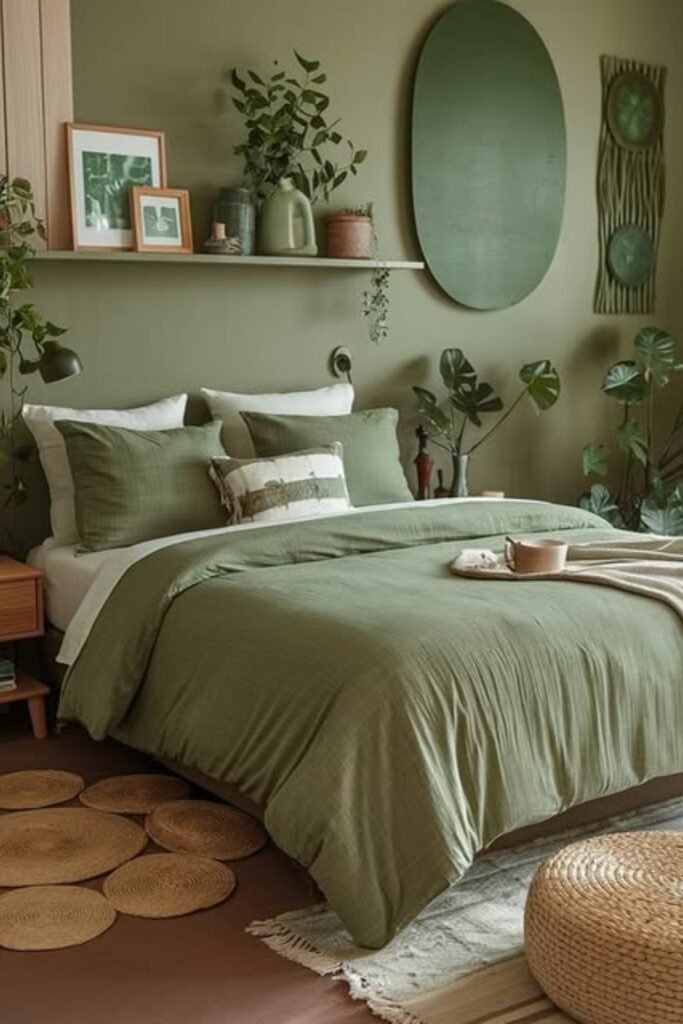
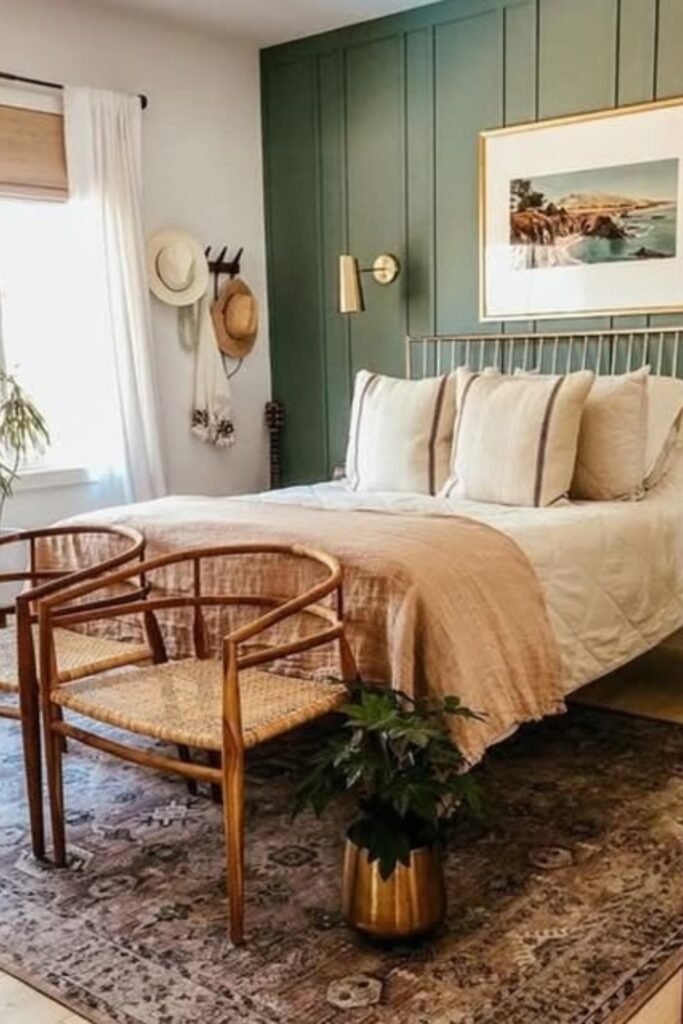
Relaxed Green Backdrop
Letting green live on one main wall keeps the room grounded without taking over.
The jewel tone sits behind the bed, while light bedding, woven chairs, and natural wood keep everything easy and breathable.
This setup works best if your bedroom gets decent daylight and you want color without drama.
You can use a deep but slightly muted green on the bed wall, then soften the rest of the room with warm neutrals and simple, lived-in textures.
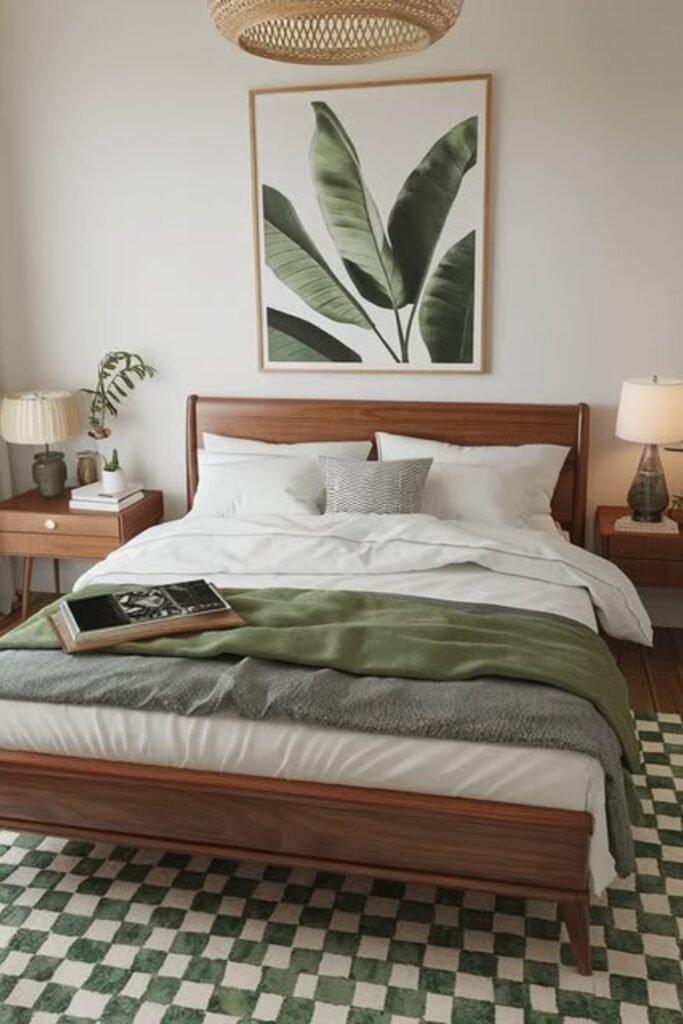
Subtle Green Layering
This bedroom proves you don’t need bold walls to bring jewel tones in. The green shows up in layers, throw, rug, artwork, so the room stays light but still intentional.
This works best if you like a clean, neutral bedroom and just want a hint of color.
You can keep walls and bedding white, then layer one jewel tone in soft textiles and simple decor.
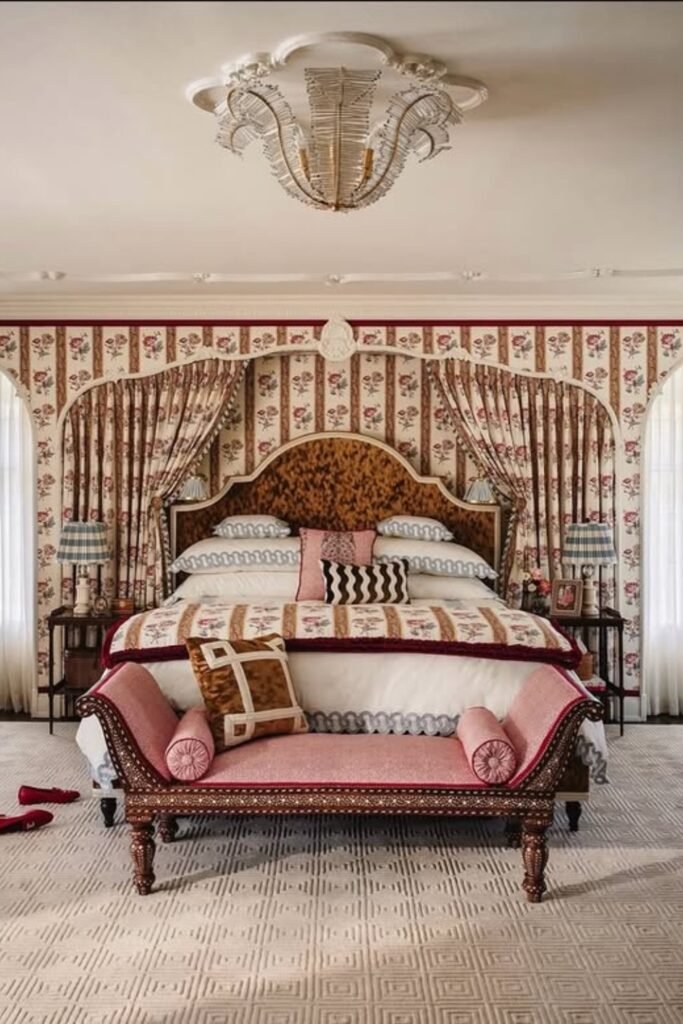
Layered Ruby Elegance
This bedroom shows how jewel tones shine when you layer them instead of isolating them.
The ruby and burgundy notes repeat through the headboard, bench, trim, and textiles, so nothing feels random.
This approach works best in classic or traditional bedrooms with architectural detail.
You can start with one rich red tone, echo it in at least three places, and keep the base colors light so the room feels rich, not heavy.
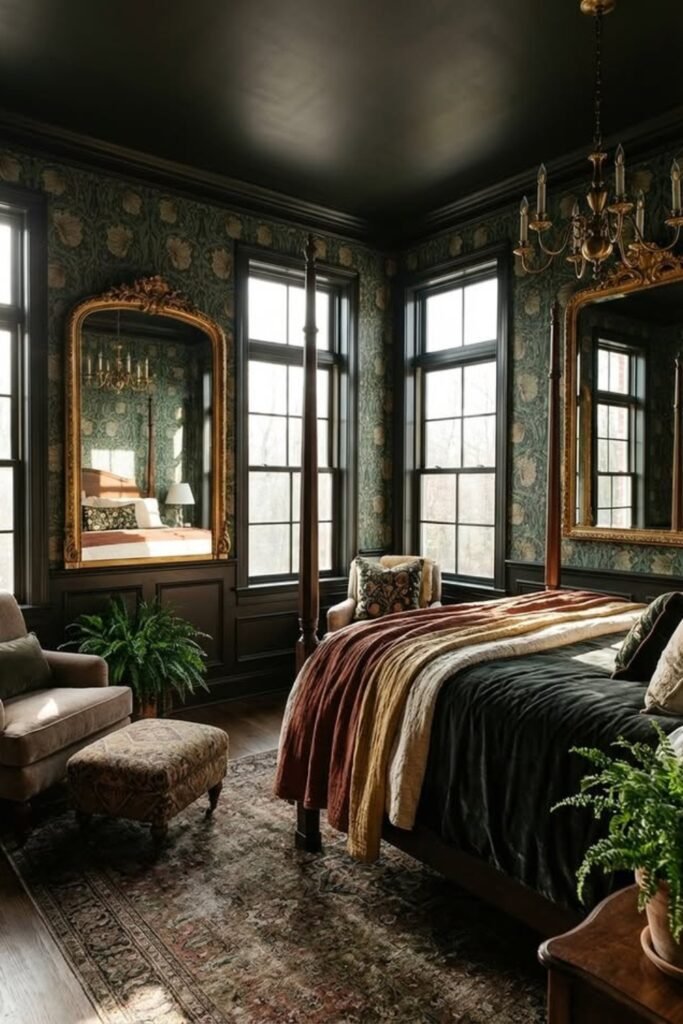
Moody Heritage Layers
Old-world jewel tones feel richest when you let them stack instead of stand alone.
Deep green walls, patterned wallpaper, and warm rust bedding all work together here, which keeps the room dramatic but livable.
This approach suits larger bedrooms with tall windows, where darkness won’t feel suffocating.
You can mix one dark jewel tone with vintage patterns, layered textiles, and warm metals. The goal isn’t contrast, it’s depth that builds slowly across the room.
Color-Confident Mix
The deep green walls act as a calm base, which makes the patterned bedding, art, and textiles feel expressive instead of chaotic.
This approach suits creative bedrooms where personality matters more than restraint.
You can lock in one strong wall color first, then layer patterns that share similar undertones. As long as the base stays consistent, the room feels collected, not cluttered.
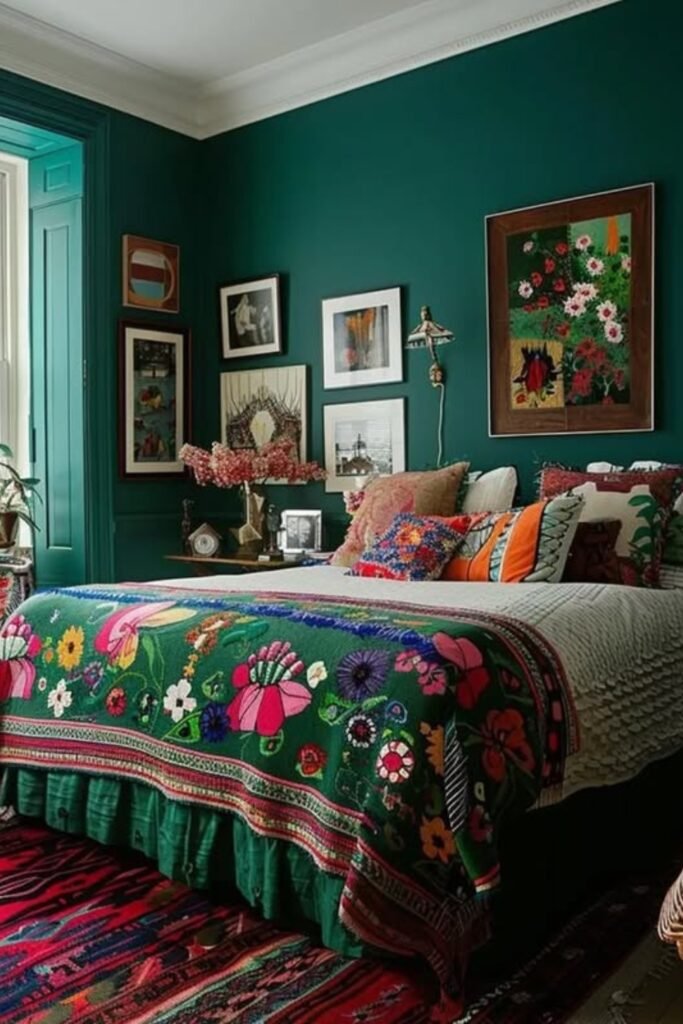
Teal With Mustard
The deep teal walls create a calm backdrop, while mustard and warm browns punch in contrast through pillows, throws, and small decor.
This works especially well in smaller bedrooms where you want color without visual clutter.
You can lock in one cool jewel tone on the walls, then add warmth through textiles and accessories. The mix keeps the room cozy, layered, and far from flat.
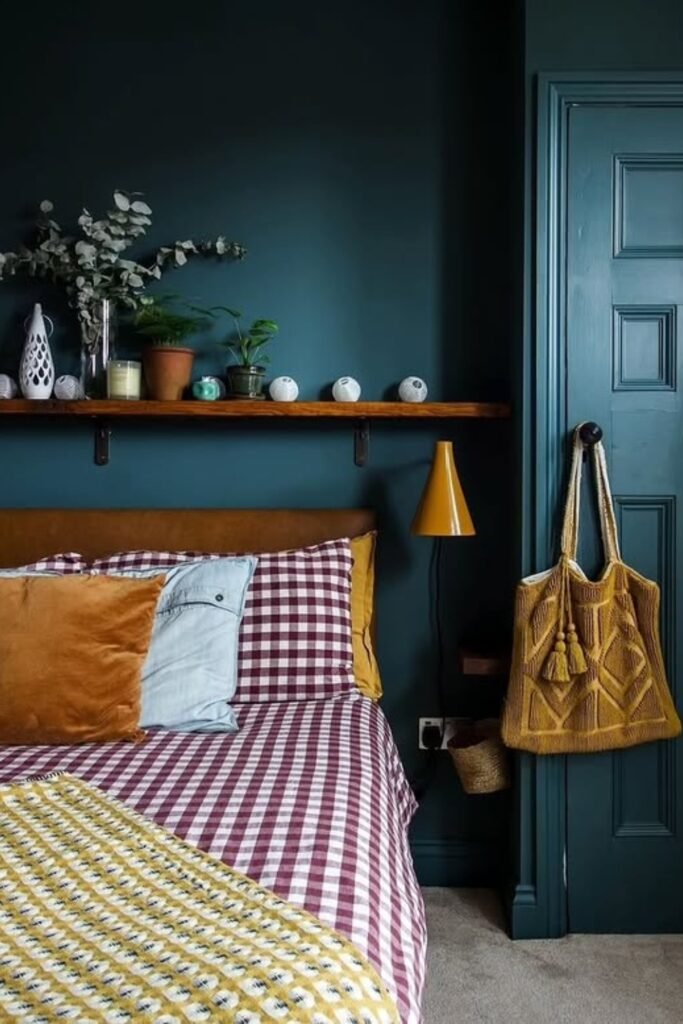
Teal Night Accent
The teal here feels bold because it’s uninterrupted, not because it’s everywhere. This works best if you want jewel tone impact without committing the whole room to color.
You can paint one wall in a rich teal, keep furniture dark and simple, and use black or brass lighting to sharpen the look.
The result feels modern, focused, and intentionally dramatic without overwhelming the space.
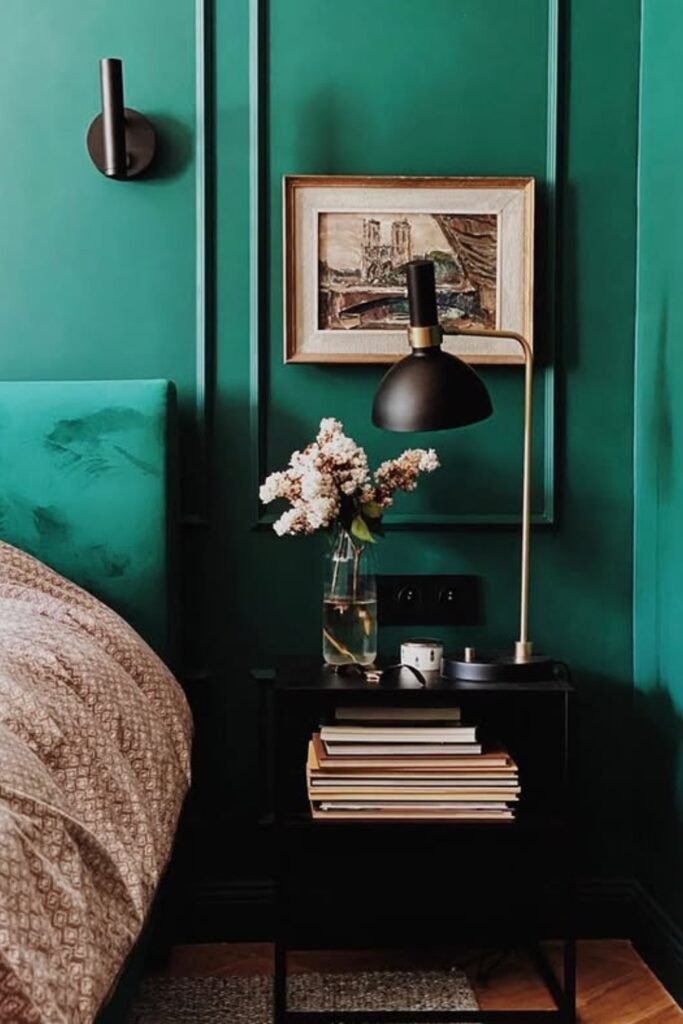
Airy Mint Calm
The green stays light and fresh, which keeps the bedroom feeling open and relaxed. This approach is perfect if you want color but hate heavy rooms.
You can stick to pale green bedding and accents, keep walls neutral, and bring in plants and light wood.
The color shows up softly, so the room feels calm, bright, and easy to live with every day.
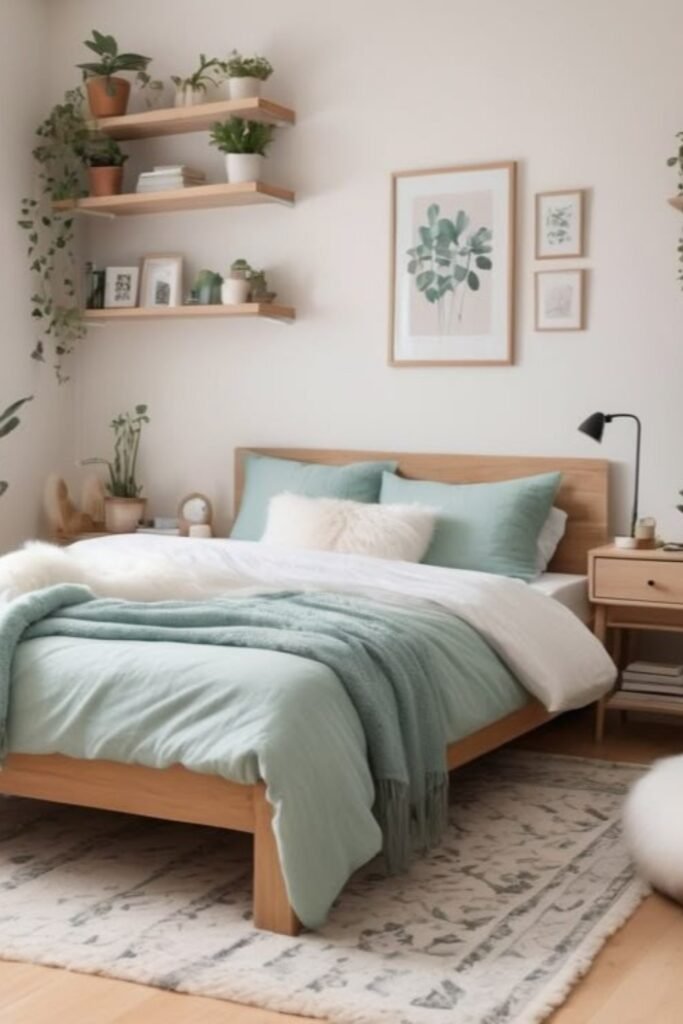
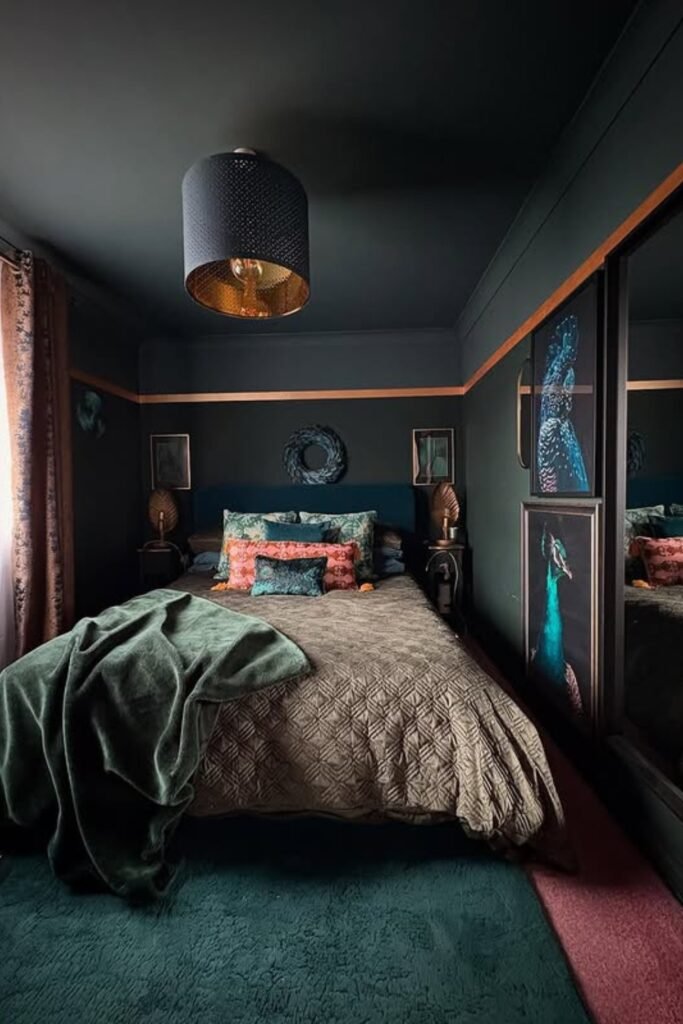
Dark Jewel Envelope
This bedroom works because the color wraps the space instead of stopping at the walls.
The deep teal runs across the walls, ceiling, and trim, which makes the room feel intentional rather than chopped up.
This approach suits smaller bedrooms where you want drama without clutter.
You can commit to one dark jewel tone everywhere, then add contrast through metallic lighting, soft bedding, and one or two warm accents so the room feels immersive, not closed in.
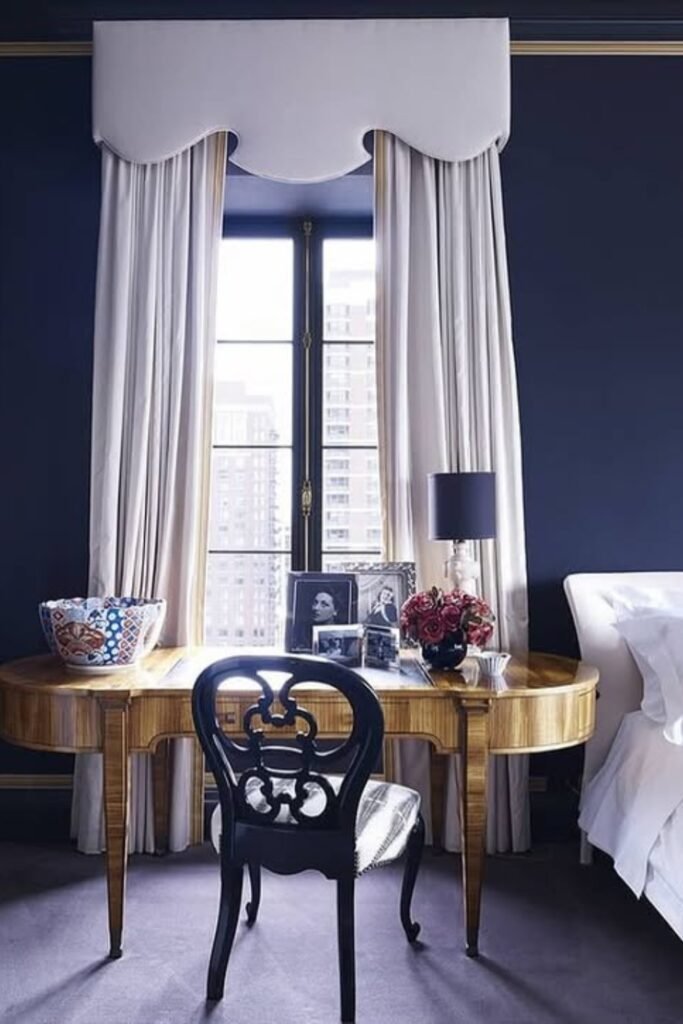
Navy With Gold
This bedroom shows how jewel tones feel instantly elevated when you pair them with warm metals.
The deep navy walls create depth, but the gold desk and trim keep the room from feeling cold or flat.
This works best if you want a refined, grown-up bedroom without heavy decor.
You can use a dark blue on the walls, keep bedding light, and bring in brass or gold through furniture or lighting so the space feels polished, not dark.
Dreamy Amethyst Escape
This bedroom works because the jewel tone doesn’t fight the mural, it supports it.
The soft amethyst bedding pulls color from the artwork and keeps the space grounded instead of chaotic.
This approach is ideal if you love bold walls but still want the bed to feel calm.
Let one statement wall lead the design, then choose bedding in a jewel tone that echoes the artwork. Keep everything else simple so the room feels immersive, not busy.

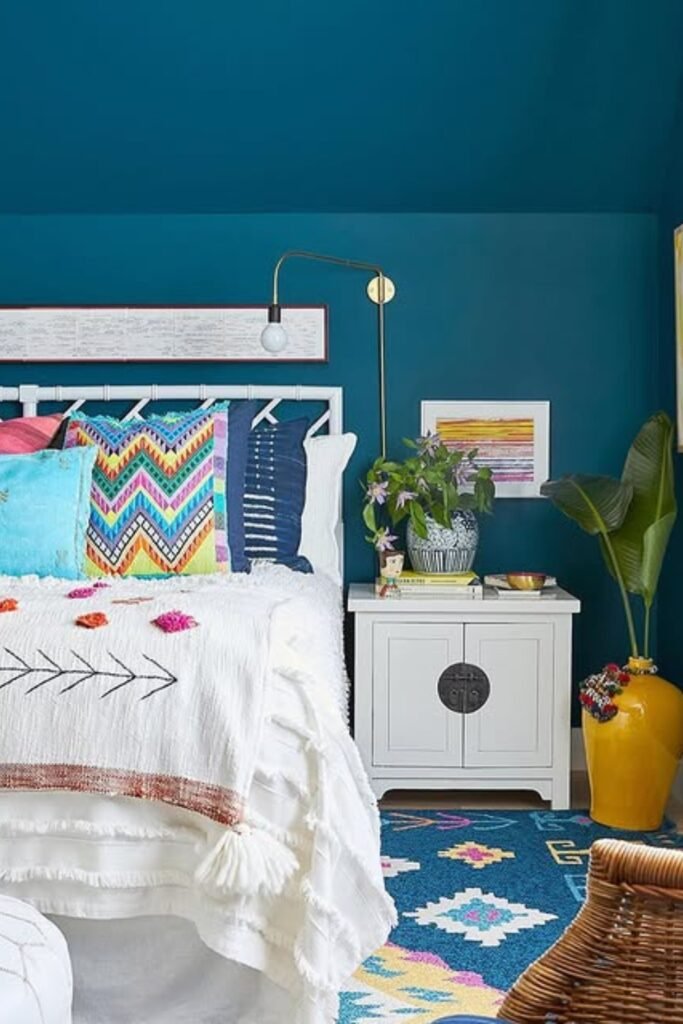
Sapphire With Play
This bedroom proves jewel tones don’t have to feel serious. The rich sapphire walls give the room depth, while colorful textiles and art keep it lively and personal.
This works best if you like bold color but don’t want a formal or moody feel.
You can start with one strong blue on the walls, then layer in pattern and color through pillows, rugs, and small decor. The key is keeping the base solid so the playful pieces feel intentional.
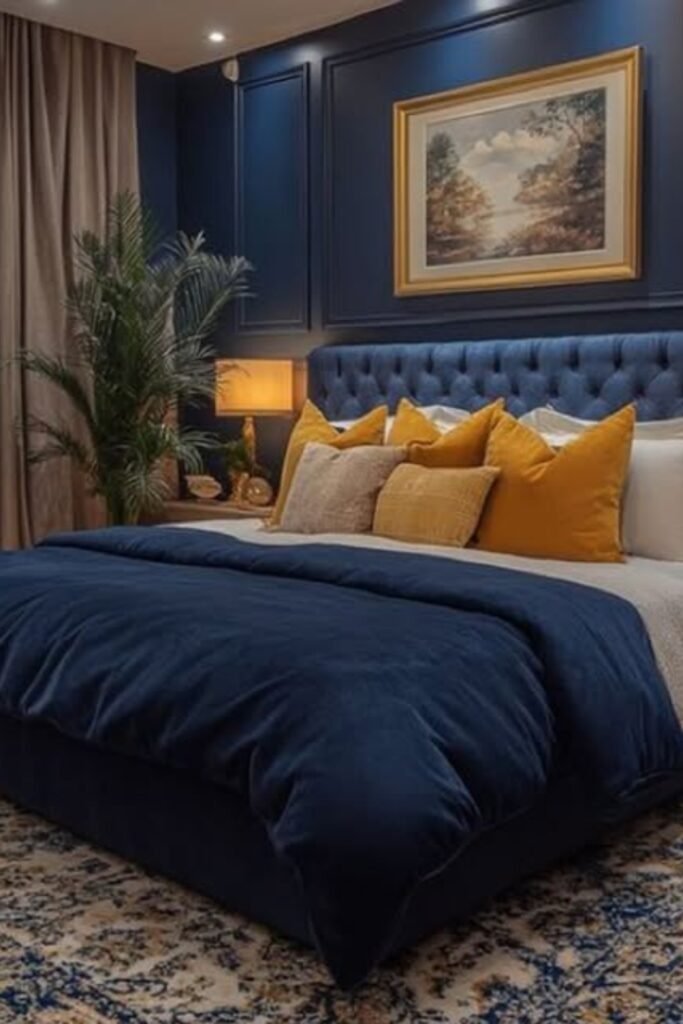
Navy Gold Comfort
This bedroom gets its richness from contrast, not excess.
The deep navy walls and bedding set a calm, grounded base, while mustard pillows and warm lighting stop the space from feeling cold.
This works well if you want a cozy, hotel-style bedroom that still feels welcoming.
You can anchor the room with one dark blue, then layer in warm tones through cushions, lamps, or artwork. The mix keeps the room feeling plush, not heavy.
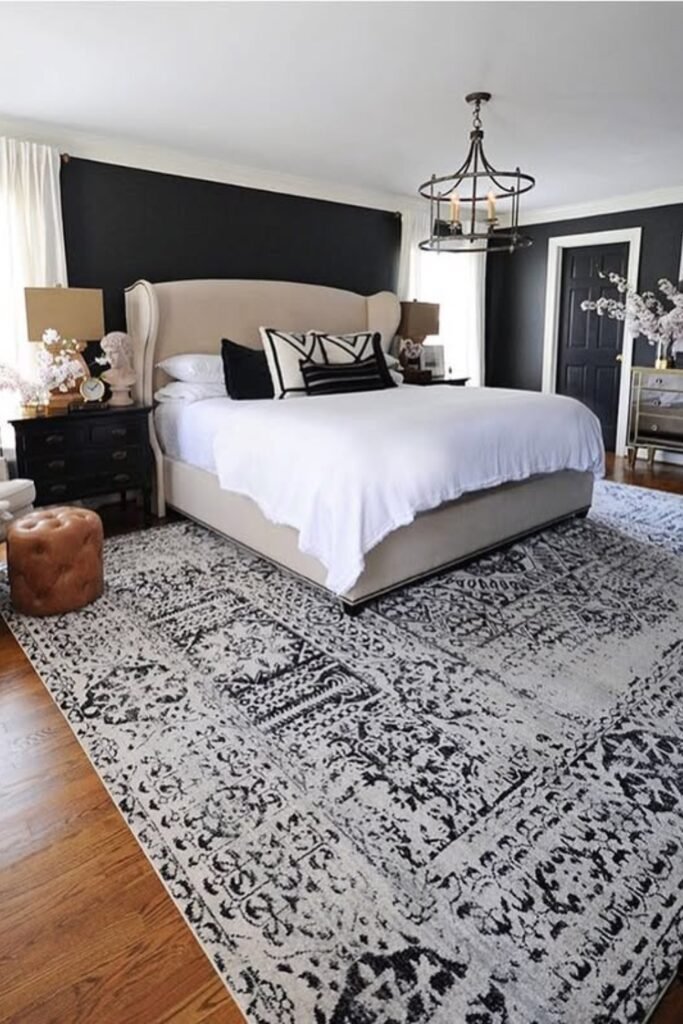
Black Jewel Base
This bedroom shows how jewel tones don’t always have to be colorful to feel rich.
The black walls act like a deep gemstone backdrop, making the light bed, rug, and decor stand out more. This works best in large bedrooms with good natural light.
You can go dark on the walls, keep furniture and bedding light, and add subtle texture through rugs or metal accents so the space feels bold but balanced.
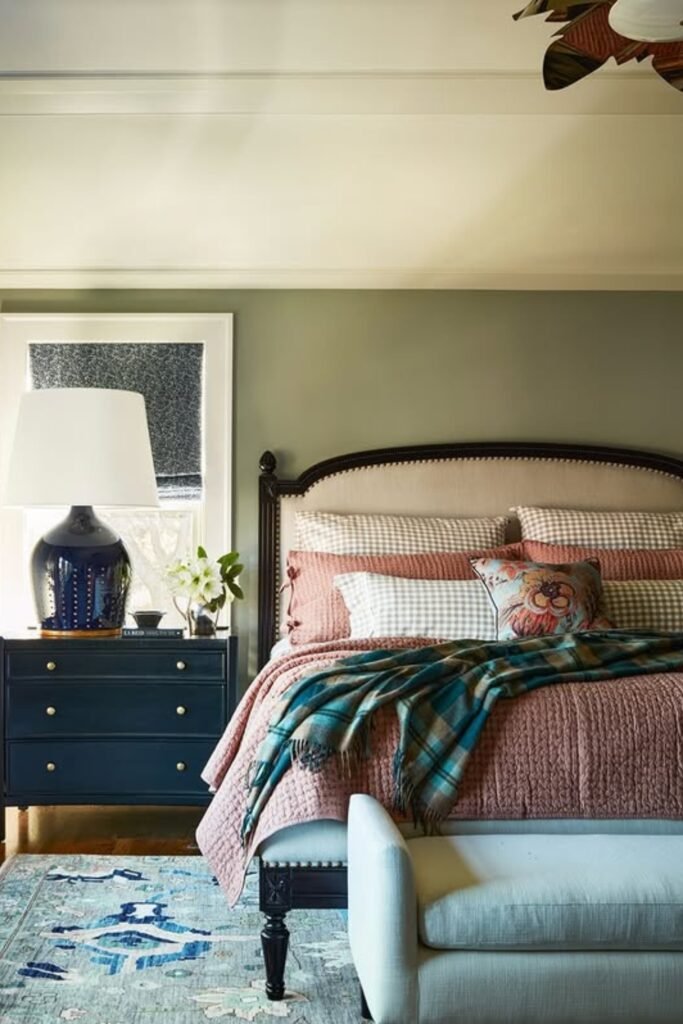
Blush Meets Jewel
This bedroom shows how jewel tones calm down when you mix them with soft, familiar colors.
The deep blue nightstand and throw bring in that jewel richness, while blush bedding and warm neutrals keep the space approachable.
You can anchor one or two furniture pieces in a jewel tone, then layer softer shades around the bed so the room feels balanced, cozy, and easy to live with.
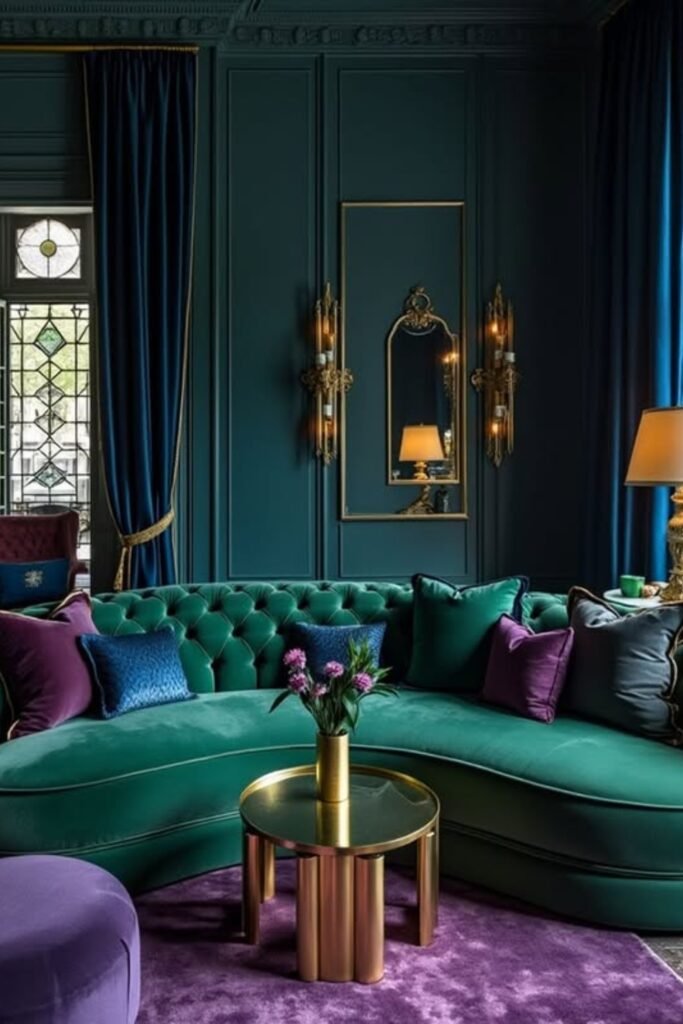
Emerald Velvet Drama
This space shows what happens when you fully trust jewel tones instead of playing it safe.
The emerald upholstery sets a rich base, while deep blues, purples, and gold accents layer on top without fighting each other.
This works best in large bedrooms or suites where you have room for statement pieces.
You can choose one dominant jewel tone, repeat it in plush textures like velvet, then add smaller hits of contrasting jewel colors so the room feels luxurious, not chaotic.
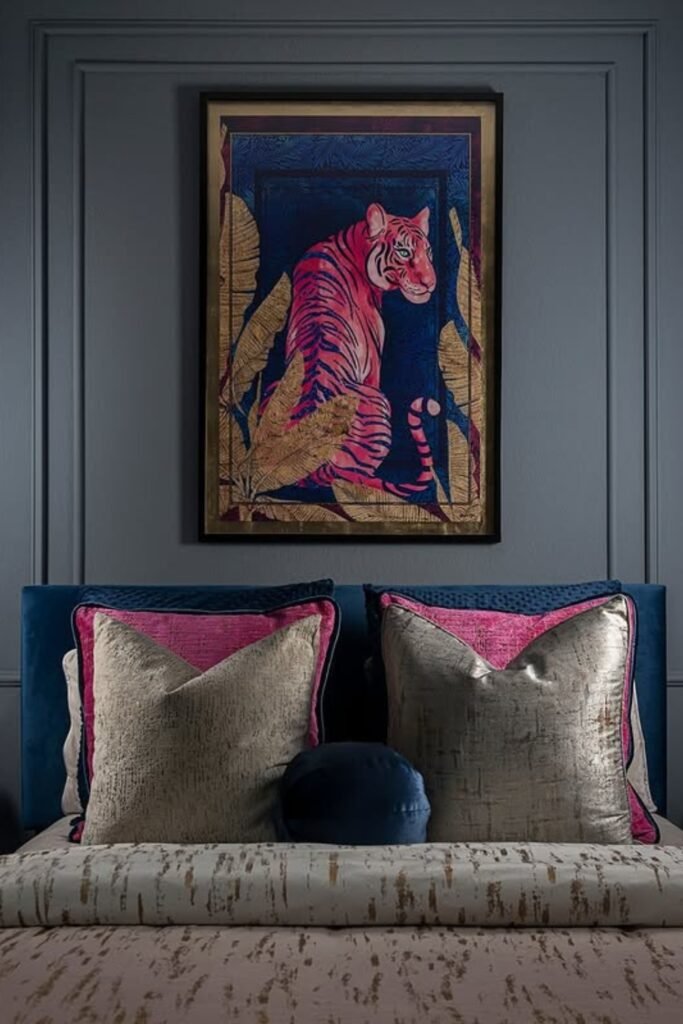
Art-Led Jewel Focus
This bedroom proves you don’t need color everywhere to make jewel tones work. One bold artwork sets the palette, and everything else quietly supports it.
The deep blue headboard and soft metallic pillows pull color from the art without competing. This approach works best if you love statement pieces but want control.
You can start with one jewel-toned artwork you love, then echo its colors in two or three soft elements so the room feels intentional, not overstyled.
FAQs
Do jewel tones make a bedroom feel smaller?
Jewel tones can work for you, but only if you use them carefully and not without contrast.
When you pair them with light bedding, reflective surfaces, or good lighting, you’ll notice your room still feels open.
If your bedroom is small, you should keep jewel tones to one wall, your bed, or textiles, instead of covering every surface, and you’ll see how it keeps the space feeling balanced and inviting.
How many jewel tones should you use in one bedroom?
One jewel tone is usually enough for you. You should start with a single jewel tone as your anchor, and then support it with neutrals or softer shades.
If you decide to add more than one jewel tone, you’ll want to keep the rest of your room simple so the colors don’t compete and the space still feels balanced for you.
You may like to read!
