
24 Green And Neutral Bedroom Ideas for 2026

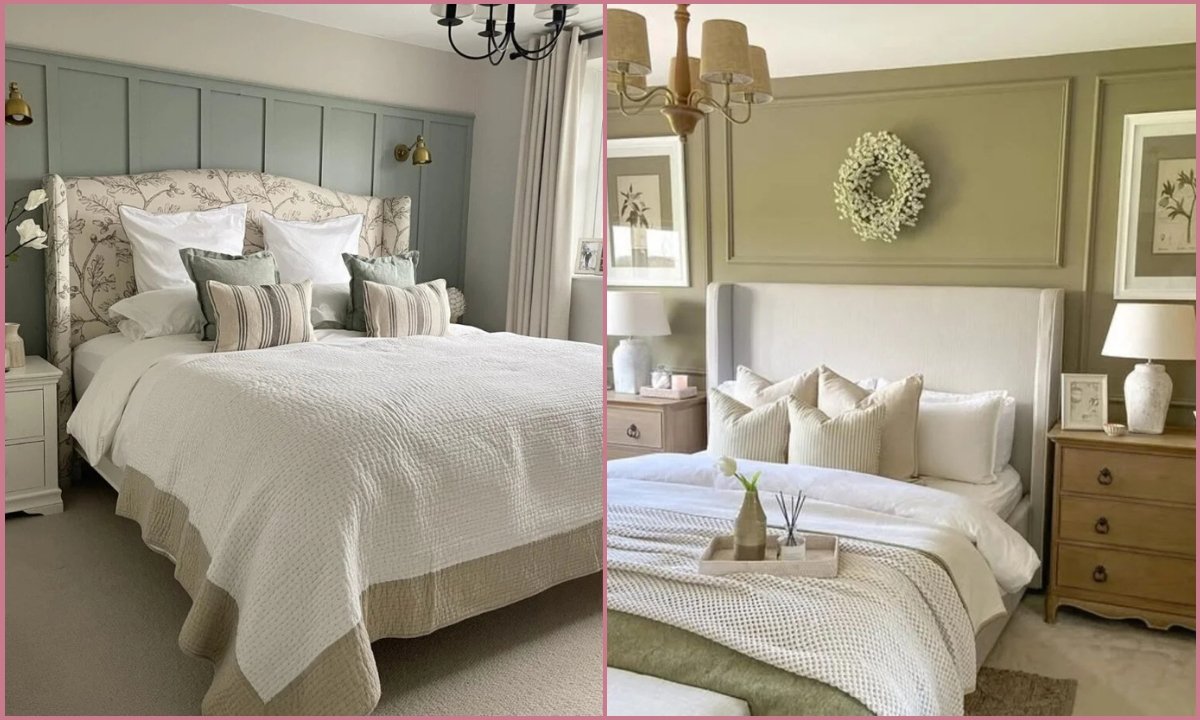
This article may contain affiliate links: read full affiliate disclosure.
You like green, but you keep wondering if it really belongs in a bedroom.
You have probably seen those gorgeous green rooms online, but when you try to imagine it in your own space, doubts start creeping in.
Will it feel too dark? Too cold? Too much for you? And which green should you even pick, sage, olive, or a deep, moody green?
If you are stuck between loving the idea and worrying about the outcome, you should know you are definitely not alone.
In this article, you are going to see whether green can actually work in a bedroom and 24 green with neutral bedroom inspirations.
Let’s jump in!
Is Green A Good Color For A Bedroom?
Yes, green can be a fantastic color for a bedroom but only if you use it the right way.
You will see that green works because it sits right between warm and cool tones, which means your eyes can actually relax instead of staying on high alert.
If you want your bedroom to feel calm and restful, you should lean toward softer greens like sage or olive, because those shades do the job better than anything bright or sharp.
But if you pick the wrong shade or use too much of it, you might notice the room starting to feel heavy or dull.
The trick for you is balance, you want the color to soothe you, not overwhelm you.
Soft Sage Balance
A muted green like this works perfectly when you want calm without going flat. You will see that the paneled wall adds structure, so the color feels intentional, not empty.
This setup works best in medium to bright bedrooms, especially if you like neutral bedding but want your room to feel finished, not bland.
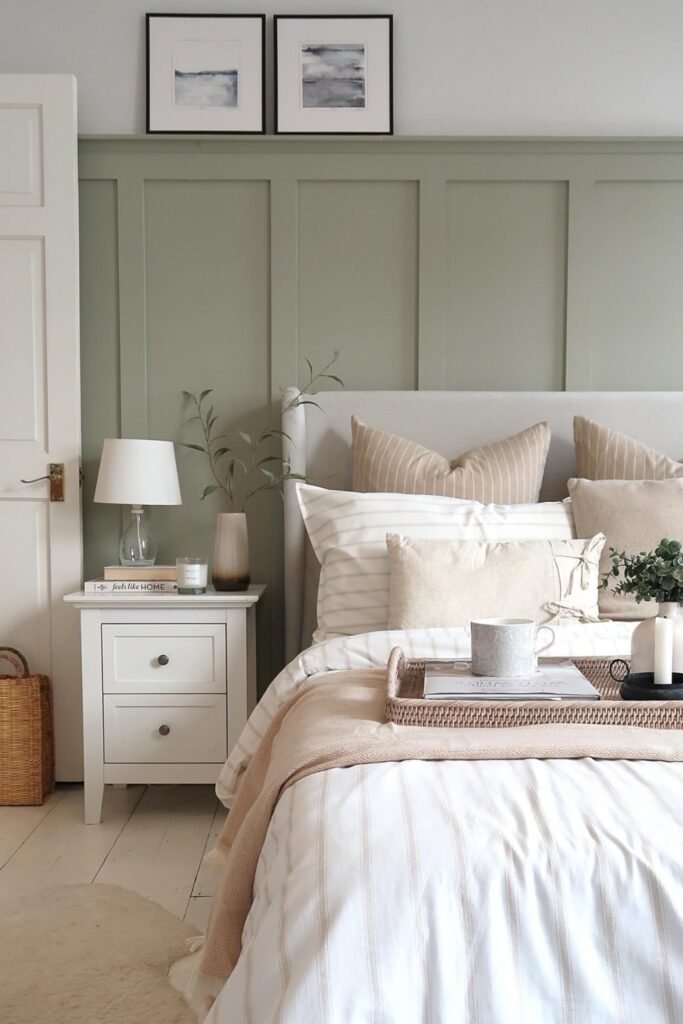
Deep Green Contrast
When you want green to feel cozy instead of dark, you should limit it to the lower wall. The deep green paneling grounds the room, while white walls and bedding keep it open.
You can’t underestimate the power of warm lighting here, without it, the space might feel flat.
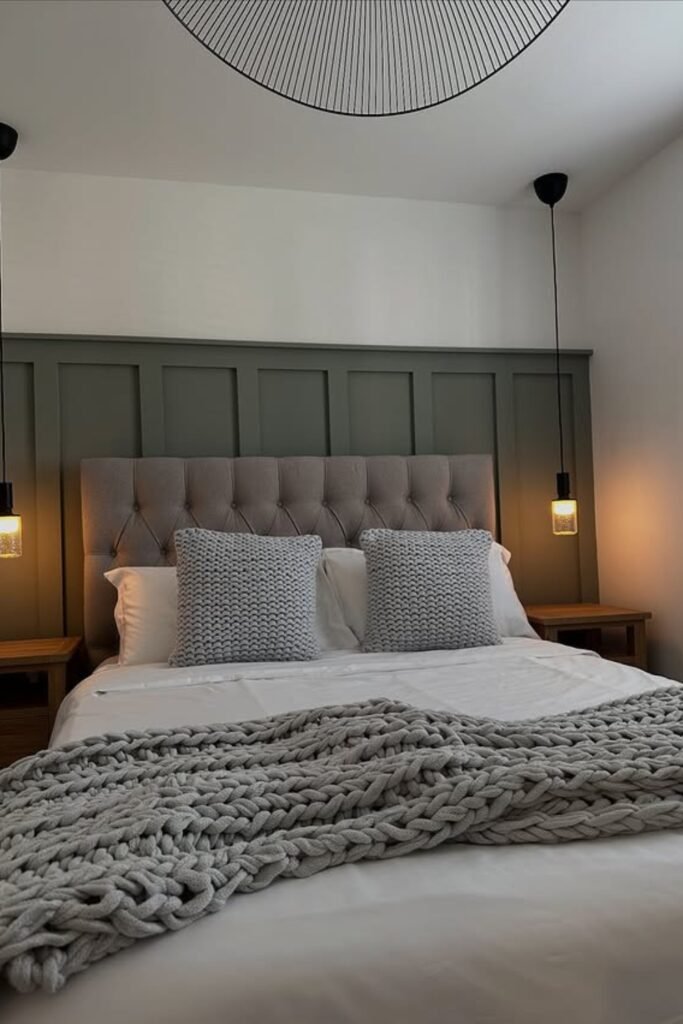
Olive Neutral Layers
You don’t have to cover the whole room in green to make an impact. The muted olive wall sets a calm base, while white bedding keeps the bed feeling fresh and open.
This works well if you have a small to medium bedroom and want color, but still want the space to feel light and breathable.
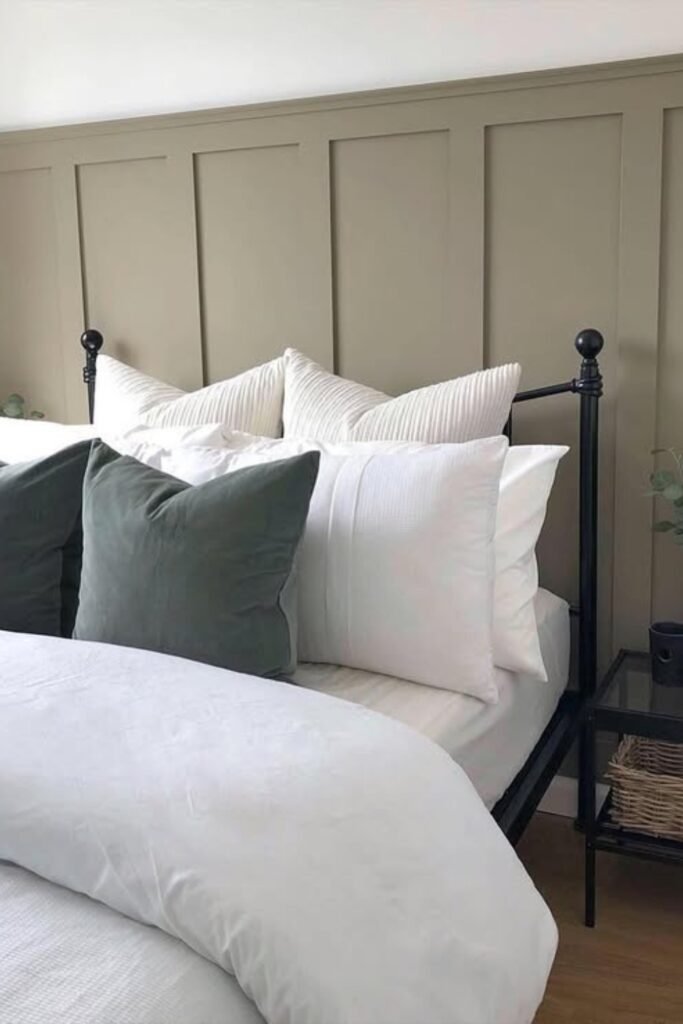
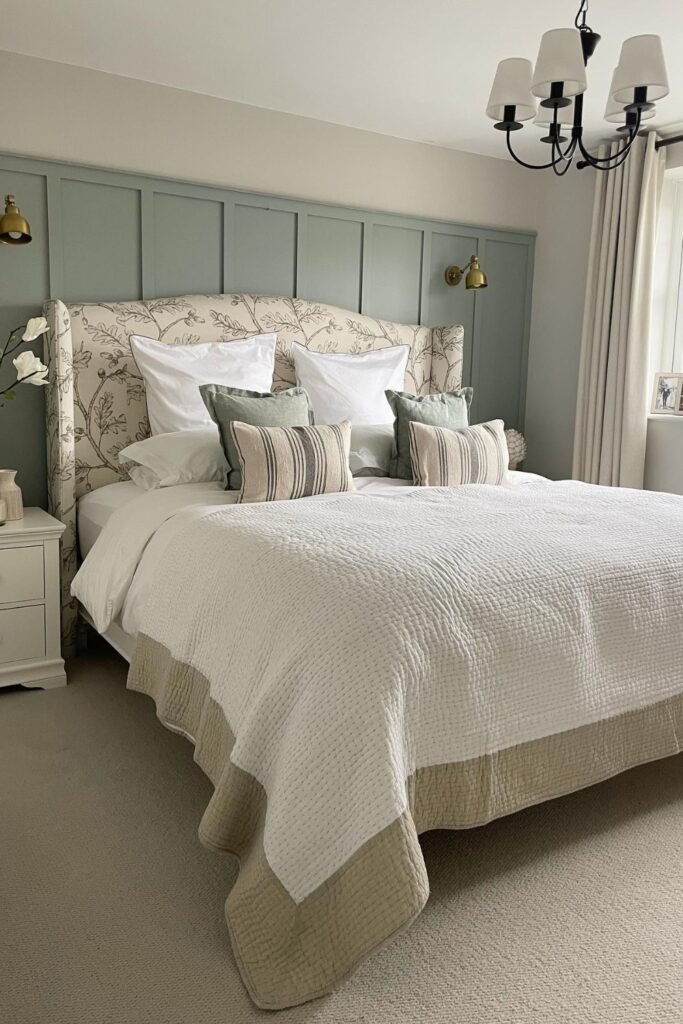
Sage Headboard Focus
The sage paneling frames your headboard and makes the bed the clear focal point without darkening the room.
You can recreate this look by limiting green to one wall and then layering whites, creams, and subtle patterns so everything stays relaxed and bright.
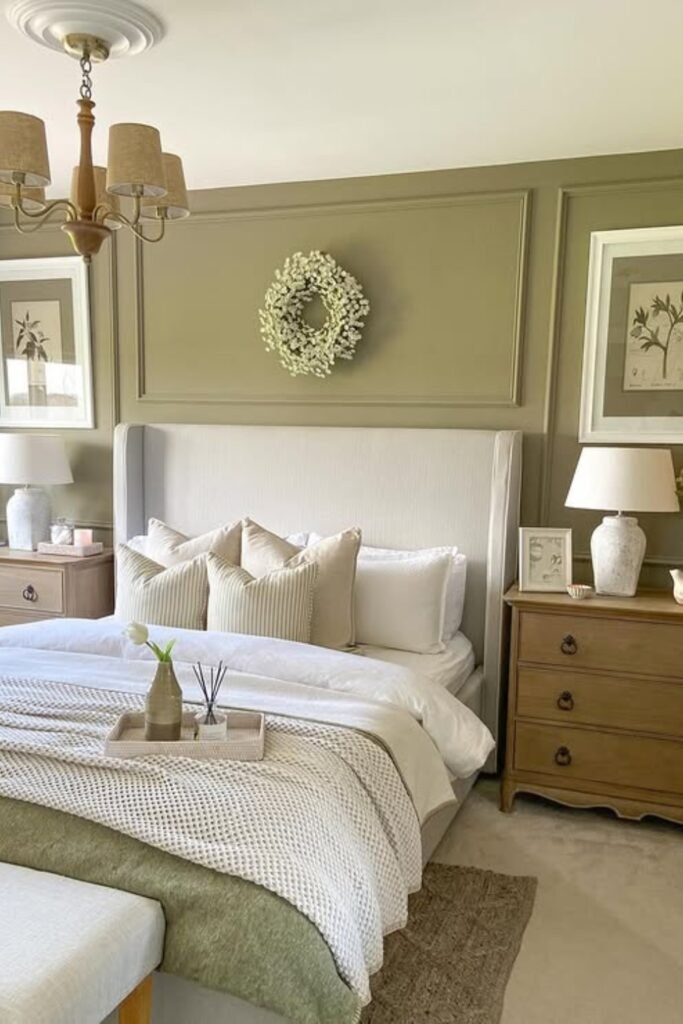
Warm Olive Comfort
If you want green to feel warm instead of cool, you should lean into olive with creamy neutrals.
The wall color sets a cozy base, while white bedding keeps the room from feeling heavy. You can add wood furniture to bring in warmth and make the green feel natural, not painted on.
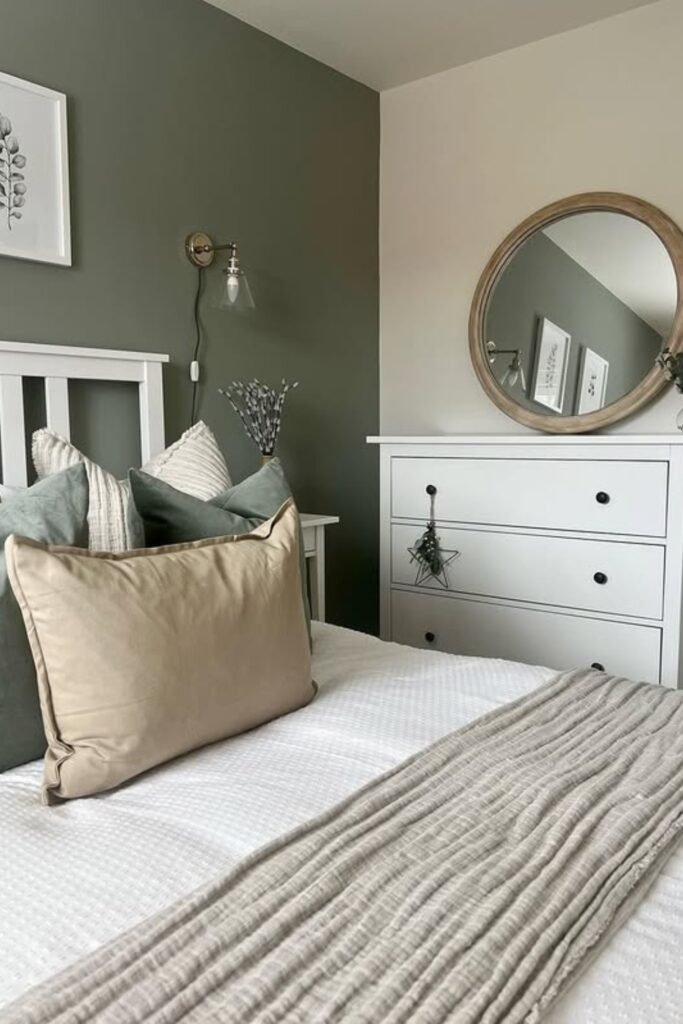
Green Accent Wall
You should pair it with white furniture to make the contrast clean and fresh. This works especially well in smaller bedrooms where you want color without shrinking the space.
You can stick to soft fabrics and simple decor so the wall stays the main statement. If you’re nervous about using green everywhere, you can start with one accent wall.
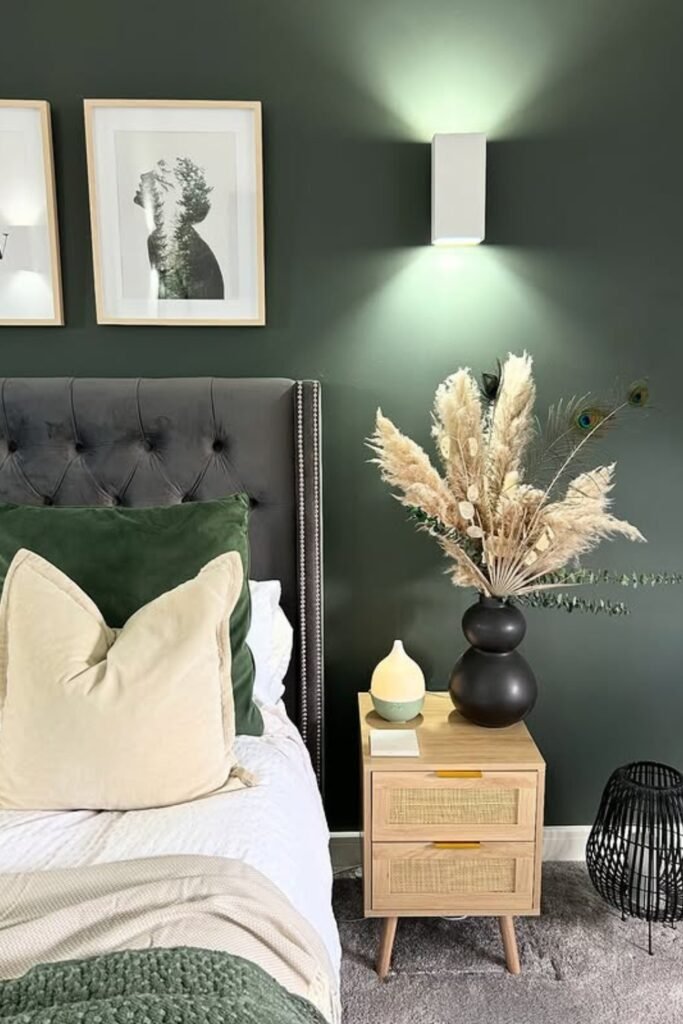
Moody Green Depth
The deep wall color makes your room feel cocooned, not cramped, because everything else stays light and warm.
This setup is perfect if you want a cozy, grown-up feel, especially when you add warm lighting to avoid a flat look.
Soft Green Framing
The muted paneling frames your space without stealing attention, while white and light grey bedding keeps everything feeling calm.
If you want a bedroom with color but still like it airy and clean, this approach can work perfectly for you. You should stick to soft textures and light woods so the green feels gentle, not dominant.
Earthy Green Layers
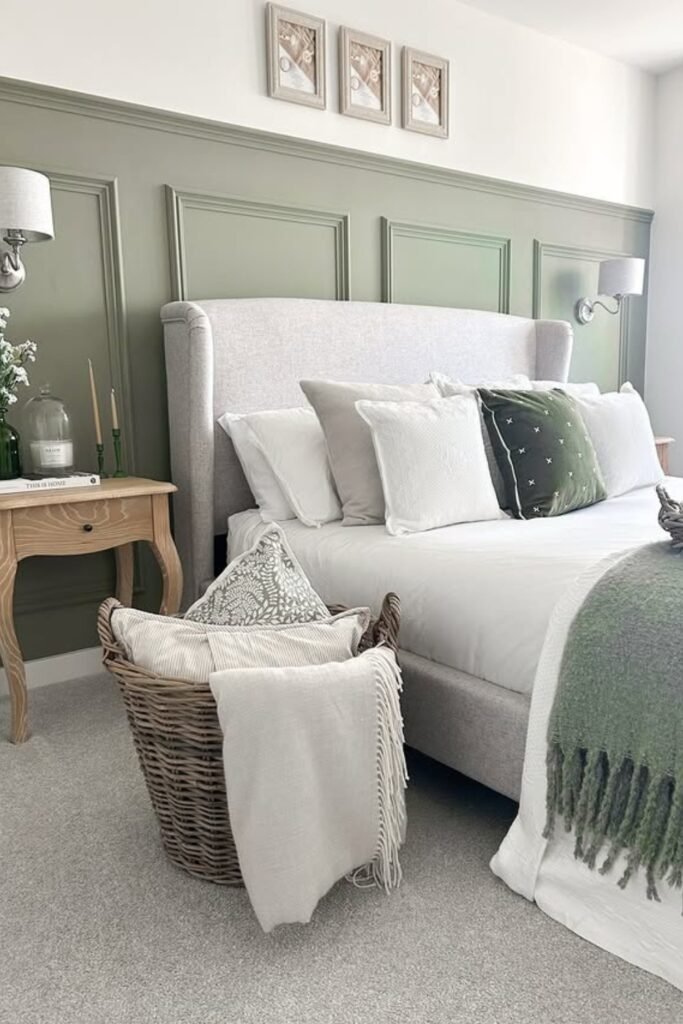
You’ll see that a soft olive wall sets a calm backdrop, while beige, cream, and brown tones help keep the room grounded.
You can recreate it by balancing green walls with cozy fabrics, simple patterns, and natural materials like wood and woven accents.
Deep Green Grounding
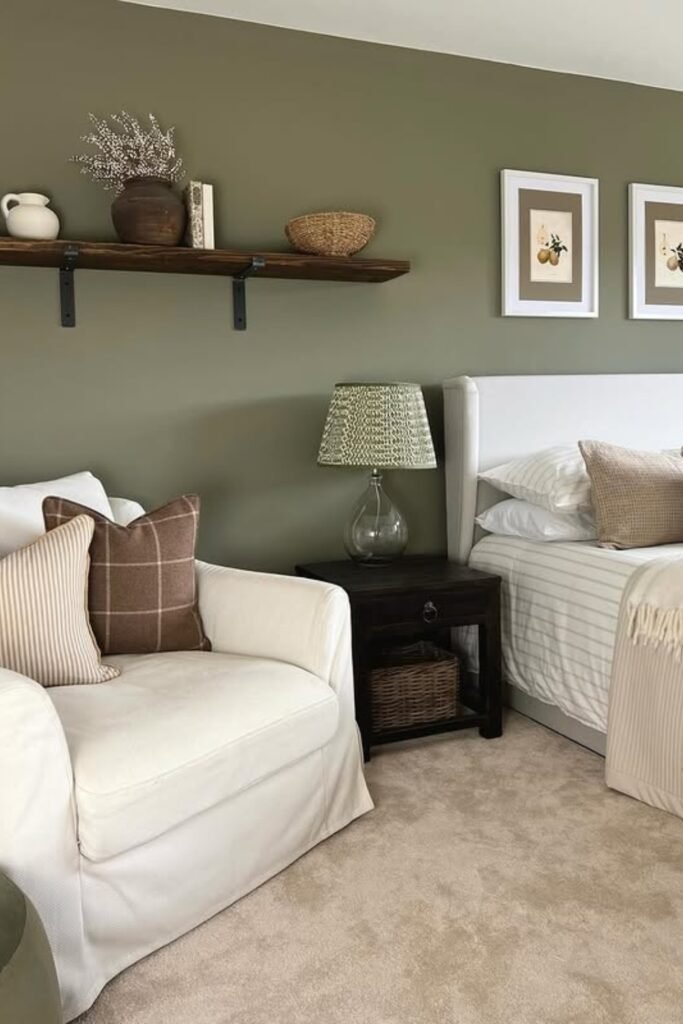
The deep paneling gives the room weight, while white furniture prevents it from feeling heavy. The grey bedding can help you bridge the contrast smoothly.
You will find this works best in bedrooms with enough light and simple furniture. You should keep decor minimal and let the green wall and clean lines do the work for you.
Soft Greige Green
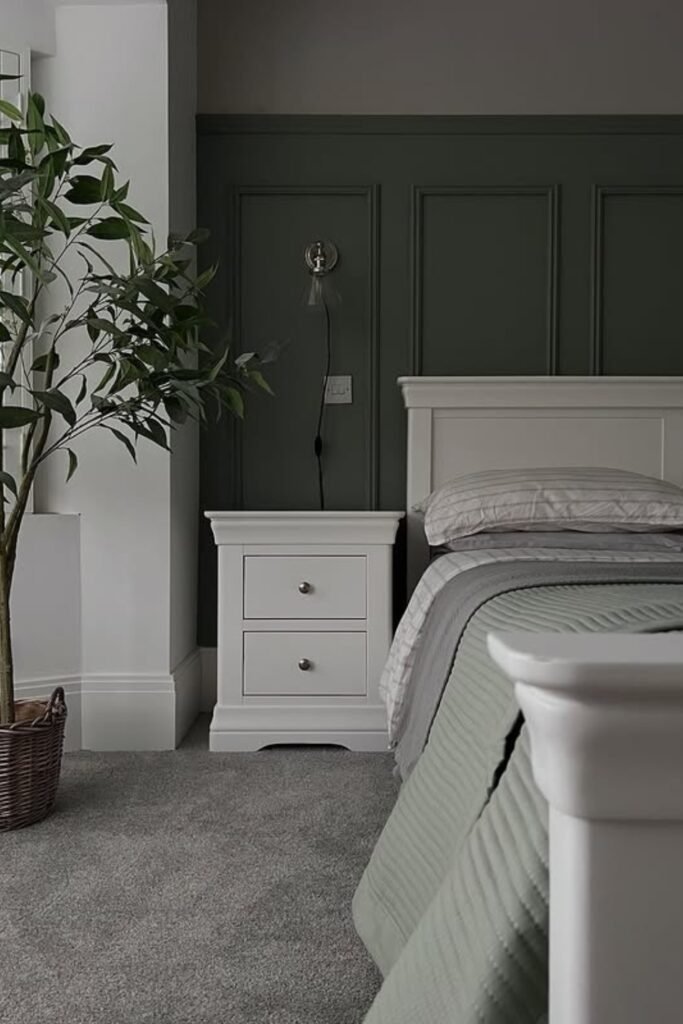
If you want green without clearly seeing green, this approach can work really well for you. The wall color sits between green and grey, calming your room without adding contrast.
This works especially well in smaller or low-light bedrooms where stronger greens might feel too heavy. You should stick to soft fabrics and keep your palette tight so the color stays subtle.
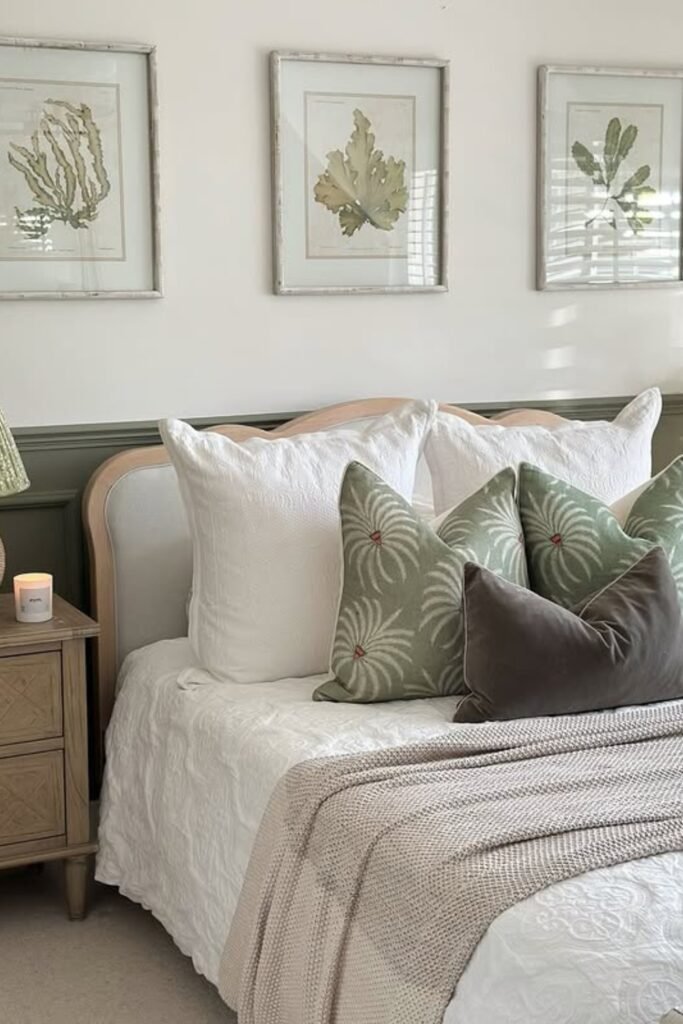
Subtle Green Accents
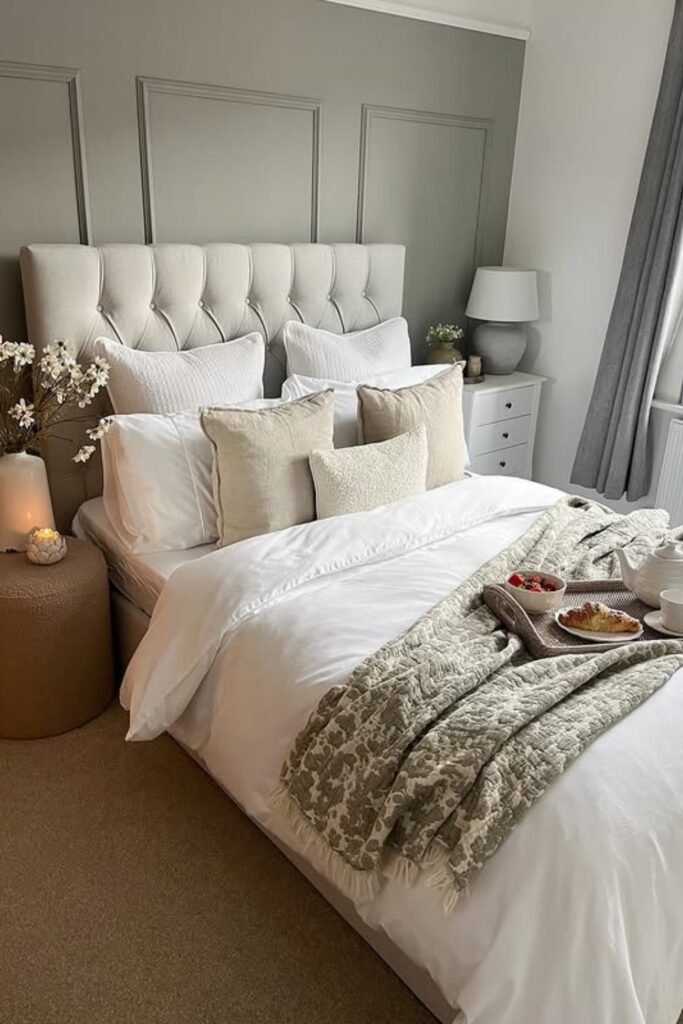
If you like neutral bedrooms but don’t want them to feel flat, you can let green show up in small doses.
The soft green pillows and artwork add just enough interest without changing your calm mood.
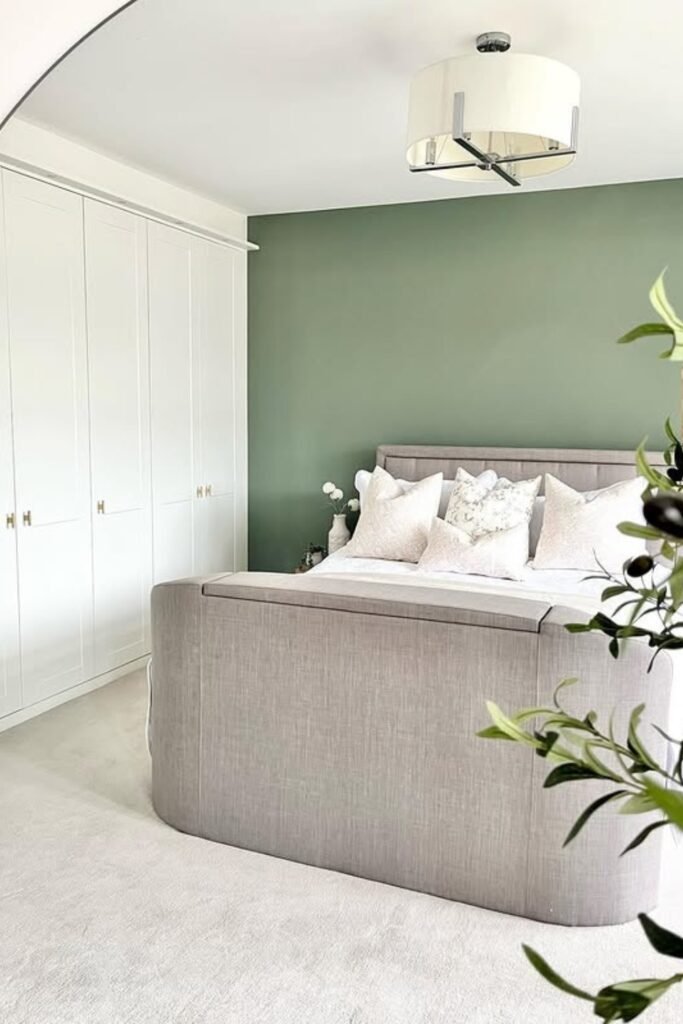
Sage Feature Wall
The sage wall adds calm contrast without fighting your white wardrobes or light flooring. This setup is ideal if you want color but still like a clean, uncluttered look.
You can recreate it by keeping everything else neutral and letting one green wall carry the mood.
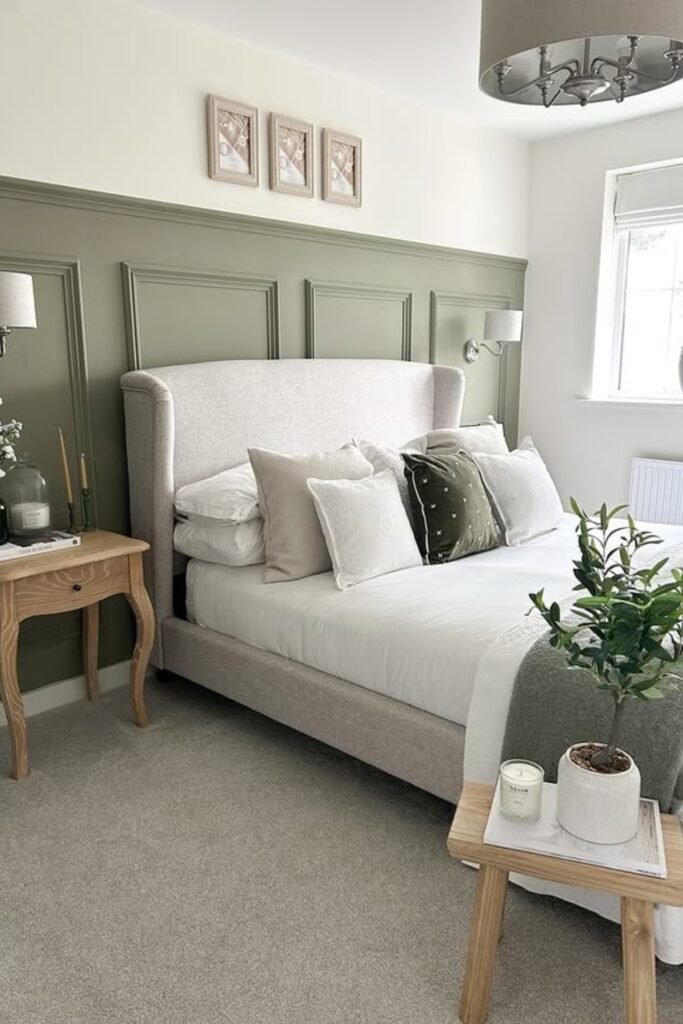
Balanced Sage Paneling
The paneling keeps the sage contained, so your room stays calm and tidy. Your light upholstery and white bedding stop the green from feeling heavy.
This works best if you want a soft statement without changing your whole palette. You should keep accessories minimal and repeat green only once or twice for balance.
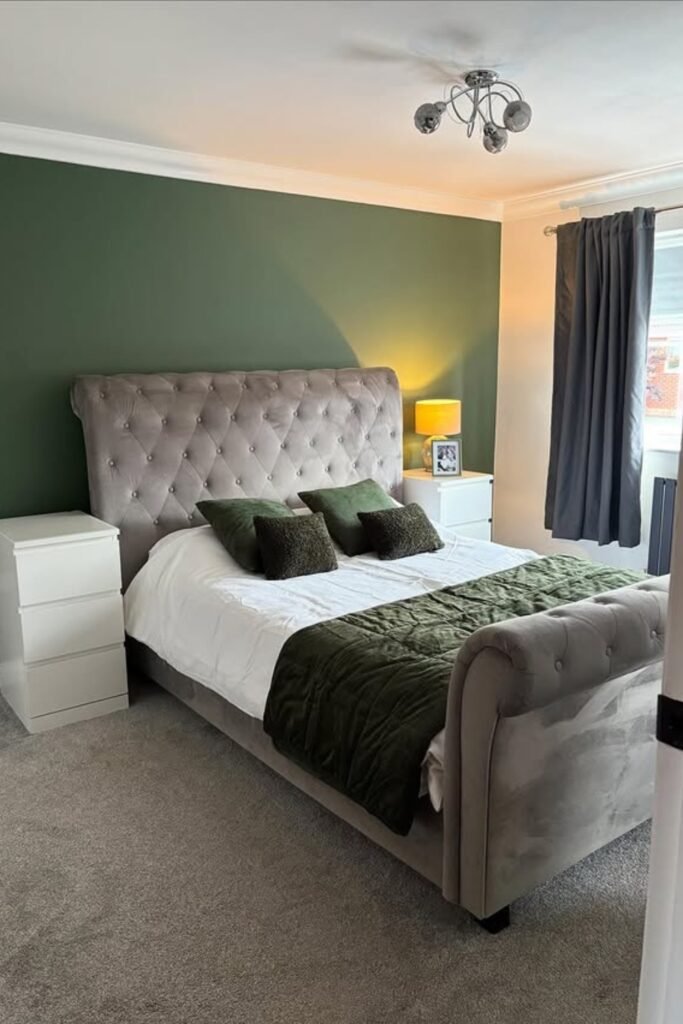
Deep Green Anchor
The wall adds depth, while grey upholstery and white furniture keep the room from feeling closed in. If your bedroom feels a bit plain or boxy, this setup can really help you.
You can recreate it by using one strong green wall, then softening it with light bedding and warm lamps so the space feels cozy.
Soft Sage Calm
The sage wall adds just enough color to warm up your room without stealing light, which is especially important if you have sloped ceilings or awkward angles.
You can recreate this feel by keeping your bedding simple, using soft textures, and letting the green act as a quiet backdrop instead of the main feature.
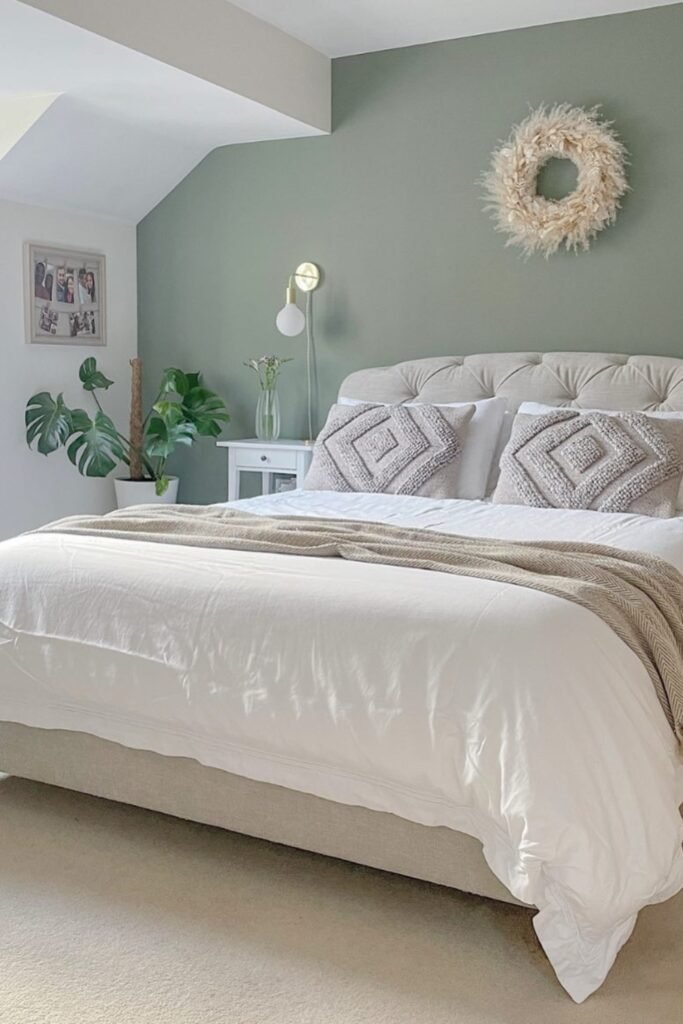
Classic Sage Paneling
The soft sage panels add structure, while warm wood furniture and white bedding keep the space comfortable.
You can recreate it by focusing on paneling, keeping patterns subtle, and using natural textures so the green feels calm and lived-in.
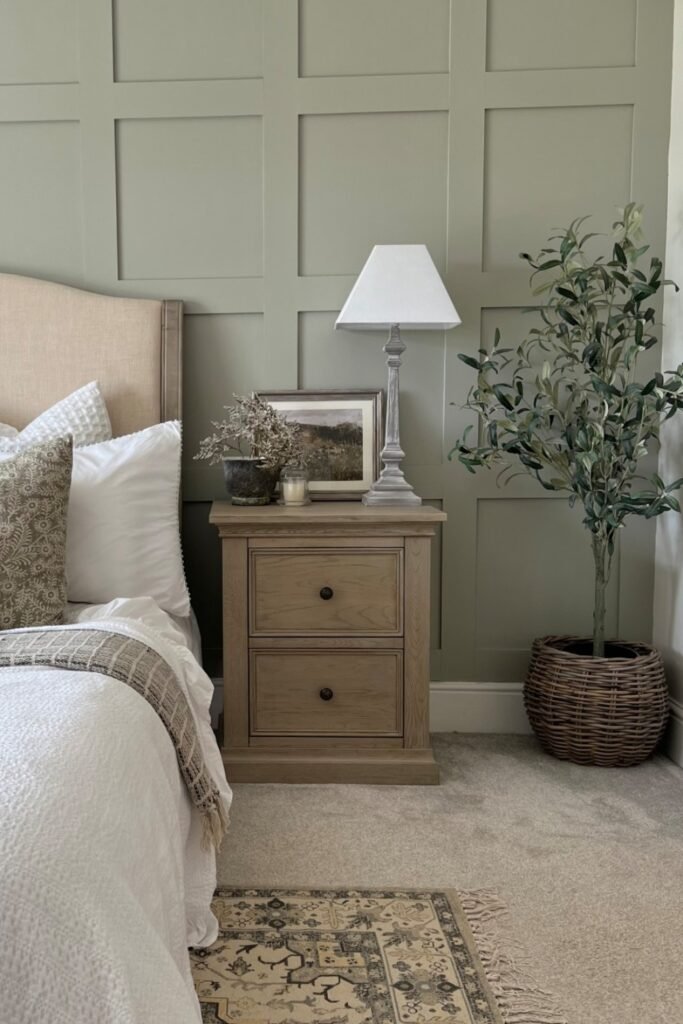
Soft Neutral Green
The muted green paneling almost reads like a neutral, letting your bedding and textures do most of the talking.
You should recreate it by choosing a green with grey undertones and pairing it with light fabrics, simple patterns, and minimal decor
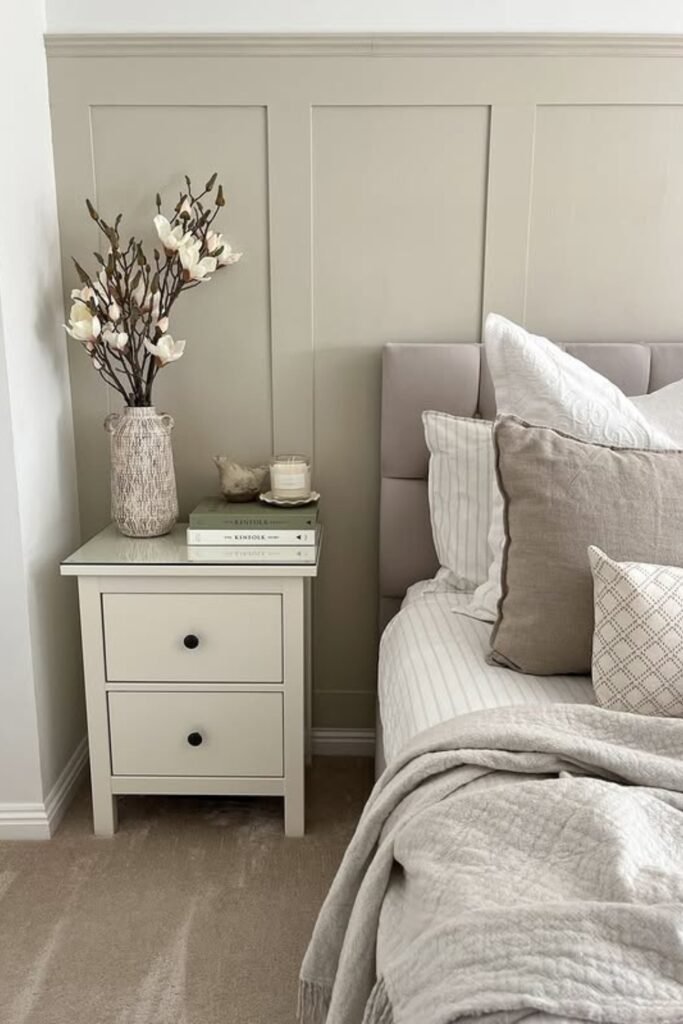
Forest Green Focus
Your dark green works here because you can wrap the bed in it, giving your space a protected, almost hotel-like feel.
The key is contrast, light bedding, pale furniture, and soft textures keep the wall from feeling heavy. If you want your bedroom to feel cozy and intimate, this idea can help you achieve that.
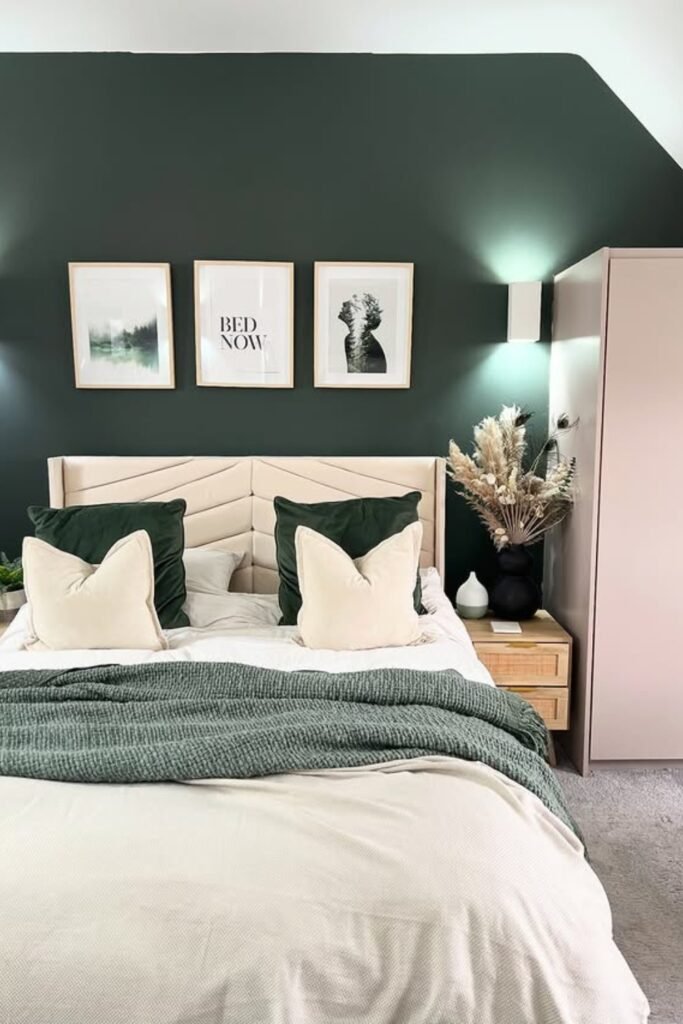
Cottage Green Warmth
The paneling adds texture without making the room feel formal, while soft bedding keeps everything relaxed.
You can recreate it by choosing a gentle green, adding simple wall paneling, and repeating the tone through cushions or small decor so your room feels connected, not busy.
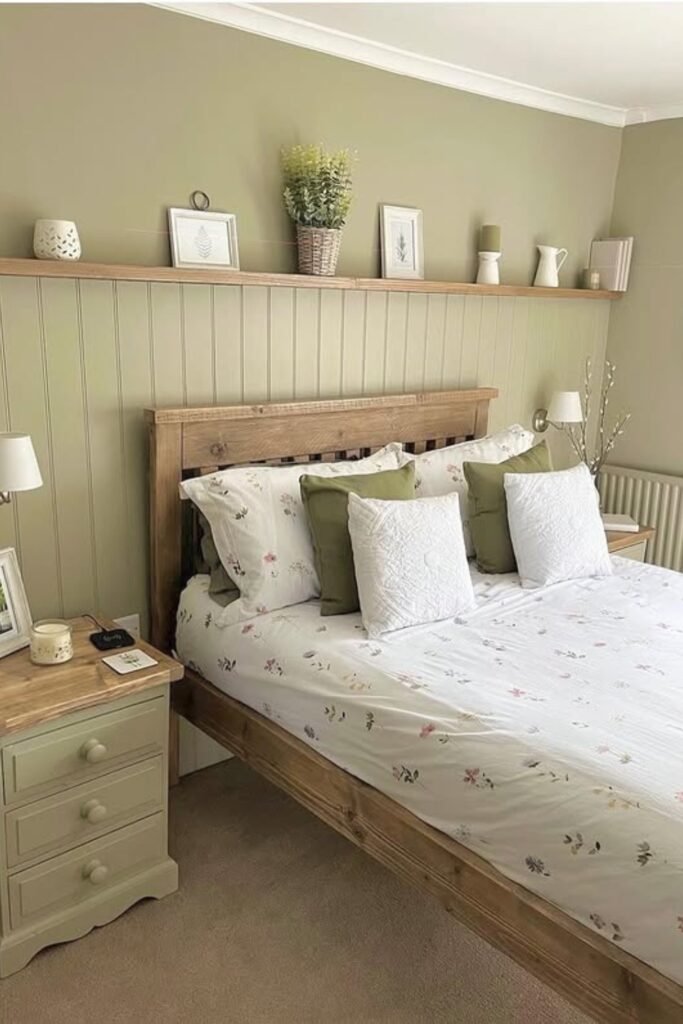
Modern Green Accent
A vertical green panel wall gives your bed a strong backdrop, while the rest of the room stays light and simple.
This is ideal if you want a touch of color in a modern bedroom without breaking the minimalist flow. You should keep decor minimal and let lines and contrast do the work for you.
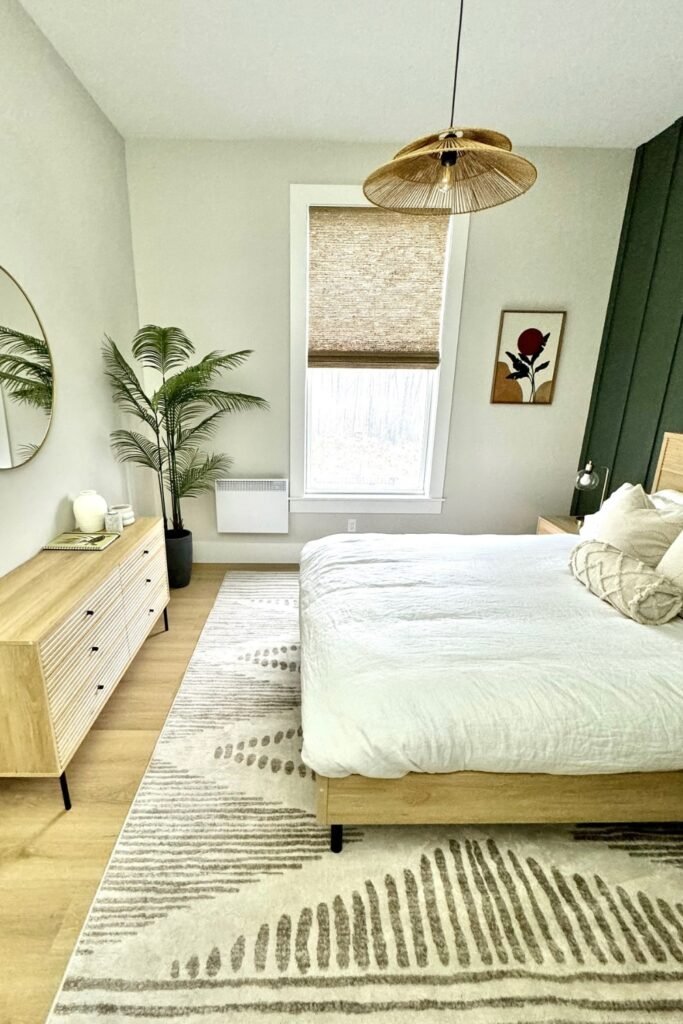
Structured Sage Backdrop
If you have a bedroom with higher ceilings or sloped walls and you want definition, this approach can work really well for you.
You should keep the green below eye level, use crisp whites on your bed, and let simple textures soften the look.
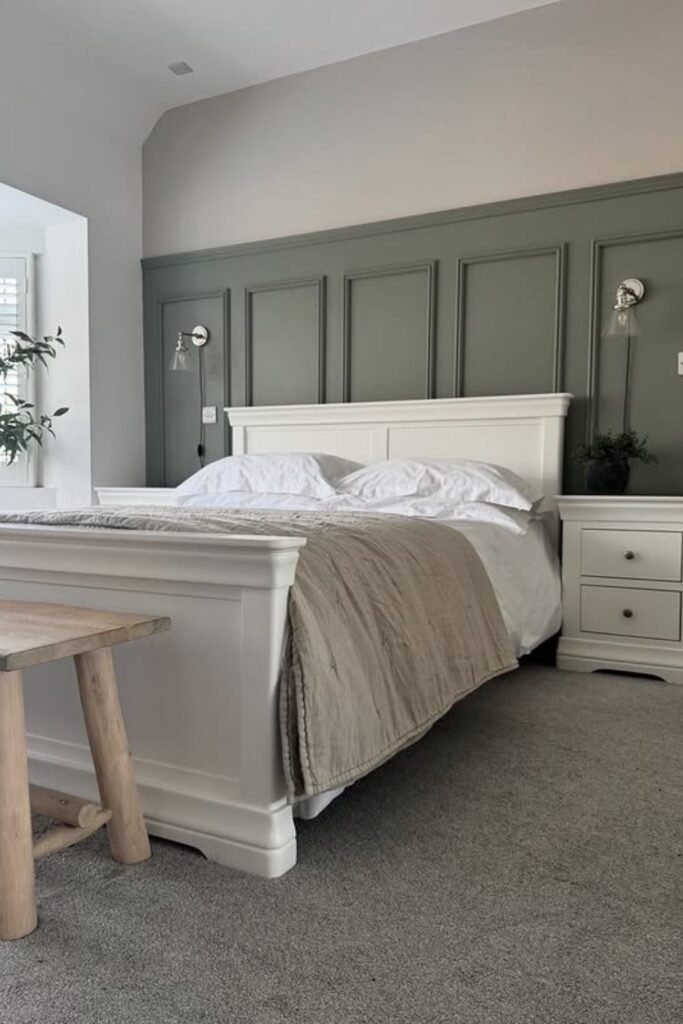
Cozy Green Cocoon
The wall, bedding, and soft lighting all stay in the same family, so your room feels calm instead of busy.
If your bedroom is mainly for resting rather than multitasking, this idea can help you create the perfect cocoon.
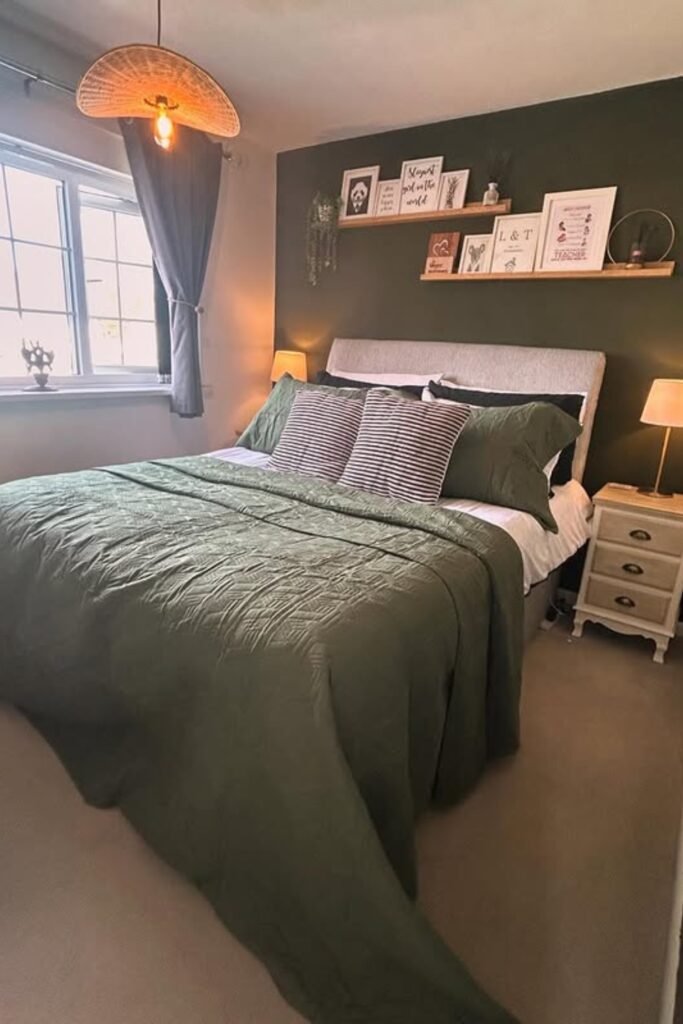
Gentle Green Neutrals
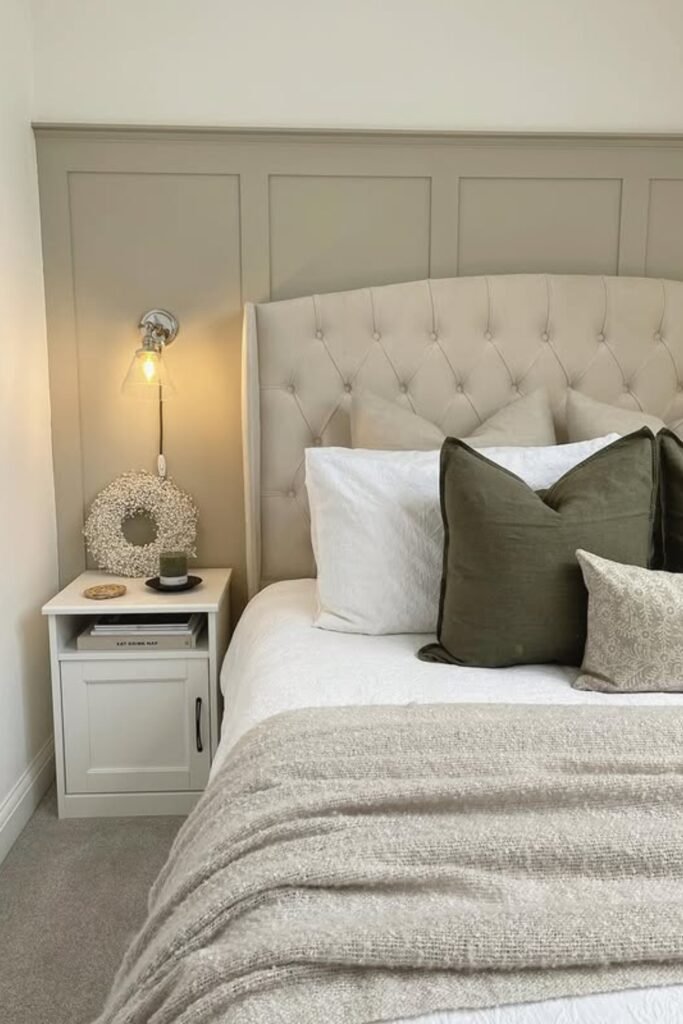
The paneling blends into the background, letting your bed and textures take center stage. Your darker green cushions add just enough contrast without changing the calm vibe.
This works especially well in smaller bedrooms where strong color might feel too much.
You should choose muted greens, keep your bedding light, and rely on texture instead of extra color.
FAQs
Can green make a bedroom feel too dark?
Your green only feels dark when you pick a shade that’s too deep for your room’s light.
If your bedroom doesn’t get much natural light, you should stick to softer greens like sage or grey-green.
You can balance them with white bedding and warm lamps, and your room will still feel open, calm, and inviting.
Should green be on the walls or in the bedding?
If you feel confident with color, you can let green walls create a restful, grounded vibe in your bedroom.
If you are unsure, you should start small, with green pillows, throws, or just one accent wall.
Once you see how the color behaves in your light, you can decide whether you want to commit to more.
You may like to read!
