
20 Freestanding Bathtub Ideas For 2026

This article may contain affiliate links: read full affiliate disclosure.
You’re probably here because you love how freestanding baths look, but you’re also wondering if choosing one could be a smart move or a very expensive regret.
Maybe you’re standing in your bathroom trying to imagine the space, worrying if it will even fit, or stressing that the installation might turn into a full-on plumbing headache.
You might also be thinking that it looks amazing in photos, but in real life it could feel uncomfortable, be hard to clean, or just not work for your everyday routine.
And honestly, that concern makes sense. A freestanding bath isn’t cheap, and once you install it, you can’t exactly undo the decision.
In this article, you’ll see whether a freestanding bath truly makes sense for you, so you can feel confident before you commit.
Are Freestanding Baths A Good Idea?
It really comes down to how you actually use your bathroom, not how good the tub looks on Instagram.
If you have enough space, solid flooring, and you genuinely enjoy long, quiet soaks, you can end up loving a freestanding bath.
But if your bathroom feels tight, your plumbing isn’t planned for it, or you just want something easy and low-maintenance, you might start regretting it pretty fast.
These baths don’t forgive poor planning. When you get the size, placement, and installation right, you’ll enjoy it every single day.
Ignore those details, and you’ll feel the frustration every time you walk into your bathroom.
Soft Minimal Luxury
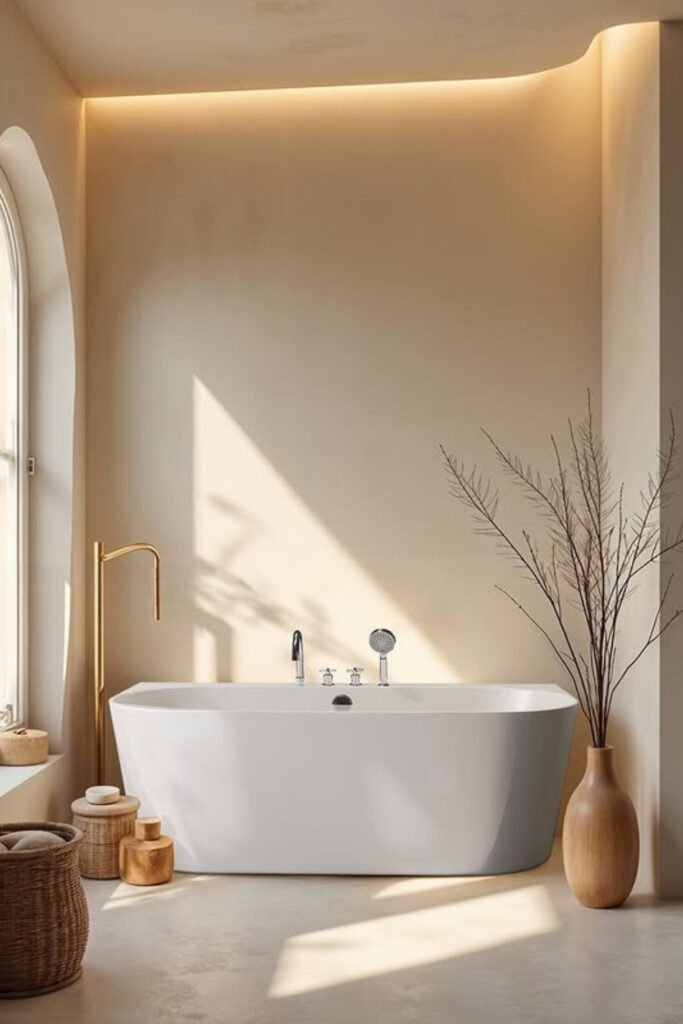
When you notice the curved window, the rounded tub edges, and the smooth plastered walls, you start to feel a soft flow that looks intentional, not empty.
You’ll get better results when you choose matte surfaces, warm neutrals, and just one natural element like wood or dried branches.
Small Space Win
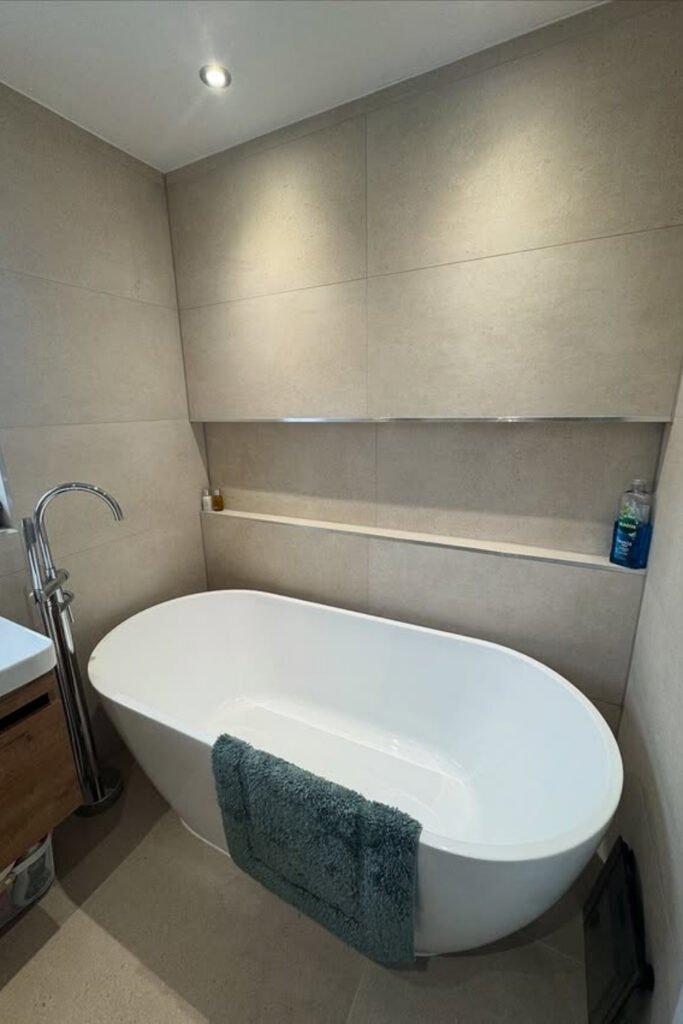
This setup proves you can make a freestanding bath work even when your space feels tight.
You’ll notice how the tub is pushed neatly against the wall, which helps you save room without making it feel boxed in.
Balanced And Practical
You can see how the freestanding tub sits centered between two windows, so it feels planned instead of randomly dropped in.
When your storage lives in the vanity and bookshelf, you keep the tub area calm and uncluttered.

Drama Done Right
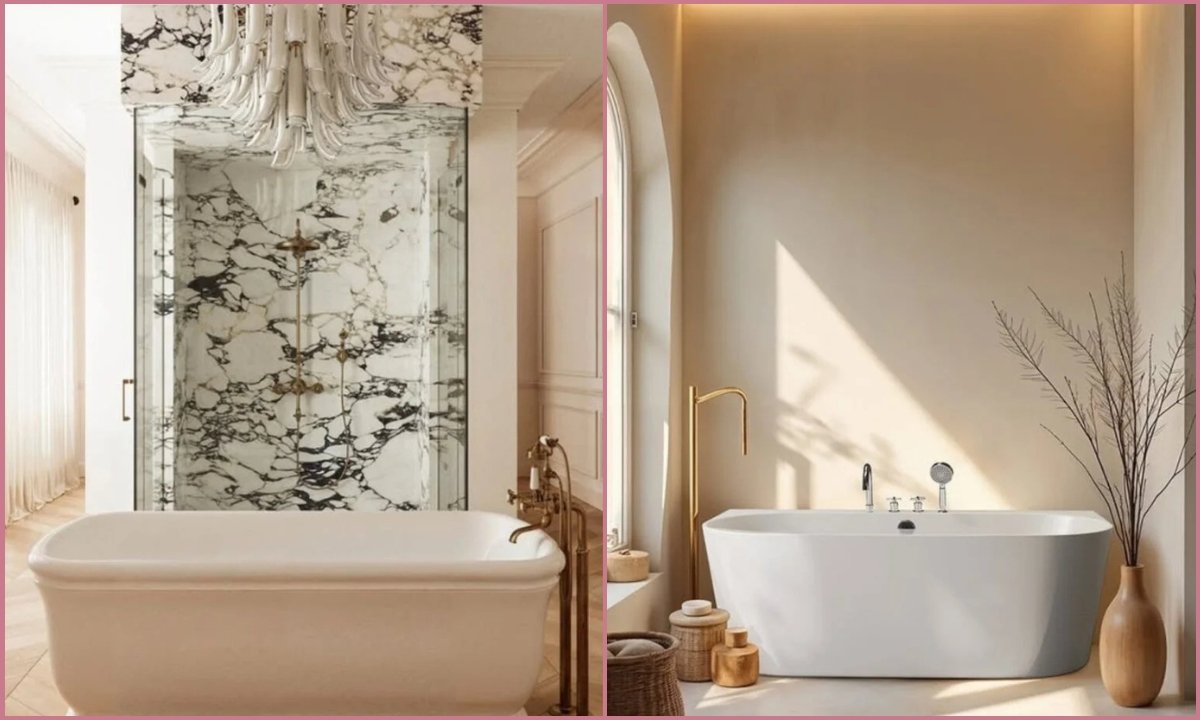
When you pair marble, brass fixtures, and a bold chandelier with controlled, neutral surroundings, the drama feels intentional.
If you want to recreate this, you have to commit fully, cheap finishes will instantly ruin the effect. You should plan lighting early, check floor strength, and keep storage hidden.

Built-In Feel
When you frame the tub with cabinetry and wall panels, you give it structure so it doesn’t feel like it’s floating randomly.
This is perfect if you love the freestanding look but still want storage nearby. If you recreate this, you should design the tub and cabinetry together, not separately.

Calm With Texture
You’ll feel how the soft plastered walls add depth, so the neutral palette never feels flat or sterile.
When you place the tub near the window, you let natural light do the work, and the wall-mounted tap keeps things clean.
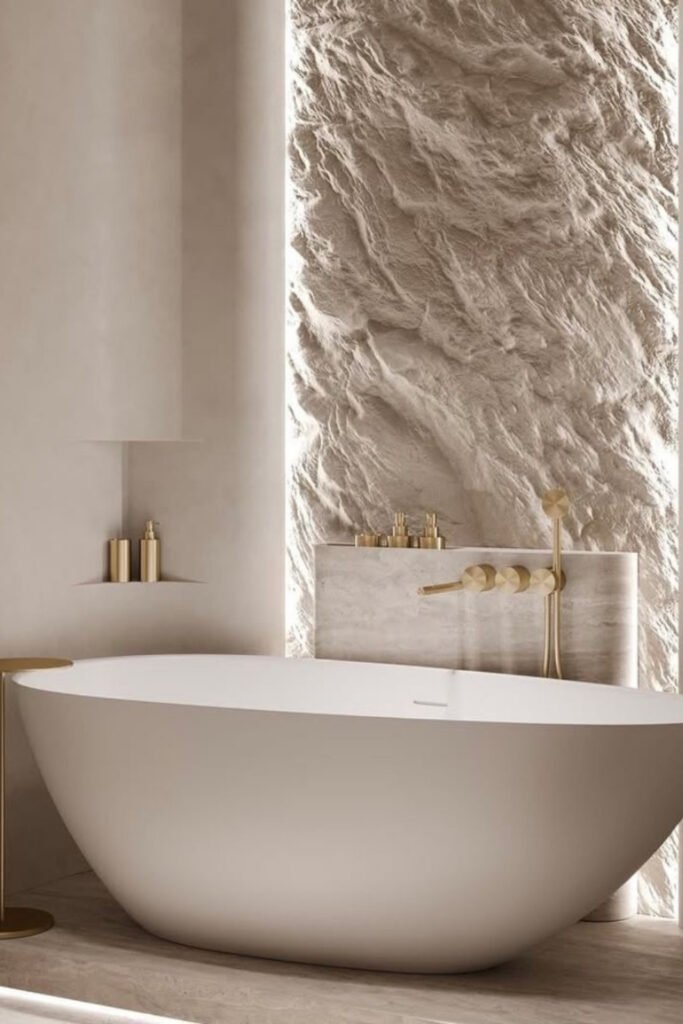
Sculptural Statement Zone
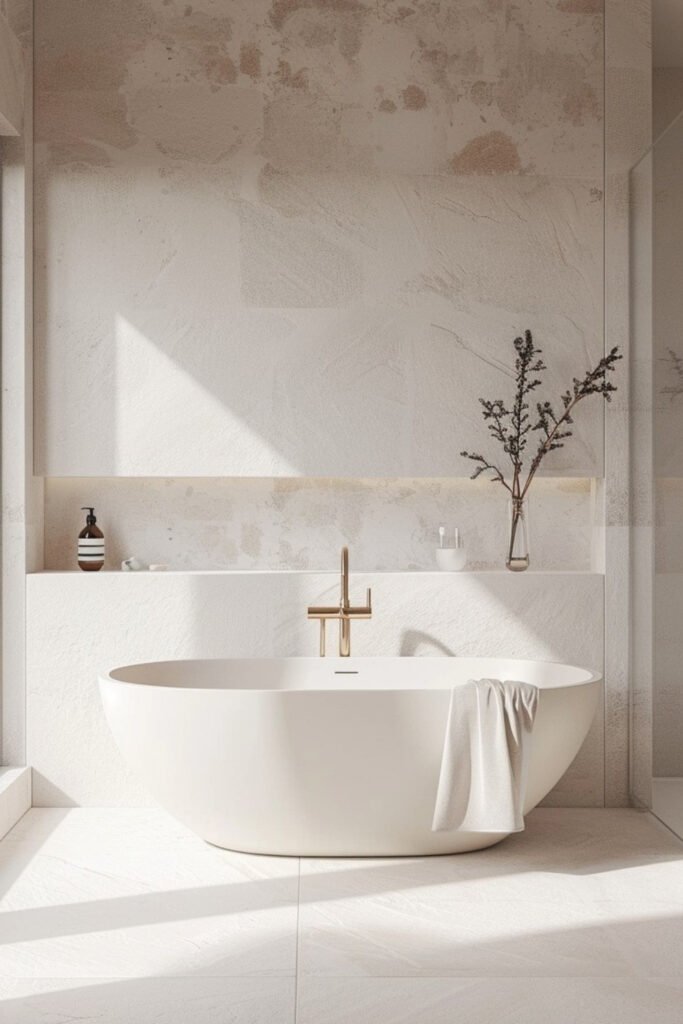
You’ll see how the textured stone wall takes center stage, letting the tub stay simple and smooth. When backlighting is done right, you get drama without needing color or pattern.
You should invest in one strong surface and keep everything else restrained. Brass fixtures help you add warmth against pale stone.
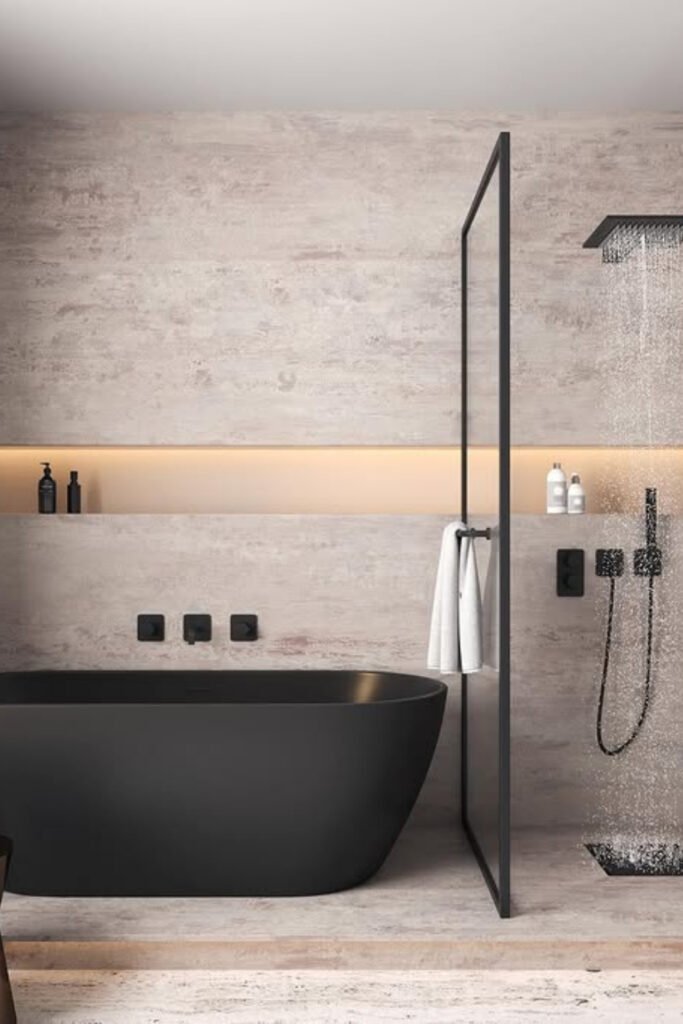
Contrast With Control
You can see how the dark freestanding tub anchors the space, while soft stone walls keep it from feeling heavy.
If you want this look, you should keep your palette tight and repeat finishes, matching fixtures, controls, and clean glass.
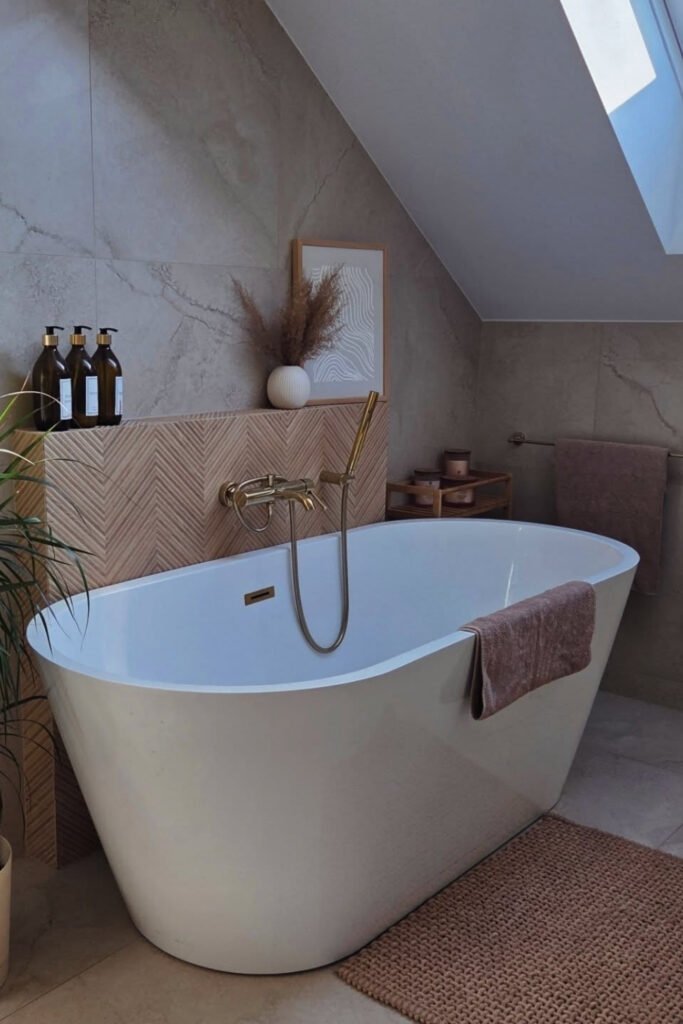
Attic Space Solved
When you place the freestanding tub where standing height isn’t needed, the layout suddenly feels smart.
A skylight brings in daylight without sacrificing privacy, and the built-in ledge replaces bulky storage.
Zoned Without Walls
This bathroom shows you how to fit both a freestanding tub and a shower without crowding the space.
Instead of walls, you rely on placement and finishes to define zones. When the tub sits slightly tucked to one side and the shower takes the opposite end, circulation stays clear.
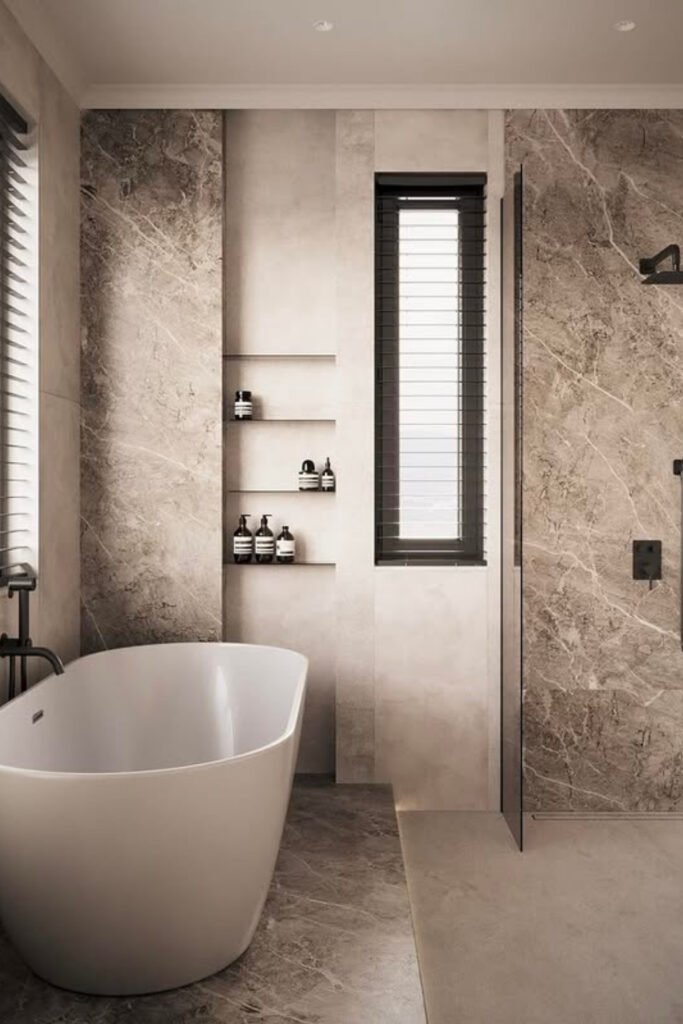
Depth Through Layout
When you pull the freestanding tub to the back instead of lining everything up, you create a visual endpoint that makes the room feel deeper.
Your eye travels through the space instead of stopping short. If you want this effect, you should keep the front clean, use the same flooring throughout, and save the tub for the far end.
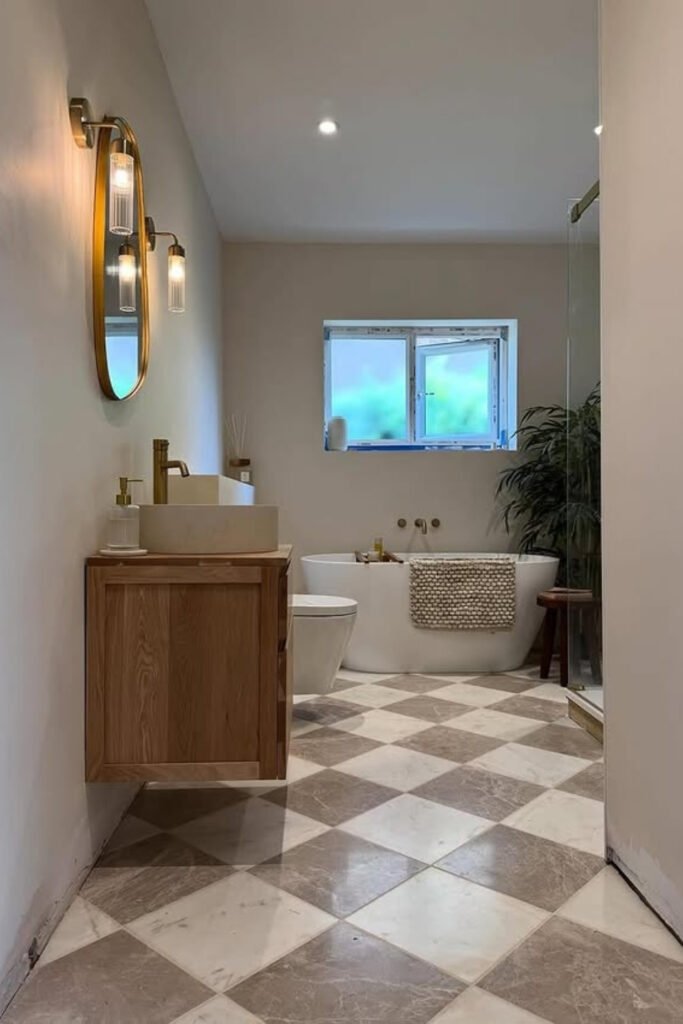
Clean And Compact
A wall-mounted tap and slim ledge replace bulky surrounds, while the round mirror softens the straight lines.
If you recreate this, you should choose a compact tub with a flat back and plan wall plumbing early.

Warm Stone Balance
You’ll notice how placing the tub against a full stone wall gives it a strong backdrop so it doesn’t feel lost.
This setup works well when your bathroom connects to a shower and you want a spa feel that still feels practical.

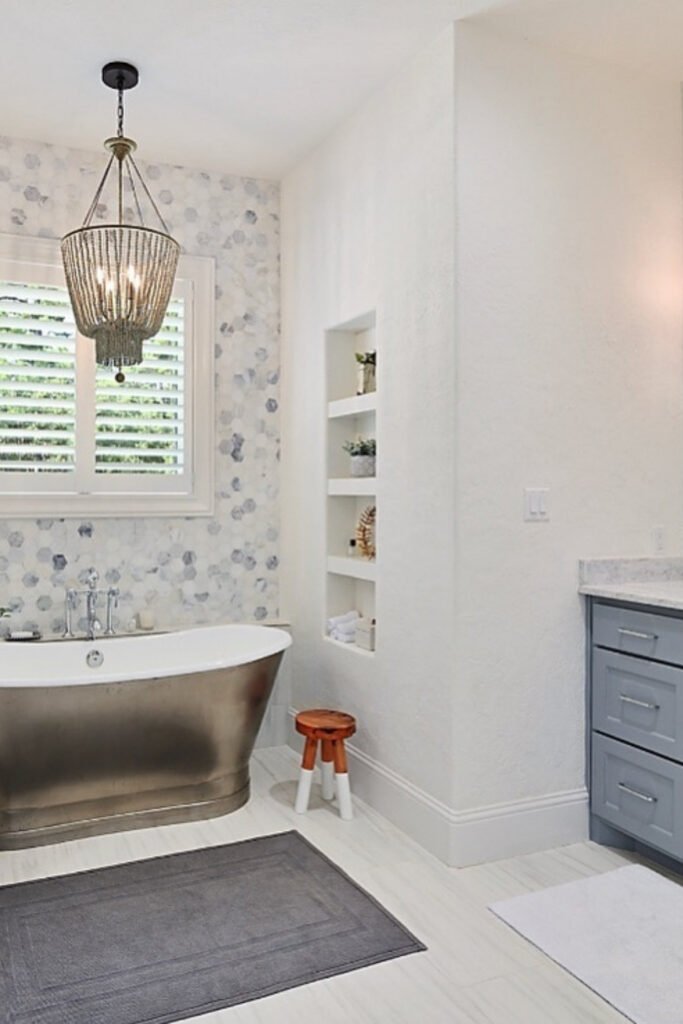
Vintage With Comfort
This bathroom blends character with comfort, and the freestanding tub sits right in the middle of that balance.
When you choose a metallic tub, you add personality without overpowering the room. Patterned walls keep things interesting without feeling busy.
Framed Like Art
The gallery wall adds personality, and the rug softens the space so it doesn’t feel formal. If you want this look, you should define the tub zone first, then layer in art and warm lighting.
This works best when you have a larger bathroom and you want the tub to feel special without interrupting daily routines.

Compact Yet Complete
This layout shows you how a freestanding tub can still work when your bathroom has to do a lot at once.
You’ll notice how the tub and shower sit side by side without fighting for attention, thanks to clear glass and a tight footprint.

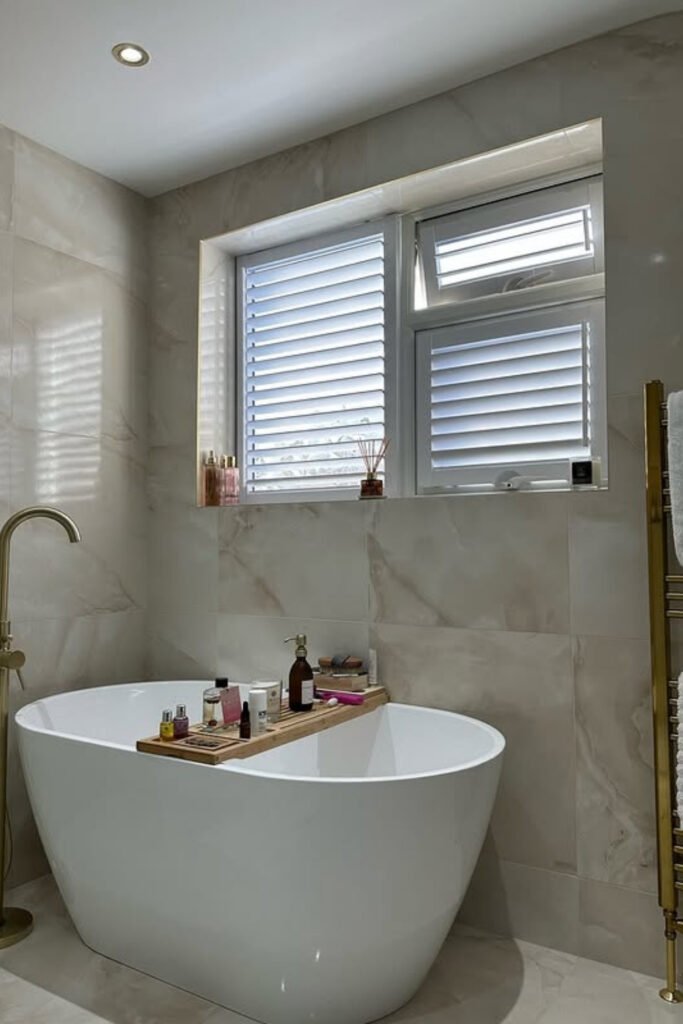
Practical Everyday Luxury
You can see how the freestanding tub sits against the window wall, letting you enjoy natural light while shutters protect your privacy.
A simple bath tray turns the tub into a usable zone instead of something that just looks good.
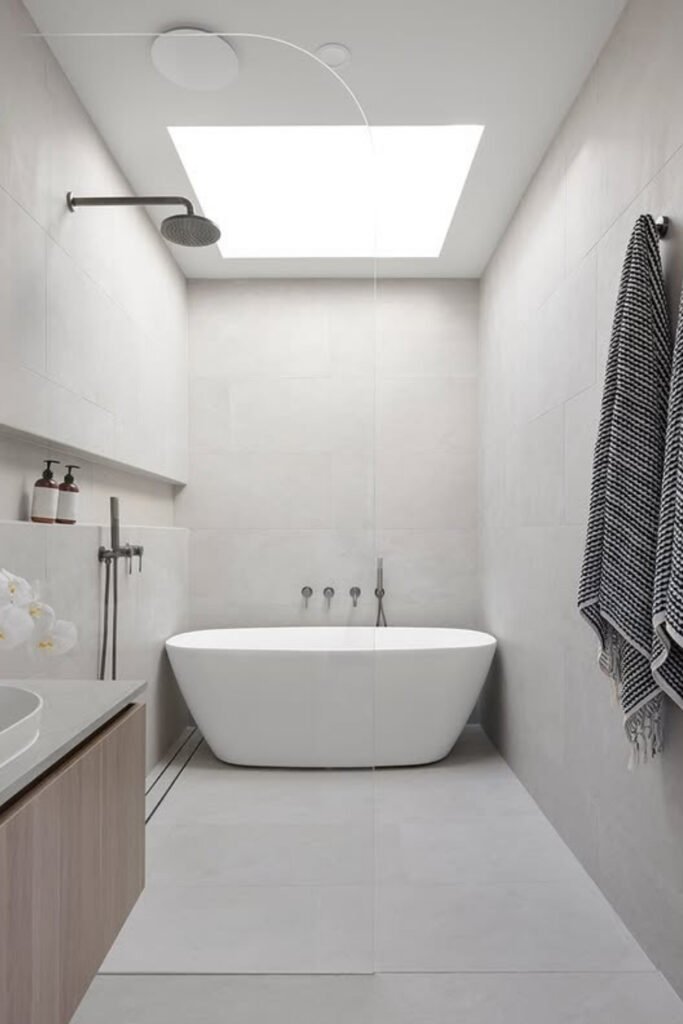
Light From Above
When you add a skylight, you pull daylight straight down into the space, which stops it from feeling boxed in.
You’ll notice how centering the tub at the end makes the room feel intentional, not like a narrow corridor.
Art As Anchor
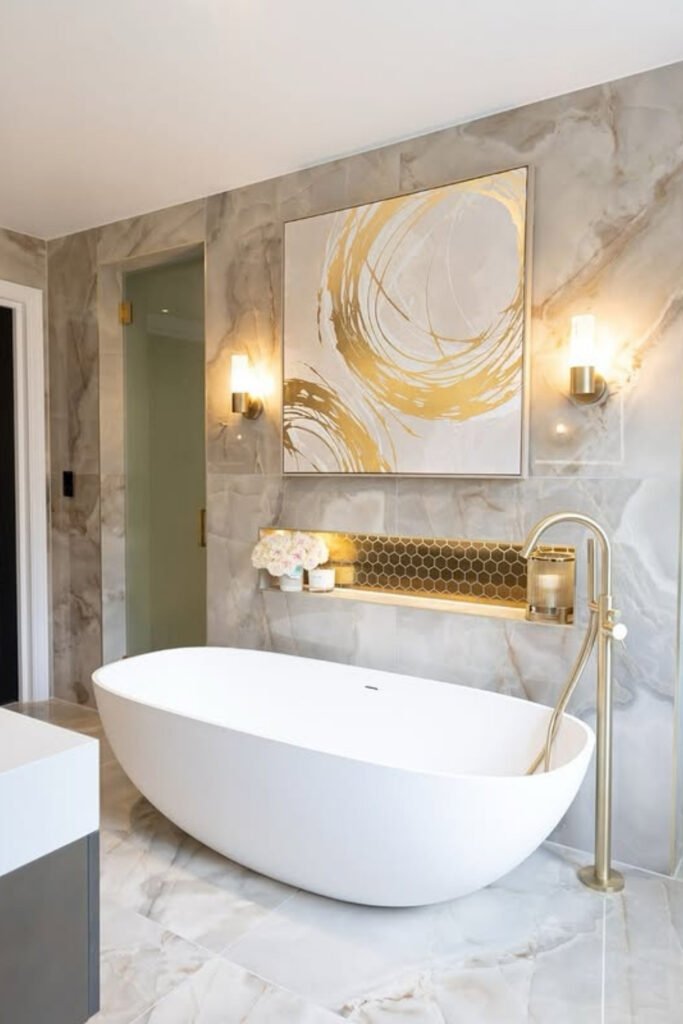
When you place artwork behind it, you give the freestanding bath something to lean on visually, so it feels grounded instead of floating.
The recessed shelf keeps everyday items close without clutter, and the warm brass tap pulls the look together.
Hotel-Level Finish
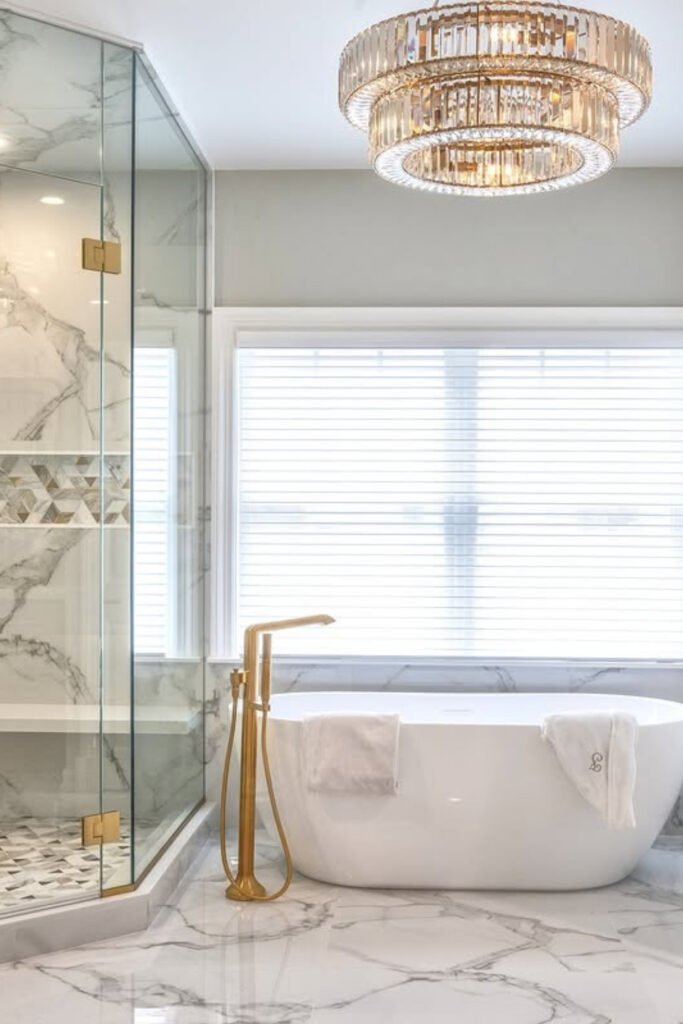
You can see how the freestanding tub sits neatly in front of the window, framed by marble and clean lines so it feels refined, not showy.
The chandelier adds softness without stealing the spotlight, and the glass shower keeps everything open.
FAQs
Do freestanding baths work in small bathrooms?
Yes, but only if you pick the right type and plan your layout early. You’ll find that slim or back-to-wall freestanding tubs work much better than fully floating designs when your space is tight.
If you push the tub closer to a wall, use wall-mounted taps, and add built-in niches instead of shelves, you’ll make the most of every inch.
But if you try to just drop a large, sculptural tub into a small bathroom without planning, you’ll quickly feel cramped, and what was meant to be relaxing will become frustrating instead.
Are freestanding baths harder to maintain?
They can be, but only if you don’t think about access and placement. You’ll notice that tubs placed far from walls collect dust and water underneath, which quickly becomes a pain to clean.
When you keep at least one side close to a wall, choose finishes that are easy to wipe down, and avoid overly decorative feet, you’ll make a big difference.
If you plan it right, you’ll see that maintaining a freestanding tub isn’t any harder than looking after a built-in one.
You may like to read!
