
16 Couch Not Against Wall Layout Ideas For 2026


This article may contain affiliate links: read full affiliate disclosure.
You pull the couch away from the wall, you step back, and right away something feel off.
The room suddenly looks empty, the space behind the sofa feels awkward, and you start wondering if you just made a mistake.
Should you push the couch back against the wall, or should you trust the layout you’re trying to create?
If you’re stuck in that exact moment, you’re not doing it wrong, you’re just missing a few key rules.
In this article, you’ll see how you can place a couch away from the wall so it looks intentional, with 16 unique ideas.
Let’s jump in!
How To Place A Couch Not Against A Wall?
You can place a couch away from the wall only works when you stop treating it like a piece that has to hug the wall and start treating it like the center of your room.
The first step for you is to decide why you’re pulling it forward. If you want better conversation flow, you can move the couch closer to your seating area.
If you are trying to divide an open space, you can use the back of the couch as a visual boundary.
Once you’re clear on your purpose, everything else, spacing, rugs, and what goes behind the sofa, will start to make sense for you.
Center the Conversation
The sofas sit away from the walls so the coffee table and fireplace become the natural meeting point.
This setup works best when your room feels formal or overly stretched.
You can float the main seating toward the center, keep equal distance between pieces, and let one strong focal point anchor everything instead of the walls.
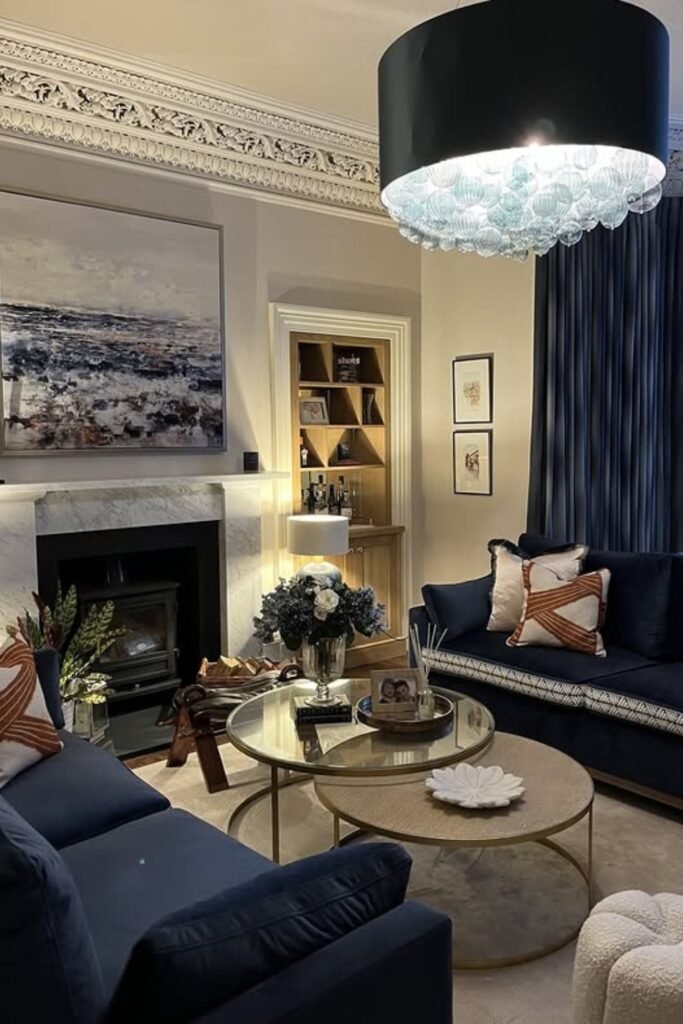
Frame the Fireplace
When the fireplace is the strongest feature in your living room, let the seating work around it instead of hiding against the walls.
The couch and chairs float forward to face the fireplace directly, making it the natural anchor of the space.
This works best in symmetrical rooms with a clear focal point.
You can center your rug first, then place seating inward so every seat visually connects to the fire.
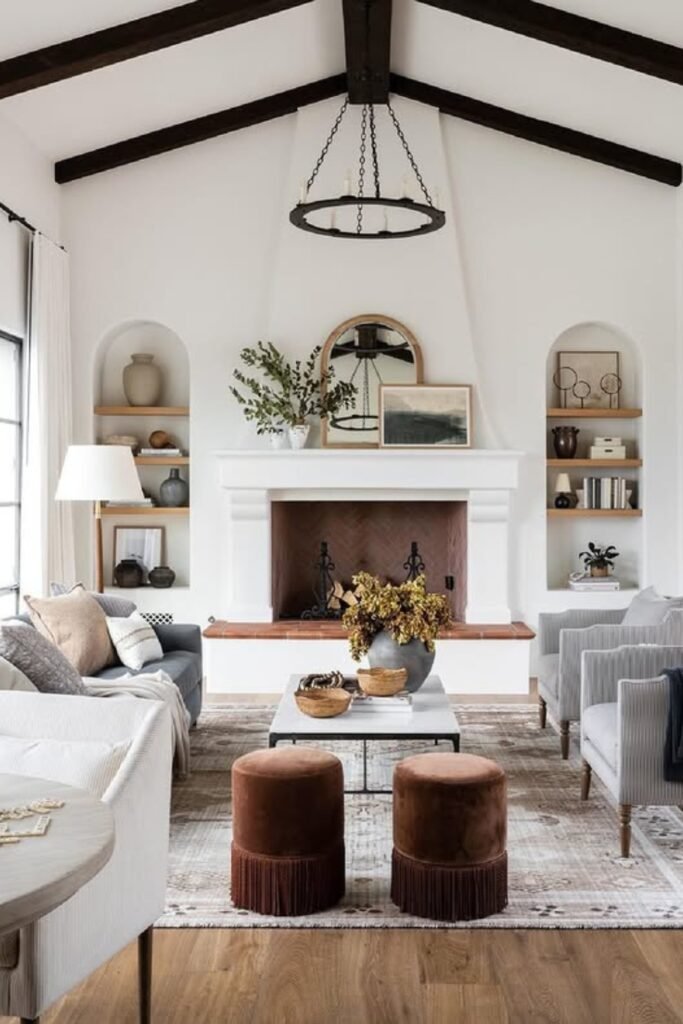
Use Wall Energy
When the wall already has personality, the couch doesn’t need to hide against it.
In this living room, the sofa floats slightly forward so the gallery wall becomes a backdrop, not a boundary.
This works well in creative or loft-style spaces where art is a main feature.
You can pull the couch off the wall just enough to add depth, then let art, plants, and lighting carry the visual weight behind it.

Create Soft Depth
A couch doesn’t need to sit far out to feel intentional.
In this living room, the sofa is pulled just enough off the wall to avoid that stiff, showroom look while still keeping things clean and structured.
This works best in smaller or more polished spaces where you want softness without losing order.
You can leave a small gap behind the couch, use a textured wall or paneling, and let lighting add depth instead of distance.

Float With Light
When your living room already feels airy, pulling the couch slightly forward keeps that openness instead of flattening it.
The sofa sits off the wall just enough to let shelves, plants, and texture breathe behind it.
This works best in bright, narrow living rooms where you want depth without clutter.
You can leave a small gap behind the couch, use slim wall shelving, and keep everything light so the space stays calm and open.

Face the Light
Sometimes the best wall isn’t a wall at all. In this living room, the couch floats in front of the window so seating faces the light instead of turning its back on it.
This works well when you want views and conversation to share the spotlight.
To recreate it, center the sofa on the rug, balance it with chairs opposite, and leave enough space behind the couch so the window still feels open, not blocked.

Divide Without Walls
You have open layouts don’t need solid barriers to feel organized.
The couch floats between the seating area and the dining space, quietly marking where one zone ends and the other begins.
This works best in studio or open-plan homes where everything blends together too much.
To position the sofa with its back toward the secondary area, keep a clear walkway behind it, and let lighting and rugs reinforce each zone.
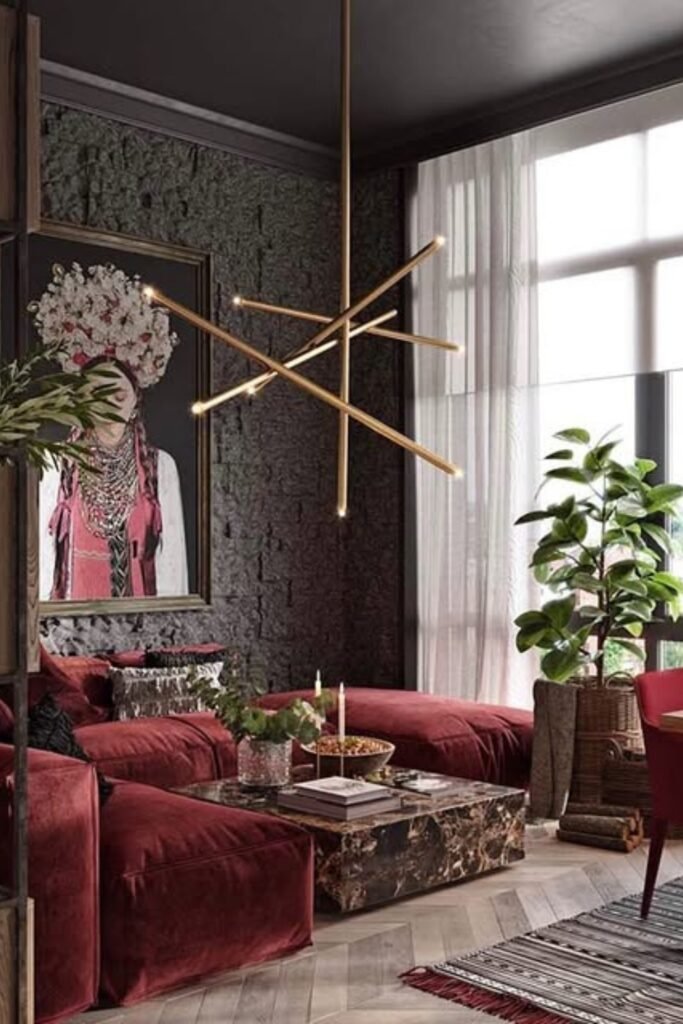
Anchor the Middle
Some living rooms are meant to be lived in from the center, not the edges.
The couch sits fully away from the walls, using the fireplace and open sightlines as anchors instead.
This works best in wide, open spaces where walls are mostly glass.
You can place the sofa in the middle first, build seating around it, and let architectural features, not walls, set the boundaries of the living room.

Let Walls Lead
When the wall already does the heavy lifting, the couch can float with confidence.
In this living room, the bold paneled wall and artwork act as the visual anchor, so the sofa doesn’t need to touch it to feel grounded. This works best in styled, color-rich spaces.
You can pull the couch slightly forward, center it on the wall feature, and use lamps or chairs to balance the space instead of relying on wall contact.

Create Breathing Room
When a living room starts to feel boxed in, pulling the couch away from the wall instantly fixes it.
The sofa floats forward so the room feels lighter and easier to move through, especially near the doors and windows.
This works best in modern or minimal spaces where flow matters more than filling corners.
To recreate it, center your seating around an ottoman or table, keep the edges open, and let empty space work for you instead of against you.

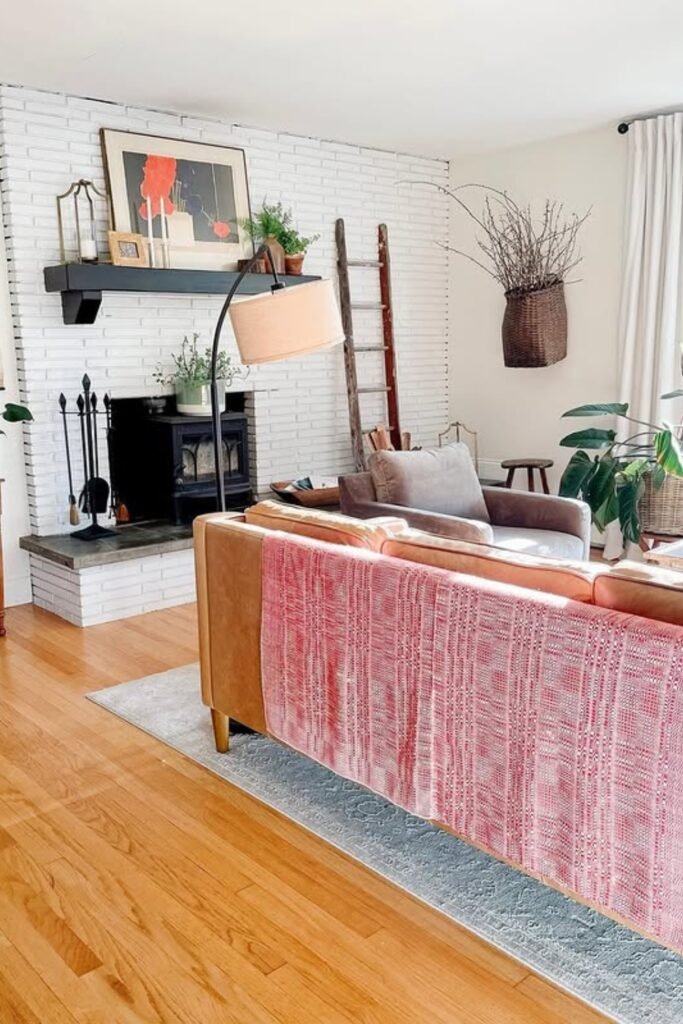
Soften the Back
When the back of the couch is visible, treat it like part of the design instead of an afterthought.
In this living room, the sofa floats toward the fireplace, and a simple throw adds warmth and intention to the exposed back.
This works best in cozy, layered spaces where texture matters.
You can pull the couch forward, face it toward the focal point, and style the back with a throw, lamp, or plant so it feels finished from every angle.
Zone the Space
The open apartments work better when the living room claims its own territory.
The couch floats away from the walls to separate the seating area from the dining space without blocking light or views.
This layout is ideal for open-plan homes with large windows.
You can place the sofa on a rug to define the living zone, keep the back open toward the dining area, and let furniture placement, not walls, do the dividing.
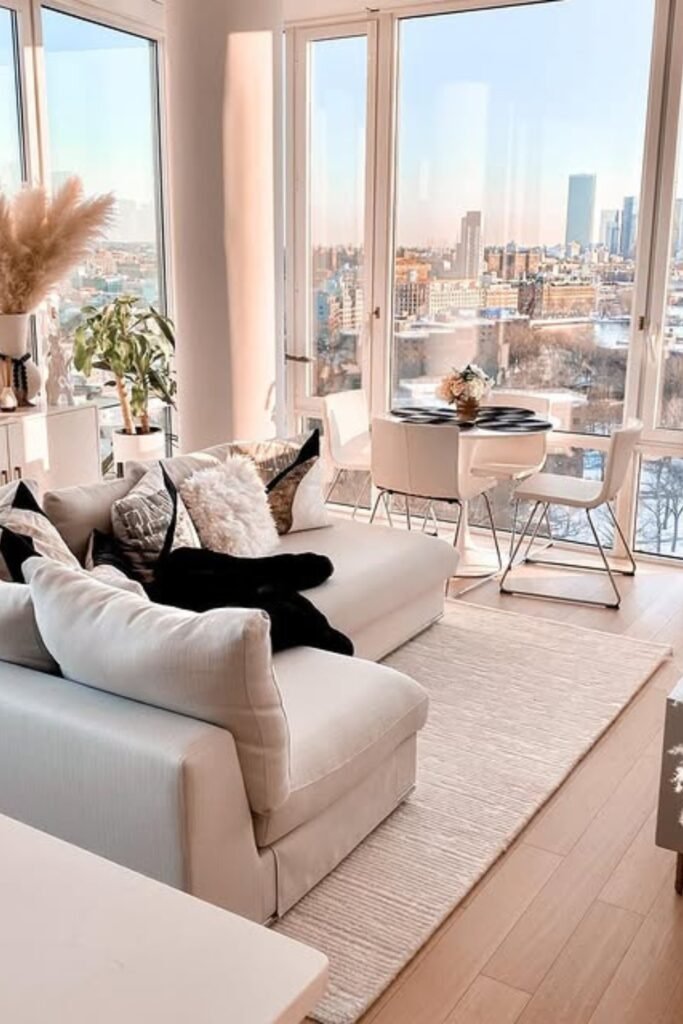
Mirror the Layout
When balance matters, symmetry does the heavy lifting.
In this living room, both couches float away from the walls and face each other, turning the fireplace into a shared focal point.
This works best in formal or traditional spaces where order feels right.
You can place your rug first, place matching sofas opposite each other, and keep equal spacing on both sides so the room feels calm, intentional, and easy to use.
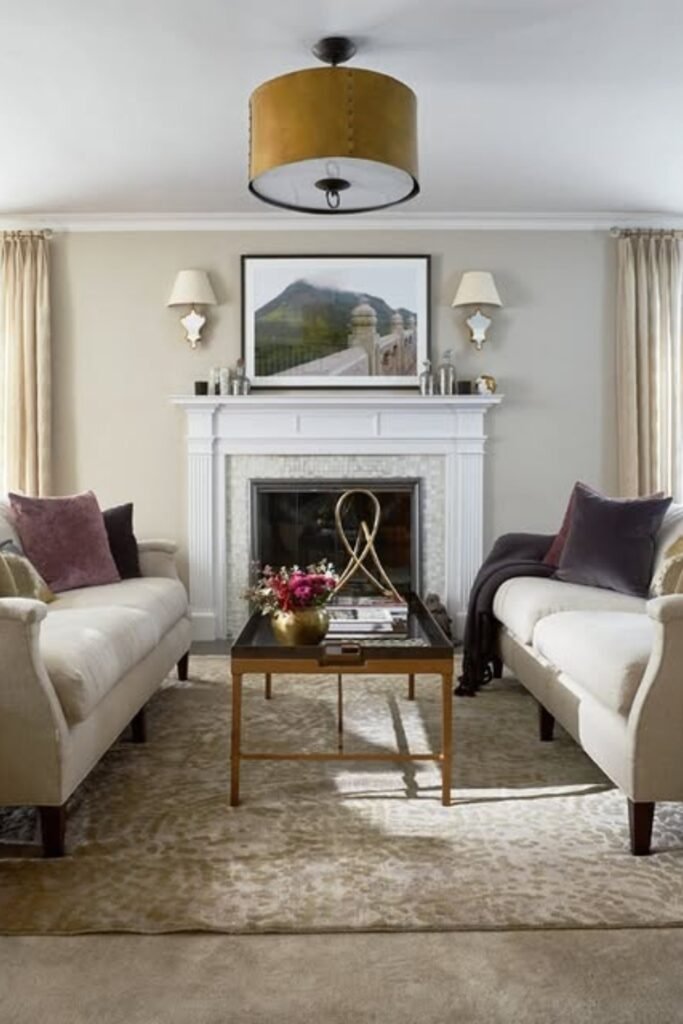
Build Behind Seating
When storage and seating need to work together, floating the couch makes room for both.
The living room places the sofa slightly forward so built-in shelves become part of the layout, not something squeezed above it.
This works best in compact or minimalist spaces where every inch matters.
You can pull the couch off the wall just enough to clear shelving depth, keep the palette calm, and let books and soft lighting finish the space without crowding it.
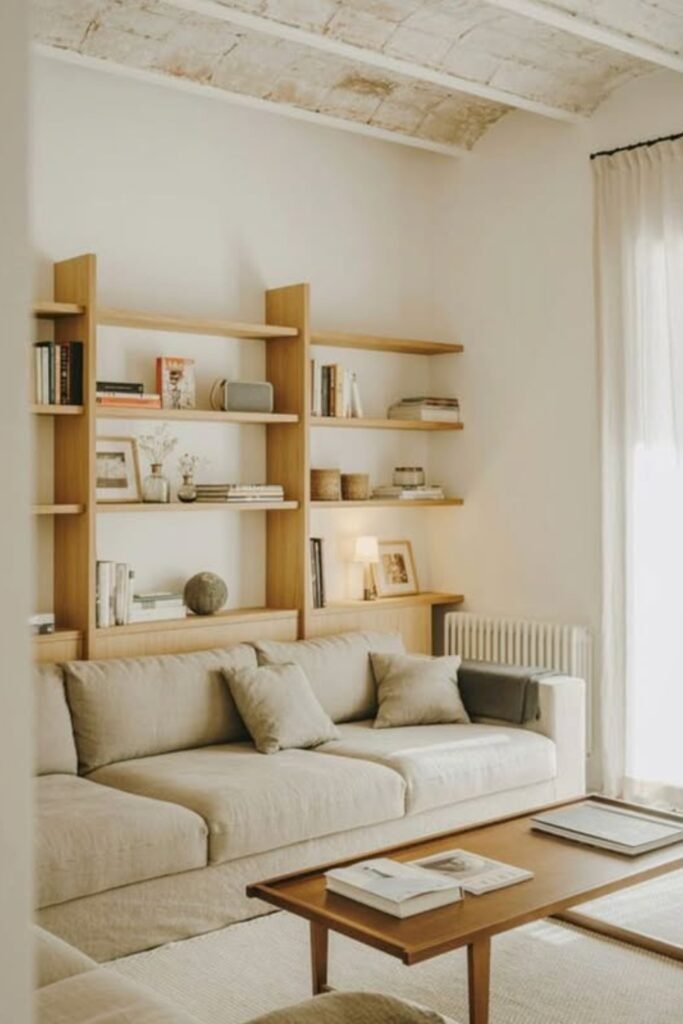
Pull It Forward
Sometimes the wall makes the room feel tighter than it is.
The couch sits a few inches forward so the corner can breathe and the seating feels less boxed in.
This works well in narrow or older rooms where walls close in quickly.
You can slide the sofa slightly off the wall, keep the floor lamp behind it, and let the extra space soften the layout instead of filling it.
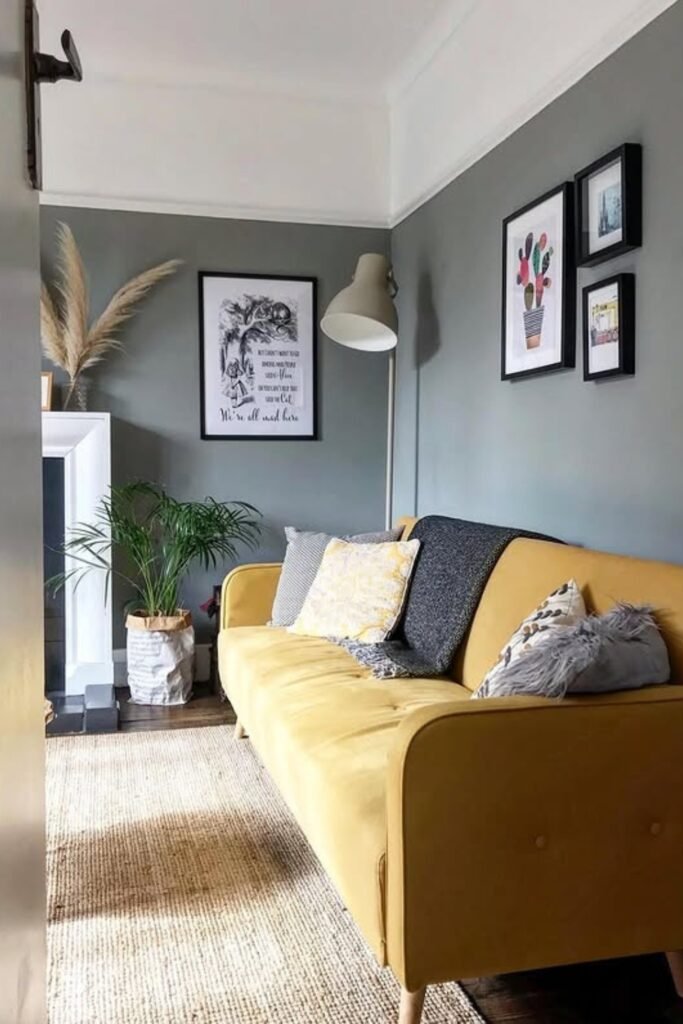
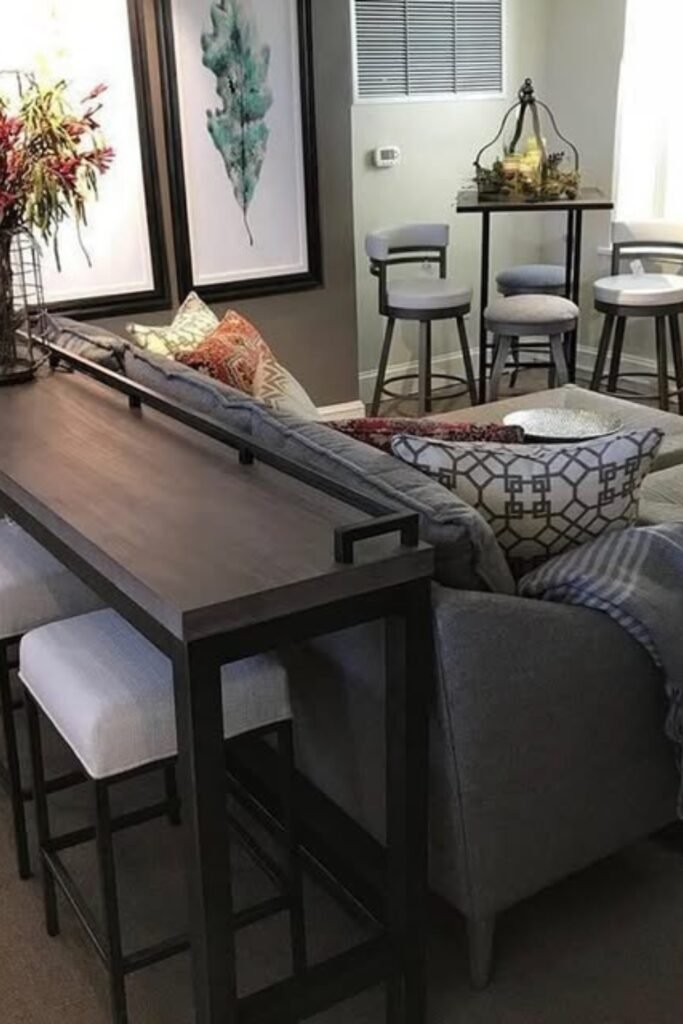
Add a Working Back
When the space behind your couch feels wasted, turn it into something useful.
In this living room, the sofa floats away from the wall so a narrow counter-height table doubles as extra seating and a casual dining spot.
This works best in apartments or open layouts where space has to multitask.
You have to leave enough clearance behind the couch, add a slim table, and keep stools tucked in so the layout stays clean and walkable.
FAQs
Is it okay to place a couch away from the wall?
Yes, and in many living rooms, that actually works better for you.
When you pull a couch away from the wall, you can create a clear seating zone, improve conversation flow, and make your room feel more intentional.
The key for you is giving the couch a purpose, whether you anchor it to a rug, a focal point, or use it to divide your space, so it never feels like it’s just floating randomly.
How much space should be left behind a couch not against the wall?
That really depends on how you plan to use your space.
You can leave a small gap of 6–12 inches to give yourself some breathing room. If you aim for around 24-36 inches, you’ll have a comfortable walkway.
You can even go deeper if you want to fit a console table, some storage, or a desk, as long as you make sure movement stays easy and comfortable for you.
