
19 Couch In Middle Of Living Room Ideas for 2026

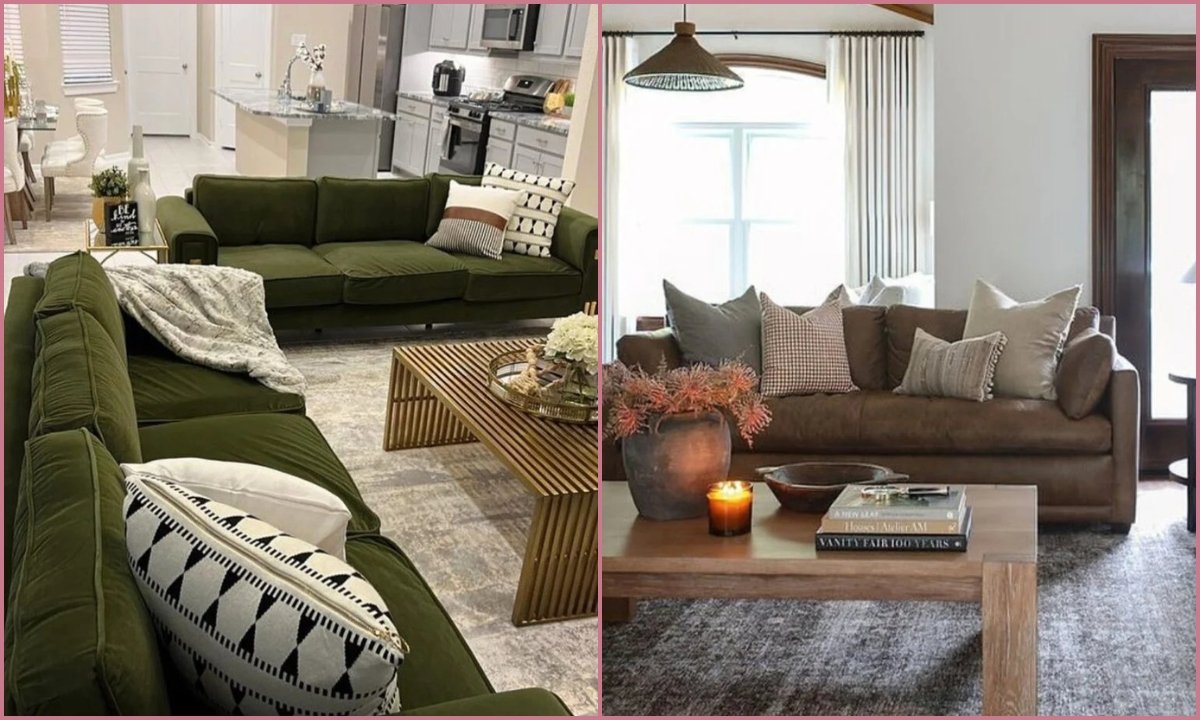
This article may contain affiliate links: read full affiliate disclosure.
You place the sofa in the middle of the living room, and you immediately feel it, you know something looks off.
You see the space, and you start noticing how awkward it feels, and you realize the sofa looks like it’s floating.
You might start wondering if you’ve made a mistake, and you probably will.
Because most people hit this point when they treat a middle-of-the-room sofa like a wall sofa, and you can’t really do that.
In this article, you will see exactly how you can style a sofa in the middle of the room with 19 unique ideas.
Let’s jump in!
How Can You Style A Sofa In The Middle Of The Room?
You can make your space feel intentional, balanced, and beautifully designed when you style a sofa in the middle of the room, and you will see how it changes everything.
Since you don’t have a wall to anchor it, you need to treat it as a focal point, and you should style it from every angle you can see.
You can start by defining the area with a rug. You’ll notice a large area rug helps you ground the sofa, and you will see how it separates the seating zone from the rest of the room.
You should make sure the front legs or ideally all legs, of the sofa sit on the rug so you feel the look is cohesive.
Next, you should style the back of the sofa thoughtfully.
You might place a console table behind it, and you can use it for lamps, books, decorative bowls, vases, or framed art.
You’ll instantly see how you can add visual interest and create a natural transition between spaces, especially if you have an open-concept layout.
You can layer cushions and throws, and you should mix textures, patterns, and complementary colors so you feel the sofa is inviting from every angle.
You will want to keep it balanced, but you don’t have to make it perfectly symmetrical, you’ll see how a relaxed feel works best.
You can add surrounding furniture to create flow. You might position accent chairs across from the sofa so you can easily form a conversation area.
You should include a coffee table in front and side tables on either end, and you can use floor lamps or table lamps so you feel the seating area is cozy and well-lit.
If you’re dividing spaces, like separating the living and dining areas, you should make sure both sides feel intentional.
You can place a bench, bookshelf, or decorative screen behind the sofa so you will see how it enhances the layout.
Finally, you should maintain clear walkways around the sofa so you can move easily and feel the room is open rather than cramped.
When you style it properly, you will notice how a centrally placed sofa adds depth, structure, and a designer-quality feel to your space, you can really make your living room shine.
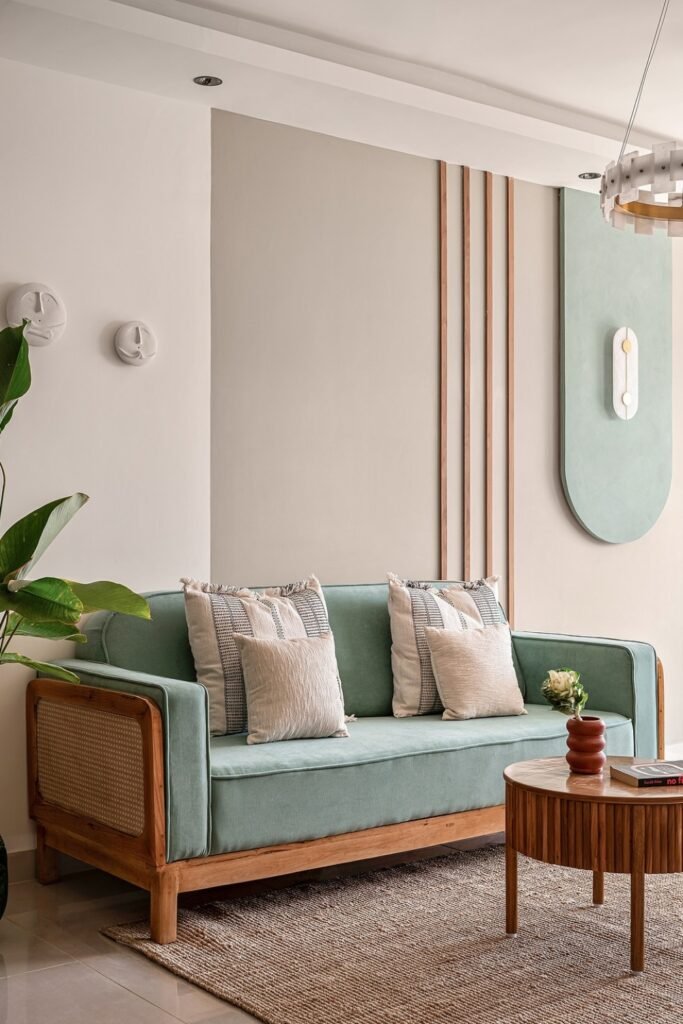
Design The Back
When your living room sofa sits away from the wall, the back side becomes part of the room, not something to hide.
This setup works best in modern or mid-century living rooms where clean lines matter.
You can use a soft color palette, vertical wall details, or simple sculptural elements behind the sofa to frame it visually.
You can keep accessories minimal so the sofa feels intentional, not boxed in, and let texture do the heavy lifting.
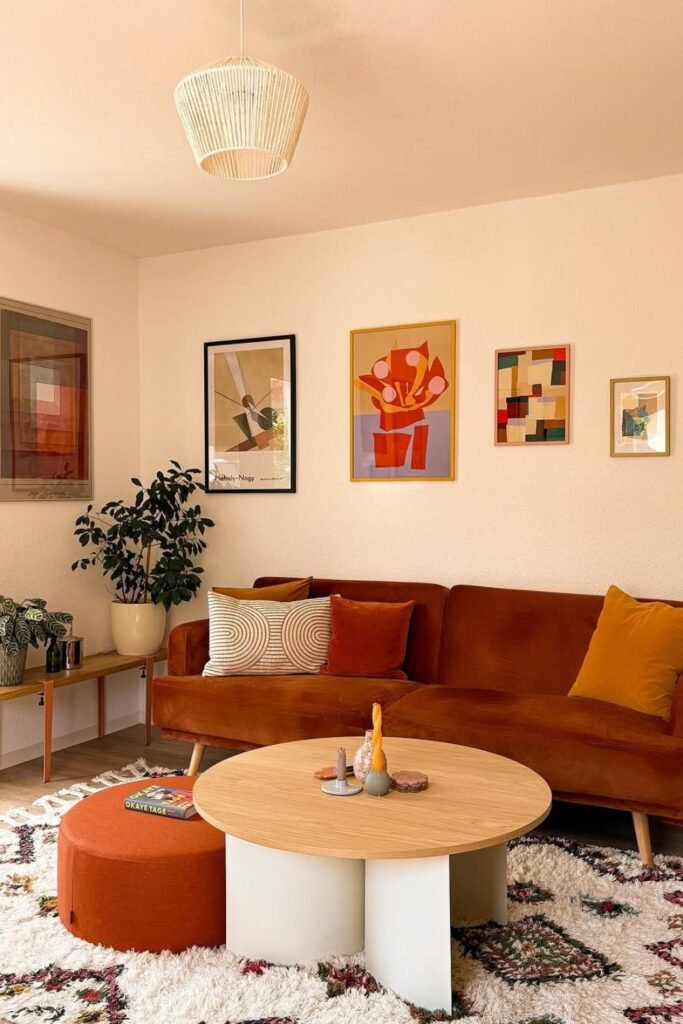
Center The Conversation
This living room works because the sofa doesn’t cling to the walls, it pulls the seating inward and lets the room breathe.
This setup fits best in medium to large living rooms where you want people to face each other, not the walls.
You can keep the sofa angled around a round or oval coffee table to soften the layout. A layer a bold rug underneath so the seating zone feels defined, not scattered.
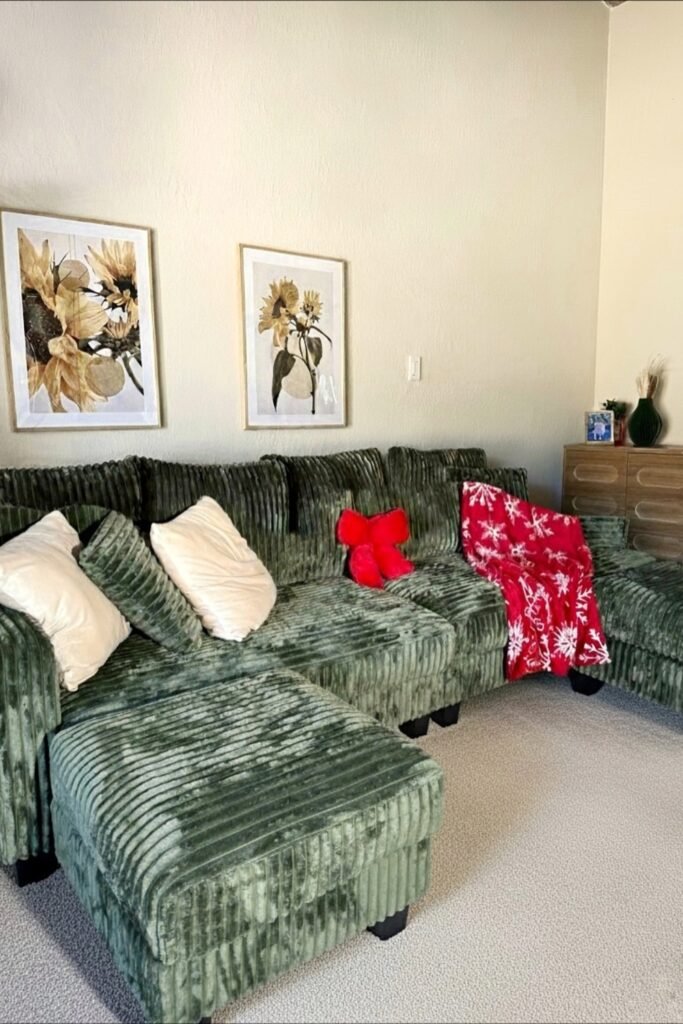
Float Sectional Confidently
A sectional like this works in the middle of a living room when you let it shape the space instead of fighting it.
This setup is best for larger living rooms where the sofa becomes the main organizer.
The angle the sectional to create a clear seating zone and keep open space around it so it doesn’t feel heavy.
Soft textures, layered cushions, and simple wall art help balance the size without cluttering the room.
Define The Zone
This living room works because the sofa doesn’t just sit in the middle, it claims its own zone.
This approach is ideal for open or spacious living rooms where walls aren’t doing the dividing.
You can place the sofa facing a clear focal point, then use a bench or low seating opposite to close the layout visually.
A large rug underneath ties everything together and makes the floating arrangement feel grounded instead of scattered.
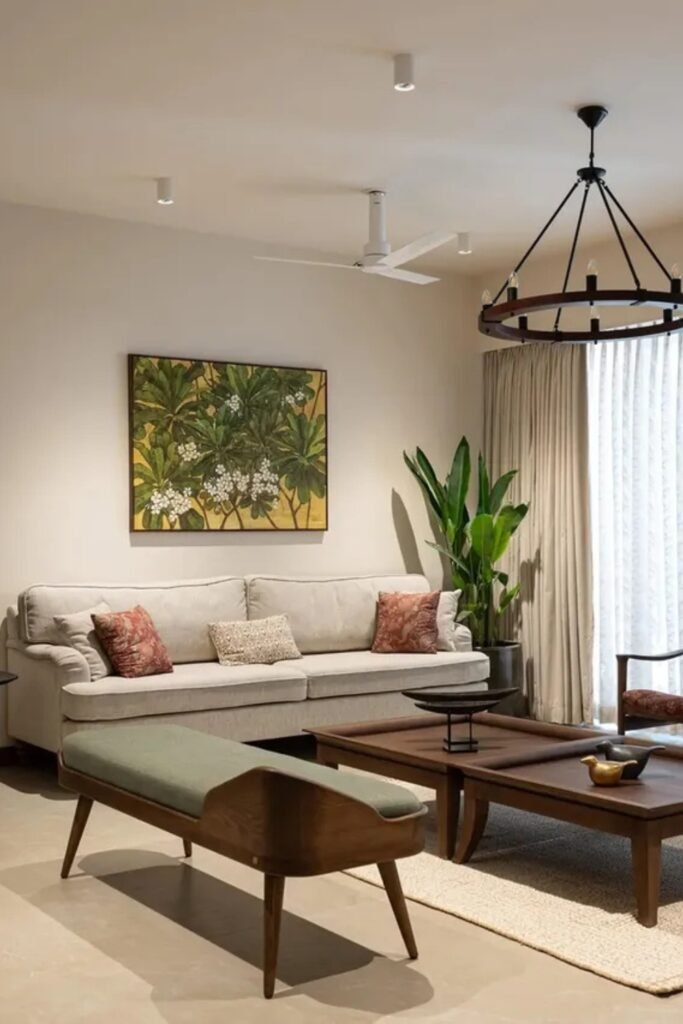
Balance With Negative
A floating sofa works best when you let empty space do part of the styling. In this living room, the sofa sits confidently in the middle because nothing crowds it.
The clean walls, simple art, and a single tall plant keep the layout calm and intentional.
You can recreate this look in modern or minimalist living rooms by resisting the urge to fill every corner.
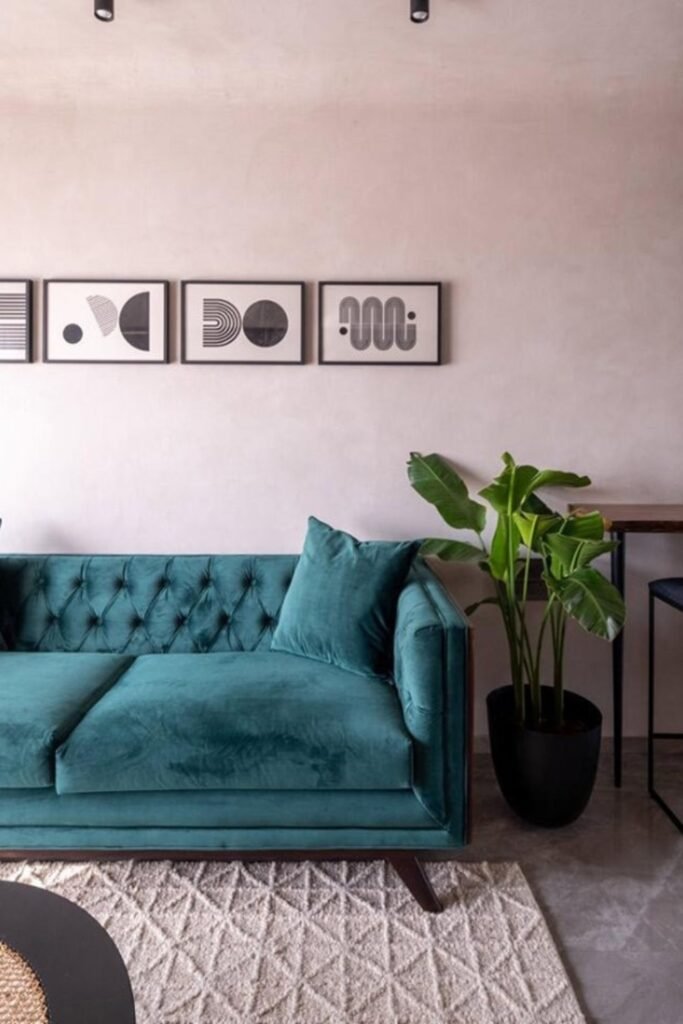
Face A Focal
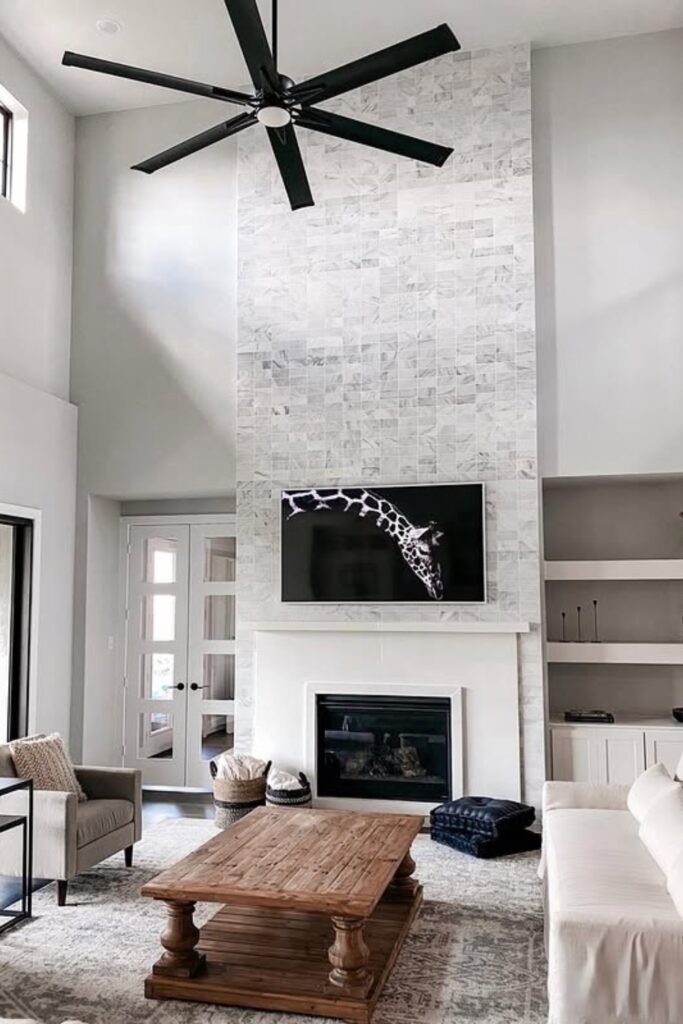
A sofa in the middle of the living room needs something strong to look toward, and a fireplace does that job perfectly.
This setup works best in tall or open living rooms where the focal point naturally pulls the layout together.
You can place the sofa facing the fireplace, then balance it with chairs on the sides to keep the space open.
A large rug and solid coffee table help lock the seating area in place so it feels grounded, not floating.
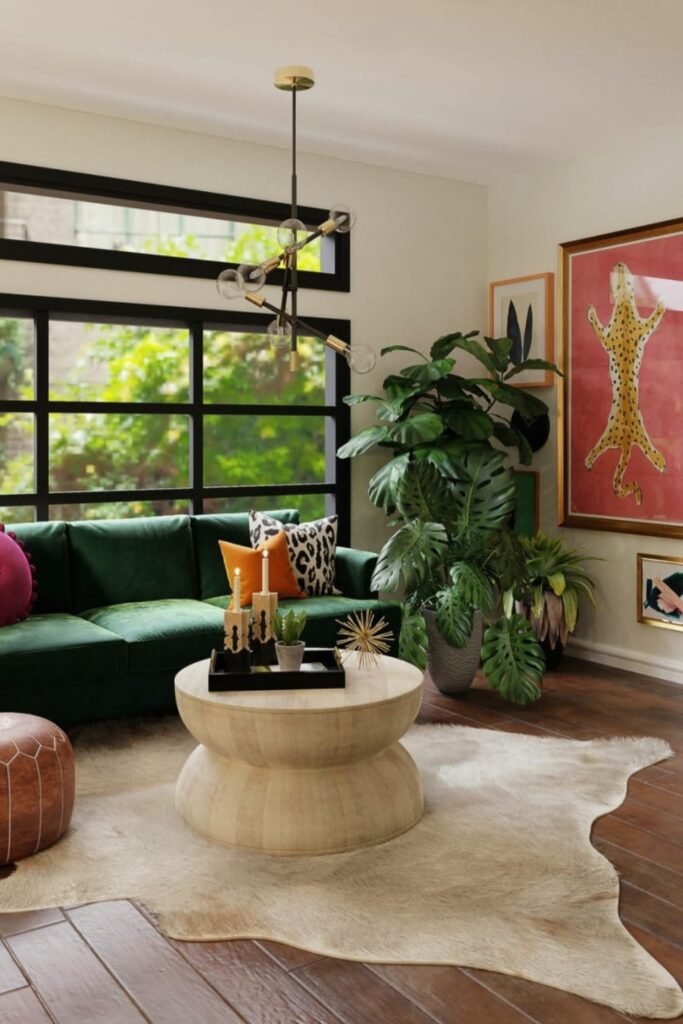
Layer Around Seating
A sofa in the middle of the living room feels right when the layers around it do the supporting work.
This setup shines in bright living rooms where natural light and color can play together.
You can start by grounding the sofa with a soft, oversized rug, then build outward using a sculptural coffee table, low poufs, and plants.
Art on the surrounding walls helps frame the seating area so the sofa feels connected to the room, not dropped into it.
Let Color Lead
A sofa in the middle of the living room feels intentional when color does the heavy lifting.
This setup works best in creative or eclectic living rooms where personality matters more than symmetry.
You can start with a neutral sofa, then pull it into the space using a bold rug and layered cushions that repeat the same tones.
The wall art above helps lock the palette in place, so the sofa feels connected to the room instead of standing alone.
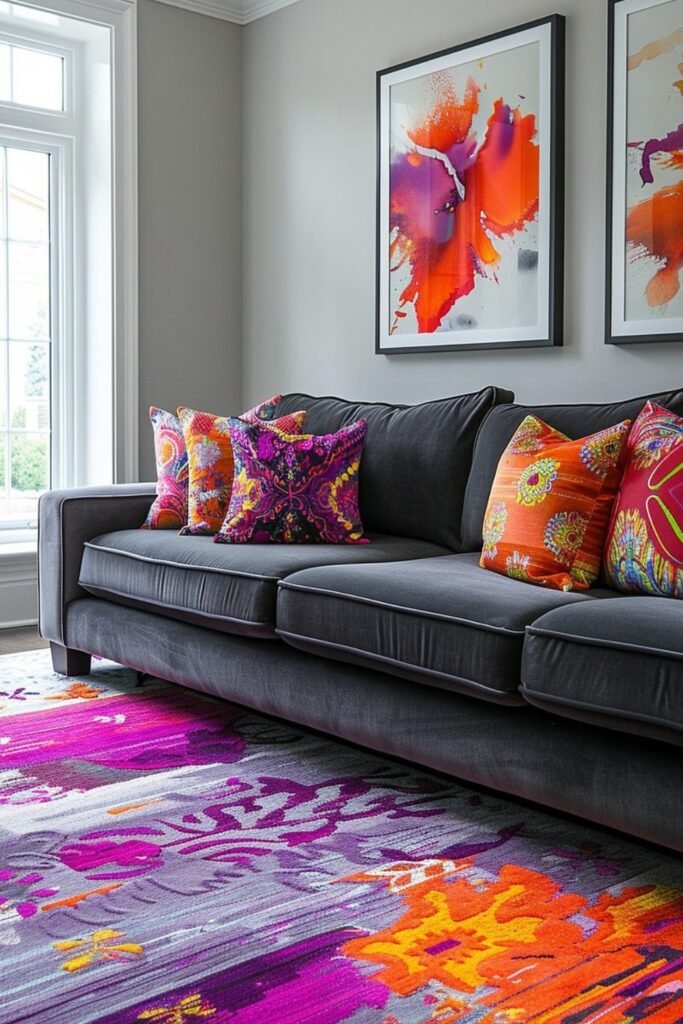
Create Clear Symmetry
A sofa in the middle of the living room feels right when the layout feels balanced from every angle.
This setup works best in larger living rooms where you want the seating to feel calm and grounded.
You can place sofas facing each other with a solid coffee table in between to create a strong center.
You can keep side tables and lamps consistent on both sides so the space feels intentional, not scattered, even without walls guiding the layout.
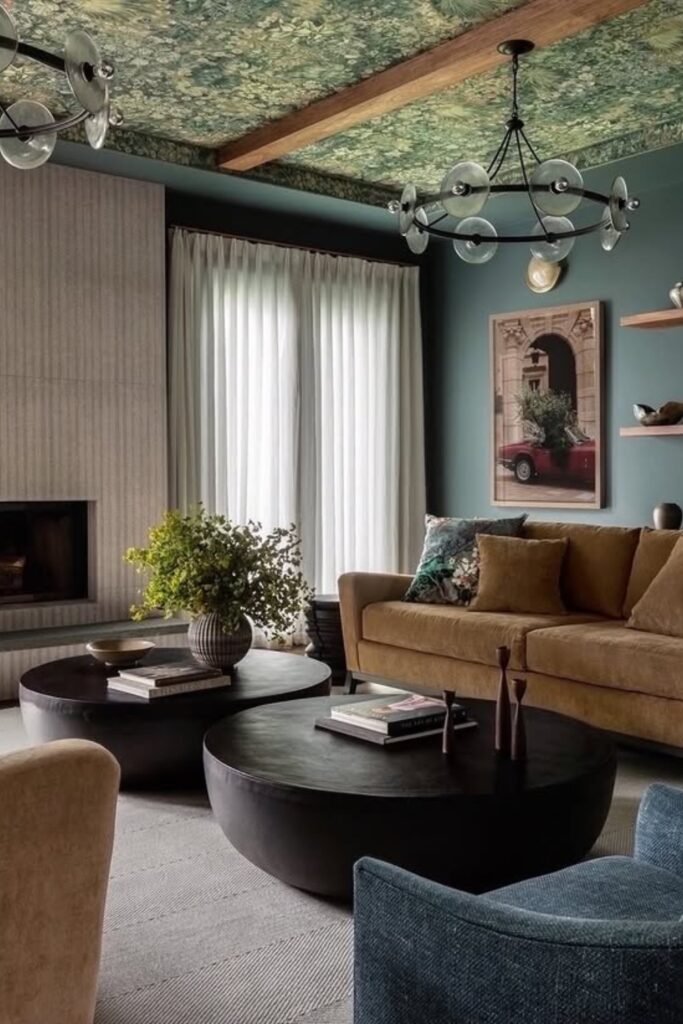
Ground With Layers
A sofa placed in the middle of the living room feels settled when the layers around it carry visual weight.
This approach works best in rich, cozy living rooms where texture and depth matter.
You can use a heavy coffee table, layered rugs, and warm upholstery tones to keep the seating area grounded.
Overhead lighting and ceiling details help pull the eye inward, so the sofa feels anchored within the room instead of floating on its own.
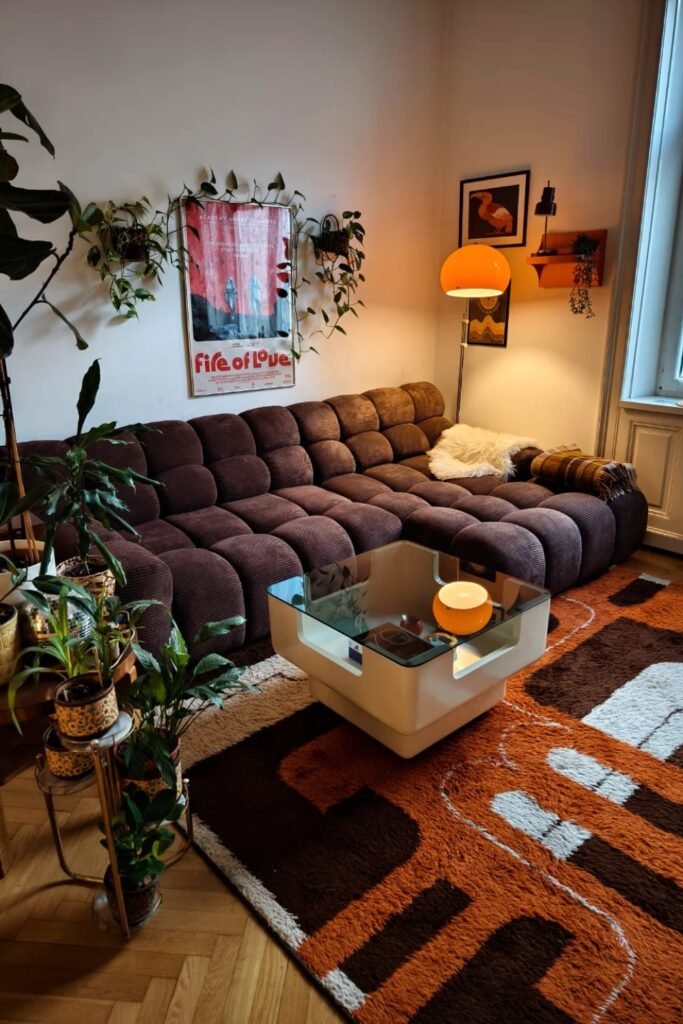
Embrace Cozy Depth
A sofa placed in the middle of the living room doesn’t have to feel formal to work.
This setup shines in lived-in, character-rich living rooms where comfort matters more than clean lines.
Deep seating, soft lighting, and layered textures help the sofa feel settled instead of exposed.
You can recreate this look by pairing a plush sofa with warm lamps, low tables, and a bold rug that pulls the seating area inward and makes it feel intentional.
Soften The Center
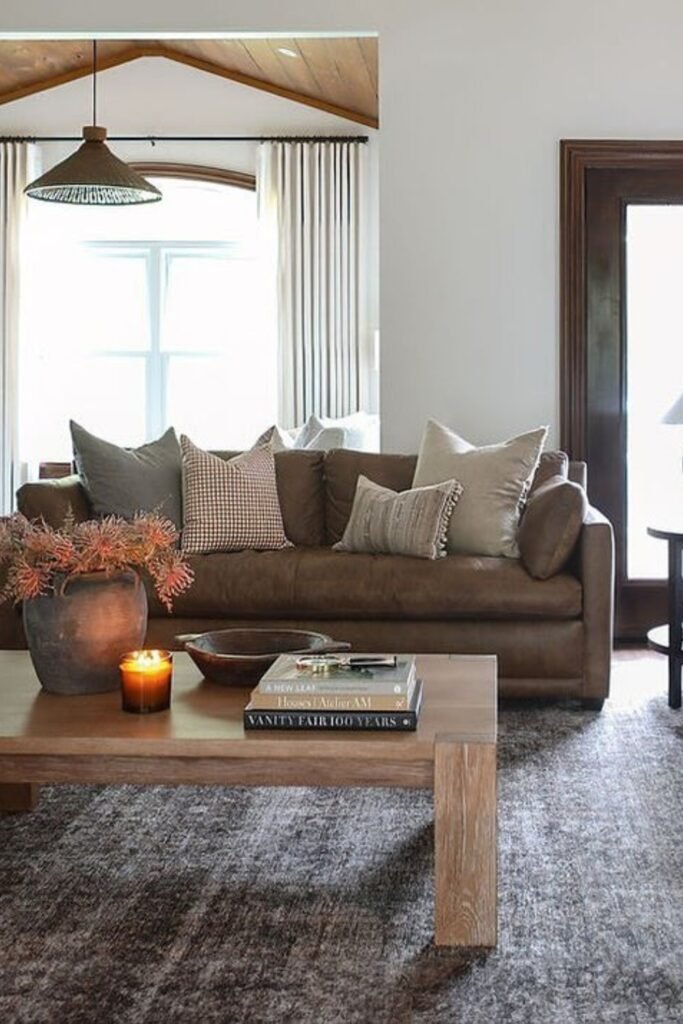
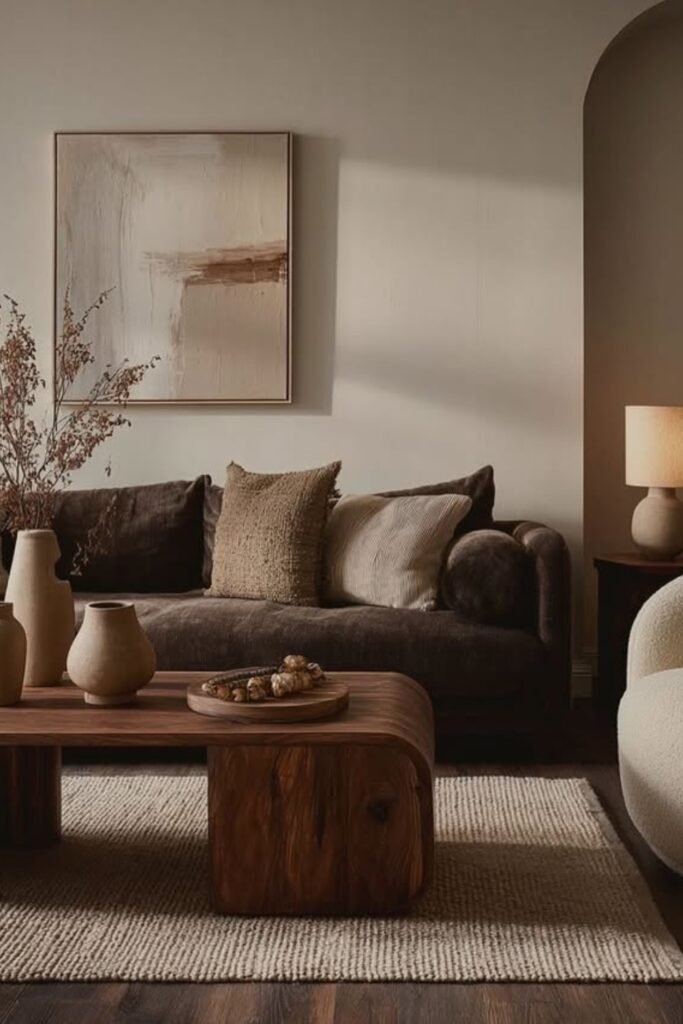
A living room sofa placed in the middle feels calm when the styling leans warm and grounded.
This approach works best in neutral or earthy living rooms where mood matters more than contrast.
You can use low wooden tables, textured cushions, and soft lighting to keep the center of the room relaxed instead of rigid.
The art and subtle decor behind the sofa help frame the space so the seating feels intentional, not exposed.
Frame With Contrast
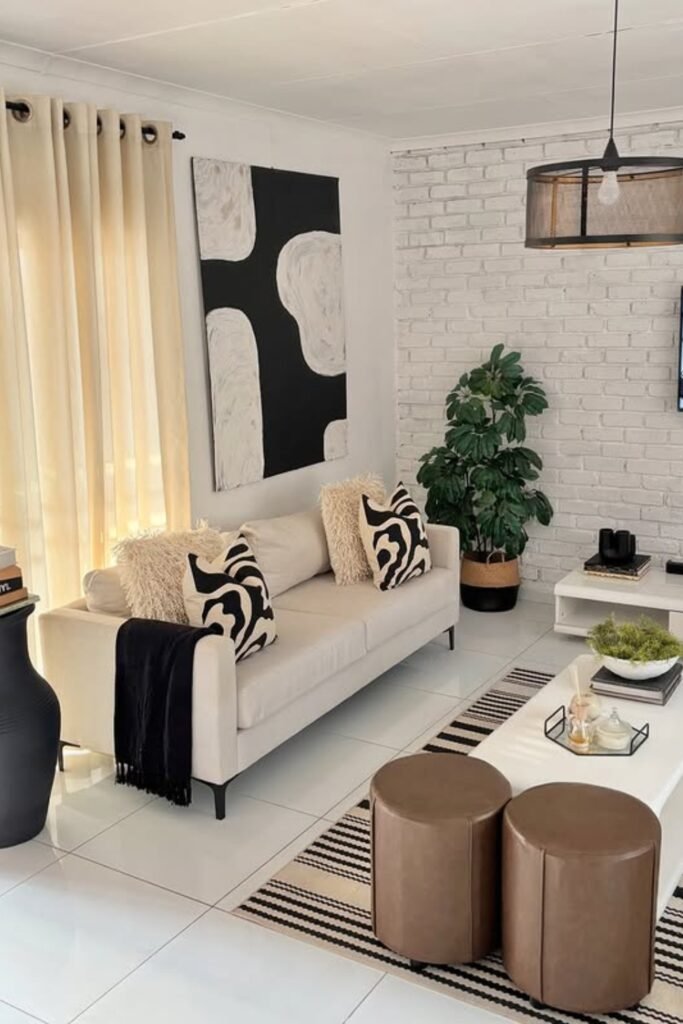
A sofa placed in the middle of a living room stands out when contrast does the framing.
This setup works well in clean, modern living rooms where light walls and simple finishes dominate.
You can use bold artwork, textured cushions, or dark accents behind and around the sofa to give it visual weight.
You can keep the furniture lines simple so the contrast feels intentional, not busy, and let the sofa hold its ground without needing walls for support.
Use Natural Flow
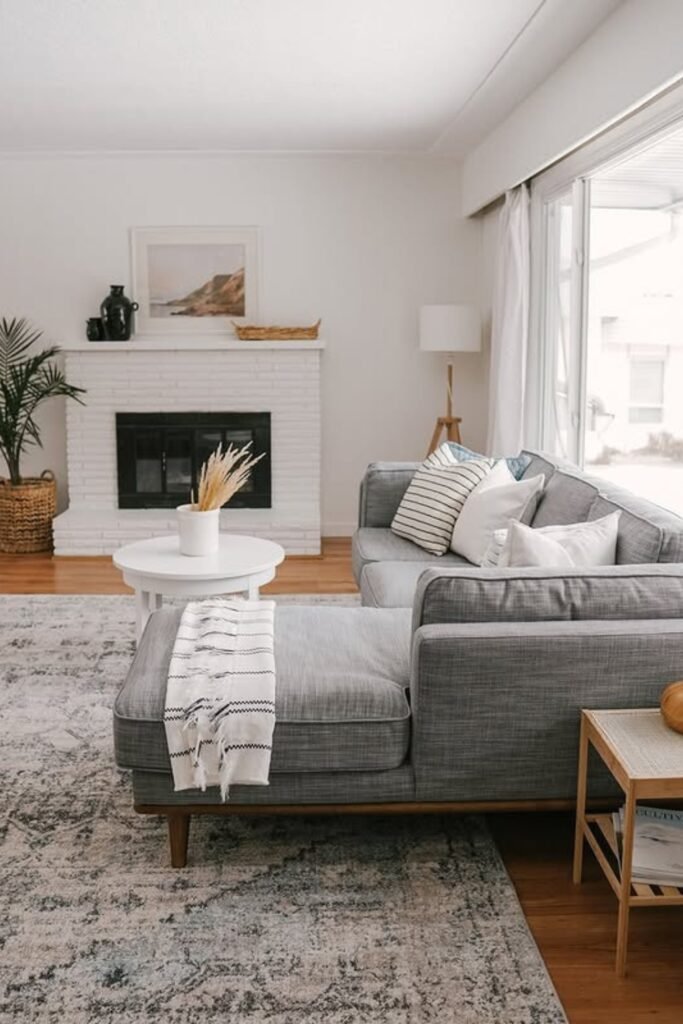
A sofa in the middle of the living room works when it follows how the room is already used.
This setup fits bright, everyday living rooms where light and movement matter.
The position the sofa to face the fireplace while keeping the window side open so the space doesn’t feel blocked.
A rug underneath defines the seating area, and light side tables keep things functional without closing the room off.
Back It Purposefully
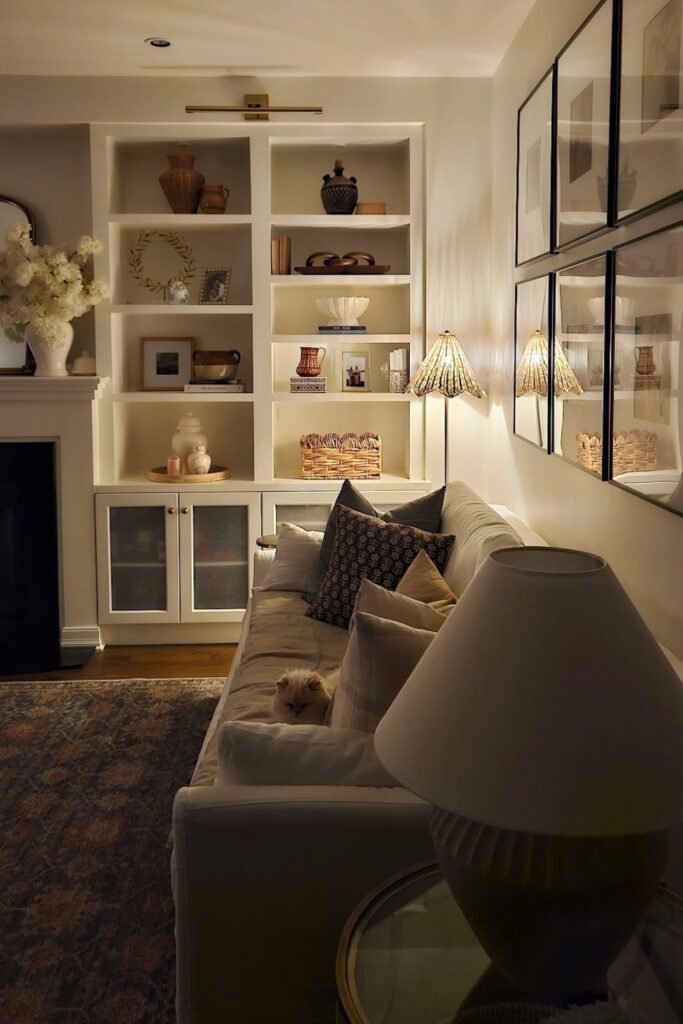
A sofa in the middle of the living room feels intentional when the space behind it actually works. This setup is ideal for living rooms with built-in shelves or storage walls.
Let the sofa face the room while the shelving adds weight and function behind it.
You can use warm lighting, balanced decor, and a few personal pieces so the back of the sofa feels like part of the design, not a leftover gap.
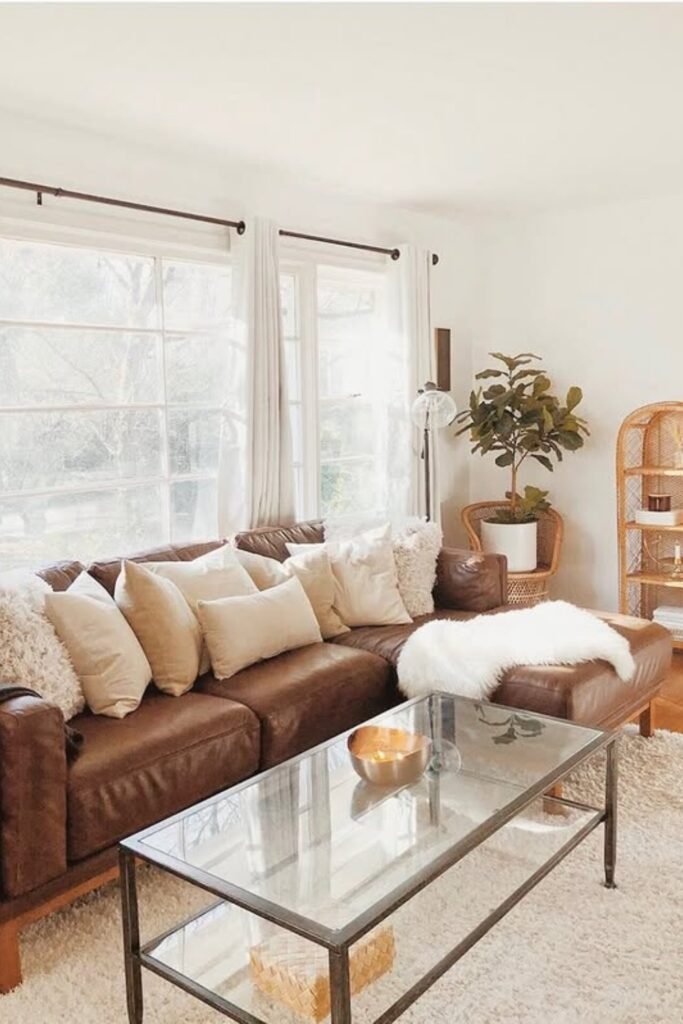
Let Light Lead
A sofa in the middle of the living room works beautifully when natural light stays uninterrupted.
This setup is ideal for bright living rooms with large windows where the sofa shouldn’t block the view.
You can keep the sofa low-backed and pair it with light fabrics so sunlight can flow through the space.
A glass coffee table and soft rug help define the seating area without adding visual weight, keeping the room open and easy.Divide Without Walls
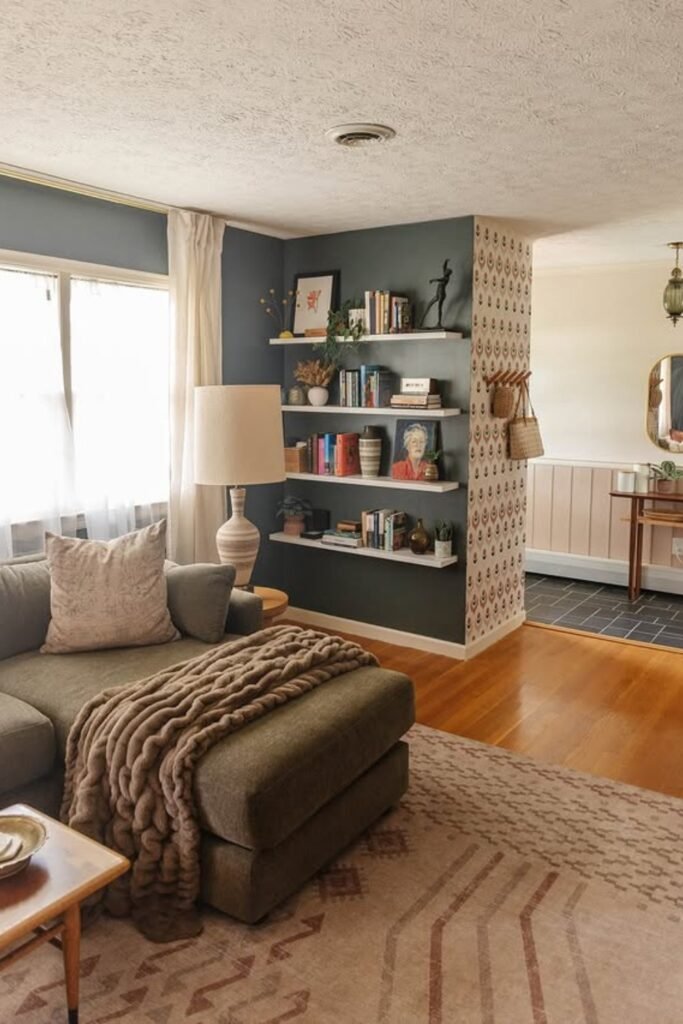
Divide Without Walls
A sofa placed in the middle of the living room can quietly separate spaces without making the room feel closed off.
This approach works best in open or semi-open living rooms where you want clear zones without building walls.
You can use the back of the sofa to define the living area, then support it with shelving or a console nearby for balance.
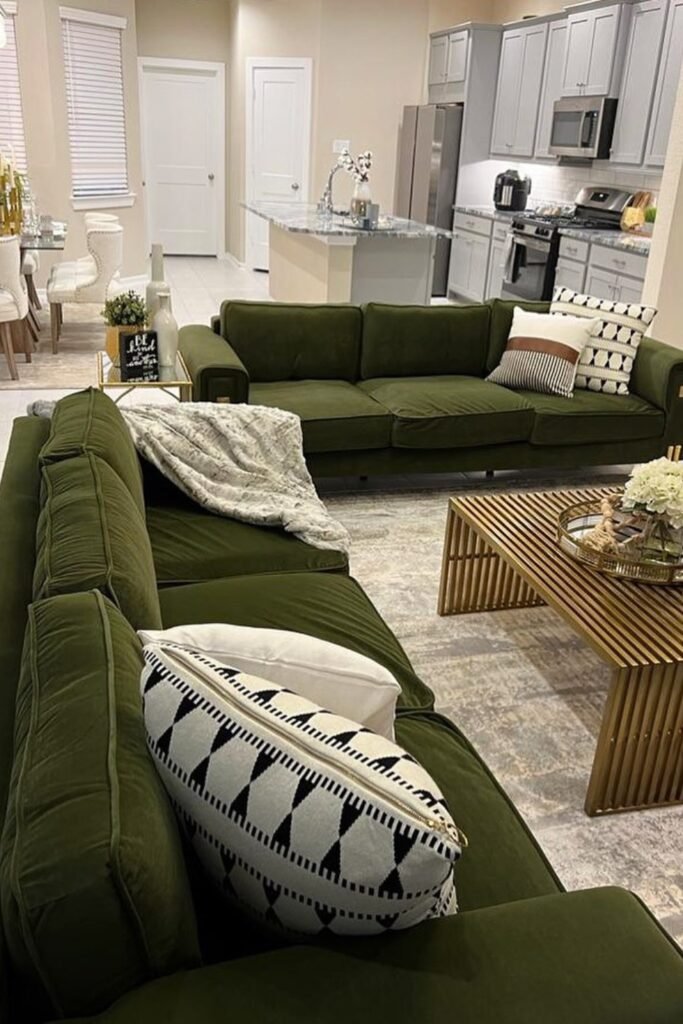
Separate Open Spaces
A sofa in the middle of the living room works best when it quietly draws a line between areas.
This layout is ideal for open-plan homes where the living room flows into the kitchen or dining space.
Let the sofa face inward toward the seating area while its back defines the boundary.
You can use a large rug and a solid coffee table to lock the living room zone in place, so the space feels organized without adding walls.
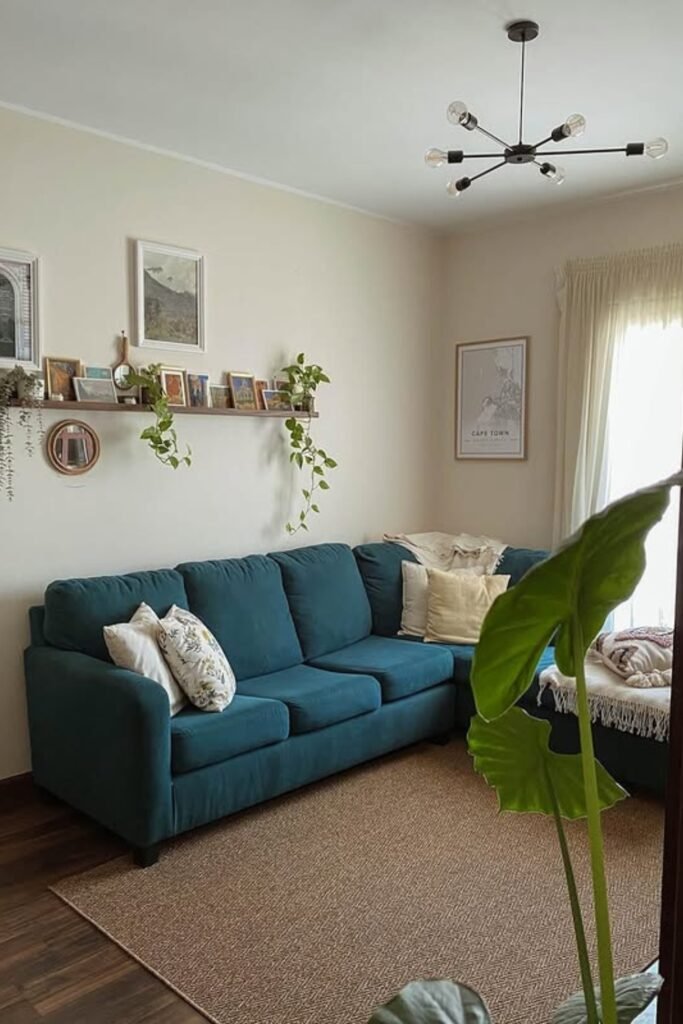
Keep It Airy
A sofa placed in the middle of the living room doesn’t have to dominate the space to feel intentional.
This setup works especially well in small to medium living rooms where you want the seating to feel present without closing the room in.
A slim sofa profile, a neutral rug, and open space around the edges keep the layout breathable.
You can use wall shelves, trailing plants, or small art pieces behind the sofa to add personality without visual weight.
Let natural light stay unobstructed, and keep accessories minimal so the sofa feels comfortably placed, not crowded.
FAQs
Can you put a sofa in the middle of a small living room?
Yes, you can place a sofa in the middle of a small living room, and you will see how you can make it work if you keep the layout light and purposeful.
You should make sure the sofa doesn’t block windows, doors, or main walking paths, you’ll want to feel free to move around.
You can choose a compact or low-profile sofa, and you should anchor it with a rug so you feel the space is grounded.
You will need to leave enough space around it so you can move easily, and you’ll notice how you can still make the room feel open and airy.
What should you place behind a sofa that sits in the middle of the room?
Behind a sofa in the middle of the room, you can add a slim console table, and you might place a low shelf, plants, or soft lighting so you feel the back of the sofa has a purpose.
You will see how these elements help you make the sofa feel intentional.
You will notice how you can prevent it from looking unfinished while you keep your living room balanced and functional.
You may like to read!
