
16 Beige Kitchen Cabinets Ideas For 2026

This article may contain affiliate links: read full affiliate disclosure.
You chose beige because it felt safe and neutral, something you thought you couldn’t mess up. But now you’re stuck.
Every color you try either washes you out, makes it look yellow, or turns the kitchen flat and boring. The white feels too sharp. The gray feels cold.
The wood can go wrong fast. If this sounds like you, this is where the confusion starts, not because beige is tricky, but because pairing it the wrong way changes everything.
In this article, you will see which colors work with beige with 16 beige kitchen cabinets ideas for 2026.
Let’s jump in!
What Color Best Compliments Beige?
The beige feels simple until you actually try to pair it with something, and that’s usually where you get stuck.
One color you try can suddenly make it look yellow, another can make it feel dull, and before you know it, your “safe” choice doesn’t feel safe anymore.
The truth is, beige doesn’t fail on its own, it reacts to whatever you put next to it, and you can feel that shift right away.
If you choose the right supporting color, you can make beige feel warm, balanced, and intentional.
But when you choose the wrong one, you might notice it starts to feel dated much faster than you expected.
Before you pick counters, walls, or hardware, you should understand which colors can bring beige to life and which ones can quietly ruin the whole look you’re trying to create.
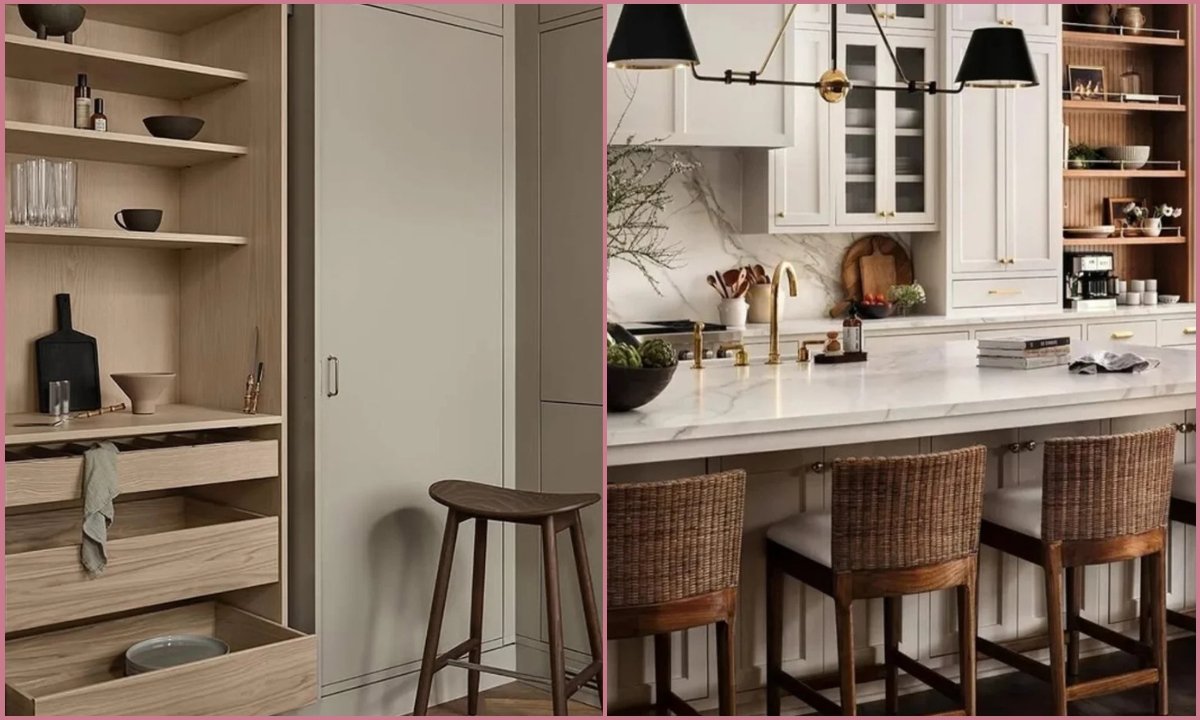
Hidden Warmth Moment
You can see how the light wood interior adds warmth right where beige can start to feel too smooth or flat.
This is a smart choice when you’re dealing with tall cabinet walls or pantry-style storage and you know beige will dominate the space.

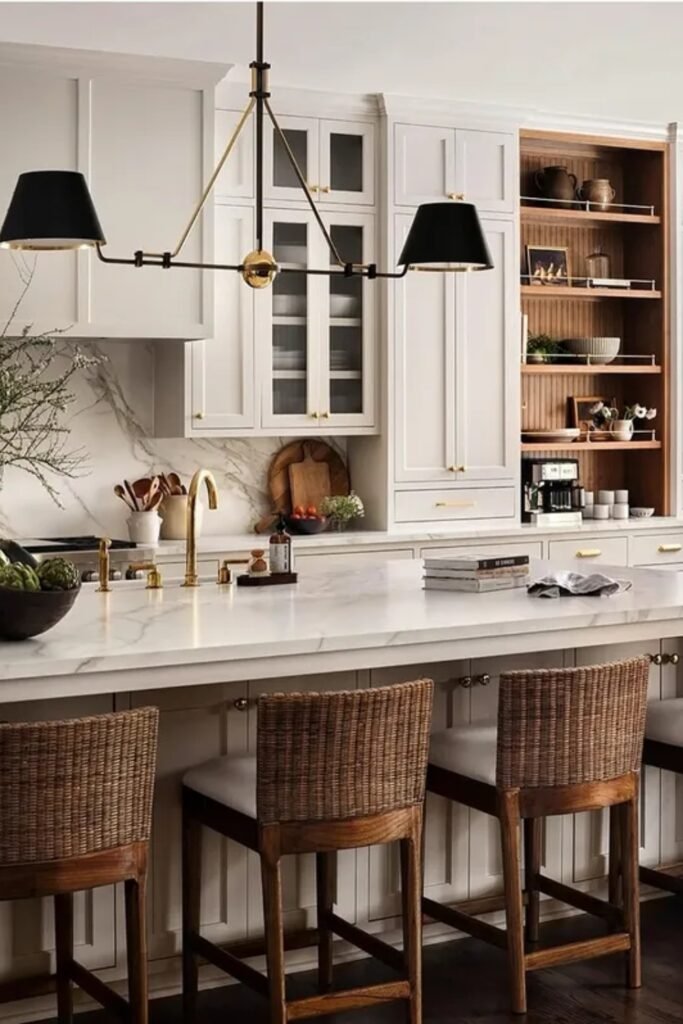
Crisp White Balance
The white countertops and backsplash help you stop beige from drifting into yellow territory and keep your kitchen feeling bright.
You should pair beige cabinets with white stone that has soft, subtle veining so the contrast feels calm instead of sharp.
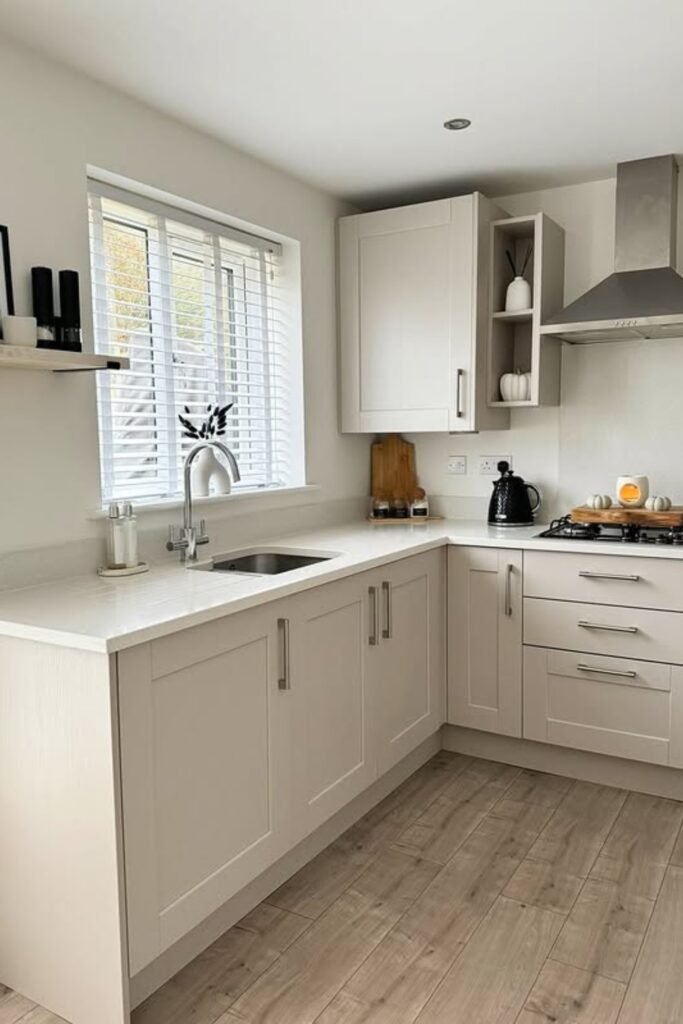
Soft Grey Support
This setup works best when you’re working with a small or medium kitchen and you want a clean look without harsh contrast.
To recreate it, you can choose light grey flooring or accents with neutral undertones, then keep beige consistent so the space feels balanced and easy on your eyes.
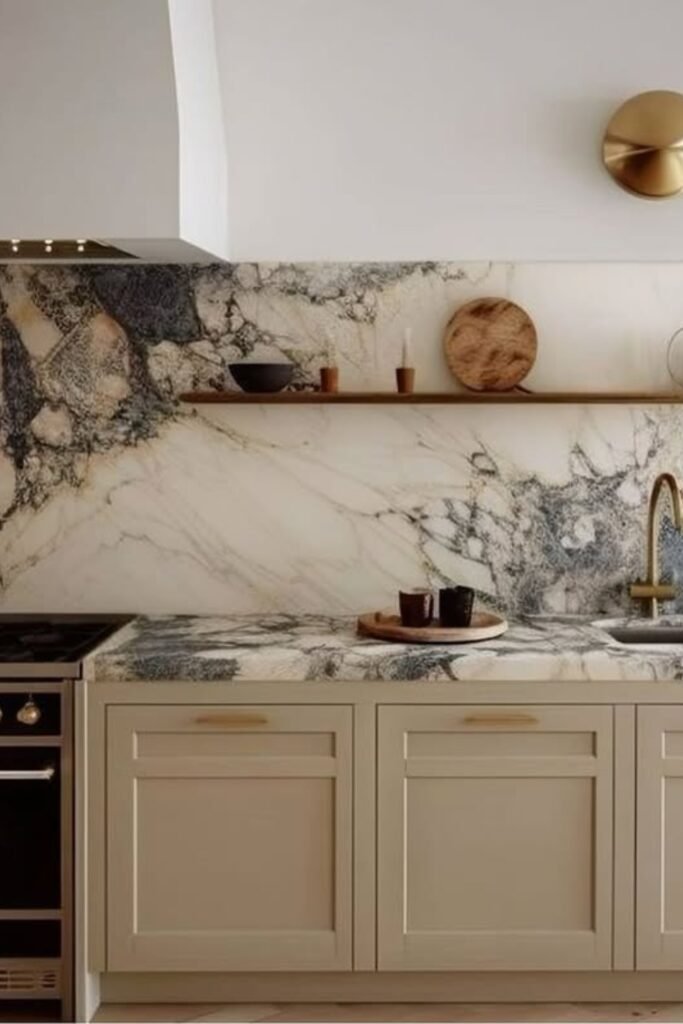
Stone-Led Contrast
The beige comes alive when you let stone take the lead, and you can really see it here. The bold veining gives beige something to play against, so it feels intentional instead of plain.
This approach works best when you want warmth with a little drama but don’t want to go dark.
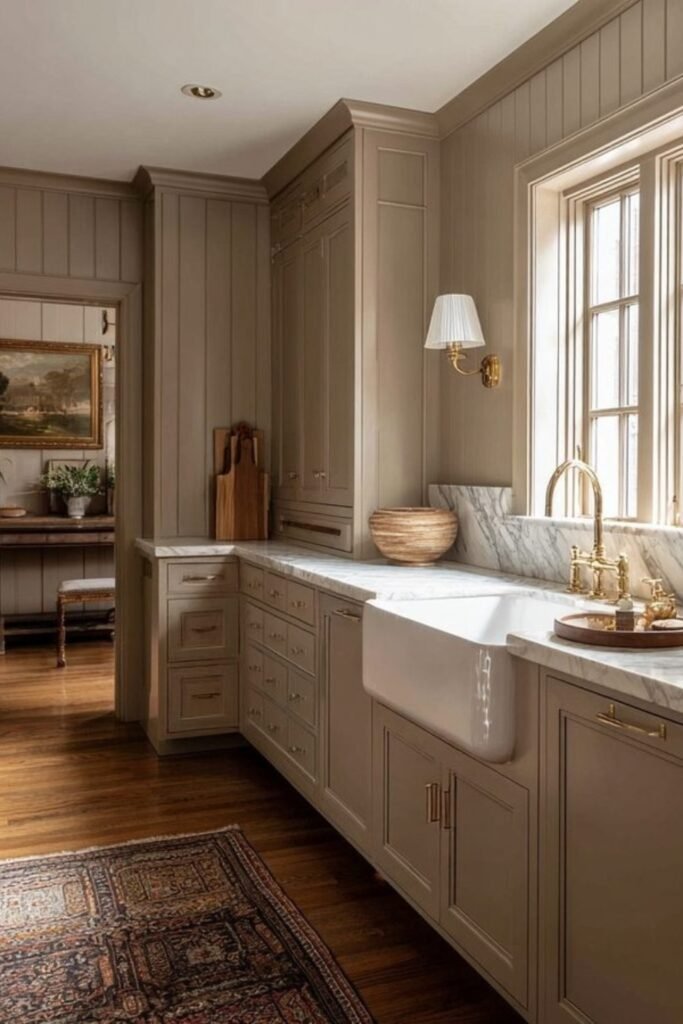
Warm Brass Accents
You should stick to one metal finish and repeat it across handles, faucets, and lighting so beige feels layered, not plain.
This works best when you’re aiming for a classic or transitional kitchen and you want warmth without heaviness.
Glass Softens Beige
By letting dishes and glassware show through, you add depth without introducing another color.
You can use clear or lightly frosted glass and keep what’s inside simple and neutral, so the focus stays on balance, not clutter.

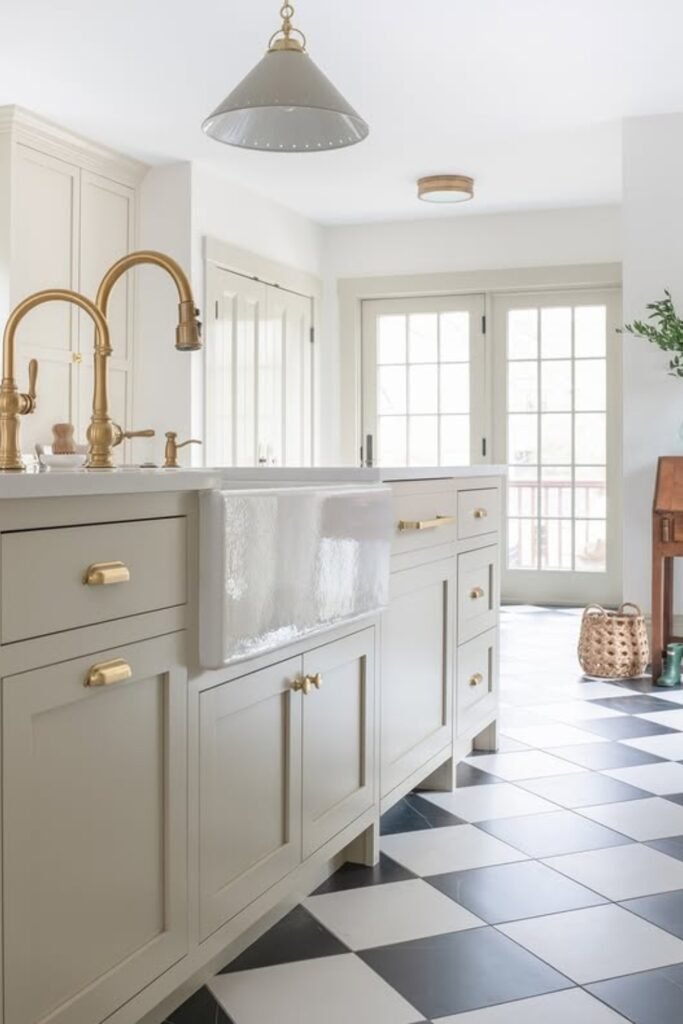
Pattern Grounds Beige
The bold black-and-white pattern underneath adds structure and keeps beige from drifting into bland territory.
You can keep the cabinets soft and neutral, then introduce a graphic floor pattern so beige feels intentional, not washed out.
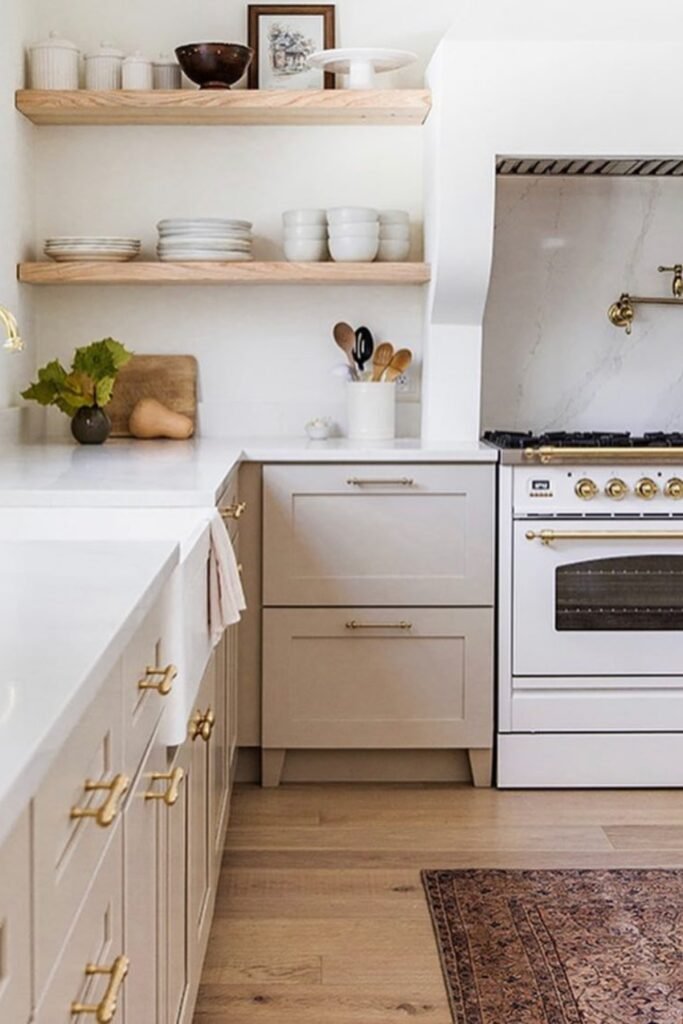
White Keeps Control
The bright countertops, backsplash, and range help you avoid that muddy or dull feeling, while warm brass adds just enough depth.
You can let white dominate large surfaces and use beige on cabinets to soften the space without losing clarity.
Soft Tile Buffer
Your beige cabinets stay calm when you place a soft, light backsplash behind them. The pale tiles here act like a buffer, stopping beige from feeling heavy while still keeping everything warm.
This works especially well in kitchens with lots of upper cabinets where color can stack up fast.

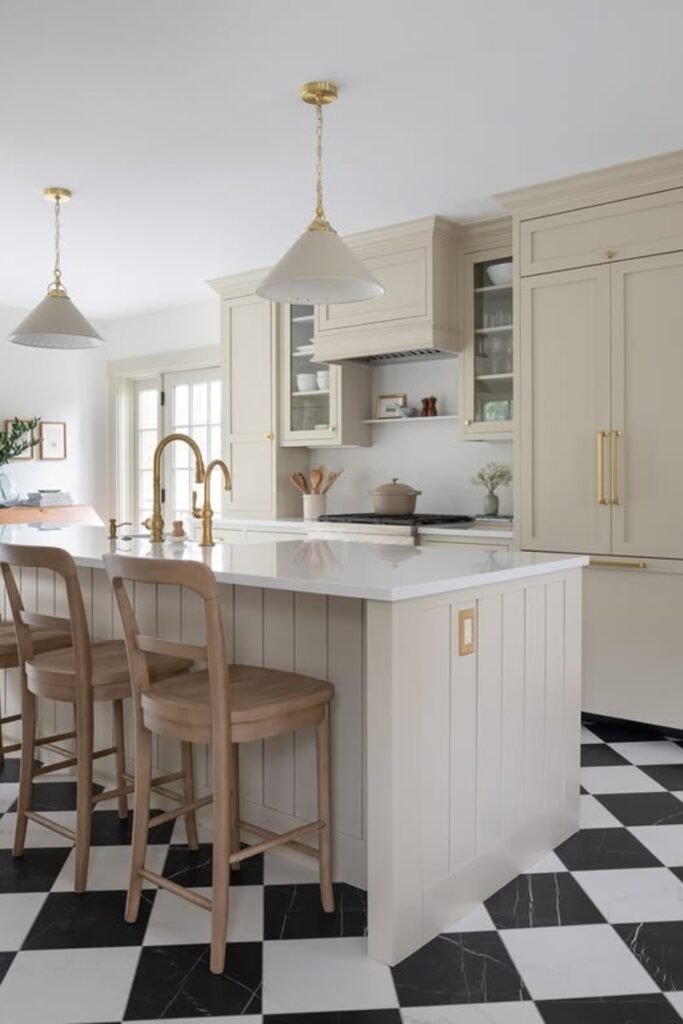
Black-White Foundation
If beige cabinets feel sharper when you sit them on a strong black-and-white base. The checkered floor adds structure and gives beige something solid to stand on.
To recreate it, you can keep cabinets warm and soft, then add a bold floor pattern to anchor the space. This works best in bright kitchens where you want a classic look with a little edge.
Muted Contrast Works
The black pulls give just enough contrast to define the cabinets, while the white backsplash keeps everything light.
It works best if you like beige but don’t want it to feel too soft. To recreate it, you should keep colors neutral and let hardware quietly sharpen the look.
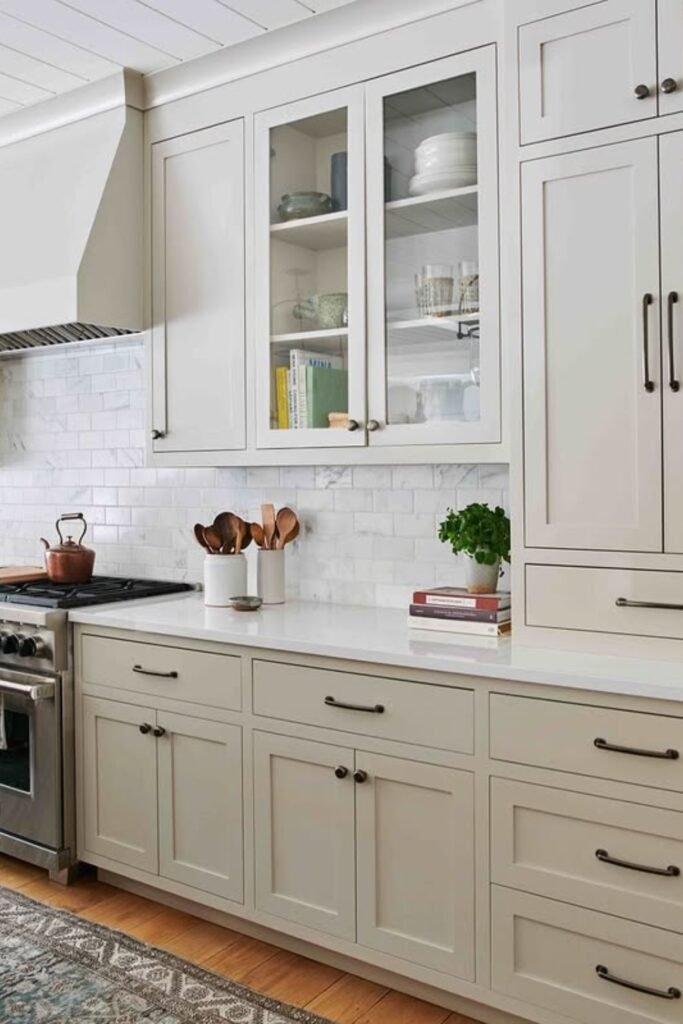
Earthy Layers Matter
The mix of wood, stone, soft fabrics, and greenery keeps the cabinets from feeling flat or overly polished.
This approach works best in kitchens where you want warmth and a lived-in feel, not a showroom look.
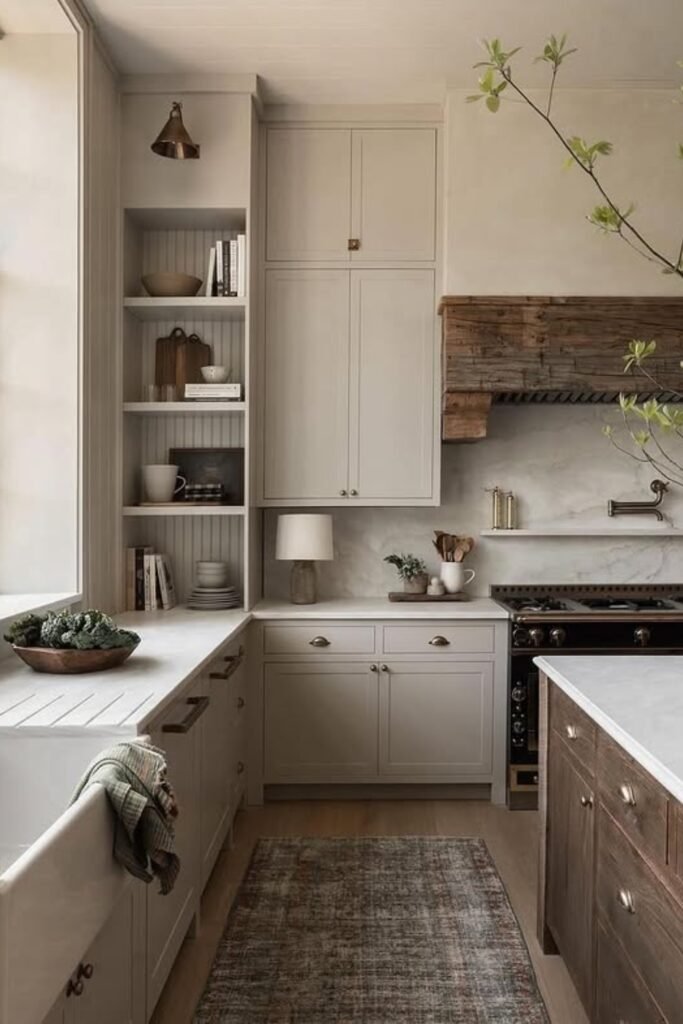
Subtle Shine Works
When the glossy backsplash here bounces light back onto the cabinets, keeping your color from looking dull or heavy.
You can pair beige cabinets with a light, shiny tile or polished surface so your space feels brighter without introducing a new color.
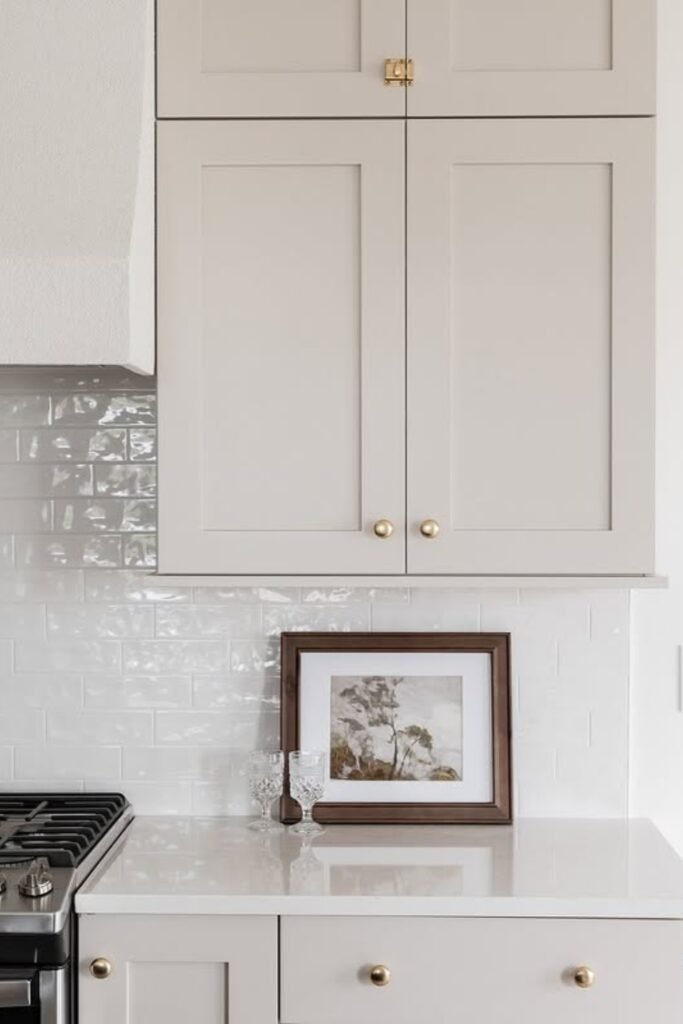
Brass Defines Beige
You can keep your cabinets and backsplash light, then repeat brass in hardware, faucets, and even lighting so beige feels intentional and well-balanced.
The brass faucet and handles here add contrast without overpowering the softness of beige, which keeps the kitchen warm but not dull.
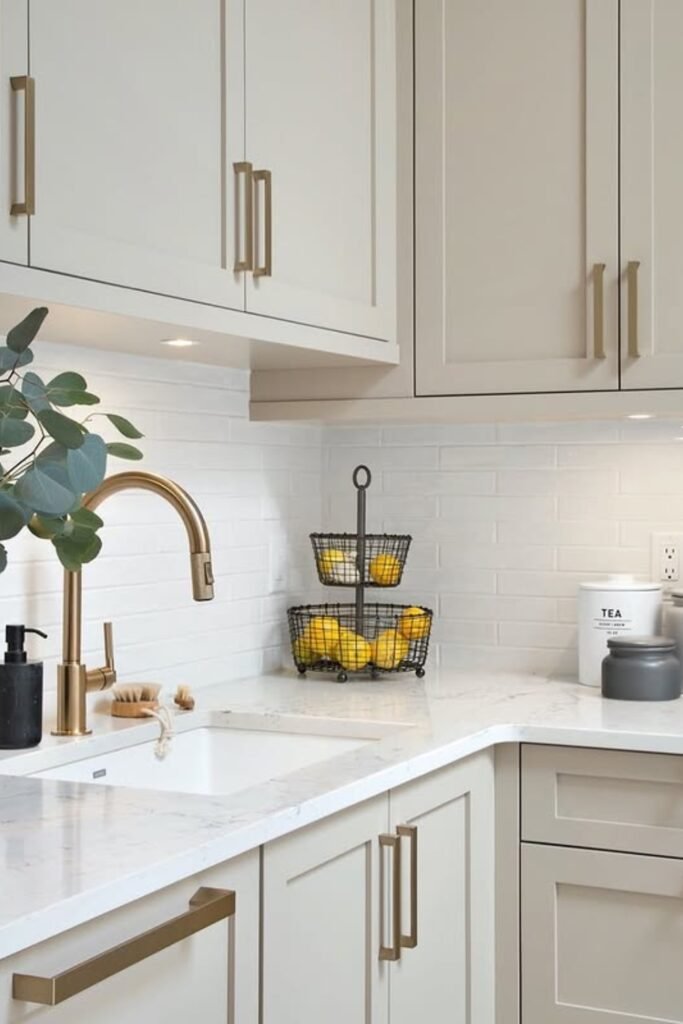
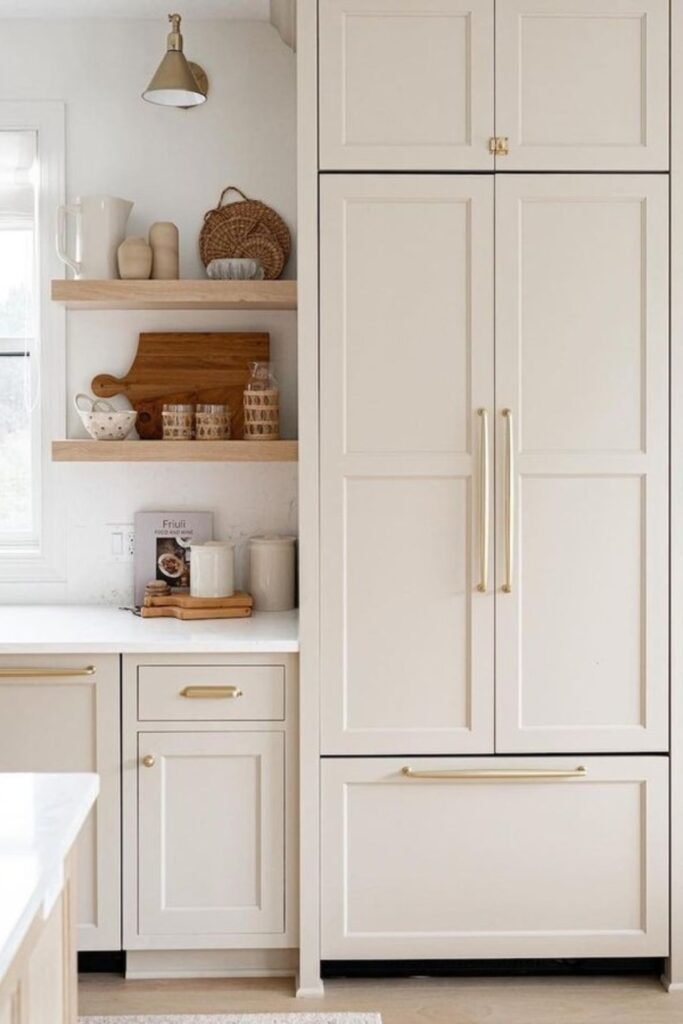
Open Shelf Warmth
Your light wood here adds warmth and keeps the tall cabinet run from feeling too closed off or heavy.
You can keep shelves simple, use natural wood tones, and style them lightly so they add warmth without turning into clutter.
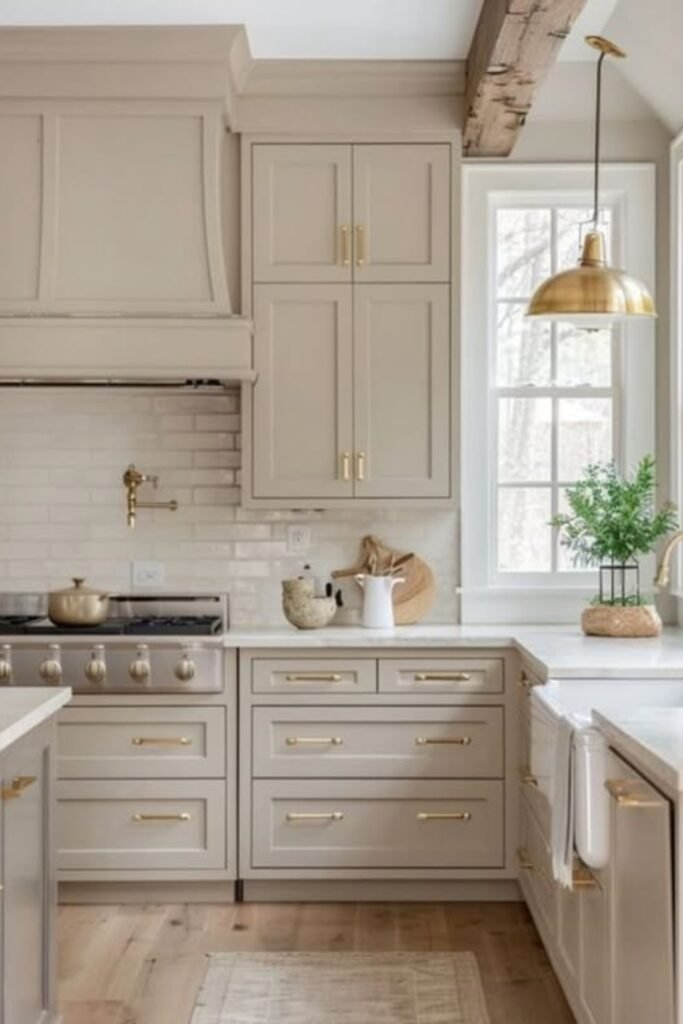
Warm Metal Focus
The brass hardware, faucet, and lighting here give beige a clear direction, so it reads rich instead of washed out.
You can commit to one warm metal finish and repeat it across key elements. When metal stays consistent, beige feels confident, layered, and far from boring.
FAQs
Do beige kitchen cabinets go with white?
Yes, beige and white can work extremely well together when you use them with intention.
White helps you keep beige from turning yellow or dull, especially when you use it on countertops, backsplashes, or walls.
If your beige leans warm, you should stick to soft whites instead of sharp, icy tones.
This kind of balance can help you make beige feel clean and fresh while still letting your space stay warm and inviting.
Are beige kitchen cabinets outdated?
The beige cabinets only feel outdated when you pair them the wrong way. Your flat beige with no contrast, texture, or warmth can make you feel like the space is stuck in the past.
But when you add the right elements like white surfaces, warm metals, wood, or soft grey accents, you can make beige feel fresh, current, and timeless.
The key is not the color itself, it’s how you choose what goes next to it.
You may like to read!
