
23 Bedroom Layout Ideas For 2026

This article may contain affiliate links: read full affiliate disclosure.
You move your bed to one wall, then to another, and then you start shifting the wardrobe, hoping something will finally click.
You try pushing everything into the corners, but the room still feels awkward, cramped, or just off.
That usually isn’t because your bedroom is too small or because you picked the wrong furniture. It’s because the layout isn’t working the way it should.
In this article, what is the best layout for a bedroom, and also share 23 bedroom layout ideas you can try.
Let’s jump in!
What Is The Best Layout For A Bedroom?
The best bedroom layout is the one that lets you move around easily, sleep comfortably, and use your space without ever feeling blocked or cramped.
You should start with the bed first because everything else in your room depends on it.
Place it against a solid wall where it won’t block doors or windows, and you’ll see how much smoother your space can feel.
If you can walk around your bed without squeezing, you know your layout is working.
If you can’t, you’ll notice that the room will always feel tight, no matter how nice your furniture looks.
A layout that works for you should support your daily life first, before it even looks good.
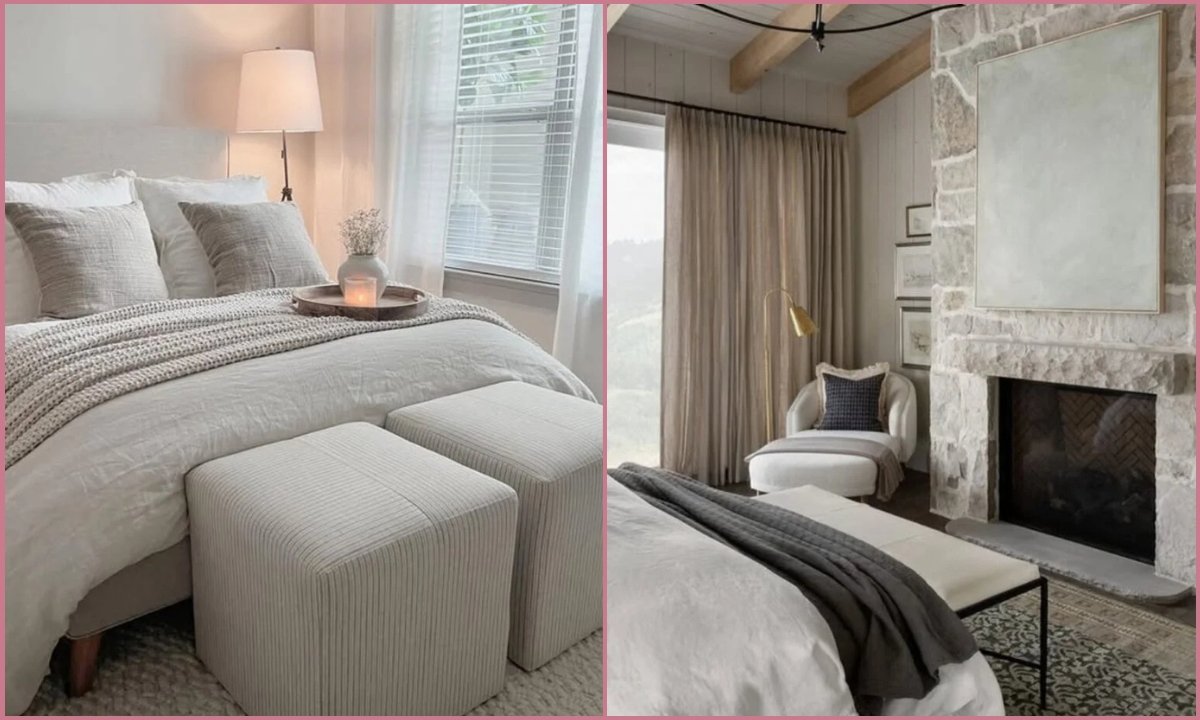
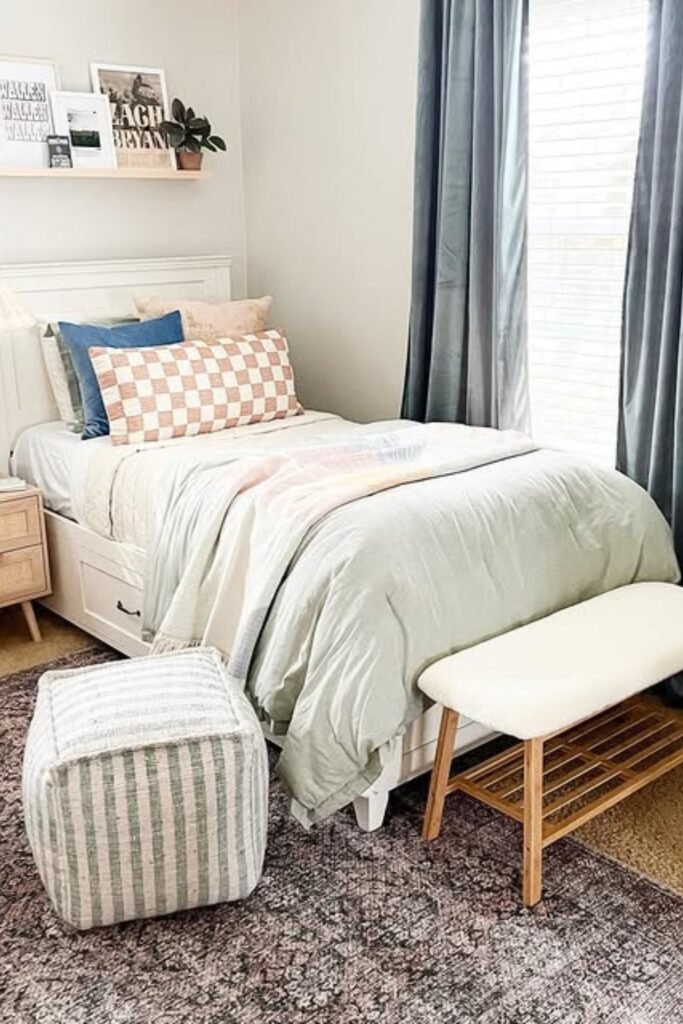
Flexible Foot Seating
You can use the space at the foot of the bed to add function without crowding the room.
The low cube stools work best when you want extra seating but don’t have room for a bench.
They slide in neatly, keep walkways clear, and give you a place to sit while dressing or laying out clothes.
This setup works especially well in small or calm, neutral bedrooms where bulky furniture would make the layout feel heavy.

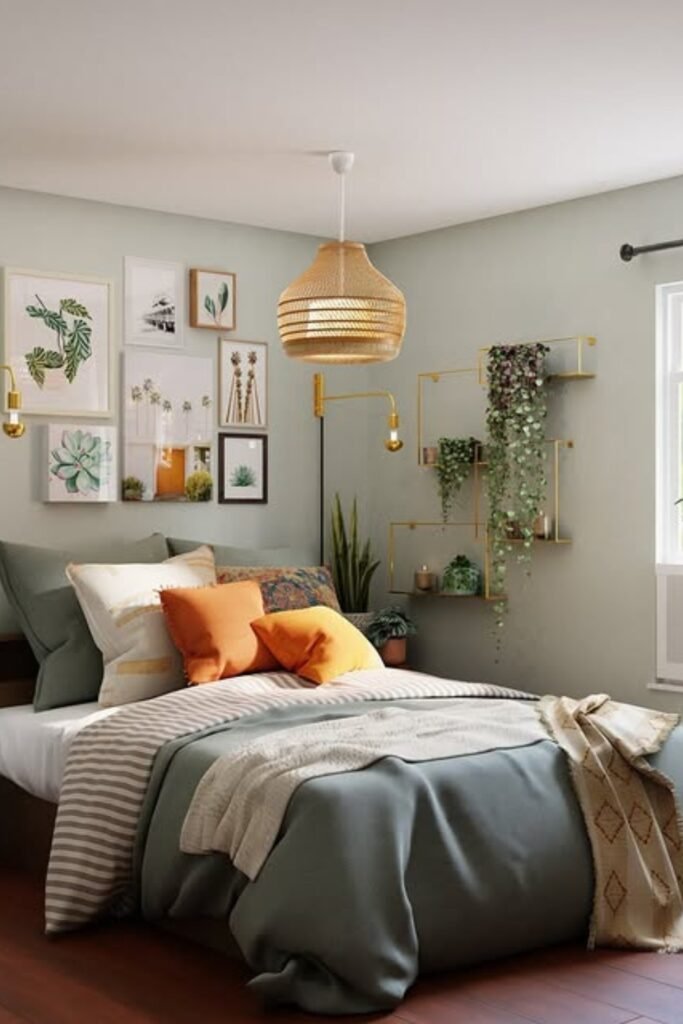
Cozy Green Retreat
Let the bed sit slightly off the wall to create room for plants, shelves, and soft lighting around it.
This layout works best in medium-sized bedrooms where you want the space to feel calm, not crowded.
You can use wall-mounted shelves instead of bulky furniture to keep the floor open.
The layer greenery, warm lighting, and soft textiles so the room feels relaxing without relying on extra furniture to fill it up.
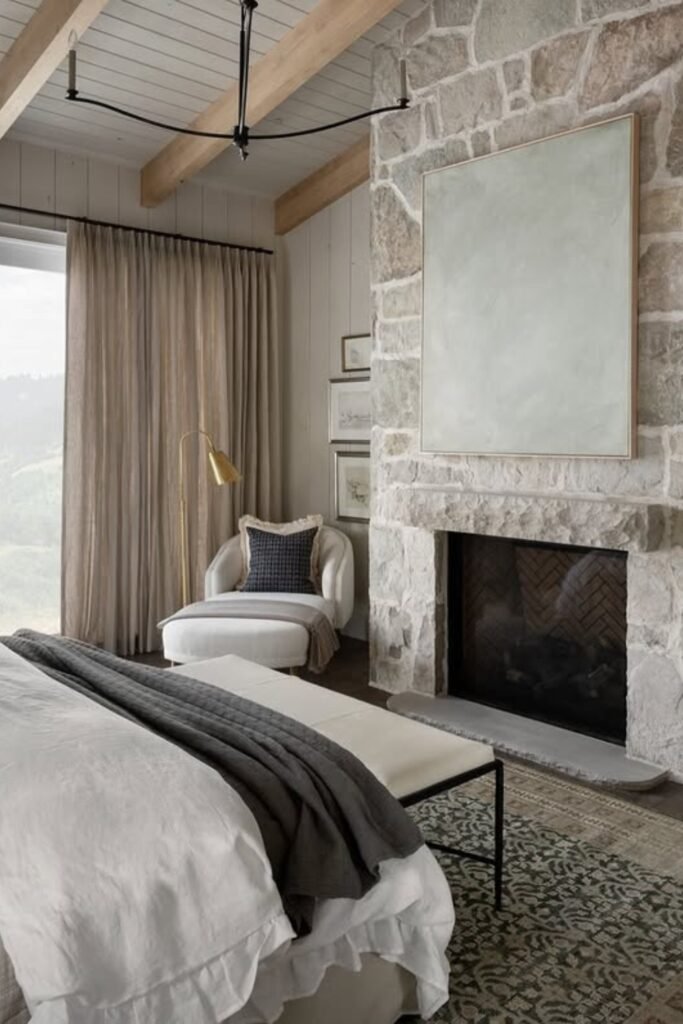
Fireplace Facing Bed
When your bedroom has a fireplace, let it become the visual anchor instead of fighting it.
The position the bed so it faces the fireplace, keeping enough space at the foot for a slim bench or clear walkway.
This layout works best in larger bedrooms where symmetry matters.
You can use calm bedding and simple furniture so the stone feature stays dominant without making the room feel heavy or crowded
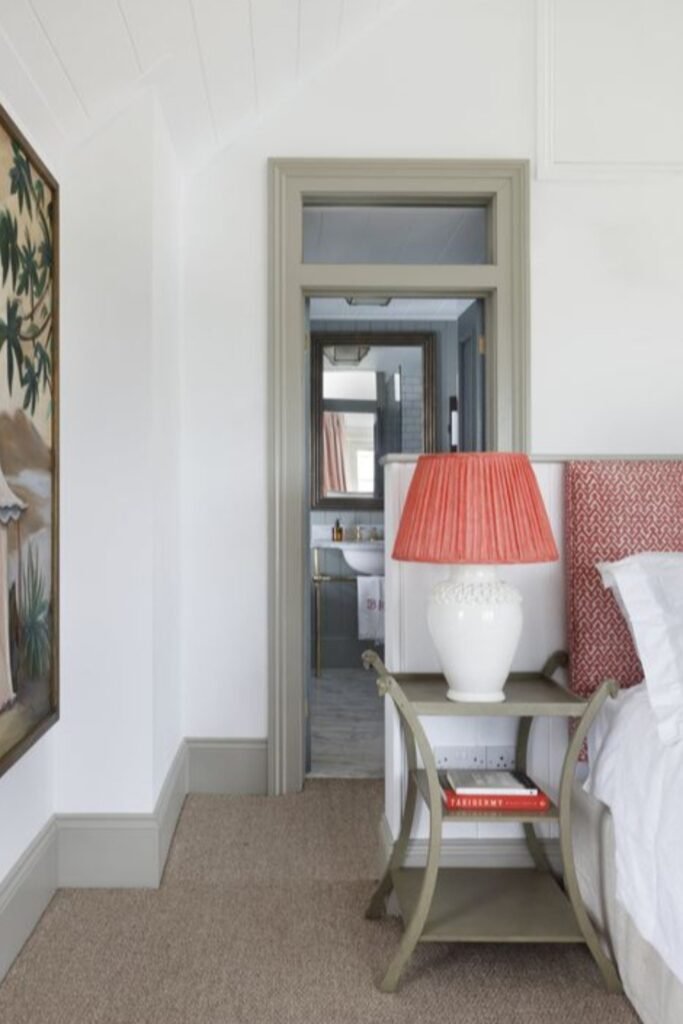
Side-Wall Bed Placement
When your bedroom connects directly to another space, pushing the bed against a side wall keeps the pathway clear and the room calm.
This setup works best in narrow or pass-through bedrooms where doorways need breathing room.
You can keep the nightstand slim and lighting compact so movement stays easy.
This layout lets the bed feel grounded without interrupting how you walk through the room.
Compact Storage Layout
When floor space is tight, this layout shows how to make every inch work harder.
You can keep the bed pushed to one wall to open up the walking path, then use under-bed drawers and a slim bench for extra storage.
A wall shelf above the headboard replaces bulky furniture and keeps essentials within reach.
This setup works best in small bedrooms where you need storage without making the room feel crowded or boxed in.
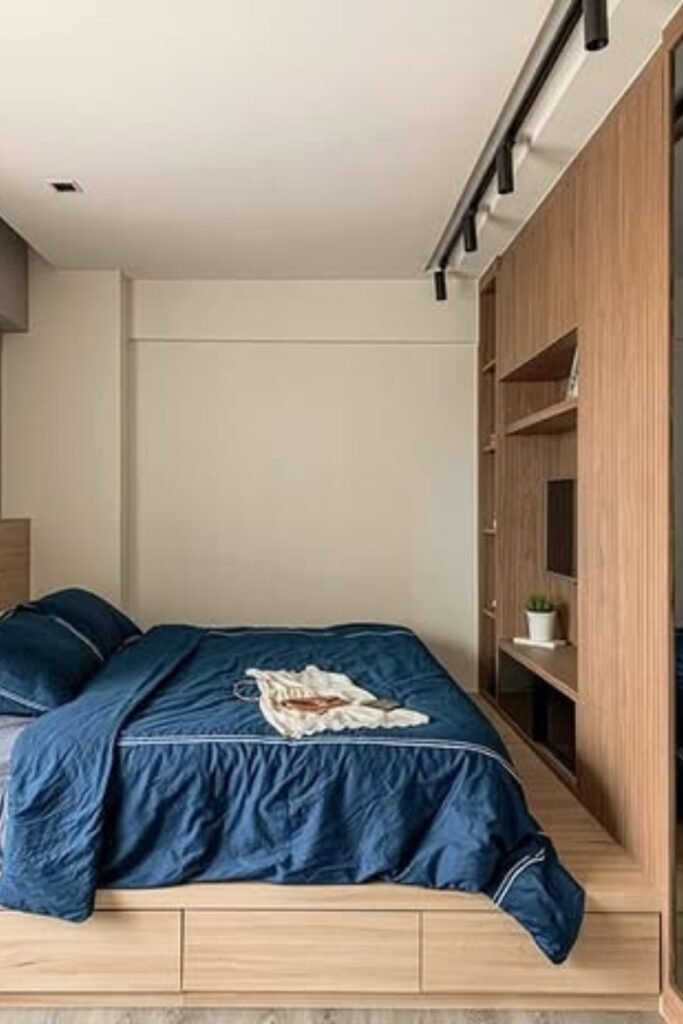
Built-In Bedwall
Let the bed and storage work as one unit instead of competing for space.
A built-in bed wall keeps everything tight and organized, which is exactly what you need in long or narrow bedrooms.
You can use drawers under the bed and full-height cabinets along one side to replace extra furniture.
This layout works best when you want a clean look and clear walking space without sacrificing storage or comfort.
Balanced Dresser Zone
When you don’t want your bed to compete with storage, keep the dresser on the wall opposite the bed.
This layout works best in medium to large bedrooms where you can maintain clear walkways on both sides.
You can use a low, wide dresser so the room feels open, not boxed in.
A large mirror above it helps bounce light and makes the space feel wider without changing the layout.

Centered Statement Bed
Let the bed take the lead by centering it on the main wall and giving it room to breathe on both sides.
This layout works best in larger bedrooms where balance matters more than squeezing in extra furniture.
A bench at the foot adds function without crowding the space.
You can keep the surrounding pieces simple so the bed frame, lighting, and symmetry do the heavy lifting visually.
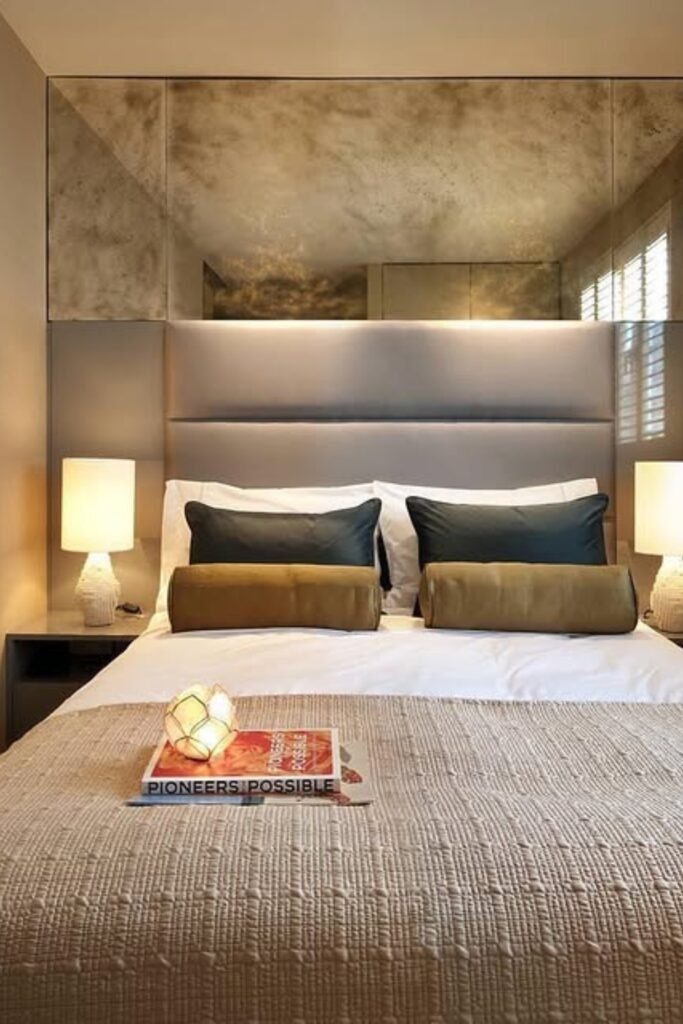
Symmetry-First Layout
When a bedroom feels restless, symmetry usually fixes it.
You have the center the bed on the main wall, match the nightstands, and keep lighting identical on both sides.
This layout works best in small to medium bedrooms where balance matters more than extra furniture.
A padded headboard and wall panels help frame the bed so the room feels calm, grounded, and easy on the eyes without adding clutter.
Soft Layer Focus
If your bedroom feels cold or flat, this layout fixes it through texture, not furniture.
You can keep the bed centered and let soft layers do the work, thick throws, plush pillows, and warm lighting close to the bed.
This works best in small bedrooms where adding more furniture would crowd the space.
You can stick to light colors so the room stays airy while still feeling cozy and lived-in.

Shelf-Backed Headboard
If you want personality without crowding the room, let the wall behind the bed do more work.
A shallow shelf acts like a headboard extension, giving you space for art, plants, and personal items without adding furniture.
This layout works best in small to medium bedrooms where nightstands stay simple.
You can keep the bed centered and use wall-mounted lights so the shelf stays functional, not cluttered.

Low Profile Sleeping
You can keep the bed close to the floor instantly makes a narrow bedroom feel calmer and more open.
This layout works best in small apartments or minimalist spaces where height creates visual clutter.
You can push the bed toward the window to pull in natural light, then keep storage slim and wall-mounted.
You can skip bulky frames and tall furniture so the room feels wider, brighter, and easier to move through every day.

Sloped Ceiling Setup
When the ceiling drops, let the bed follow it instead of fighting the angle.
You can place the bed under the slope turns an awkward spot into the coziest part of the room.
This layout works best in attic or loft bedrooms where standing height is limited.
You can use the lower wall for sleeping and keep taller furniture near full-height walls so the space feels intentional, not compromised.

Open Corner Balance
When a bedroom has windows on more than one wall, resist the urge to push everything outward.
Center the bed between windows creates balance and keeps light flowing evenly around the room.
This layout works best in larger bedrooms where you don’t need to hug the walls for space.
You can keep furniture low and spread out so the room feels open, calm, and easy to move through instead of crowded along the edges.
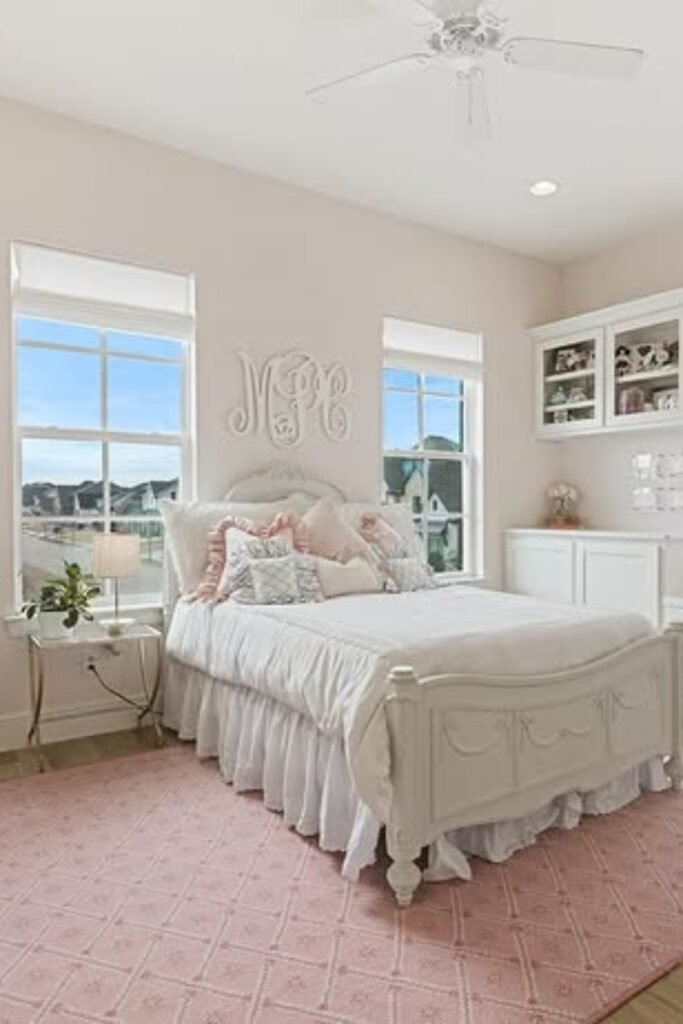
Window-Centered Bed
Let the window guide your layout instead of working around it.
You can place the bed directly under or aligned with the window keeps the room feeling balanced and bright, especially in medium-sized bedrooms.
You can use simple curtains and a low headboard so light isn’t blocked.
You can keep nightstands slim and storage minimal on this wall so the window stays the main feature, not an obstacle.

Bed-Desk Balance
When a bedroom also needs to function as a study space, keep the layout simple and split the room by purpose.
You can place the bed along one wall so it feels tucked in and restful, then position the desk nearby without crowding it.
This works best for teen bedrooms or small rooms where focus matters.
You can keep furniture compact and colors calm so sleep and work can coexist without the space feeling busy.
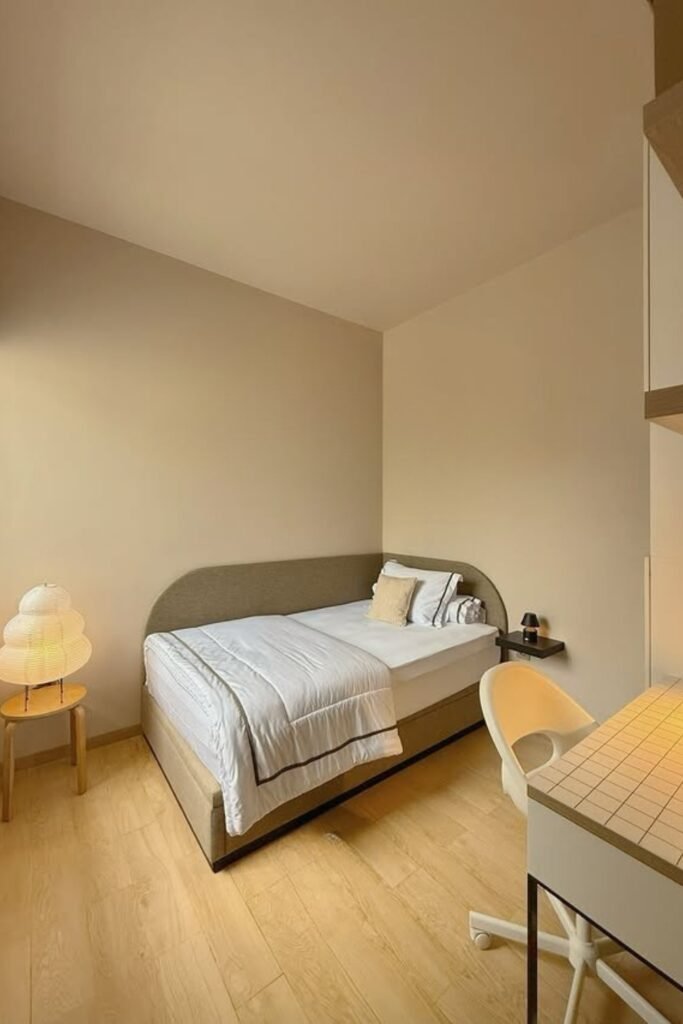
Corner Bed Comfort
When your bedroom is short on wall space, tucking the bed into a corner can actually make it feel calmer.
This layout works best in small bedrooms where you need one clear side for walking and dressing.
You can use wall-mounted lighting and a floating nightstand to save floor space.
It add a mirror nearby to reflect light and keep the corner from feeling boxed in or forgotten.

Light-Filled Pathway
You can walk into the room should feel open, not blocked.
This layout keeps the bed pushed slightly to one side so natural light can travel through the space instead of stopping at furniture.
It works best in narrow bedrooms with windows on one end.
You can keep the dresser along a side wall and leave the center clear so the room feels longer, brighter, and easier to move through every day.

Vertical Storage Stack
When floor space runs out, go up instead of adding furniture.
This layout turns one corner into a full storage zone using floating shelves and wall-mounted pieces.
It works best in small bedrooms where a dresser would block light or movement. You can keep everyday items at eye level and decorative pieces higher up.
This way, the room stays functional without feeling cluttered or visually heavy.

Long-Wall Storage Flow
Let the longest wall handle storage so the rest of the room can breathe.
This layout works best in narrow bedrooms where a tall dresser would feel bulky.
It run a low, wide dresser under the window and keep the bed on the opposite side to create a clear walking path.
You can use the top surface for daily items and lighting, and keep furniture heights low so the room feels wider, not boxed in.
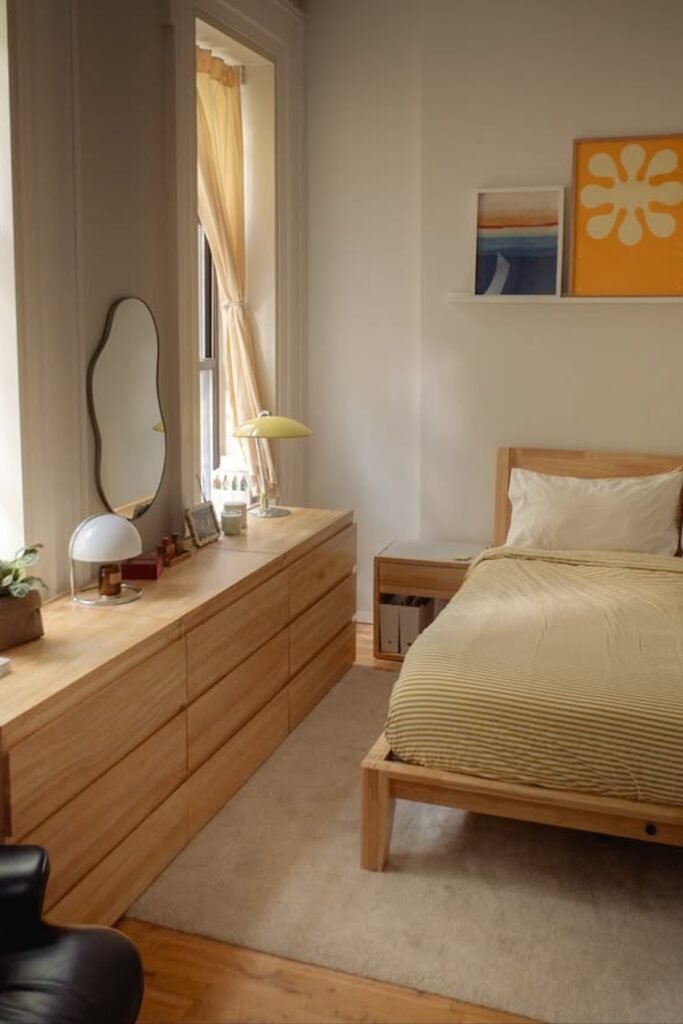
Integrated Sleep Work
When one room has to do everything, combining the bed and desk solves two problems at once.
This layout works best in small bedrooms or studio apartments where space is limited.
You can attach a narrow desk to the bed frame or place it flush at the foot so it doesn’t interrupt walking space.
You can keep the desk shallow and clutter-free, and let built-in shelves handle storage so the room stays practical without feeling cramped.
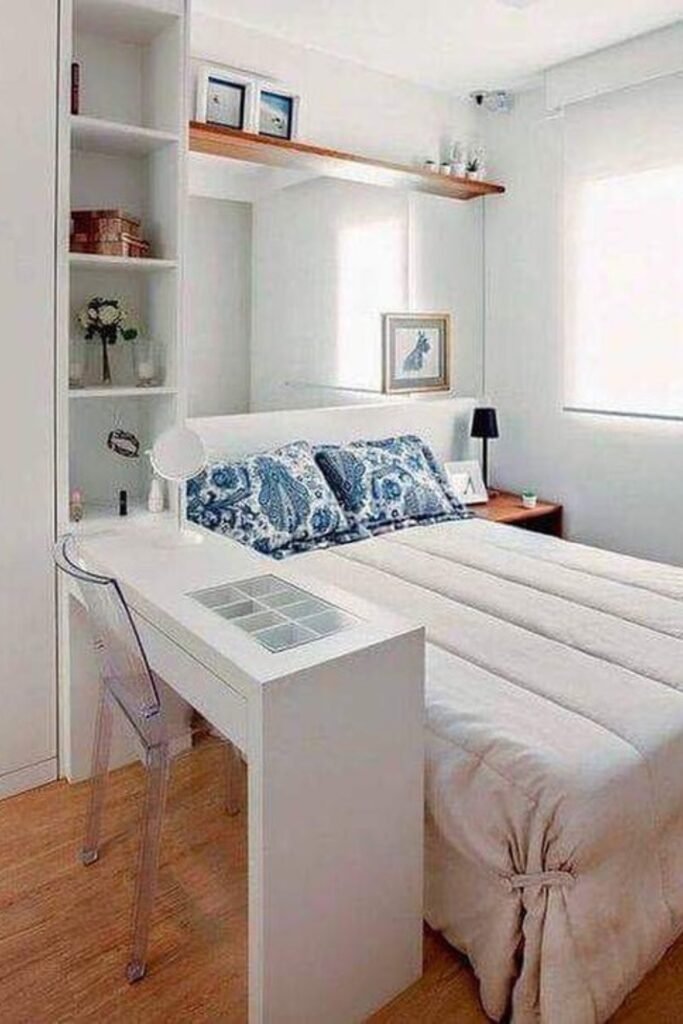
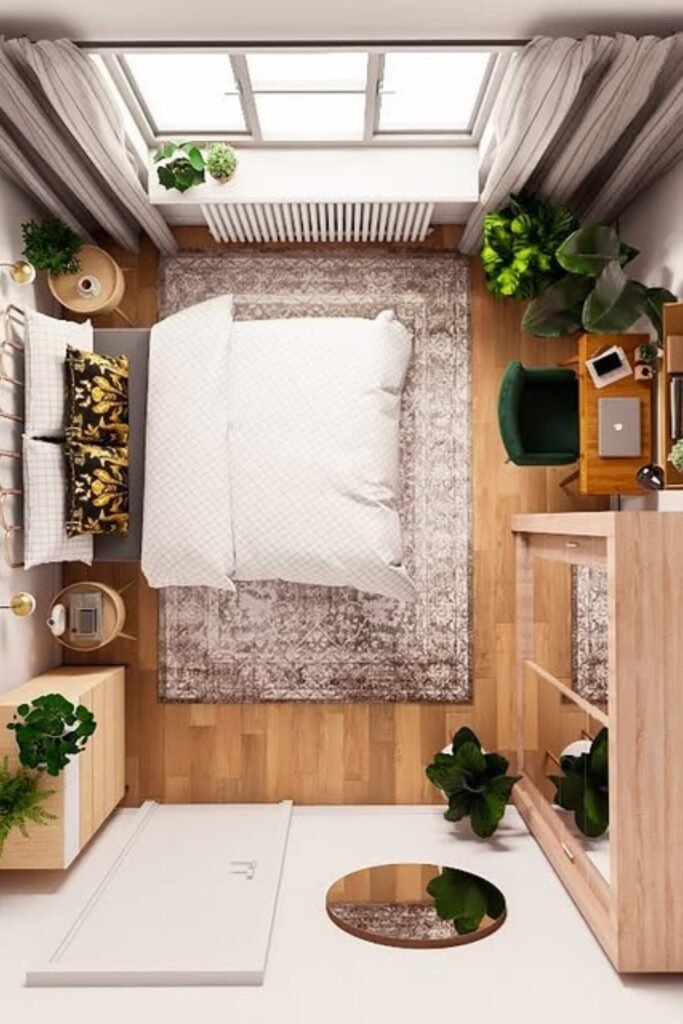
Centered Square Layout
The square bedrooms work best when everything lines up cleanly.
Center the bed keeps walking space even on all sides and stops the room from feeling lopsided.
This layout is ideal when you want to add both a dresser and a desk without crowding the space.
You can keep furniture pushed to the walls and leave the center clear so the room feels balanced, open, and easy to move around.
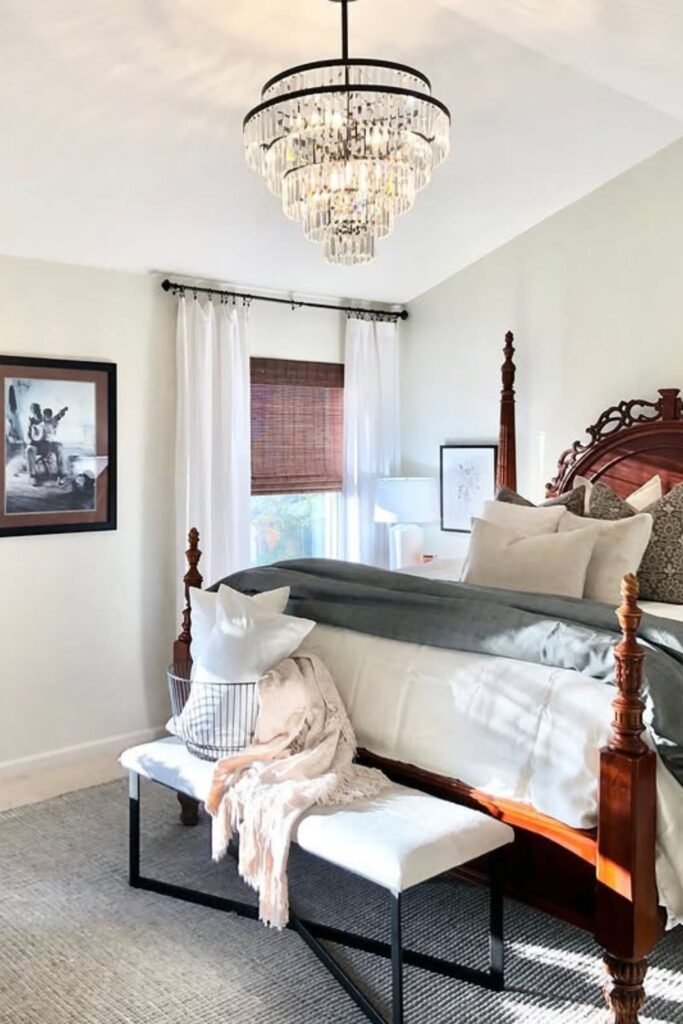
Balanced Bench Anchor
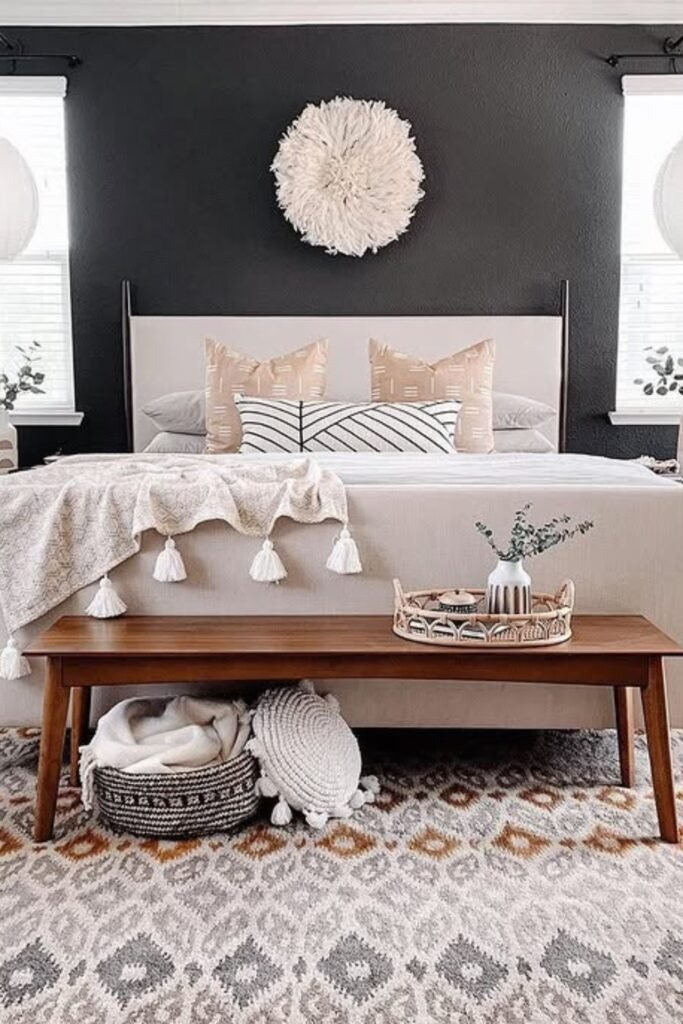
When the bed sits between two windows, symmetry becomes your best friend.
It center the bed on the wall and anchor it with a bench at the foot to keep the layout grounded.
This works best in medium to large bedrooms where you want a strong focal point.
You can keep nightstands similar in size and spacing so the room feels intentional instead of scattered.
FAQs
Where should the bed go in a small bedroom?
You should place your bed on the longest uninterrupted wall so you can keep clear walking space on at least one side.
When you do that, you’ll find it’s much easier to move through your room, and you won’t feel like doors, closets, or windows are blocked.
How much space should be around a bed?
You should aim for enough space to walk comfortably without having to turn sideways.
If your space is tight, you can prioritize keeping one clear side and the foot of your bed free.
You’ll see how much easier daily movement becomes, making your room feel frustration-free for you.
You may like to read!
