
20 Accent Wall Living Room Ideas for 2026

This article may contain affiliate links: read full affiliate disclosure.
You spot a stunning accent wall online and think, That’s it, that’s exactly what my living room needs.
Then you start wondering, which wall should you even pick? The TV wall? The sofa wall? And what if the color makes the room feel smaller instead of better?
That kind of hesitation can stop you before you even take the first step. If that feels familiar, then you are in the right place.
In this article, you are going to see exactly how you can pick the right accent wall and what is the rules for accent wall, without you having to second-guess every choice.
Which Wall Should Be The Accent Wall In A Living Room?
You can start with the wall your eyes go to first when you walk into the room.
Usually, that’s the sofa wall, the TV wall, or the fireplace wall. When you highlight a wall that already grabs attention, you can make the room feel planned instead of random.
You should skip walls with too many doors, windows, or awkward angles, they break the flow and make the whole effect fall flat.
If your living room feels confusing, don’t make yourself force an accent. Let the layout guide you, and you’ll see exactly where it belongs.
What Is The Rule For Accent Walls?
You can keep one wall bold and let the rest of the room support it. That’s really the rule you should follow. If every wall tries to compete, you’ll feel the space turning chaotic.
Your accent wall should connect with something already in the room, your sofa, rug, or favorite decor, so you make it look intentional, not forced.
When you pick a dark wall, you need to balance it with light furniture. When you choose a patterned wall, you should give it calm surroundings.
If you stick to this one rule, one star, everything else in the background, you can make your living room always feel just right.
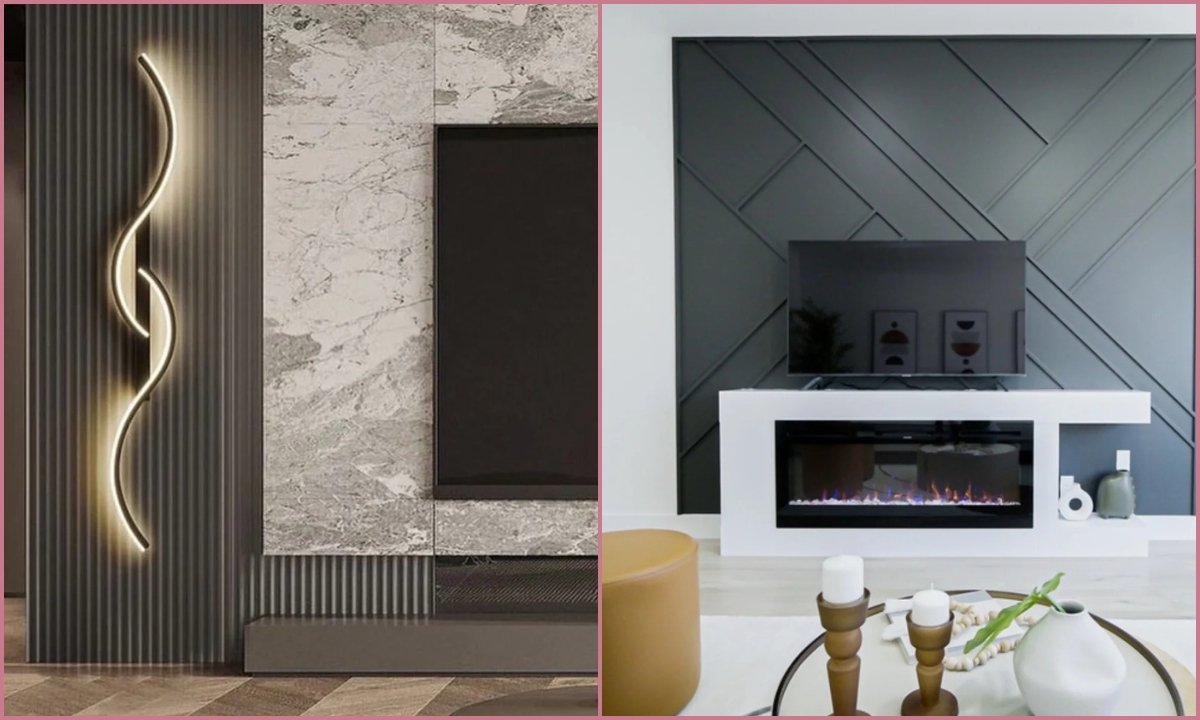
Dark Panel Focus
Your eyes go straight to the fireplace wall here and that is exactly why it works.
The deep charcoal paneling frames the TV and fire so cleanly that you can keep the rest of the room light and calm.
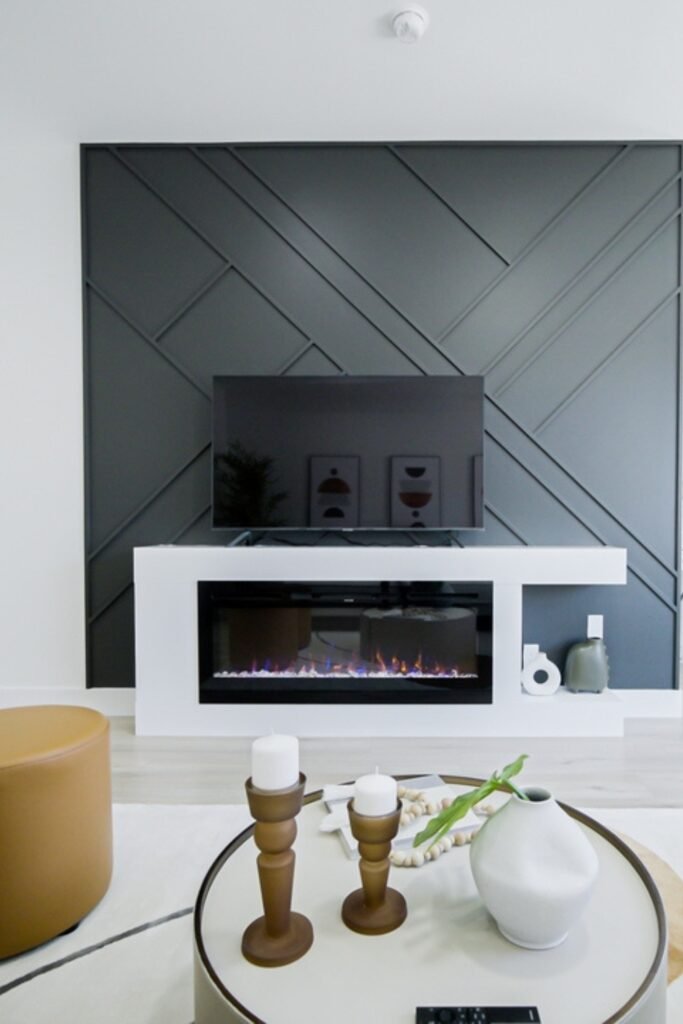
Sculpted Light Strip
You don’t always need color for your accent wall to grab attention, light can do it for you.
Your vertical fluted panels with a warm LED strip [Check on Amazon] turn the wall into a soft statement without overwhelming the room.
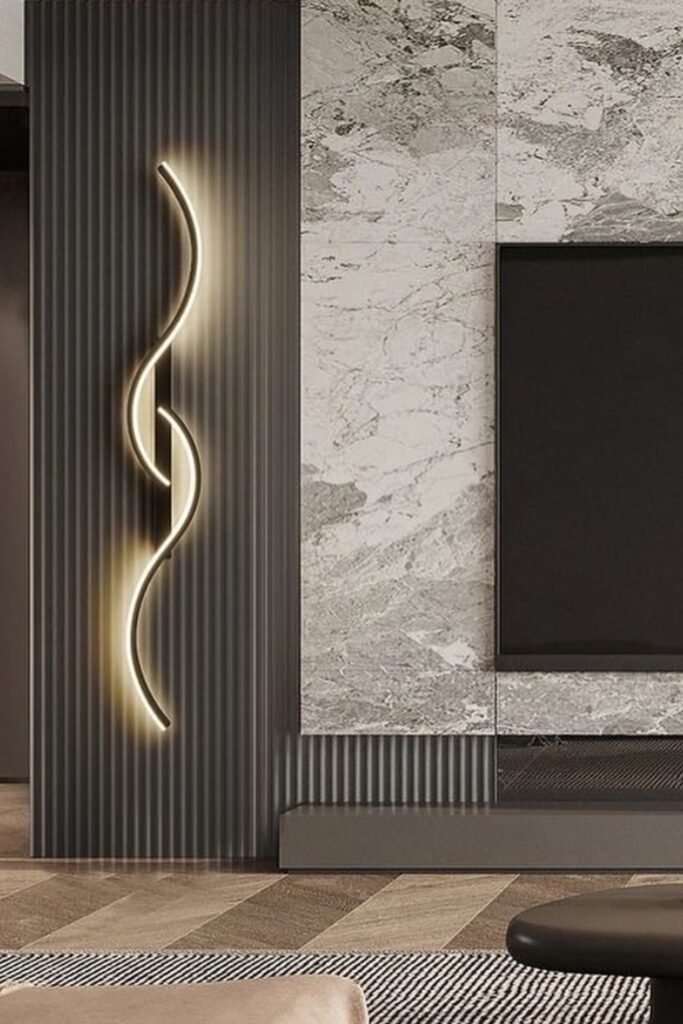
Tall Panel Calm
When height can do the heavy lifting, you can stretch full-length wall panels from floor to ceiling.
It makes your space feel taller and more refined without bold color. You can use this behind your main sofa if your furniture and lighting are already strong.
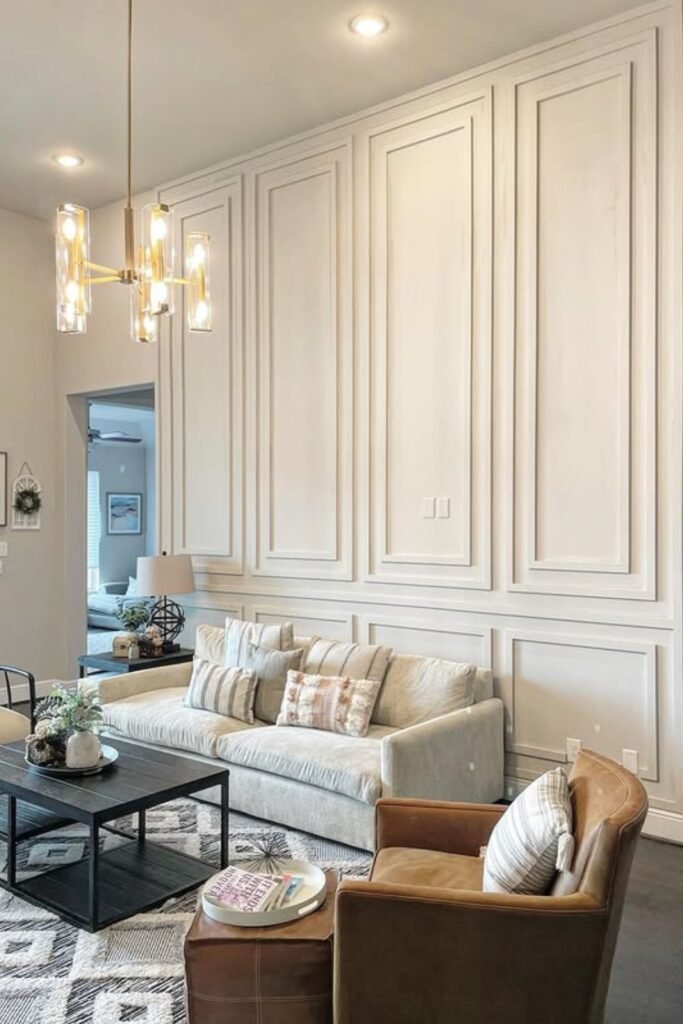
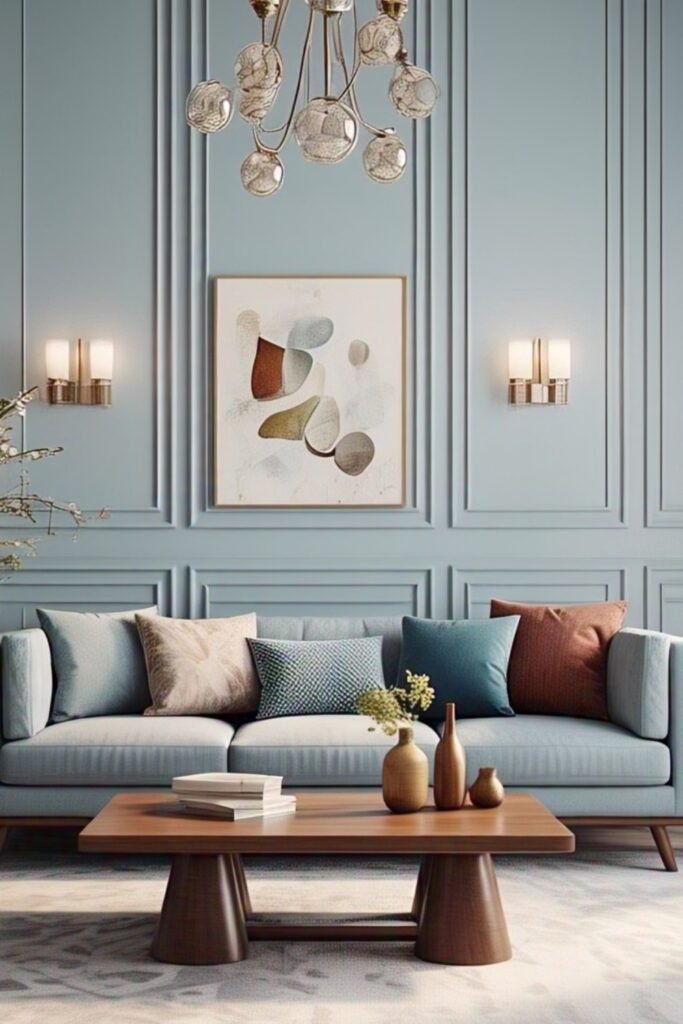
Soft Blue Frame
If calm is your goal, you can let dusty blue paneling behind your main sofa take over the space.
The wall keeps the living room relaxed while giving you a clear focal point. You can use this approach when your furniture is neutral and you want color without visual noise.
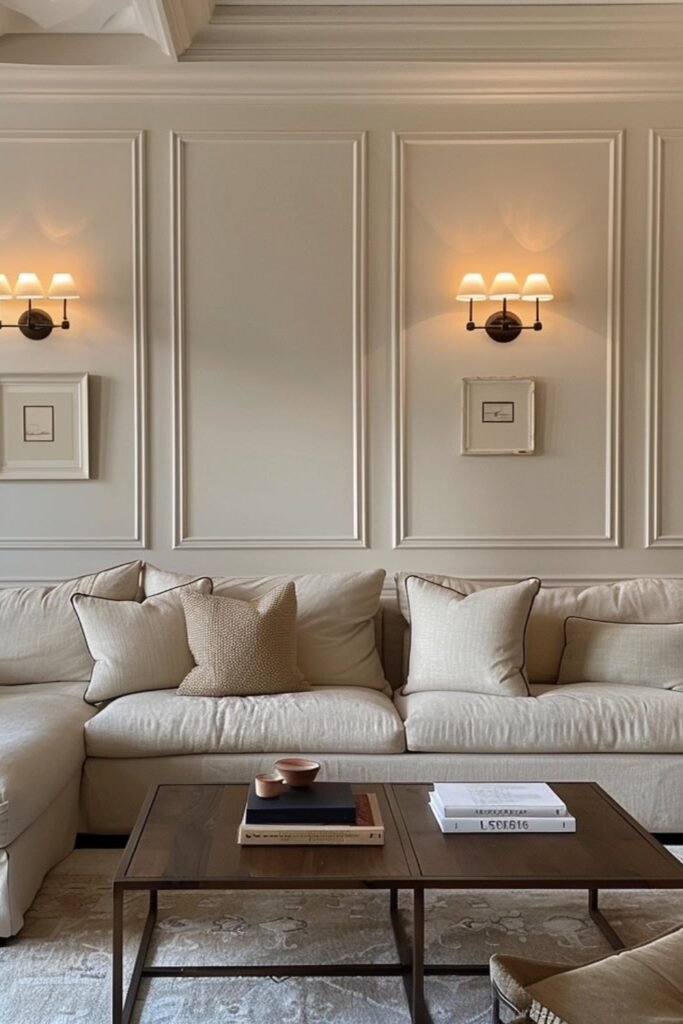
Cream-on-Cream Lift
It makes the wall feel rich instead of flat. You can use this setup when your furniture leans neutral and you want quiet detail.
You can recreate it with thin trim strips, matte paint, and warm sconces to keep the mood relaxed.
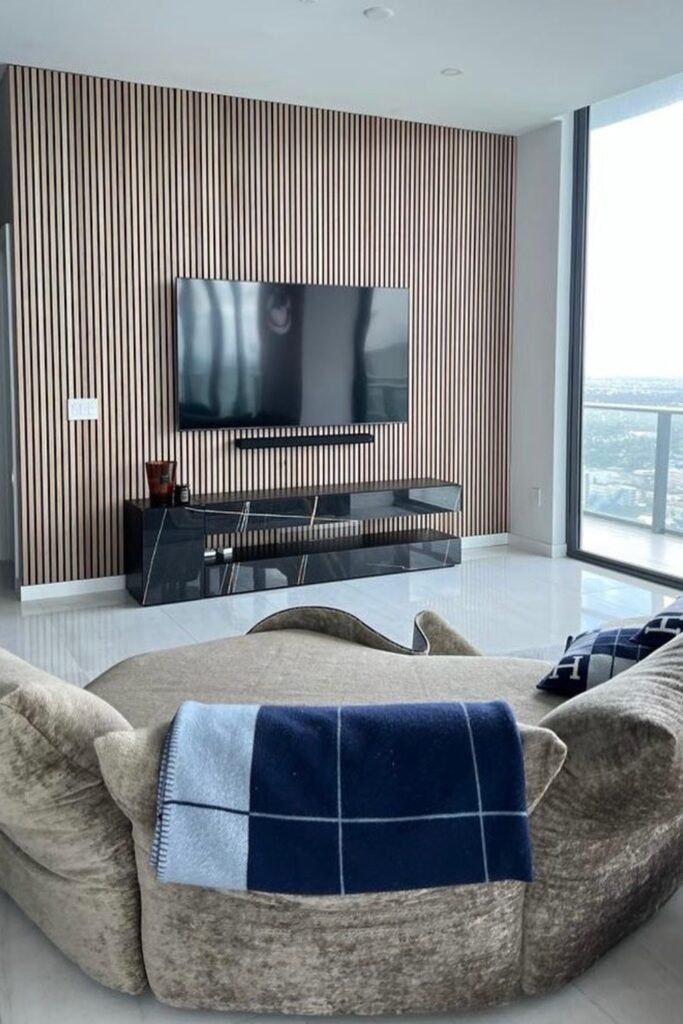
Wood Slat Anchor
You can recreate it with MDF slat panels or real veneer sheets, keep the other walls plain, and let natural light highlight the pattern instead of adding more decor.
It gives your living room texture and rhythm, perfect for modern spaces with clean furniture and big windows.
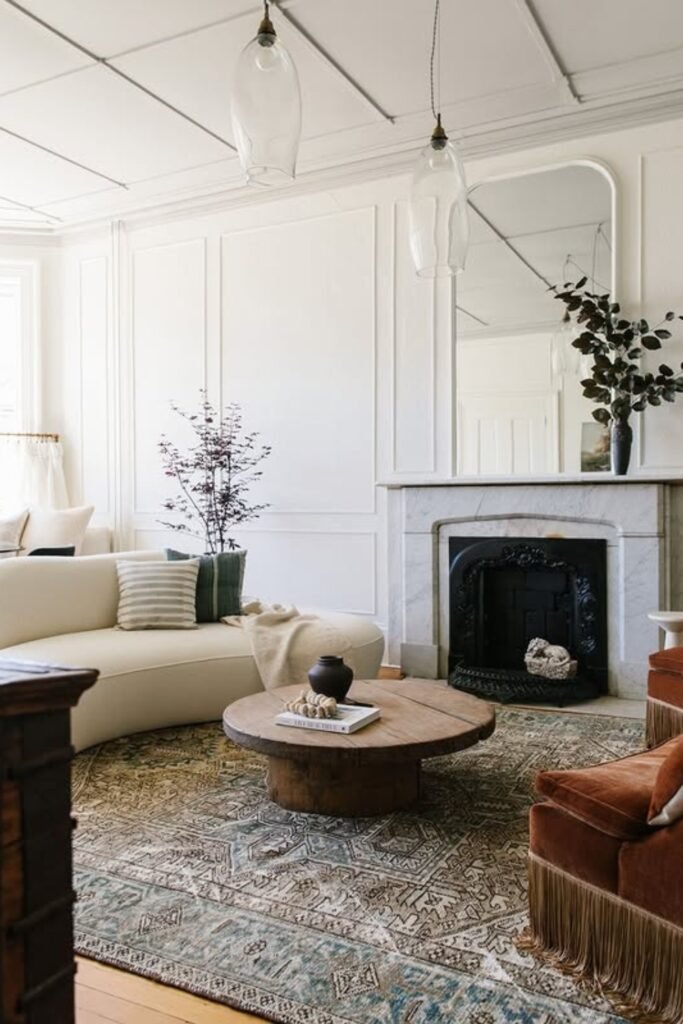
Fireplace Frame
When you want the fireplace wall to be the heart of your living room, you can use soft paneling to do it quietly.
It wraps the firebox so the wall feels intentional, not loud. You can use this in older homes or cozy spaces where you want character without visual stress.
Grided Neutral Backdrop
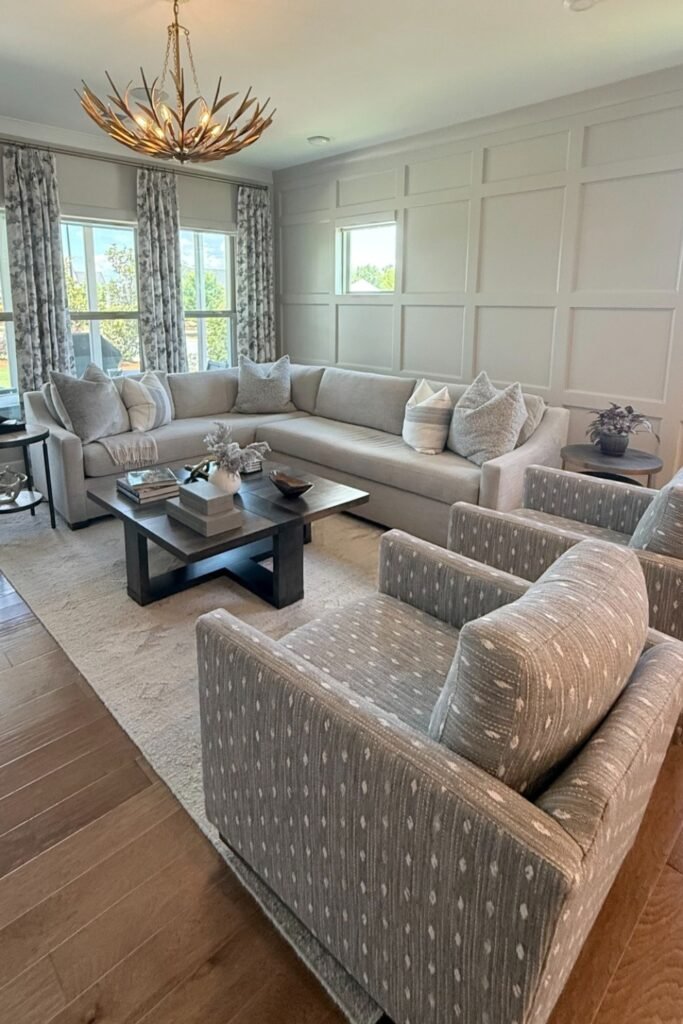
You can use this in family living rooms where you need calm but still want definition behind a large sectional.
You can recreate it with simple MDF trim, one wall color, and layered cushions to keep the look warm, not stiff.
Sunlit Panel Glow
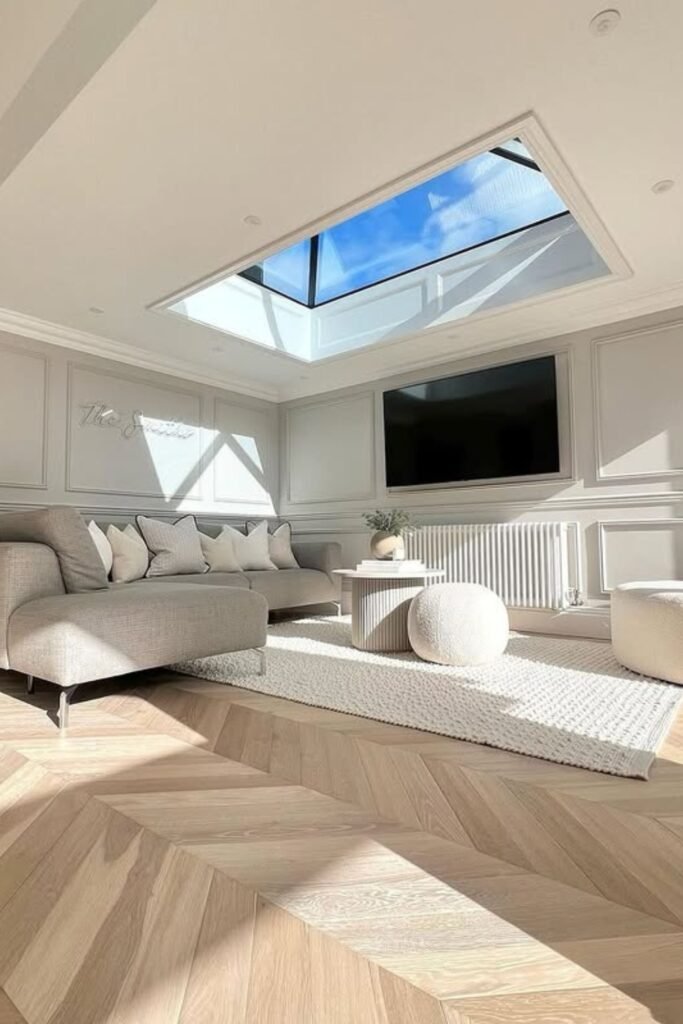
When natural light hits the room, you can let it do most of the styling for you. You can use this idea in bright living rooms where you want definition without dark color.
Your soft gray wall panels behind your seating area catch sunlight from the skylight, so the accent feels airy instead of heavy.
Moody Shiplap Mood
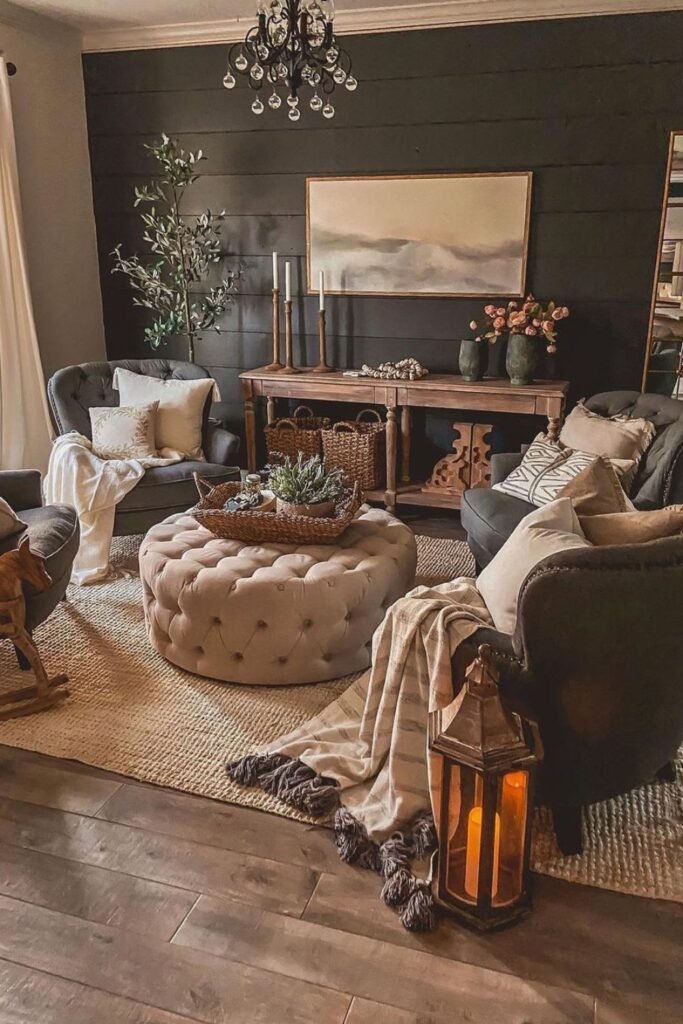
If you want your living room to feel cozy without feeling heavy, you can rely on dark horizontal shiplap boards.
The wall pulls all the warm textures, wood floors, soft rugs, and layered throws, into one grounded backdrop.
Stone-Slat Contrast
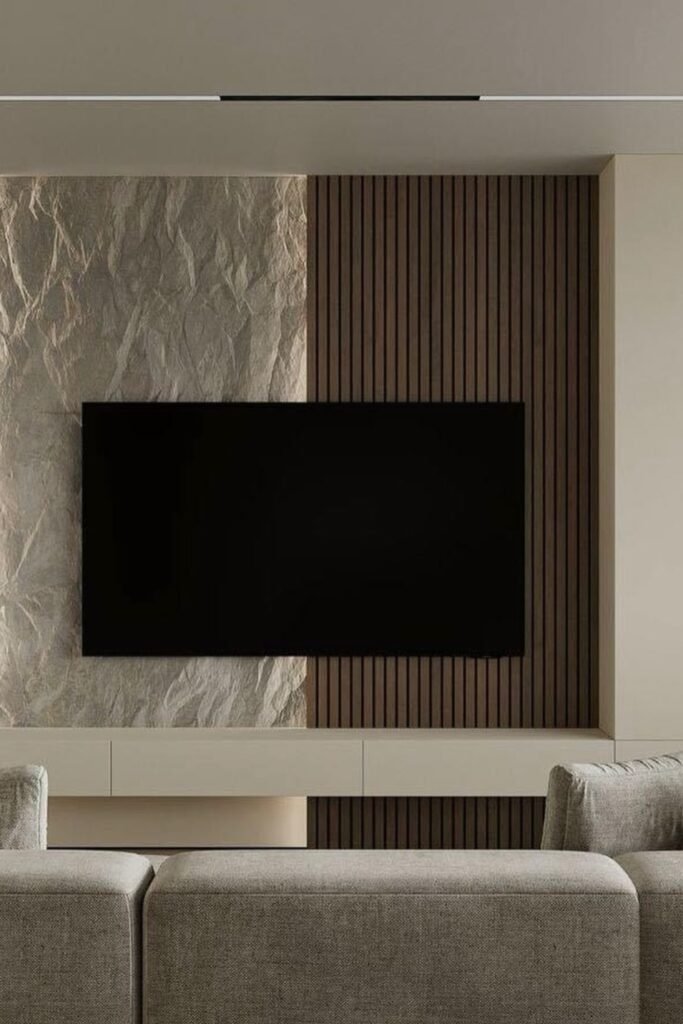
When texture needs to do all the talking, you can combine stone on one side and wood slats on the other.
It splits the focus without chaos, letting the screen sit clean in the center. You can use this in modern living rooms where you want a bold media wall without heavy color.
Elegant Frame Balance
If you want a calm, polished space, you can let soft wall frames do the work. The accent stays subtle, so your sofas, art, and chandelier lead the mood instead of the wall.
You can use this behind a formal seating setup where symmetry matters. You can recreate it with slim box molding, light warm paint, and one large artwork to anchor the center.

Deep Drama Wall
When bold color takes control, you can instantly make your living room feel intentional.
The charcoal paneled wall locks your seating layout into place, so everything looks polished, not scattered.

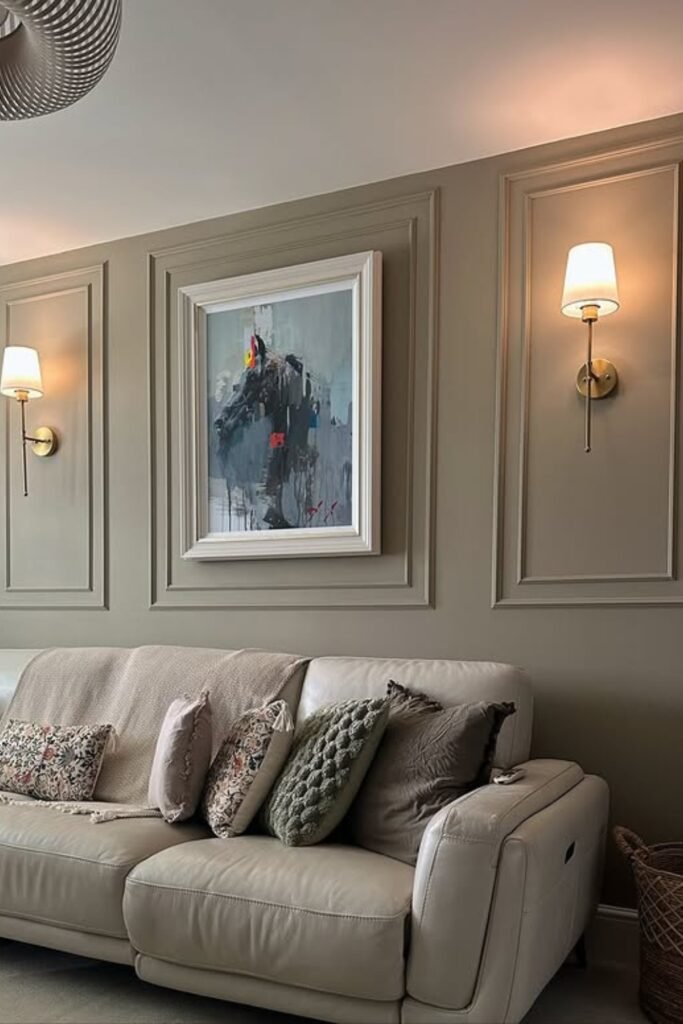
Taupe Art Focus
If you want your artwork to shine, you can let soft taupe panels quietly support it. The wall creates a calm base so bold art and warm sconces stand out without visual noise.
You can use this setup when your living room already has statement pieces you want to highlight.
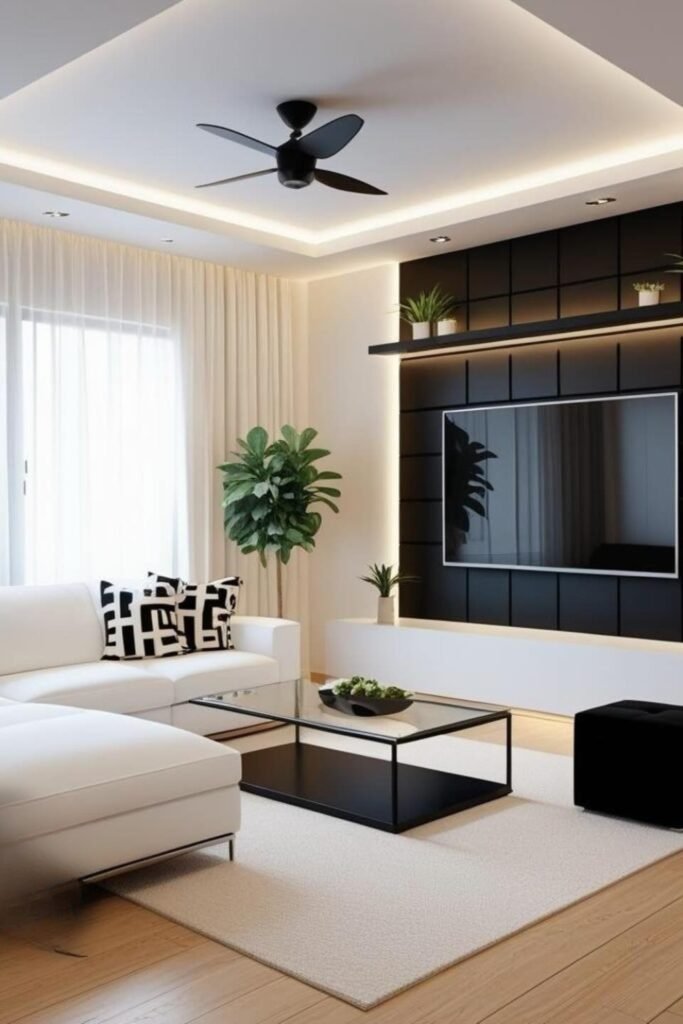
Floating Black Media
Your matte black panels with hidden shelf lighting turn your TV into a design feature instead of a dark box.
You can recreate it with flat panel boards, warm LED strips under each shelf, and keep the rest of the room soft and minimal.
White Stone Lift
If light needs to take over, you can wrap your fireplace wall in pale stone like this.
The bright surface keeps the living room open while giving your TV and fire a clear home. You can use this in smaller or low-light spaces where dark accents feel risky.

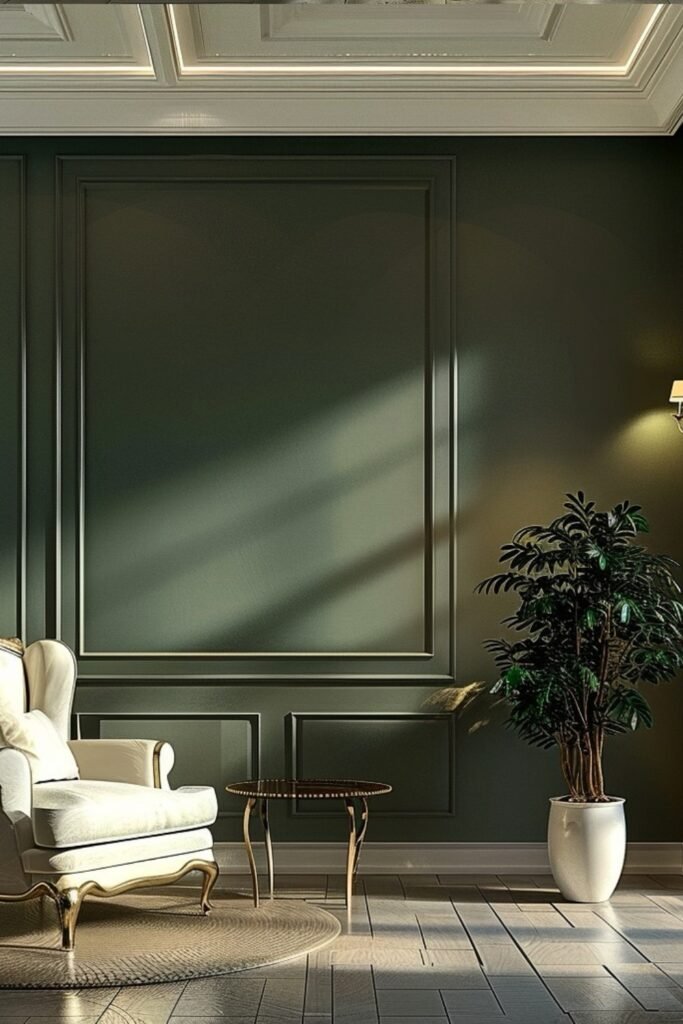
Moody Green Calm
When late-afternoon light hits your deep green wall, you can instantly create atmosphere.
Your soft paneling keeps the color rich instead of flat, so your living room feels cozy, not heavy.
You can use this behind a reading chair or quiet seating corner when you want a relaxed, classic mood.
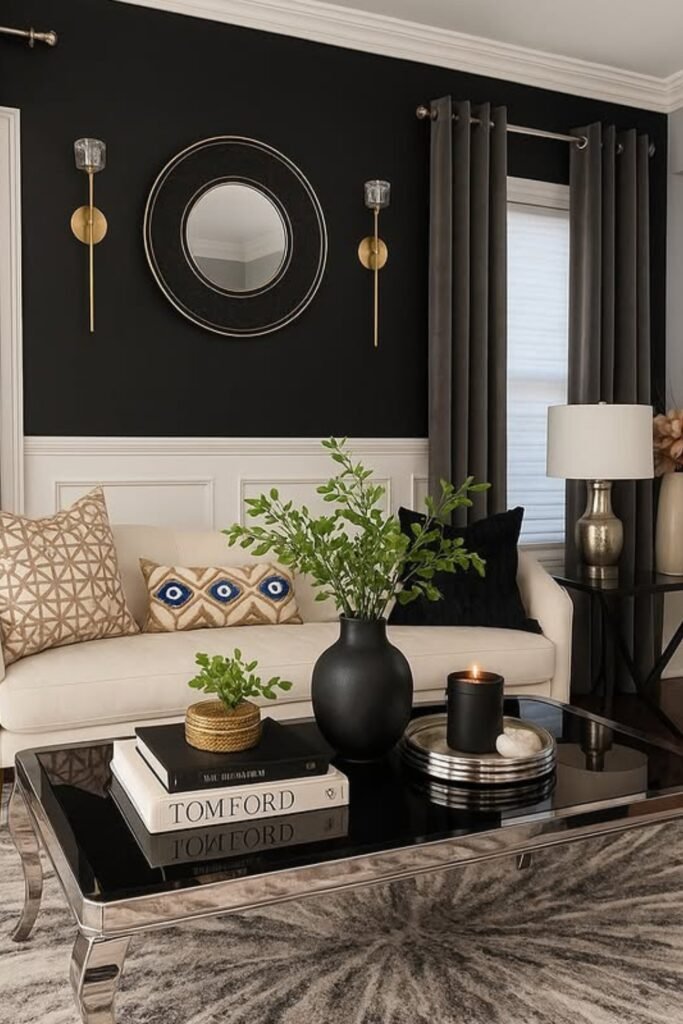
Black Mirror Moment
A matte black wall behind the sofa sharpens every light surface in front of it, so the seating instantly pops.
You can recreate it with one deep black paint, brass wall lights for warmth, and a round mirror to soften the edges.
Two-Tone Quiet
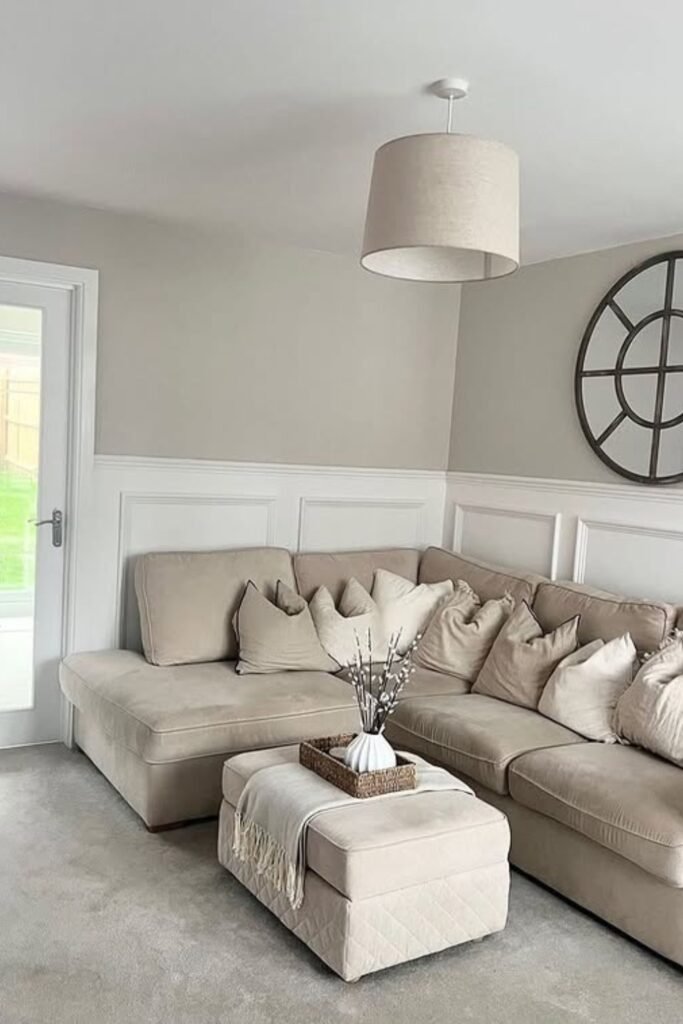
When you want soft contrast without chaos, you can use lower paneling to ground the space while the lighter upper wall lifts the ceiling visually.
It keeps your living room feeling relaxed, not busy. You can use this behind a sectional when you want definition without bold color.
Mirror Niche Depth
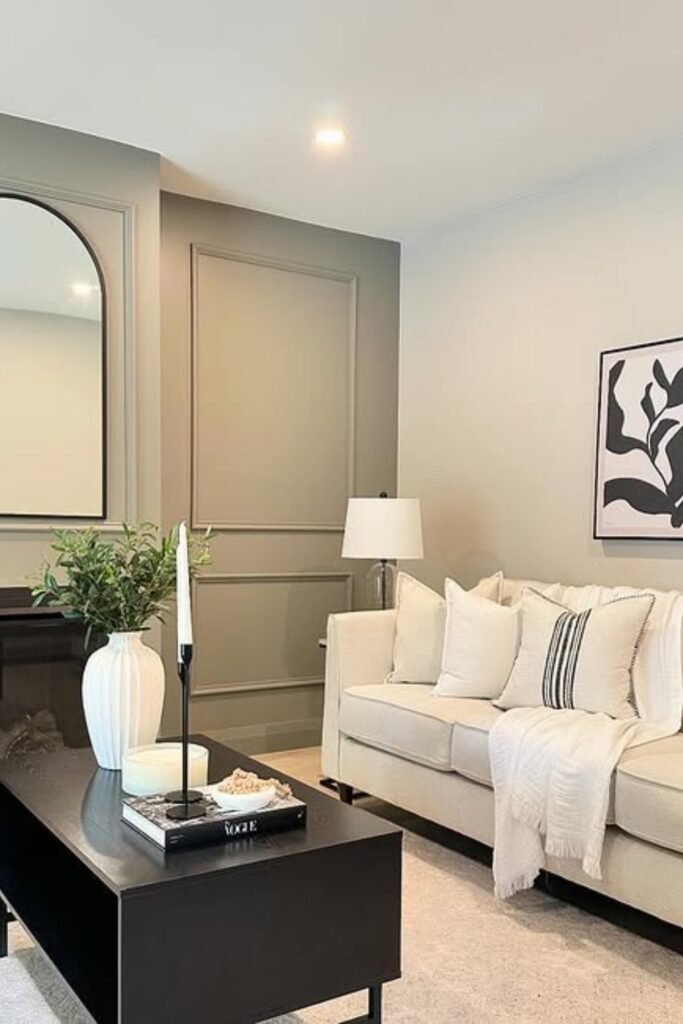
A hidden corner suddenly feels designed once you wrap it in soft paneling and add an arched mirror.
That vertical shape pulls attention upward and makes the living room feel taller without heavy color.
FAQs
Can you have more than one accent wall in a living room?
You can use more than one accent wall but only when the room is large and open.
If two walls face each other and share a purpose, like a TV wall and a seating wall, you can make it work.
When your living room is smaller, you should avoid multiple accents, because more than one usually backfires and makes the space feel busy instead of bold.
Should an accent wall always be darker than the other walls?
You can create an accent with contrast, not just with darkness.
When you use a lighter textured wall, soft paneling, or patterned wallpaper, it can stand out just as clearly.
If the rest of your living room already leans dark, you can let a light accent wall create better balance and make the space feel more open.
You may like to read!
