
24 Blue Living Room Ideas
You almost didn’t paint your living room blue. You’ve seen all those photos online, and they looked stunning but when you imagined it in your own space, you started to worry.
In this article, you’ll learn exactly how you can choose the right blue shade, and 24 unique blue living room ideas.
Let’s jump in!
How to Choose the Right Shade of Blue for Your Living Room
This is where you might get stuck. You love blue. But which blue should you choose? Navy? Dusty blue? Teal? Powder blue?
They all look amazing online, but you know that the wrong shade in your own living room can make the space feel smaller, darker, or colder than you expected.
You should start by thinking about your room size and natural light.
If your living room is small or doesn’t get much light, you might want to avoid very dark navy on all four walls.
It can feel heavy fast. You could go for softer blues like dusty blue, blue-gray, or muted sky blue, they reflect more light and help your room feel open.
You might choose navy, midnight blue, or even rich cobalt, and you’ll see how bold and elegant it can look without closing in the space.
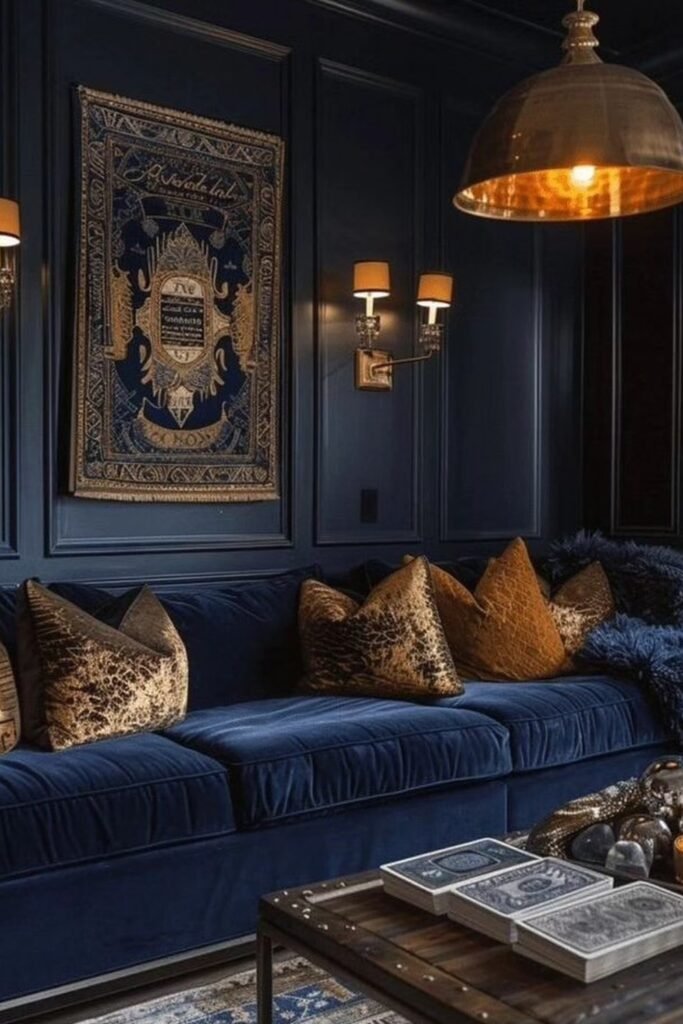
Navy and Brass Drama
You might think dark blue will feel cold, but it doesn’t have to.
When you use deep navy walls, you can create a bold, cocoon-like effect and you should add brass pendants or wall sconces to completely change the mood.
You’ll notice how the warm light bouncing off the blue makes it feel rich and inviting instead of heavy.
If you go this dark, you should layer in velvet, gold accents, and warm lighting. You can make blue look expensive when you warm it up on purpose.
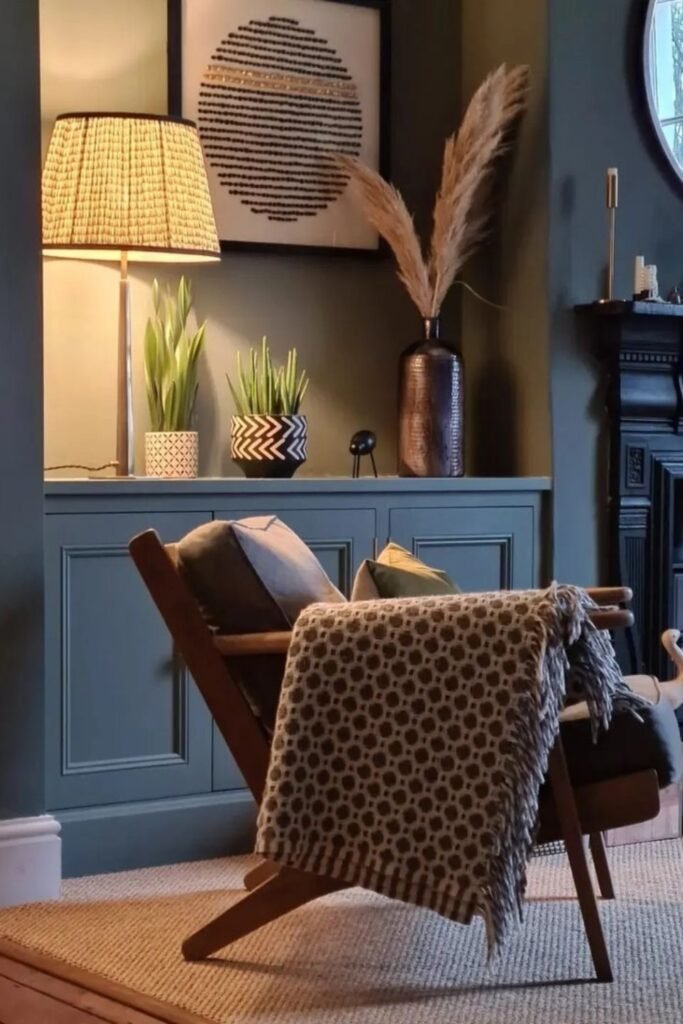
Soft Blue Paneling
You don’t always have to go bold with navy. When you try muted blue paneling, you can add depth without overpowering your room.
You should bring in warmth with natural wood tones, a woven lampshade, and textured fabrics.
If your room feels flat, you could add wall molding and paint it the same blue, you’ll instantly get subtle dimension.
Then layer in warm lighting and earthy decor so your blue feels calm and cozy instead of cold.
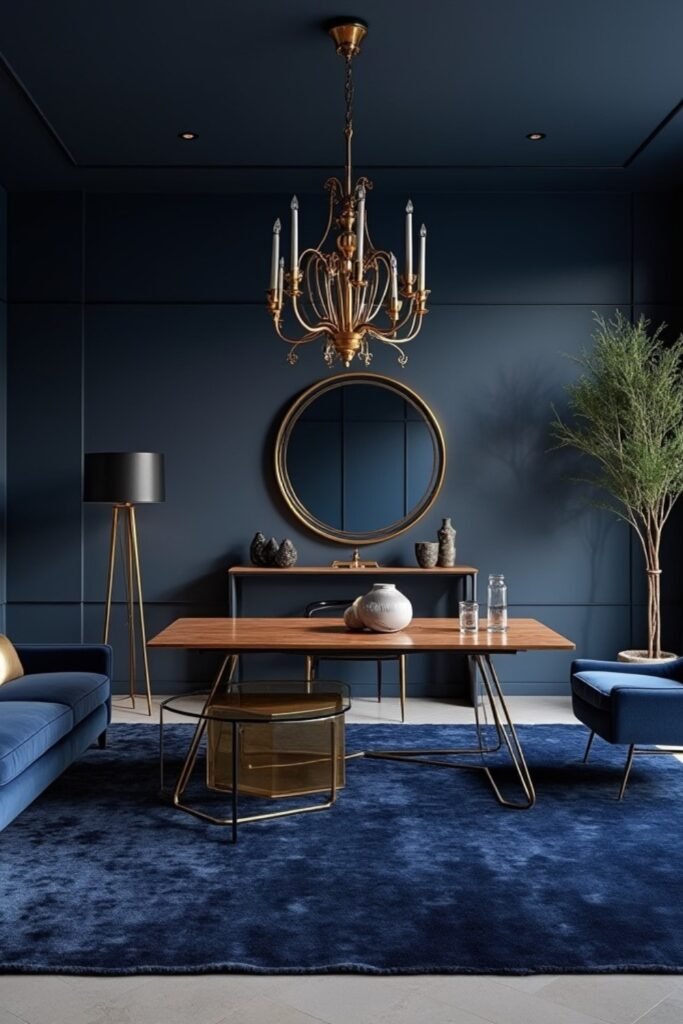
Blue and Gold Elegance
If you want your living room to feel elegant without clutter, you can pair deep blue with gold accents.
You’ll see how the matte blue walls create a strong base while a chandelier, mirror frame, and metal table details bring in warmth and contrast.
You might add one large rug in a similar tone to ground the space and make sure the richness of the blue stays intact.
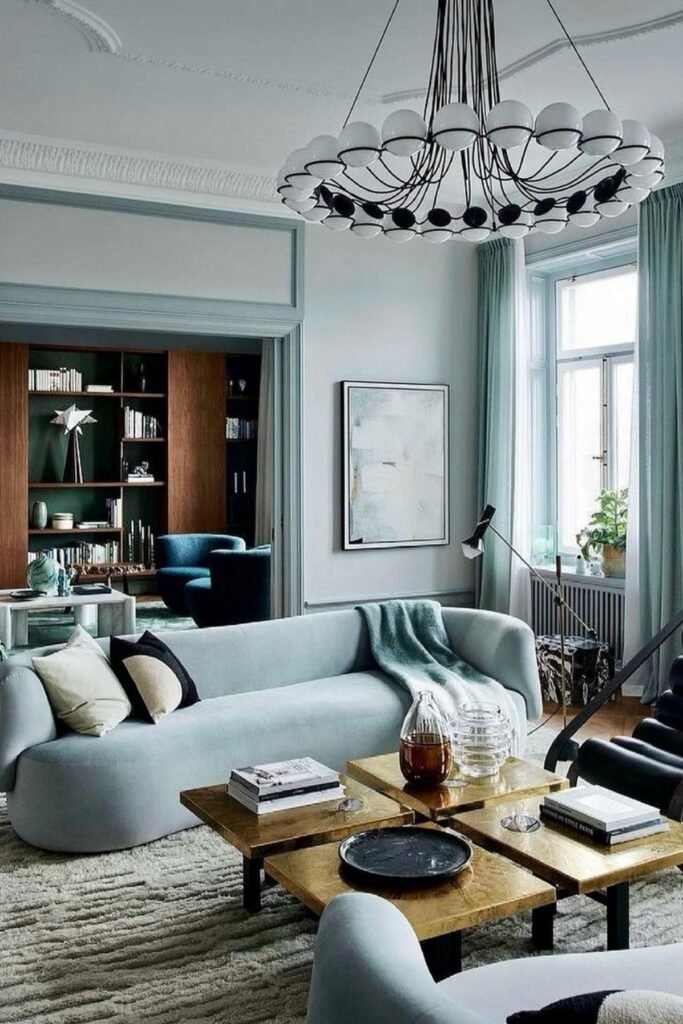
Soft Blue Layers
Not every room needs dark drama. You can pair a pale blue sofa with matching curtains and subtle trim to make your living room feel calm and airy.
You should add warm wood tables and a textured rug to stop the blue from feeling cold.
If your room is bright, you can let the light bounce and soften everything naturally.
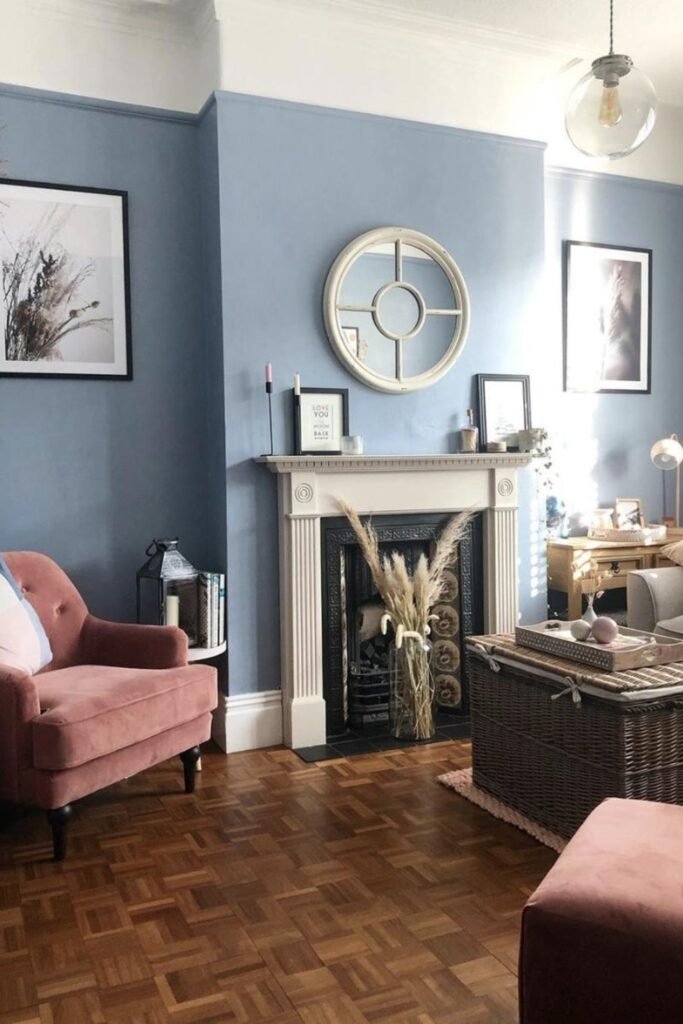
Blue With Blush
You can instantly soften blue by pairing it with blush.
You’ll notice how muted blue walls feel calm, but a dusty pink armchair or ottoman warms the room without overpowering it.
If your blue feels too cool, you could add just one warm accent piece instead of repainting.
You should keep the rest neutral and let that soft contrast do the work.
Navy With Personality
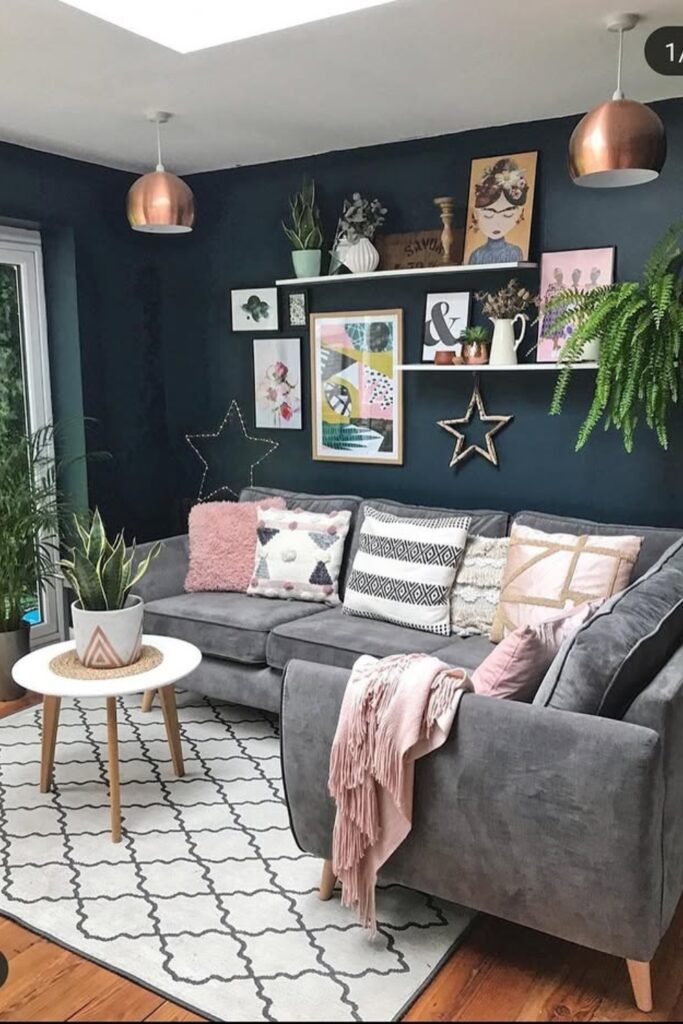
You can make dark blue fun when you treat it as a backdrop instead of the main event.
You’ll see how a navy wall makes your gallery art, plants, and soft pink accents stand out.
You should mix patterns and textures on a neutral sofa instead of matching everything perfectly.
If you want the space to feel lively, add copper or warm metal lighting, you’ll see how blue works best when you let other elements pop against it.
Moody Teal Library
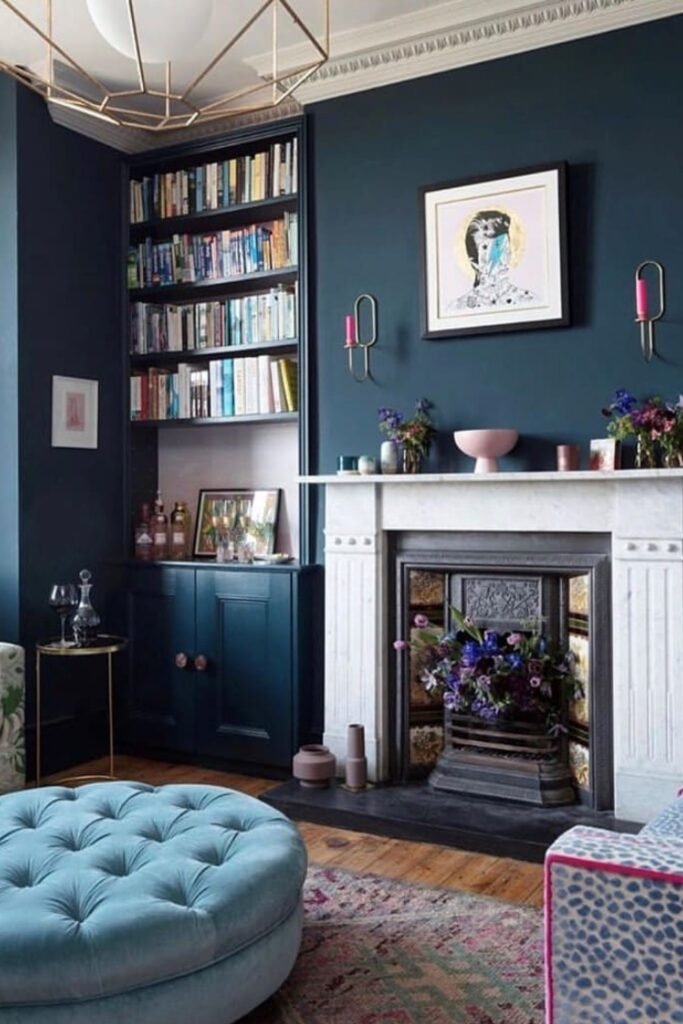
If you want your living room to feel intimate and layered, you could lean into a deeper teal-blue and carry it across walls and built-ins.
You’ll notice how keeping the color consistent makes your space feel intentional, not patchy.
You should break it up with a light fireplace surround, soft pink accents, and a textured ottoman.
You can make dark blue feel warmer by adding books, flowers, and natural wood instead of leaving it bare.
Blue with Warm Textures
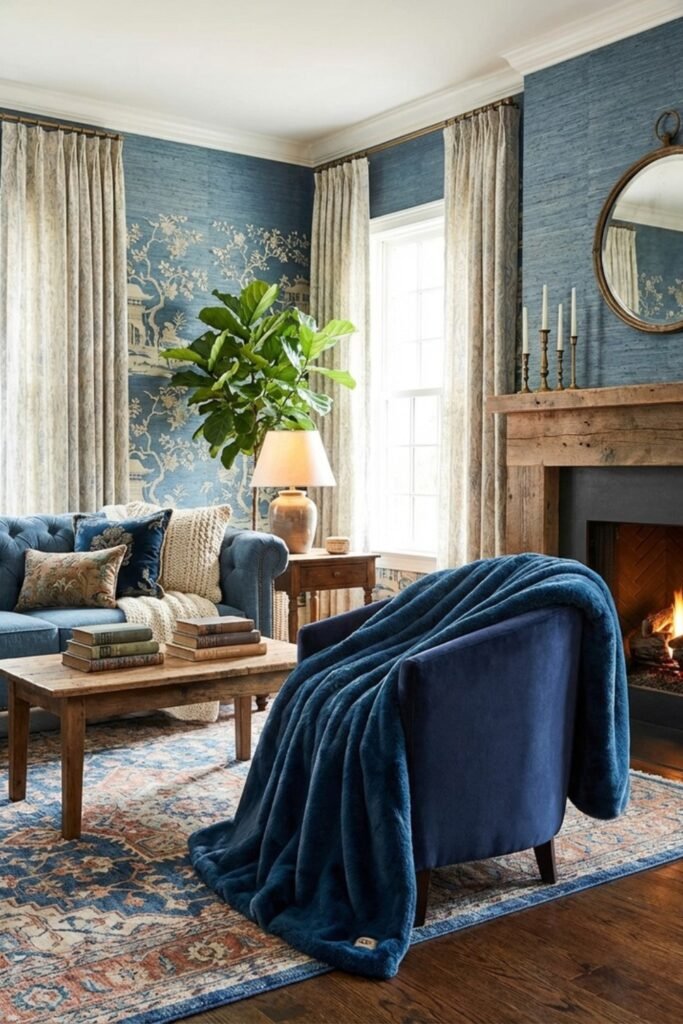
You’ll see how blue feels cozier when you layer it with natural materials.
You can use textured wallpaper, a patterned rug, wood furniture, and soft cream curtains to keep blue from feeling cold.
You should add a fireplace or warm lighting to make the space feel welcoming.
You can make blue work best when it’s surrounded by comfort, not left standing alone.
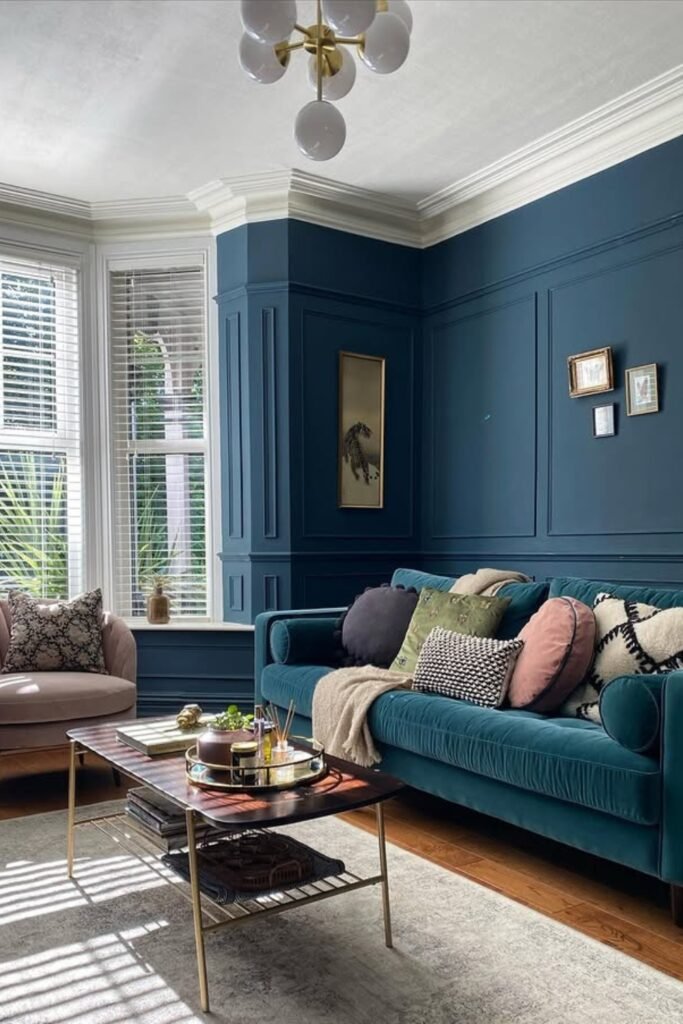
Structured Blue Panels
You should know clean wall paneling makes blue look intentional.
When you use rich blue panels, you can get depth while keeping the ceiling and trim light so the room doesn’t feel boxed in.
You might add soft pink or mixed cushions to warm up a teal sofa.
If you’re using bold blue, you can break it up with white trim and natural light, structure plus softness keeps dark tones balanced.
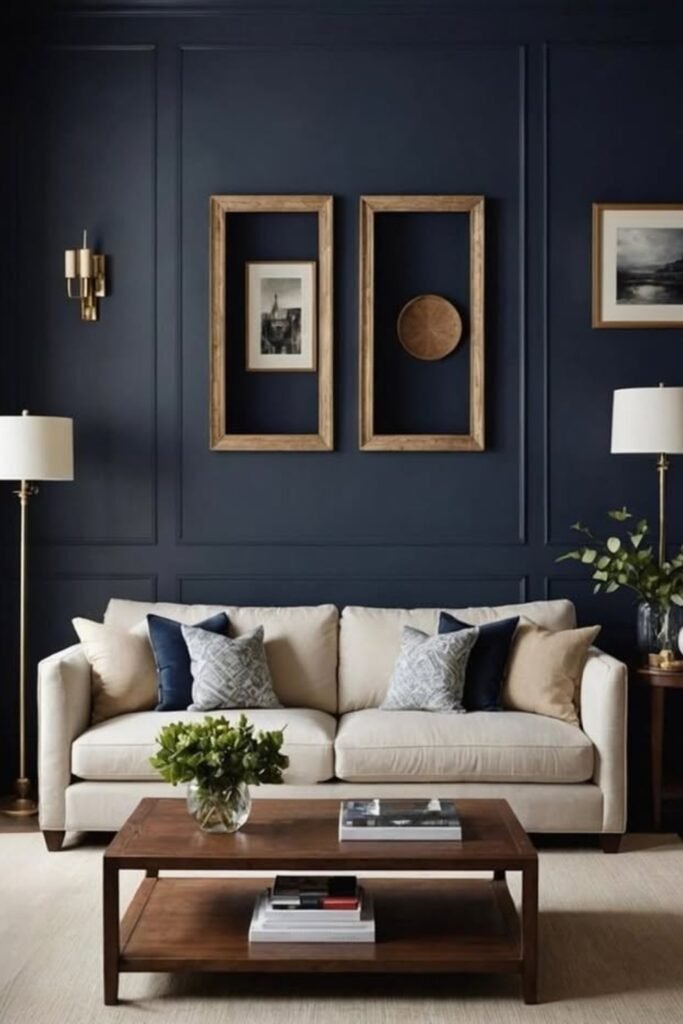
Classic Navy Contrast
If you want to calm a dark blue living room, you should use cream furniture.
You’ll notice the deep navy walls feel strong, but the light sofa, curtains, and lamps stop the room from feeling heavy.
You could add wood frames or a simple coffee table to bring warmth without distracting from the color.
You should remember contrast is what makes navy look polished, not overwhelming.
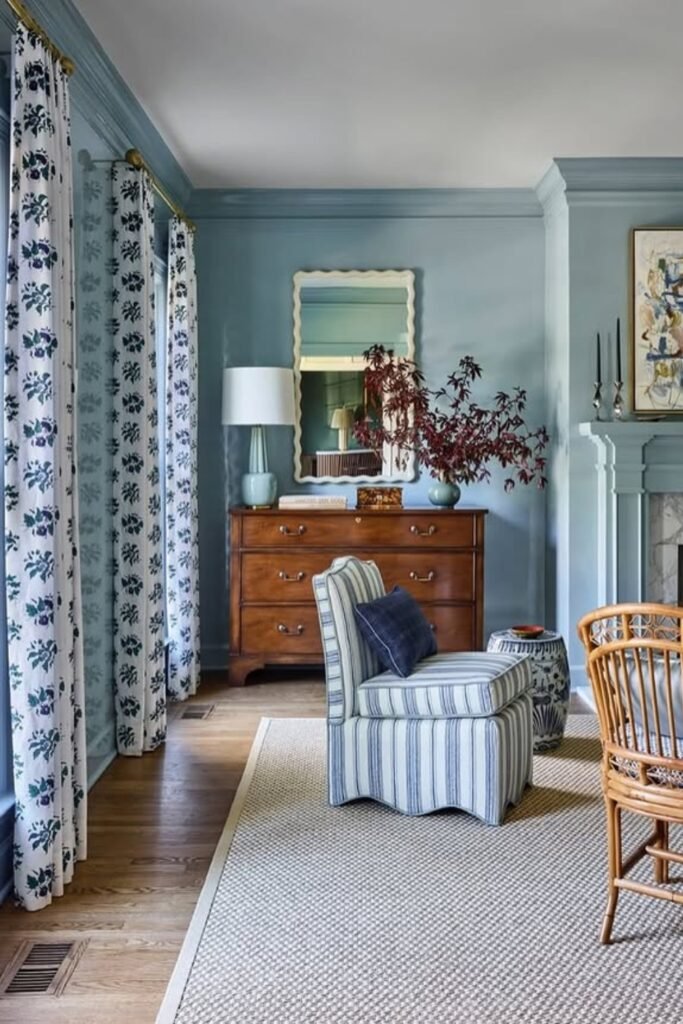
Airy Blue Charm
You can instantly relax your living room with light blue, especially when you keep the ceiling and trim crisp white.
You’ll see how soft wall colors feel fresh when paired with warm wood furniture and natural textures.
You could use patterned curtains to add movement without overwhelming the space.
If you want blue to feel open and cheerful, you should stick to lighter shades and mix in woven pieces, striped upholstery, and plenty of daylight.
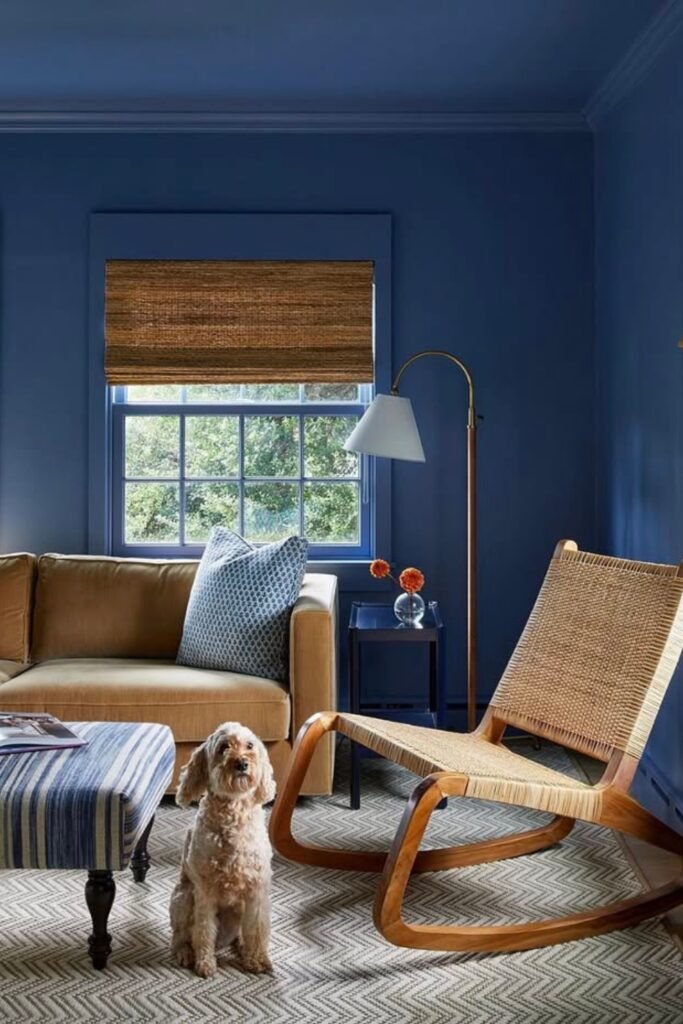
Blue with Cane
You can make bold blue feel grounded when you bring in natural materials.
When you add a tan leather sofa and a woven cane chair, you’ll see how the strong wall color instantly softens.
You might also include bamboo blinds, you’ll notice they add another warm layer that keeps the room balanced.
If your blue looks too sharp, don’t repaint it. You can simply add rattan, wood, or leather, and let those textures warm it up naturally.
Navy with Terracotta
Nothing warms a dark blue living room faster than terracotta.
You’ll notice how deep navy walls feel bold and modern, but a tan leather sofa or peach-toned nook stops the space from feeling cold.
That contrast creates energy without chaos. If your blue feels too serious, you should introduce one earthy color through furniture or an adjacent wall.
You’ll see how warm tones next to navy make the whole space feel alive.
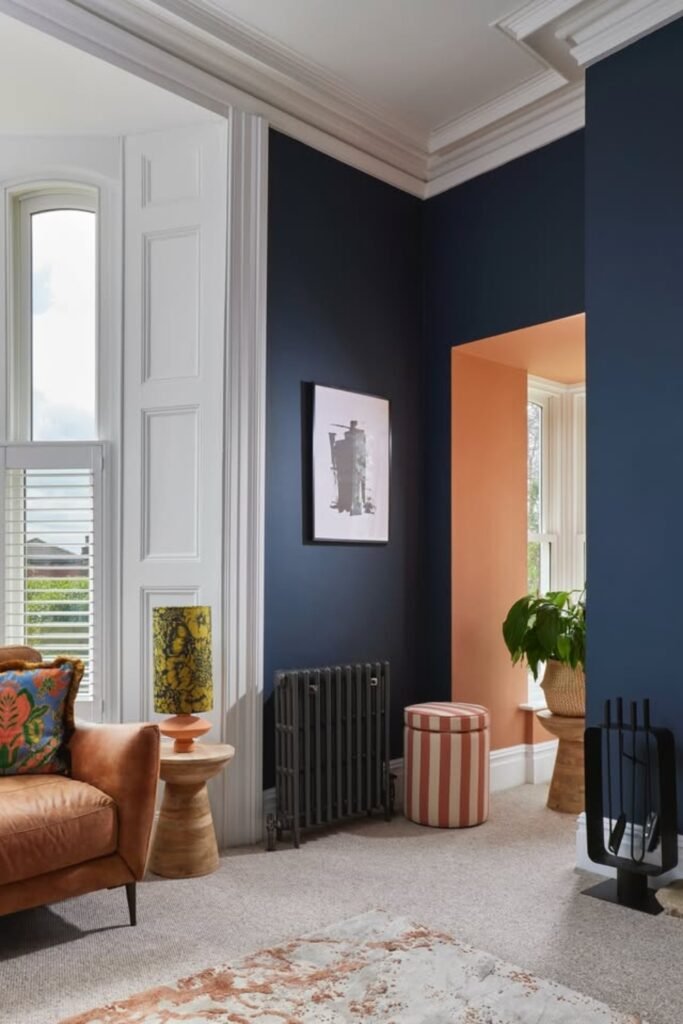
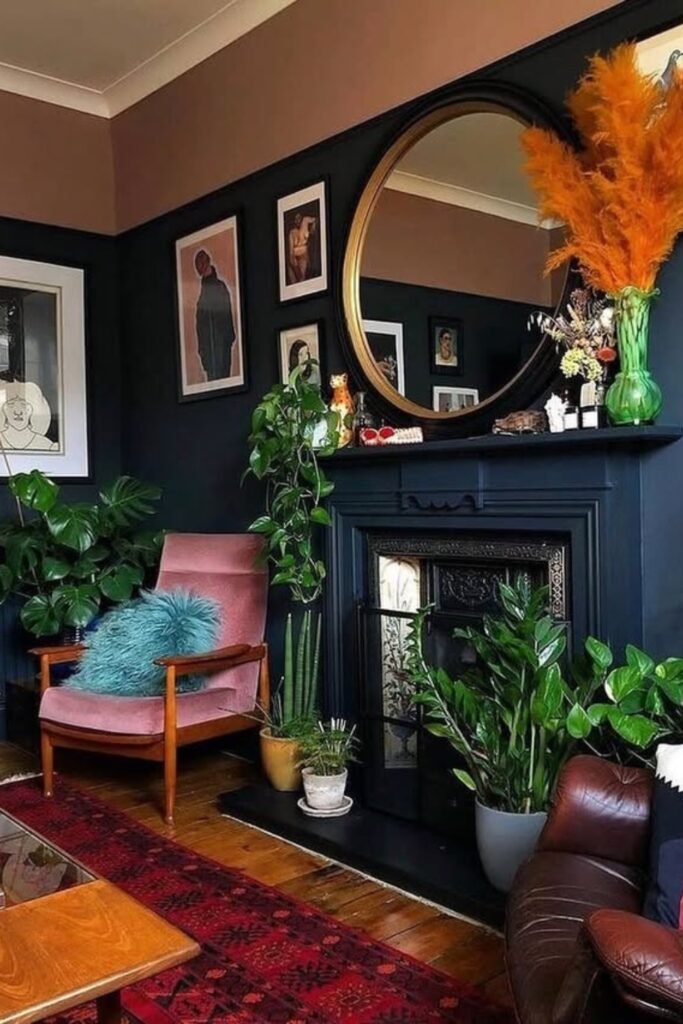
Navy with Bold Accents
You can make deep blue exciting when you stop playing it safe.
When you pair dark navy walls with rust tones, blush seating, rich wood, and greenery, you’ll see how the room instantly comes alive.
You might add one bold warm color and natural plants if your blue feels too serious. You should remember that contrast gives navy personality.
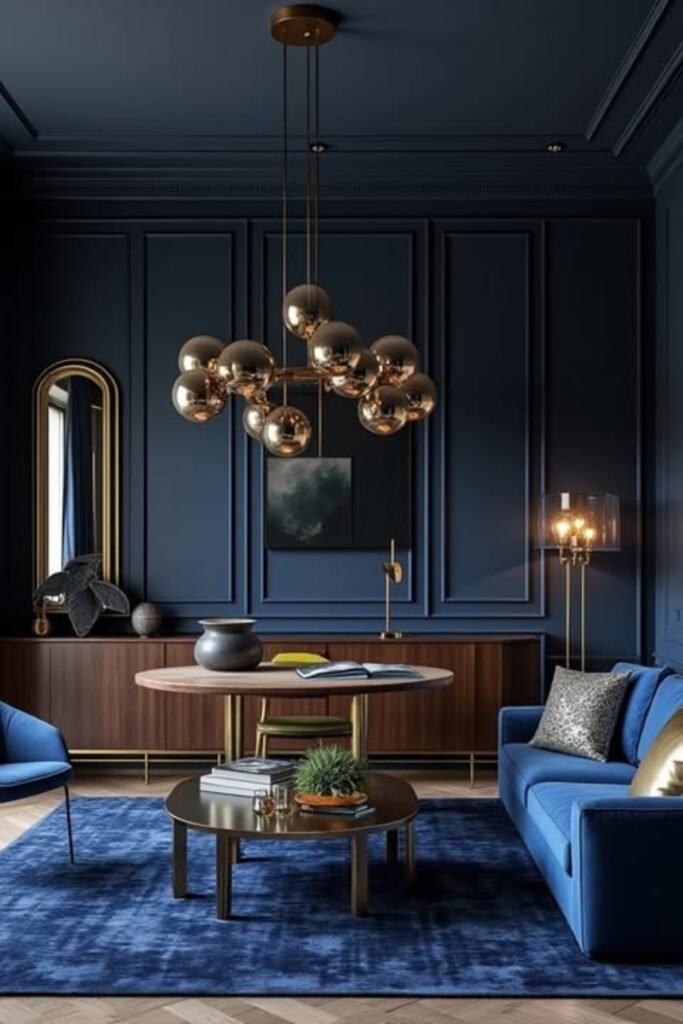
Full Blue Immersion
When you stop breaking up the color, blue becomes powerful.
You could paint walls, panels, and even the ceiling the same deep tone to create a cocoon effect.
It feels dramatic but not cold when you add a warm wood console and brass lighting.
If you want impact, you should commit to the color fully and balance it with warm metals and rich textures.
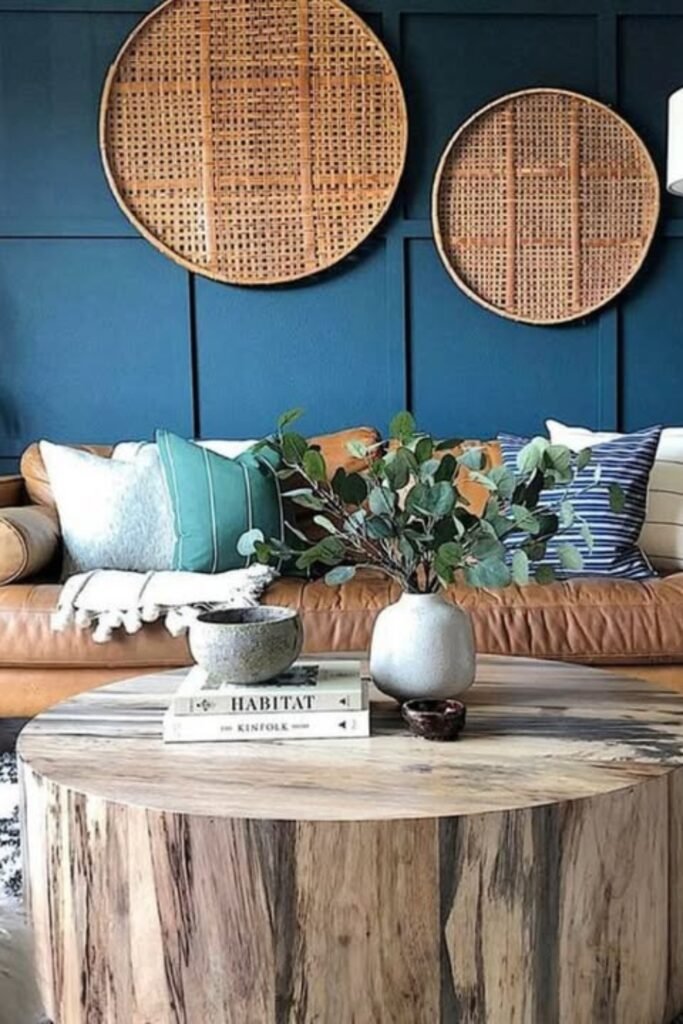
Blue and Natural
You’ll see how deep blue feels warmer when you surround it with raw, natural textures.
You might add a tan leather sofa, woven wall decor, and a chunky wood coffee table to soften bold walls.
If your blue looks too cool, you can add organic materials, nature tones balance strong paint better than adding more color.
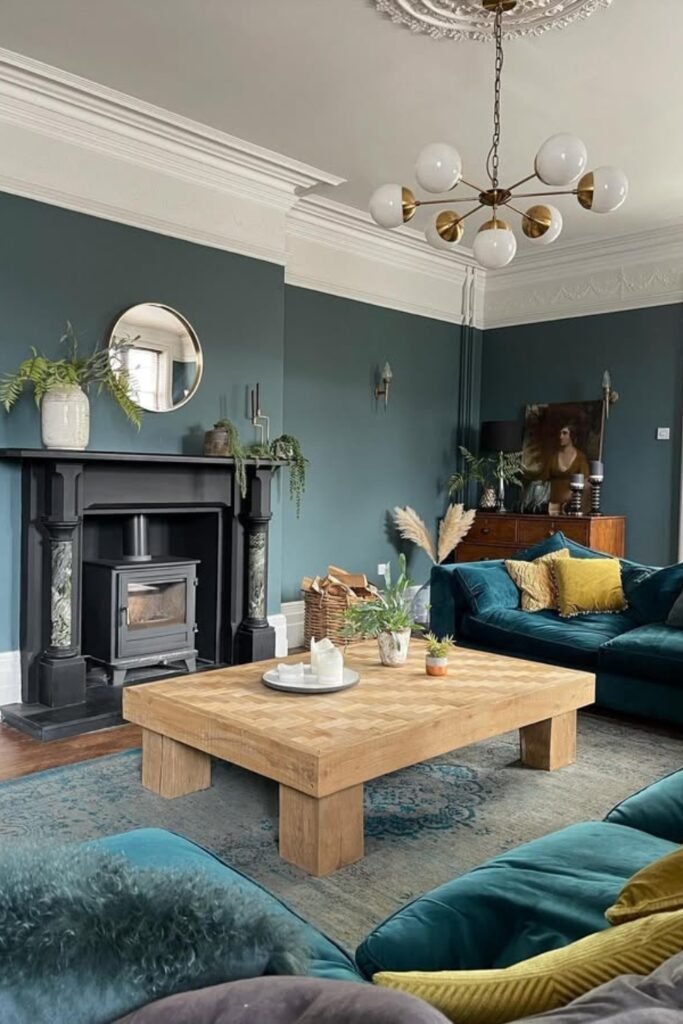
Teal and Mustard
You can make teal walls feel cozy by pairing them with bold warmth.
When you add mustard velvet, burnt orange curtains, and brass lighting, you’ll see how the space feels energetic and inviting.
If you choose a saturated blue, you should avoid diluting it with pale neutrals. You can add one strong warm color and let it stand out.
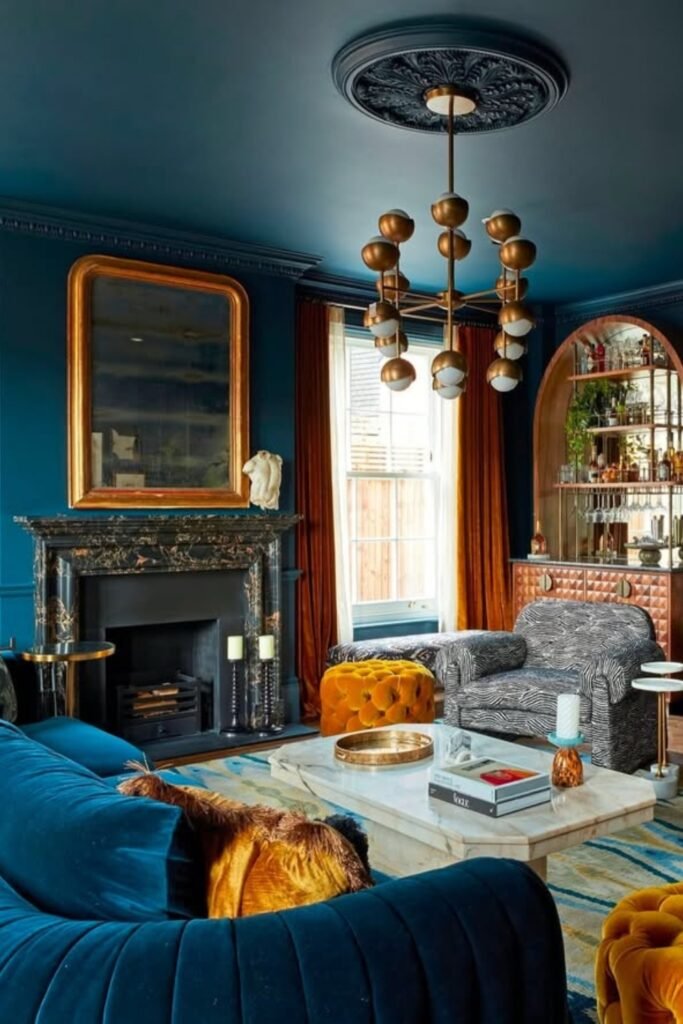
Soft Blue Built-Ins
Light blue works beautifully when you carry it across walls and cabinetry.
You’ll notice how using the same soft tone on built-ins, trim, and fireplace surround makes your room calm and cohesive.
You should keep furniture and accents light, cream sofas and a marble mantel help keep it fresh.
If you want subtle color without drama, you could repeat muted blue on architectural details.
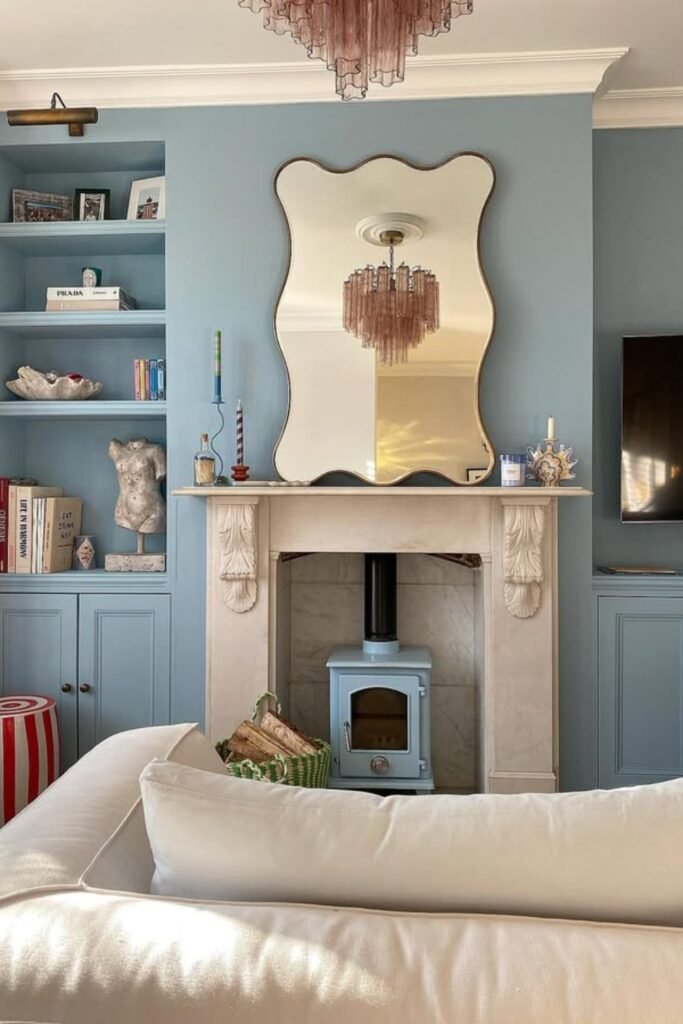
Blue Feature Wall
You don’t always need full coverage, sometimes one wall is enough.
When you paint a deep blue wall around a fireplace or built-ins, you can create a strong focal point without shrinking the space.
If you’re unsure about going full blue, you could start with one architectural section and keep furniture neutral.
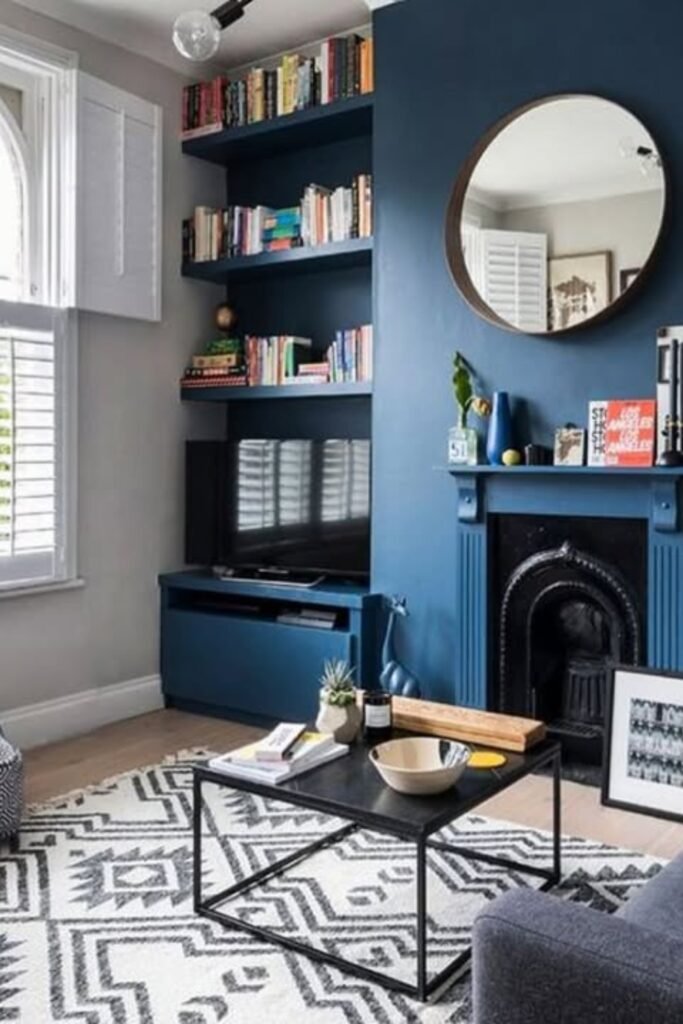
Blue Gallery Wall
You can make blue the perfect backdrop for art.
When you use a green-blue wall, you’ll notice how frames, wood tones, and vintage pieces stand out without feeling busy.
If you love collected decor, painting the wall first can unify everything instantly.
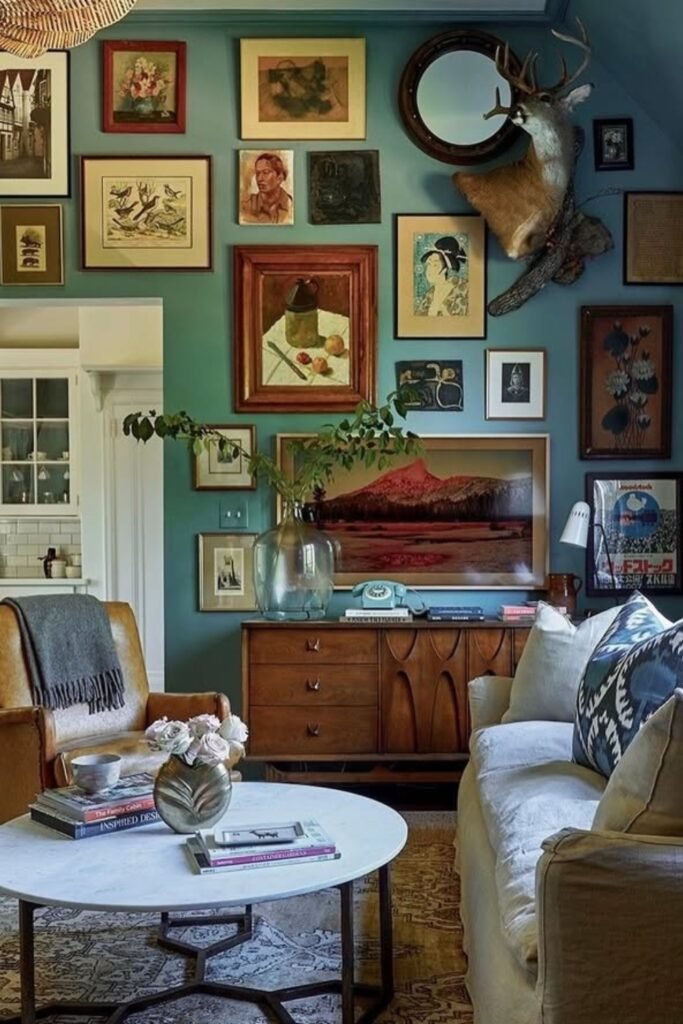
Teal with Neutrals
You might make teal feel calmer by framing it with white trim and ceilings.
You’ll see how muted blue-green walls stay bold while crisp molding keeps the room from feeling heavy.
You should add a velvet sofa for depth and light wood furniture to soften everything.
If you choose a medium blue, surround it with clean white and warm wood, contrast keeps the space fresh.
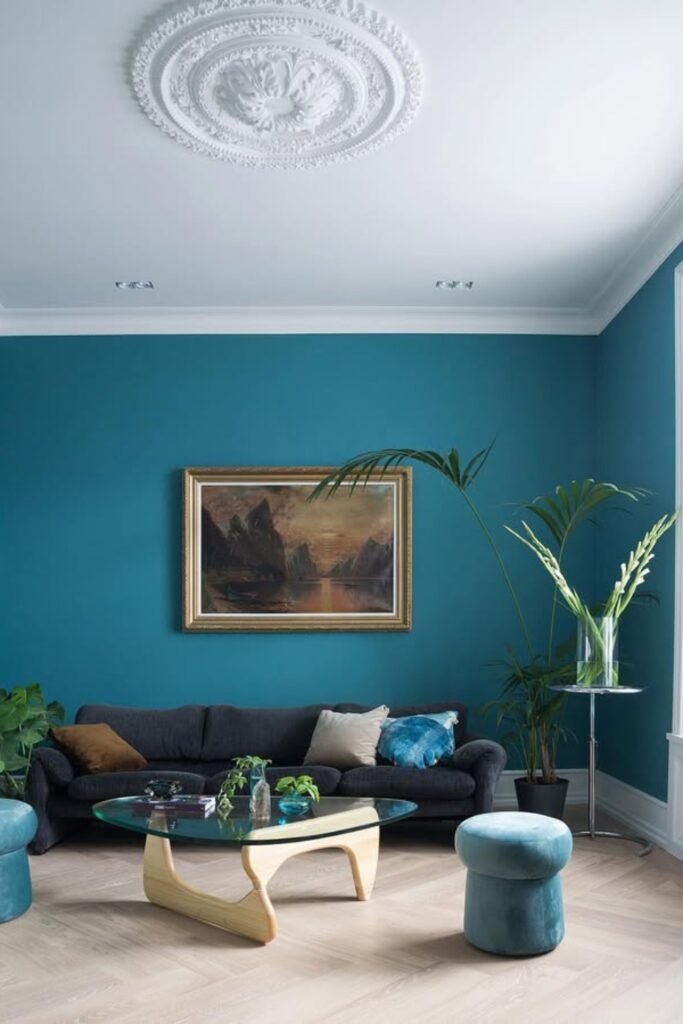
Teal and Light
A saturated teal can still feel fresh when you protect the light.
You can use a white ceiling, crown molding, and large windows to stop the bold wall color from taking over.
You might add pale flooring and glass furniture to keep the space open, while plants soften the edges.
If you want strong blue without heaviness, you should keep everything above and below bright. Balance makes bold color livable.
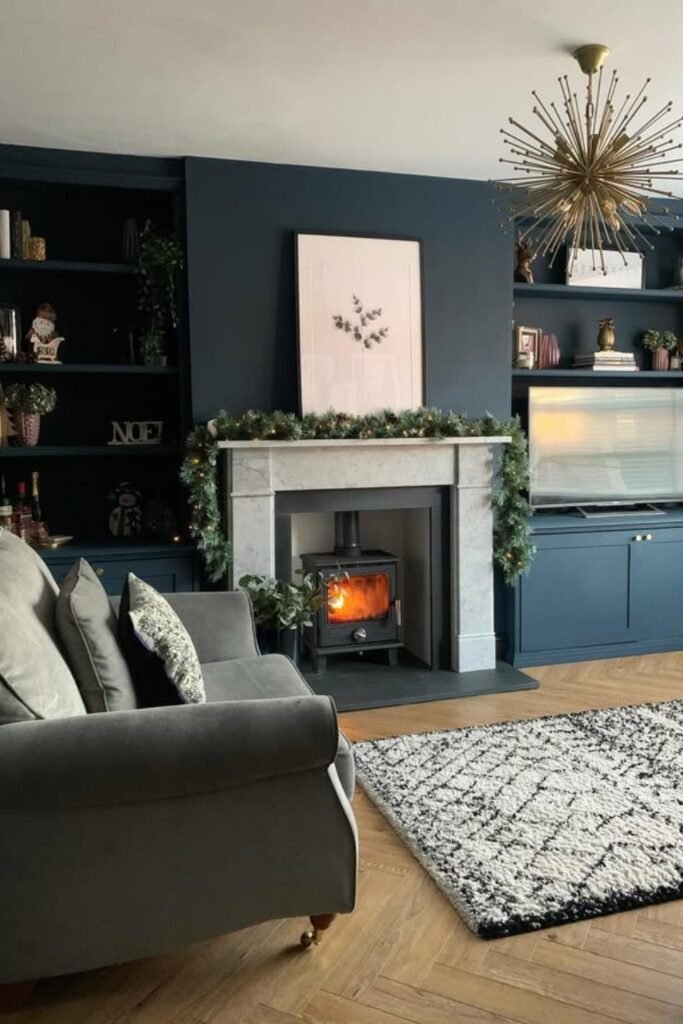
Cozy Navy Corner
You’ll see how dark blue feels warmer when firelight hits it.
When navy built-ins create depth, you can use a stone fireplace and soft lighting to make the space inviting.
You should layer in textured rugs and neutral armchairs to soften the walls. If you’re using deep blue, you could add warm light sources and tactile fabrics.
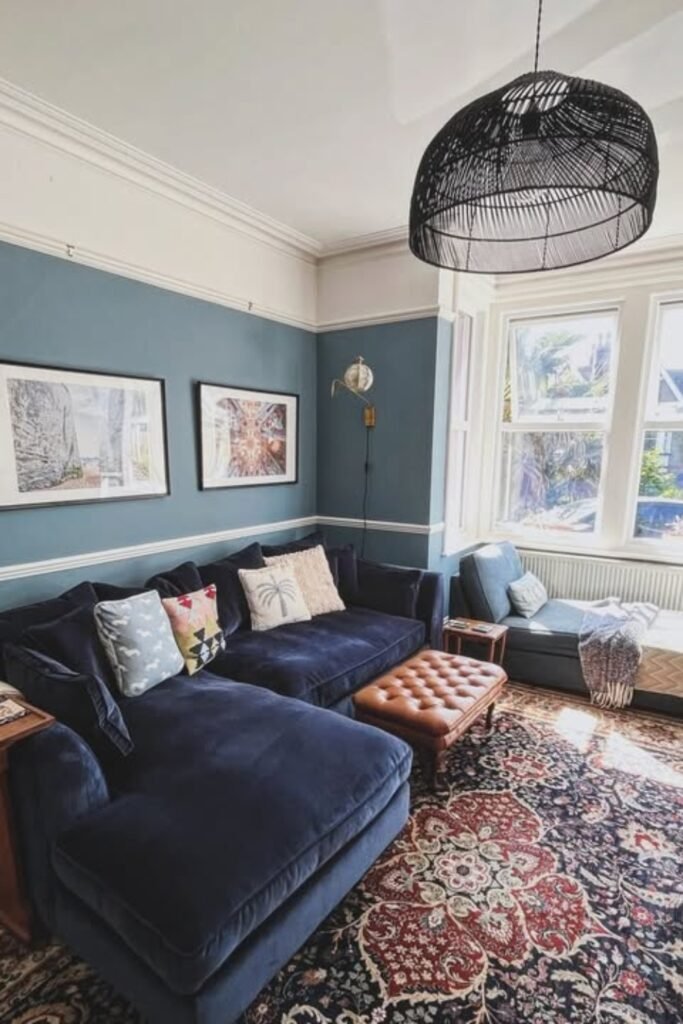
Blue with Contrast
You can keep bold blue from overwhelming a bright living room by painting only the lower half of a wall.
When you add deep teal below the trim, you’ll see how it adds color and character while white upper walls reflect light.
You might anchor the room with a navy sofa and patterned rug. If you love bold blue but want balance, you should try a two-tone wall instead of full coverage.
You may like to read!
