
25 One Bedroom Apartment Ideas
You walk into your one-bedroom apartment, and even after cleaning, you still feel like something is off.
If you fix the layout, you will notice how everything starts to fall into place.
In this article, you’ll learn how you can arrange your one-bedroom apartment, with 25 unique ideas to try.
Let’s jump in!
How To Arrange One Bedroom Apartment?
Arranging a one-bedroom apartment is really about how you use your space, how you guide the flow, and how you create clear zones.
When you plan things thoughtfully, you can turn even a small apartment into a place where you feel open, comfortable, and fully functional.
When you start by defining areas, you can immediately feel more in control of the space.
In the living room, you should position the sofa so you anchor the room, usually facing something you naturally look at, like a TV or a window.
If you have an open layout, you can use rugs so you visually separate zones, and you might add a small dining table or breakfast bar.
You should always choose multi-functional furniture when space is limited.
You can use storage ottomans, beds with drawers, nesting tables, and wall-mounted shelves so you reduce clutter while saving floor space.
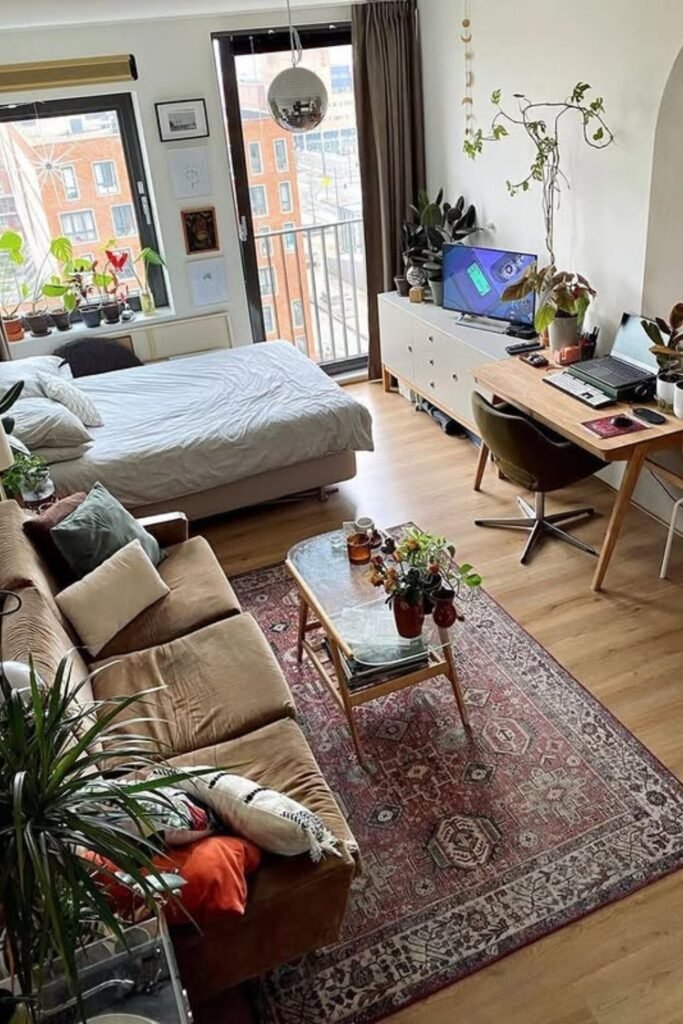
Bed by Window
When you place your bed next to the window, you instantly solve two things at once.
You can save wall space, and you can let natural light pull you into the sleeping area.
You should keep the bed low and close to the window frame, then you can let the sofa and rug define everything else.
If you want the space to feel open but still organized, you’ll notice this layout gives you flow without needing walls or dividers.
Bedroom Behind Storage
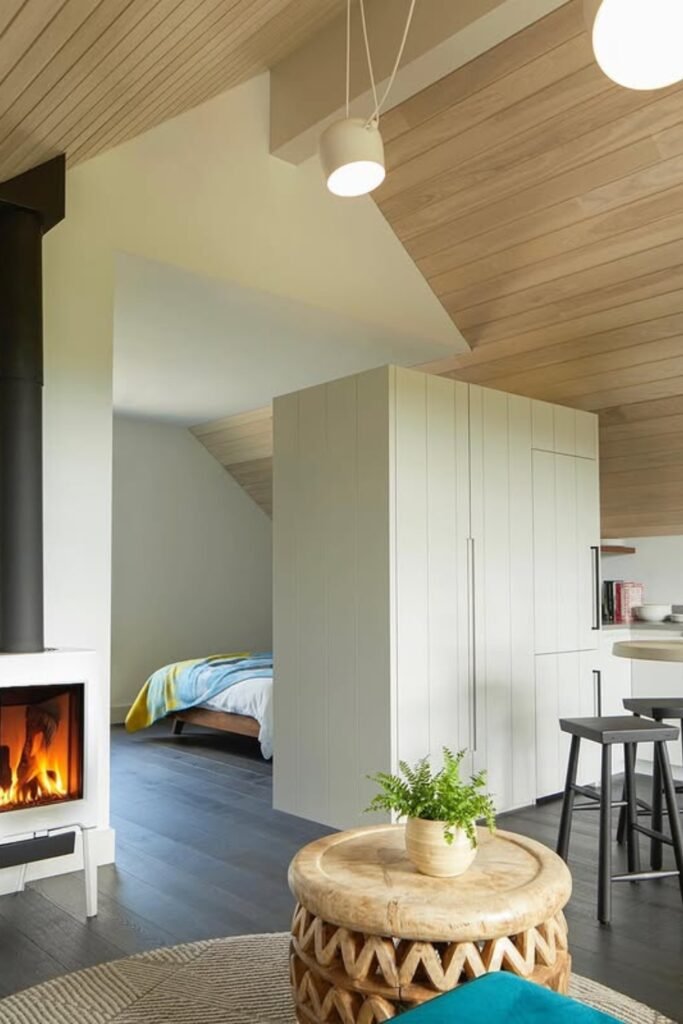
You’ll find this works best if you live in an open one-bedroom apartment or a loft-style space where you don’t have many walls.
You can use a wardrobe or custom cabinet as a soft divider, then you place your bed right behind it.
You get a quieter sleeping zone, and you won’t feel boxed in, plus you can replace bulky dressers with built-in storage.
Bedroom Wrapped Greenery
When you want your bedroom to feel calm, you don’t always need walls.
You can use plants as a soft boundary, especially if your sleeping area opens into the living space.
You should place taller plants near the edge of the bedroom zone, and you can keep lighter ones closer to the bed.
When you do this, you filter light, add privacy, and you still keep the apartment feeling open and natural.

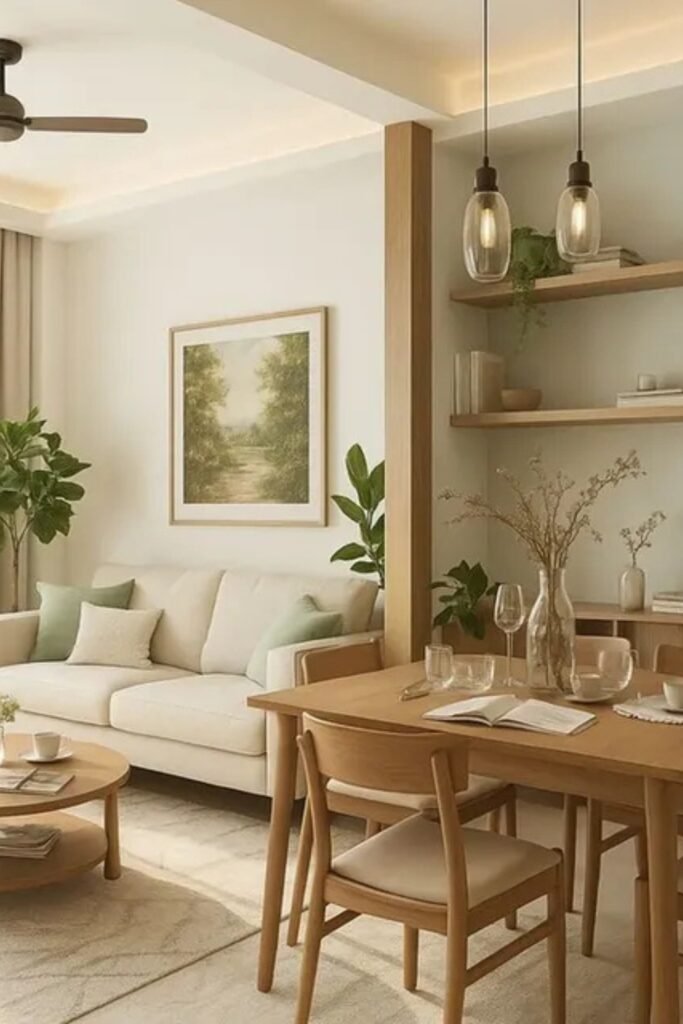
Calm Zoned Living
When you keep your main living area calm and clutter-free, you’ll notice your bedroom automatically feels more restful.
You should use soft colors, light wood furniture, and built-in shelving so you reduce visual noise.
When the living and dining areas stay visually quiet, you won’t need heavy separation for your bedroom to feel relaxing.
Bedroom Upstairs Zone
If you place your bedroom upstairs, you can separate sleep from daily noise without adding walls.
You should keep the lower level clean and functional, then you can reserve the upper floor just for sleeping.
When you use soft lighting and minimal furniture upstairs, you’ll feel privacy without closing off the apartment.

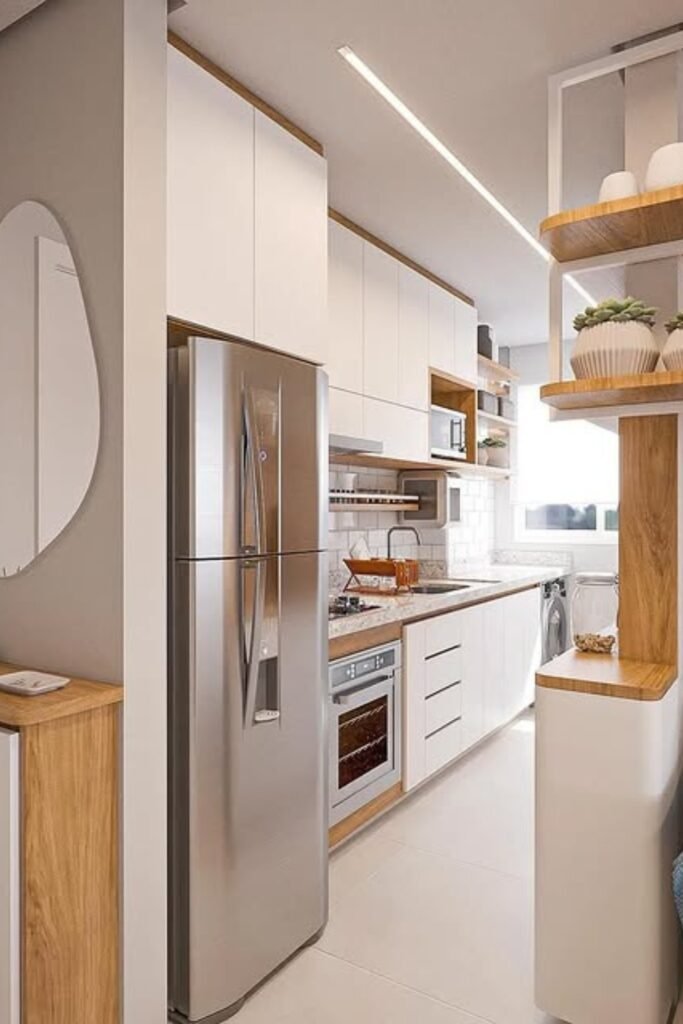
Bedroom Kept Separate
When you block kitchen views, you can make your bedroom feel calmer, even in a small one-bedroom apartment.
This works well if your bedroom sits close to the main living area. You might use tall cabinets, partial walls, or shelving so cooking clutter doesn’t spill into sightlines.
When the kitchen stays visually contained, you’ll find it easier to relax and disconnect at night.
Quiet Visual Flow
When you keep the living and dining area visually light, you help your bedroom feel calm without any divider.
You should stick to one color palette, low-profile furniture, and clean sightlines so your eyes don’t feel overwhelmed.
When the main area feels controlled, you’ll notice the bedroom feels more private, even without doors.

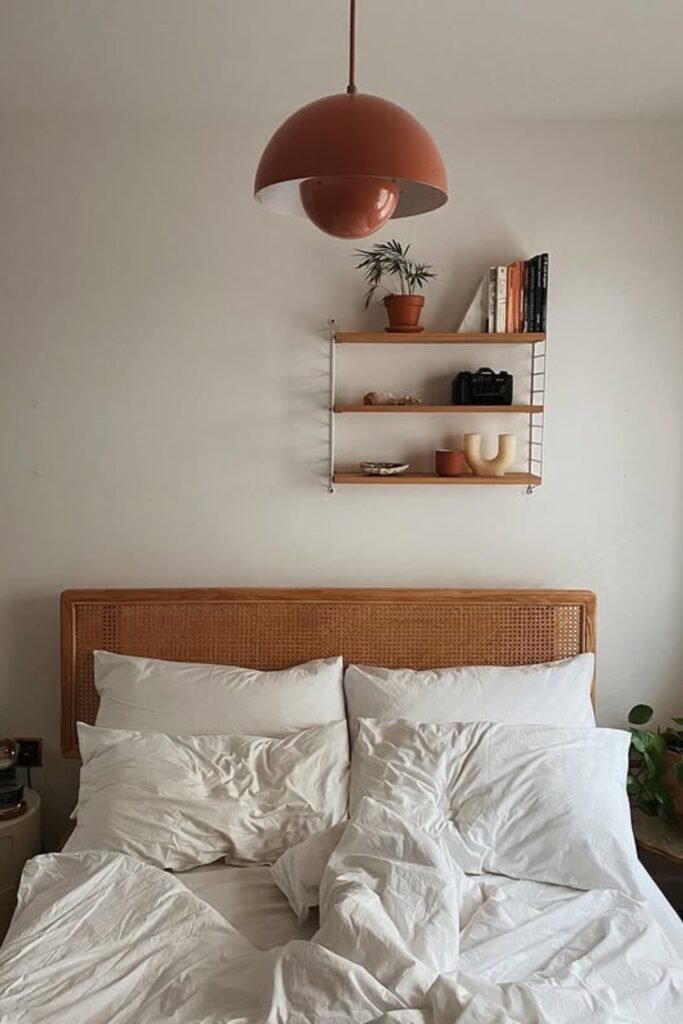
Simple Bedroom Focus
This is especially helpful if you’re working with a small one-bedroom apartment.
You should stick to a low bed, light bedding, and just one or two wall-mounted shelves instead of bulky furniture.
By lifting items off the floor and keeping colors calm, you’ll keep the room functional without making it feel cold.
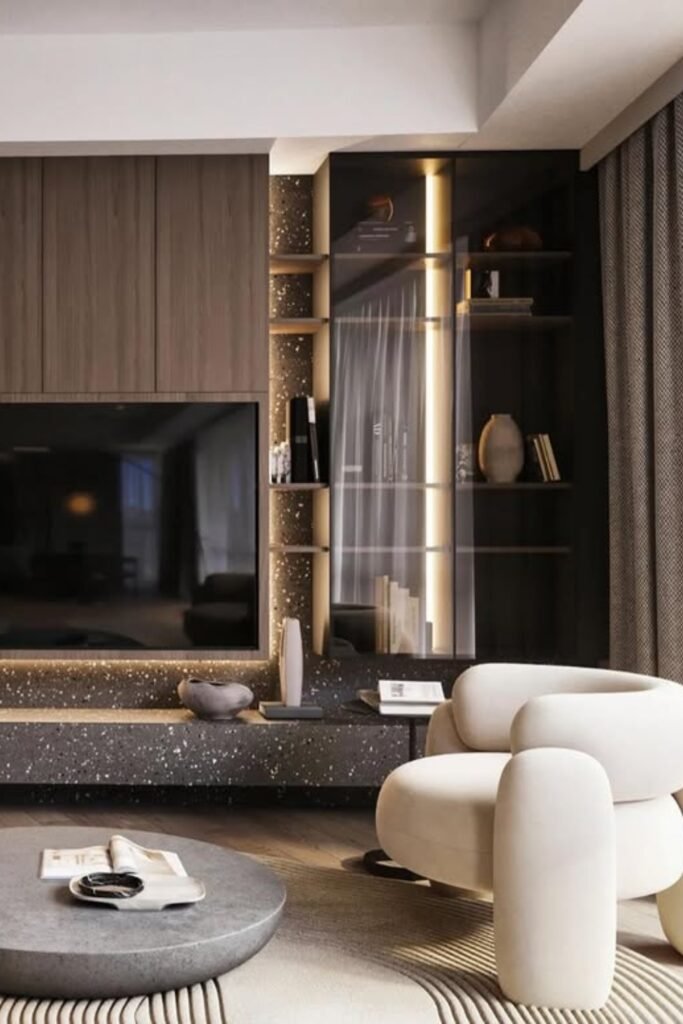
Bedroom Protected Sightlines
When you keep bold design elements away from your bedroom sightlines, you help your sleeping area stay calm.
You can place darker tones, built-ins, or statement pieces on the opposite wall, then keep the bedroom-facing side soft and minimal.
When your eyes don’t land on busy visuals from the bed, you’ll find it easier to switch off at night.
Layered Bedroom Comfort
When you layer your bed properly, you can make a standard one-bedroom feel finished without adding furniture.
You should start with a padded headboard, then you can build layers with neutral pillows and one textured throw.
If you keep the color range tight, you’ll make the room feel larger while still warm and complete.

Bedroom Away Activity
This layout works best if your living and dining areas sit closer to windows and natural light.
You can let activity happen at the bright end of the apartment, then you place the bedroom deeper inside.
When movement and routines stay away from the bed, you’ll feel calm without needing doors.
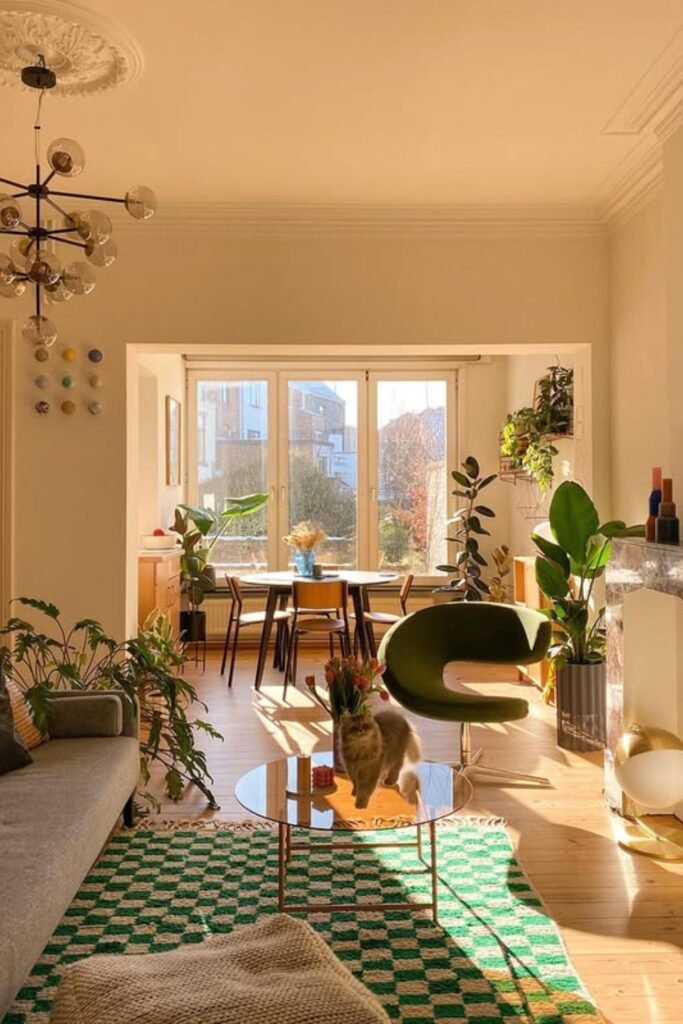
Bedroom Softly Divided
When you let your bedroom sit behind a light divider, you keep the apartment open while still creating a sleep zone.
You can use a wardrobe, curtain, or tall plant between the bed and seating area, and you should keep colors consistent on both sides.
You get privacy when you need it, but you still keep the space connected.

Bedroom Meets Living
This setup works well if you’re dealing with limited square footage or awkward layouts.
You can use soft lighting, layered textiles, and a calm color palette so the bed doesn’t feel exposed.
When you keep everything low and cozy, you make the bedroom feel intentional during the day.

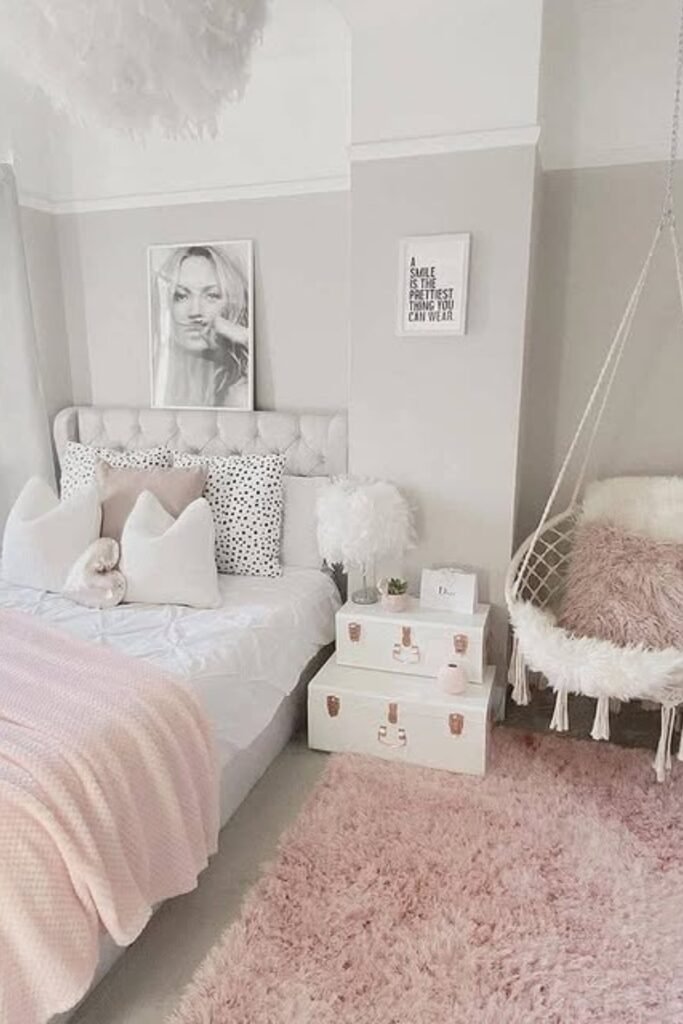
Cozy Corner Bedroom
When you use a corner layout, you can make a small bedroom feel intentional instead of squeezed in.
You should push the bed into the corner, then you can soften the open side with a chair, hanging seat, or layered textiles.
When you treat the corner as a feature, you free up walking space and help the bedroom feel warmer and calmer.
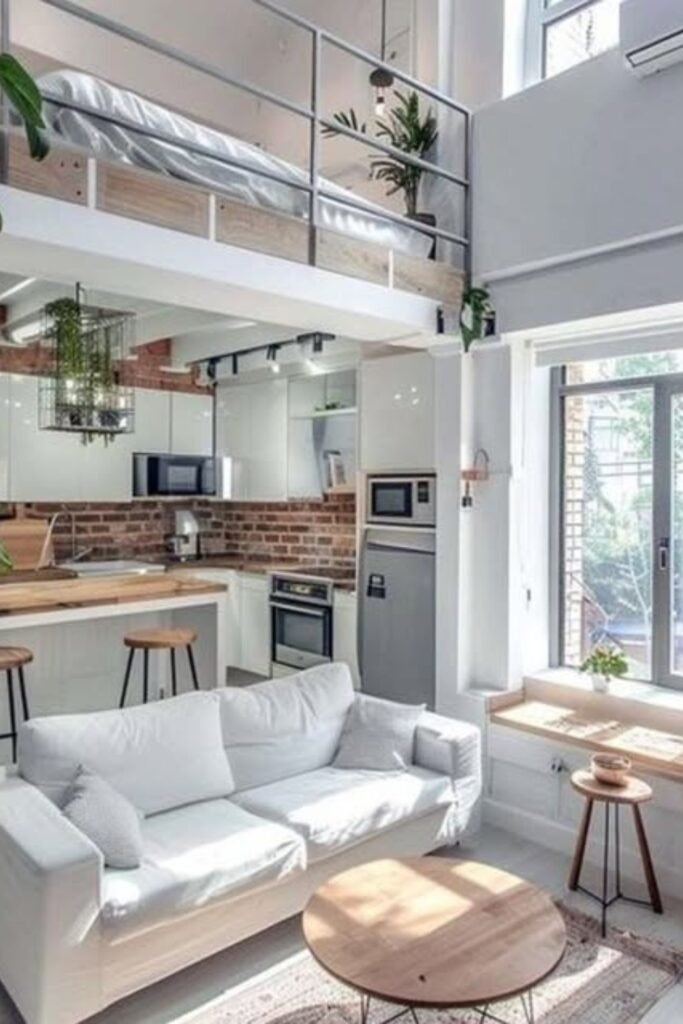
Elevated Bedroom Loft
When you lift your bedroom above the main living space, you instantly give yourself privacy without losing floor area.
You should keep the bed simple and low-profile, then you can use the space underneath for your kitchen or seating.
When you add plants or railings up top, you soften the edge so you feel secure, not exposed.
If you go vertical like this, you turn one room into two clear zones without walls.
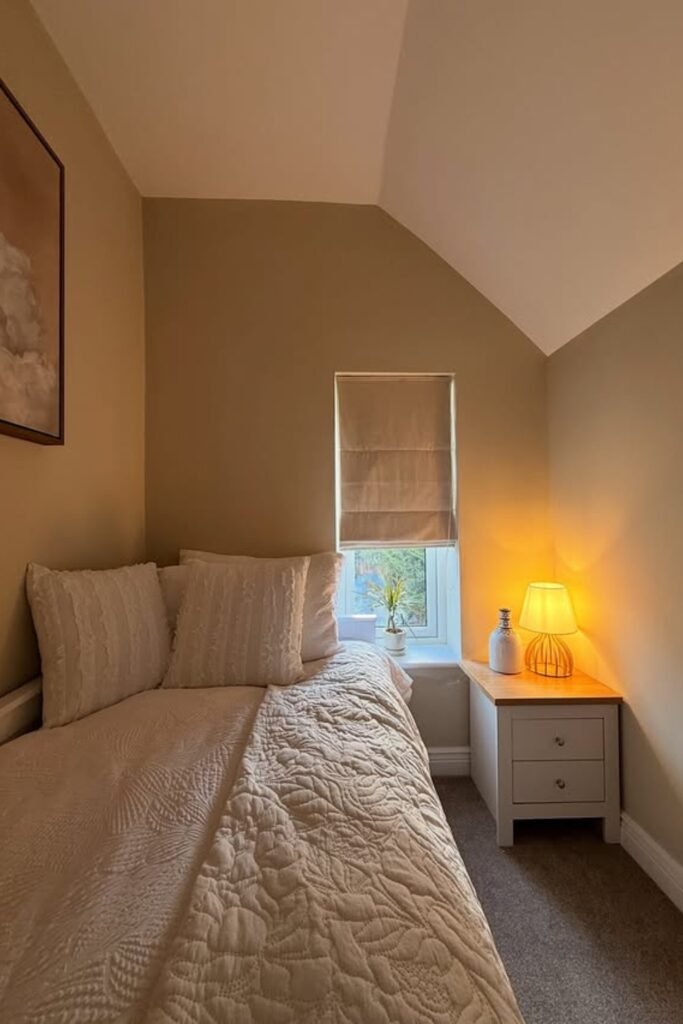
Bed Under Slope
This works best if you live in an attic-style or top-floor one-bedroom where wall height is limited.
You should place the bed where you don’t need to stand, then you can keep storage low and simple.
When you use soft lighting and light wall colors, you stop the slope from feeling heavy while making the most of space you might otherwise ignore.
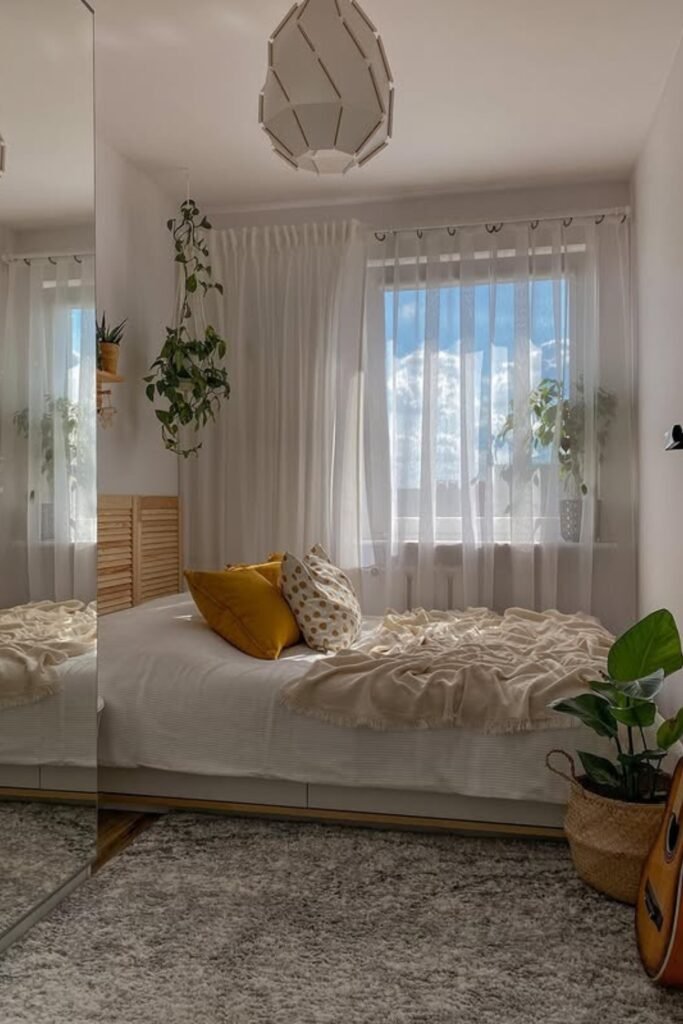
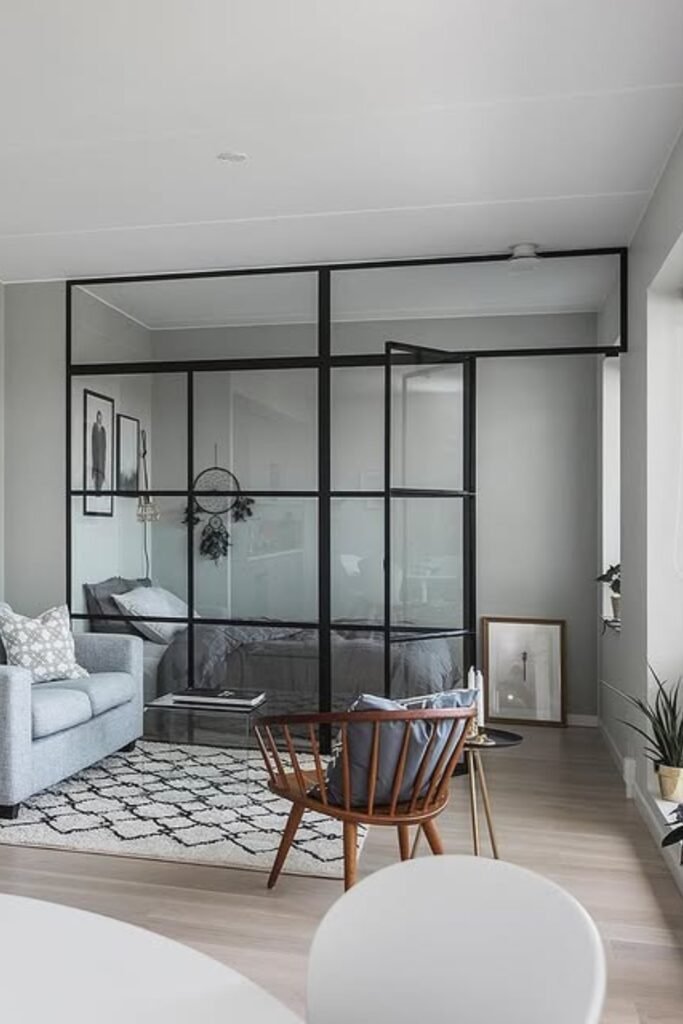
Bedroom Behind Glass
When you use glass to separate your bedroom, you keep light flowing while still creating a clear sleeping zone.
You can add a glass partition or wardrobe so the bedroom feels open during the day, then more private at night with curtains or softer lighting.
If you keep the bed low and colors neutral, you won’t feel like the glass is harsh or cold.
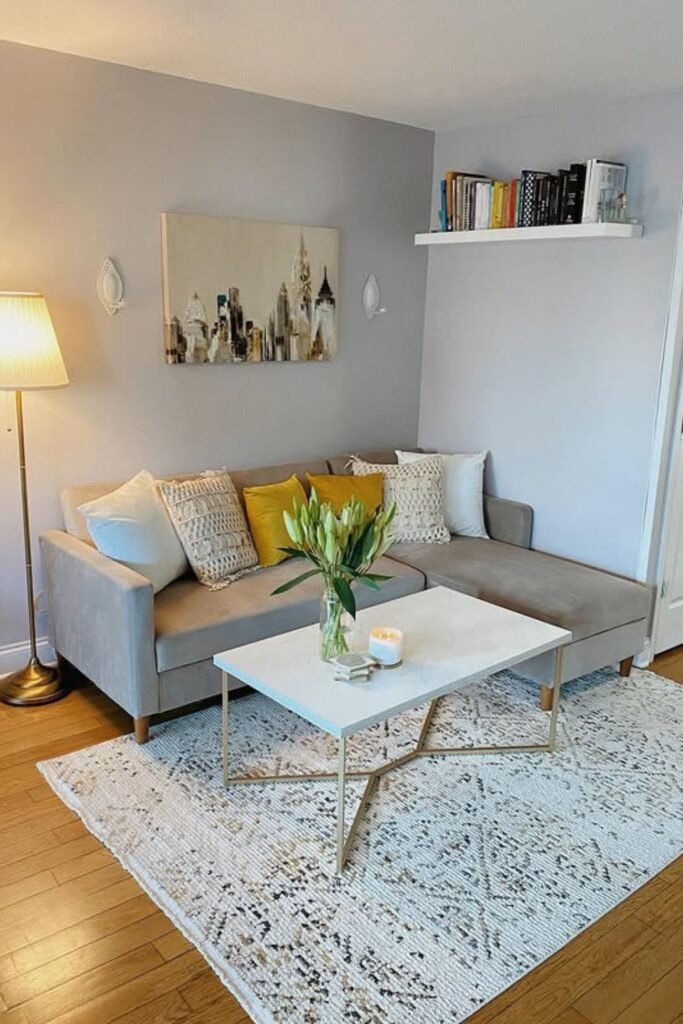
Bedroom Framed Softly
This layout works well if your one-bedroom apartment is long and spaces flow into each other.
You might use a half wall, glass panel, or open frame to mark the sleeping zone, then you should keep furniture light around it.
The bed feels intentional and private, while you still keep the apartment open and connected.

Bedroom Calmed Nearby
When you keep your seating area simple, you help your bedroom stay visually calm, even when it’s just a few steps away.
You should use clean lines, one rug, and limited décor so nothing feels loud before you reach the bed.
When the living zone stays controlled, you’ll notice the bedroom feels restful without needing dividers or walls.
Low Bed Layout
This works best if ceiling height or window placement feels tight in your one-bedroom apartment.
You can use a platform bed or built-in base, then you should keep storage tucked underneath or on nearby walls.
The low profile keeps sightlines open and lets light travel further, so the bedroom feels grounded instead of boxed in.
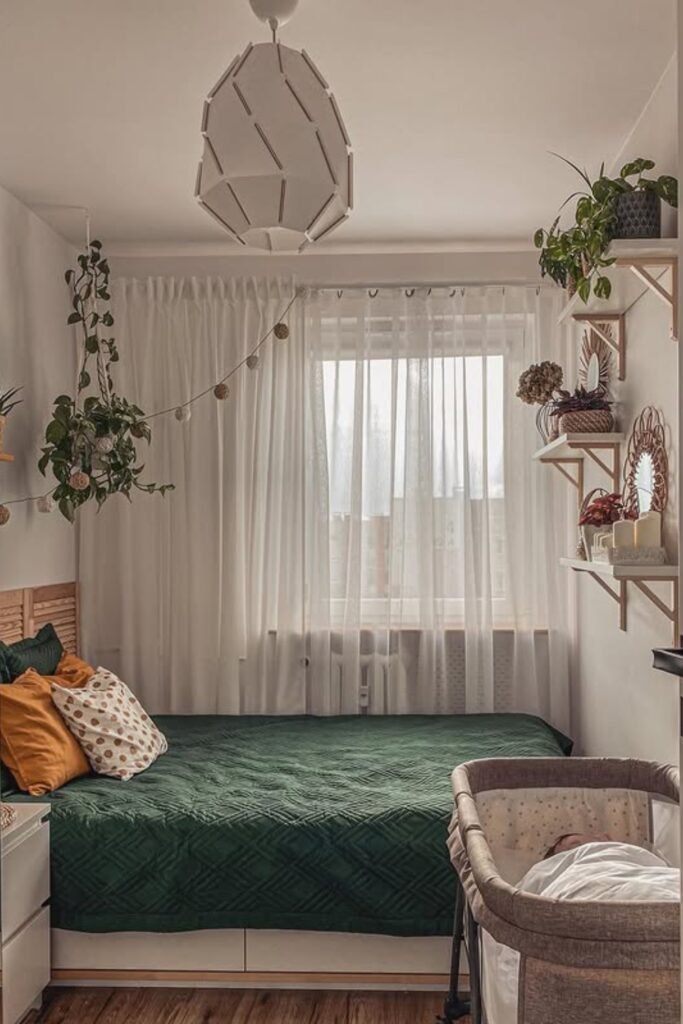
Patterned Wall Anchor
When you use a patterned wall behind your bed, you give the bedroom a clear focus without adding furniture.
You should limit the pattern to one wall, then you can balance it with simple bedding and neutral colors.
The wall does the visual work for you, so the room feels finished without clutter.
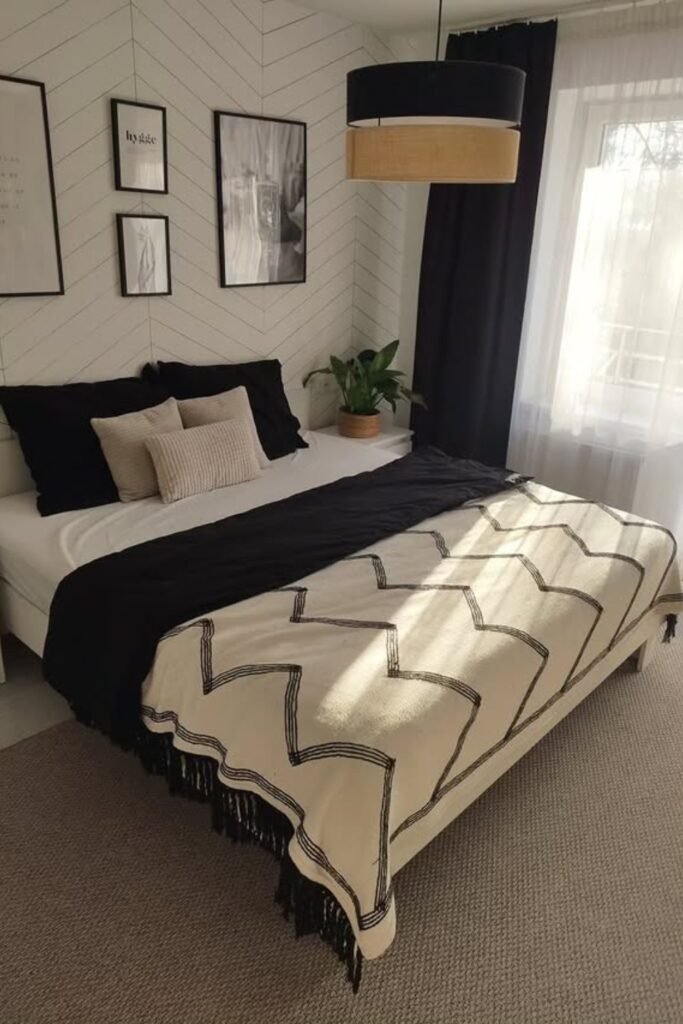
Airy Brick Bedroom
This works best in one-bedroom apartments with industrial details or older structures.
You should keep the bed simple and low, then you can balance the rough texture with white bedding and soft curtains.
When natural light hits the brick, you stop it from feeling heavy or overpowering.
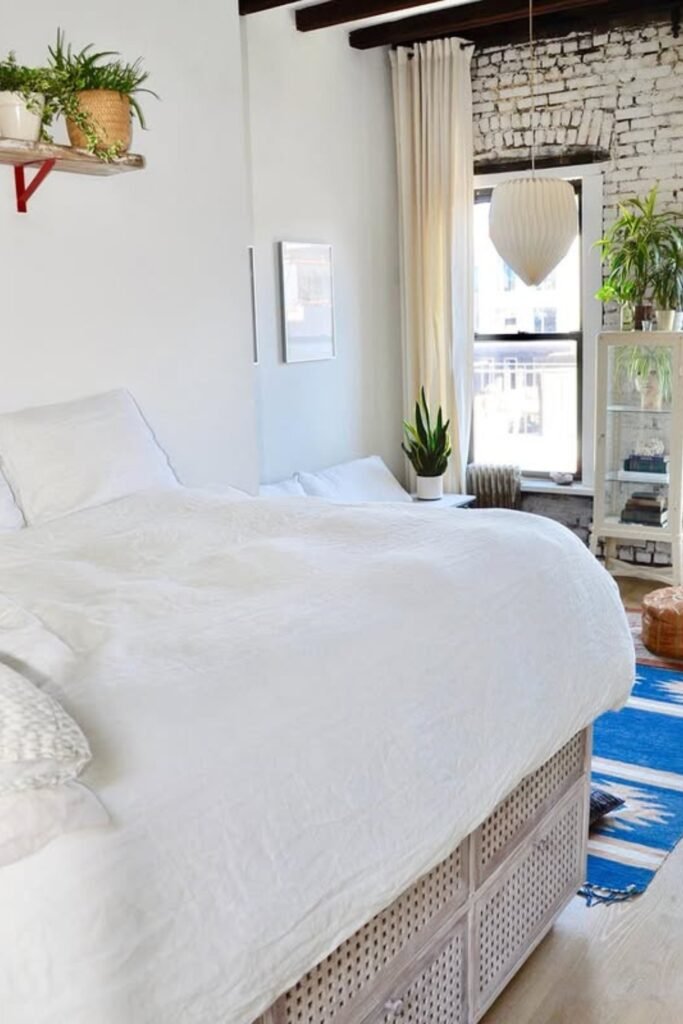
Shelved Bedroom Divider
When you use open shelving to separate your bedroom, you get privacy without blocking light.
You can place shelves between the sofa and bed, then you should mix closed boxes with a few open pieces so things don’t look messy.
You get storage, separation, and airflow at the same time, while the bedroom stays calm and never boxed in.
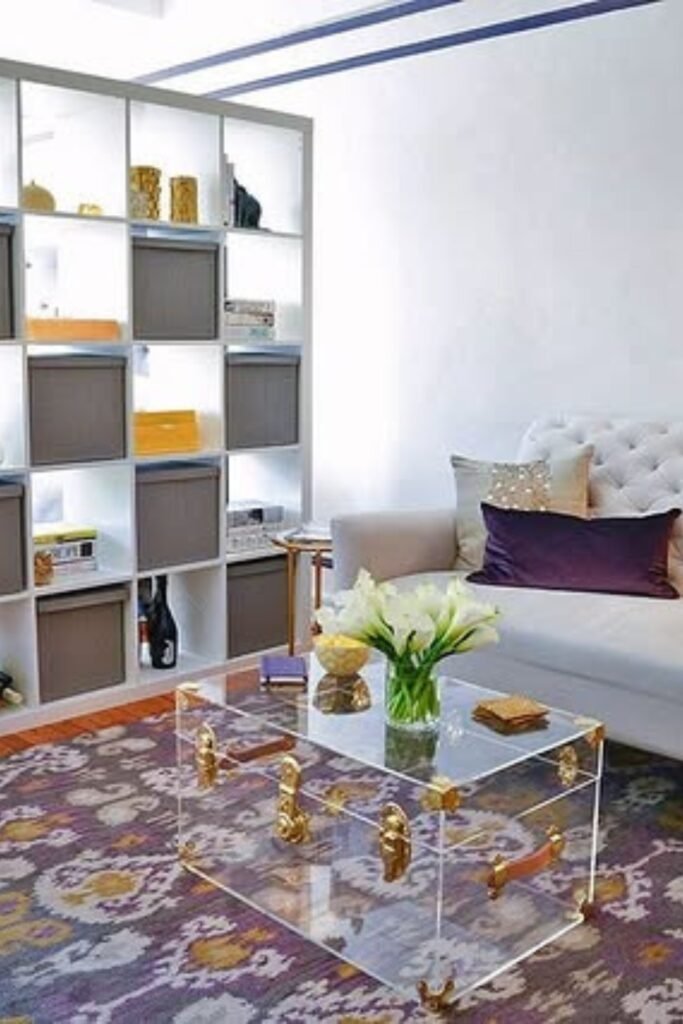
Glass-Walled Bedroom
This setup works best if windows are limited and solid walls would darken the apartment.
You can add curtains or blinds when you need privacy, then keep them open during the day.
You’ll feel that the bedroom is separate and intentional, while the apartment stays open and visually spacious.
Raised Bedroom Retreat
When you lift your bedroom onto a mezzanine, you create instant separation without shrinking your living area.
You should keep the lower level open for daily life, then reserve the raised area only for sleep.
When you use warm lighting and simple railings, you keep the bedroom calm and private, while the rest of the apartment stays social and open.

You may like to read!
