
24 Kitchen Open Shelf Styling Ideas
You set up open shelves because they looked great online.
Then you filled them, stepped back, and something felt off. The shelves looked messy instead of styled, cluttered instead of calm.
You tried removing a few things, then added them back, but nothing fixed it.
That’s because open shelves don’t fail due to bad taste, they fail because no one tells you how to use them.
In this article, you’ll learn how to style kitchen open shelves in a way that actually works in real homes, and 24 ideas that you can try.
Let’s jump in!
How To Style A Kitchen Open Shelf?
When you style a kitchen open shelf, you’ll notice how it can make your kitchen feel more organized, functional, and visually appealing.
You can use open shelves to display beautiful kitchen items while keeping the things you use every day easy to reach.
If you focus on balancing practicality and decoration, you’ll see your shelves look neat instead of cluttered.
You should start by choosing a color theme or style. When you stick to two or three main colors, you’ll create a cohesive look.
You’ll find that neutral tones like white, beige, wood, or soft pastels help keep the shelves feeling clean and calm.
You can mix practical items with decorative pieces. When you display everyday kitchen items like plates, bowls, mugs, or glasses, you’ll notice they can look beautiful too.
You might stack plates neatly or line up matching mugs, and when you use similar materials or colors, you’ll see the shelves feel unified.
You should also add natural elements to make the shelves feel warm and inviting.
You can place small plants, herbs in pots, or a vase with fresh flowers, and you’ll notice how life and freshness come into your kitchen.
You can also use wooden cutting boards or woven baskets, and you’ll see how texture and natural touches make a difference.
You’ll want to vary the height and shape of objects so your shelves feel dynamic.
You can combine tall items like bottles or vases with shorter pieces like bowls or jars, and you’ll notice it creates visual interest and keeps your shelves from looking flat.
You might also use glass jars or containers, which are both practical and stylish.
You can store pasta, rice, coffee, or spices in them, and you’ll see everything stays organized while looking attractive. Clear containers also make it easy for you to see what you have at a glance.
Remember to leave some empty space. When you give your shelves a little breathing room, you’ll notice the display looks intentional and balanced.
Overcrowding will only make your shelves feel messy. In the end, when you style your kitchen open shelf, you’ll see how it can be both beautiful and functional.
You’ll feel your kitchen is organized, welcoming, and a reflection of your personal taste.
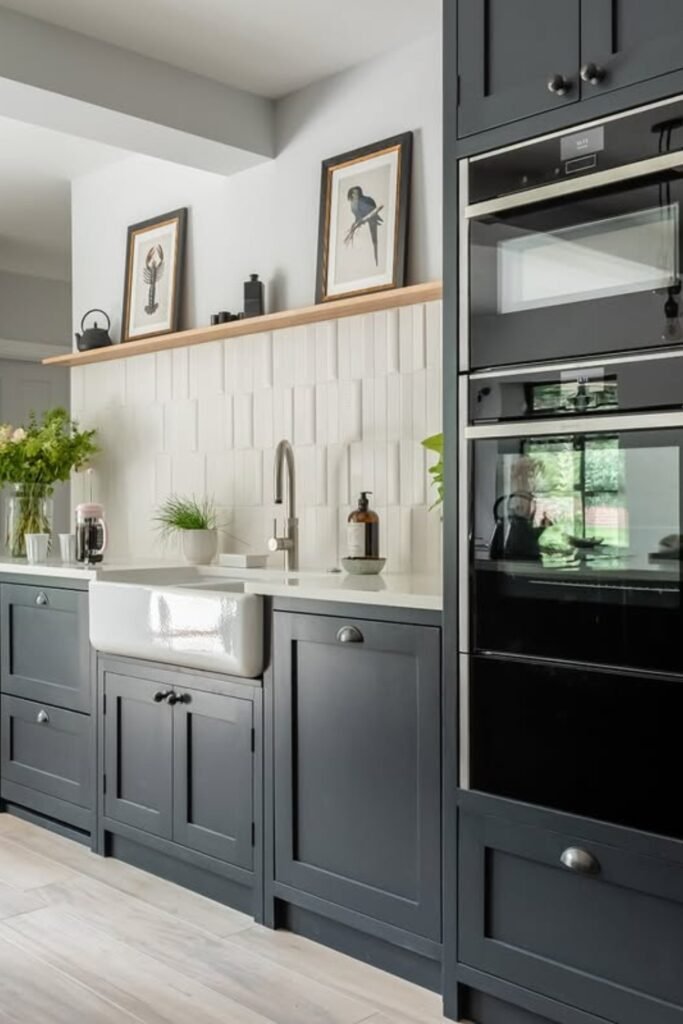
Art Over Storage
When a kitchen already has strong cabinetry, open shelves don’t need to work hard. Here, the shelf acts more like a slim gallery ledge than storage.
Framed art sets the tone, while a couple of small objects keep it grounded in function.
You can choose one long shelf, keep items flat against the wall, and stop before it feels useful. Best for kitchens where cabinets already handle most of the storage.
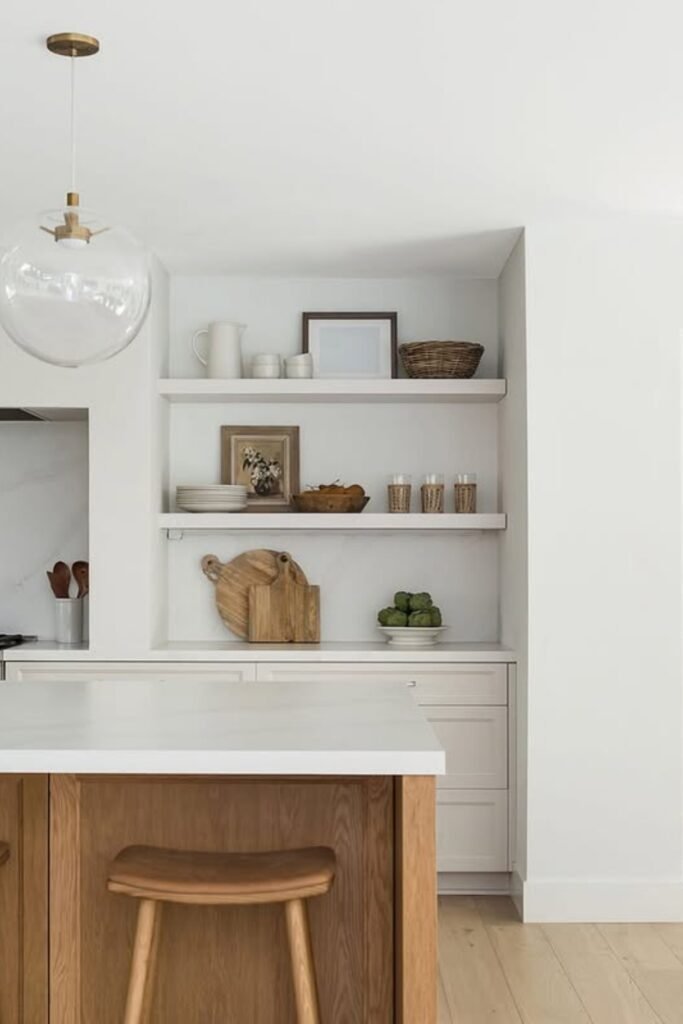
Built-In Shelf Niche
Open shelving works best when it feels intentional, not added later. A recessed shelf like this turns storage into architecture.
The sides frame everything, so even simple dishes look styled. You can keep colors tight, same shelf color as the wall, natural wood accents only.
You can use heavier items on the bottom, lighter pieces above. This setup shines in calm, modern kitchens where you want shelves without visual chaos.
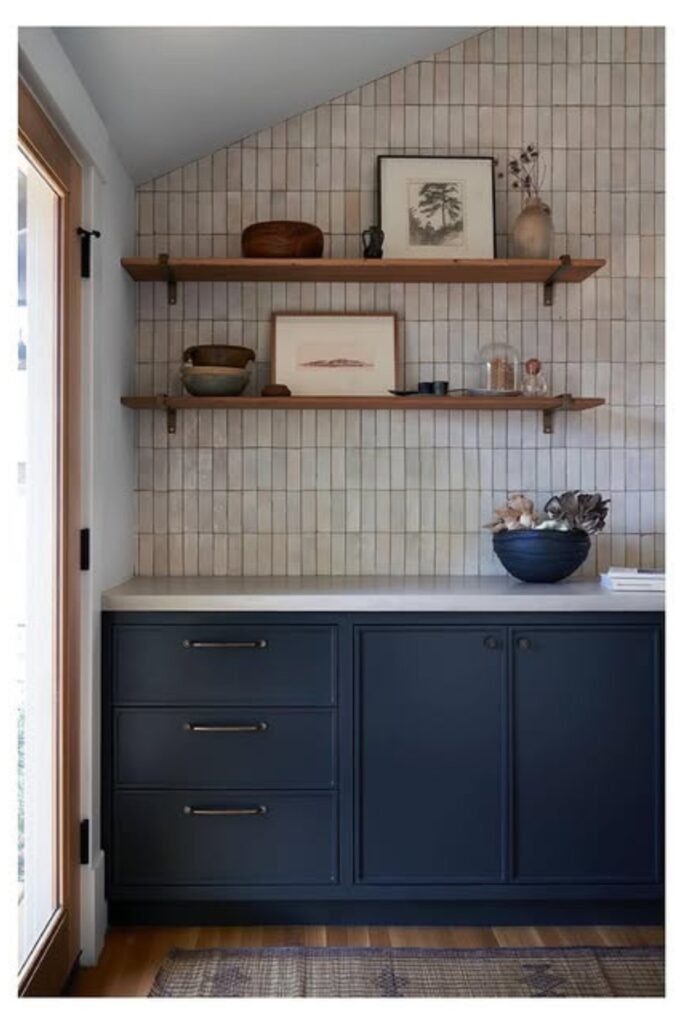
Layered Everyday Pieces
Open shelves feel lived-in when they mix daily use with quiet decor.
Stacked bowls, small jars, and one framed piece keep the shelves useful without turning them into storage overload.
The key move here is spacing, each shelf gets room to breathe, so nothing competes for attention.
This approach works best in kitchens where you cook often but still want the shelves to feel calm and intentional.
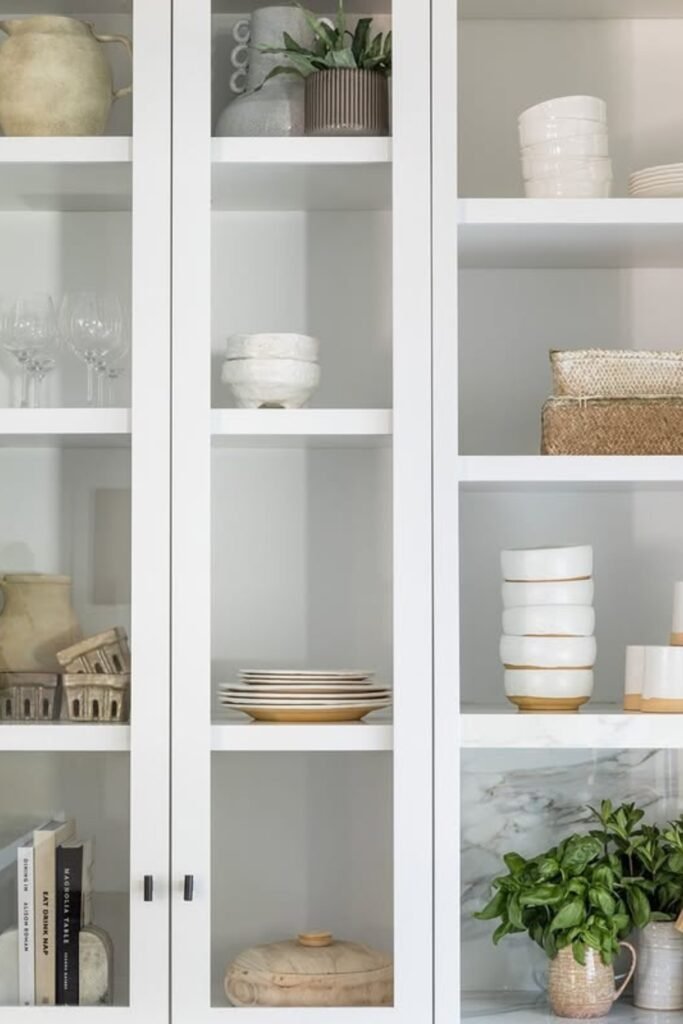
Organized Glass Cabinets
Glass-front shelves give you the openness of display without fully exposing everything.
The trick here is treating each vertical section like its own zone, glassware together, plates stacked cleanly, textured pieces adding warmth.
Nothing feels random because repetition does the work.
Balanced Shelf Pair
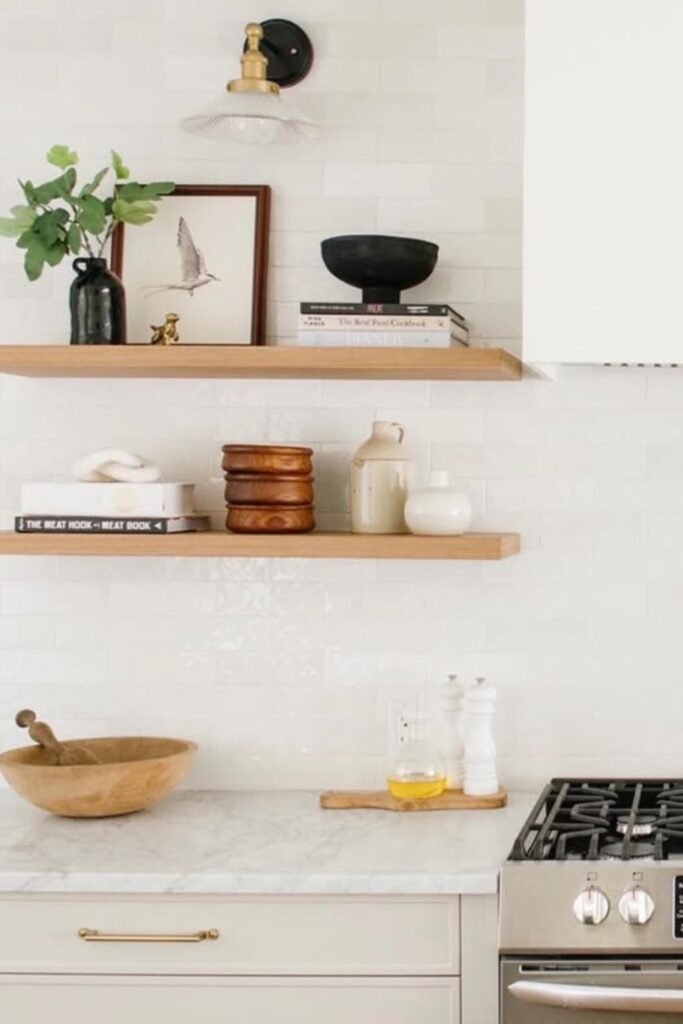
Two open shelves work best when each one has a job. The upper shelf sets the mood with art and a plant, while the lower shelf stays closer to everyday use.
Nothing is crowded, and every item has space around it. You can keep the color palette tight and repeat materials like wood or ceramic.
This setup suits kitchens where you want warmth and function without letting shelves take over the wall.
Warm Rustic Layers
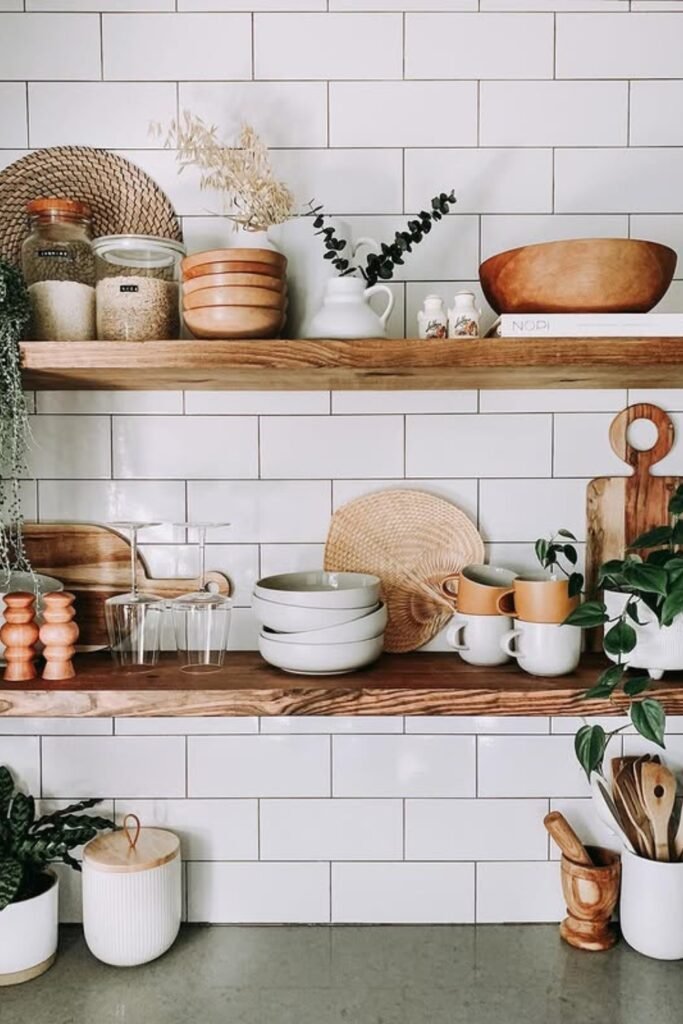
Natural wood shelves soften a tiled wall that could otherwise feel cold.
The warmth comes from repetition, wood bowls, cutting boards, neutral ceramics, layered without stacking too much in one spot. You can leave small gaps so each piece still reads clearly.
You can recreate this by sticking to earthy materials and keeping colors muted.
Best for kitchens that lean cozy or farmhouse-inspired, especially when you want open shelves to feel inviting rather than decorative-only.
Color-Forward Shelving
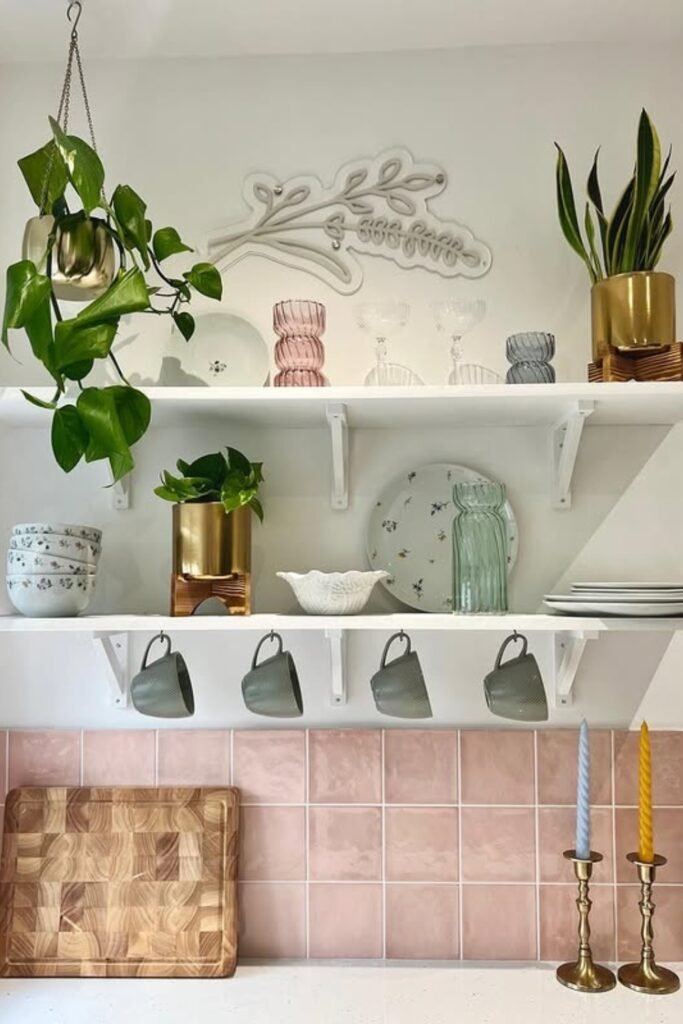
White shelves don’t have to feel boring when color does the work.The soft pink tiles and tinted glass turn simple shelving into a focal point.
The trick is spreading color lightly instead of stacking it, one plant, a few glasses, one bold piece per shelf.
You can keep the shelves neutral and let accessories carry the personality.
This approach works well in small kitchens where you want character without visual overload.
Pantry-Style Shelving
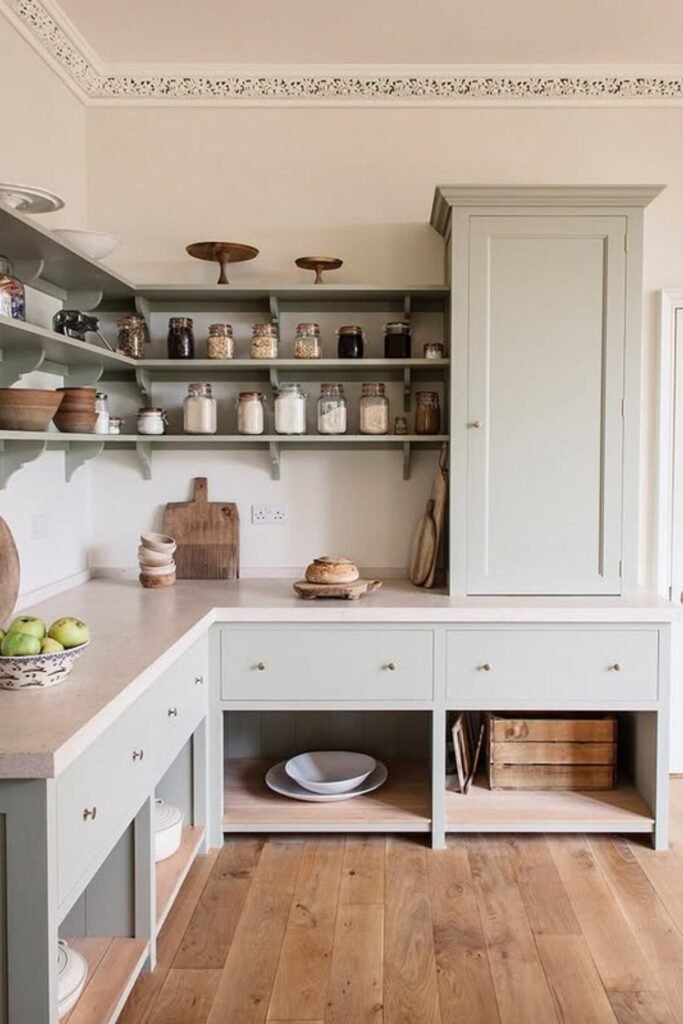
Open shelves shine when they replace a pantry wall instead of upper cabinets.
Rows of matching jars keep everyday staples visible and easy to grab, while repetition makes the setup feel organized rather than busy.
The key is consistency, same containers, same spacing, nothing random.
You can leave heavier storage to lower cabinets so the shelves don’t feel overloaded. This works best in kitchens where cooking is frequent and function matters as much as looks.
Minimal Utility Shelf
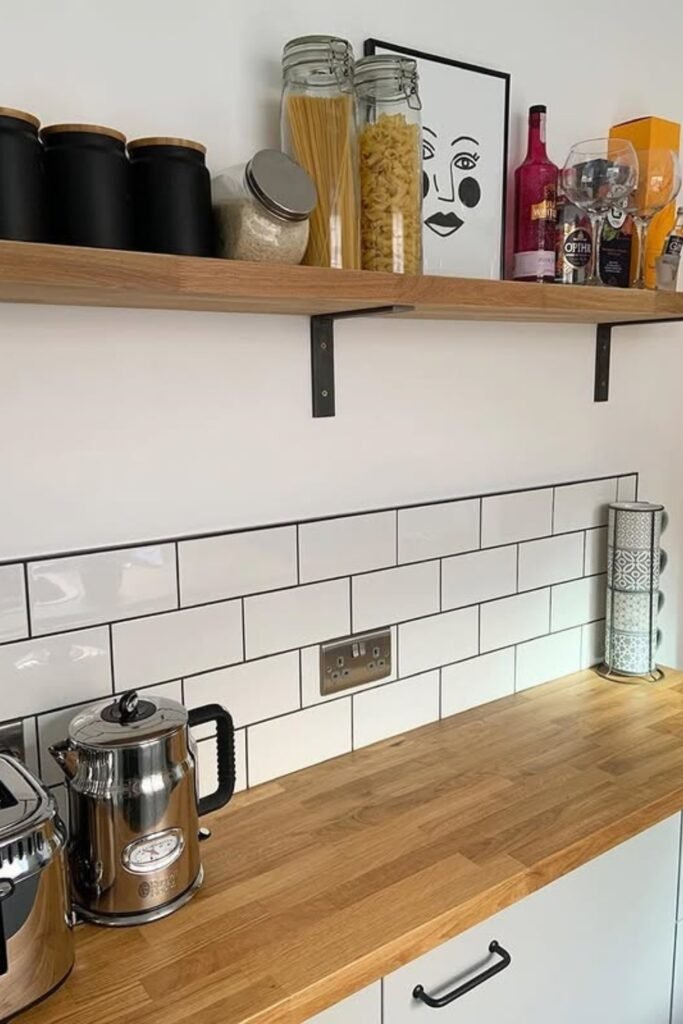
Open shelving doesn’t always need to be decorative. In a kitchen like this, the shelf works as clean, visible storage for things you actually use, jars, bottles, glasses.
The wall stays uncluttered because everything lines up and nothing overlaps.
You can use matching containers and keep the counter below almost empty.
This setup suits small or rental kitchens where function comes first but you still want it to look intentional.
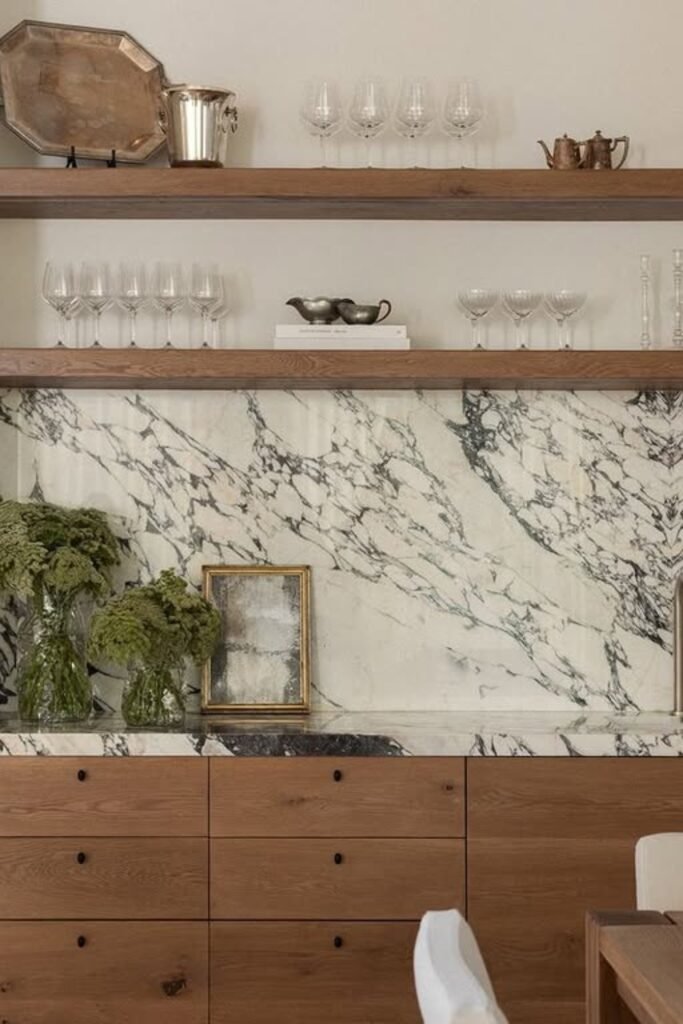
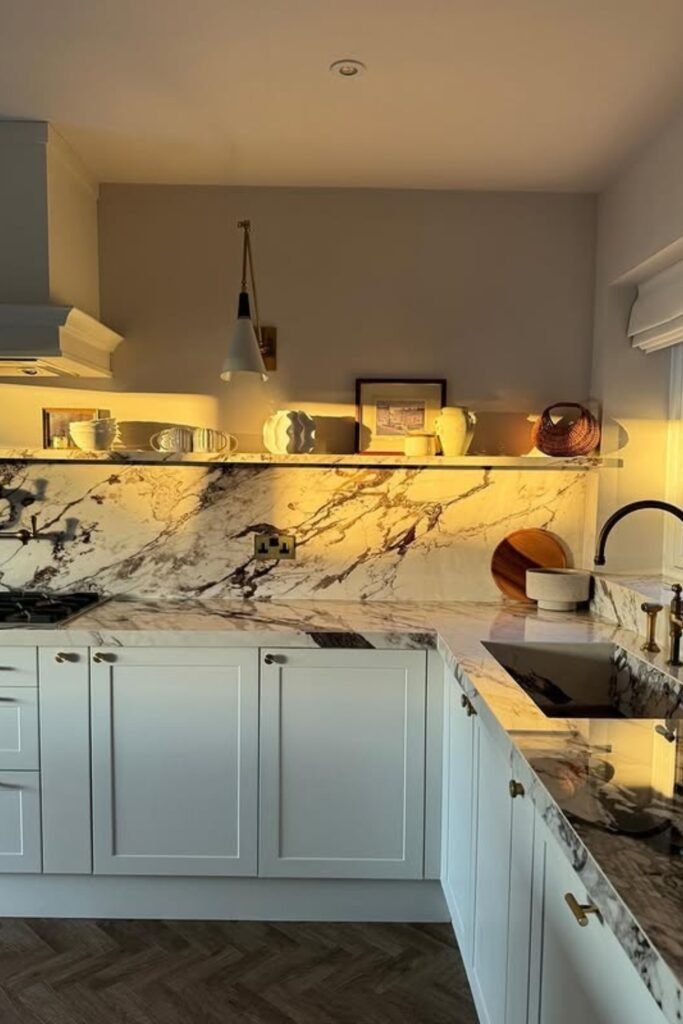
Shelf As Ledge
Instead of floating shelves, the stone backsplash itself becomes the shelf.
That changes everything. Items sit low, feel grounded, and never compete with the cabinetry above. The warm lighting turns everyday pieces into part of the design.
You can keep objects shallow and spaced, nothing tall, nothing crowded.
This works best in kitchens with strong materials like marble or stone, where the shelf blends in and quietly supports the whole look.
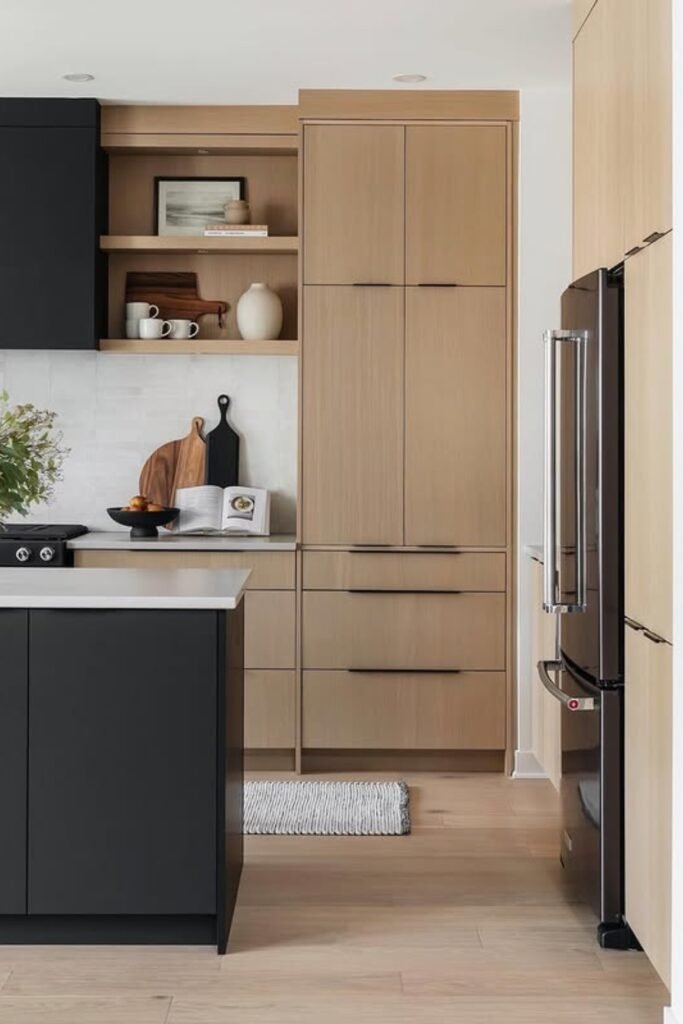
Integrated Shelf Moment
Not every kitchen needs full open shelving to feel styled. A small open section tucked between tall cabinets gives you the best of both worlds.
Closed storage handles the mess, while the open shelf becomes a calm pause for mugs, bowls, and one sculptural piece. The key is treating it like a vignette, not storage.
You can keep the items limited, repeat materials like wood or ceramic, and let the surrounding cabinetry frame the shelf so it feels intentional, not accidental.
Calm Layered Balance
Open shelves work best when each level feels intentional, not equally busy.
The top shelf stays light with a plant and one woven piece, while the middle shelf carries more visual weight through bowls, boards, and art.
The counter below stays mostly clear, which keeps the whole wall from feeling crowded.
You can decide which shelf carries the focus and let the others support it.
This approach suits kitchens where you want warmth and personality without turning shelves into storage zones.
Dark Contrast Display
Dark walls change how open shelves behave. Instead of blending in, every plate and bowl stands out clearly.
The shelves work because the dishes stay consistent in color and shape, which keeps the look controlled instead of busy.
You can choose one dish style and repeat it across both shelves, then break the pattern with just one or two natural elements like plants or wood boards.
This setup works best in larger kitchens where bold contrast won’t feel heavy.
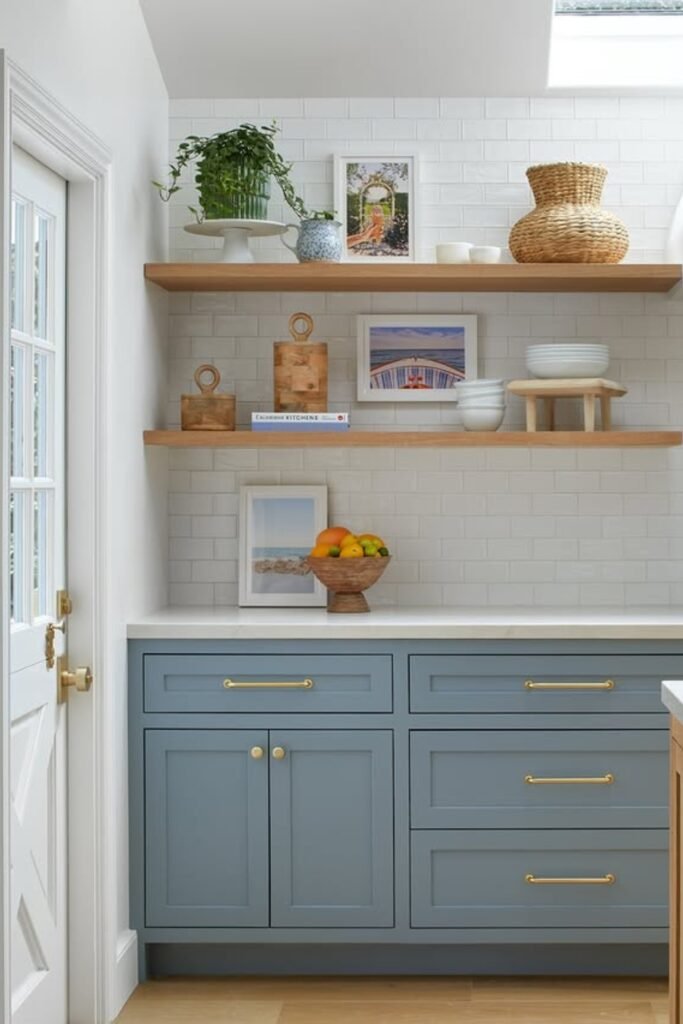
Everyday Meets Display
Open shelves work best when they hold things you actually reach for. The bowls, mugs, jars, and cutting boards share space with art and plants, so nothing feels staged.
The shelves stay calm because items are spread out, not stacked deep. You can mix daily-use pieces with one or two visual anchors per shelf, then stop before it looks full.
This approach suits family kitchens where function matters, but you still want the shelves to look considered.
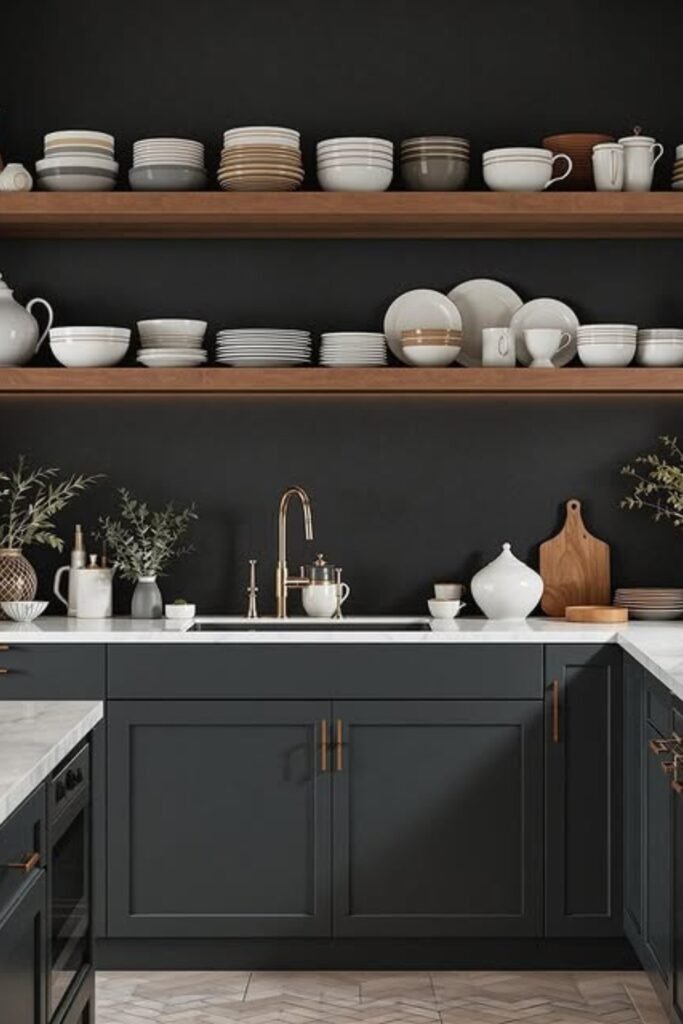
Corner Shelf Focus
Corners usually turn into dead space, but open shelves can flip that completely. The shelves pull attention upward and make the corner feel intentional instead of forgotten.
The key move is keeping the items low-profile, plates, small vessels, one plant, so the corner doesn’t feel crowded. You can avoid tall stacks and let the counter stay mostly clear.
This works especially well in L-shaped kitchens where every inch needs to earn its place.
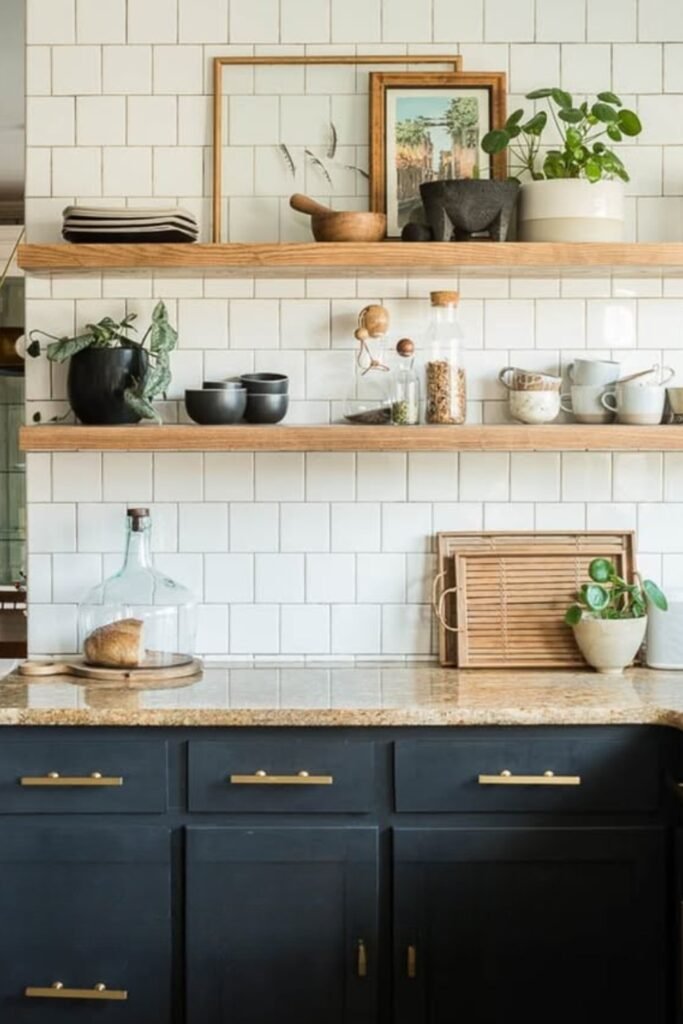
Soft Guarded Shelves
Slim rails change how open shelves feel. They let you layer art, boards, and everyday pieces without worrying about things slipping or looking messy.
The shelves stay relaxed, but nothing feels exposed. To recreate this, keep items shallow and spaced, and let the rail do the quiet work of holding everything in place.
This setup fits kitchens that want open shelving with a slightly more polished, collected look, especially when shelves sit over active prep zones.
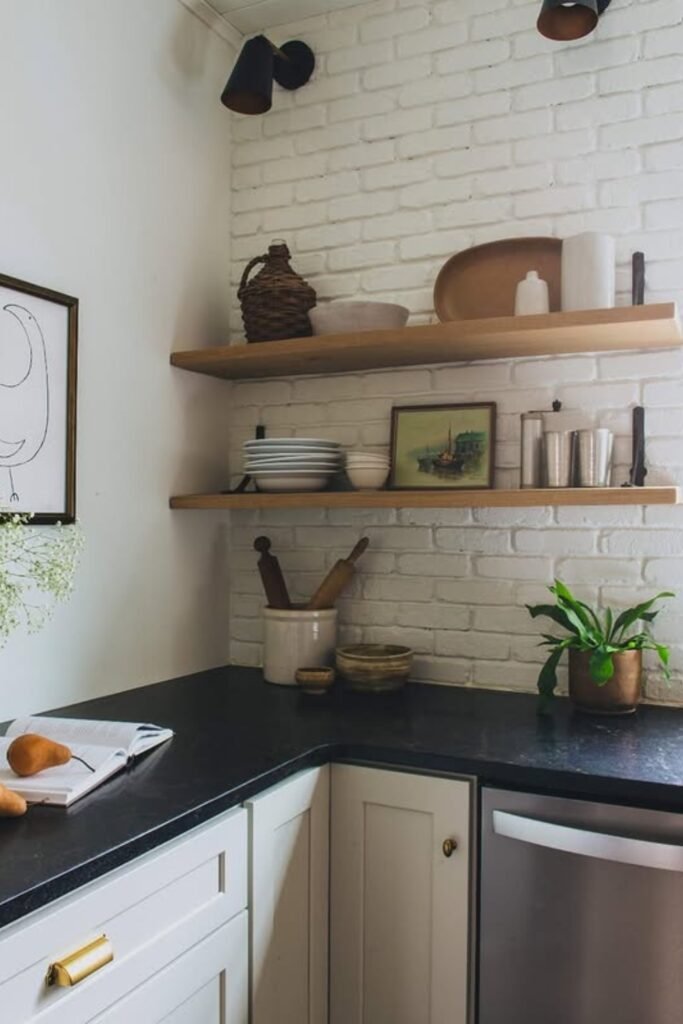
Everyday Coffee Zone
Open shelves work well when they support a daily routine. The shelves frame a coffee setup instead of competing with it.
Glasses, mugs, and small bowls stay within reach, while decor stays light and spaced.
The key move is alignment, shelves sit directly above the workstation, so everything feels purposeful.
You cangroup items by use and keep extras off the counter. This setup fits kitchens where mornings start here and clutter needs firm boundaries.
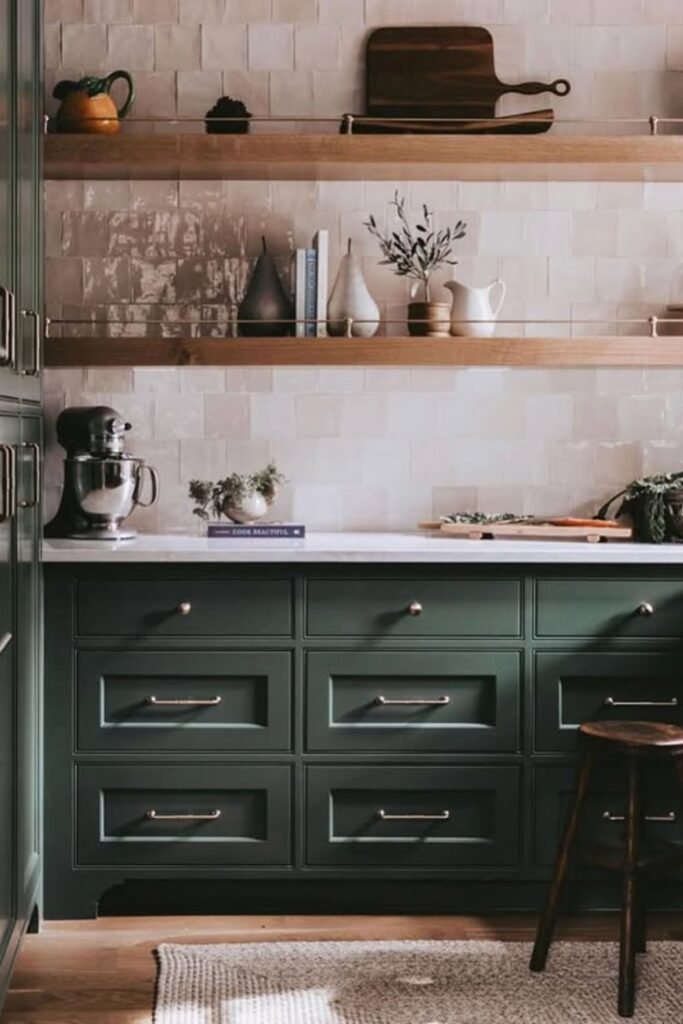
Soft Neutral Story
Shelves don’t have to work hard when the kitchen already feels calm. The muted tones, natural wood, and a few earthy pieces do all the talking.
The books, bowls, and pottery create a quiet rhythm without pulling focus from the space. To recreate this look, stick to one soft color family and let texture add interest.
You can keep shapes simple and spacing generous. This approach works best in warm, modern kitchens where you want shelves to blend in rather than stand out.
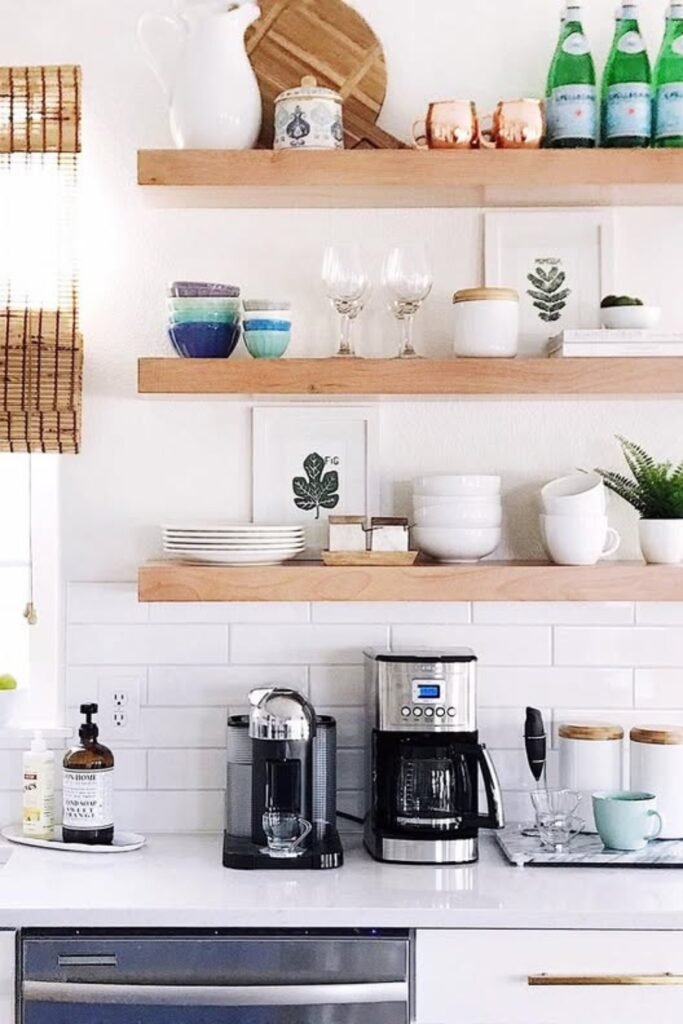
Balanced Symmetry Shelves
When shelves flank a range, balance matters more than decoration. Both sides carry similar visual weight, so the kitchen feels steady, not busy.
Notice how items stay low and repeat, wood boards, dark ceramics, simple plants, so nothing pulls attention away from the center.
You can style both sides together, not one at a time. If one shelf gets fuller, adjust the other. This works best in classic or transitional kitchens where order keeps the space feeling calm.
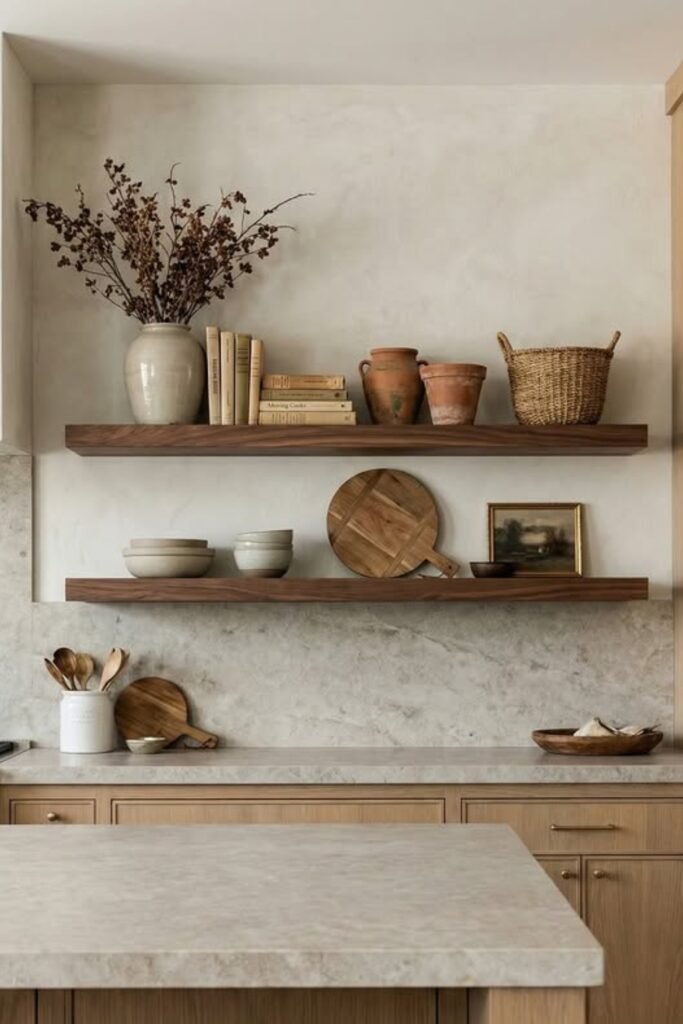
Corner Shelf Cascade
Corner shelves don’t have to feel cramped when you let them flow vertically. The shelves climb the wall instead of spreading wide, which keeps the corner light and usable.
Your plates stay stacked, greenery softens the angles, and nothing feels jammed in. To recreate this, you can keep the bottom shelf practical and let the upper shelves go lighter.
This setup works best in bright kitchens where corners need storage but still need to breathe.
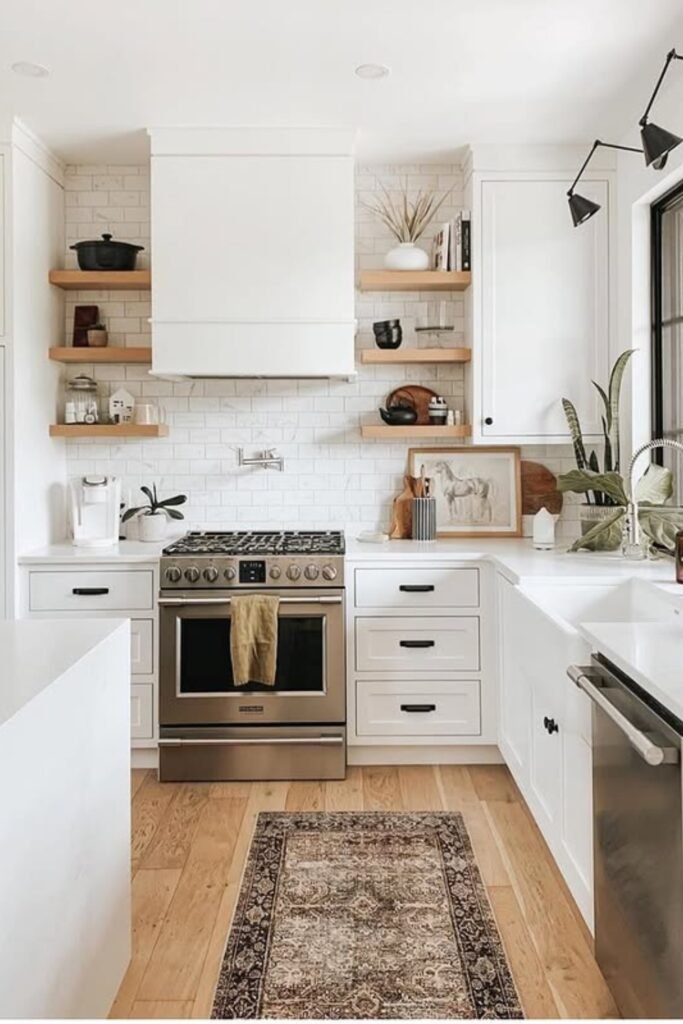
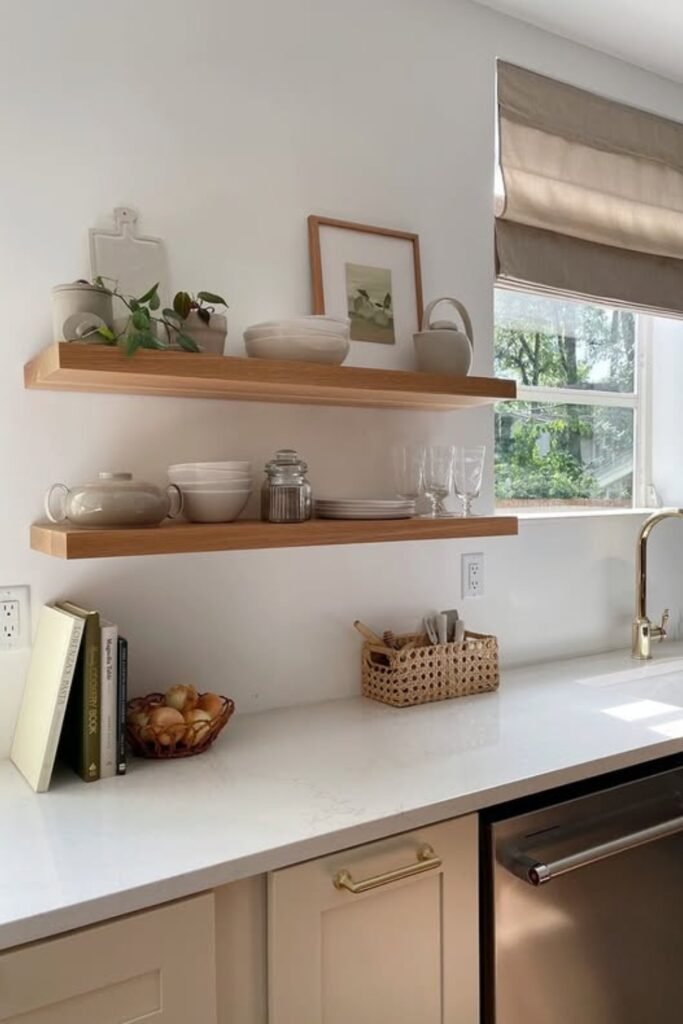
Light Everyday Shelves
Natural light changes how open shelves feel. Here, the shelves stay soft and simple so the window does the heavy lifting.
White dishes, clear glasses, and one small plant keep everything feeling airy instead of staged. Nothing is stacked too high, which keeps the wall relaxed.
You can limit contrast and keep your most-used items closest to the sink. This setup works best in bright kitchens where shelves should support daily use, not steal attention.
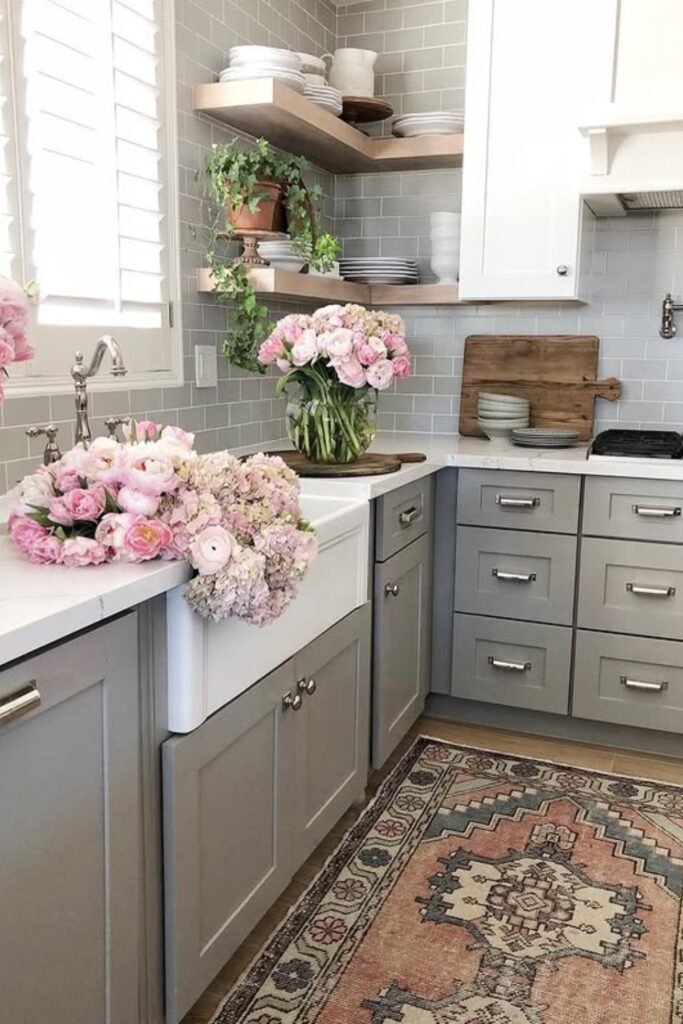
Tucked Shelf Break
A small open shelf works best when it breaks up heavy cabinetry. The shelf creates a visual pause between tall cabinets without giving up storage.
A few everyday items, mugs, a bowl, one framed piece, are enough to make it feel intentional.
You can keep the shelf shallow and the items minimal so it doesn’t compete with the cabinets.
This approach fits modern kitchens where you want warmth and openness without committing to full open shelving.
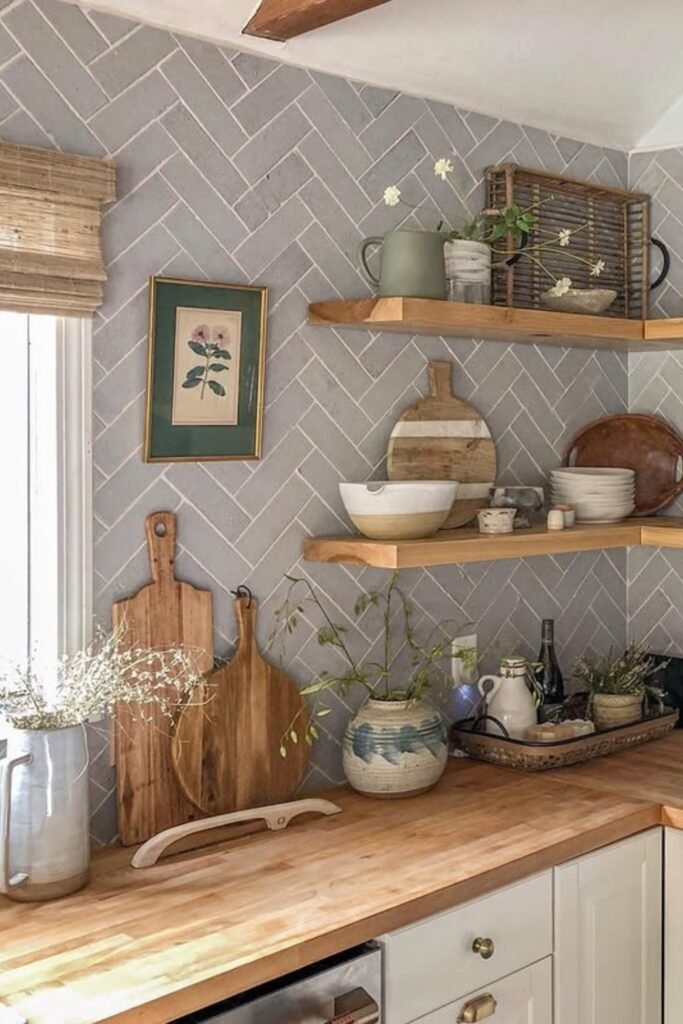
Cottage Corner Layers
Patterned walls already bring movement, so the shelves stay grounded and simple.
The wood shelves echo the countertop, while bowls, boards, and greenery soften the angles of the corner. Nothing is stacked too high, which keeps the space relaxed instead of busy.
You can repeat natural materials and let plants trail slightly to break straight lines.
This setup works best in cozy kitchens where texture and warmth matter more than perfect symmetry.
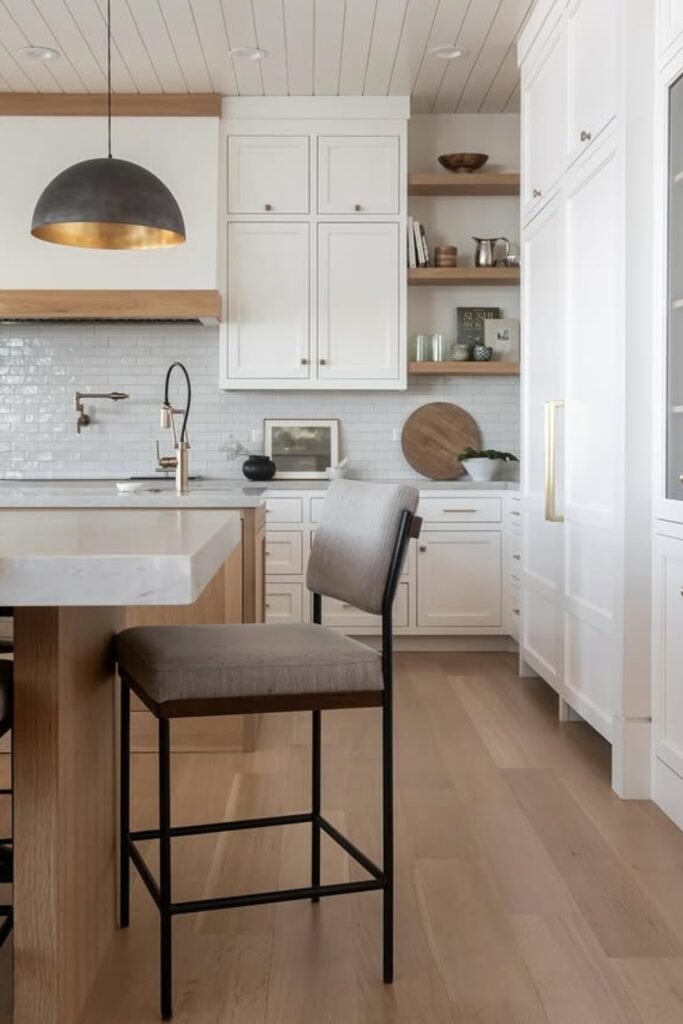
Framed Range Shelves
When shelves sit around a range, they work best as a frame, not a feature.
The matching shelves on both sides keep the focus centered while still adding warmth.
Everyday items stay close to where they’re used, glasses, boards, oils, so nothing feels decorative for no reason.
To recreate this, you can mirror the shelf sizes and spacing on both sides and keep items low-profile.
This setup suits kitchens where cooking is the main event and shelves need to stay practical.
Frequently Asked Questions
Do open kitchen shelves get dusty easily?
Daily use naturally keeps dust away. Avoid placing shelves right next to heavy cooking zones, and skip fragile decor that needs constant cleaning.
If you’re okay with light weekly wiping, open shelves are manageable.
Are open shelves practical for small kitchens?
You can use them for light, everyday items and leave bulk storage to lower cabinets. If shelves are overfilled, the kitchen will feel smaller fast. Less really is the rule here.
You may like to read!
