
20 Small Kitchen Layout Ideas
Most small kitchens don’t feel small because of their size, they start feeling small because the layout isn’t working for you.
When that keeps happening, you start thinking you might need a bigger kitchen, even though what you really need is a smarter layout.
In this article, you’ll see how different small kitchen layouts can actually work, which ones might fit your space best, and 20 best ideas.
Let’s jump in!
What Is The Best Layout For A Small Kitchen?
The best layout for your small kitchen is usually a galley or L-shaped design because it helps you make the most of your space and work efficiently.
In a galley layout, you can have two parallel walls, keeping everything within easy reach and creating a smooth workflow that makes cooking easier for you.
An L-shaped kitchen opens up floor space and works perfectly in corners, making your room feel bigger.
In a small kitchen, you should focus on vertical storage, compact appliances, and a clear work triangle between your sink, stove, and fridge.
When you do that, you can improve functionality without ever feeling crowded or overwhelmed.
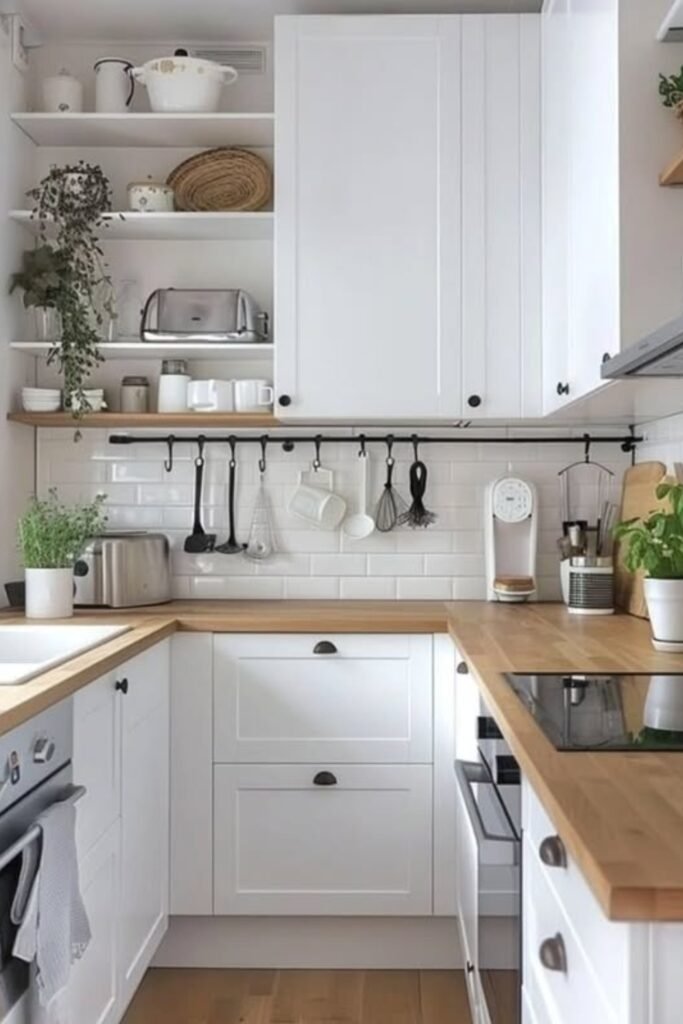
Corner Workflow Boost
By turning the kitchen into an L-shape, movement stays tight and purposeful instead of scattered.
This setup works best in small square kitchens or closed rooms where two walls can be used fully.
You can keep appliances along the two runs, use light cabinetry to avoid heaviness, and move daily tools onto wall rails so the counter stays clear and usable.
Dining Meets Prep
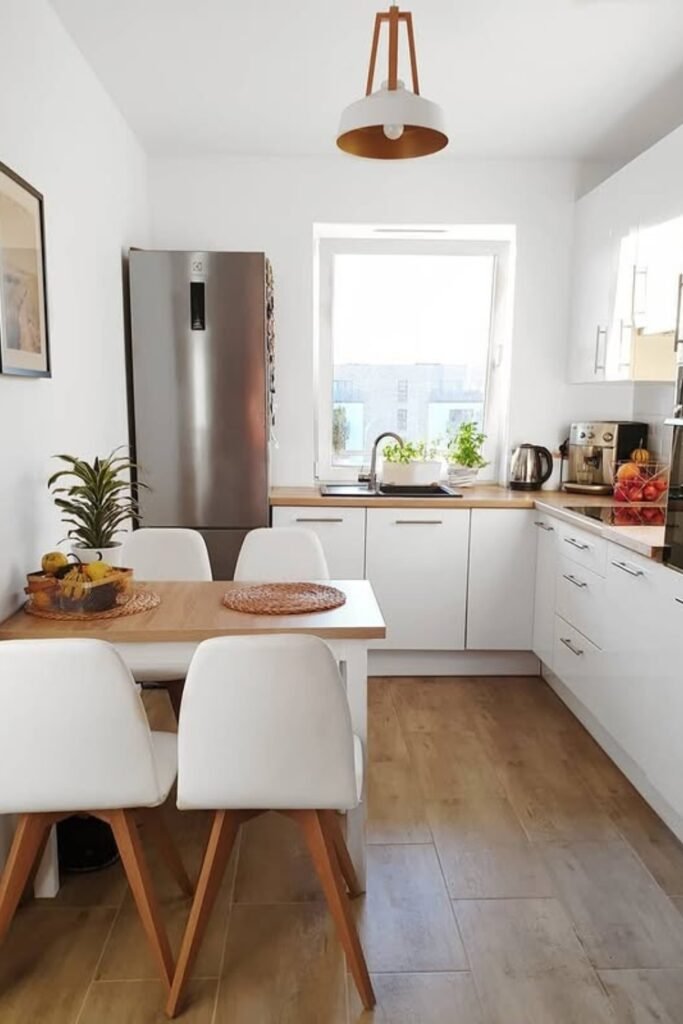
When a small kitchen needs to do double duty, blending prep space with dining is a smart move.
One side handles cooking, while the table extends the kitchen into a casual eating spot.
You can keep the layout tight, choose slim furniture, and place the table close enough to act as extra counter space without blocking movement.
Banquette Dining Hack
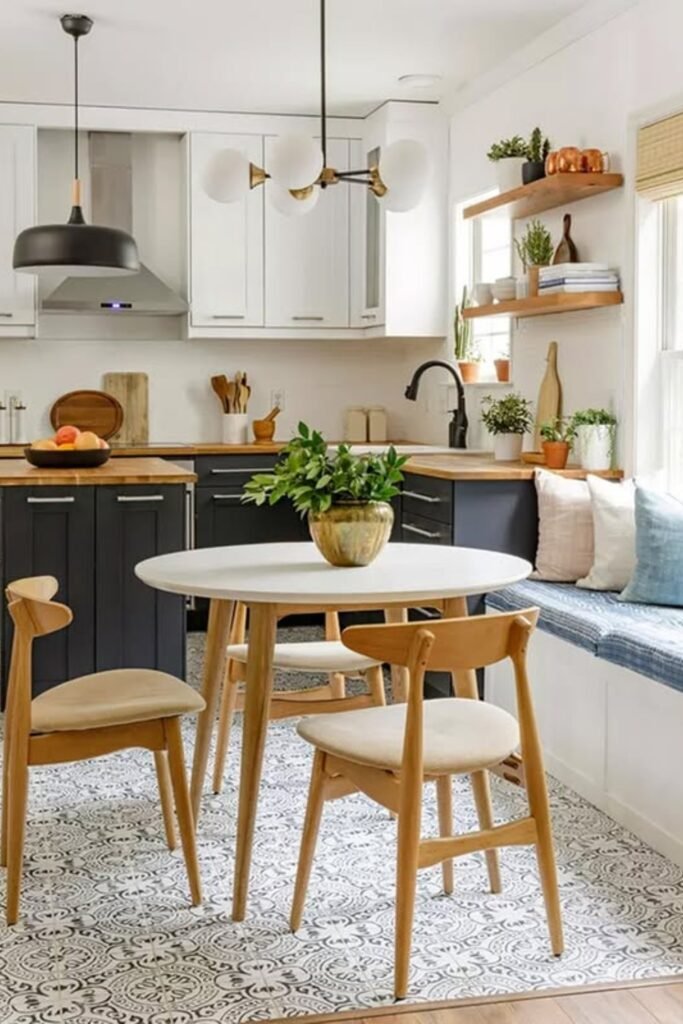
A built-in bench solves that problem instantly. The small kitchens struggle when dining furniture eats up floor space.
By pushing seating against the wall and under the window, this U-shaped kitchen keeps the center open while still fitting a full dining spot.
You can add a fixed bench with storage underneath and pair it with a round table.
Island Without Bulk
A full kitchen island would overwhelm this space, but a slim table-style island gets the job done without blocking movement.
This setup works best in narrow or apartment kitchens where you still want a central surface for prep, eating, or working.
You can skip heavy cabinetry, choose open legs instead of closed storage, and keep seating tuckable.

One-Wall Efficiency
When space runs long but not wide, pushing everything onto one wall keeps the kitchen usable instead of cramped.
This one-wall layout works best in studio apartments or open-plan homes where the kitchen shares space with the living area.
You can line up appliances in a logical order, keep cabinets sleek and handle-less, and add a slim counter extension.

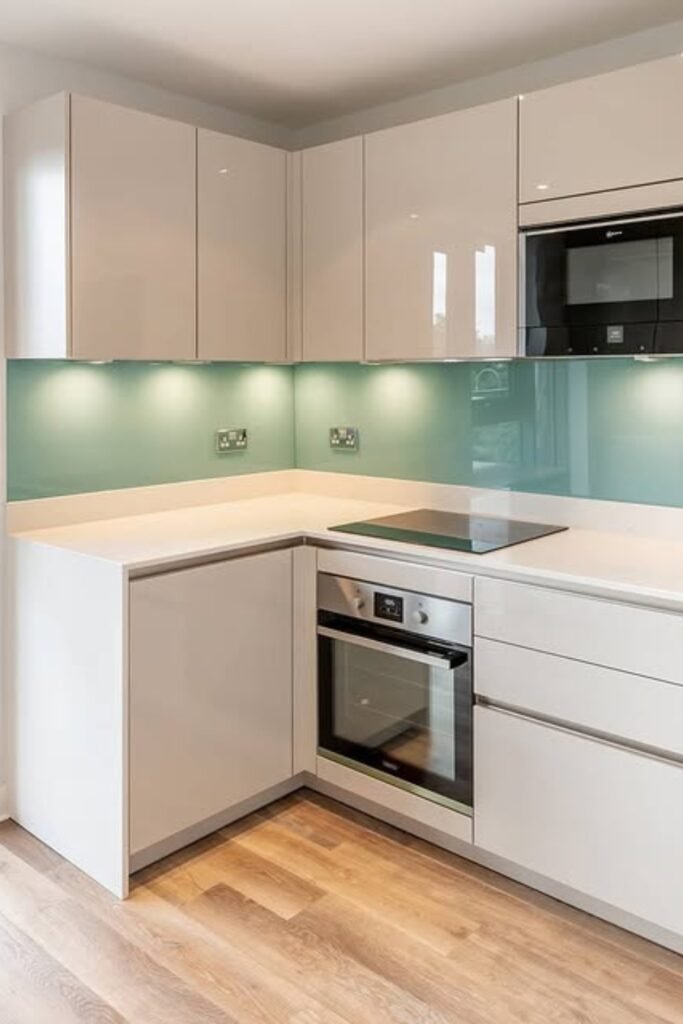
Seamless Corner Minimalism
When a small kitchen needs to feel calm instead of crowded, clean lines do the heavy lifting.
This compact L-shaped layout works best in modern apartments where every surface needs to stay visually light.
The glossy, handle-less cabinets reflect light and reduce visual breaks, while built-in appliances keep everything flush.
You can keep colors consistent, use under-cabinet lighting to define work zones, and let the corner counter remain clear.
Open Shelf Balance
The heavy upper cabinets can make a small kitchen feel boxed in, even when the layout is right.
This setup swaps bulky storage for open shelves, which keeps the space visually lighter while still staying practical.
It works best in narrow or galley-style kitchens with good natural light.
You can limit shelves to everyday items, keep colors consistent, and pair them with solid lower cabinets.

Breakfast Bar Bridge
When a kitchen needs extra function without eating into the room, a narrow breakfast bar works as the perfect middle ground.
The bar creates a clear boundary while doubling as prep space, quick dining, or even a work spot.
You can keep the counter slim, use stools that slide fully underneath, and align the bar height with the main counter.

Window-Centered Workflow
You can place the sink under the window instantly improves how a small kitchen feels and functions.
This layout works best in narrow or galley-style kitchens where one wall can be fully dedicated to cleaning and prep.
The natural light makes the space feel larger, while keeping the cooktop on the opposite run prevents congestion.
You can center the sink on the window, keep surrounding counters clear, and use the opposite side for heavier appliances and storage to balance movement.

Center Island Anchor
A small kitchen feels more organized when there’s one clear place everything revolves around.
This compact island acts as the anchor without overpowering the room.
It works best in open or semi-open kitchens where the layout needs definition but not walls.
You can keep the island slim, use it for light prep or casual meals, and maintain clear walkways on all sides.
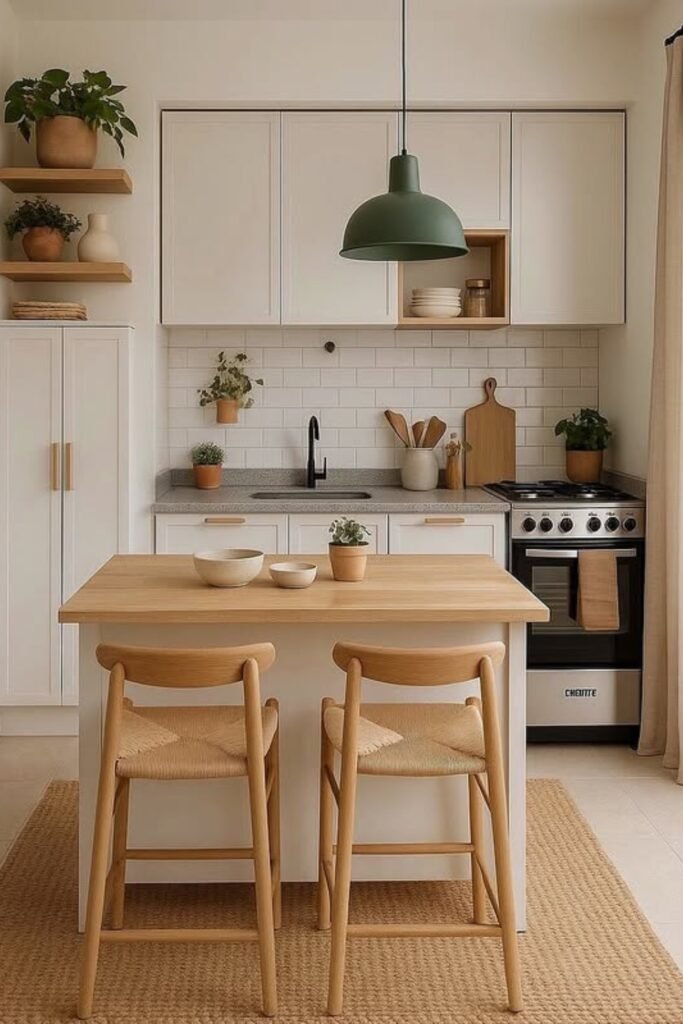
Sink-Focused Zone
When counter space is limited, building the layout around the sink makes daily tasks easier.
By placing the sink at the center, cleaning, prep, and quick tasks stay contained instead of spreading across the kitchen.
You can keep the dishwasher close, reserve nearby counter space for prep, and use the surrounding wall for storage.

Island-Led Layout
When storage and prep space start fighting for room, a compact island can bring order back.
This layout works best in small but open kitchens where you can still maintain clear walkways around the center.
The island adds extra counter space and hidden storage without pushing appliances too far apart.
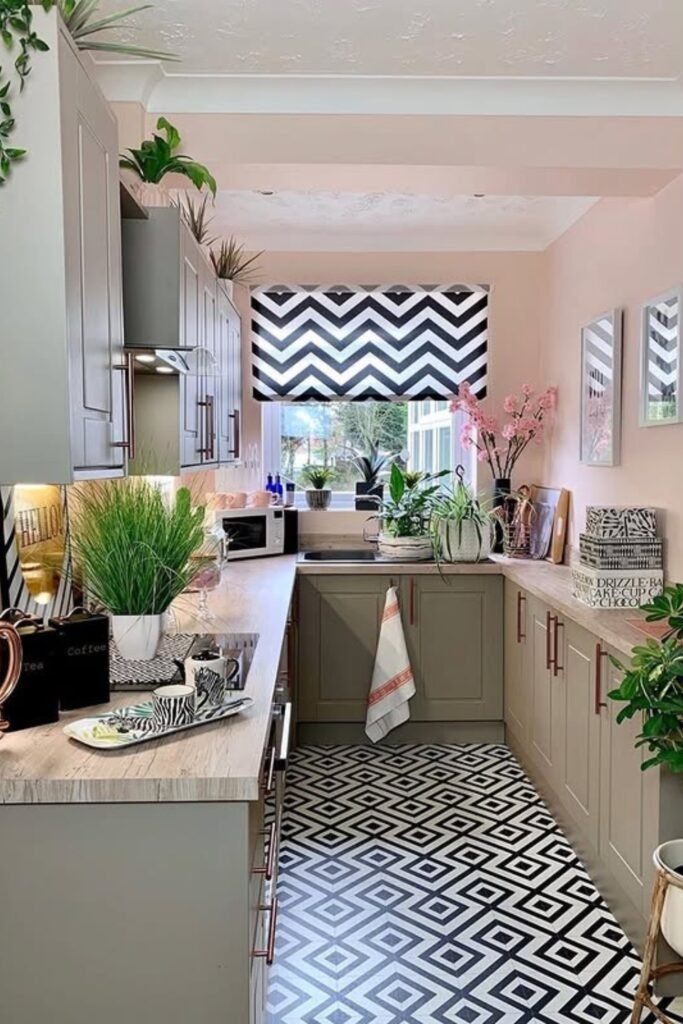
Narrow Galley Control
The long, narrow kitchens work best when everything stays parallel and purposeful.
This galley-style layout keeps both sides active without wasting the center on unused space.
It’s ideal for older homes or townhouses where width is limited but length isn’t.
Window Nook Dining
You can turn the window area into a small dining nook is a smart way to solve two problems at once, lack of eating space and wasted daylight.
This layout works best in compact kitchens where a full dining table won’t fit but a narrow run along the window is available.
By placing a slim table next to the fridge and keeping counters on the opposite side, movement stays clear.

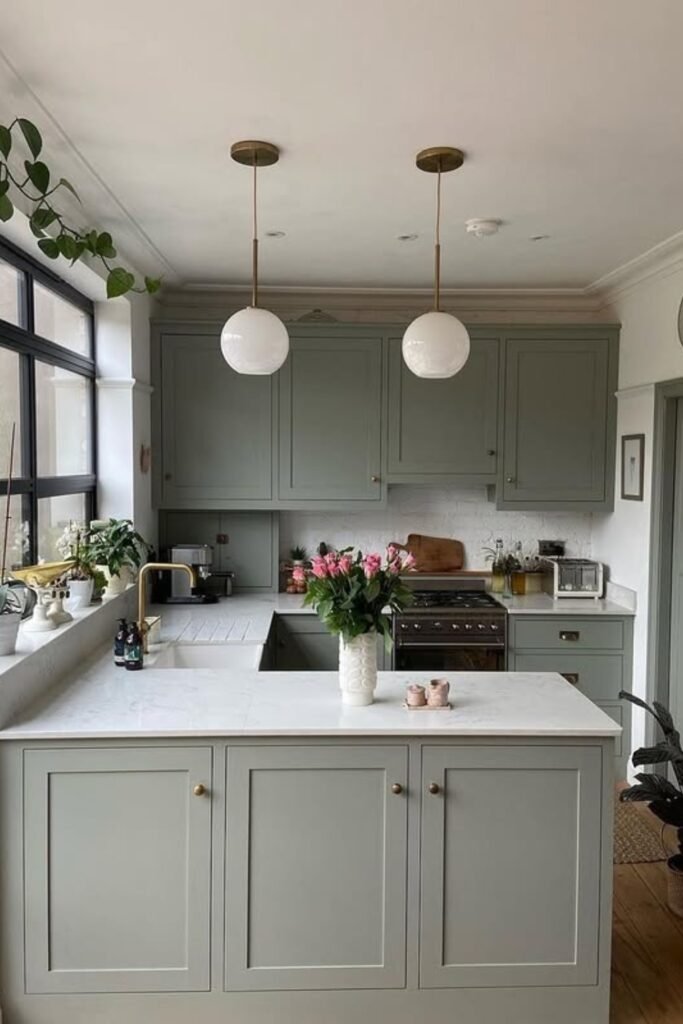
Peninsula Space Saver
When a full island won’t fit, a peninsula gives you the same benefits without breaking the layout.
This setup works best in very small kitchens where one side can connect to a wall or window.
The extended counter adds prep space, casual seating, and a visual divide, all in one move.

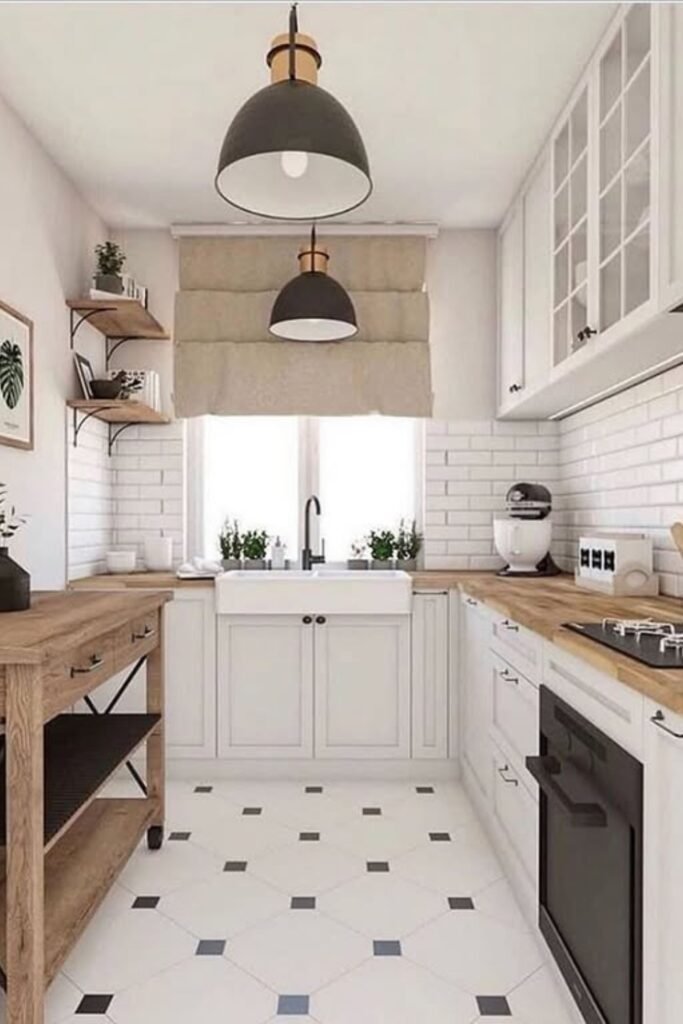
Symmetrical Galley Calm
With cabinets and counters running evenly on both sides, the space feels organized instead of narrow.
This layout is ideal for compact kitchens with a window at the end, where natural light can visually widen the room.
You can keep both sides visually similar, place the sink under the window, and use slim furniture or a narrow table on one side.
Under-Stair Advantage
That awkward space under the stairs doesn’t have to be wasted.
You can turn it into part of the kitchen instantly adds function without stealing room elsewhere.
The appliances and storage fit neatly under the slope, while the island handles prep and seating.

Corner Work Triangle
A small kitchen starts working better the moment the corner is used with intention.
It works best in compact kitchens with a window on one side, where natural light can soften the corner instead of making it feel boxed in.
You can place the sink or prep zone at the corner, keep drawers below for easy access, and use lighter upper cabinets.
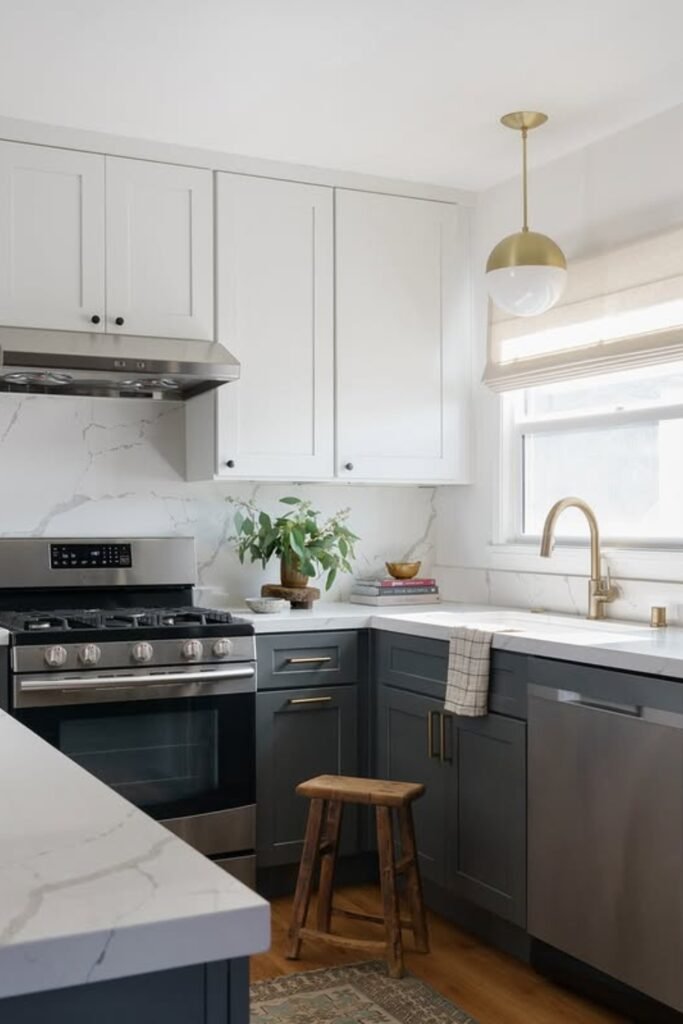
Clean Corner Efficiency
A small kitchen becomes far more usable when the corner is planned, not ignored.
This L-shaped layout keeps the sink, stove, and prep space close enough to work smoothly without crowding each other.
It’s ideal for compact kitchens with a window on one wall, where light helps the space feel open instead of boxed in.

Wrapped L-Shape Comfort
An L-shaped kitchen like this works because it keeps everything connected without closing the space in.
The cooking, prep, and cleaning all happen within a short reach, which makes daily tasks feel smoother and less tiring.
You can place the stove on one run, the sink on the other, and keep the corner as shared prep space.

You may like to read!
