
22 Brown Kitchen Cabinet Ideas
You’re probably here because you like brown kitchen cabinets, but you’re still not fully sure if you should trust them.
The truth is simpler than all that: brown cabinets can look really good, but only when you handle them the right way.
In this article, you will clearly see when brown works, when it doesn’t, and how you can make the right call for your own space.
Let’s jump in!
Is Brown A Good Color For Kitchen Cabinets?
Yes, brown can be a really good color for kitchen cabinets, but you should know it’s not a play-it-safe choice.
If you pick brown without thinking about light, contrast, and finishes, you could end up with a kitchen that feels dark or stuck in the past.
That’s exactly why you see brown cabinets fail in some homes and look amazing in others. The color itself isn’t what causes the problem, it’s how you use it.
When you don’t balance brown with the right walls, countertops, lighting, and hardware, you can easily miss the mark.
But if you understand how brown behaves in your space, you can turn it into a warm, modern kitchen instead of one that feels heavy.
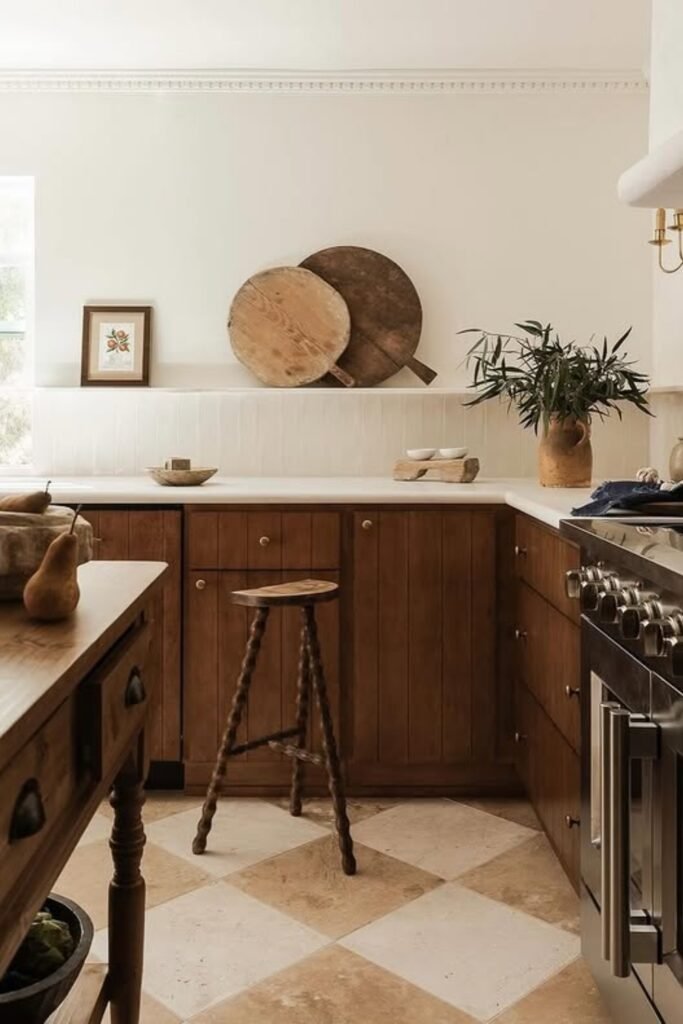
Warm Minimal Rustic
You will notice the warmth comes from the wood itself, not from adding extra colors or busy patterns.
When you pair them with light walls, pale stone counters, and simple finishes, you can keep the kitchen feeling open and relaxed.
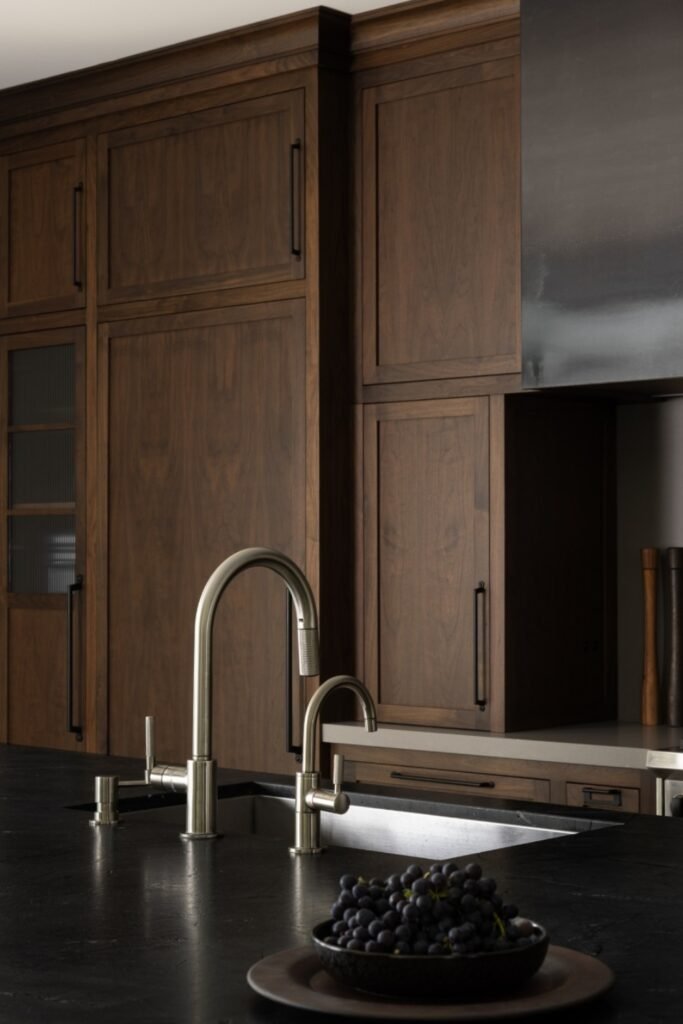
Dark Modern Depth
You can see how deep wood pairs with dark stone surfaces and clean-lined hardware, giving you a bold, modern feel rather than something cozy.
This style suits you if you have a larger kitchen or an open layout where darkness won’t feel cramped.
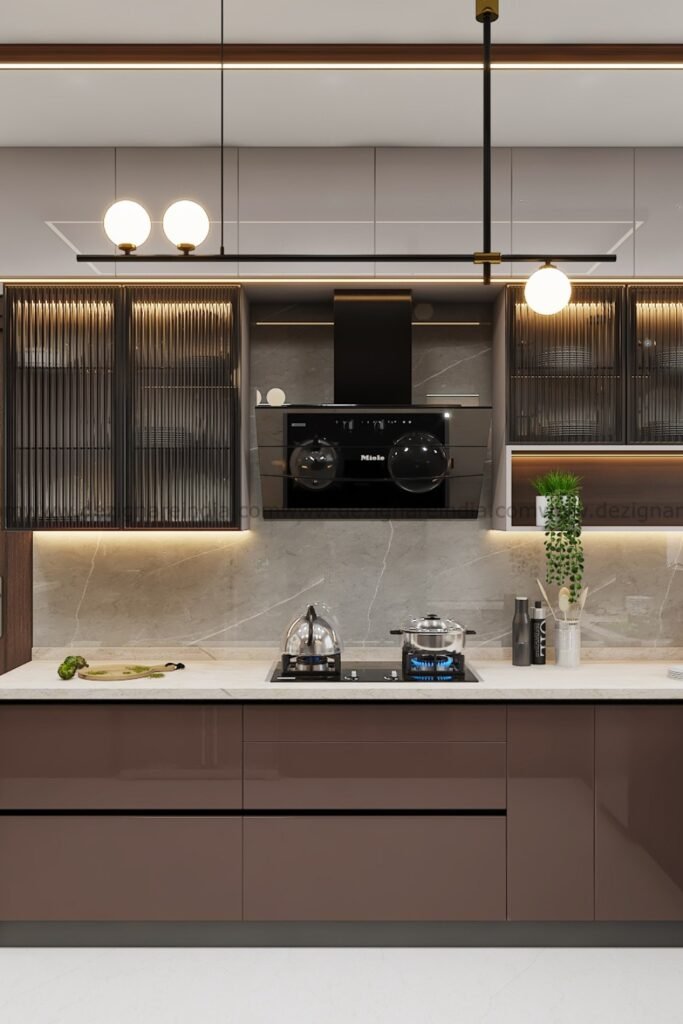
Gloss Meets Glow
When you use glossy brown cabinets, you allow them to reflect light, and when you add warm LEDs and glass-front uppers, you keep the space feeling open.
You can choose a high-gloss brown finish, add under-cabinet lighting, and balance it with light countertops and a simple stone backsplash.
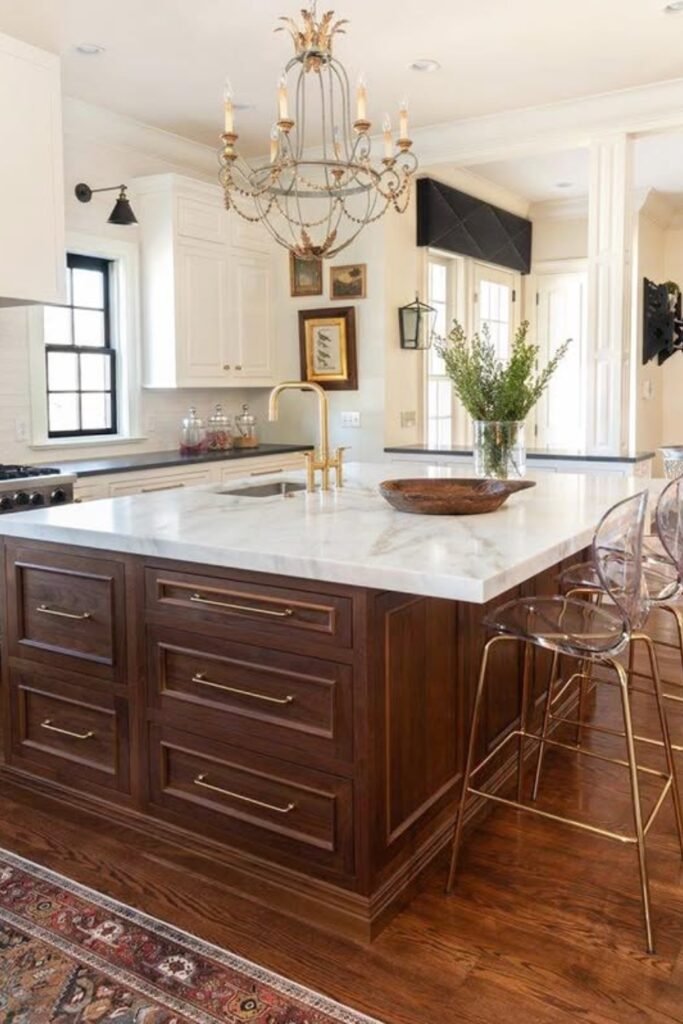
Classic Island Anchor
By keeping the brown concentrated on the island and surrounding it with white cabinetry, your space feels balanced and intentional.
You can use a rich brown island, light stone countertops, and warm metal hardware so the island feels like a focal point, not an afterthought.
Soft Vintage Warmth
A softer brown shade can give you warmth without weighing the room down, especially when you pair it with creamy uppers and a light, patterned backsplash.
You can choose a muted brown finish, mix it with lighter cabinetry above, and use traditional elements like apron sinks and warm metals.

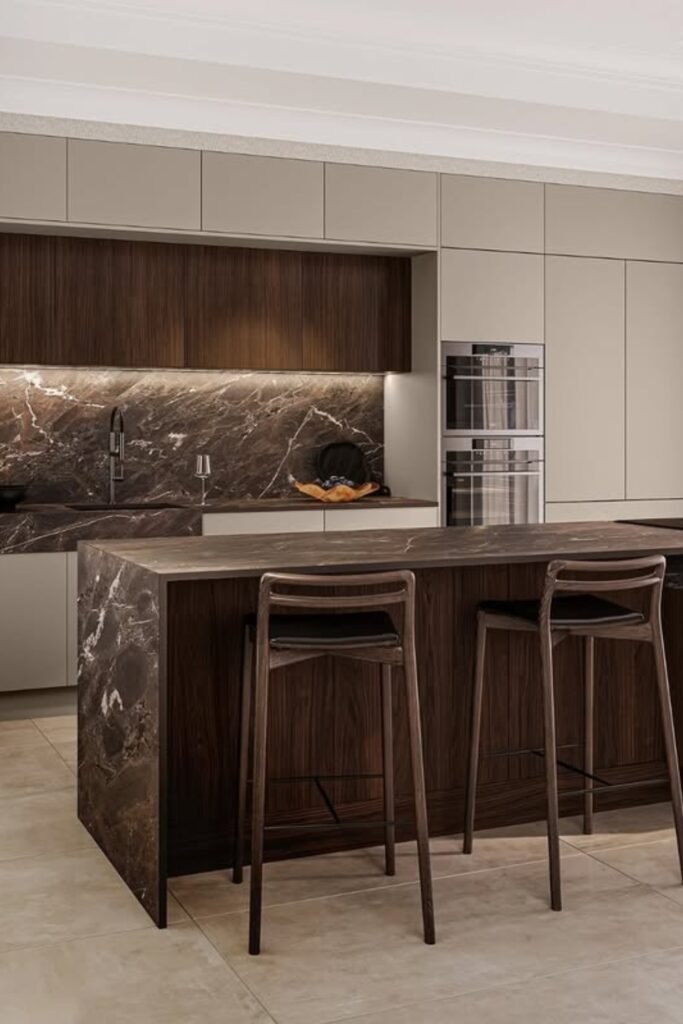
Stone-Wrapped Contrast
When you place rich wood cabinets and an island against light matte cabinetry and bold stone surfaces, the brown feels intentional.
You should limit brown to one zone, pair it with a dramatic stone backsplash or waterfall island, and keep the rest of the cabinetry quiet.
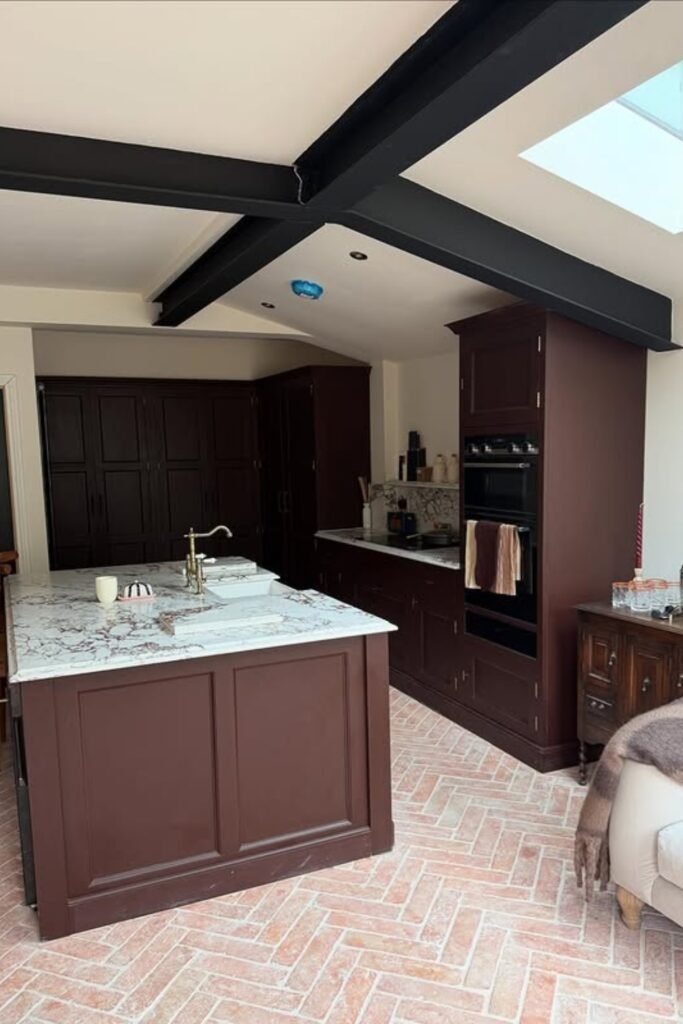
Grounded Architectural Warmth
When you already have exposed beams, brick flooring, or a skylight, you give the kitchen character before the cabinets even come in.
That’s why the brown feels grounded instead of heavy. This idea works well for you if your home has strong architectural details or a converted space.
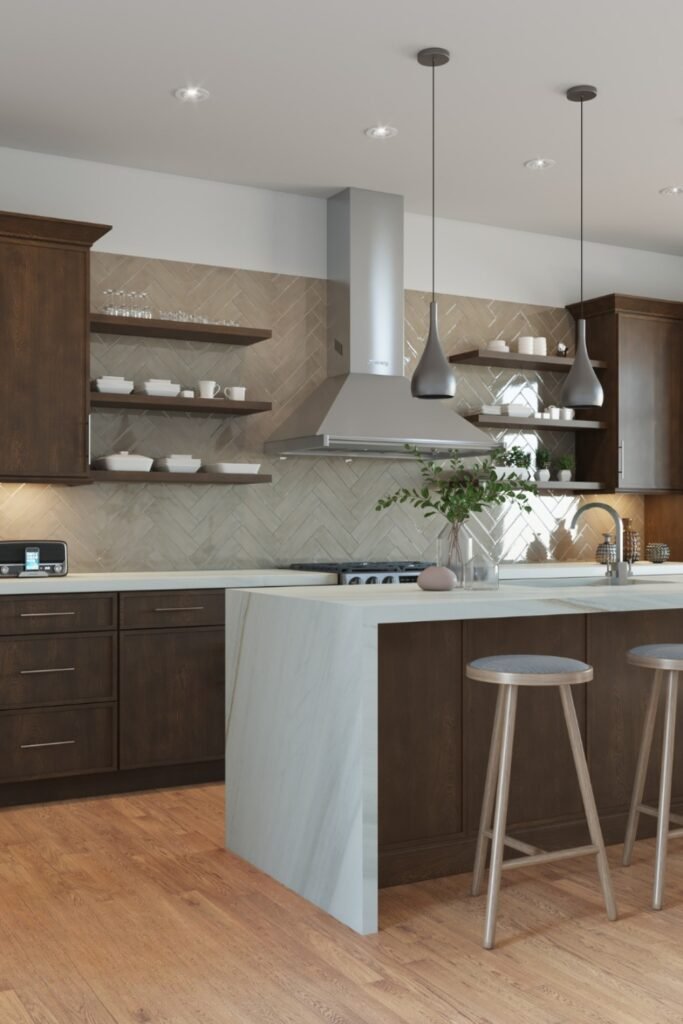
Open Shelf Balance
When you add open shelves, you give your eyes a place to rest, and when you use light backsplashes and countertops, you keep the space fresh.
This works well for you if you have a medium to large kitchen and want warmth without visual bulk.
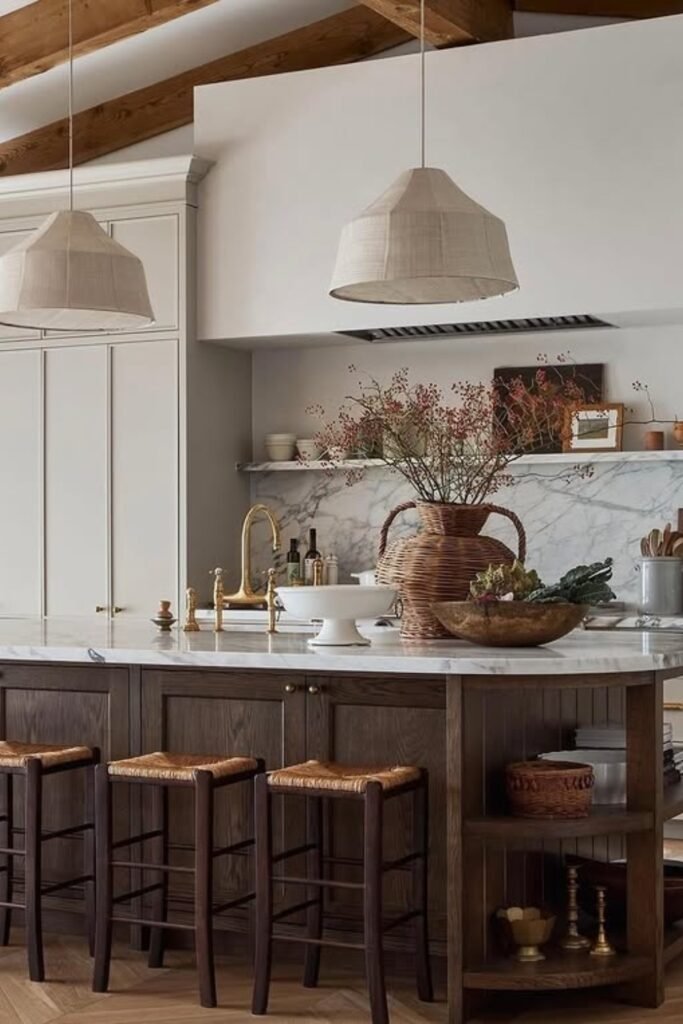
Soft Farmhouse Contrast
Brown cabinets feel inviting here because you pair them with light, classic elements instead of fighting them.
You can keep brown to one main piece like the island, use lighter cabinets around it, and balance everything with warm metals, natural wood beams, and simple finishes.
Statement Hood Focus
When you add an oversized hood, you draw attention upward, which stops darker cabinets from feeling dominant.
This approach works well for you if you love classic or European-style kitchens with a bit of drama.
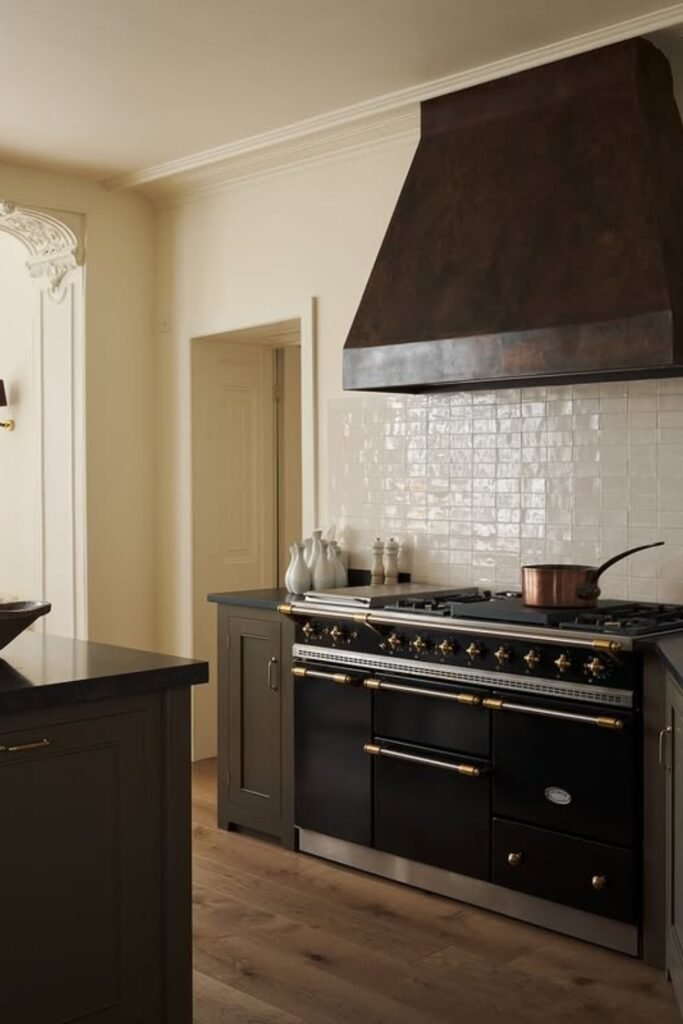
Soft Neutral Blend
When you choose a muted, taupe-leaning brown, you get warmth without darkness.
This is a great option if you love light, calm spaces but still want depth.
You can choose a low-contrast brown shade, pair it with light stone countertops and warm brass hardware.
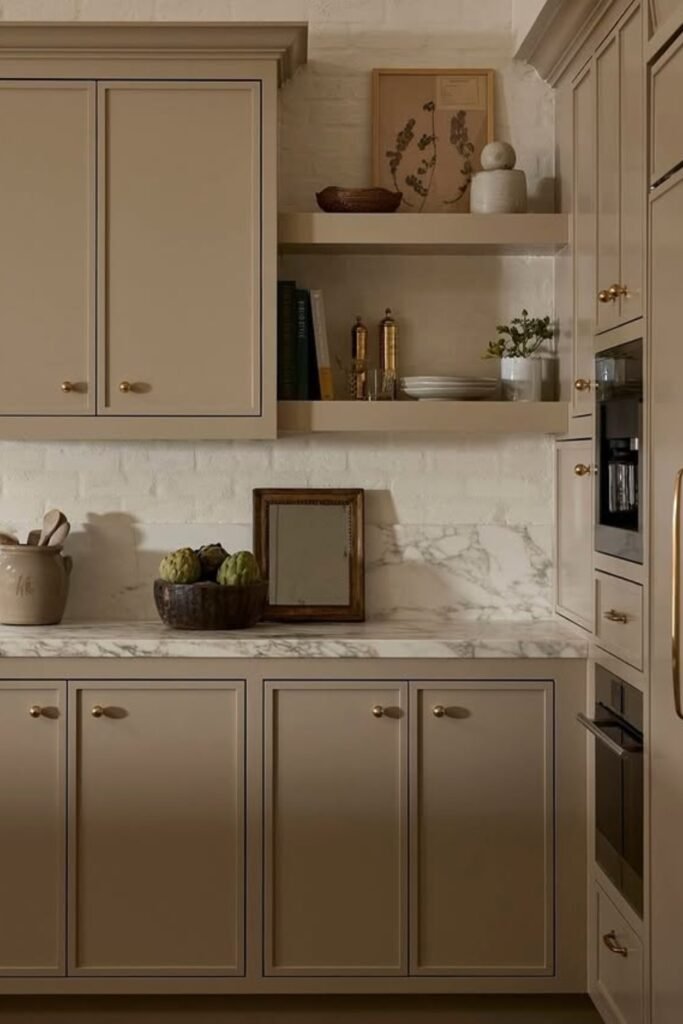
Dark Island Contrast
When you surround it with pale cabinetry, light countertops, and plenty of natural light, you stop the space from feeling closed in.
A deep brown island works best when you keep everything around it light and simple.
This is ideal if you have an open-plan kitchen and you want the island to stand out.
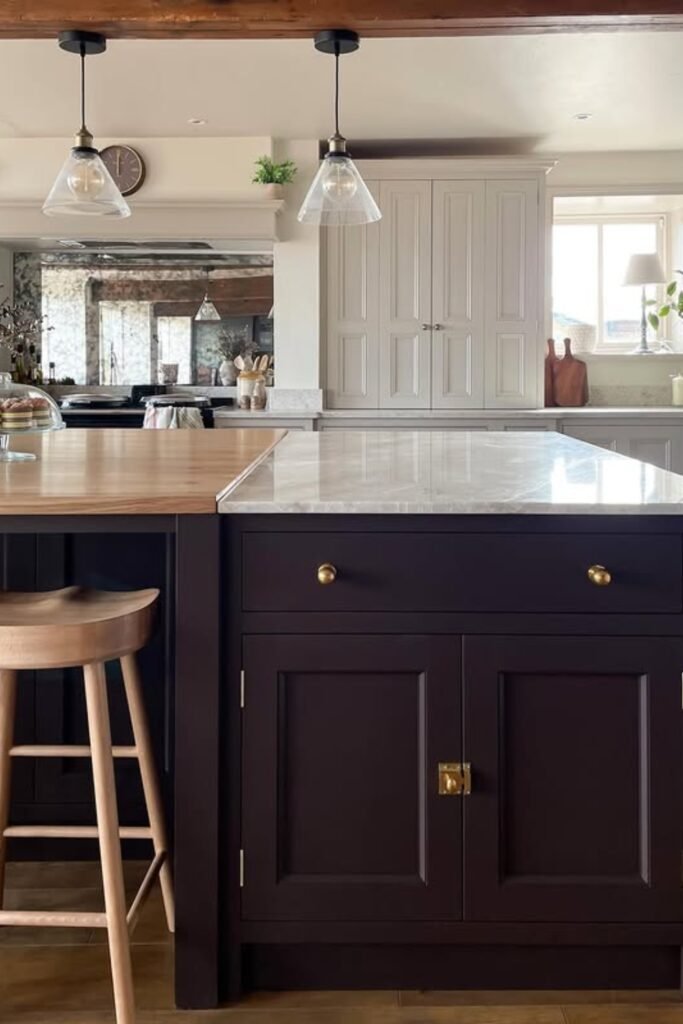
Warm Transitional Flow
You will see how the warm wood tone naturally works with marble counters, soft wall colors, and classic lighting.
You can choose a medium brown finish, use simple shaker-style doors, and mix in modern fixtures so you keep the warmth while still feeling updated.
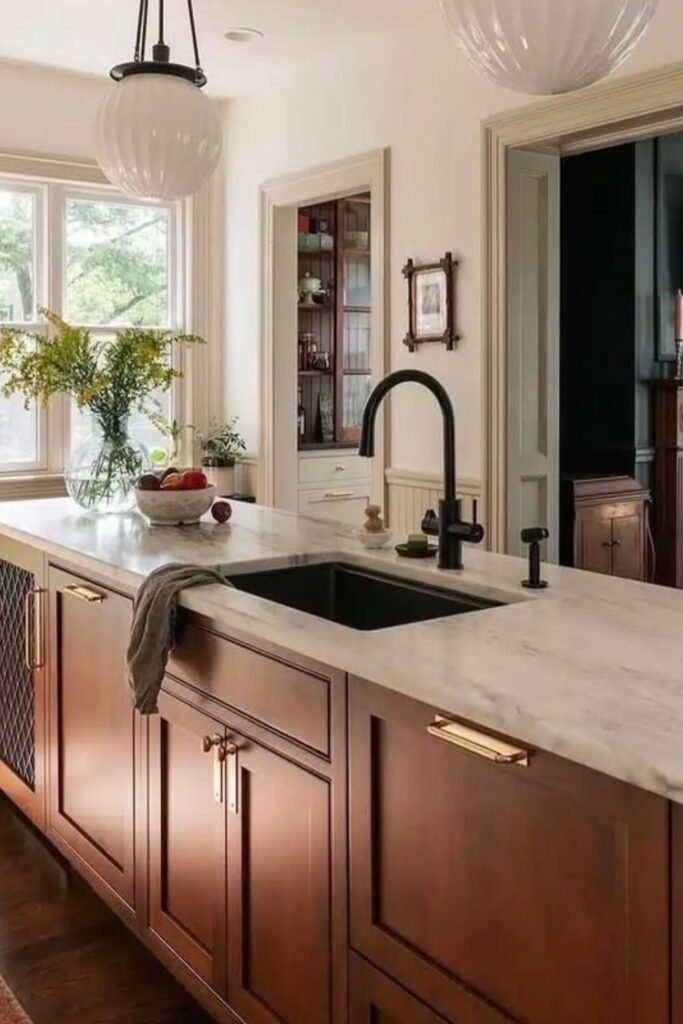
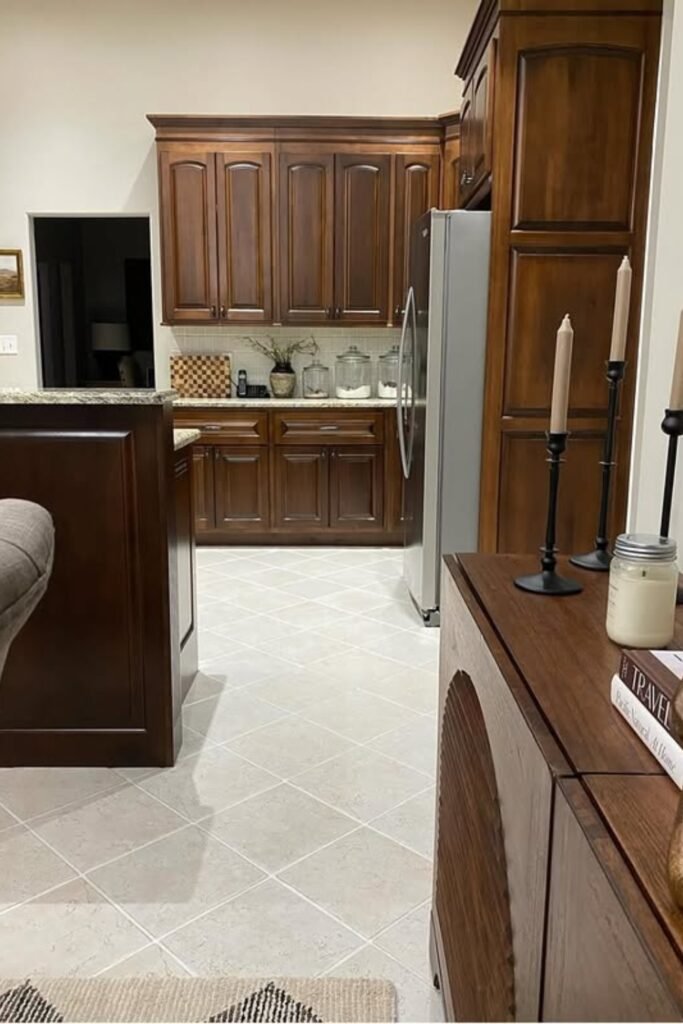
Traditional Full Warmth
When you keep the wood tone consistent, you create a solid, traditional feel that works best when you have the space and light to support it.
When you keep counters simple and decor minimal, you help the cabinets feel intentional instead of overwhelming.
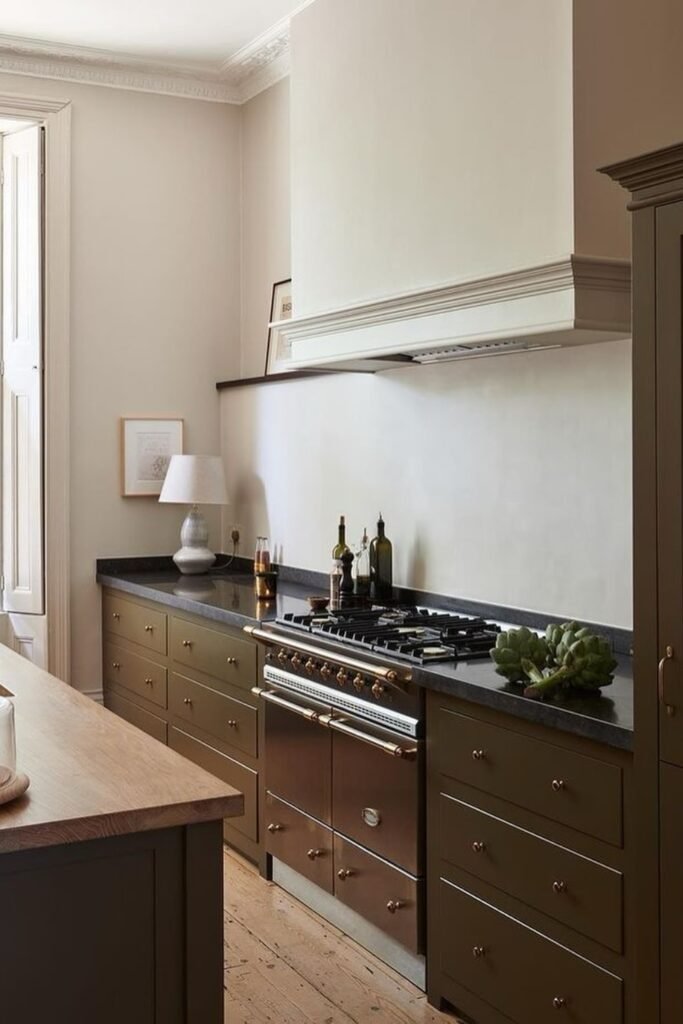
Muted European Elegance
When you add a tall hood, a classic range, and simple walls, you draw attention upward, so the cabinetry supports the space instead of dominating it.
You can choose a muted brown or olive-brown finish, keep counters dark and simple, and let architectural details, not color, carry the character.
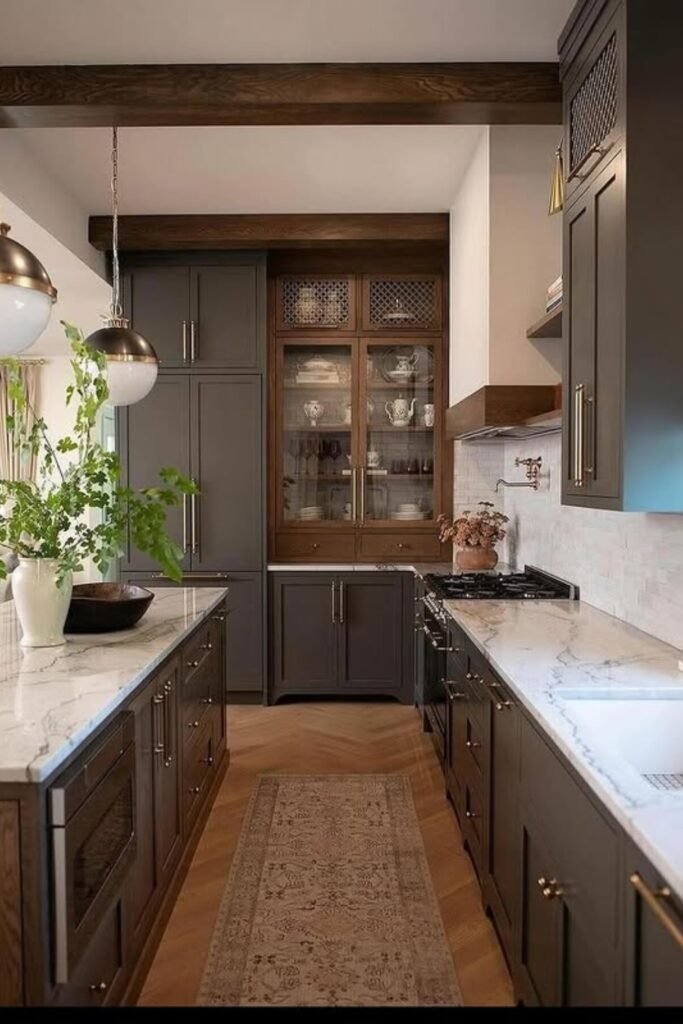
Layered Dark Harmony
The dark tones repeat through the beams, trim, and accents, which makes the cabinetry feel intentional instead of heavy.
You can echo the cabinet color in architectural details, mix in light surfaces for balance, and keep the palette tight so nothing feels random.
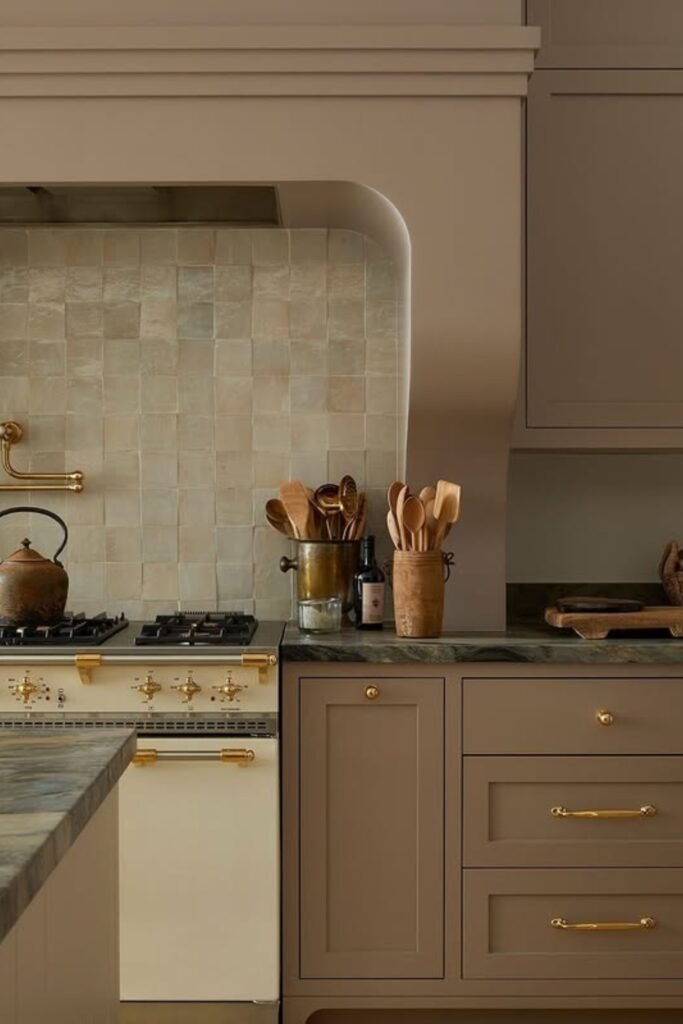
Soft Brown Classic
This kitchen shows how brown can feel calm, not heavy, when the shade stays soft and the details do the talking.
The cabinetry leans warm and muted, while brass hardware and a tiled backsplash add quiet character.
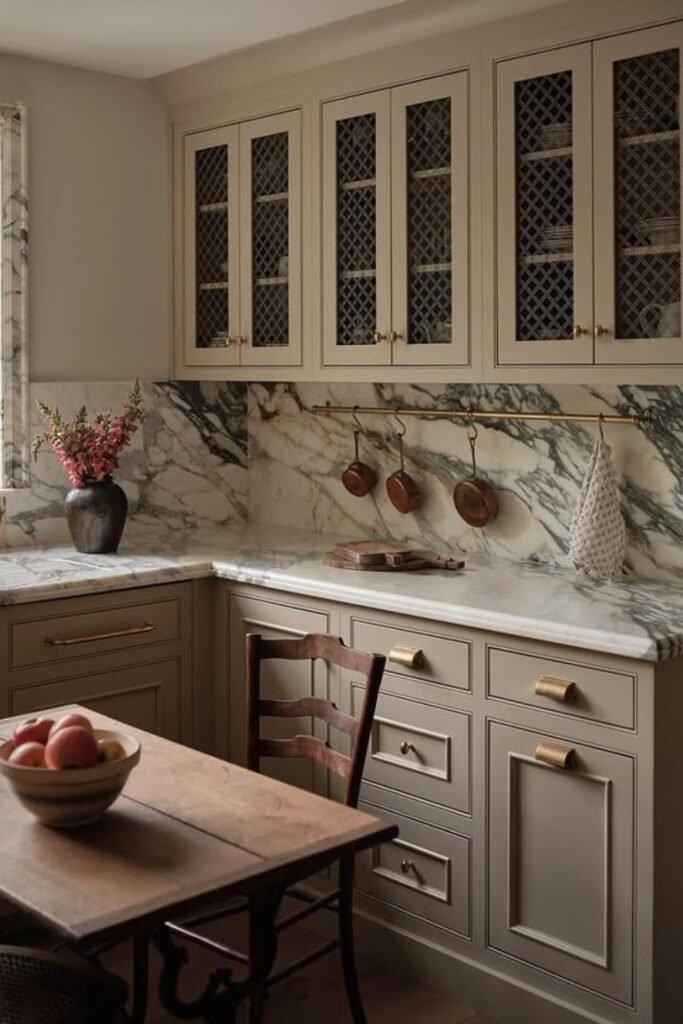
Refined Classic Calm
The cabinetry sits in that in-between zone, not too brown, not too beige, which makes it incredibly flexible.
It works because the stone backsplash and countertops introduce movement and texture, while the warm brass hardware adds just enough contrast.
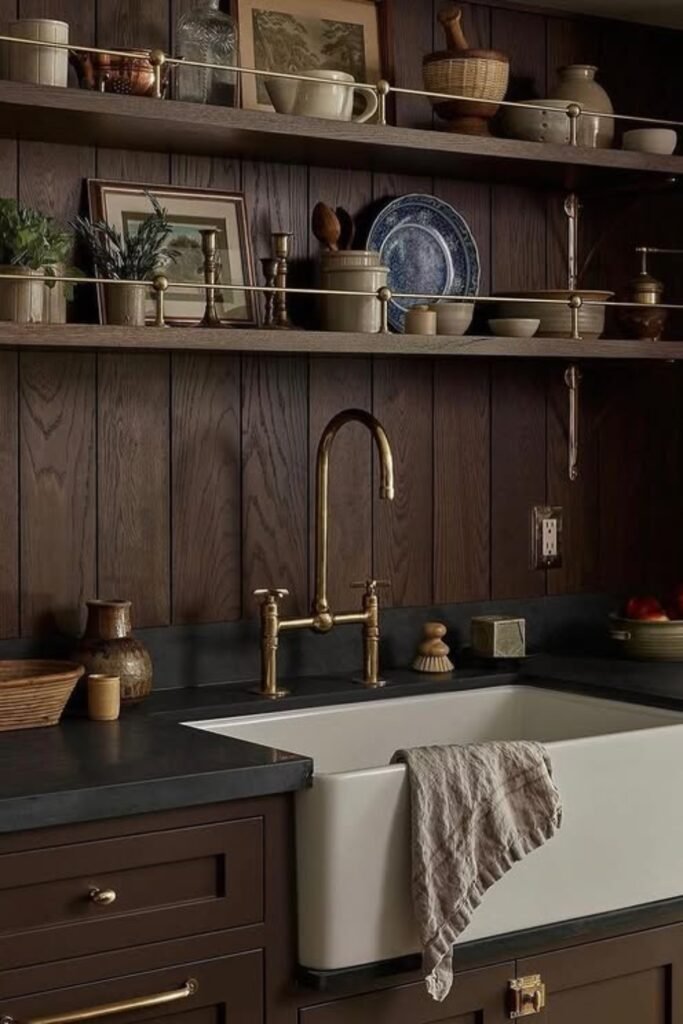
Dark Shelved Warmth
When you pair dark cabinetry with a wood-paneled wall, you create depth, and when you add open shelves, you stop the space from feeling boxed in.
You can pair deep brown cabinets with dark countertops, add open shelving for balance, and use warm metals to keep the look layered and livable.
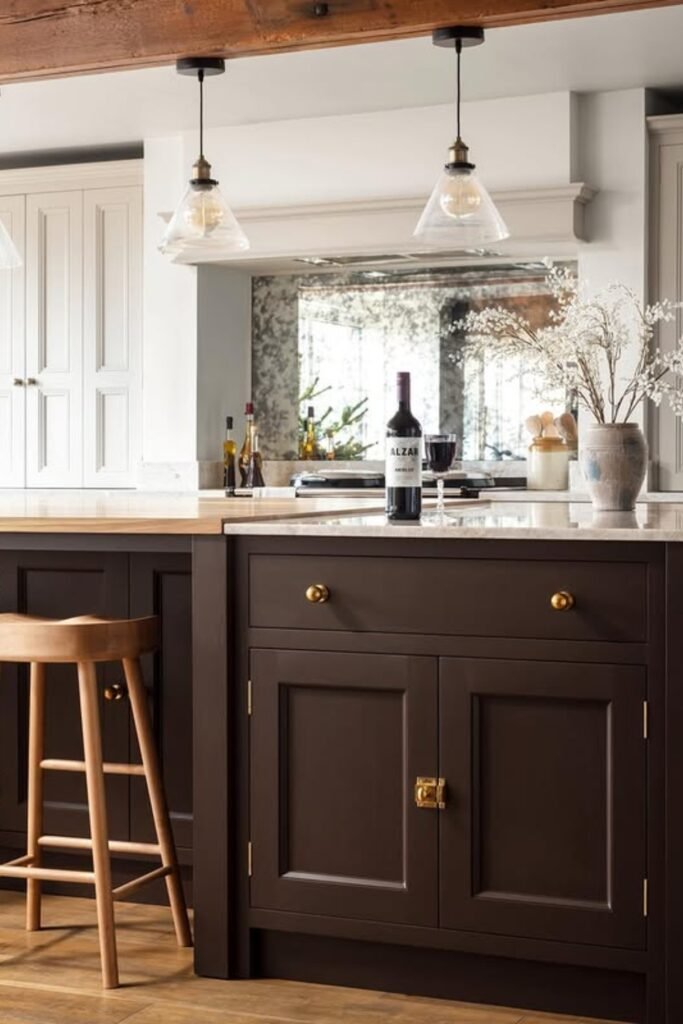
Balanced Island Warmth
This kitchen shows you how a dark brown island can ground the space without overpowering it.
This approach works especially well if you have an open or farmhouse-style kitchen.
The contrast works because you keep the perimeter cabinets light and simple, which lets the island become your visual anchor.
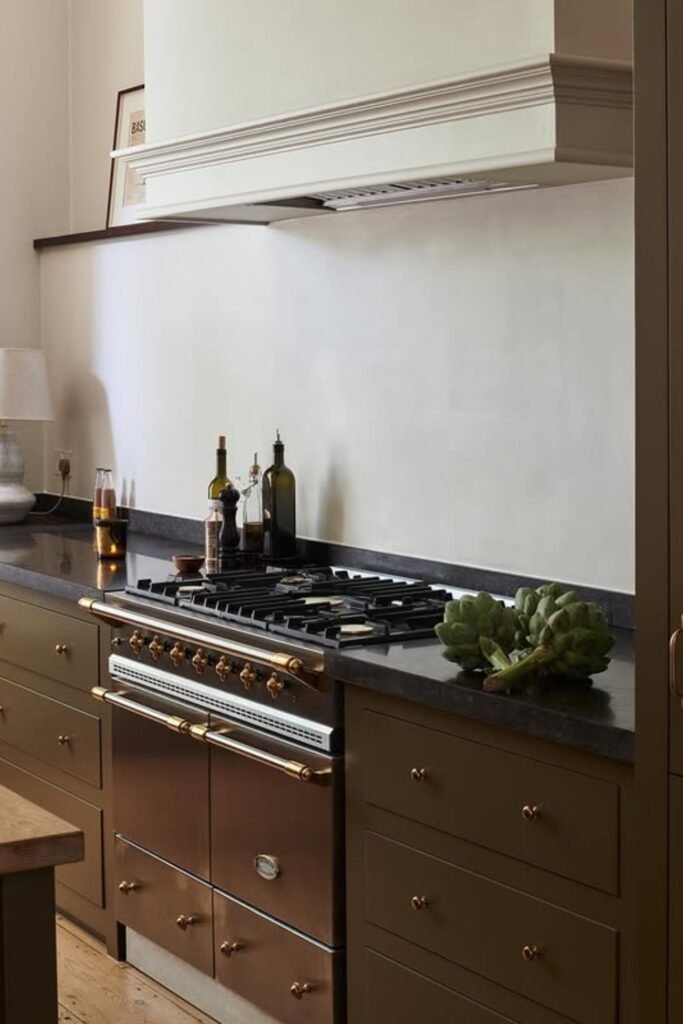
Refined European Warmth
You can choose a deep but muted brown, pair it with dark stone counters, keep the backsplash simple, and use warm metals.
When you keep the cabinetry clean and understated, you allow the range, brass accents, and dark countertops to carry the character.
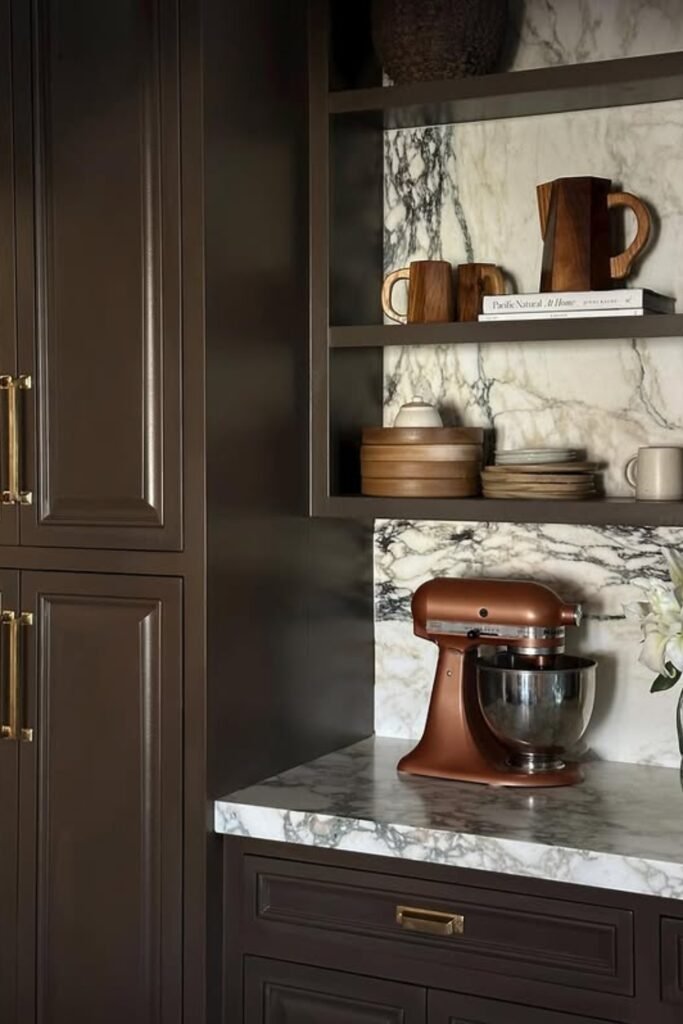
Rich Shelf Contrast
The deep cabinetry creates a strong base, while marble-backed open shelves add light, texture, and a sense of depth.
You can keep most cabinets closed and dark, introduce one open section with a lighter stone backdrop, and style shelves with warm wood pieces.
You may like to read!
