
19 Wood and Cream Kitchen Ideas
If you’ve chosen a cream kitchen but now you feel stuck trying to figure out which color to pair with it, don’t worry, you’re definitely not alone.
In this article, you are going to see exactly which colors work best with a cream kitchen.
Let’s jump in!
What Color Goes Best With A Cream Kitchen?
If you’re standing in front of paint swatches or scrolling through endless ideas and you’re thinking.
Why does every option either look boring or way too much?, you’re not imagining it.
This is exactly the problem you can run into with cream kitchens. The cream is forgiving, but you also have to be careful because it can show mistakes really fast.
If you pick the wrong color, you can make it look yellow or dated. If you try to add too many colors, you can make the space feel messy.
The goal isn’t for you to just add color for the sake of it, it’s for you to choose a color that actually supports the cream, and balances your space.
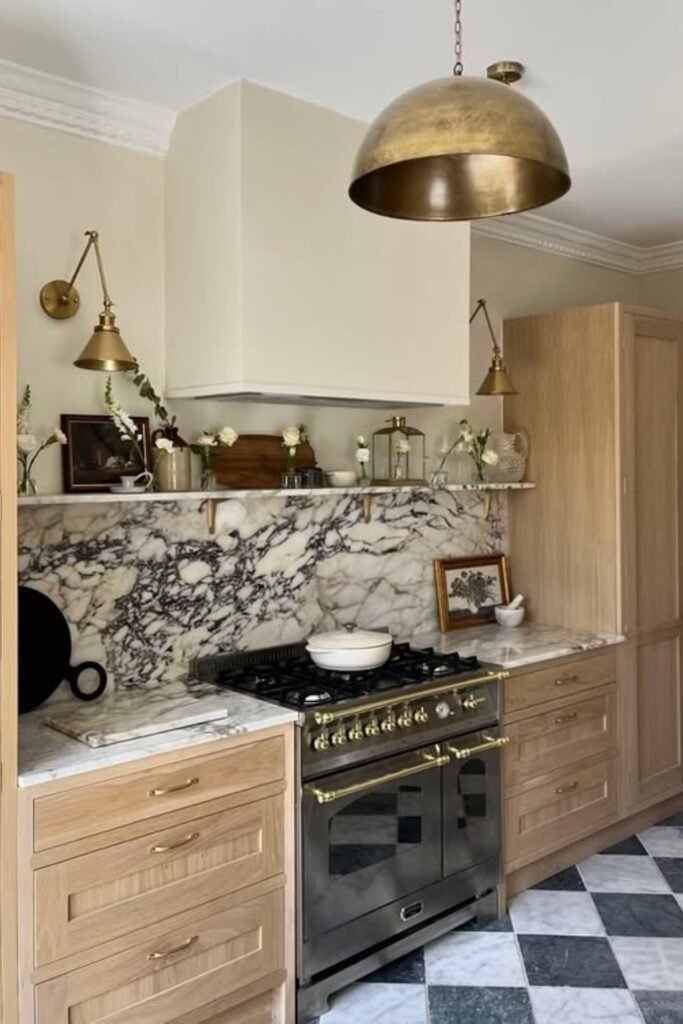
Soft Cream Contrast
You’ll notice cream works here because it’s paired with strong, warm materials that give the space structure.
You can let the oak cabinetry anchor your kitchen, while the marble splash back adds just enough drama so it doesn’t feel safe or boring.
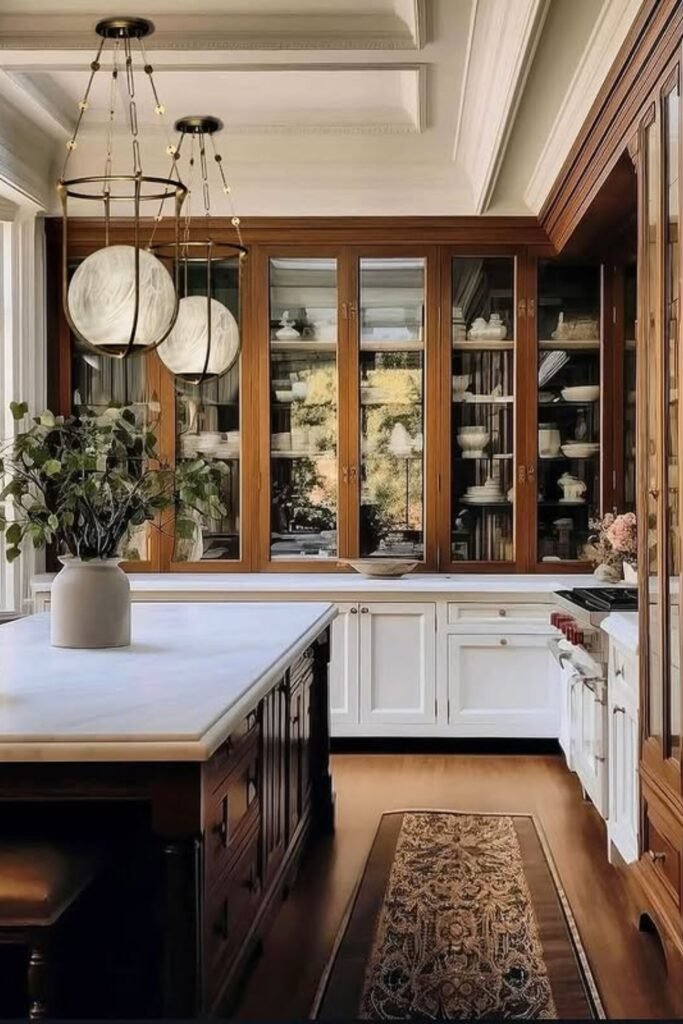
Dark Wood Frame
You’ll see cream feels grounded when it’s surrounded by deeper wood tones. You can use dark cabinetry like a frame so the cream doesn’t float or wash out.
If you love cream but worry it’s too soft, you can fix it by keeping darker wood on tall units or the island, leaving cream for lower cabinets, and using glass fronts to bounce light.
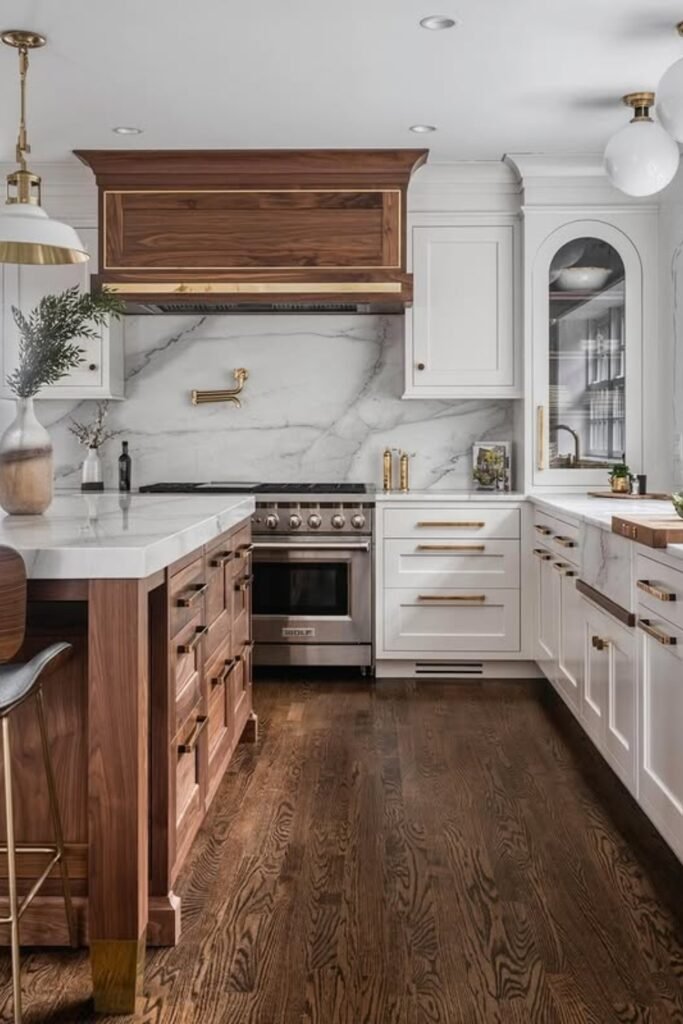
Rich Walnut Anchor
If you use darker wood on the island, hood detail, and flooring, you’ll stop the space from feeling too light or washed out.
When you try this, keep cream on the perimeter cabinets and bring the darker wood into the focal points, finishing it off with warm brass hardware.
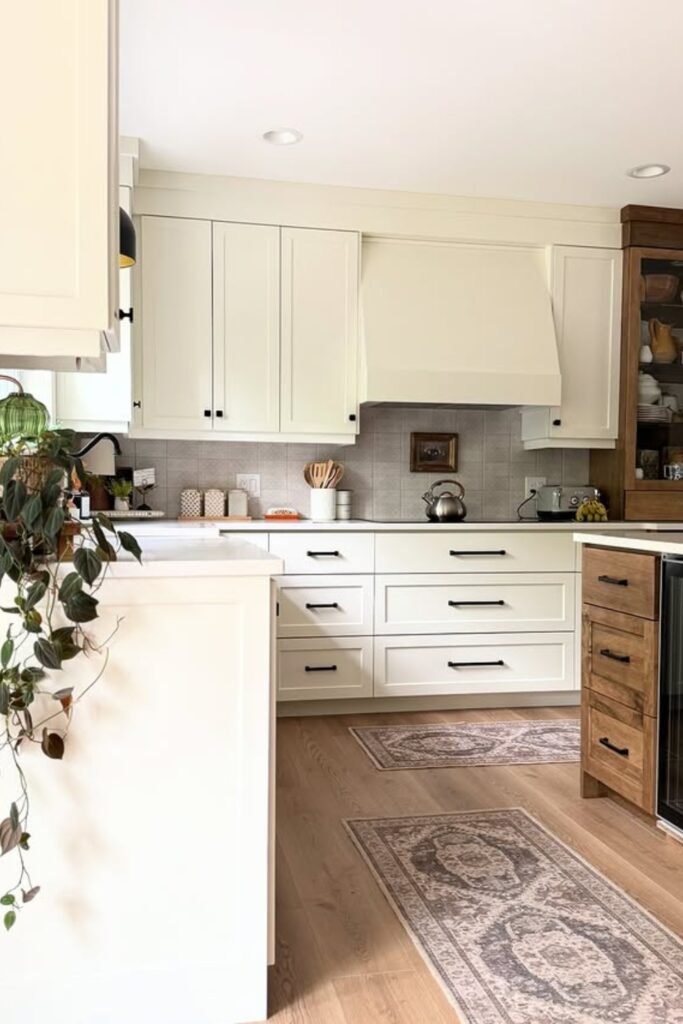
Cream First Approach
You can let cream take the lead while wood quietly supports it. When you do this, your space feels light instead of heavy.
You should keep most cabinets cream and only use wood where it adds warmth, a side unit, island detail, or flooring.
Clean Wood Strip
You can warm up a cream kitchen with just a thin band of wood. Instead of using large wood cabinets.
You can use it as a horizontal break to keep the space light and modern.
If you’re nervous about adding too much wood, you should try it through trim, open shelving, or an island edge, keeping everything else cream and simple.
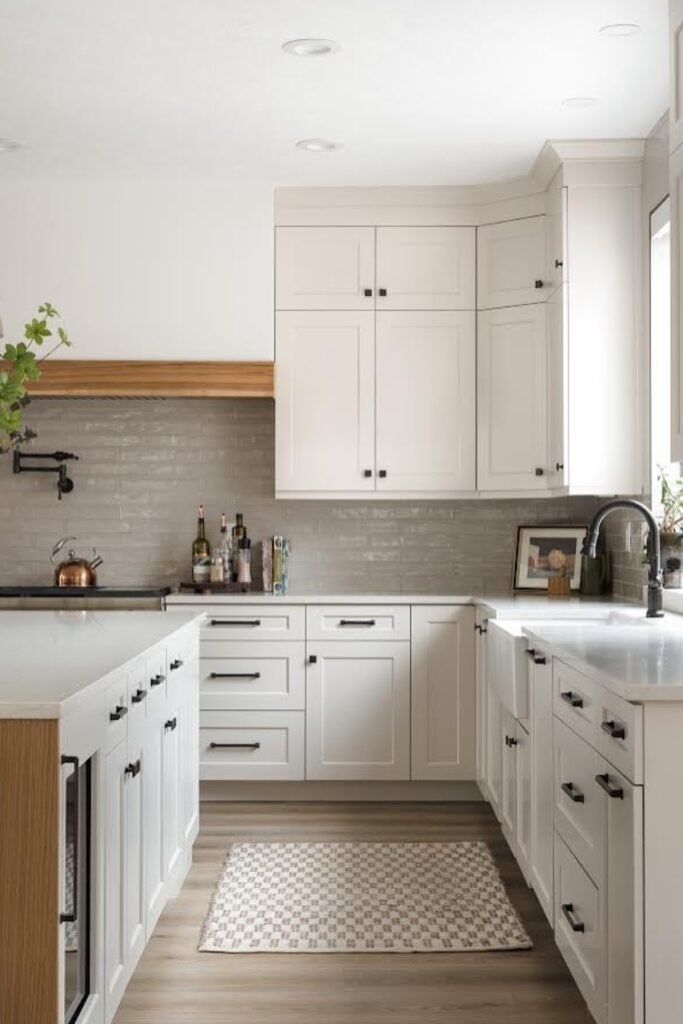
Soft Sage Layer
When you do this, the soft green calms the space while the oak island and hood trim prevent it from feeling cold or flat.
If plain cream feels too safe for you, this is an easy upgrade.
You should keep upper cabinets light, bring color into the lowers, and repeat wood in small doses.
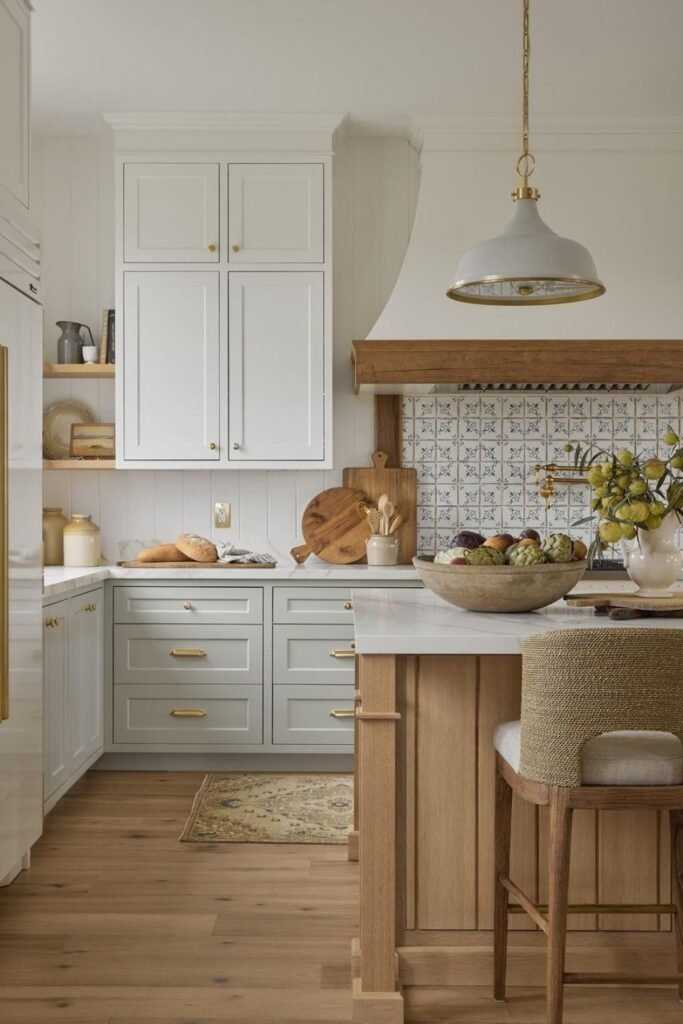
Country Wood Warmth
You should keep cabinetry simple, use warm wood furniture instead of built-ins, and let natural light do its job.
This look is perfect for country homes, older properties, or anyone who wants a kitchen that feels welcoming instead of polished.
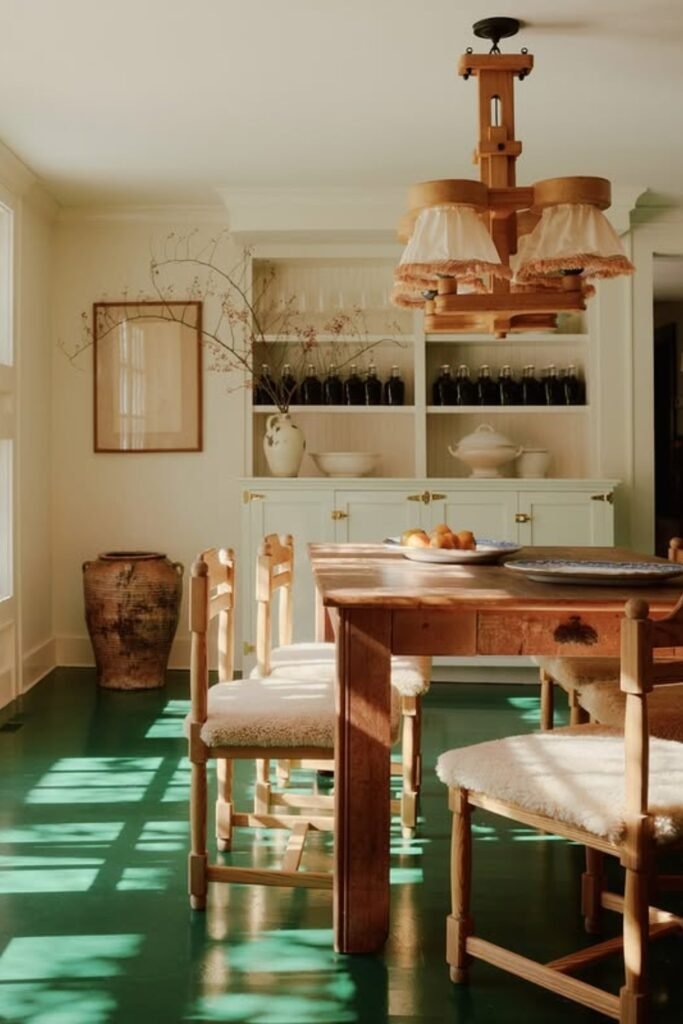
Light Wood Lift
When you use light wood on the island, it adds warmth without darkening the space, while marble and brass keep things clean and modern.
You should use light wood only on one main feature, keep the rest cream, and let natural light bounce off reflective surfaces.
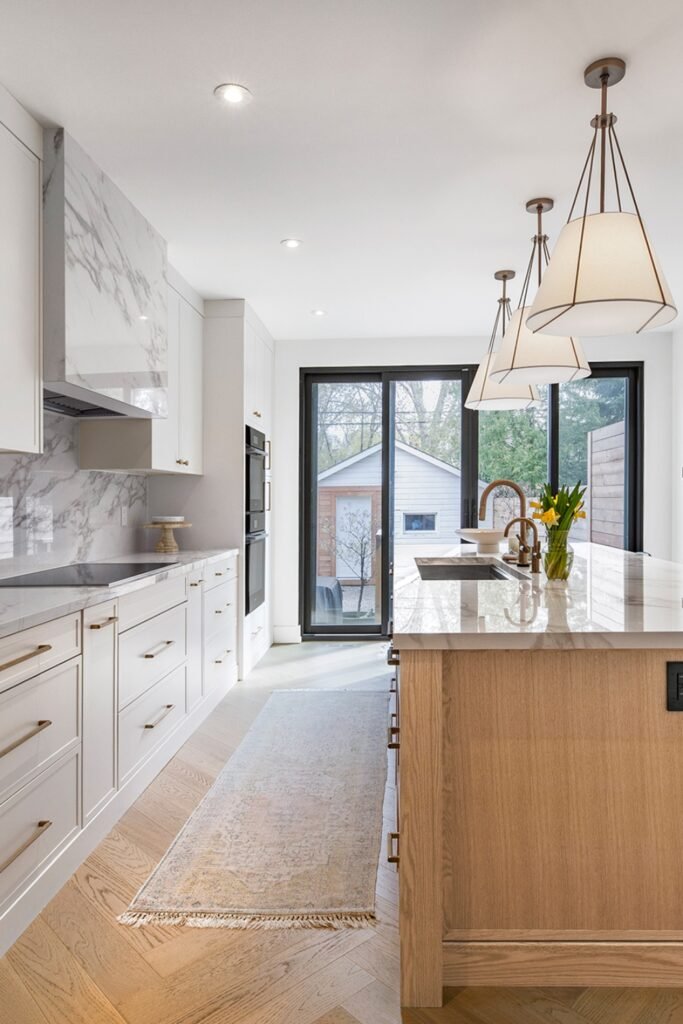
Modern Wood Touch
You can make cream feel fresh by using wood in short, intentional moments instead of everywhere.
When you do this, the wood on cabinets, stools, and dining tables connects your kitchen to the rest of the space without overpowering it.
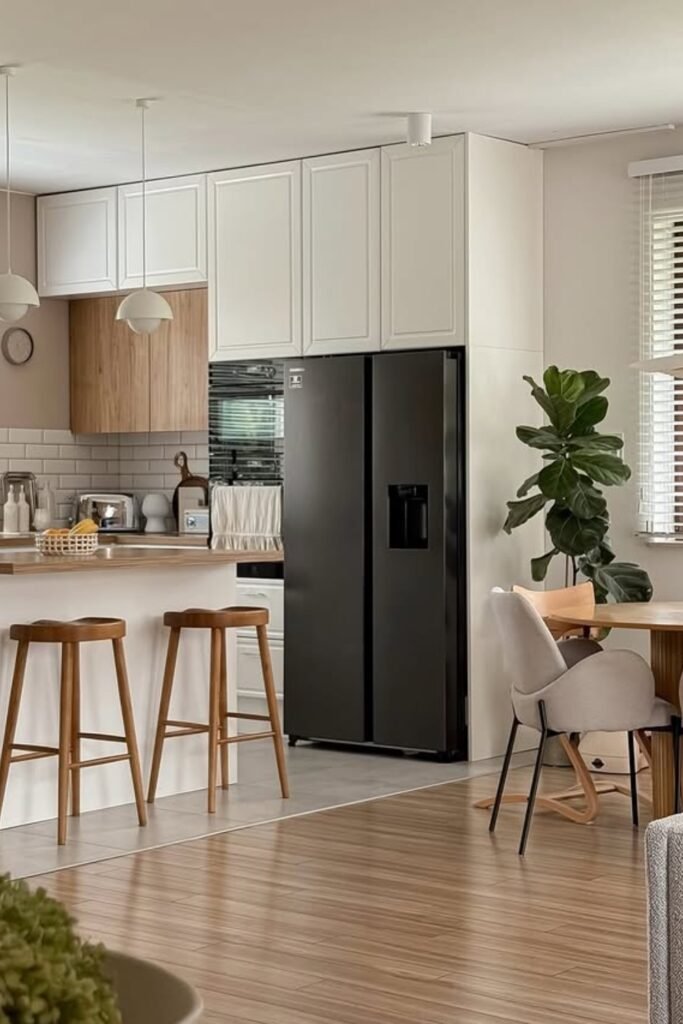
Soft Two-Tone Flow
When you do this, upper cabinets stay light while the wood base units and island add warmth without breaking the flow.
To recreate this, you should commit to cream above eye level, use wood only on lower cabinets, and repeat the tone through open shelves or trim.
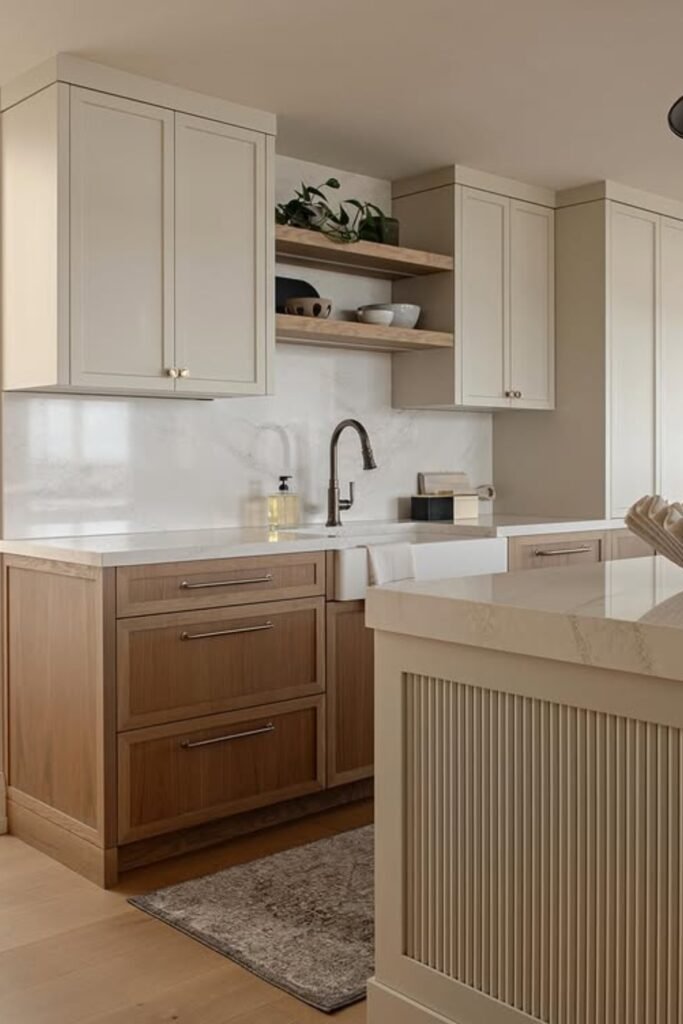
Patterned Cream Depth
You can avoid flatness by letting texture do the work instead of color.
When you do this, a tiled backsplash adds movement, while the wood island brings warmth and weight.
This works well in classic kitchens where you want detail and character without making the space feel busy.
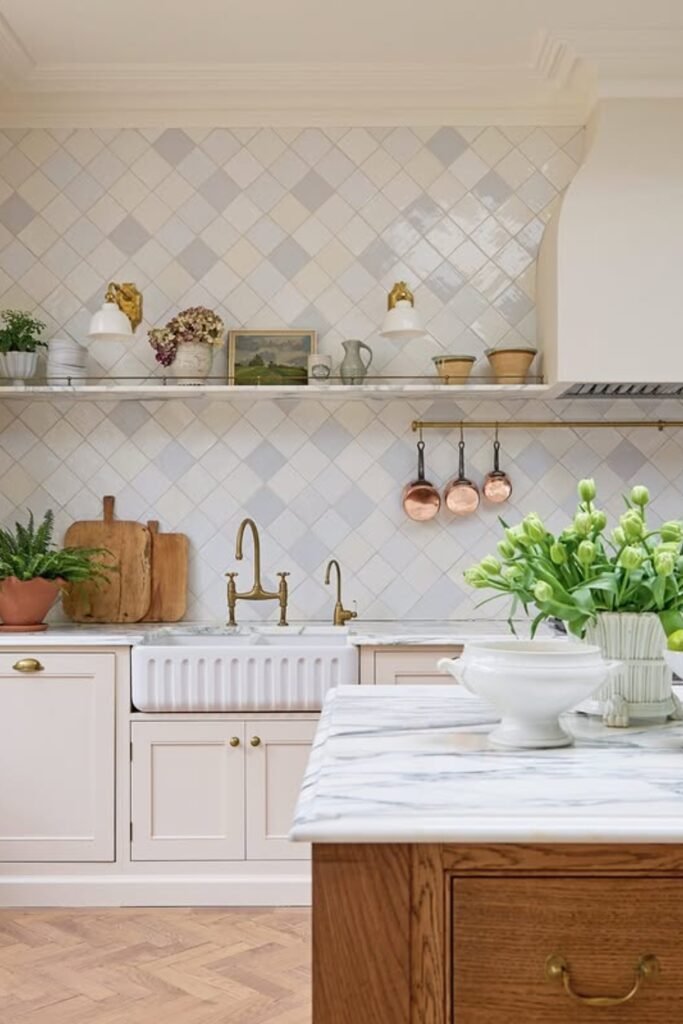
Hood Wood Detail
You can make the cream stand out by drawing the eye to the hood.
When you add a slim band of wood here, it breaks up the cabinetry and creates a focal point without adding color.
If your space feels too plain or boxy, this is an easy fix you should try.
You can keep cabinets cream, choose light oak or ash, and let simple tiles form the background.
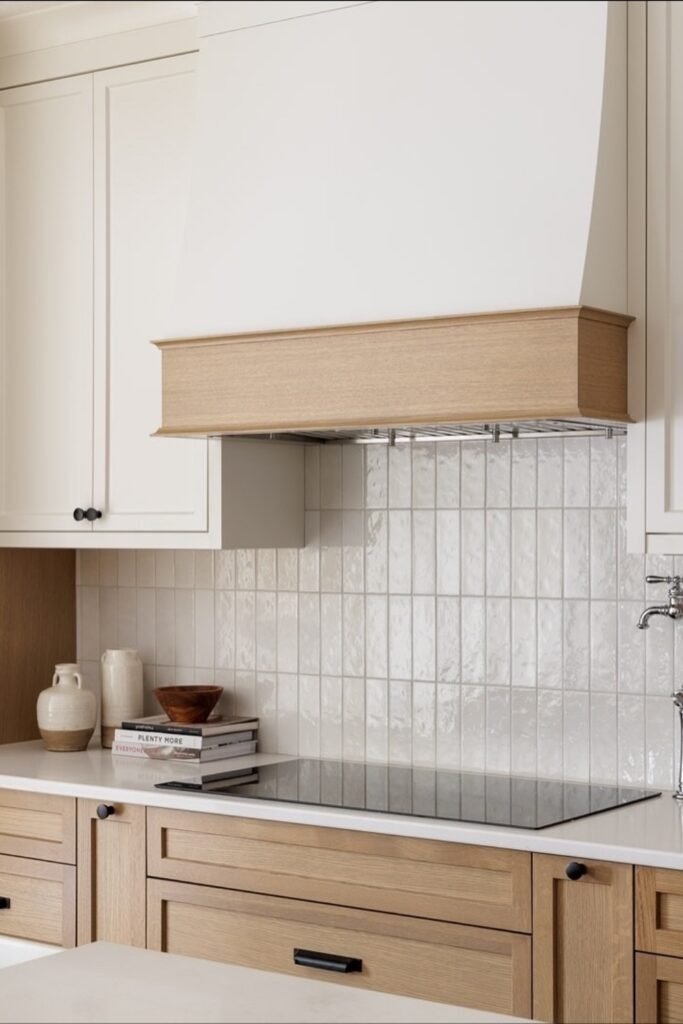
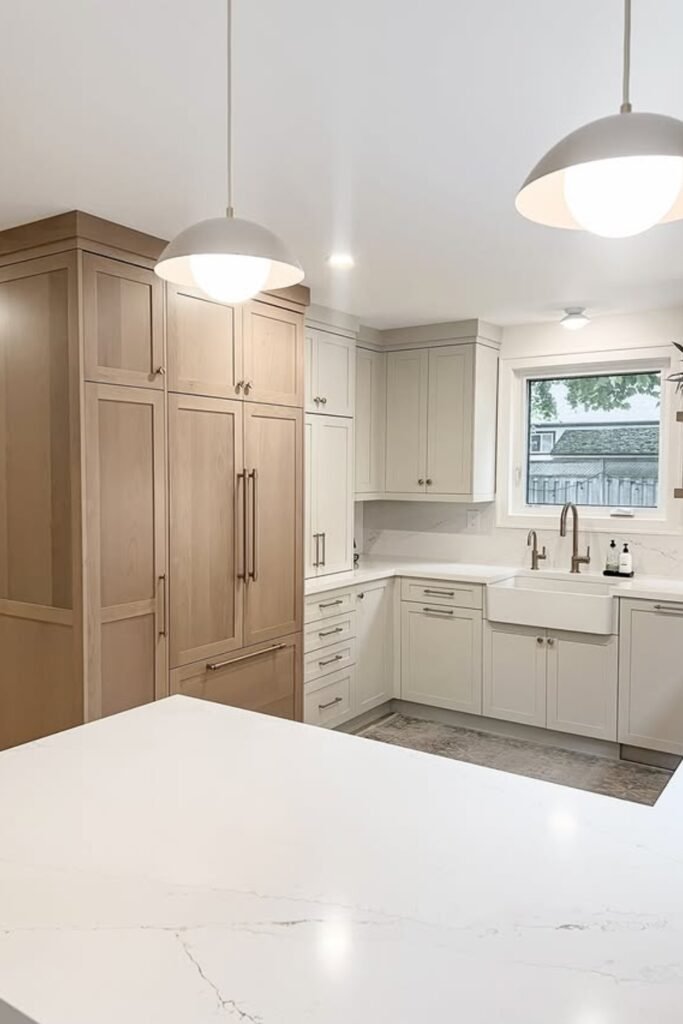
Tall Wood Anchor
You’ll see this kitchen feels calm instead of bland because the tall wood cabinetry gives the cream something solid to lean on.
You can let a full-height pantry break the wall of cream and add visual weight so the space never feels empty or floating.
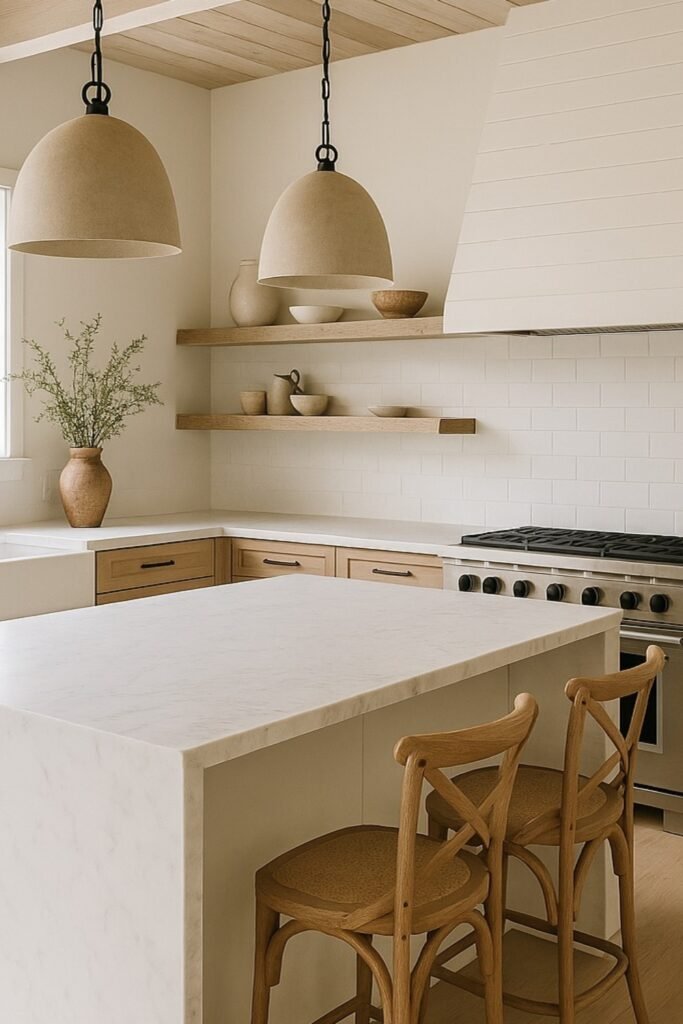
Soft Wood Calm
You should let the cream island and backsplash keep everything bright while texture does the rest of the work.
If you want a kitchen that feels calm and lived-in, limit contrast and repeat the same wood tone in small ways.
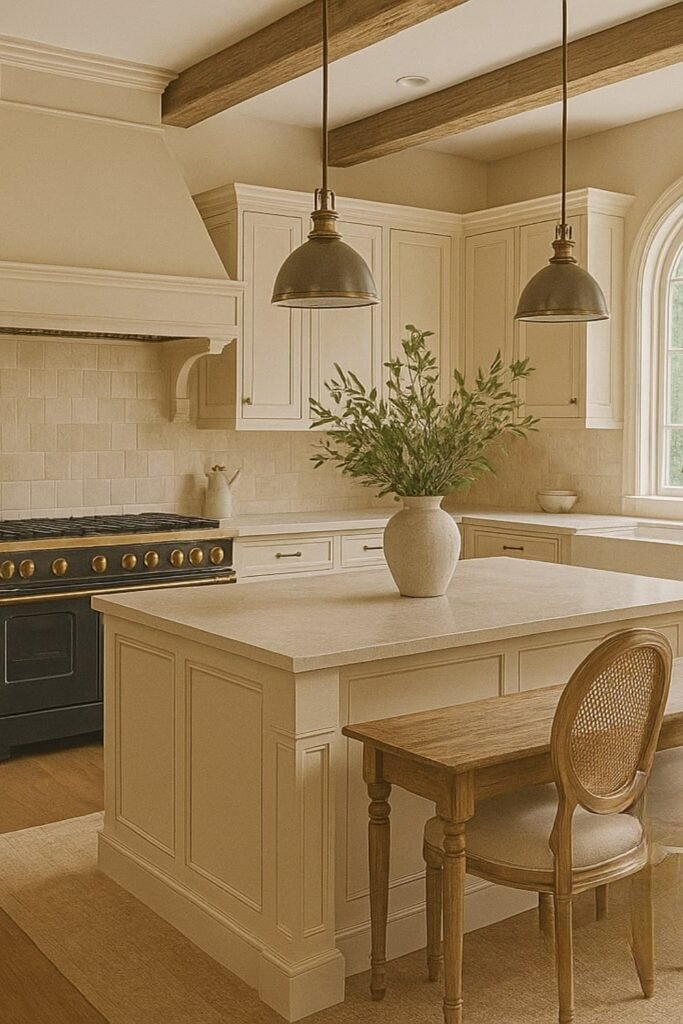
Classic Cream Warmth
You can add exposed wood beams, warm flooring, and simple wooden seating to stop the space from feeling pale or washed out.
You should let the cream cabinets soften the room, while brass details and a dark range add just enough contrast.
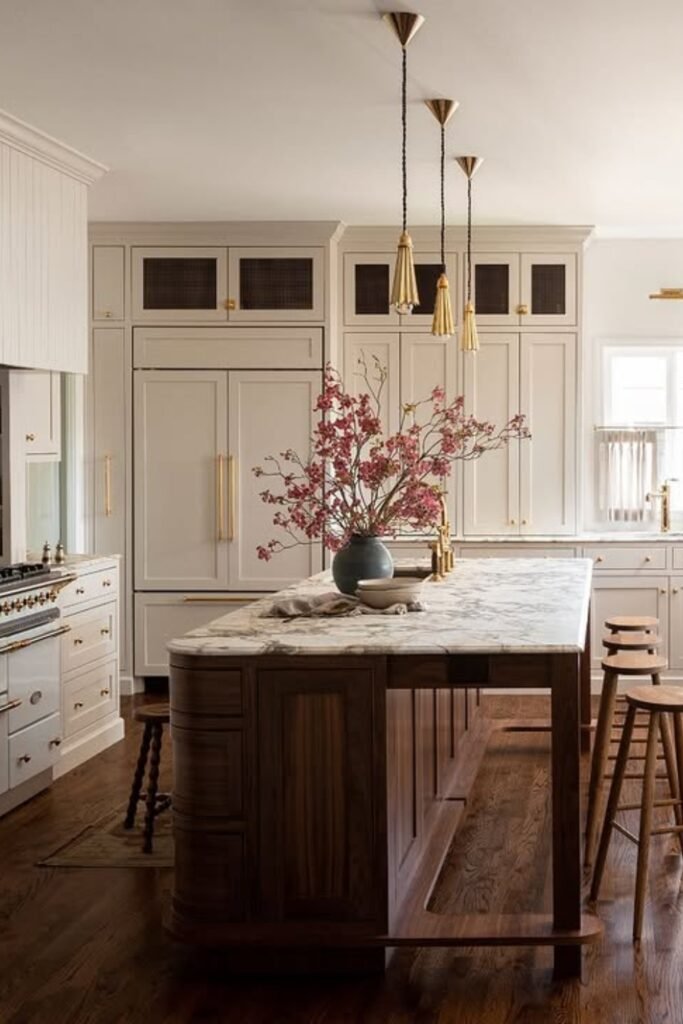
Wood Island Focus
You should use a dark wood base for the island so the surrounding cream never feels flat or overpowering.
If your kitchen feels too uniform, you can fix it easily. This works best in larger kitchens where the island can lead the design instead of blending into it.
Warm Island Seating
You can keep the kitchen from feeling too formal or plain by focusing on seating and touchpoints.
If you worry cream might feel cold, choose a medium wood tone for the island, repeat it in stools or flooring, and keep the rest soft and simple.
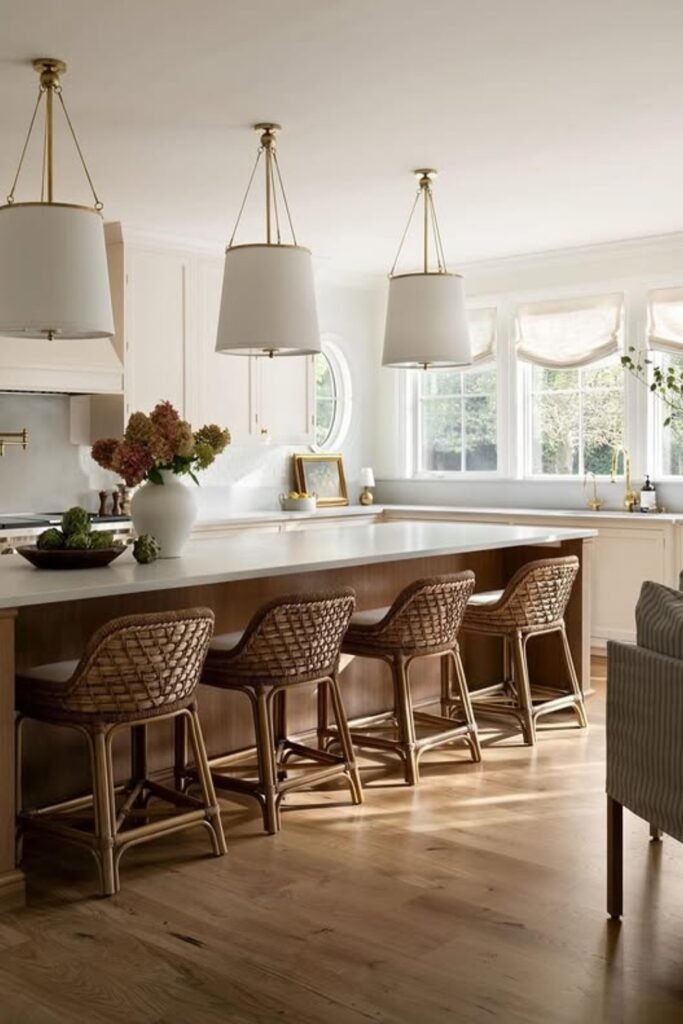
Soft Neutral Flow
If you want a cream kitchen that feels easy to live with, you should stick to soft neutrals, keep wood tones light, and limit contrast to small details like handles or lighting.
This setup suits everyday kitchens where you want calm, brightness, and flexibility without committing to bold colors.
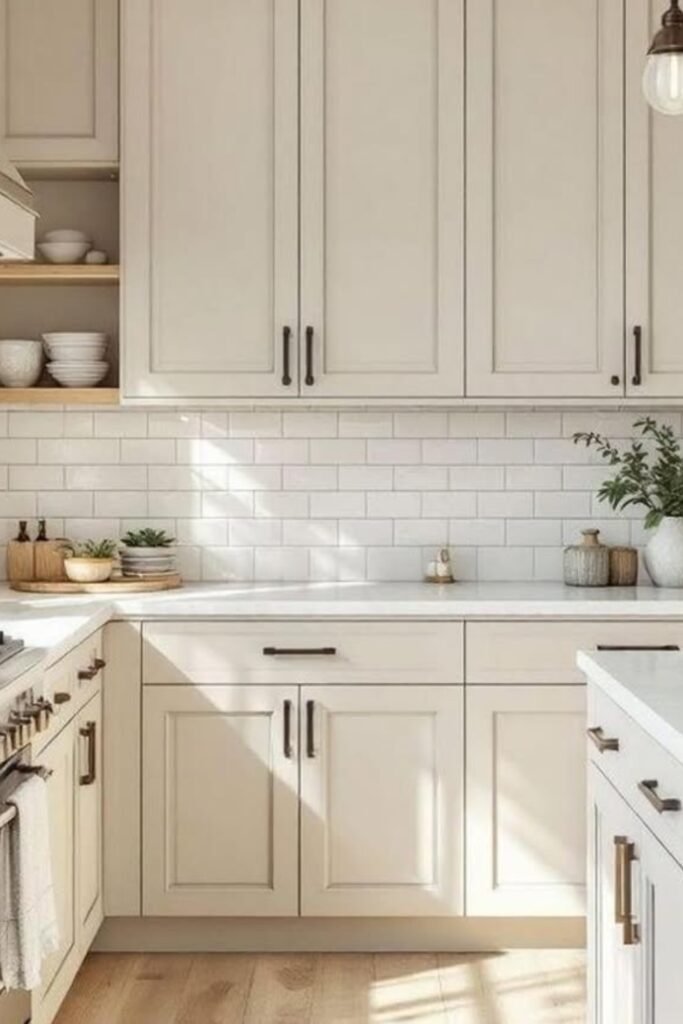
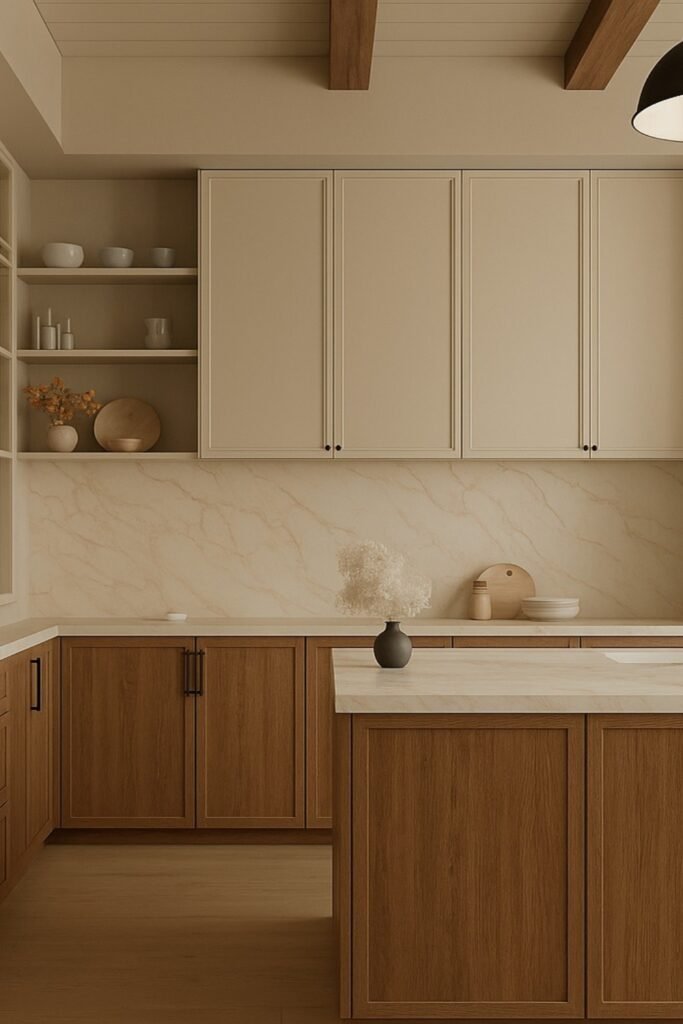
Warm Modern Balance
You can keep cream grounded here by treating the wood as structure, not just an accent.
You should use lower cabinets and the island to carry warmth, while the cream uppers keep the space open and light.
That contrast makes your kitchen feel modern without turning cold.
You may like to read!
