
21 Dark Academia Bedroom Ideas
If you have ever saved dozens of dark academia bedrooms and still felt stuck, you’re definitely not alone.
If you get the colors wrong, your whole room can fall flat. But if you get them right, you will feel your bedroom instantly become warm, and moody.
In this article, you are going to see exactly which colors work, how you can combine them, and how you can avoid the mistakes that usually ruin the look.
Let’s jump in!
What Are The Colors For A Dark Academia Bedroom?
If you think dark academia colors are just black and brown, that’s exactly where you might go wrong.
You might believe the goal is to make your bedroom dark, but really, you want it to feel warm, deep, and lived-in.
You can use the right colors to create that cozy old-library mood without making your room feel heavy or depressing.
You’re going to learn which dark shades actually work, how you can mix them without going overboard.
And how you can balance deep colors with lighter tones so your bedroom still feels comfortable and not closed-in.
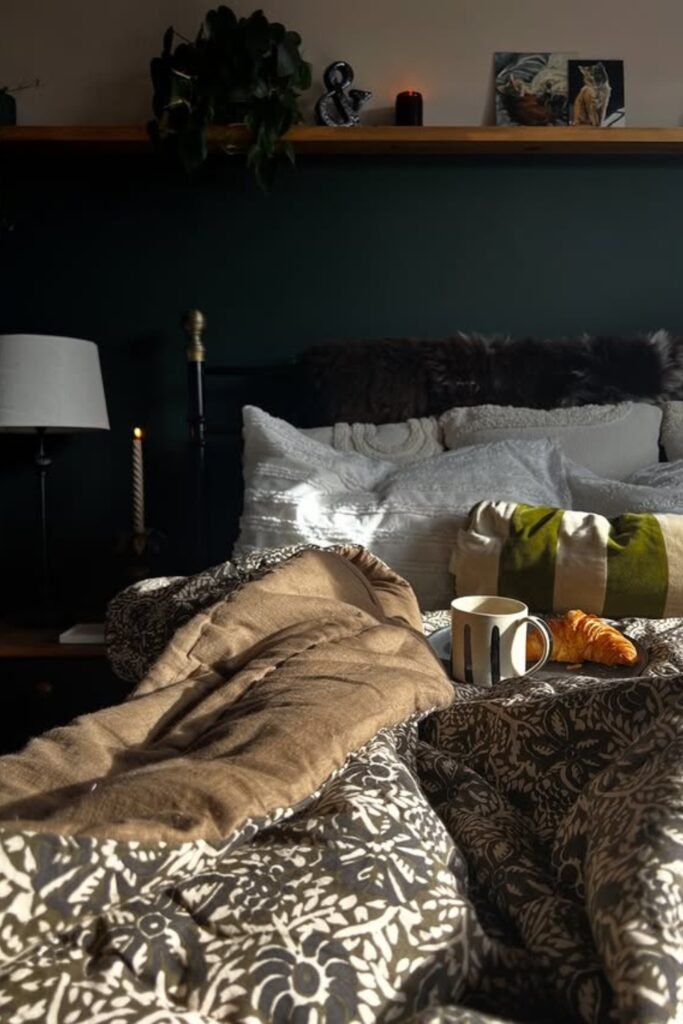
Moody Green Backdrop
If you want your bedroom to feel calm and grounded, you can start with a deep green wall behind your bed, it sets the tone without needing heavy decor.
You can begin with just one dark wall, then balance it with light bedding, layered textures, and warm lamps.
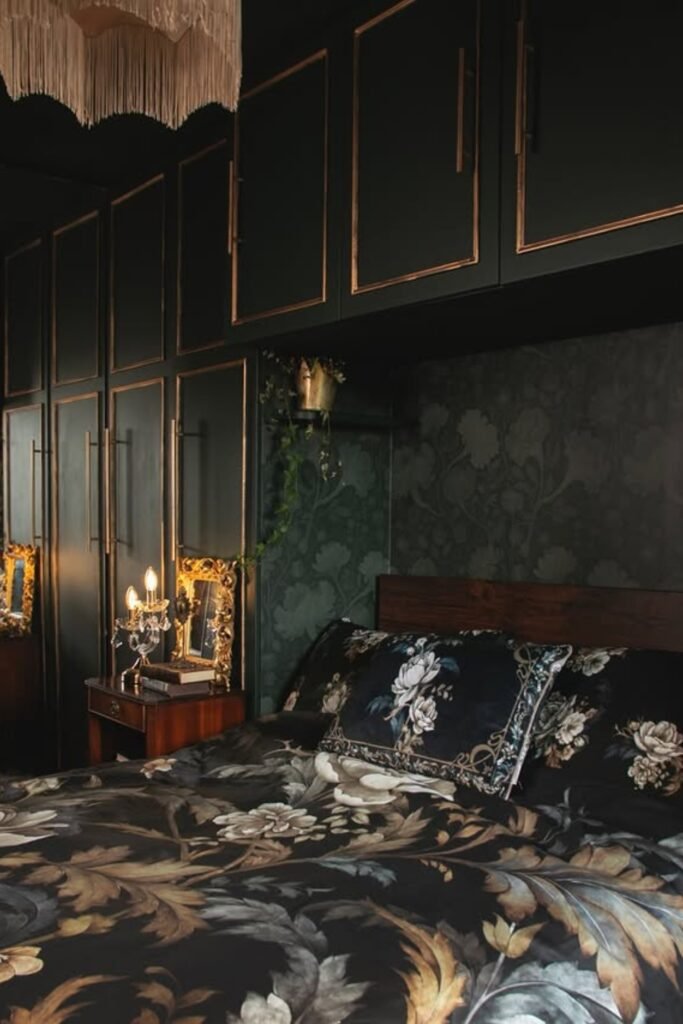
Ornate Dark Layers
You can make a bold dark academia statement with dark florals, paneled walls, and warm brass details.
You can pair patterned bedding with solid dark walls and then add gold-framed mirrors or lamps to break up the darkness, giving your room depth without clutter.
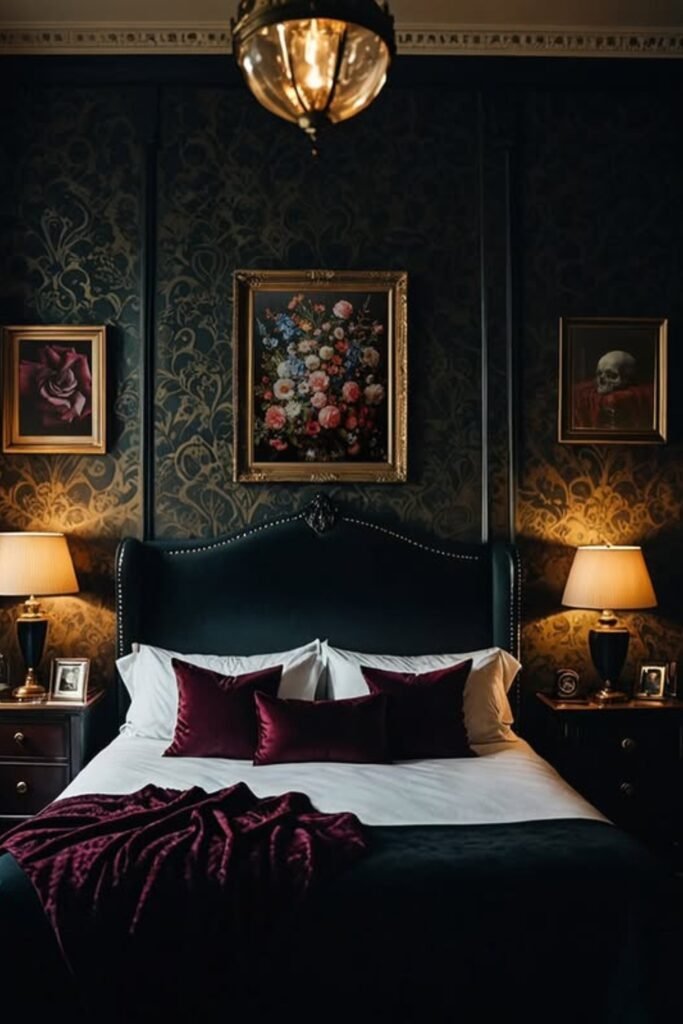
Scholarly Night Mood
When you want a classic academic feel, you can use patterned dark walls, framed art, and symmetrical lamps.
You should focus on balance first, matching lamps, centered artwork, and a strong headboard and then you can layer in deep tones like burgundy or forest green to add warmth and depth.
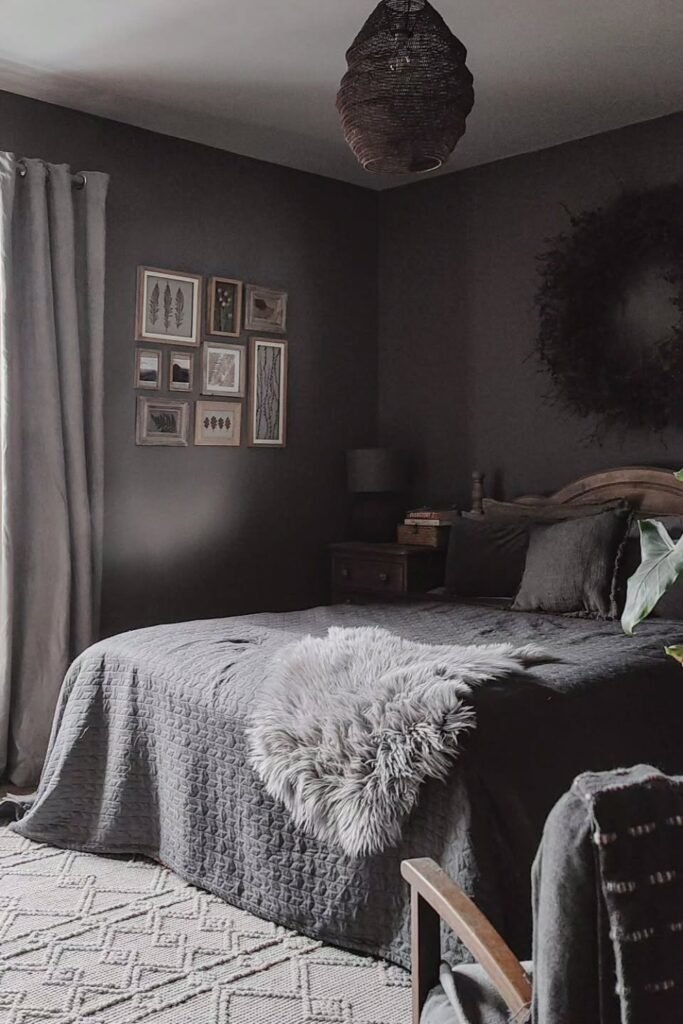
Soft Charcoal Calm
If you have been worried that dark academia feels heavy, you can try charcoal walls paired with natural light.
You will see that this setup works best when your bedroom has at least one good window, letting daylight soften the dark tones.
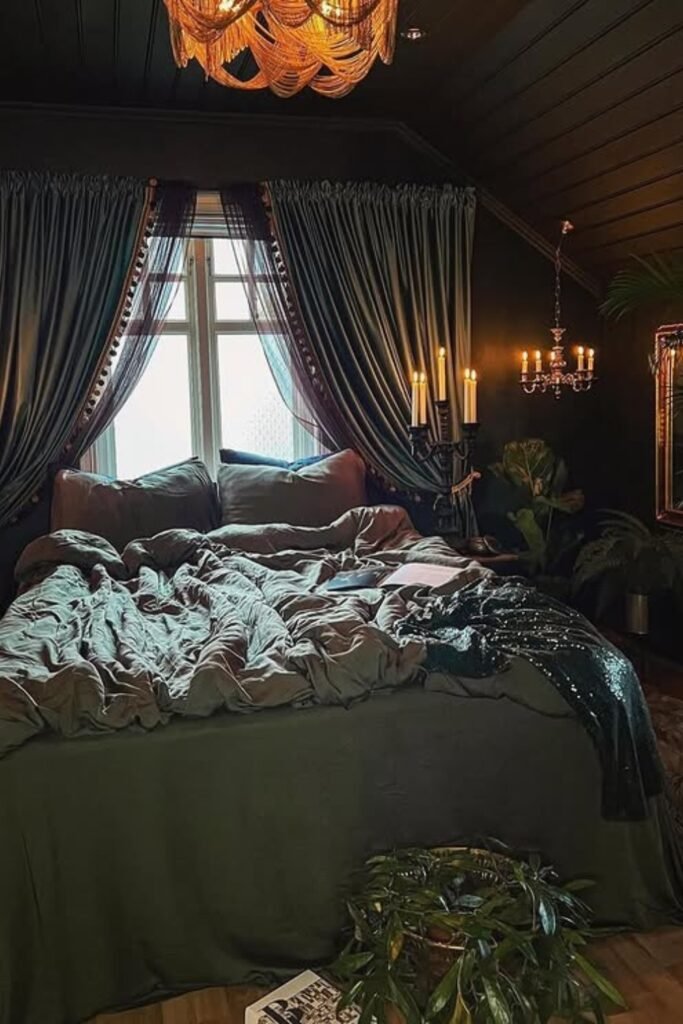
Candlelit Library Feel
You can turn your bedroom into a cozy night-time retreat with heavy curtains, low light, and deep colors.
You will notice this works best in rooms with high ceilings or strong window placement, where the darkness feels intentional.
Dramatic Evening Ritual
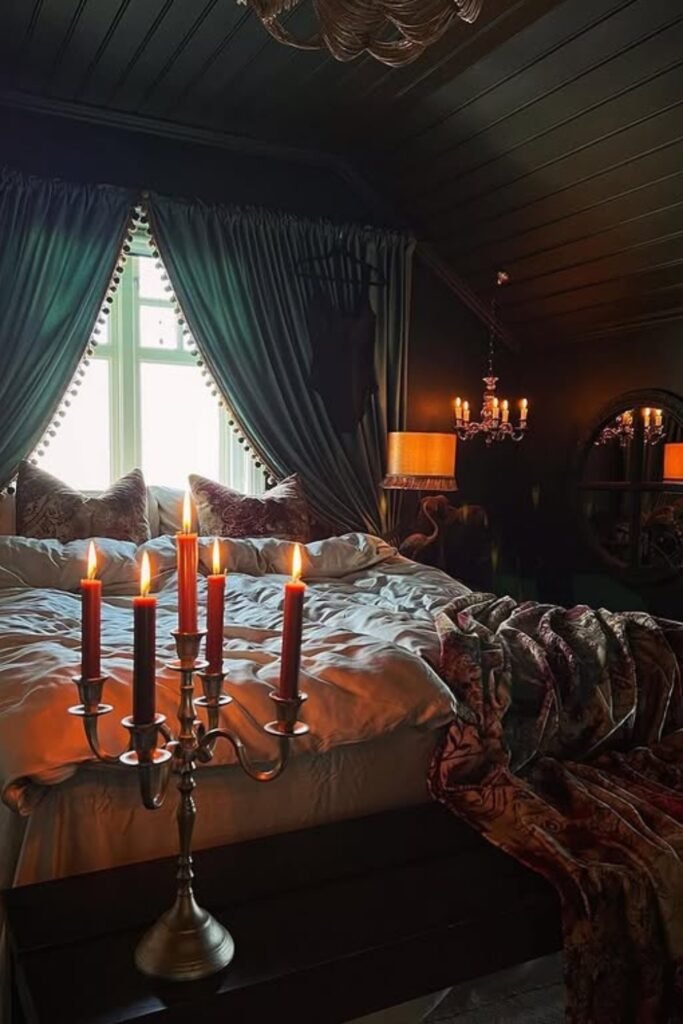
If you love slowing down at night, you can build a bedroom around the feeling of night itself, low light, heavy fabrics, and rich colors.
You should prioritize candle-style lighting and thick curtains first, then add darker bedding and maybe one reflective surface, like a mirror, so the room never feels too closed.
Burgundy Night Drama
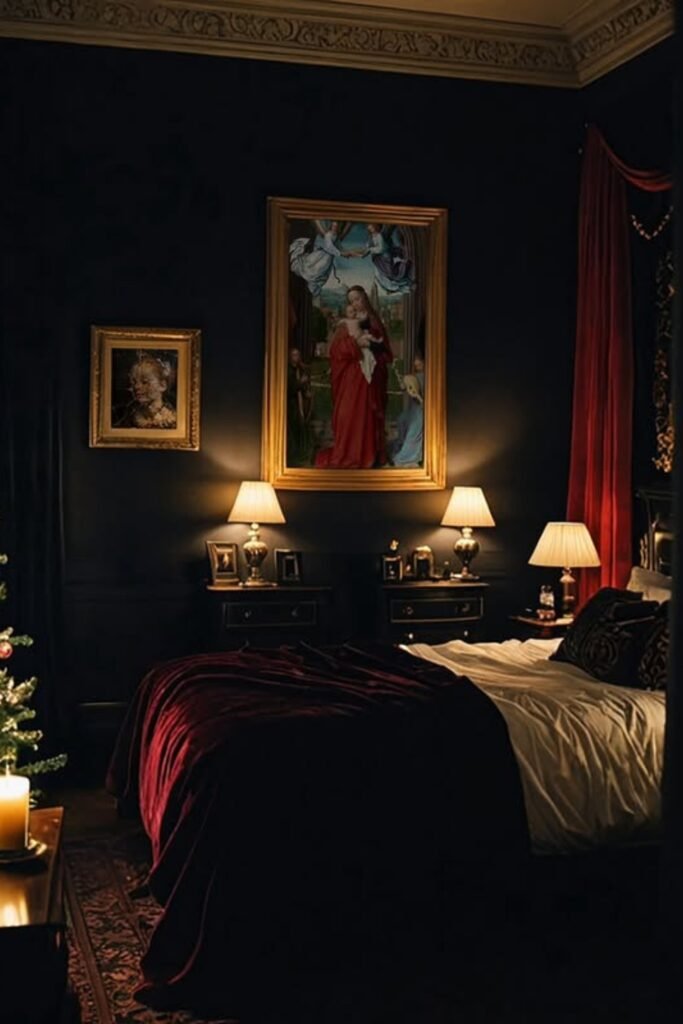
You can create instant warmth with deep burgundy against dark walls, without needing tons of decor. This works especially well if you want a rich, intimate feel in colder or low-light spaces.
You can start with dark walls, add one bold textile color like burgundy or wine, and keep your lighting soft and symmetrical so your bedroom feels grounded, not overpowering.
Maximalist Academic Charm
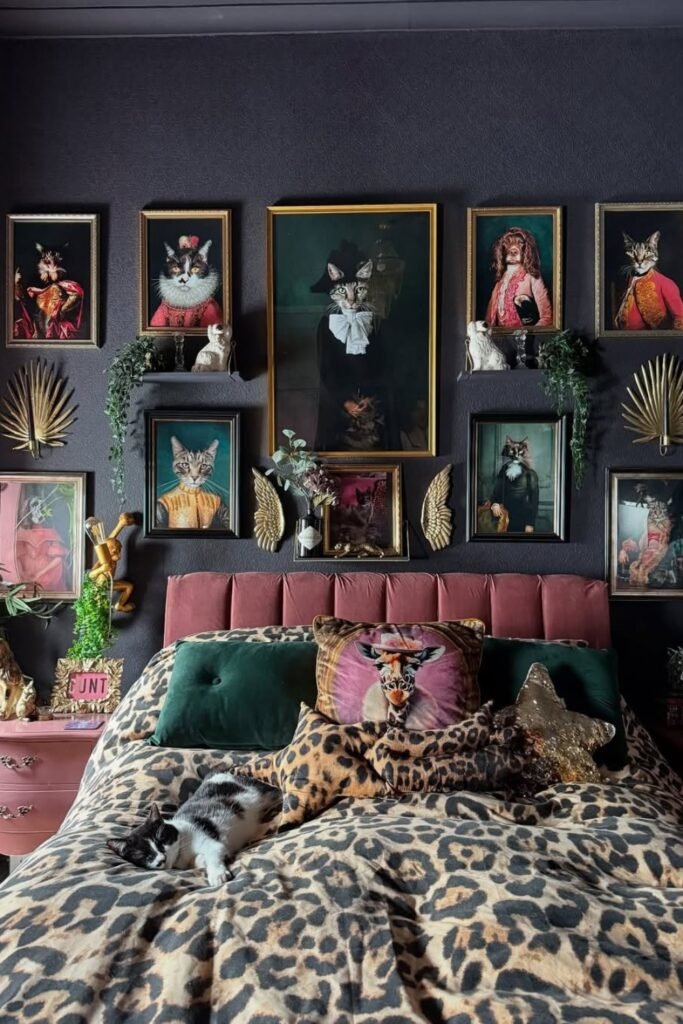
If you love visual richness, you can make a gallery wall packed with portraits and turn your bedroom into a personal archive.
You will see this works best if you aren’t afraid of bold choices. You can start with one dark wall, then build upward with framed art in mixed sizes.
Earthy Academic Blend
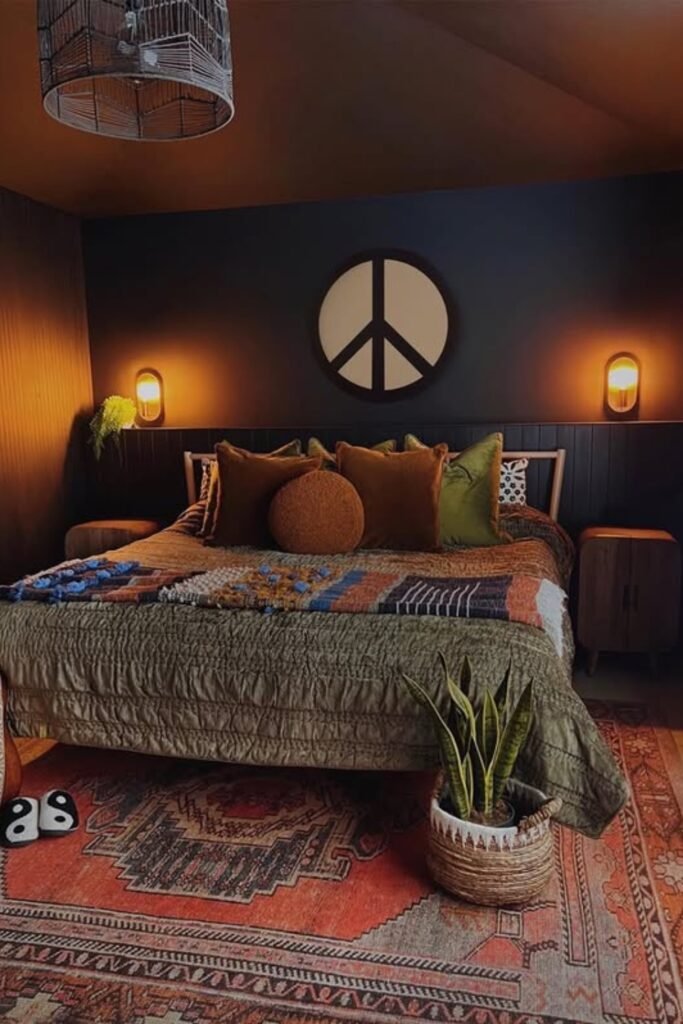
You can go for a grounded, thoughtful vibe with warm browns, muted greens, and layered textiles instead of a dramatic look.
You will notice this works well in medium-sized bedrooms where you want dark academia without going fully moody.
Refined Academic Depth
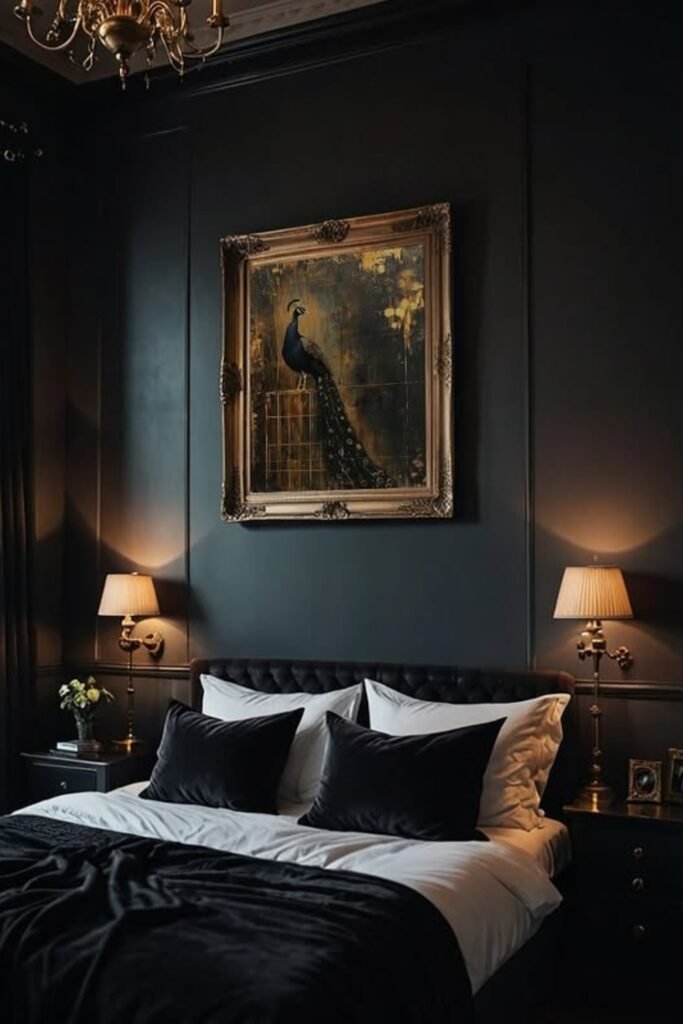
If you want your bedroom to feel elegant instead of busy, you can go for clean dark walls, soft lighting, and one strong artwork.
You will see this works best when you want dark academia to feel mature and calm, not dramatic.
Enchanted Green Retreat
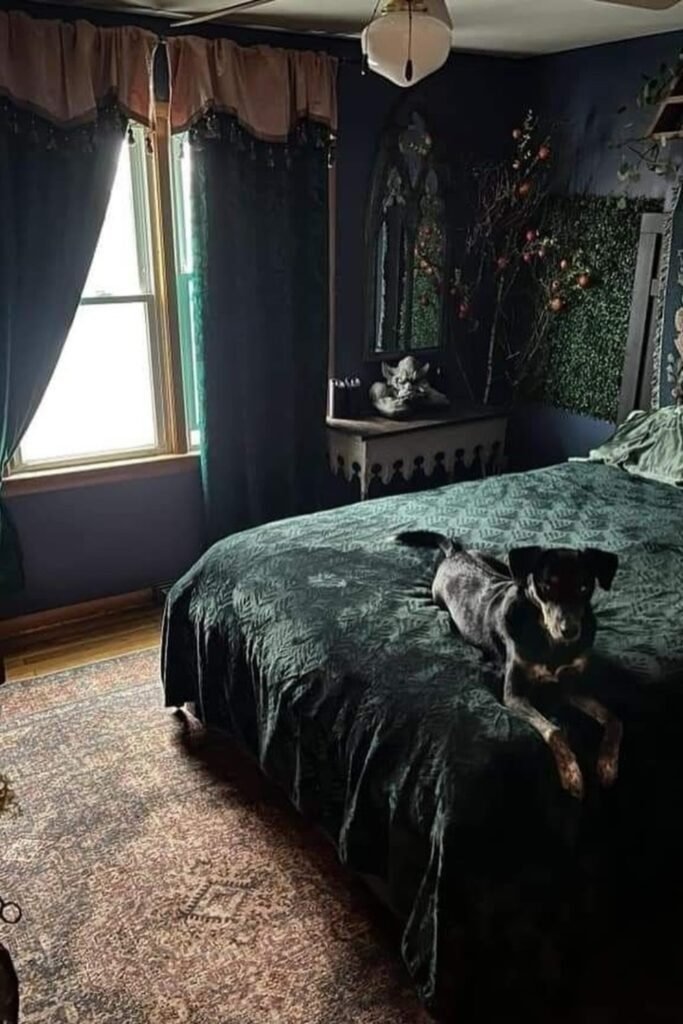
You will notice it works best in rooms with wooden floors and at least one window, where natural light can soften the darkness during the day.
You should commit to green as your main color, and then you can layer in textured fabrics, plants, and heavier curtains so the space feels immersive, not flat or gloomy.
Antique Candle Corner
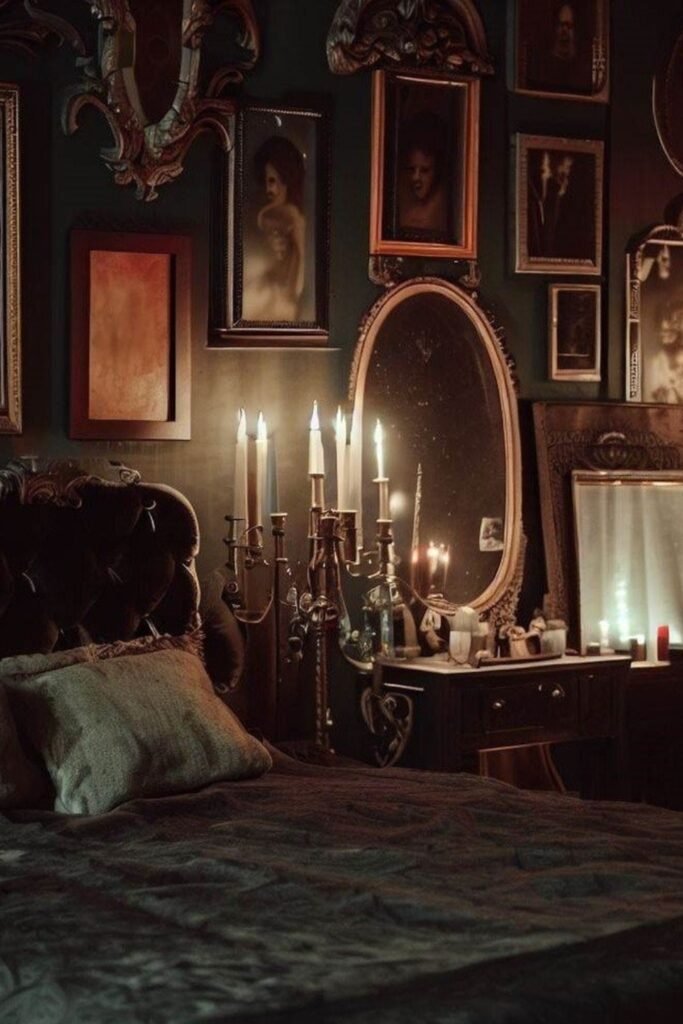
If you love collecting objects over time, you can turn your bedroom into a deeply personal space with layers of mirrors, frames, and candlelight, almost like a private study.
You can start with one wall, add mismatched vintage frames, and then introduce candle-style lighting and a dark vanity or side table to build depth without making the space feel staged.
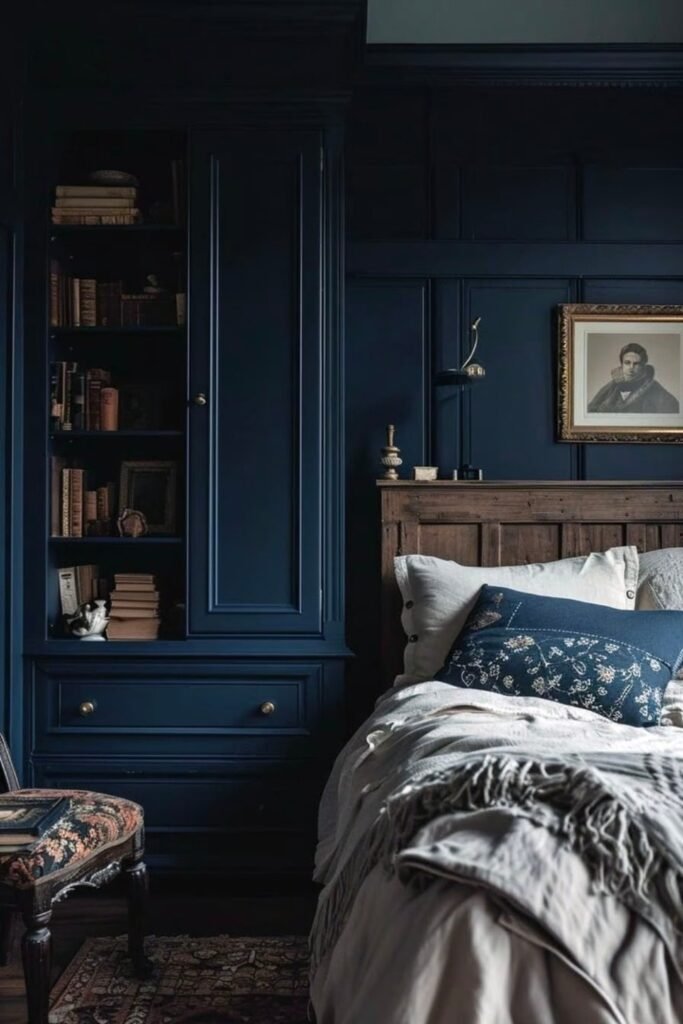
Navy Study Nook
You can create a quiet, studious feel with deep navy walls paired with built-in storage. You will find this ideal if you want your sleeping space to double as a thinking or reading zone.
You should use one strong dark color on cabinetry or walls, mix in natural wood for warmth, and keep bedding light so your room stays calm and balanced rather than heavy.
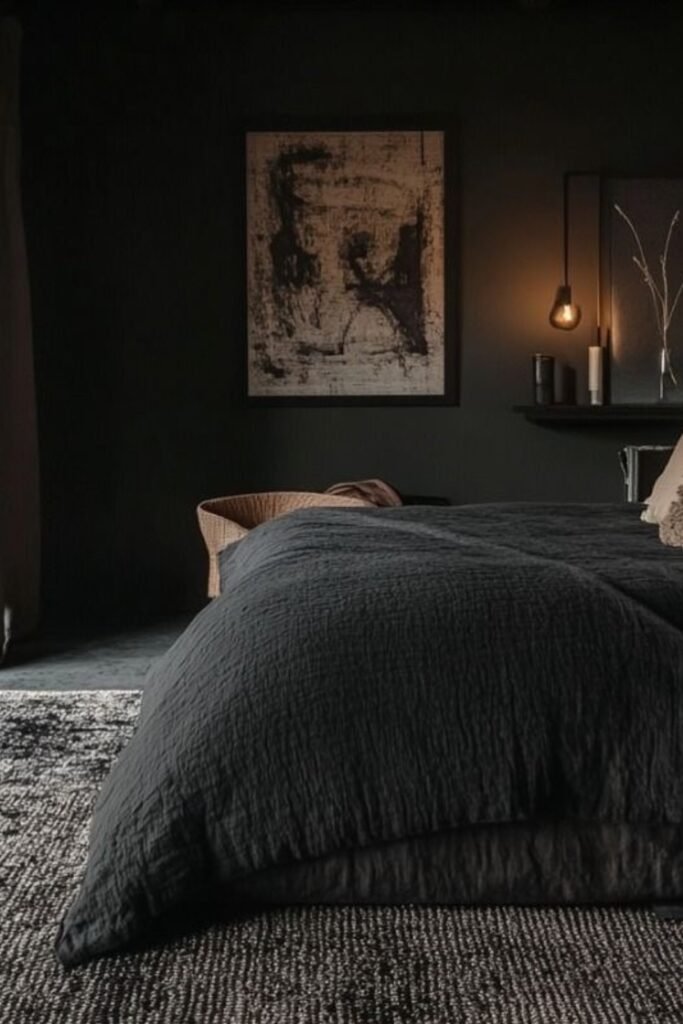
Minimalist Dark Quiet
If you love dark academia but dislike visual clutter, you can create a calm, inward-focused bedroom with soft shadows, muted tones, and very little decor.
You should keep the color palette narrow, use one or two textured fabrics, and rely on low, warm lighting instead of decoration to create mood.
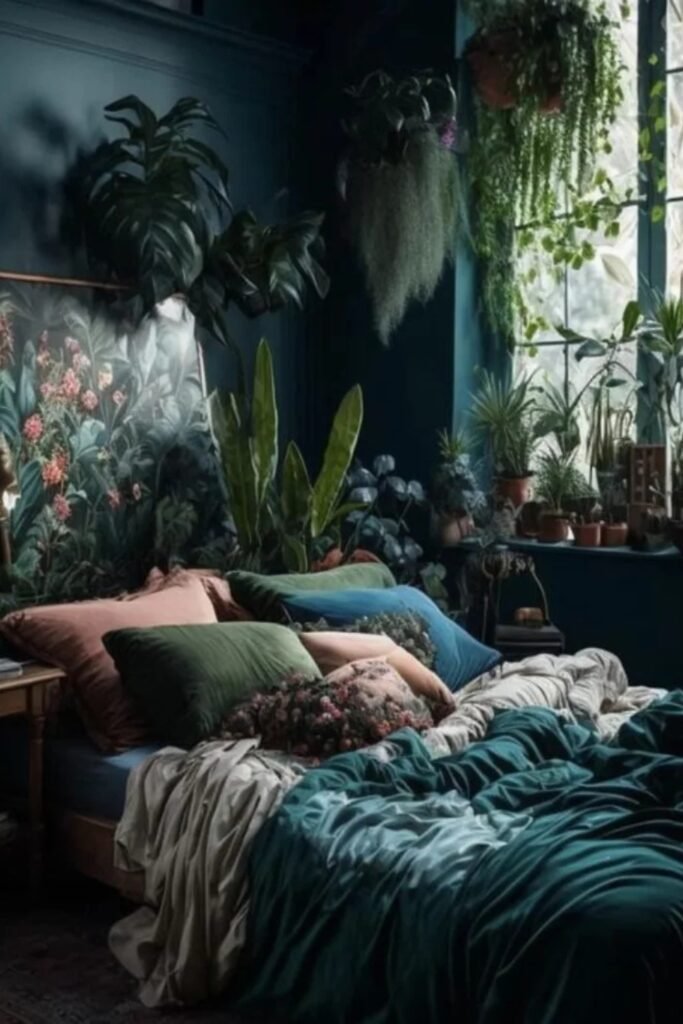
Botanical Academic Escape
You can soften dark walls and prevent your room from feeling heavy by layering in plants. This works best if you get decent daylight and enjoy a slightly wild, lived-in look.
You should keep walls deep and moody, then layer greenery at different heights. You can mix real plants with darker textiles so your bedroom feels thoughtful, not like a greenhouse.
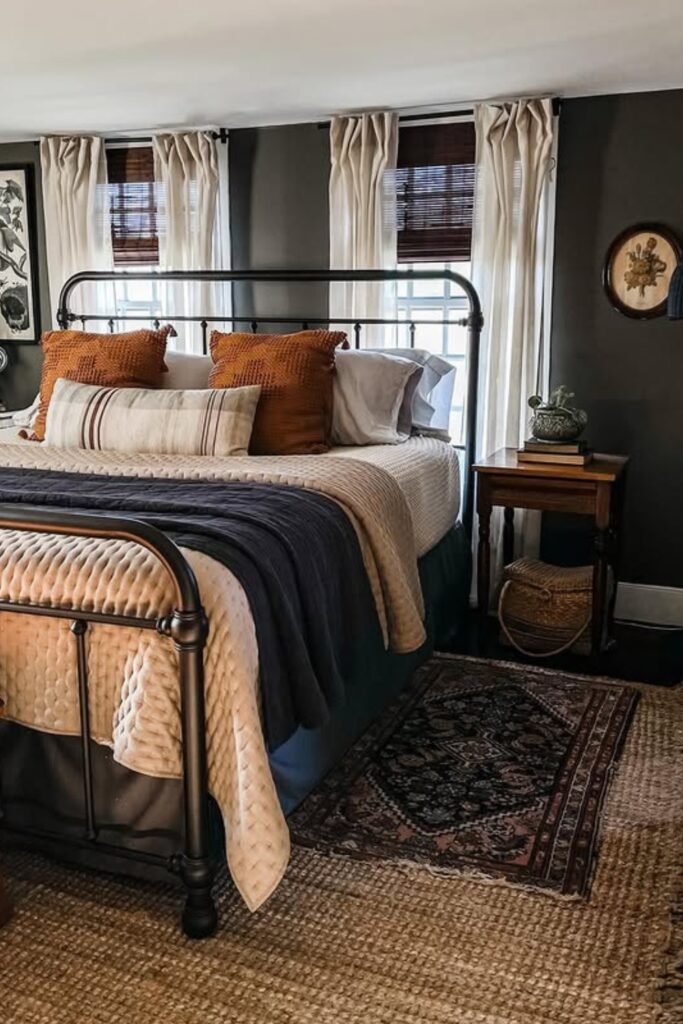
Balanced Dark Contrast
If you want your bedroom to feel grounded without heaviness, you can pair dark walls with light bedding.
You will notice this works well if your room gets good daylight and you want dark academia to feel calm, not dramatic.
Teal Academic Cocoon
You will see this works especially well in smaller rooms or if you want something richer than green but softer than black.
You should commit fully to one saturated tone, then you can add contrast through bedding and art.
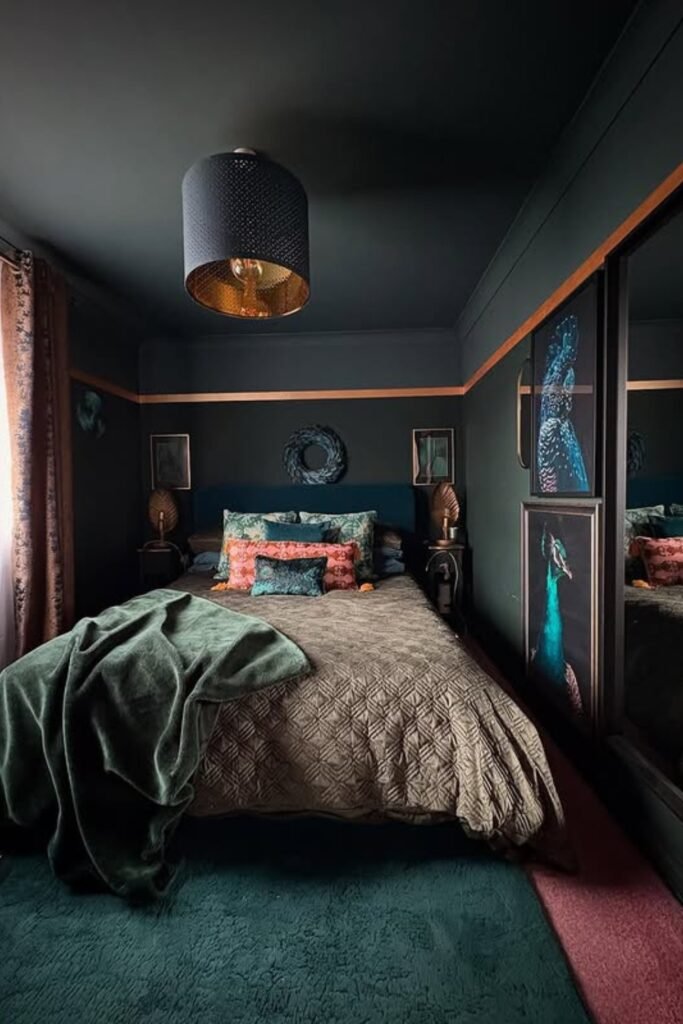
Night Sky Study
If you want your small bedroom to feel full of depth without visual clutter, you can add tiny star details on dark walls.
You should keep the wall color deep and matte, add subtle patterns or decals sparingly, and then you can ground the look with warm bedding and worn wood furniture.
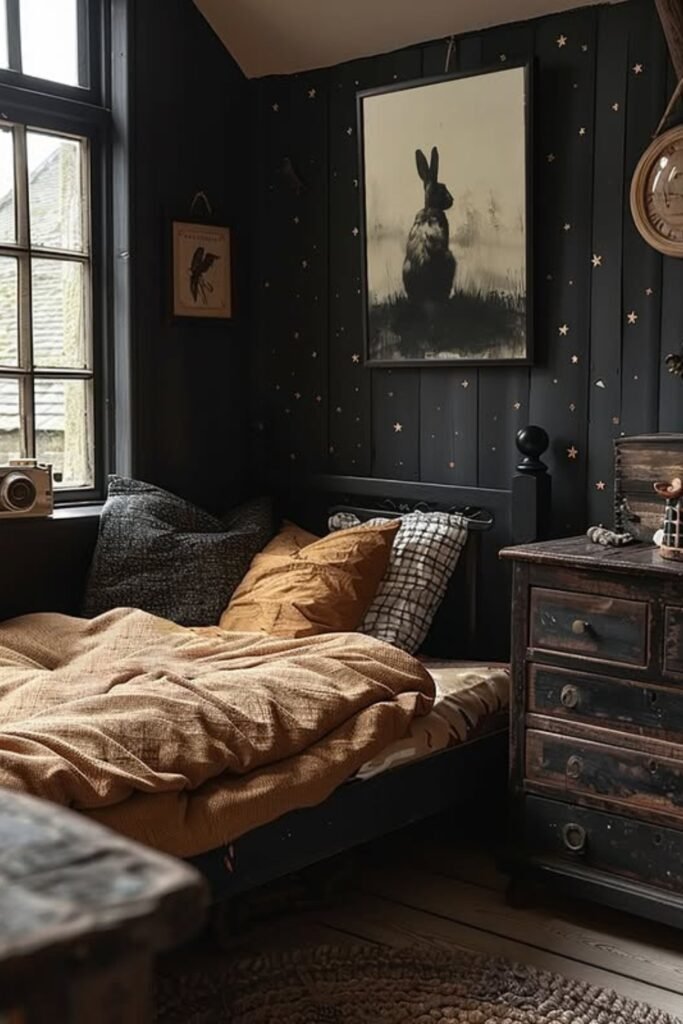
Layered Vintage Romance
You can bring warmth and coziness into your bedroom with patterned curtains, framed art, and soft lighting.
You should mix one rich wall color with detailed textiles, and then you can add small vintage touches like oval frames or ribbon accents, so your space feels personal and inviting.
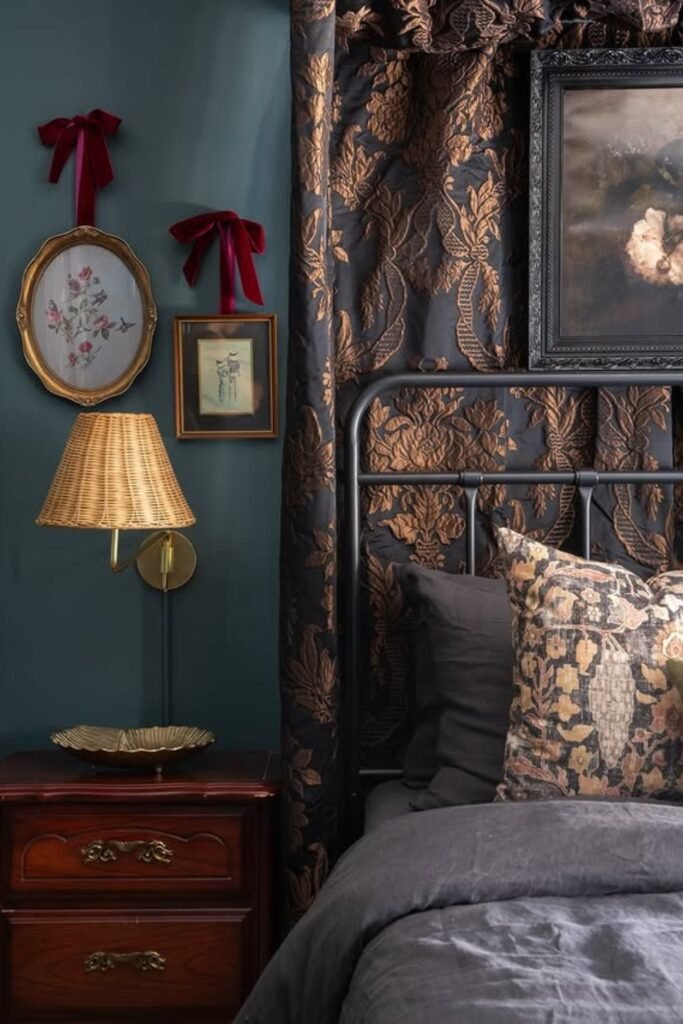
Quiet Literary Warmth
If you are after a calm, end-of-day vibe, you can create it with low light, warm textiles, and simple wall art.
You will notice this works perfectly if you want dark academia without drama or over-the-top ornamentation.
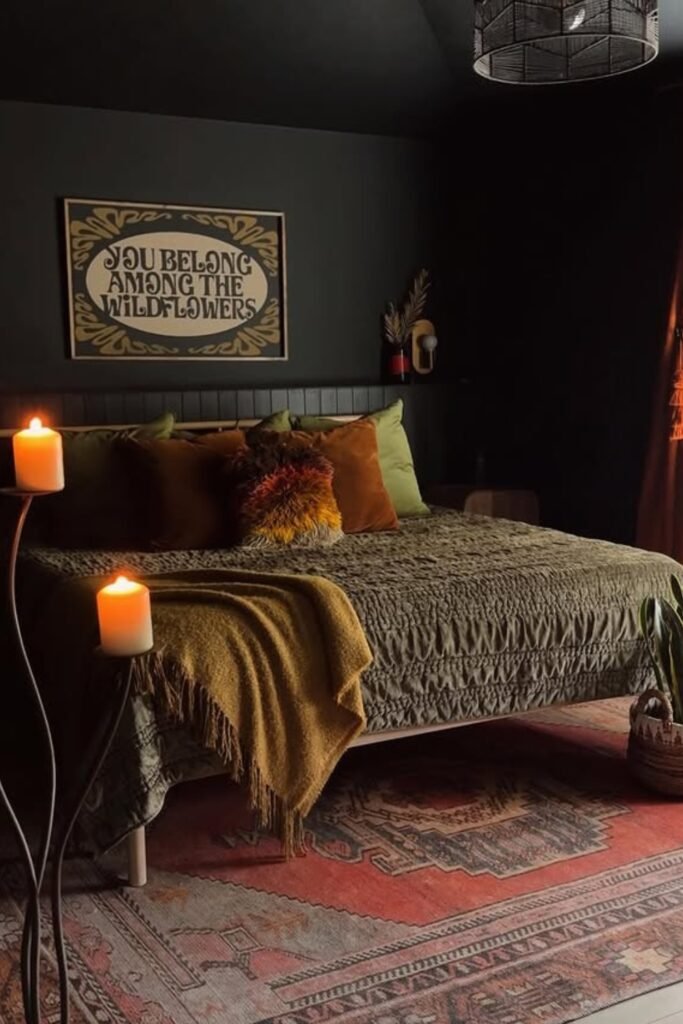
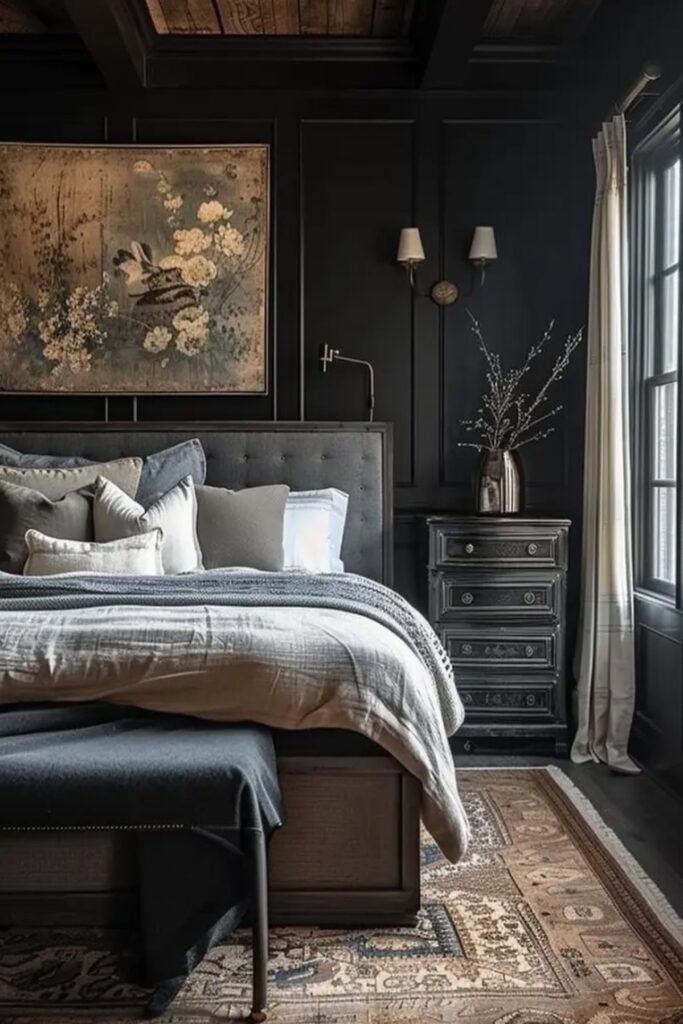
Elegant Shadow Balance
You can make a bedroom feel refined instead of heavy by pairing dark paneled walls with soft, neutral bedding.
You will see this works best in rooms with good natural light, where contrast can do the work instead of extra decor.
Frequently Asked Questions
Can a dark academia bedroom work in a small room?
You can balance it with light bedding, mirrors, and warm lighting so your room feels cozy and intentional, not cramped.
Do dark colors make a bedroom feel gloomy?
You can make them feel inviting by pairing them with warm lamps, layered fabrics, and a few lighter elements.
You should focus on creating depth and warmth, not just making the room dark for the sake of it.
You may like to read!
