
How to Organize Under Bathroom Sink
You open the cabinet under your bathroom sink to grab one thing, but end up moving bottles, cleaning supplies, and random products just to find it.
The space feels crowded, items get lost in the back, and the plumbing pipes make storage even more difficult.
With a simple system, you can use the space better, keep everything easy to find, and stop the cabinet from turning into a cluttered mess again.
In this article, you’ll learn how to organize under your bathroom sink in a way that actually works long term.
Let’s jump in!
Why Under Bathroom Sink Storage Gets Messy So Fast?
If your under-sink cabinet never seems to stay organized, you’re not alone. Most people do not start with a messy cabinet.
It becomes messy little by little. Every time you buy a new product, finish a bottle, or put something away in a hurry, the clutter grows. Before long, finding anything becomes frustrating.
One of the biggest reasons this space gets messy is the plumbing. The pipes take up valuable room and create awkward corners that are difficult to use.
Instead of having one open storage area, you end up with several small spaces that are hard to organize.
You may have toothpaste, extra soap, skincare products, hair products, cleaning supplies, toilet paper, and first-aid items all sharing the same cabinet.
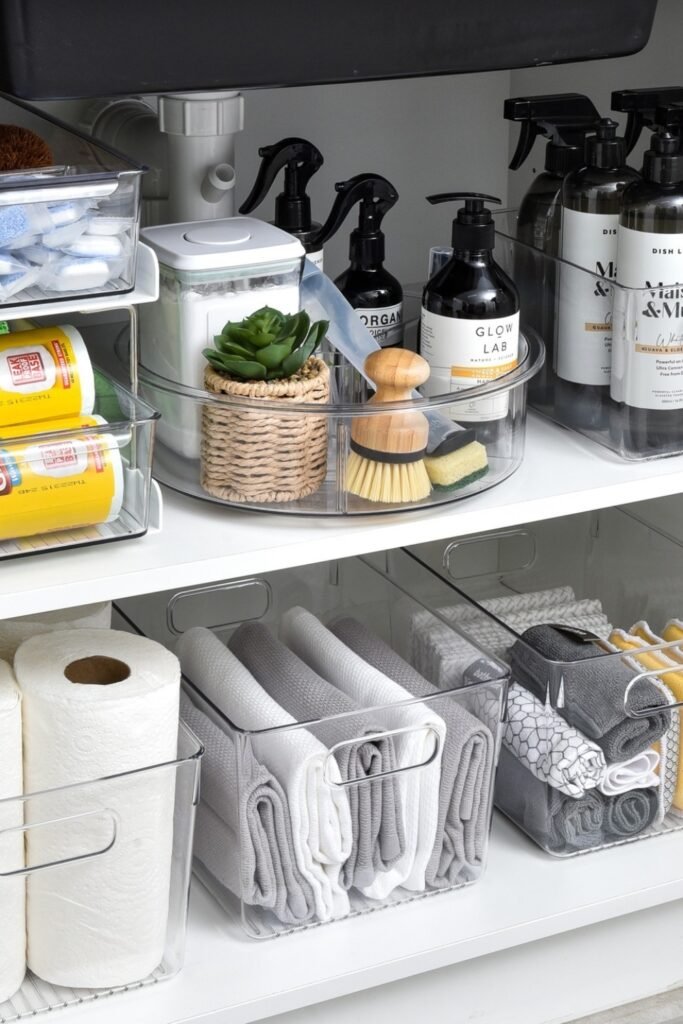
When everything is mixed together, the space quickly turns into a catch-all storage area.
Many people also waste vertical space. They place everything on the cabinet floor and leave the empty space above unused.
As a result, the cabinet feels full even when there is still room available. The biggest issue, is that most items do not have a designated place.
When something does not have a home, it gets placed wherever there is space. Over time, products pile up, duplicates appear, and the cabinet becomes harder to manage.
What Should You Remove Before Organizing?
Before you buy bins or start arranging anything, remove everything from under the bathroom sink.
This step feels simple, but it makes the biggest difference. You cannot organize properly when half the products are still hiding in the back of the cabinet.
Start by placing everything on the floor or countertop. Once you see all the items together, you may notice how many duplicate, empty, expired, or unused products you have kept without realizing it.
Old skincare bottles, dried makeup, almost-empty cleaners, hotel samples, and products you never use should not take up your storage space.
Also check items that may not belong under the sink. Medicine, heat-sensitive skincare, and anything that can get damaged by moisture should move somewhere safer.
The space under a bathroom sink can get warm, damp, or exposed to leaks, so it is not always the best place for every product.
After that, wipe the cabinet before putting anything back. Dust, spilled products, and water stains often hide under clutter.
A clean base makes the whole space feel fresher and helps you notice leaks or damage early.
The goal here is not to throw away everything. The goal is to keep only what you actually use and need in the bathroom.
When you remove the extra items first, you give yourself more space before adding any organizer.
If you forgot it was there, do not use it, or already have too many backups, remove it.
Under-sink storage works best when it holds useful items, not random products you keep “just in case.”
What Should Actually Stay Under The Bathroom Sink?
Once you clear out the clutter, the next step is deciding what deserves space under the sink. This is where many people make mistakes.
They keep everything in one cabinet and then wonder why it always feels overcrowded. A good rule is to store items that you use in the bathroom regularly.
Extra toothpaste, soap, shampoo, body wash, toilet paper, cleaning supplies, and daily toiletries usually belong here.
These items are practical, easy to replace, and often need quick access.
Try to avoid turning the cabinet into long-term storage. If you have ten backup bottles of shampoo or a large collection of products you rarely use, consider moving some of them elsewhere.
The more items you keep under the sink, the harder it becomes to stay organized.
Think about your daily routine. What do you reach for most often? Those items should be the easiest to access.
Products you use every day should stay near the front. Items you use occasionally can sit farther back.
You should also separate personal care products from cleaning supplies whenever possible.
Nobody wants to dig through bathroom cleaner just to find dental floss or face wash. Creating clear categories makes the cabinet easier to use and easier to maintain.
The purpose of under-sink storage is convenience. If an item does not help your daily bathroom routine, it probably does not need to live there.
By limiting the cabinet to useful and frequently used items, you create more space and reduce future clutter.
How Do You Organize Around The Sink Pipes?
The plumbing pipes are usually the biggest challenge under a bathroom sink. Many people try to ignore them, but the best organization systems work with the pipes instead of fighting them.
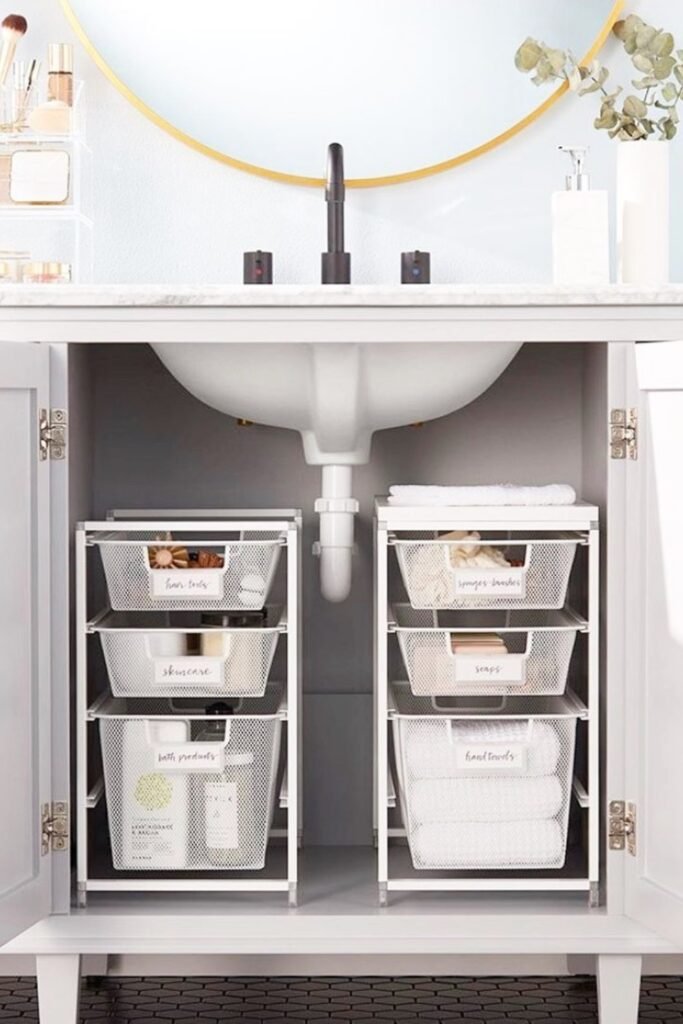
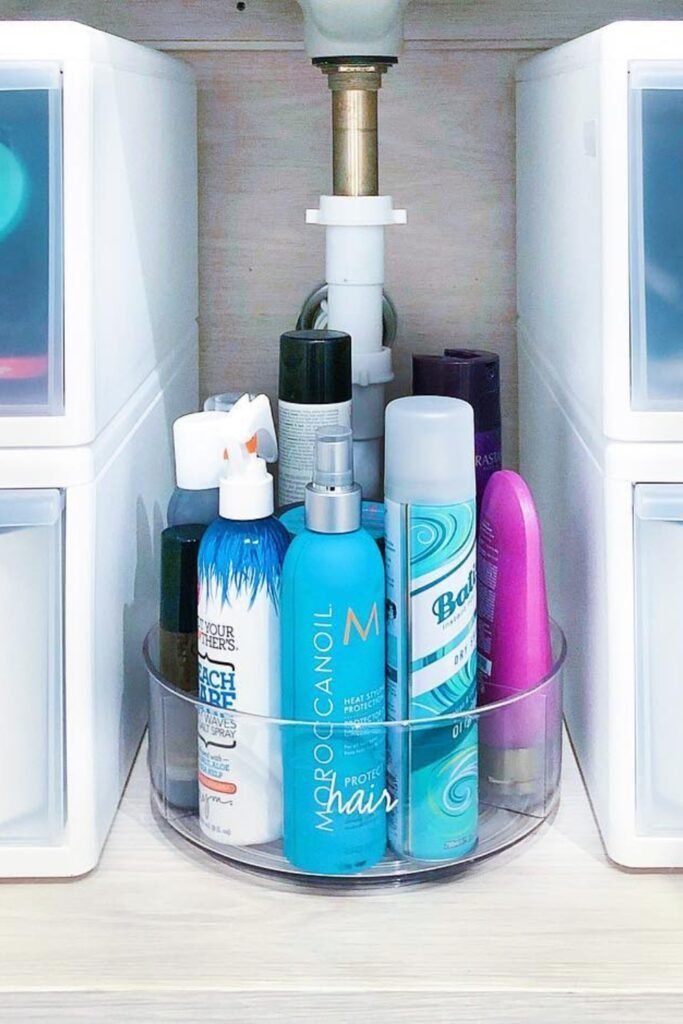
Start by looking at the available space around the plumbing. Most cabinets have usable storage on both sides of the pipe.
These areas are perfect for narrow bins, baskets, or small containers that keep items grouped together.
Avoid stacking products directly around the pipes. This often creates unstable piles that fall over whenever you reach for something.
Instead, use containers that fit neatly beside the plumbing and keep similar products together.
The space directly beneath the pipe should remain fairly open. Keeping this area clear makes it easier to spot leaks and access plumbing if repairs are ever needed.
A packed cabinet can hide water damage for weeks before anyone notices.
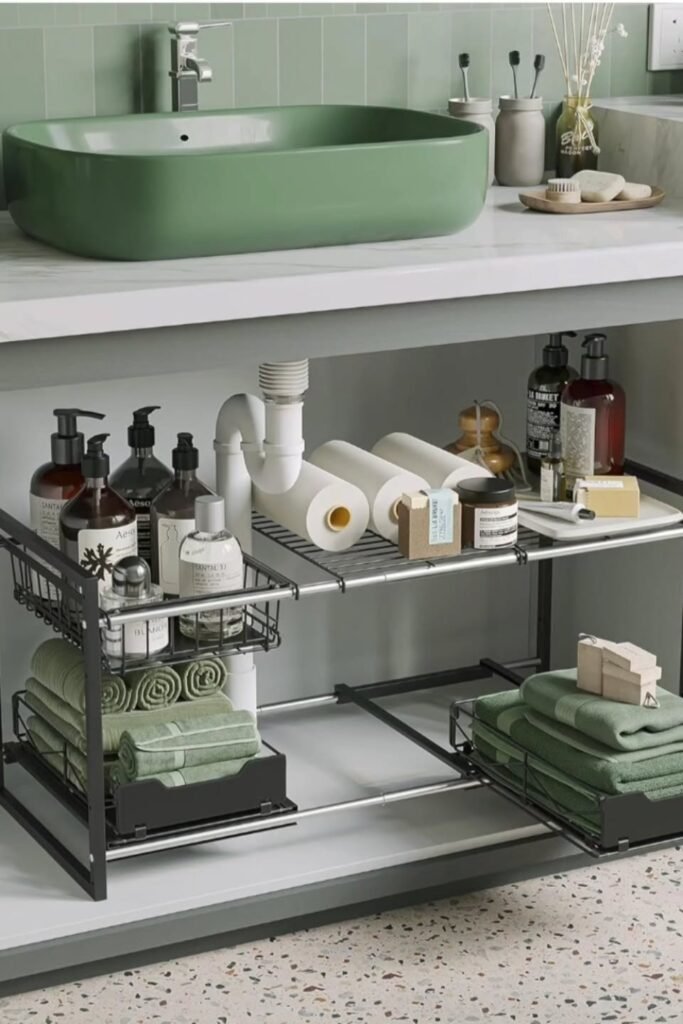
Vertical storage can also help. If your cabinet has enough height, use stackable organizers or small shelves that fit around the pipe. This allows you to use space that would otherwise sit empty.
Many people think the plumbing wastes most of the cabinet, but that is not usually true. The real problem is that items get scattered around the pipes without any plan.
Once you divide the cabinet into clear sections and work around the plumbing layout, the space becomes much easier to use.
Instead of viewing the pipes as an obstacle, treat them as a divider that helps create separate storage zones. This simple mindset can completely change how the cabinet functions.
How Can You Use More Space Without Overcrowding?
Most under-sink cabinets feel full because the available space is not being used efficiently. People often fill the bottom of the cabinet while leaving valuable vertical space empty.
Before adding more products, look upward. The area above shorter items can often hold a second level of storage.
Small shelves, stackable bins, or risers can instantly double the usable space without making the cabinet feel crowded.
Another smart strategy is using containers instead of loose products. When items sit directly on the cabinet floor, they spread out and take up more room.
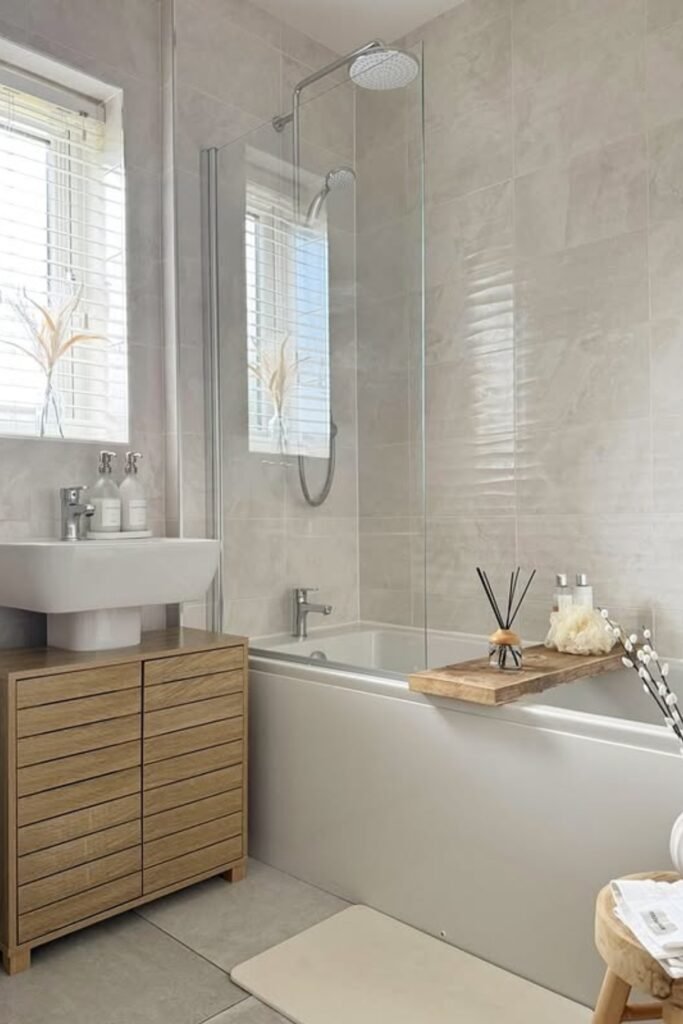
Grouping products into bins keeps everything compact and easier to find.
Think about frequency of use as well. Daily-use items should stay within easy reach. Backup supplies can sit farther back or higher up.
This prevents frequently used products from getting buried behind things you rarely touch.
Cabinet doors are another overlooked storage area. Adhesive organizers or small racks can hold lightweight items such as brushes, hair accessories, or cleaning cloths.
This frees up room inside the cabinet for larger products. The key is to maximize space without stuffing the cabinet.
If the cabinet is packed from front to back, finding anything becomes difficult. Leave a little breathing room between categories so items stay accessible.
An organized cabinet should feel functional, not crowded.
When every inch has a purpose and every category has its own space, you can store more while actually making the cabinet easier to use.
What Is The Best Way To Group Bathroom Items?
Grouping similar items together is one of the simplest ways to keep under-sink storage organized. Without categories, products get mixed together and become difficult to find.
Start by creating groups based on purpose. For example, keep dental care products together, skincare products together, hair products together, and cleaning supplies together.
Each category should have its own designated space. This approach saves time every day.
Instead of searching through the entire cabinet, you immediately know where to look. It also makes restocking easier because you can quickly see what needs replacing.
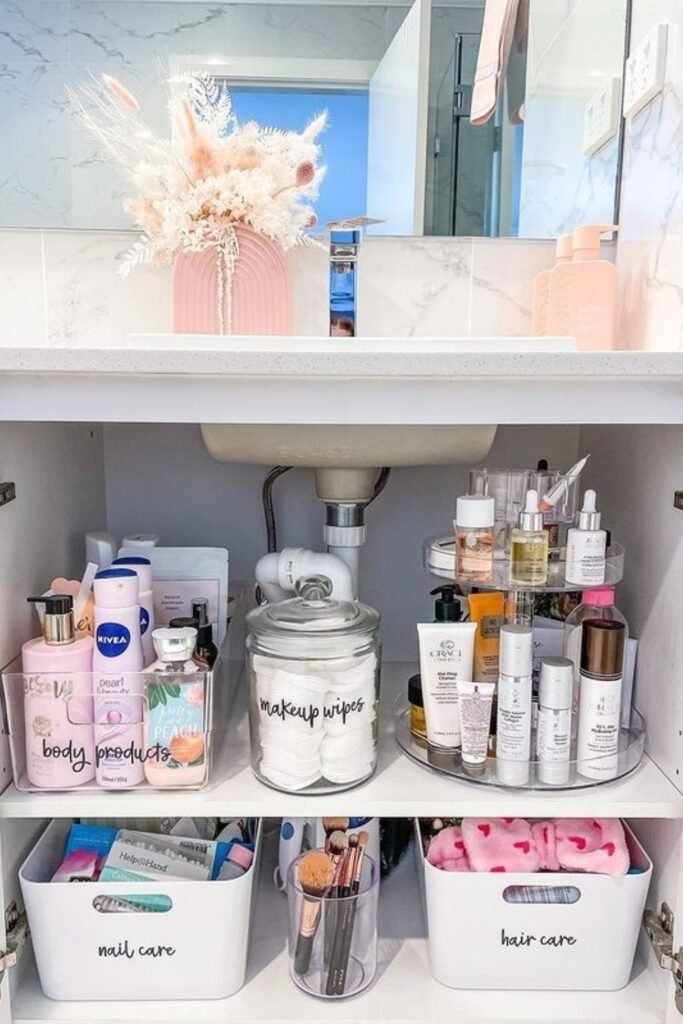
Think about how often you use each category. Daily essentials deserve prime storage space near the front. Less frequently used items can move toward the back.
Containers make categories easier to maintain. When each group has its own basket or bin, products naturally return to the right place after use.
This reduces clutter and prevents categories from mixing together. You can also create separate zones for family members if multiple people share the bathroom.
This helps prevent products from becoming scattered throughout the cabinet.
The goal is not to create dozens of tiny categories. Keep the system simple enough that everyone in the household can follow it.
A straightforward organization method is much easier to maintain than an overly complicated one.
When every product belongs to a category, keeping the cabinet organized becomes much less work.
What Mistakes Make Under Sink Storage Messy Again?
Many people successfully organize their under-sink cabinet, only to find it messy again a few weeks later. Usually, the problem is not the organizer. It is the habits that follow.
One common mistake is keeping too many backup products. Extra supplies are helpful, but storing large quantities creates unnecessary clutter. Keep only a reasonable amount within easy reach.
Another mistake is buying organizers before measuring the space. Products that look perfect online may not fit around plumbing or cabinet dimensions.
Always understand your storage needs before purchasing anything. Many people also create systems that are too complicated.
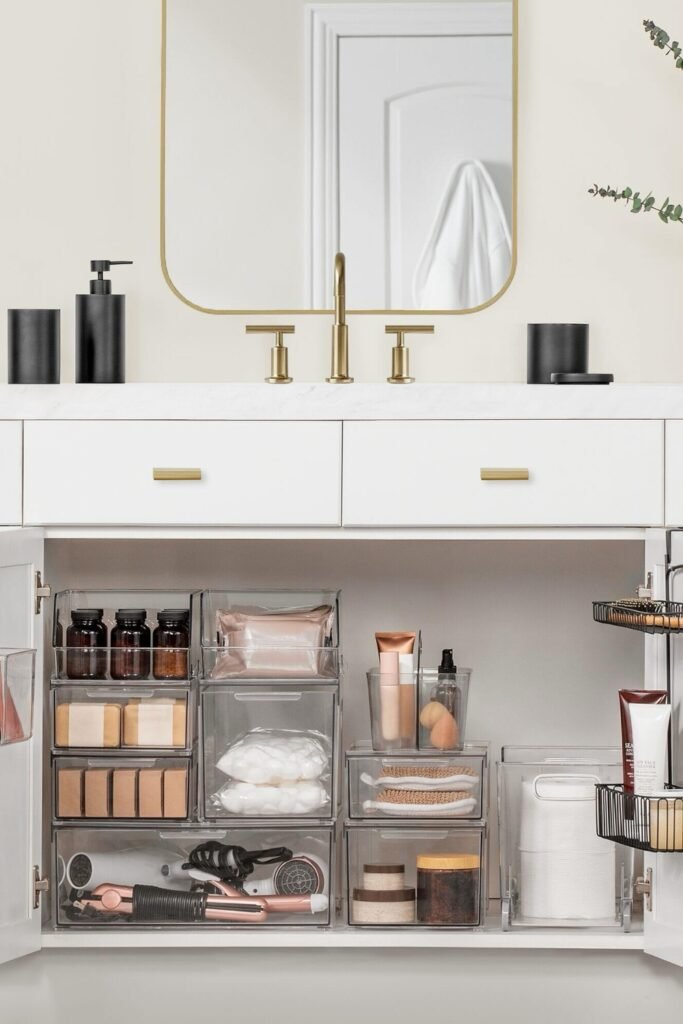
If returning an item requires opening multiple containers or moving several products, the system becomes difficult to maintain. Simplicity wins every time.
Mixing unrelated items is another common problem. When skincare, cleaning products, and hair accessories all share the same space, clutter returns quickly.
Ignoring expired or empty products also contributes to the problem. These items continue taking up space long after they stop serving a purpose.
Finally, some people try to use every inch of available space. While maximizing storage sounds good, an overcrowded cabinet becomes difficult to manage.
Leaving a little extra room actually helps maintain organization.
Avoiding these mistakes can make the difference between a cabinet that stays organized for months and one that becomes cluttered again within days.
How Do You Keep It Organized Long Term?
The hardest part of organizing under the bathroom sink is not setting it up. It is keeping it organized over time.
Fortunately, maintaining an organized cabinet is much easier than reorganizing a messy one. The secret is creating small habits that prevent clutter from building up.
Start by putting items back in their designated place after using them. This takes only a few seconds but prevents products from accumulating in random spots.
Check the cabinet once a week. Remove empty bottles, wipe up spills, and return misplaced items to their proper category. This quick reset usually takes less than two minutes.
Try following a simple “one in, one out” rule. When you bring home a new product, finish or remove an old one. This helps control the number of items stored under the sink.
Pay attention to categories that grow too large. If a basket starts overflowing, it may be time to reduce duplicates or relocate extra supplies.
You should also keep an eye on plumbing. Catching a small leak early can prevent major damage and protect your stored items.
Most importantly, avoid treating the cabinet like a dumping zone. The moment random products start landing wherever they fit, clutter begins returning.
A good organization system should make your life easier, not create extra work.
With a few simple habits, your under-sink storage can stay neat, functional, and easy to use long after the initial cleanup is finished.
Conclusion
Organizing under the bathroom sink is not about buying more storage products. It is about creating a simple system that works for your daily routine.
Once you remove clutter, keep only the items you actually use, work around the plumbing, and create clear categories, the space becomes much easier to manage.
A few minutes of maintenance each week can keep everything organized, easy to find, and free from the frustration that comes with a crowded cabinet.
You may like to read!
