
23 Ways to Style Bedroom Rug
You can spend hours saving beautiful bedroom rugs on Instagram, and still find yourself standing in your own room wondering why nothing feels right.
You try one rug and it looks too small, you step on another and it feels rough under your feet, and suddenly you feel like your bedroom looks unfinished instead of cozy.
When that happens, you might think your taste is the problem, but it’s not, you just haven’t been shown what actually works in a bedroom.
In this article, you will see exactly what kind of rug is best for bedrooms along with 23 ideas you can try.
Let’s jump in!
What Kind Of Rug Is Best For Bedrooms?
The best rug for your bedroom is the one that feels right the second your feet touch the floor.
If you choose a rug that looks nice but feels rough or too thin, you will notice it never truly feels right in a space where you’re supposed to rest.
When you think about it, you want your bedroom rug to add warmth, soften sound, and help your bed feel grounded in the room.
That’s why you need to pay attention to the material, the thickness, and a size that actually fits your space.
Once you see how these three things work together, choosing a bedroom rug stops feeling confusing and starts making sense to you.
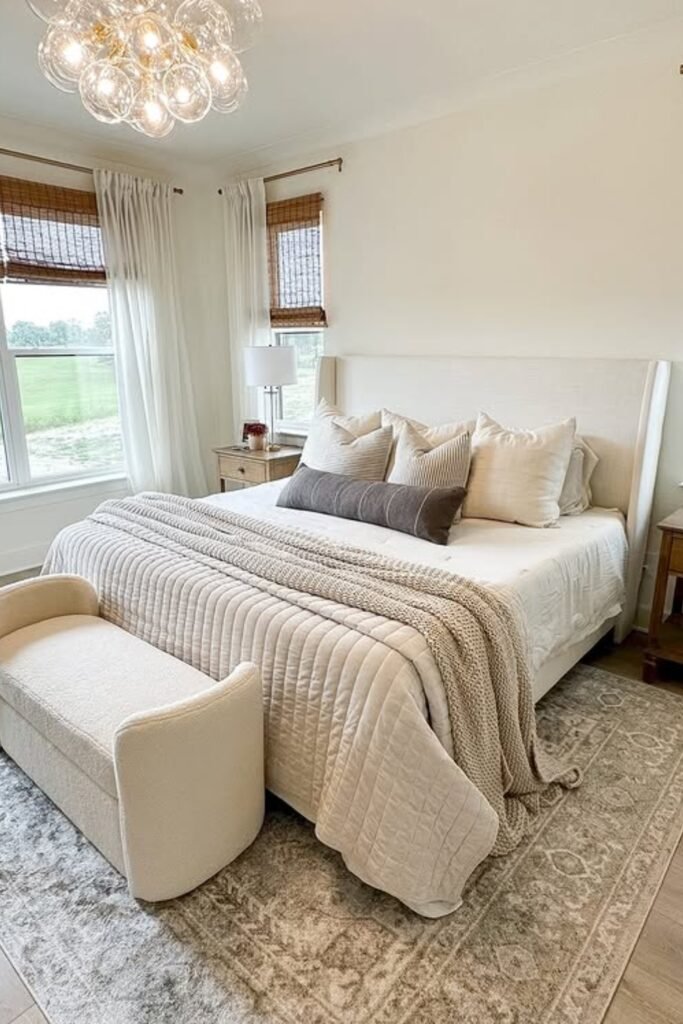
Soft Neutral Grounding
When your bedroom has large windows and light-colored walls, you might notice the space can start to feel a little too open or floaty.
That’s where you want the rug to slow everything down for you. A soft neutral rug like this adds weight under your bed, so you feel the room settle instead of drift.
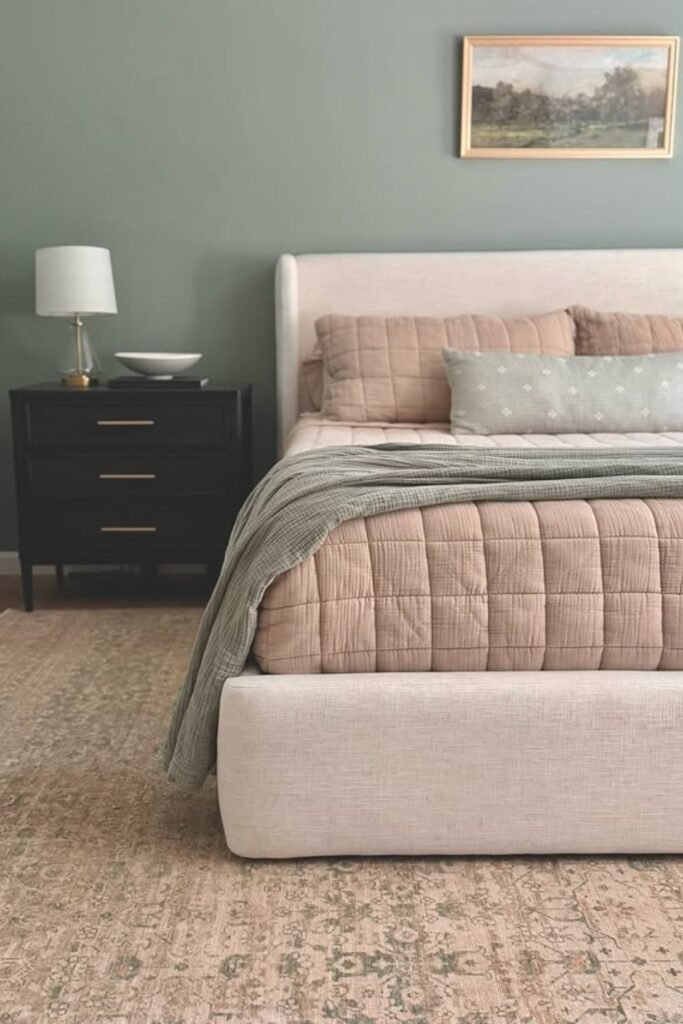
Muted Color Harmony
When you already have soft green walls, you’ve done a lot of the calming work before you even add a rug.
A faded, low-contrast rug helps you keep the space relaxed while quietly tying the bed, bedding, and wall color together.
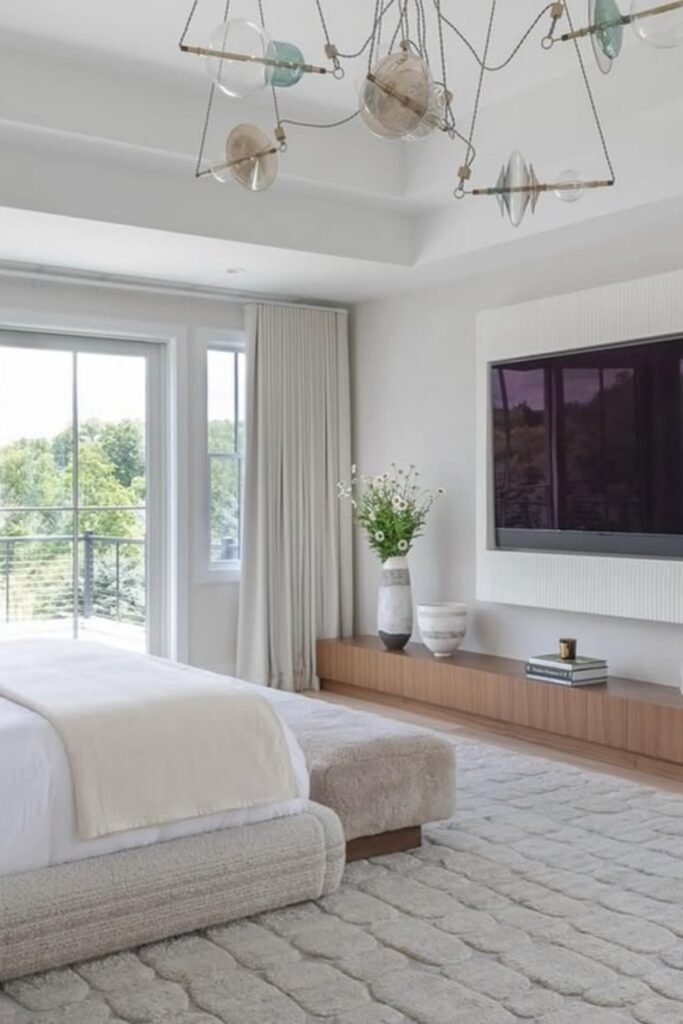
Texture Over Pattern
A thick, sculpted rug like this keeps your room from feeling cold while still protecting that calm vibe you want.
You can go for a plush, tone-on-tone rug and size it generously so it runs under the bed and bench.
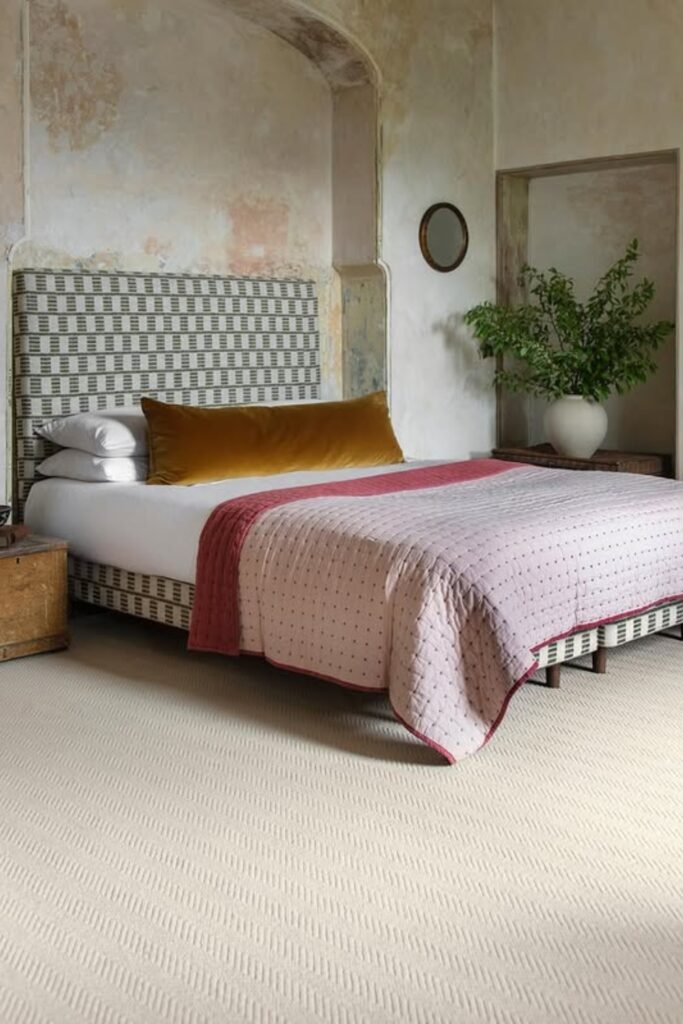
Quiet Texture Focus
Instead, you want it to calm everything down. A subtle, textured rug like this gives you a soft landing without pulling focus away from the bed or architectural details.
You should keep the color light and the weave simple, then run the rug fully under the bed so the room feels grounded.
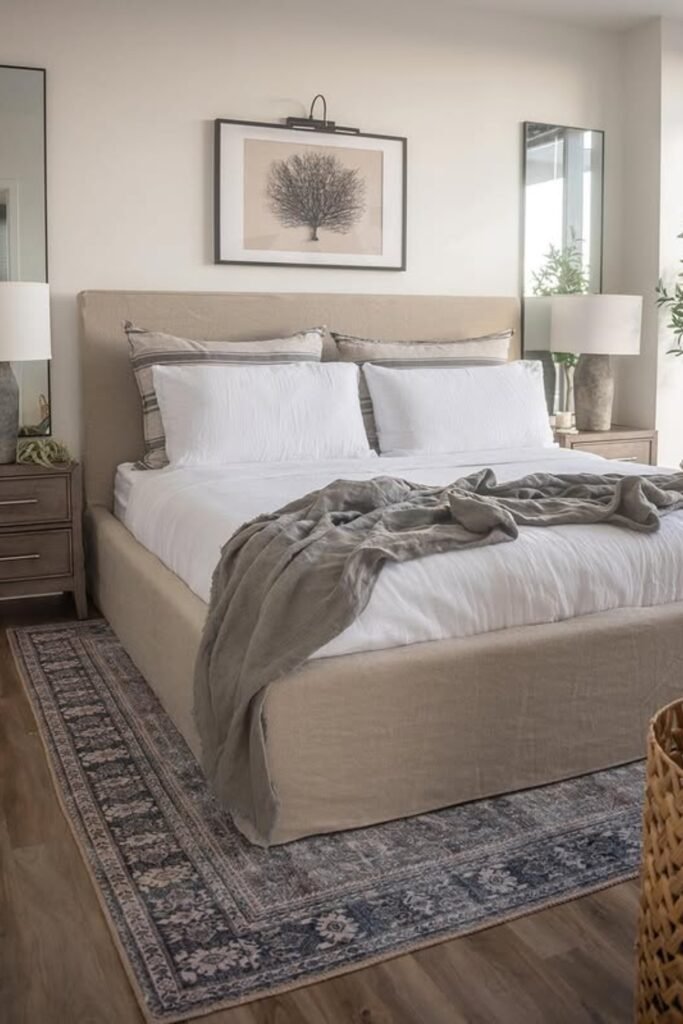
Framed Bed Balance
If you’ve ever felt like your neutral bedroom blends together too much, this is usually where a rug can fix things for you.
A slightly patterned rug creates a clear frame around your bed, so the room feels finished instead of flat.
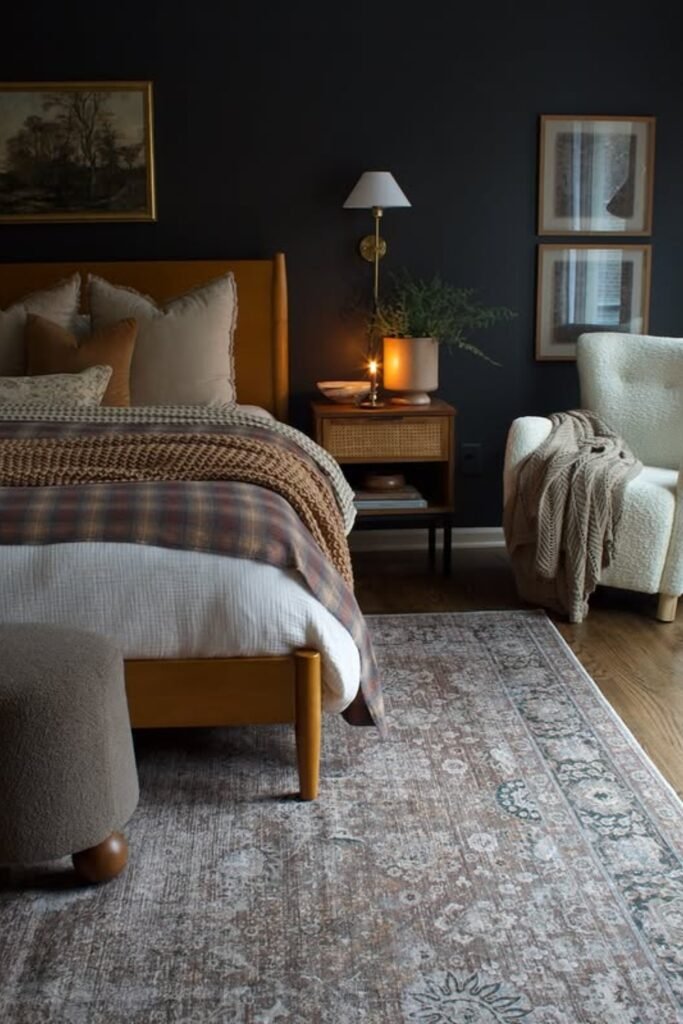
Dark Room Softening
A softly faded rug adds light under your feet and keeps the room from feeling closed in.
This works best when you want depth in your bedroom without making it feel smaller.
You should let the pattern stay subtle and the tones warm so everything connects naturally.
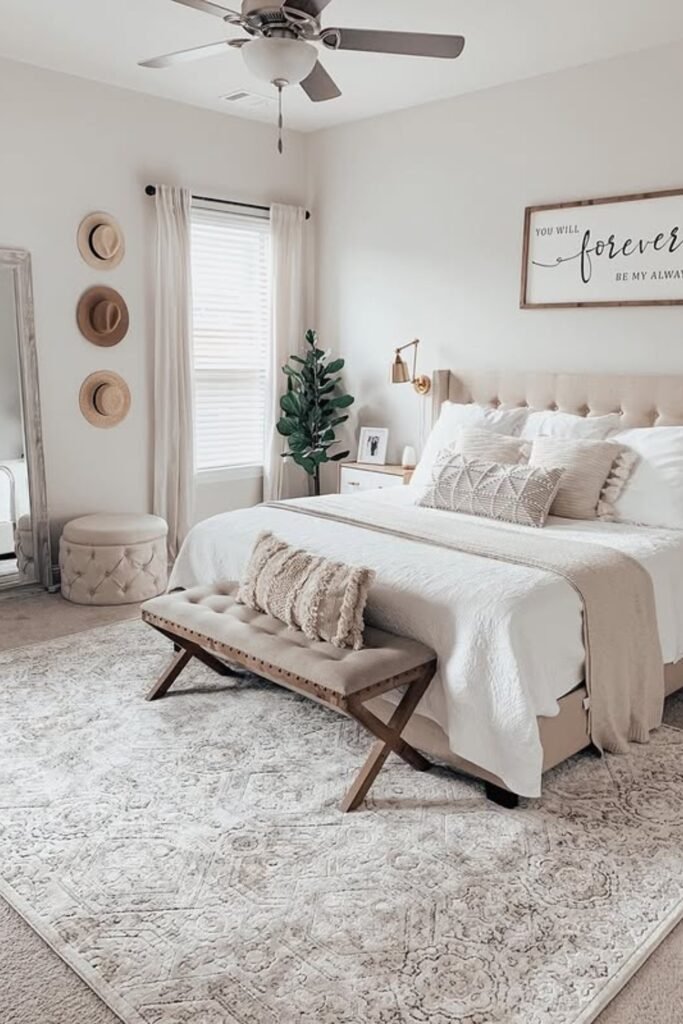
Soft Neutral Layering
When your bedroom already feels light and airy, your rug shouldn’t change the mood, it should support it.
You will want to let it extend well past the bed and bench so the room feels generous and complete.
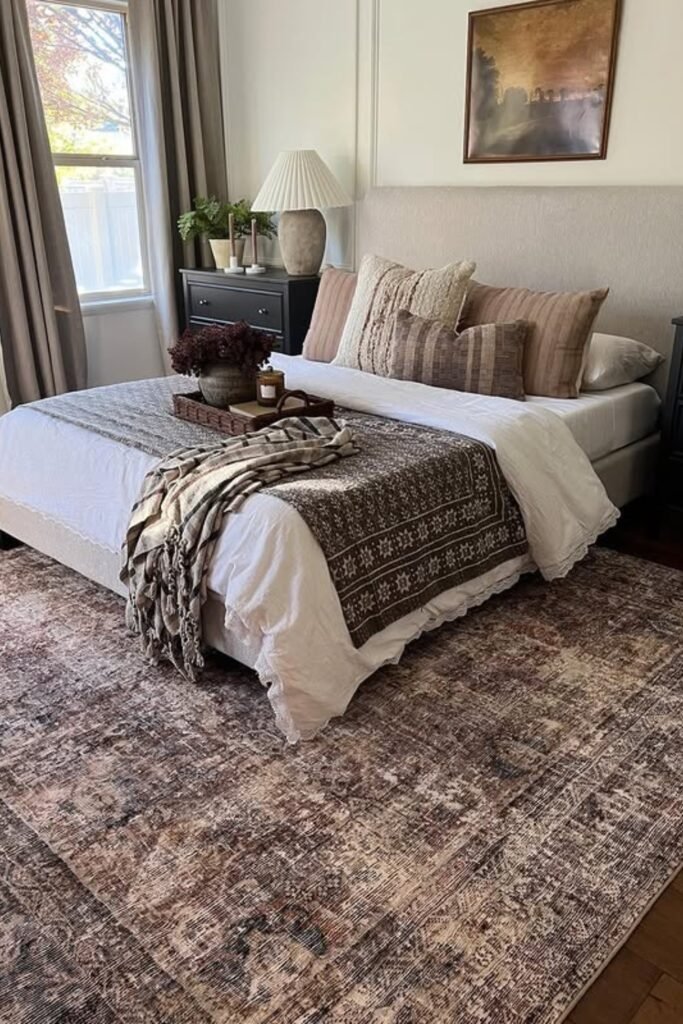
Warm Neutral Anchor
A darker, softly distressed rug like this gives your space that missing weight, so your bed feels settled instead of floating.
You should let the rug extend generously on all sides to frame the furniture and balance the room.
Cozy Pattern Play
You can absolutely use bold patterns in a bedroom, as long as you keep your color palette tight.
You should let the rug stretch past the bench and sides of the bed so the pattern feels intentional.
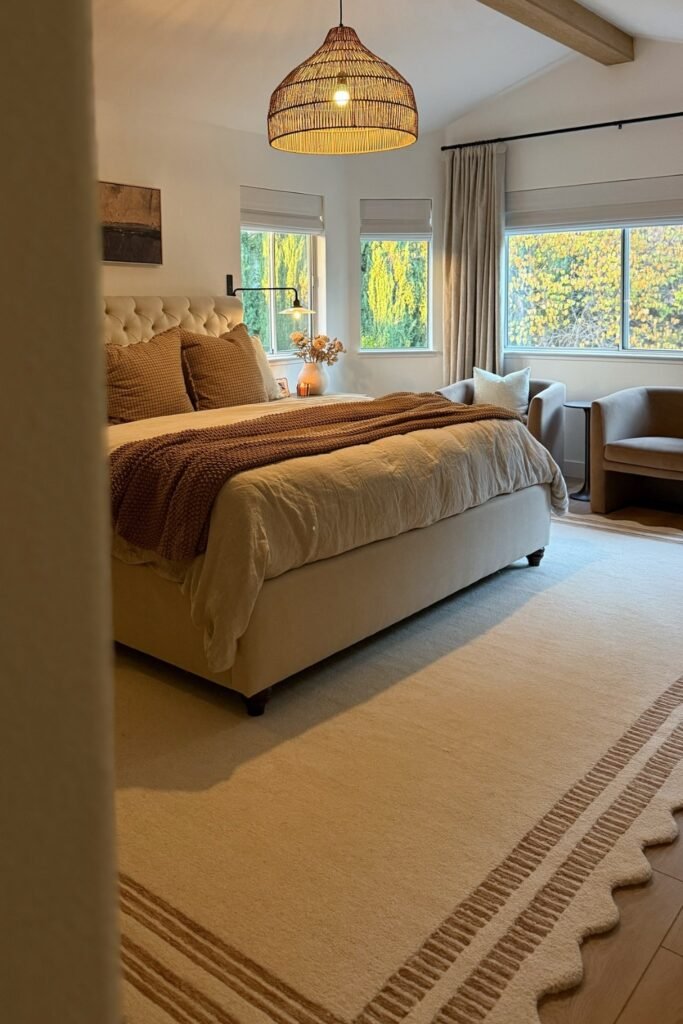
Calm Natural Foundation
When your bedroom already feels warm and welcoming, you don’t want the rug stealing attention.
You want it quietly supporting the mood you’ve created. A flat, light-toned rug keeps your space open while still adding softness underfoot.
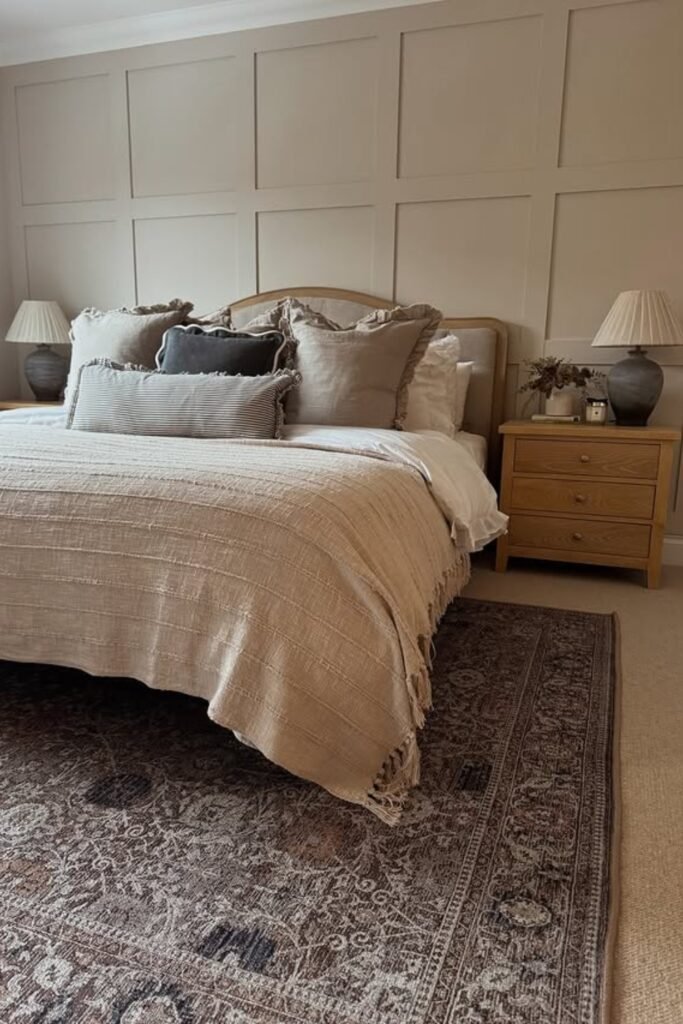
Grounded Neutral Contrast
When your bedroom is wrapped in soft, warm tones, you might notice it starts to feel a little flat. That’s where your rug comes in.
A deeper, patterned rug adds contrast at floor level, so your bed stands out without needing bold colors.
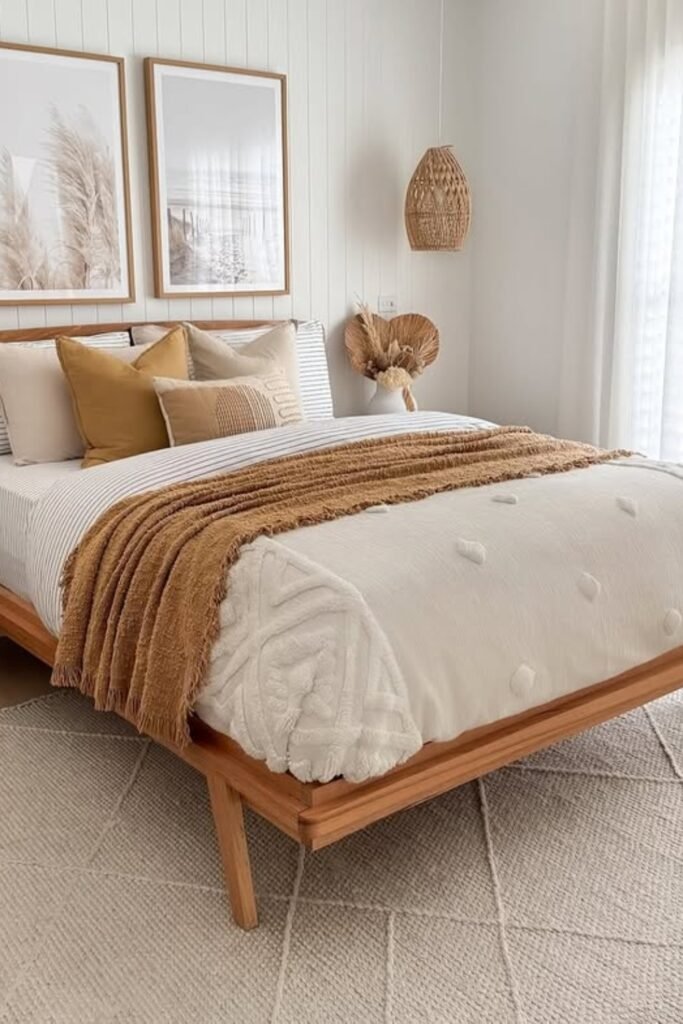
Soft Coastal Geometry
When your bedroom already feels warm and airy, you want your rug to add structure without weighing the space down.
You should stick to low-pile textures and neutral tones so the rug blends easily with wood furniture and layered bedding.
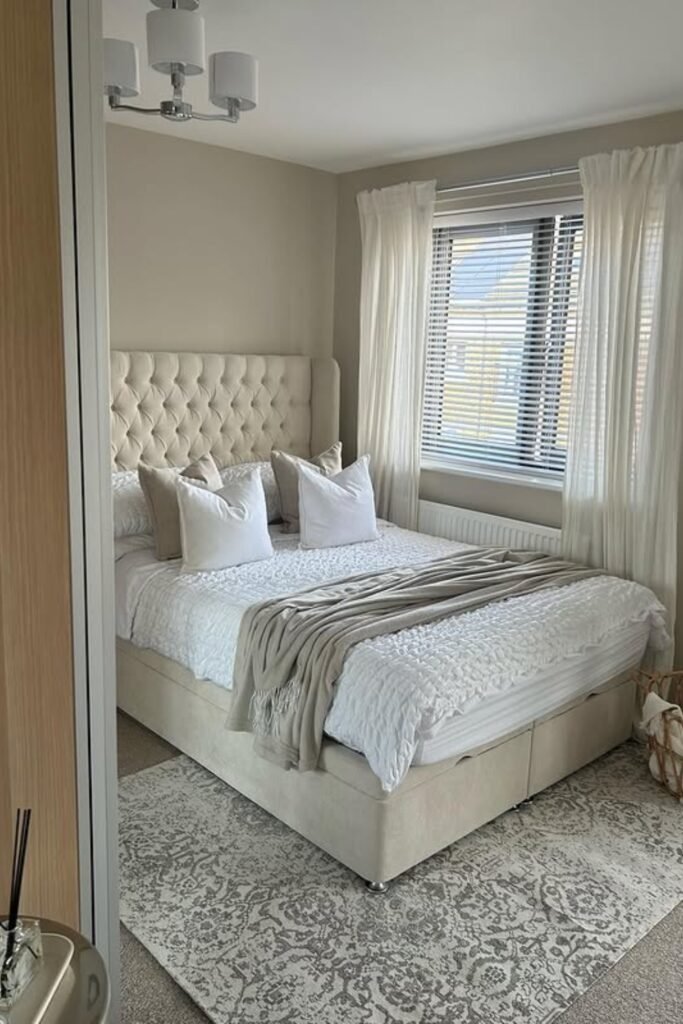
Light Pattern Softening
A lightly patterned rug helps you add movement under the bed without pulling attention away from the headboard or bedding.
You will want the rug to extend beyond the bed on all sides so the room feels wider and more balanced.
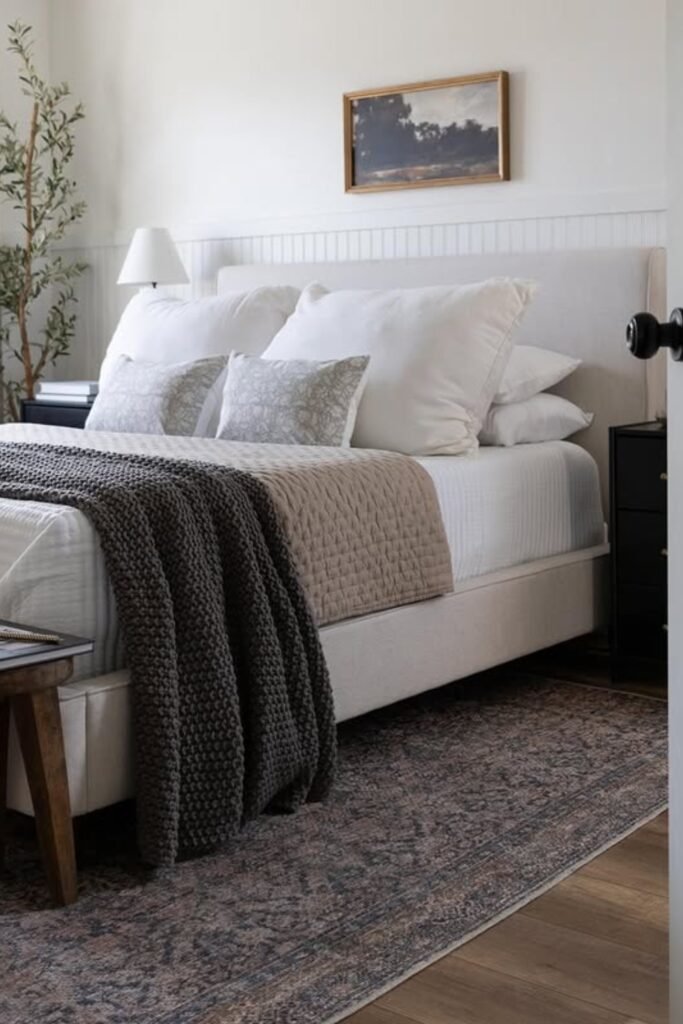
Subtle Contrast Grounding
You should keep the pattern understated so it blends into the room instead of shouting.
This setup works well when you want a calm, classic bedroom with depth but still a clean, relaxed feel.
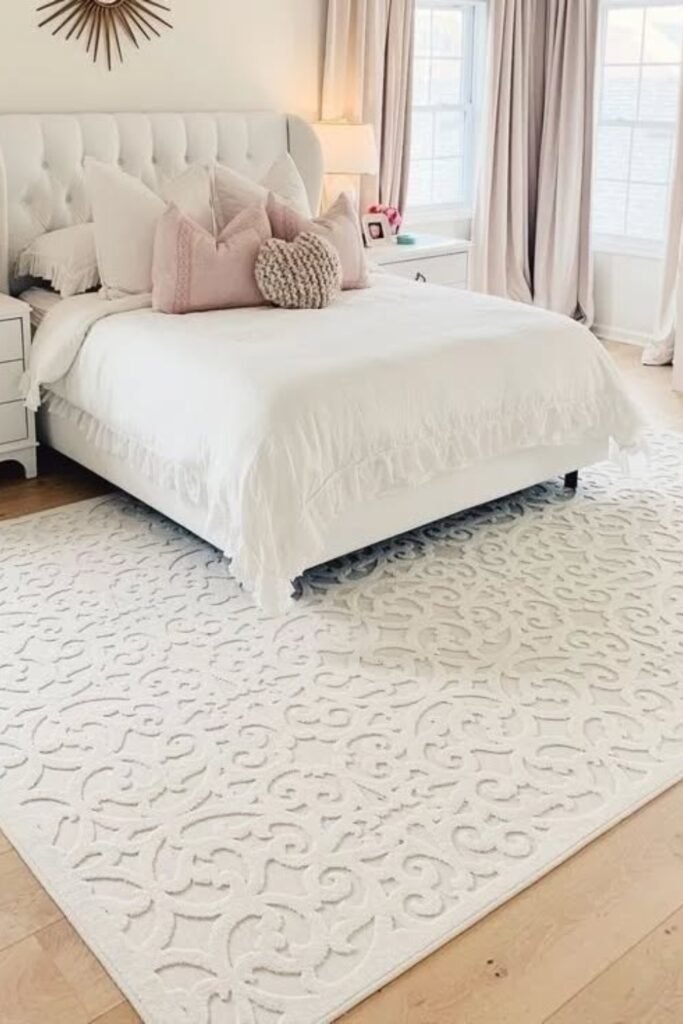
Soft-on-Soft Definition
When you design an all-white bedroom, you’ll notice it only works when something grounds it at floor level.
A sculpted white rug like this adds definition without breaking your soft palette.
The raised pattern gives you texture you can actually feel, which keeps the space from looking flat or sterile.
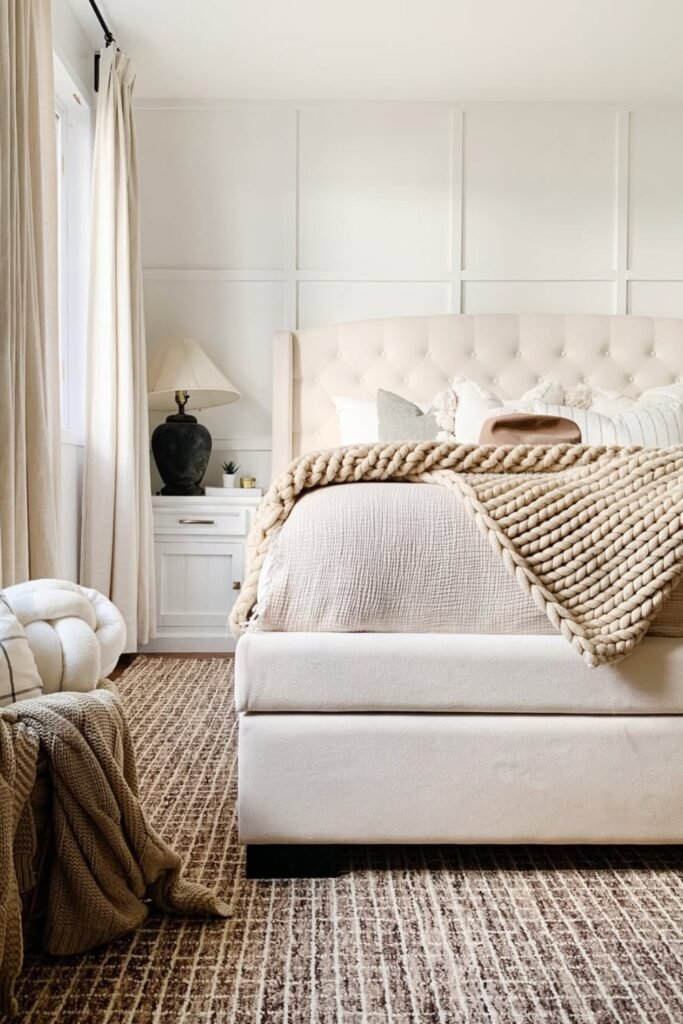
Textured Neutral Warmth
When your bedroom is layered with soft whites and creams, the rug is what brings quiet warmth from the ground up.
A textured, mid-tone rug like this keeps your space from feeling too polished or cold. The subtle pattern adds depth without competing with your bedding.
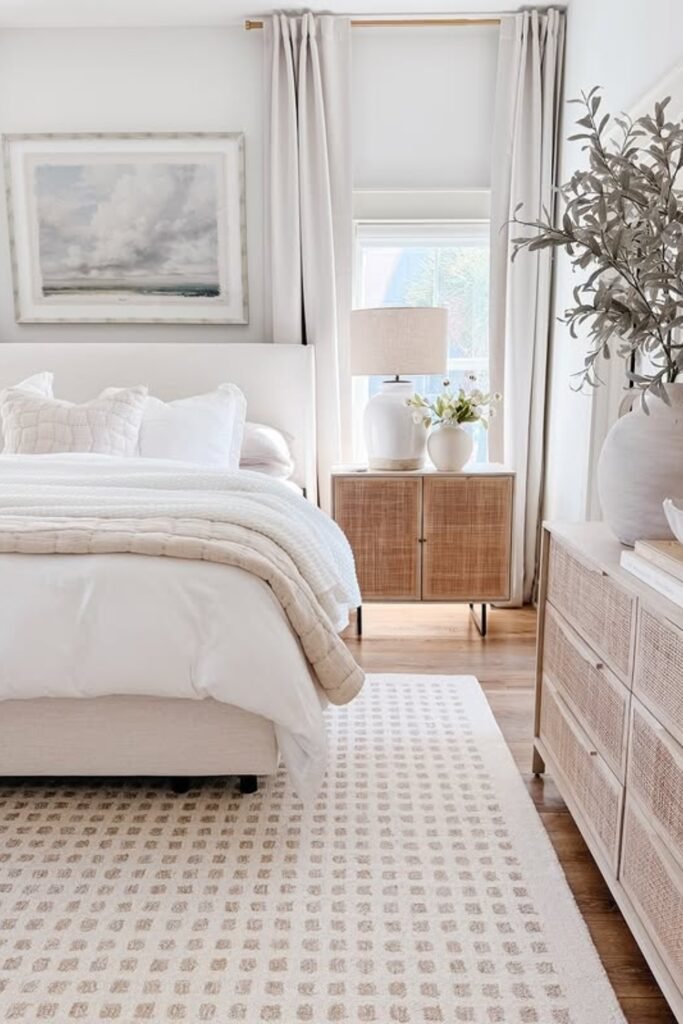
Light Pattern Calm
A light, evenly patterned rug helps you avoid a flat look while still blending into your neutral palette.
You should let it sit fully under the bed so the pattern feels like a foundation, not an accent.
This works best when balance matters more to you than contrast.
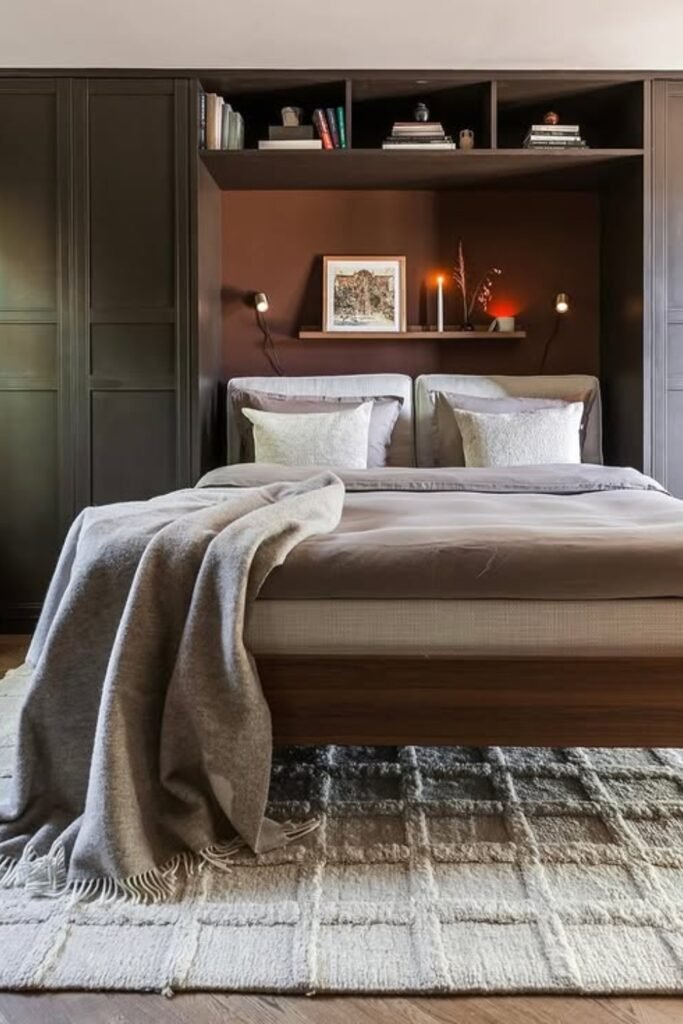
Softening Dark Built-Ins
You should choose a low-contrast pattern so it blends instead of distracting.
A light, textured rug breaks up that depth and brings softness right where you need it, under the bed.
This setup works best when you’re styling a modern or custom bedroom and you need a warm, calming counterbalance to dark wood.
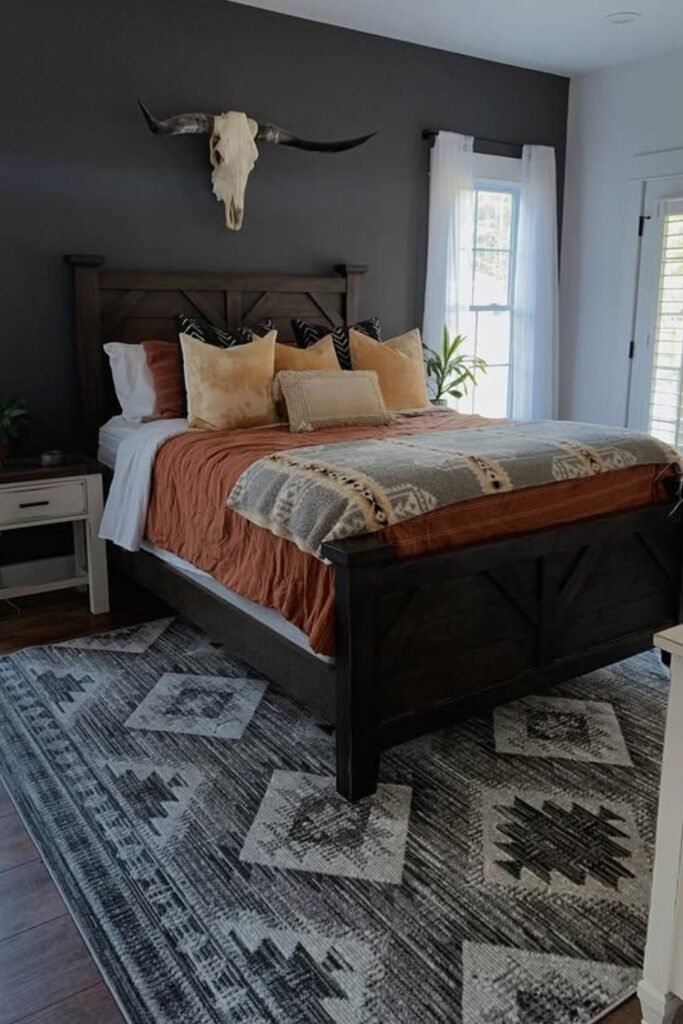
Patterned Contrast Balance
A patterned rug like this breaks up dark floors and furniture while still matching the room’s moody vibe.
This works best when you want character, warmth, and visual balance to work together in a rustic or modern bedroom.
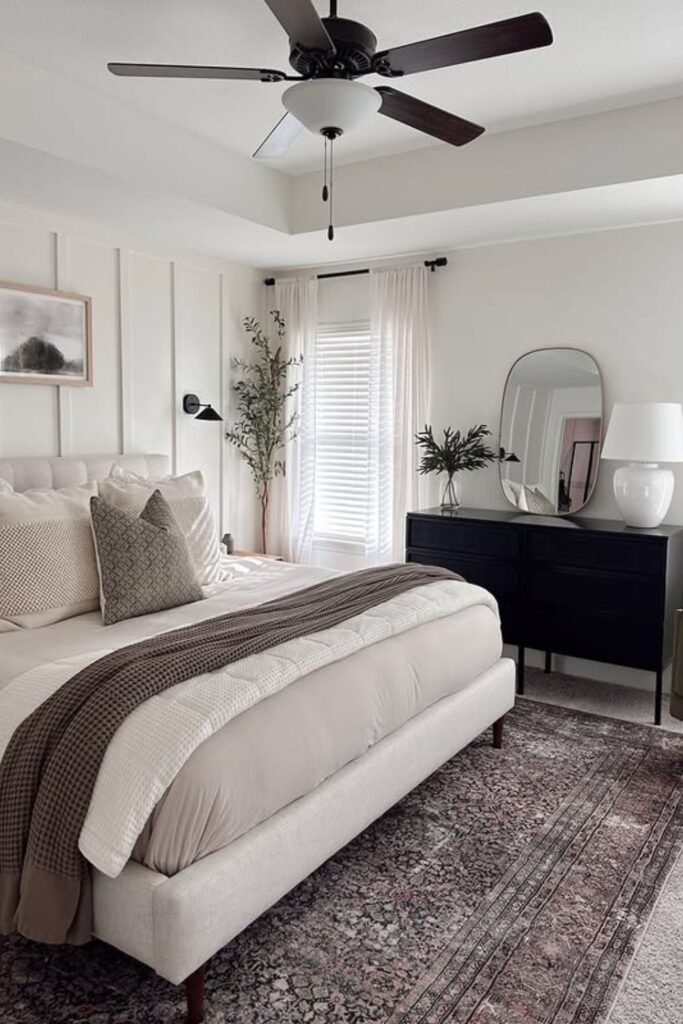
Subtle Pattern Grounding
When your bedroom mixes light walls with darker furniture, the rug becomes the piece that quietly pulls everything together for you.
This setup works especially well when you want warmth, balance, and a finished look without bold color.
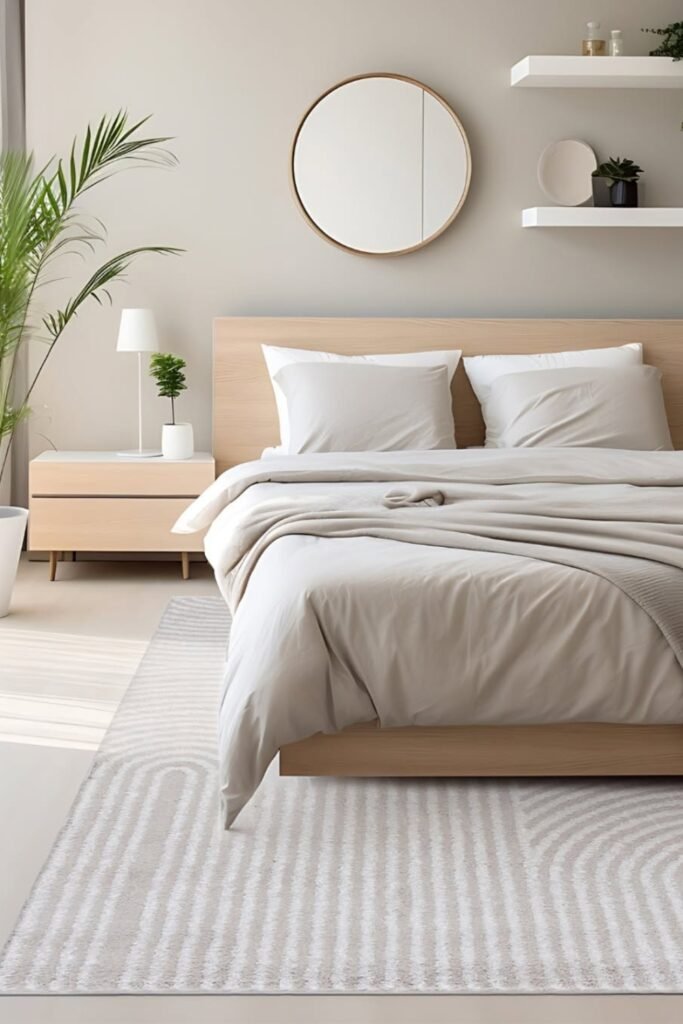
Soft Minimal Flow
You will want to keep the colors close to your bedding so everything flows naturally.
When you’re styling a clean, modern bedroom, the rug is what keeps the space from feeling bare.
Let the rug sit fully under the bed to visually widen the room. This works best when you care more about calm and balance than decoration.
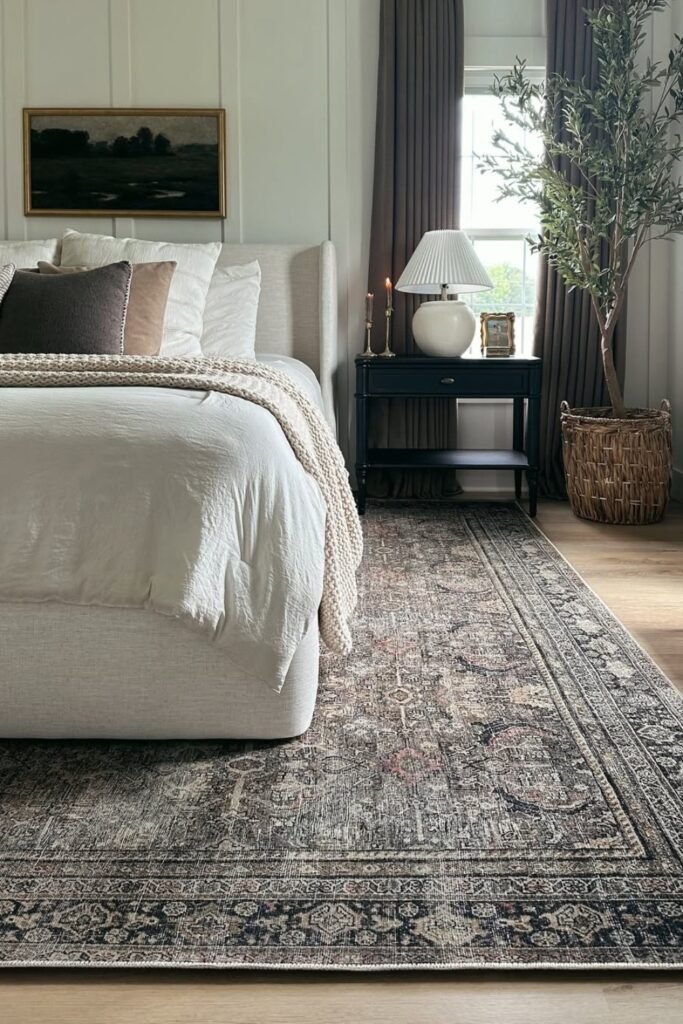
Classic Depth Anchor
The darker, time-worn pattern adds contrast under your bed, so you feel the room layered instead of one-dimensional.
This works especially well when you want a calm, classic bedroom with warmth and character, without having to introduce bold colors.
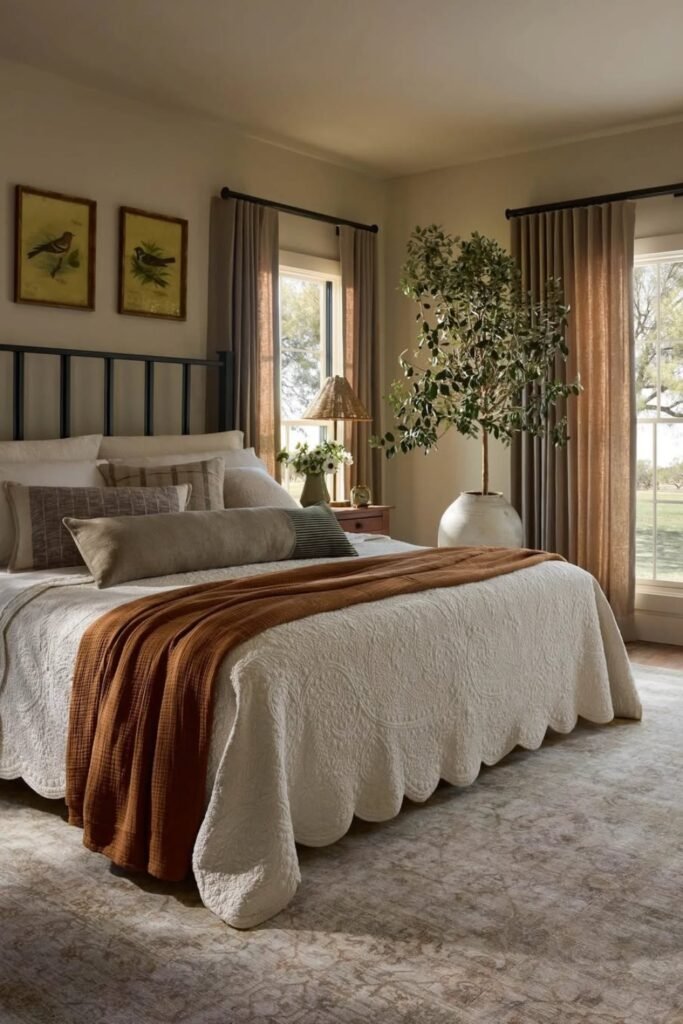
Soft Earthy Balance
You should stick to muted, earthy colors so everything feels connected and cohesive.
Let the rug extend beyond the bed on all sides so your room feels open and relaxed.
This works best when you are aiming for a nature-inspired bedroom where calm and warmth matter more to you than contrast.
You may like to read!
