
25 TV Wall Design Ideas for Every Living Room
A TV wall can look beautiful in inspiration photos, then somehow feel awkward when you try the same arrangement at home. For examples adapted to a bedroom rather than a living room, compare these bedroom TV wall ideas.
Maybe the screen sits too high, the cables are visible, or the furniture makes your living room feel crowded.
These 25 TV wall design ideas will help you create a media space that’s stylish, comfortable, and realistic for your room.
What Makes a TV Wall Look Well Designed?
The best TV wall designs start with a comfortable viewing position, not with the decorative panels.
Sit on your usual sofa and check the screen height before planning a cabinet, shelf, or feature wall.
Next, decide what your room actually needs: extra storage,
a calmer backdrop, or a focal point that works with the rest of your furniture.
For more ways to build contrast, explore our living room accent wall guide.
Keep the TV’s ventilation and mounting instructions in mind, especially if you’re using panels, shelves, or a fireplace nearby.
A polished wall isn’t worth an awkward viewing angle or an unsafe installation.
25 TV Wall Design Ideas to Try
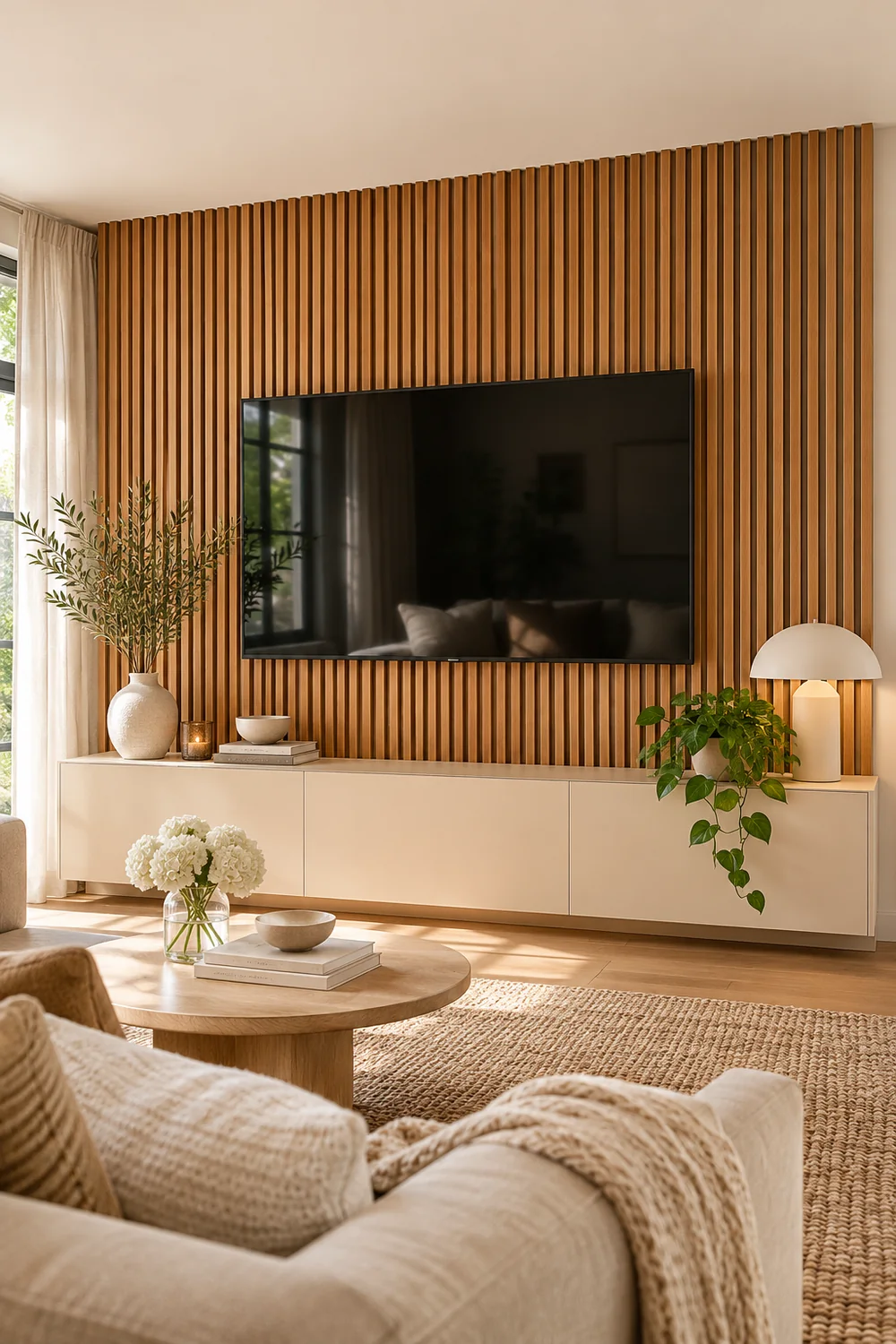
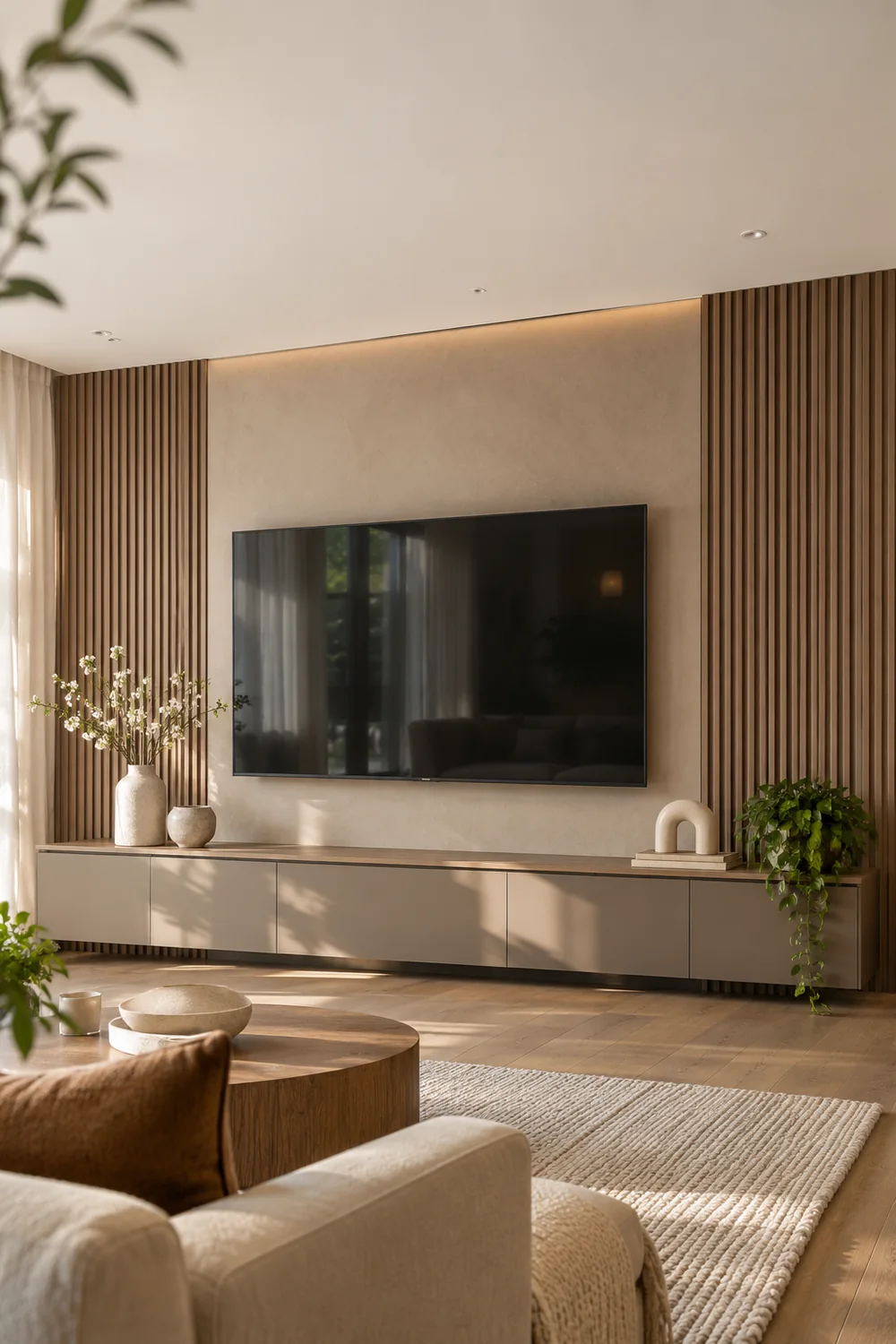
Warm Oak Slats
A wall of narrow oak slats adds texture without making your television the only thing people notice when they enter the room.
Mount the screen on a secure backing, then run the slats around it for a neat finish that still feels architectural.
Pair the wood with a simple cream console, and leave enough clear wall around the screen so the pattern can breathe.
Floating Walnut Console
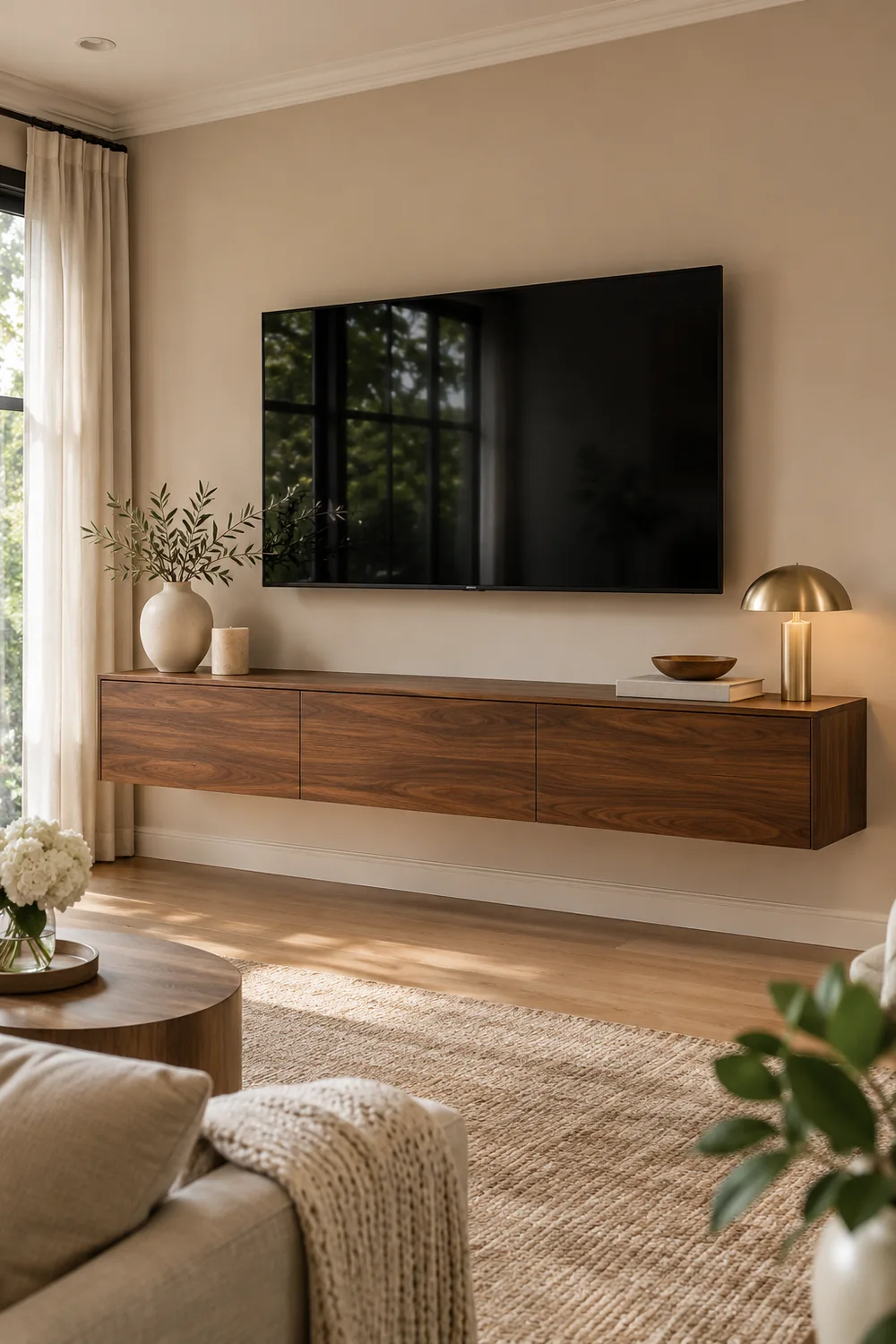
Want the floor to look less crowded? A floating walnut cabinet gives your TV wall useful storage without bulky furniture legs.
Choose deep drawers for remotes and gaming accessories, while leaving a ventilated compartment for devices that need airflow.
Match the cabinet width to the screen and wall proportions rather than choosing an oversized unit simply to fill empty space.
Soft Limewash Finish
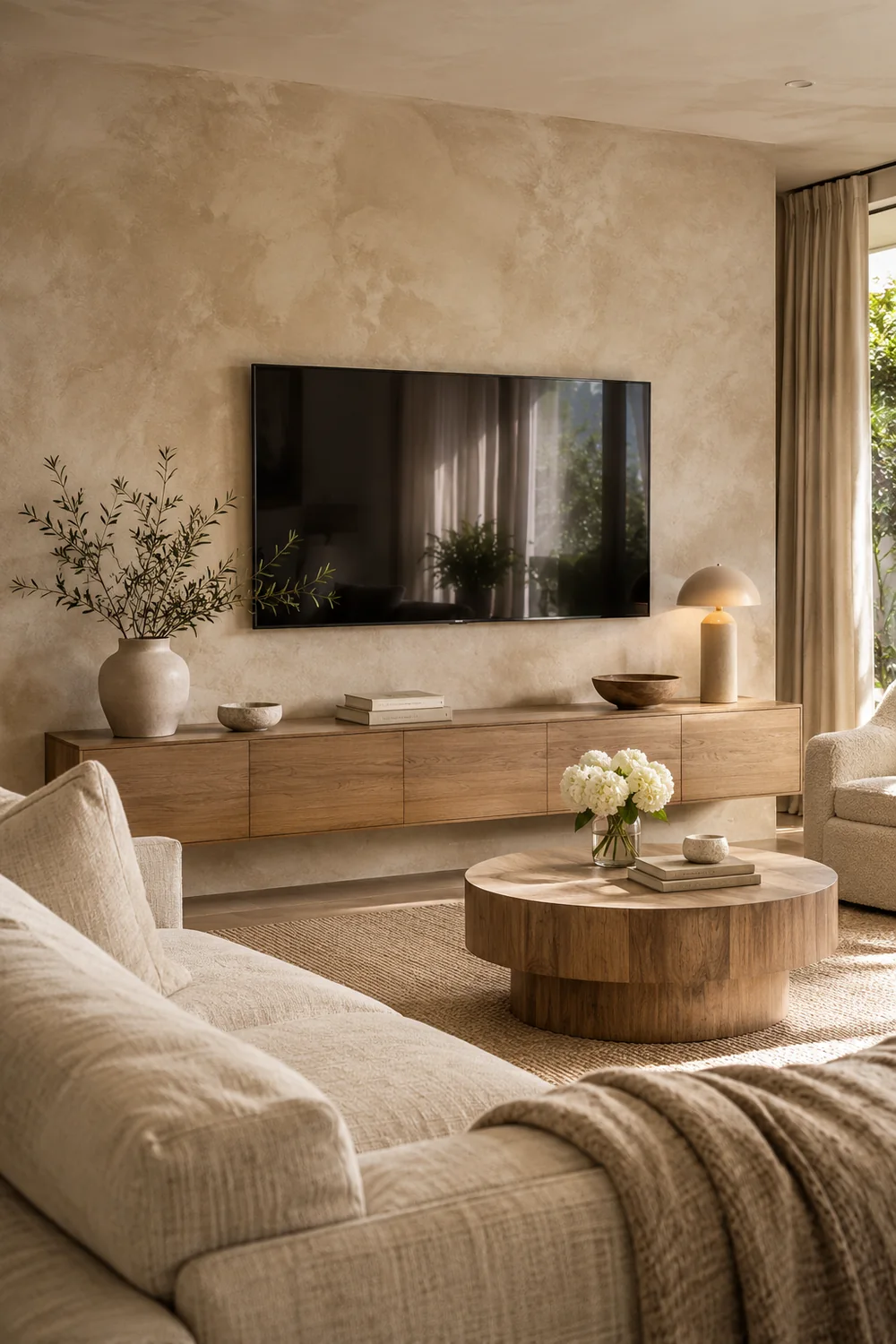
Limewash brings quiet movement to a plain TV wall, especially when your living room already has plenty of wood and linen.
Choose a soft taupe or sandy beige shade so the subtle texture reads beautifully without distracting you during movie nights.
Keep nearby shelves minimal; too many framed prints can compete with the imperfect finish that makes limewash so appealing.
Dark Charcoal Backdrop
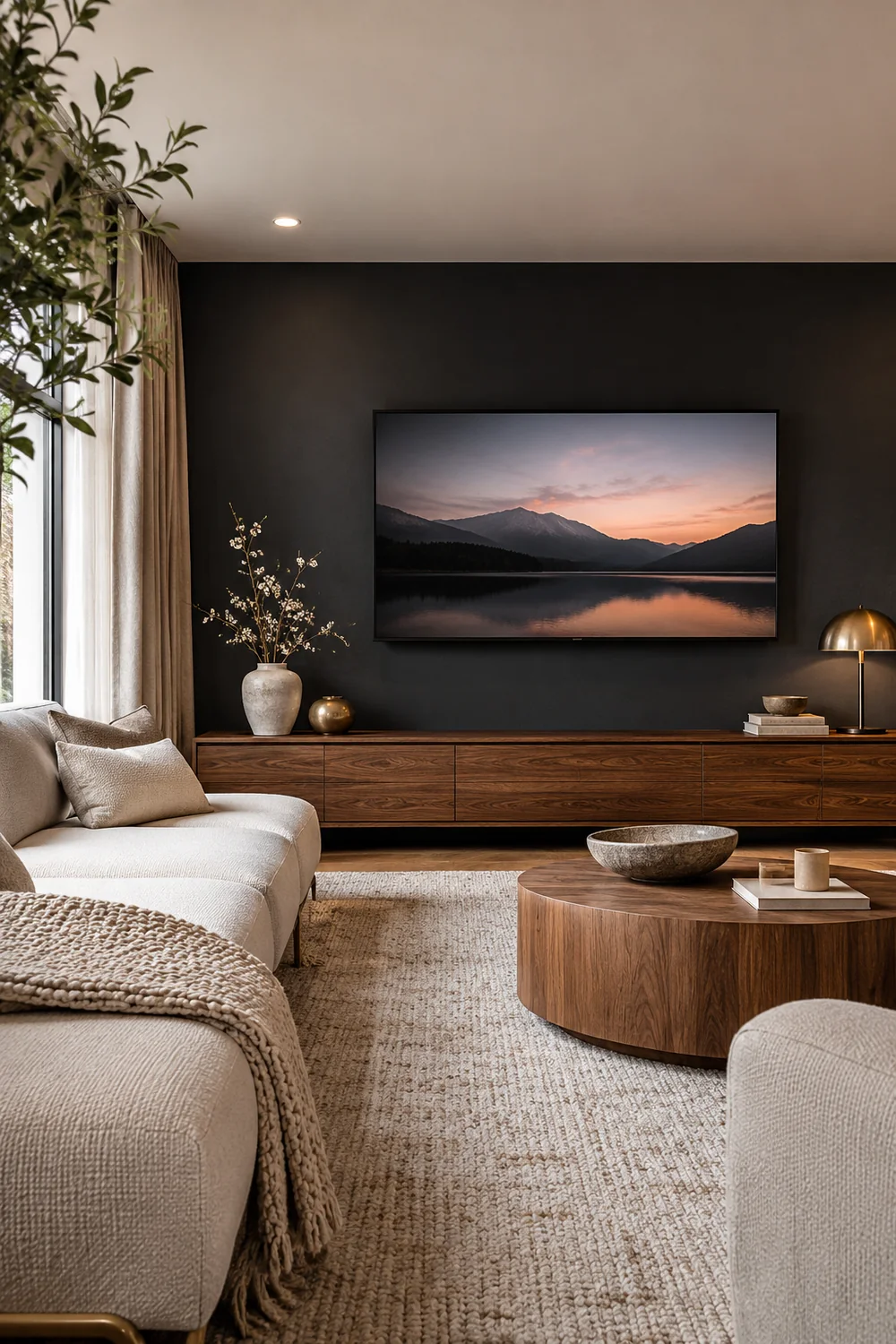
A charcoal TV wall is surprisingly practical because the black screen feels less prominent against its deep, muted background.
Use a matte paint rather than glossy black, and balance the dark surface with pale seating or natural oak furniture.
For an affordable transformation, start with paint and cable management before committing to custom cabinets or feature panels.
Cream Built-In Storage
If toys, books, and media accessories keep collecting around your television, a full-width built-in can give everything a home.
Keep the center bay open for the TV and use closed cabinets below, with a few shallow display shelves on either side.
Paint the cabinetry the same warm white as your walls for a softer effect that won’t overwhelm a smaller living room.

Stone Look Centerpiece
A stone-look panel can make your media wall feel luxurious without covering the entire room in an expensive finish.
Try one large matte porcelain or quality stone-effect panel directly behind the screen, with plain painted walls around it.
Avoid highly reflective finishes opposite windows; daylight glare can become frustrating once you actually sit down to watch television.

Asymmetrical Display Shelves
Perfect symmetry isn’t always the answer when a doorway or window interrupts the wall where your television has to go.
Cluster two or three staggered shelves on the wider side and balance them with a low console that stretches beneath the screen.
Use a restrained mix of books, ceramics, and greenery so the arrangement feels collected rather than crowded.

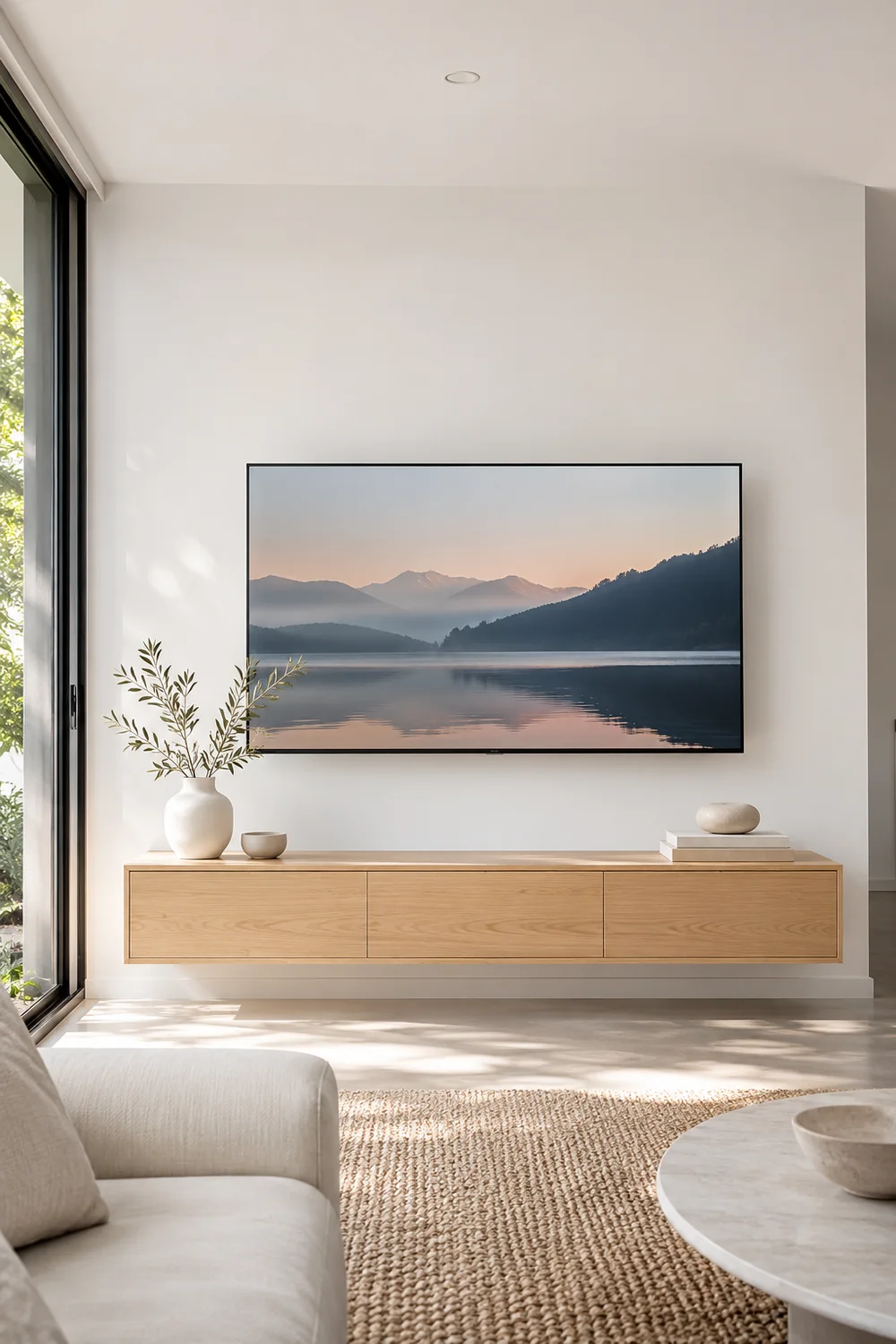
Minimal White Wall
Some rooms look best when the television has almost nothing around it, particularly if the furniture already has strong shapes.
Mount the screen at a comfortable seated height and hide the wires inside an appropriate cable-management system.
A slim pale-oak cabinet underneath adds just enough warmth to stop the setup from feeling unfinished or overly clinical.
Fluted Panel Frame
Instead of covering the whole wall, frame a smooth central TV panel with fluted sections along its outer edges.
This arrangement creates structure while leaving a calmer backdrop directly behind the screen, which makes watching more comfortable.
Repeat the fluted texture on a small cabinet door rather than adding several more competing decorative finishes.
Cozy Shiplap Feature
Horizontal shiplap can make a family TV area feel relaxed and familiar, without demanding a complete living-room renovation.
Paint the boards warm white or dusty sage, then use a straightforward wood cabinet to ground the mounted television.
Keep visible seams regular, especially around the screen, or the wall can quickly look more busy than cozy.

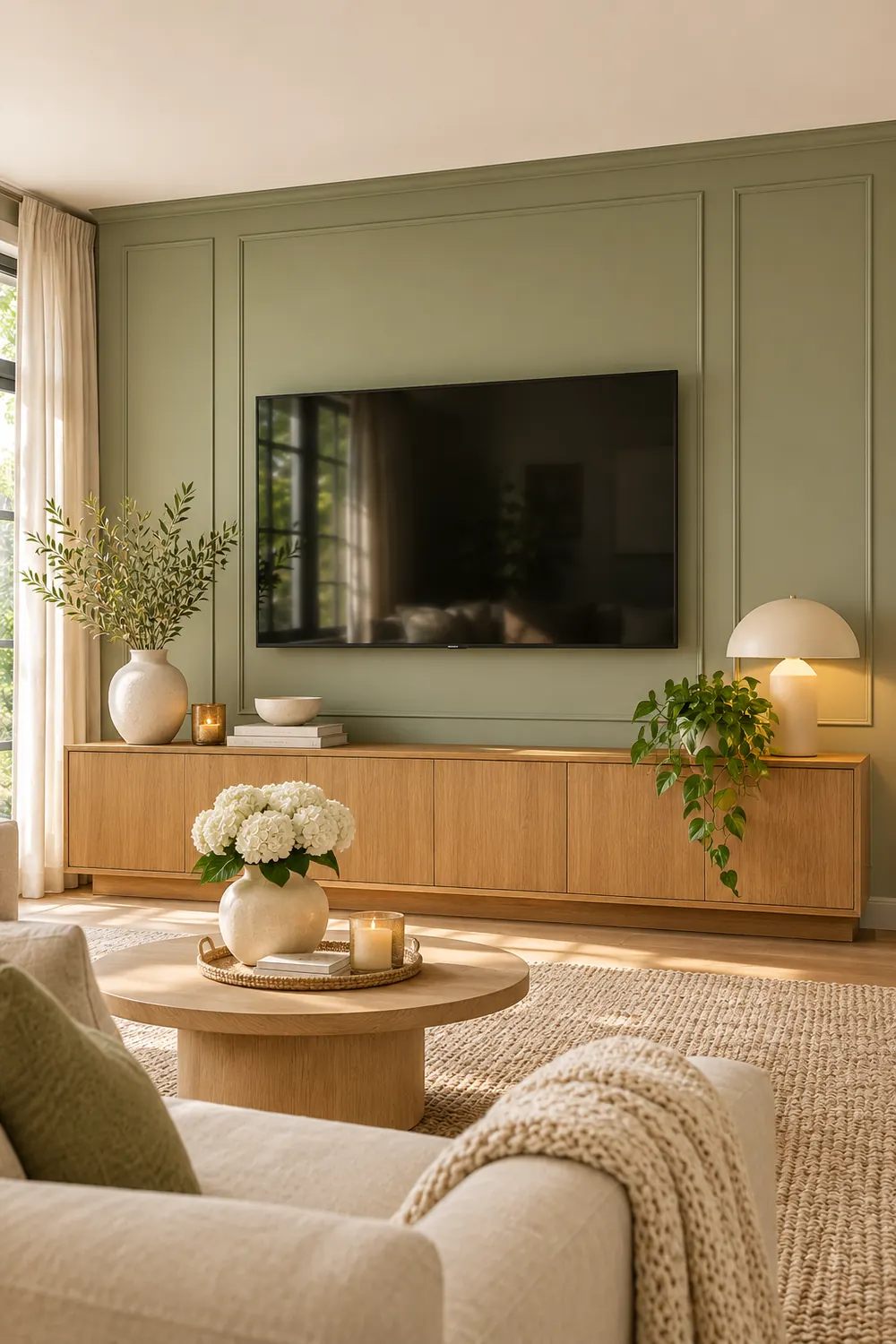
Muted Sage Panels
Muted sage green is a lovely alternative to beige if you want a TV wall with color that still feels calm.
Use simple rectangular panels or molding to introduce depth, then pair the wall with warm brass accents and oak.
Try the color on a sample board first; changing daylight can make green look cooler than you expected.
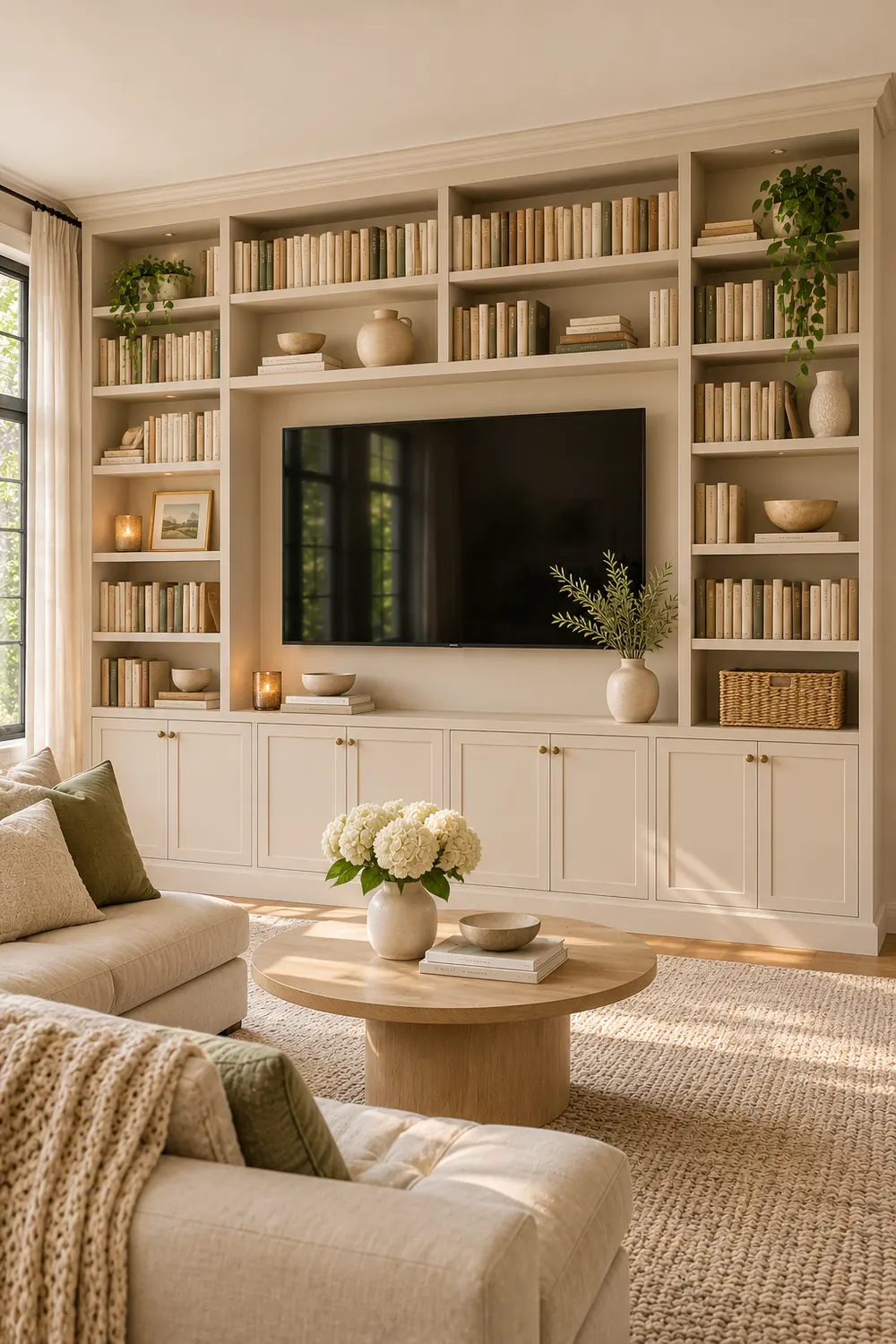
Full Height Bookcase
Love books as much as movies? A bookcase wall lets the television share attention with collections that actually mean something.
Reserve a generous central opening for the screen, and vary shelf heights for hardbacks, baskets, and decorative pieces.
Add closed storage at the base so power strips and small electronics don’t become part of the display.
Low Profile Panel
For a contemporary apartment, try a wide horizontal wood panel behind the television rather than a tall, full-wall installation.
The low profile emphasizes width, which can make a compact lounge feel more balanced without using up valuable floor space.
Choose a floating console in the same tone, and avoid stacking accessories directly under the picture.
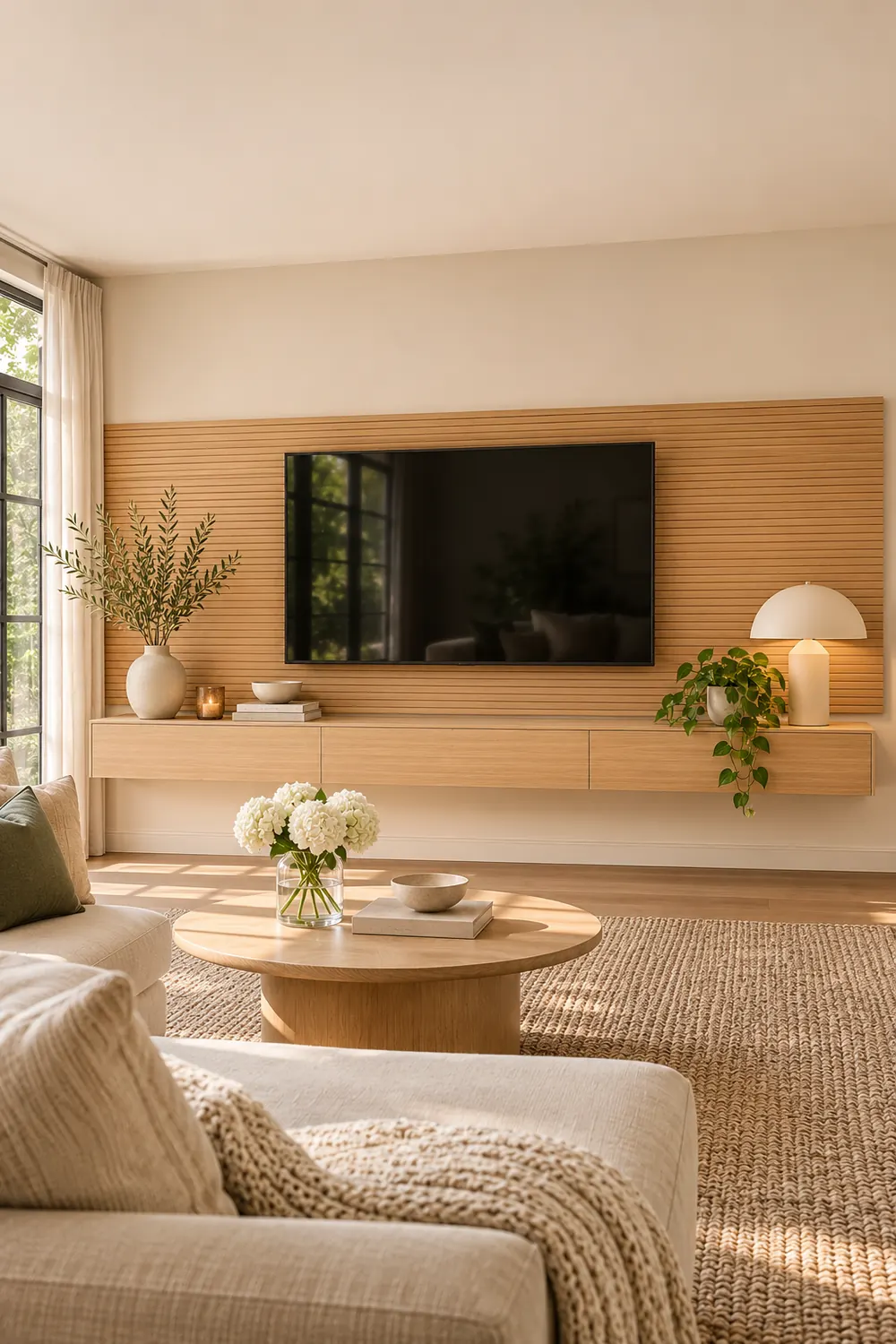
Arched Shelf Niches
Soft arches can give an otherwise boxy media wall an inviting, slightly Mediterranean feel without changing the shape of the television.
Build one shallow arched niche beside the screen for pottery or books, keeping the main TV section rectangular and uncluttered.
A plaster-look finish works particularly well here because its soft texture complements the curved detailing.

Black And Oak
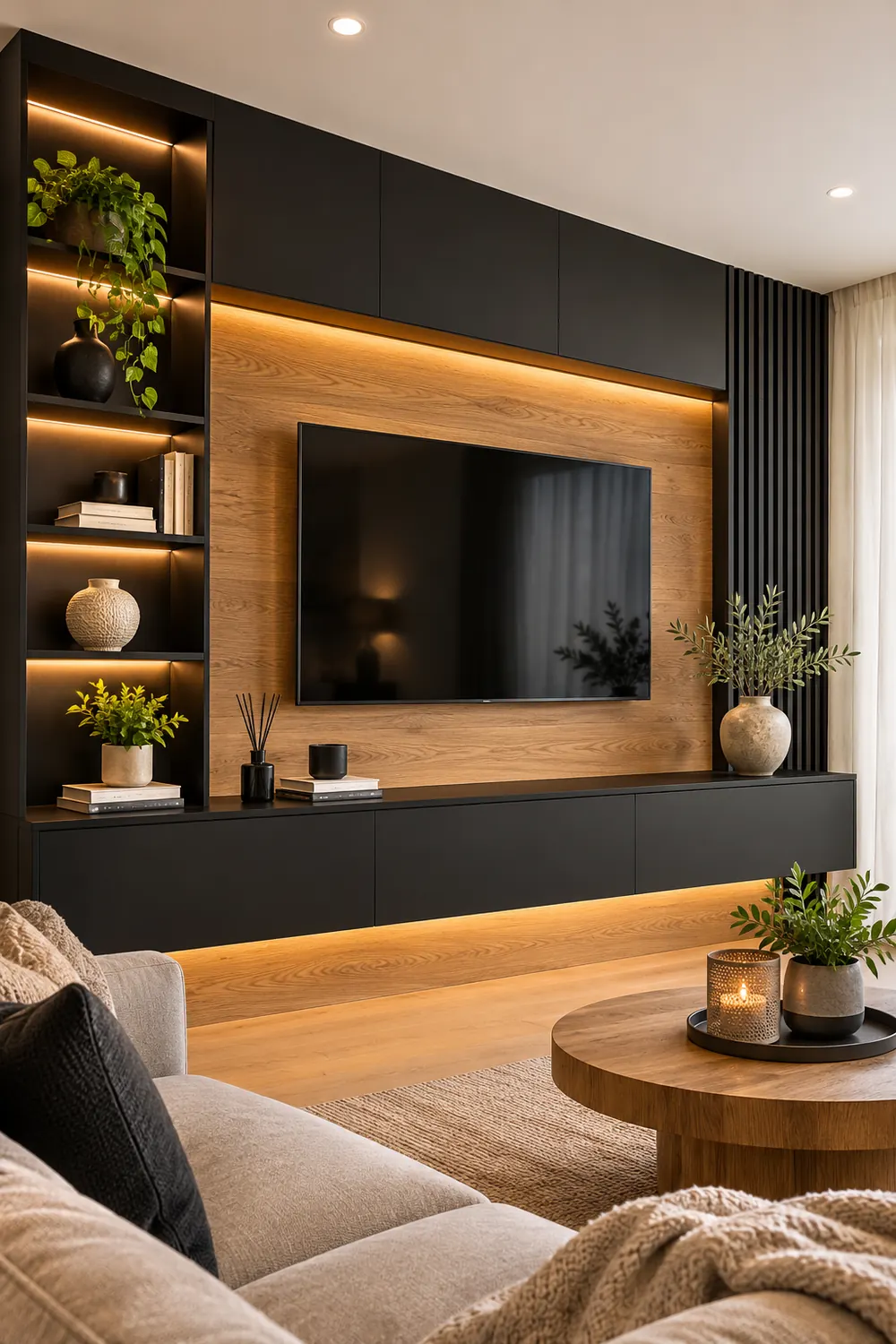
For a stronger modern contrast, combine an oak cabinet with a black panel behind the television and keep everything else restrained.
Use the oak to warm up the look, and repeat the black in a lamp, picture frame, or table legs.
Make sure the screen has enough breathing room so the dark section reads as deliberate design rather than a heavy rectangle.
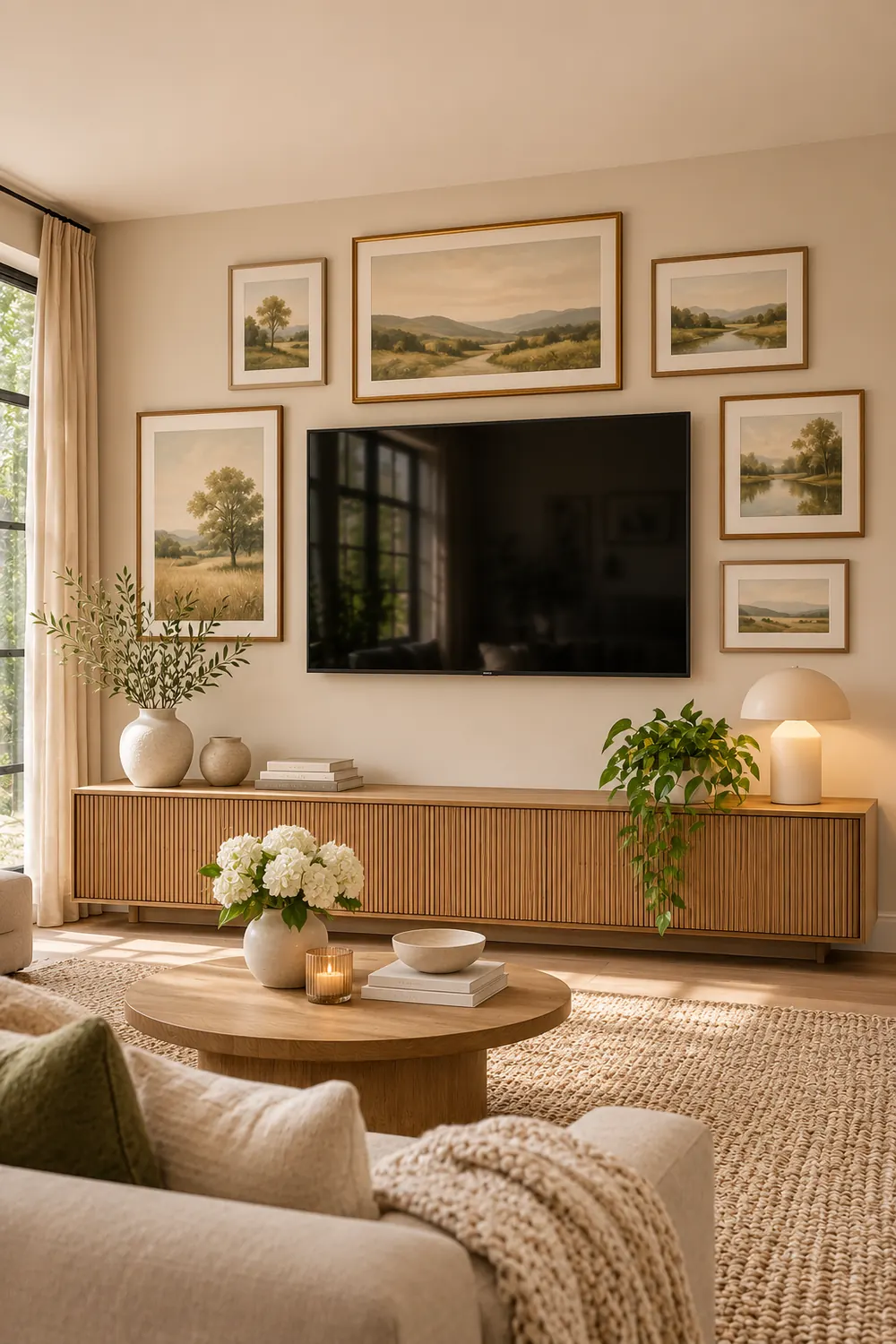
Gallery Wall Blend
If you dislike the look of a blank television when it’s switched off,
a restrained gallery wall can make it feel integrated.
Arrange artwork beside the screen rather than tightly around every edge, using consistent frames and a limited palette.
Choose pieces with quieter compositions; bold prints directly beside moving images can create unnecessary visual noise.
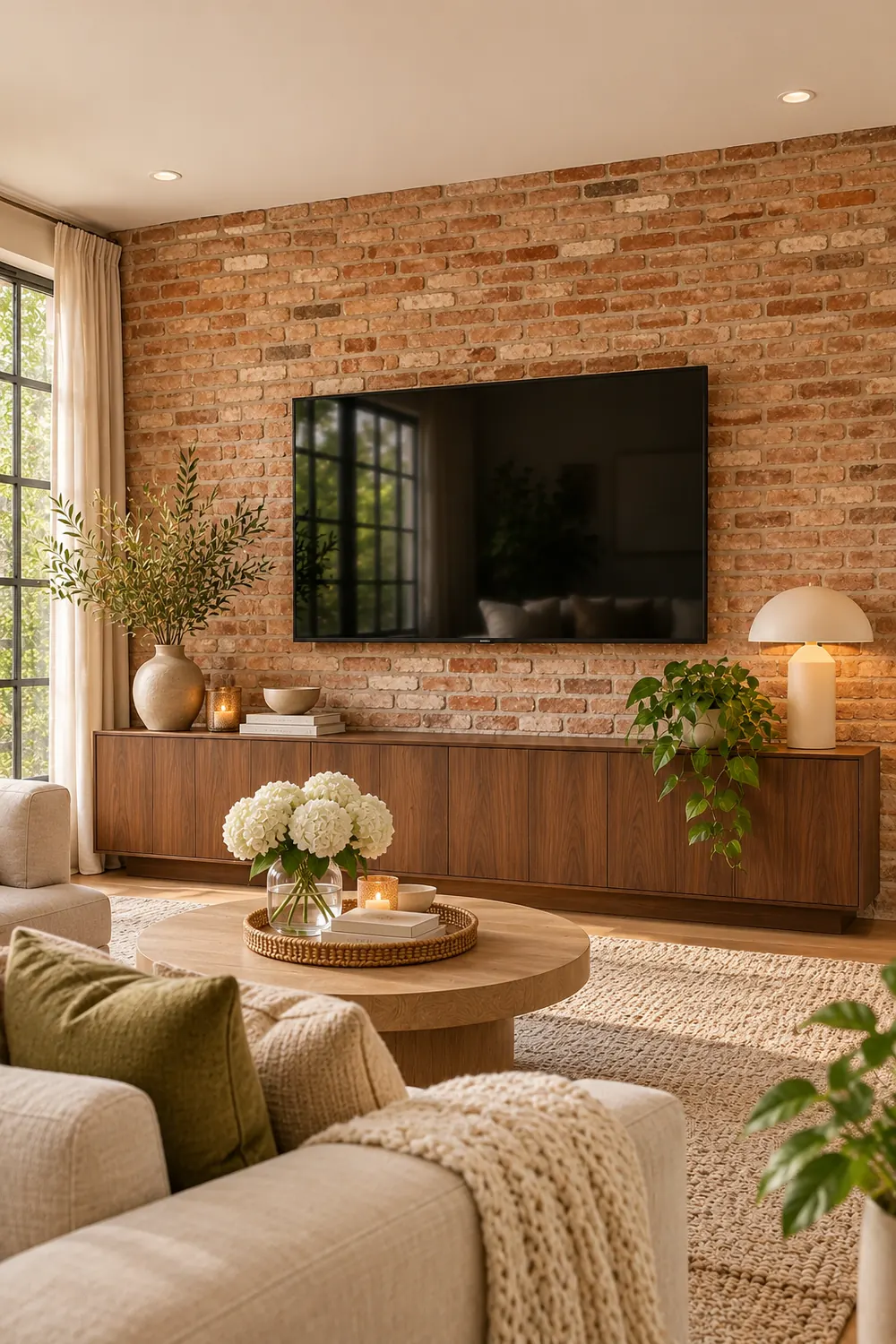
Natural Brick Texture
An exposed or brick-effect feature wall brings character to an industrial or rustic living room without requiring elaborate cabinetry.
Keep the television mount and cable route carefully planned before installing any thin brick slips or decorative cladding.
A plain black media cabinet and soft furnishings will help balance the strong texture of the wall.
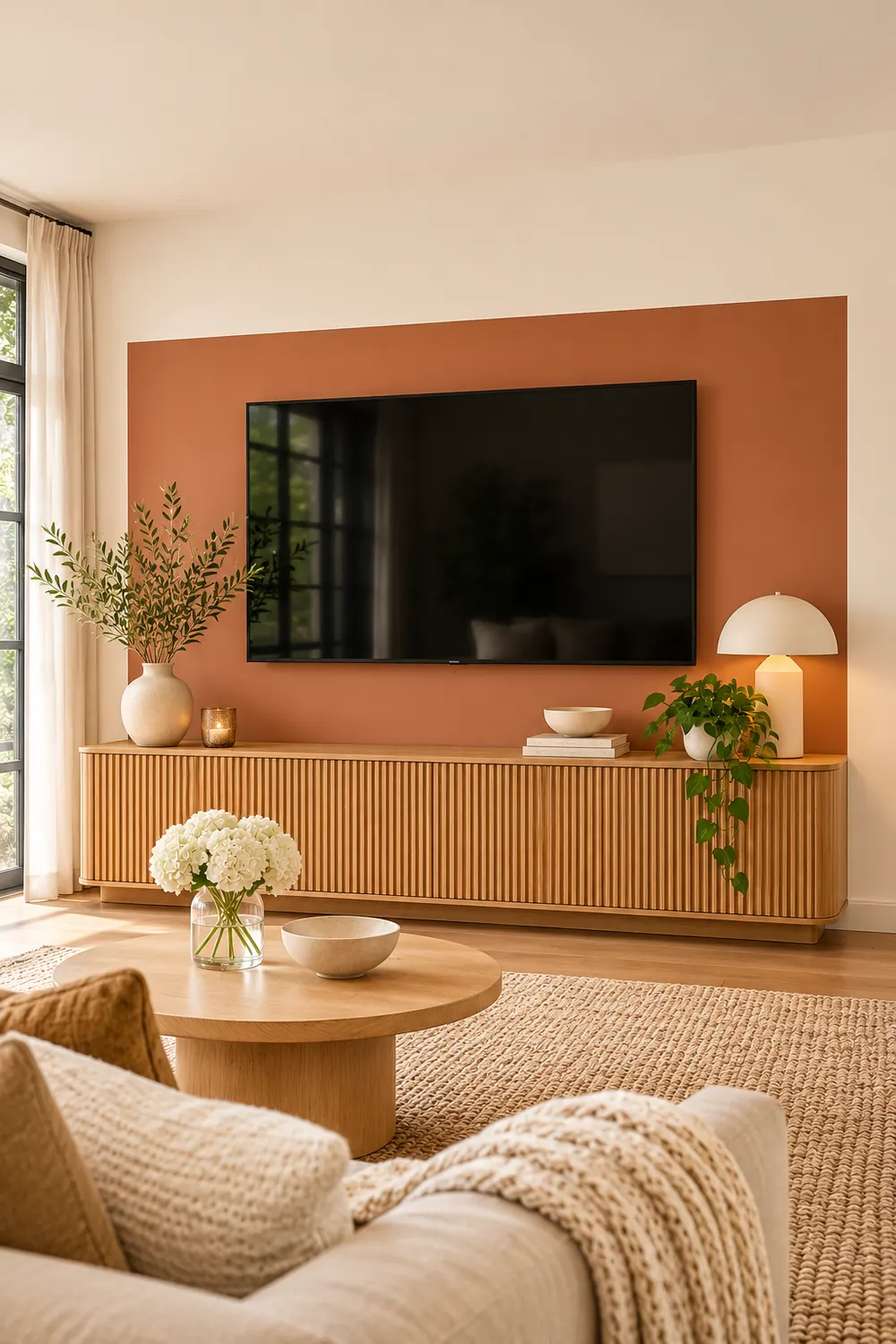
Half Wall Color Block
You don’t need built-ins to create a designed TV wall; a neat painted color block can make the same area feel intentional.
Extend a warm terracotta or olive rectangle beyond the edges of the TV and console so the whole composition feels anchored.
Use painter’s tape for crisp boundaries, and keep the remaining wall light to avoid making the room feel enclosed.
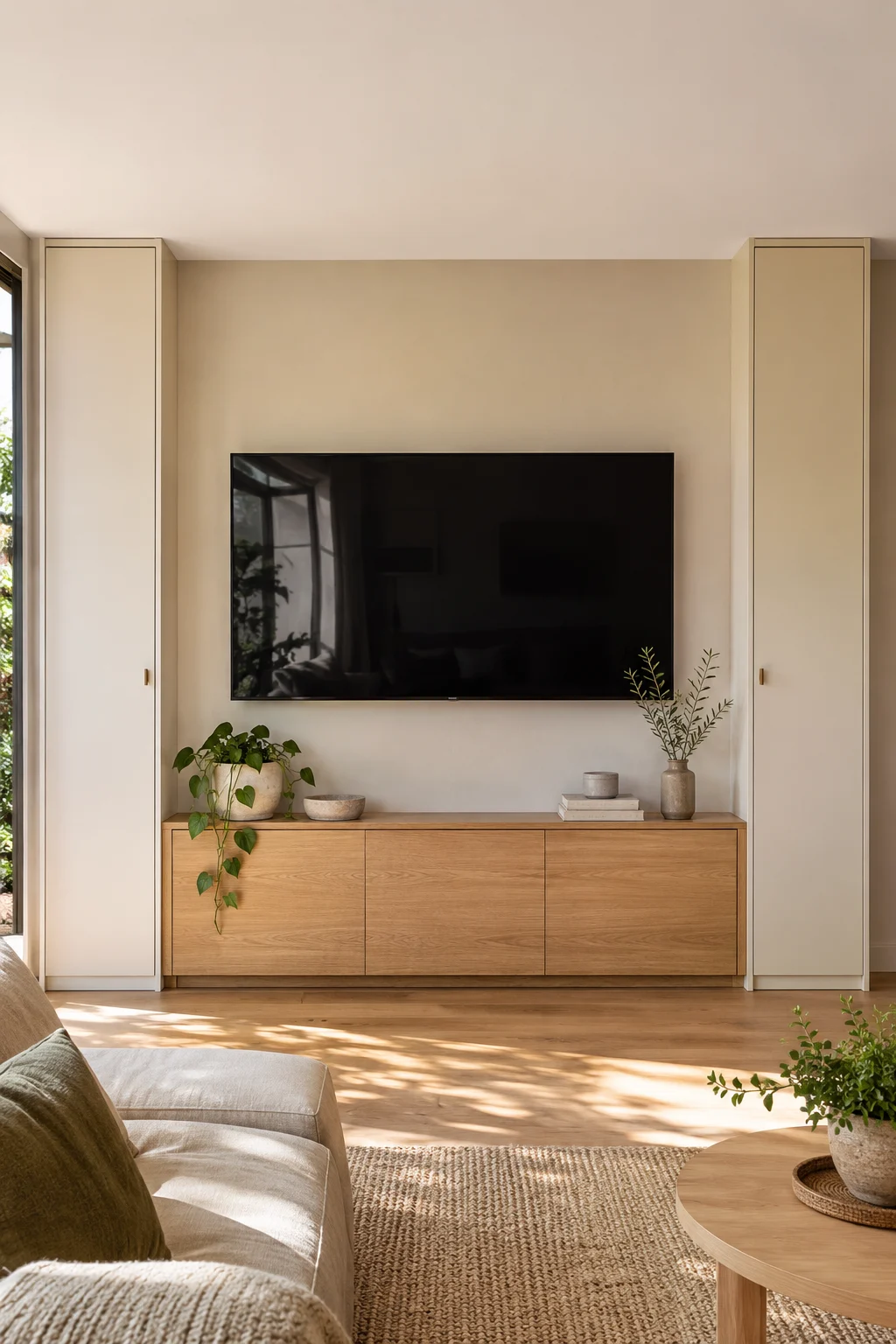
Slim Side Cabinets
A pair of tall, narrow cabinets can add serious storage even when the television occupies most of a compact wall.
Choose shallow doors on one or both sides, leaving the middle open enough for a comfortable view from the sofa.
Keep cabinet handles simple and repeat one material across the lower console for a more cohesive finish.
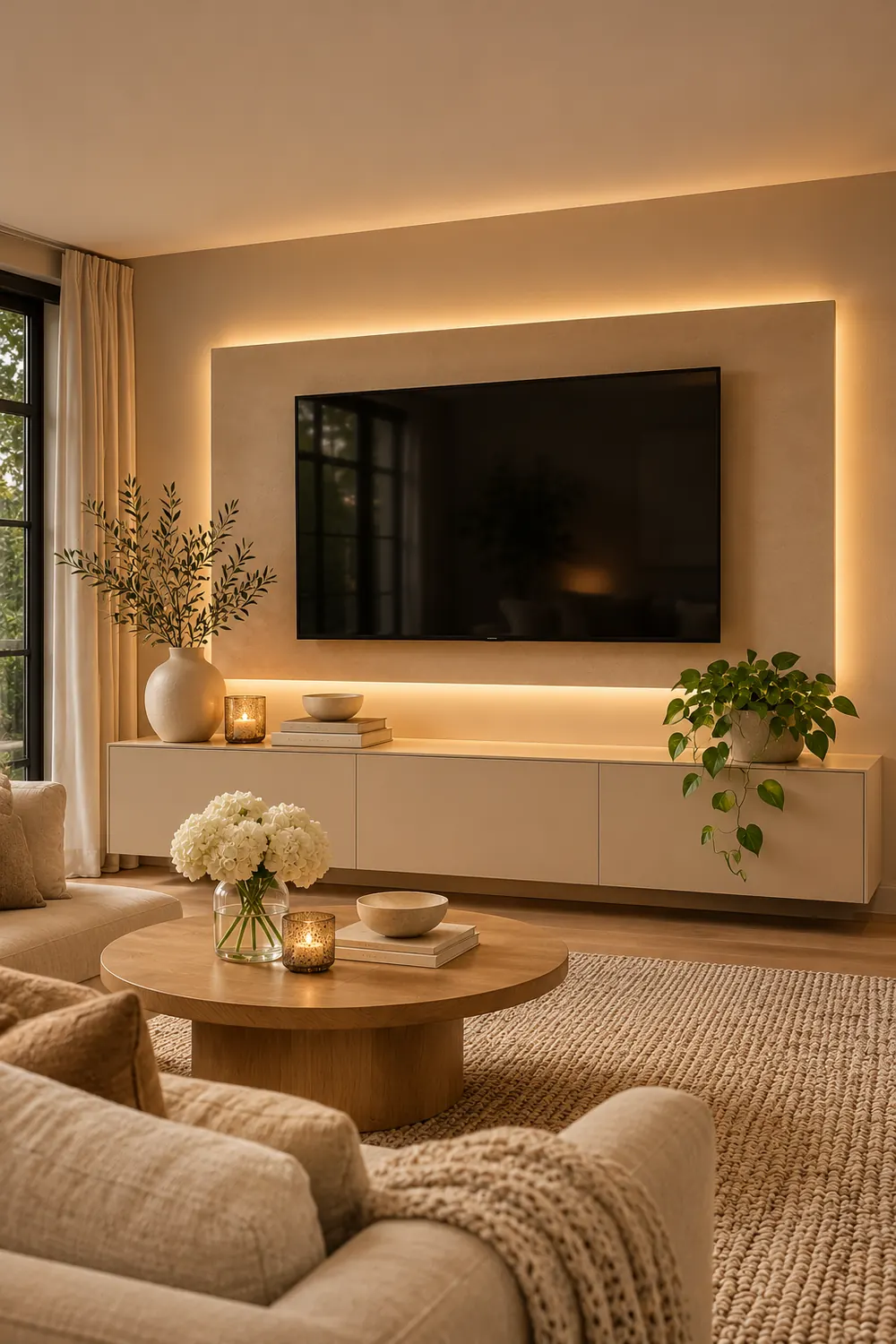
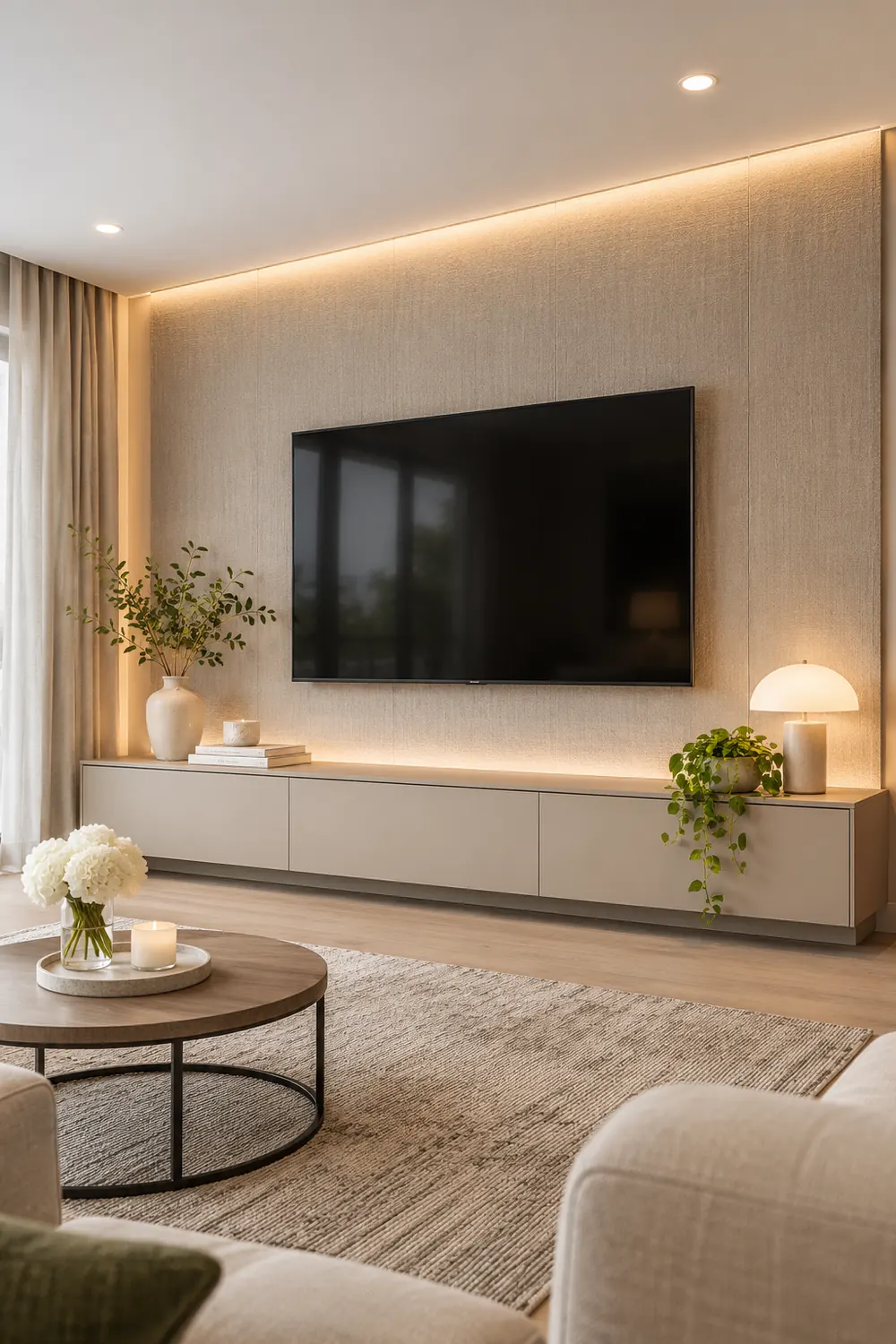
Soft Backlit Panel
Gentle lighting behind a TV panel can add evening atmosphere, provided it doesn’t shine directly into your eyes.
Choose dimmable, warm lighting and hide the strip itself so you see a soft halo instead of individual bright dots.
Test the effect at night before installing permanent channels; what looks subtle in daylight may be too intense after dark.
Japandi Wood Detail
A Japandi-inspired TV wall favors natural materials, pale colors, and useful furniture rather than shelves filled with small objects.
Try one smooth oak panel beside a plaster-colored wall and add a low cabinet with simple, handle-free doors.
Leave a generous amount of negative space around the TV to keep the whole room feeling restful.

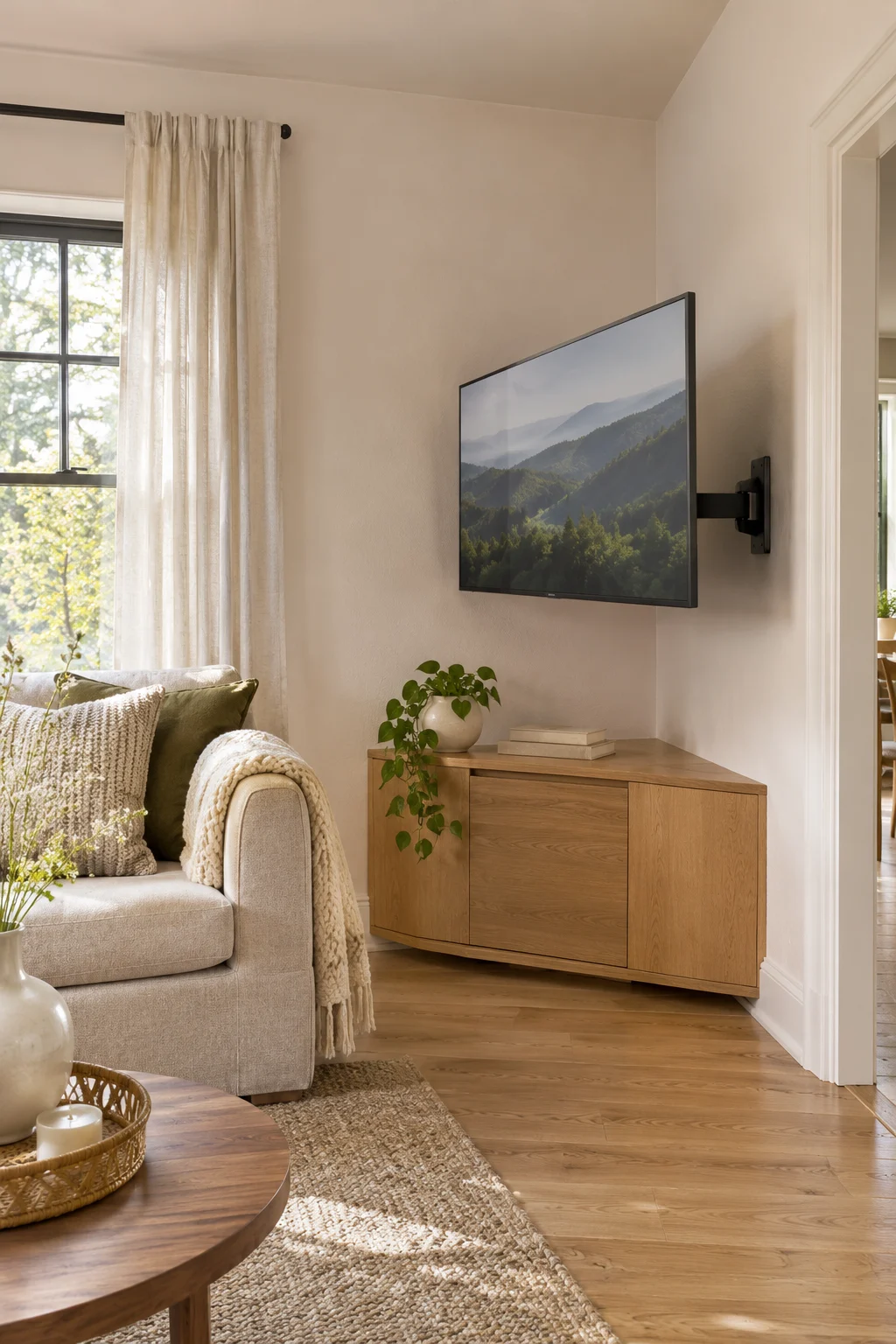
Corner Wall Solution
An awkward corner doesn’t have to force an uncomfortable TV placement or a giant cabinet that blocks your walkway.
A slim articulating mount can help angle the television toward the main sofa, provided the wall and mount are suitable.
Keep adjacent furniture low and plan the cable route for both the tucked-away and extended positions.
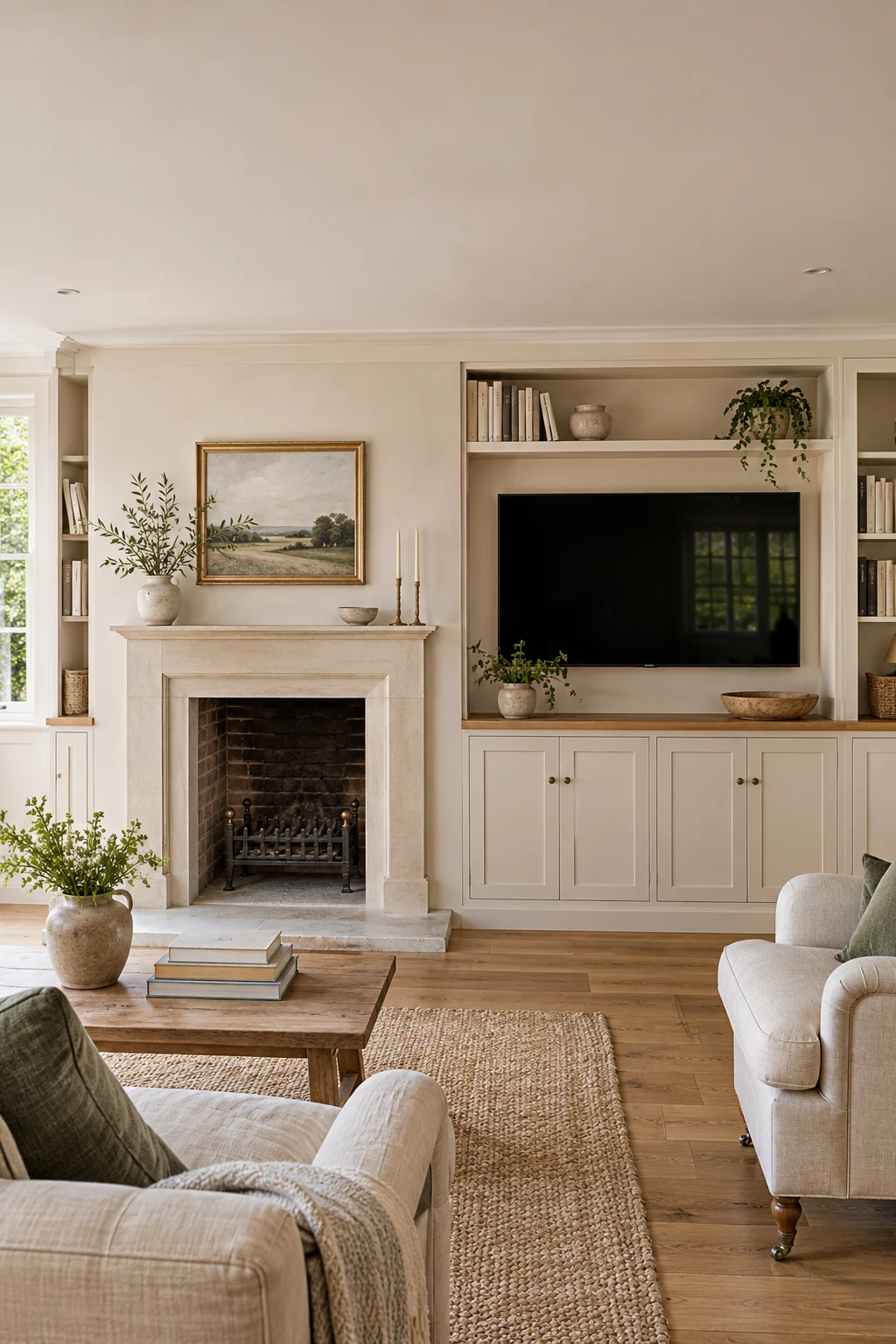
Fireplace Side Layout
If your fireplace already gives the living room a natural focal point,
let the TV occupy a neighboring wall or built-in bay.
This side-by-side approach can keep the screen nearer a comfortable viewing height instead of placing it above a hot mantel.
Connect the two areas through matching cabinetry, paint, or wood details, and check all manufacturer heat-clearance requirements.
Textured Plaster Surround
A subtle plaster-look surround adds depth to a TV wall without the strong lines of slats or panel molding.
Build a shallow feature section around the television, then use an earthy finish such as warm ivory or greige.
Keep the console streamlined and avoid reflective trim; the soft, mineral texture should remain the main decorative feature.
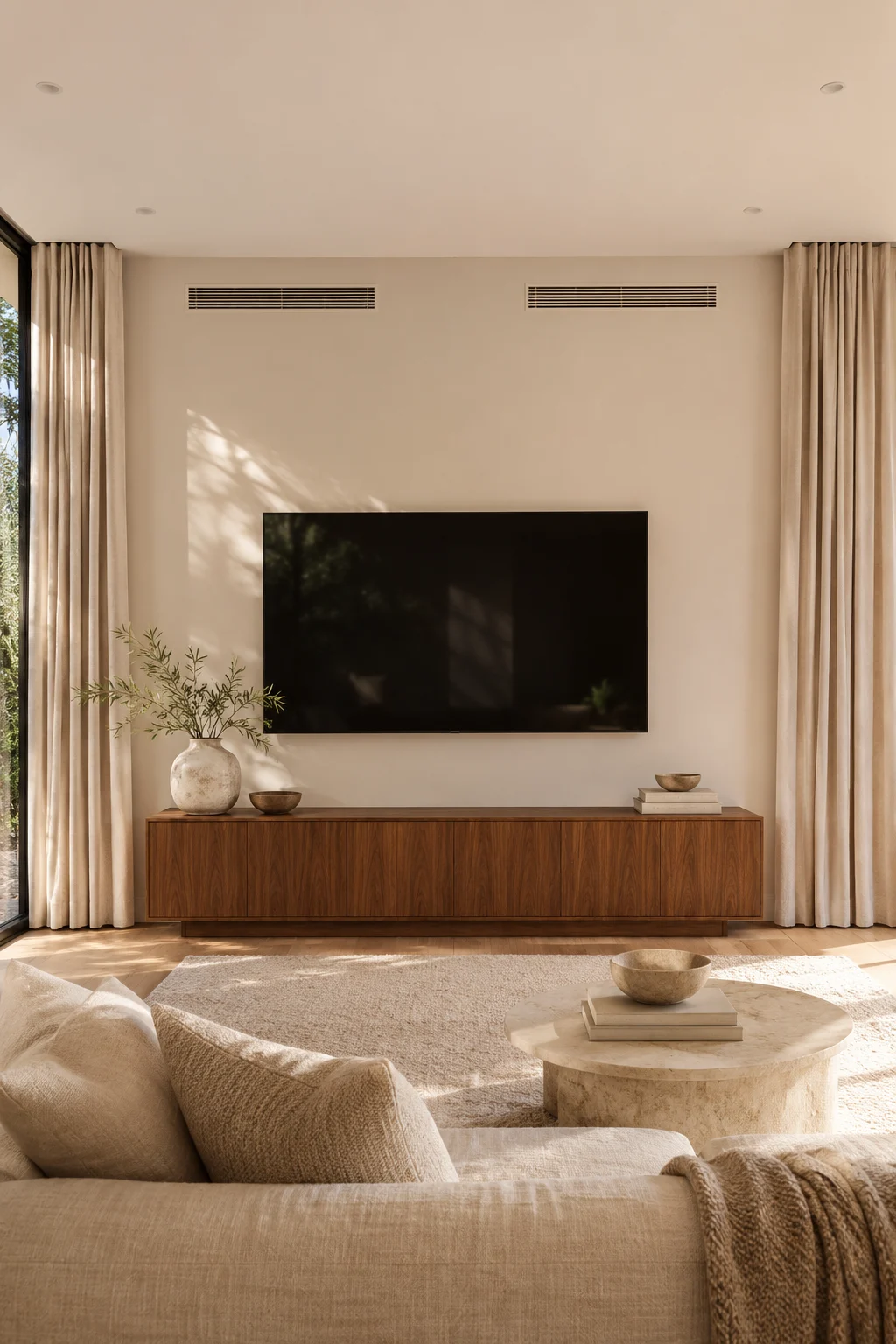
Curtained Media Wall
For a softer, unexpected approach, frame the television area with full-height curtains along the outer edges of a broad wall.
The fabric can visually connect the TV zone to nearby windows,
making a media setup feel more like part of the room.
Keep fabric away from vents, cables, and heat-producing equipment, and avoid hiding a television in a poorly ventilated enclosure.
How to Choose the Right TV Wall for Your Living Room
For a small room, start with a painted backdrop and a low-profile cabinet.
If you need display space, combine closed storage with a small number of floating shelves in the living room rather than filling the entire wall.
For a larger room, full-height cabinetry or a stone-look feature can create balance.
But keep the strongest texture in one place; a slatted panel, dramatic marble, and bright shelf lighting do not all need to compete.
If you already own a media cabinet, work with it first.
Our TV stand decor ideas show how small styling changes can make a screen setup feel more finished without a full remodel.
Plan the TV Height, Wires, and Lighting First
Measure seated eye level from your usual viewing spot, then position the screen accordingly.
The right height depends on the sofa, screen size, and room layout—not a universal number for every home.
Choose a mount rated for your TV and wall construction, and arrange suitable power and signal connections before closing up a panel.
Never run a standard power cord inside a wall where electrical codes require a properly installed in-wall solution.
If the room also has a fireplace, consider a separate TV zone.
Read our living room with fireplace ideas for layouts that let both features work together.
For manufacturer-specific precautions, see Samsung’s wall-mounting guidance, including wall strength, comfortable height, cable planning, and heat around fireplaces.
FAQs
What is the best material for a TV feature wall?
Paint is usually the simplest and most budget-friendly starting point.
Wood slats add warmth, while matte stone-look panels or textured plaster create a more architectural finish.
Choose based on your room’s style, maintenance needs, and how much visual texture you want behind the screen.
How can I decorate a TV wall without making it look cluttered?
Start with one main feature, such as a painted accent, floating cabinet, or shelving.
Keep accessories mostly to the sides, organize the cables, and leave empty space around the TV.
The screen should feel integrated into the room, not buried under decorations.
Are TV walls with fireplaces a good idea?
They can look cohesive, but mounting a TV directly over a fireplace may put the screen too high and expose it to damaging heat.
A neighboring wall or built-in bay is often easier to watch comfortably.
Follow the appliance and TV manufacturers’ clearance requirements.
Conclusion
The most successful TV wall isn’t necessarily the most elaborate one.
Choose the materials, storage, and layout that solve your room’s actual problems,
and you’ll end up with a space that looks good even when the screen is off.

4 Comments