
23 Terracotta Kitchen Ideas
There’s something about terracotta that makes a kitchen feel warm and welcoming before you even start cooking.
From soft clay-colored cabinets to textured backsplashes, this earthy shade brings a natural warmth that works with both modern and rustic kitchens.
In this article, you’ll discover terracotta kitchen ideas and simple ways to bring these warm tones into your own space.
Let’s jump in!
Is Terracotta a Good Color for a Kitchen?
Yes, terracotta is a great kitchen color if you want a warm, inviting space without relying on plain white or gray.
You can use it on cabinets, walls, or backsplashes, depending on how much color you want to bring into your kitchen.
If your kitchen is small, pair soft terracotta with cream cabinets and light countertops to keep the room feeling open and bright.
For a more natural look, combine terracotta with wooden shelves, sage green cabinets, or warm beige walls.
The best part is that you don’t need to renovate everything. Even a terracotta kitchen island or a painted wall can make a noticeable difference.
Soft Terracotta
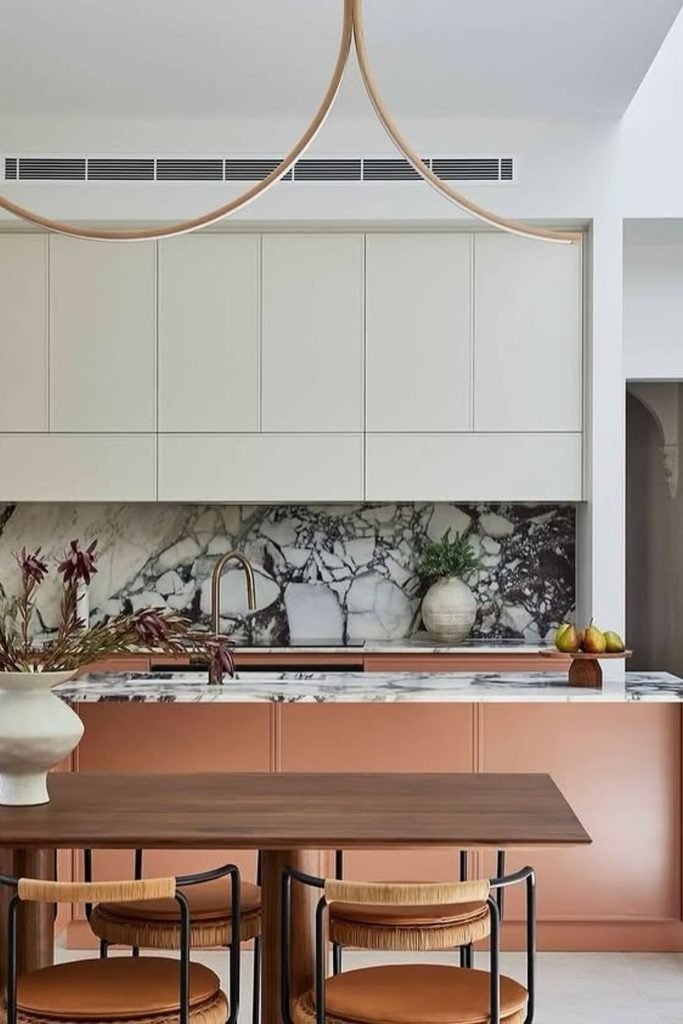
Give a modern kitchen a softer look by painting only the island terracotta, while keeping tall cabinets cream and the surrounding walls white.
Choose a muted pinkish clay shade, then pair it with boldly veined stone and a brass faucet for contrast without extra color.
This approach works especially well in open kitchens, where a wooden dining table can connect the cooking area to the living space.
Rustic Flooring
Let natural terracotta floor tiles bring warmth into a country kitchen instead of covering the cabinets with another strong earthy color.
Pair the floor with pale wood cabinets, a white farmhouse sink, and light stone counters to keep the room fresh and bright.
If you have sunny windows, place a few clay pots with herbs nearby, but keep hanging plants clear of cooking and work surfaces.

Herringbone Tiles
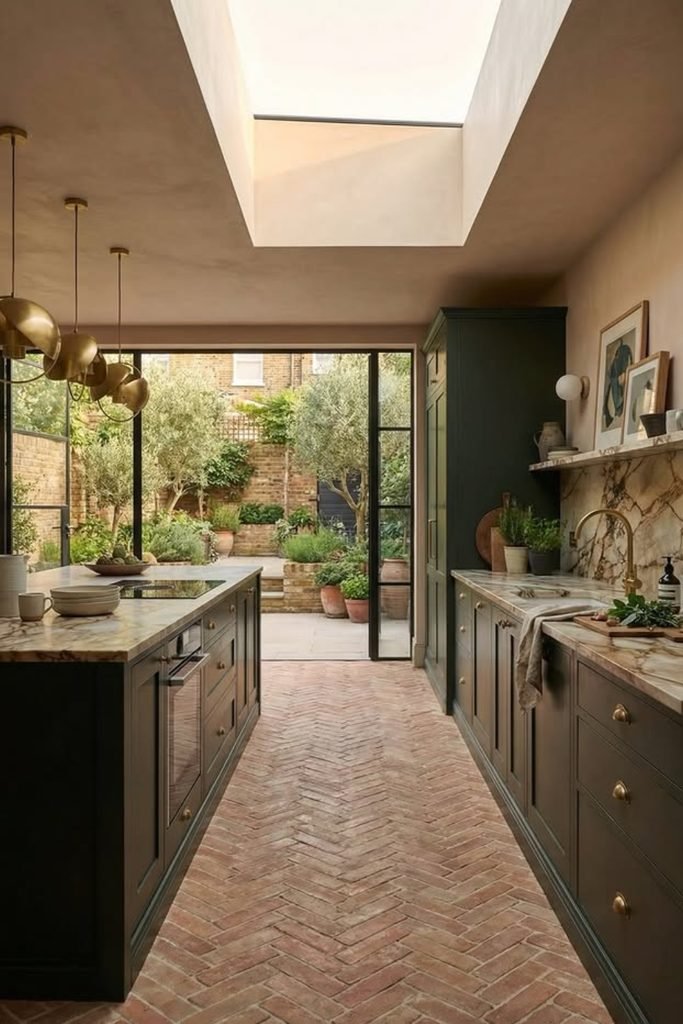
A long kitchen can feel more connected to the garden when you run terracotta herringbone flooring toward wide glass patio doors.
Use deep green cabinets against the warm brick tones, and choose a pale stone countertop to stop the room feeling too dark.
Before laying the tiles, check their slip rating and sealing requirements, particularly around the sink and other areas that get wet.
Earthy Contrast
Try a terracotta island with sage green perimeter cabinets when you want more color but don’t want every surface to compete.
Repeat the brass hardware across both cabinet colors, then choose a softly patterned stone backsplash to tie the entire scheme together.
Keep the floor and countertops lighter than the cabinets, especially if your kitchen relies more on warm artificial lighting than daylight.

Hexagonal Flooring
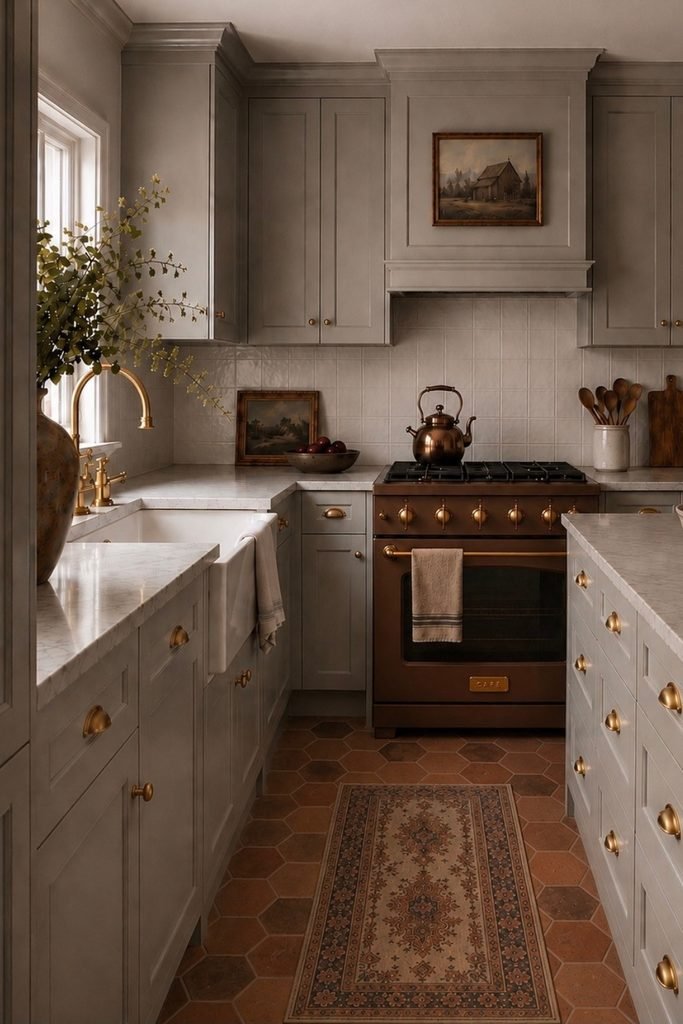
Give a narrow traditional kitchen more character with hexagonal terracotta floor tiles, especially when your cabinets are painted soft gray or taupe.
Choose brass handles and white marble countertops to balance the darker flooring, then add a vintage runner for comfort under your feet.
A copper range cooker can bring the whole look together, but keep surrounding decorations minimal so the small cooking area stays practical.
Exposed Brickwork
Why cover every wall when warm terracotta bricks can give an industrial kitchen plenty of character without adding extra paint or decoration?
Pair exposed brick with dark wooden cabinets and concrete countertops, then install warm shelf lighting to brighten the worktop below the brickwork.
If you use real brick near the sink, check its protective finish and choose an appropriate sealer to make cleaning easier.

Compact Cabinetry
Small kitchens can handle terracotta cabinets beautifully when you keep the upper walls cream and choose simple doors without heavy decorative details.
Install pale countertops and a matching backsplash, then use slim brass handles to make the lower cabinets feel neat and pulled together.
A narrow wooden breakfast counter near the window adds useful seating without taking up valuable floor space or blocking your kitchen walkway.

Tiled Island
Want a kitchen island that feels different from ordinary painted cabinets? Cover its front with slim terracotta tiles in vertical rows.
Continue the same tiles along the backsplash, then use light oak cabinetry and gray countertops to balance the warm pinkish clay tones.
This works beautifully in open kitchens with natural light, where the tiled island can become a feature without adding unnecessary decorations.

Cottage Flooring
Terracotta floors don’t always need matching orange walls. Let their natural color variations stand out against warm wooden cabinets and white surfaces.
Choose large square tiles laid diagonally, then add a round wooden dining table to create a relaxed eating area beside the kitchen.
A woven window shade and simple pendant light will soften the room, especially if you prefer traditional country kitchens over modern designs.

Painted Ceiling
Instead of adding terracotta to your cabinets, try painting the ceiling and upper walls in a muted clay shade for unexpected warmth.
Keep the lower walls, cabinets, and countertops white so the darker color above doesn’t make your small kitchen feel too enclosed.
A few handmade pottery pieces above the cabinets can connect both colors, while sheer curtains allow plenty of daylight into the space.

Brick Herringbone
Brick herringbone flooring brings plenty of texture to a farmhouse kitchen, making it a good choice when your cabinetry has a simple finish.
Pair the reddish floor with muted sage cabinets, a natural wooden island, and open shelves to create a comfortable country kitchen.
Finish with a large copper pendant above the island, but choose warm white walls to prevent the earthy materials from competing.

Seamless Cabinetry
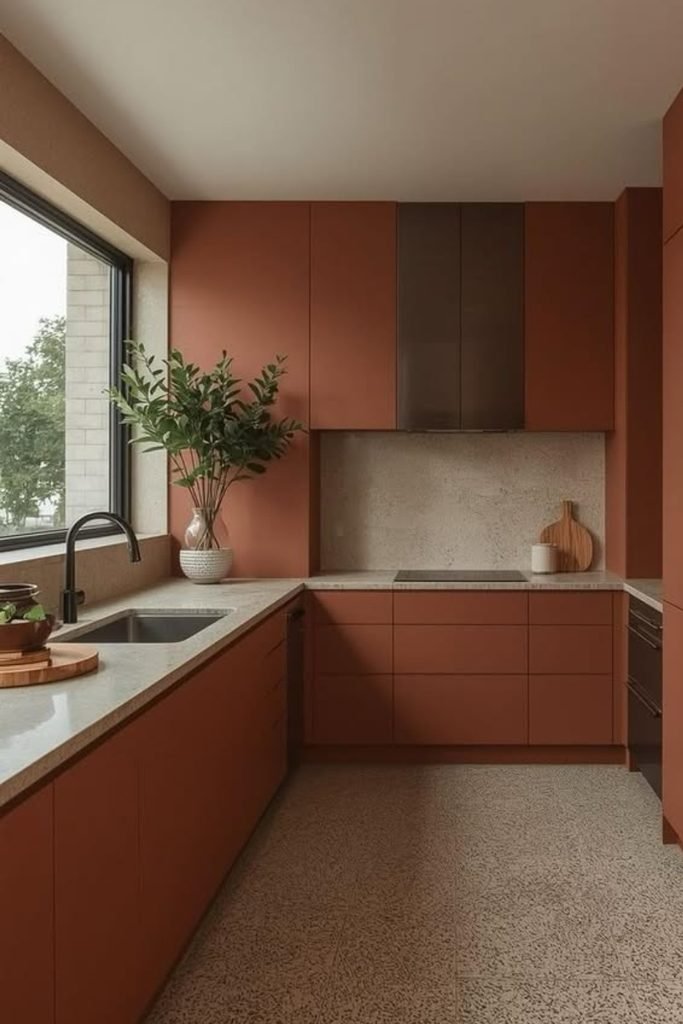
If you prefer a clean modern kitchen, cover both upper and lower cabinets in muted terracotta with flat doors and hidden handles.
Break up the continuous color with pale stone countertops, a matching backsplash, and a light terrazzo floor that keeps everything balanced.
This approach suits kitchens with large windows, where natural daylight can brighten the darker clay shade without needing extra decorative finishes.
Colorful Patterns
Who says terracotta kitchens have to look neutral? Pair warm clay walls with deep green cabinets for a playful Mediterranean feel.
Bring in green geometric backsplash tiles and a red-and-cream checkerboard floor, then use dark wooden furniture to connect the contrasting colors.
A striped fabric hood adds personality, but repeat only a few main colors so the kitchen feels intentional rather than visually crowded.

Textured Plaster
For a Mediterranean kitchen that feels calm and natural, try a textured terracotta plaster finish behind the cooking area instead of tiles.
Keep the lower cabinets cream and use thick stone countertops, allowing the rough wall texture to become the main decorative feature.
Add a matching plaster range hood, woven baskets, and simple pottery, but leave enough clear counter space for everyday food preparation.

Matching Cabinets
A large open kitchen can carry terracotta across every cabinet when you choose a soft brown-based shade instead of bright orange.
Pair the cabinets with light oak flooring, cream countertops, and a pale stone backsplash to give the darker wood tones some contrast.
Choose a matching terracotta island with upholstered stools, then add brass pendant lights to make the spacious kitchen feel warm and connected.

Terracotta Accent
A terracotta feature wall can warm up a compact dining kitchen without covering every cabinet, especially when your layout includes white cabinetry.
Add vertical wood detailing beneath the shelves, then install warm lighting above a marble backsplash to make the wall feel more interesting.
Complete the space with a round wooden table and cream upholstered chairs, keeping the dining area comfortable without overcrowding the narrow kitchen.

Rounded Island
Curved terracotta cabinets are worth trying when you want a modern kitchen that feels softer than one filled with sharp corners.
Choose a rounded island with a pale stone countertop, then repeat the clay shade on the tall cabinets and range hood.
Natural woven pendants and wooden stools bring in texture, while open shelving keeps everyday dishes accessible without adding more solid cabinet doors.

Plaster Hood
Give a traditional wooden kitchen a Mediterranean feel by covering the cooking wall and range hood with a warm terracotta plaster finish.
Keep the lower cabinets in natural wood, then introduce simple stoneware and potted herbs to soften the solid reddish background.
This combination works particularly well with thick wooden countertops, but choose an appropriate washable finish around the stove for easier maintenance.

Country Warmth
You don’t need terracotta cabinets to create a warm country kitchen when clay-colored walls can work beautifully with natural oak cupboards.
Add open wooden shelves for everyday pottery, then use light stone countertops and a farmhouse sink to break up the earthy colors.
Finish with copper pendant lights and a patterned runner, making sure the rug is washable and sits securely along the kitchen walkway.

Clay Cabinets
Terracotta lower cabinets can look clean and modern when you pair them with a cream backsplash, pale counters, and simple black handles.
Keep the tall pantry units in the same clay shade, but leave open wooden shelves near the window for a lighter finish.
If your kitchen has an island, repeat the cabinet color there and use woven stools to bring in texture without adding clutter.

Hexagonal Tiles
Already have cream cabinets? Hexagonal terracotta tiles can give a country kitchen warmth without changing the rest of your fitted furniture.
Choose black countertops for a sharper contrast, then bring in brass taps and wooden shelves to keep the overall look welcoming.
Use simple linen window coverings near the dining area, allowing daylight to show the natural color variation across the tiled floor.

Warm Galley
In a narrow galley kitchen, terracotta walls can make black lower cabinets feel warmer while white upper cabinets keep everything balanced.
Fit chunky wooden shelves along one wall for plants and everyday dishes, leaving the opposite side clear for taller storage.
A long patterned runner helps connect both ends of the kitchen, but choose a nonslip washable design that leaves walkways safe.

Industrial Brick
Exposed brick can be your main terracotta feature when you want an industrial kitchen with warmth but without painted orange cabinets.
Set low wooden cabinets against the brick wall, then use a concrete countertop and island to balance the rich reddish tones.
Floating shelves with concealed lighting will make the wall useful for dishes, while a few trailing plants soften its rough texture.

FAQs
Are terracotta kitchens still in style?
Yes, terracotta kitchens remain a popular choice because their warm, earthy colors work beautifully with both traditional and modern kitchen designs.
For a more updated look, choose muted clay shades, simple cabinets, and light countertops instead of covering every surface in orange.
You can also pair terracotta with natural wood, sage green, or cream to create a kitchen that feels welcoming without looking outdated.
What color countertops go with terracotta kitchen cabinets?
Cream, warm white, and light beige countertops work especially well with terracotta cabinets because they balance the strong color without creating harsh contrast.
If you want a more natural look, choose pale stone with subtle veining or a light wood countertop for a softer finish.
Avoid pairing very busy countertop patterns with heavily textured terracotta cabinets, as too many competing details can make your kitchen feel crowded.
