
22 Taupe Bathroom Ideas
Taupe has a way of making a bathroom feel calm without pushing the space too warm, too cool, or too plain.
It also gives you plenty of room to play with wood, stone, white, black, brass, and softer natural colors.
In this article, you’ll see how to use taupe in a bathroom and pair it with colors and finishes that actually work.
Let’s jump in!
What Colors Go With Taupe In A Bathroom?
Taupe works best with colors that match its undertone, so check first whether your shade leans more beige, brown, gray, or slightly pink.
If you have a warm taupe, pair it with cream, warm white, oak, walnut, brass, olive, or soft brown to keep the room balanced.
If your taupe looks cooler or grayer, crisp white, black, nickel, charcoal, and muted blue usually sit more naturally beside it.
You can also use stone and wood instead of adding more color, especially if you want the bathroom to feel calm without looking flat.
The key is to repeat one or two supporting tones across the vanity, tile, hardware, and textiles so the whole bathroom feels connected.
Slatted Shower
Use vertical wood slats behind the shower when your taupe bathroom needs texture, because the narrow lines add warmth without adding another color.
Keep the surrounding walls and floor pale, then repeat the wood tone on the vanity so the shower feature feels connected, not isolated.
Warm brass fixtures and hidden lighting work especially well here, helping the taupe surfaces feel softer while keeping the overall look clean.

Plaster Warmth
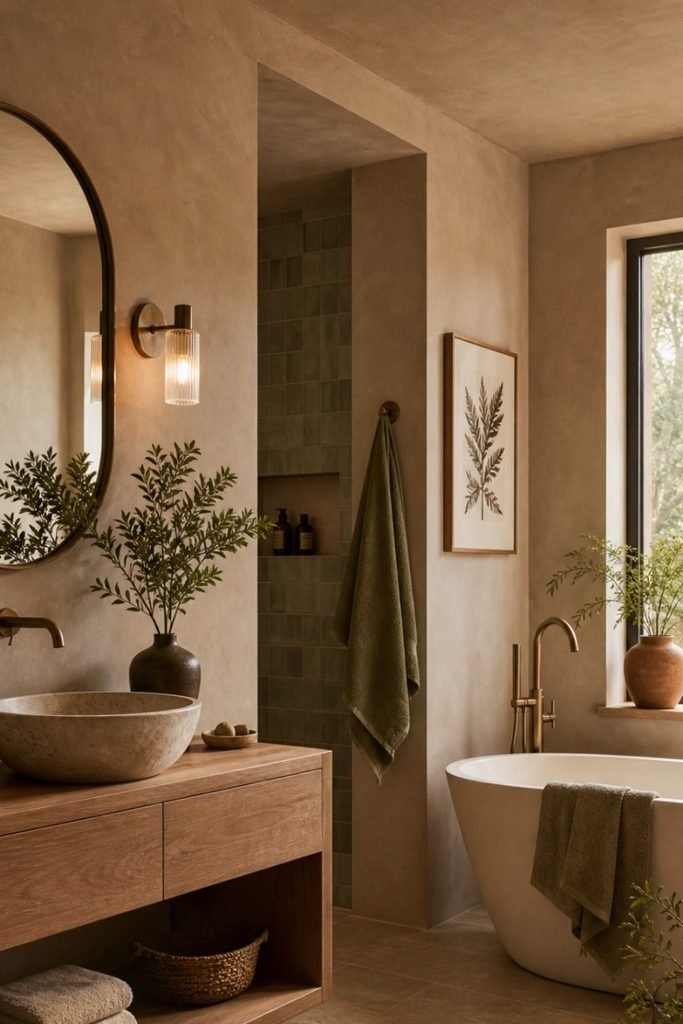
Choose a plaster-style taupe finish when you want the bathroom to feel earthy and relaxed instead of polished or overly matched.
Pair it with a light wood vanity, a stone basin, and muted green tile so each material adds depth without fighting the neutral base.
This approach suits bathrooms with natural light best, because daylight brings out the subtle wall movement and keeps the brown undertones from feeling heavy.
Layered Lighting
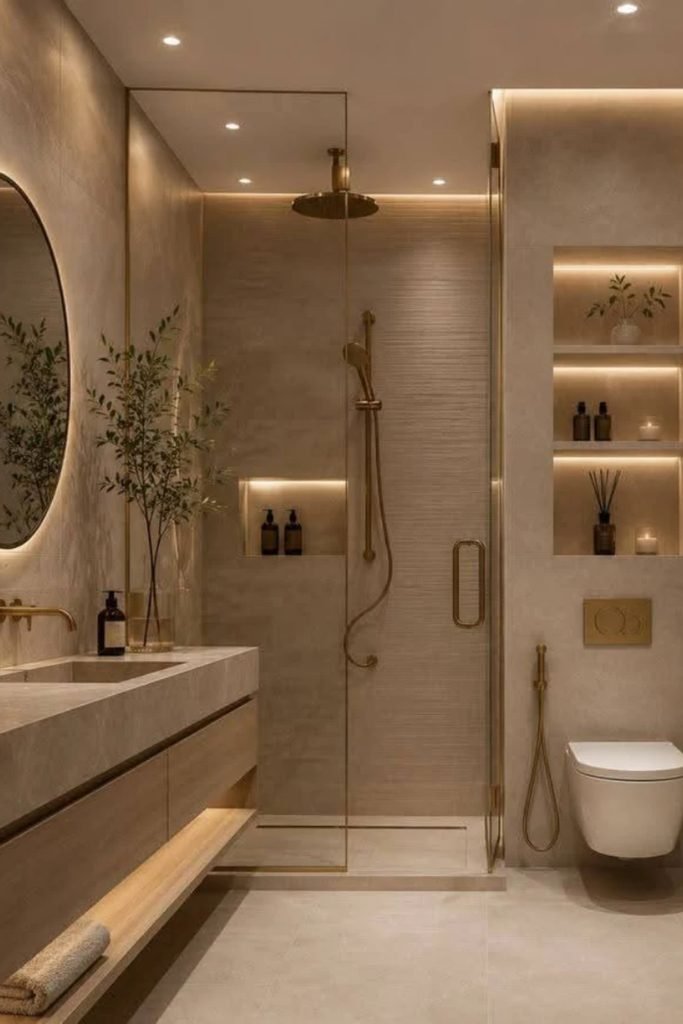
Built-in lighting can make a narrow taupe bathroom feel much more considered, especially when shelves and niches are already part of the layout.
Add warm LED strips inside recessed storage and beneath the vanity, then keep the main surfaces simple so the light becomes the feature.
Use this in windowless or compact bathrooms where layered lighting matters more, and choose warm bulbs to stop taupe from turning flat or gray.
Walnut Contrast
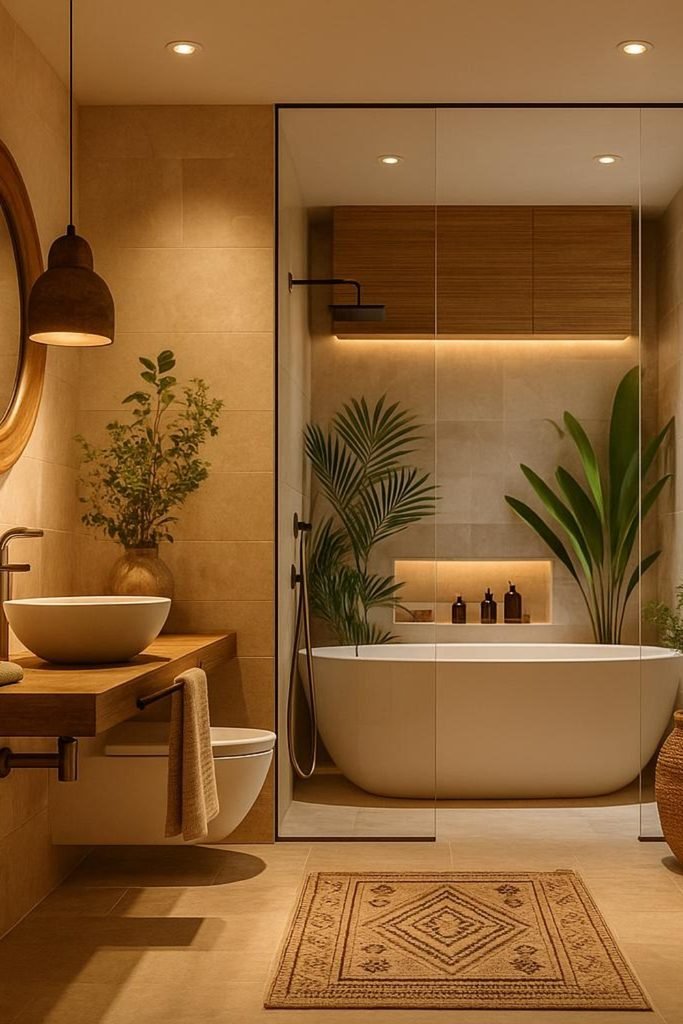
Bring in deeper wood tones when a fully taupe bathroom starts feeling too pale, because darker timber gives the room a clear visual anchor.
Use the wood on one strong element, such as the vanity or upper storage, then let the walls and floor stay quietly neutral.
Green plants and woven textures fit this look well, but keep them limited so the bathroom still feels calm rather than heavily decorated.
Seamless Taupe
Go nearly monochrome when you want a narrow bathroom to feel calmer, because repeated taupe surfaces reduce visual breaks across the room.
Keep contrast concentrated in black fixtures and a floating wood vanity, which gives the soft palette enough definition without making it busy.
Recessed shelves with warm lighting work especially well here, adding storage and depth while preserving the clean lines that make taupe feel modern.

Textured Balance
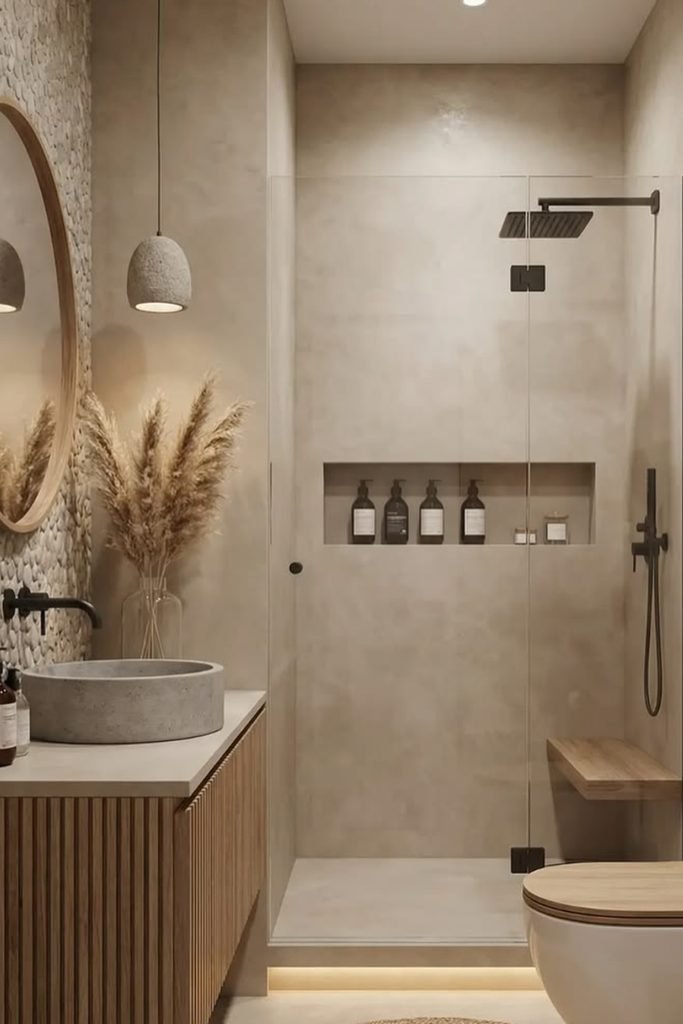
If smooth taupe walls feel too plain, introduce one heavily textured surface near the vanity so the neutral scheme gains depth immediately.
Pair that texture with ribbed wood cabinetry and a stone basin, keeping the shower walls quiet so the materials do not compete.
Black taps and shower hardware sharpen the soft palette, making this approach useful when you want warmth without losing a crisp contemporary edge.
Woven Texture
Use small woven-look tiles behind the vanity when a simple taupe palette needs movement, because the pattern adds interest without introducing bold color.
Balance the busy surface with a thick stone counter and plain vessel sink, letting larger solid shapes keep the wall from feeling restless.
A dark wood shelf and black-framed mirror add just enough contrast, making this combination especially effective in compact bathrooms with natural light.

Budget Refresh
You do not need a full remodel to bring taupe into a bathroom; painting the upper walls can change the mood quickly.
Keep existing white fixtures and pale wall tiles if they are in good condition, then let the taupe paint provide the warmth.
A round black mirror gives the room a stronger focal point, while the gray floor stops the neutral palette from looking overly beige.

Grounded Vanity
Let the vanity carry the deeper taupe when you want a classic bathroom to feel grounded without making every surface equally heavy.
Pair it with warm stone counters, soft beige walls, and brushed metal so the cabinetry feels rich instead of too dark.
This works especially well in narrow bathrooms with good daylight, where the darker base adds contrast while the lighter shell keeps things open.
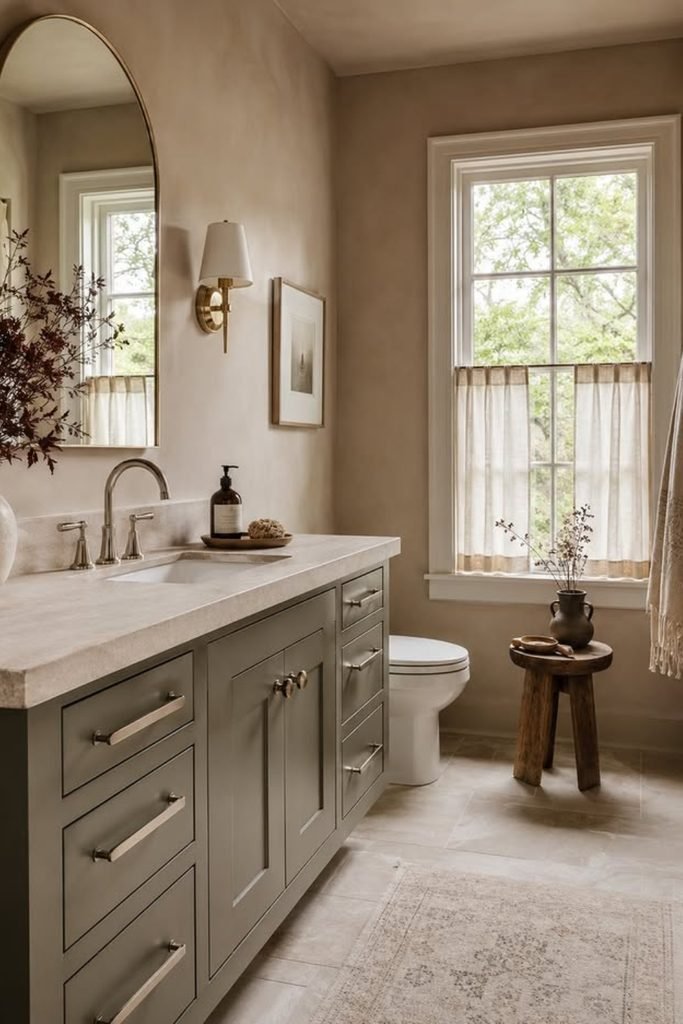
Stone Calm
Use large taupe stone panels when you want a calm bathroom with fewer visual breaks and a cleaner, more modern finish.
Keep the vanity pale wood and the fixtures simple, because too many competing materials would weaken the quiet effect of the stone.
This approach suits bathrooms with strong natural light, where subtle veining can show clearly without making the whole room feel cold.
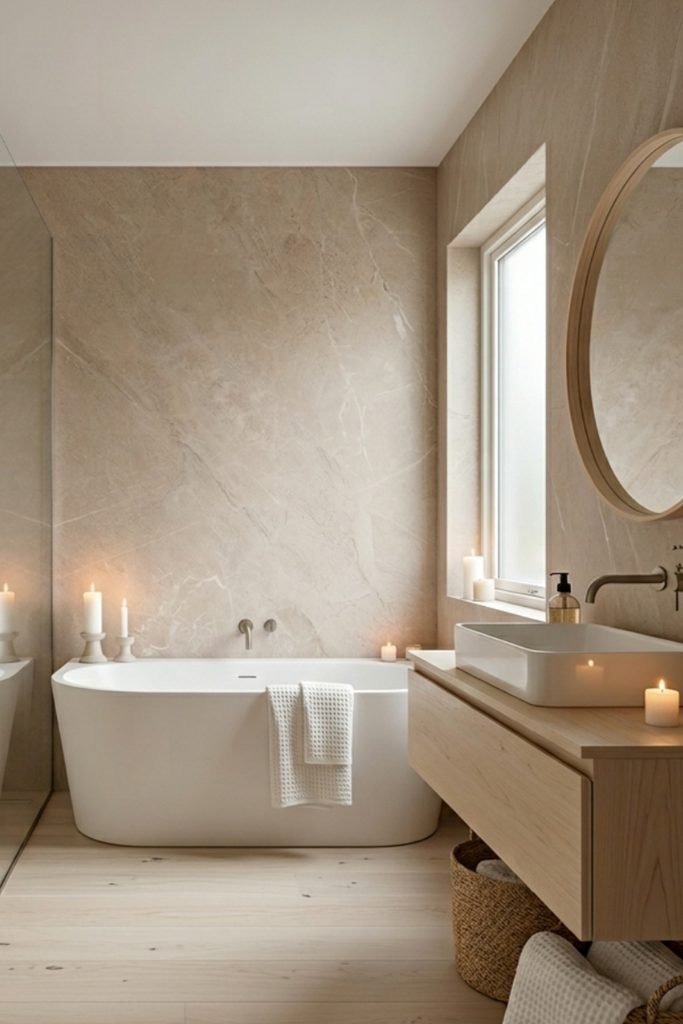
Moody Taupe
Choose a deep brown taupe for walls when you want the bathroom to feel dramatic, then use white fixtures to cut through the darkness.
Warm wood cabinetry and brass details stop the palette from feeling harsh, while the dark envelope gives the room a stronger sense of depth.
This works best in bathrooms with a large window or strong layered lighting, because darker taupe needs enough brightness to stay inviting.

Veined Walls
Bring veined taupe stone across the shower walls when you want texture to do the decorating instead of relying on extra colors.
Match the vanity to a quieter taupe tone, then use black fixtures sparingly so the stone pattern remains the main visual feature.
Large floor tiles keep the base calm and practical, making this setup especially useful when the walls already carry plenty of movement.
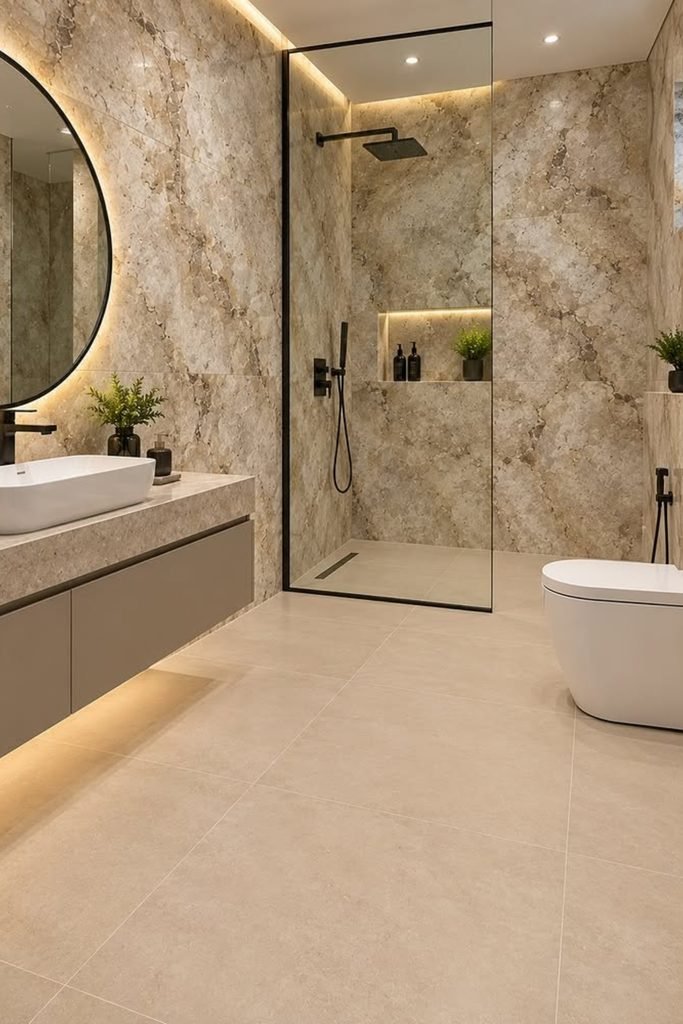
Tile Contrast
Mix slim vertical taupe tiles with larger stone panels when you want the shower area to feel detailed without becoming visually crowded.
Keep the smaller tiles above the bath line and use quieter stone below, so the change in scale feels intentional and balanced.
This layout works well in compact bathrooms, where vertical lines add height while pale grout keeps the whole wall soft and connected.
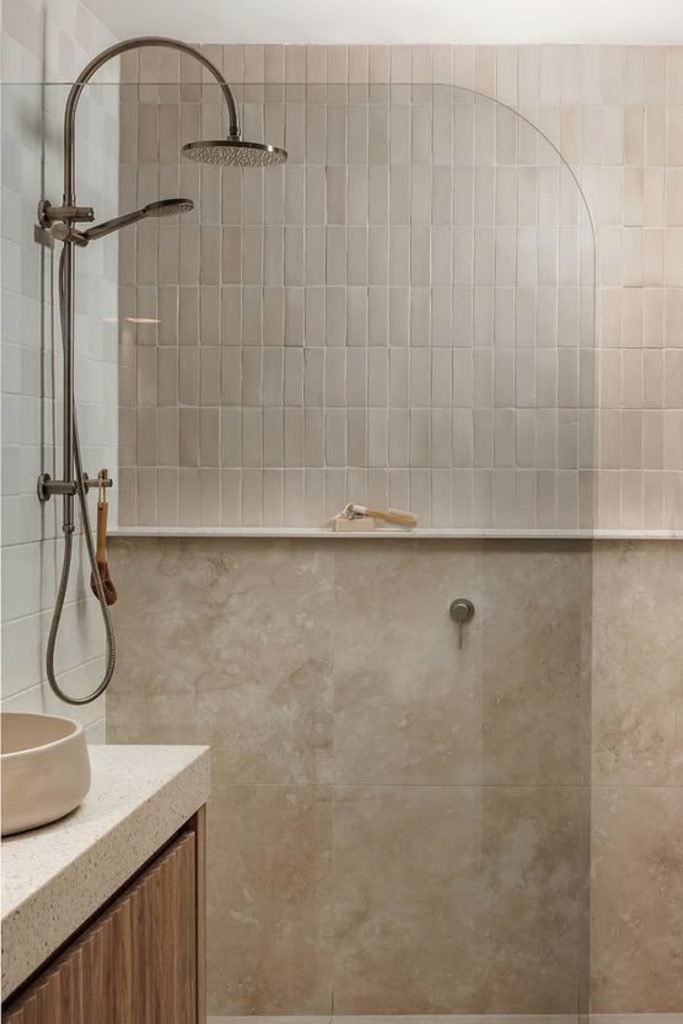
Warm Layers
Use warm taupe stone, fluted wood, and brass together when you want a polished bathroom that still feels comfortable rather than overly formal.
Let the stone cover the main surfaces, then repeat the wood on the vanity and wall panels to create a consistent rhythm.
Soft lighting behind the mirror and under the vanity adds depth, making this setup especially effective in long, narrow bathrooms.
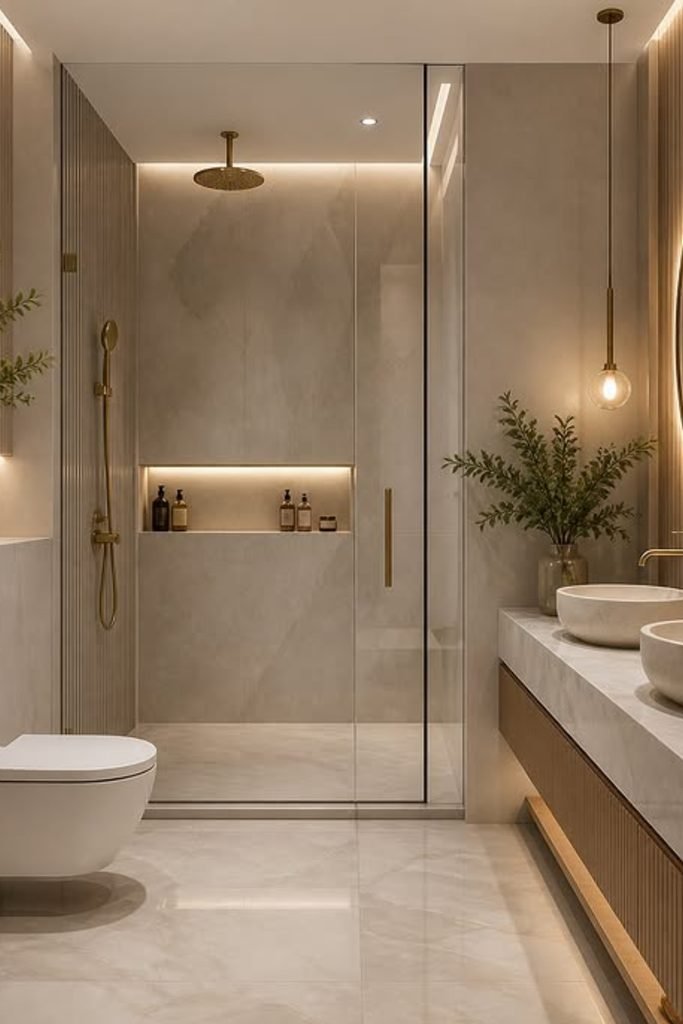
Half Height
Try half-height taupe tile when you want color and texture near the bath without covering every wall from floor to ceiling.
Run the tile in a straight line around the room, then use warm off-white paint above to keep the upper walls light.
This works especially well in bathrooms with good daylight, where deeper wood cabinetry can add contrast without making the space feel heavy.
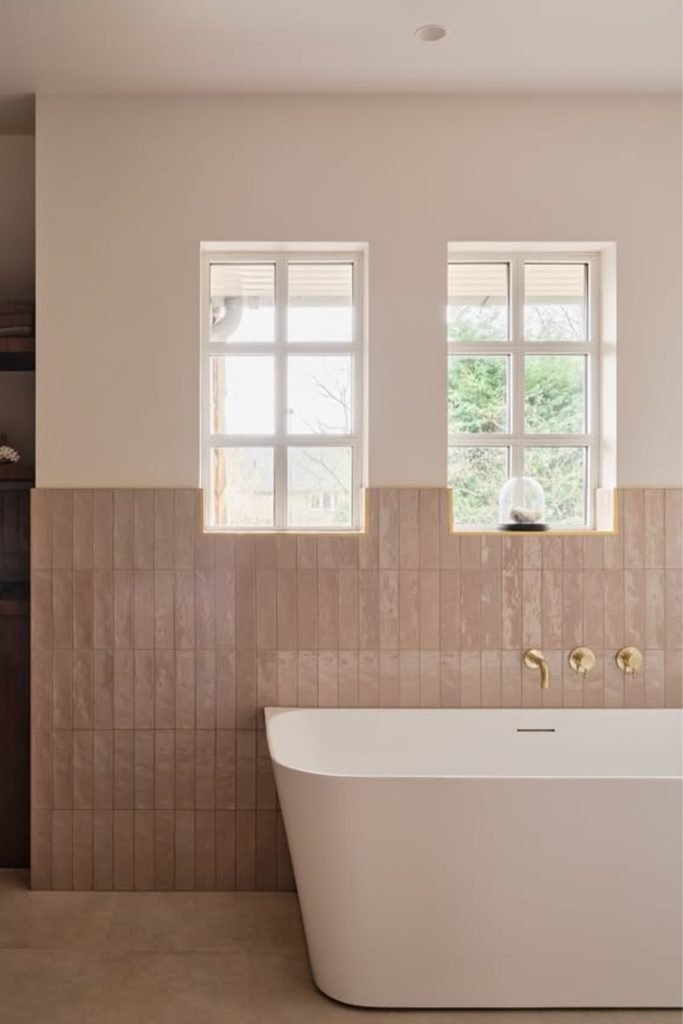
Simple Refresh
Keep taupe mostly on the upper walls when you already have white fixtures and textured wall panels that you want to keep.
The warmer paint softens the white surfaces, while dark cabinetry and black window treatments give the room enough contrast to feel finished.
This approach suits a simple refresh, because you can change the wall color and a few accents without replacing major bathroom pieces.
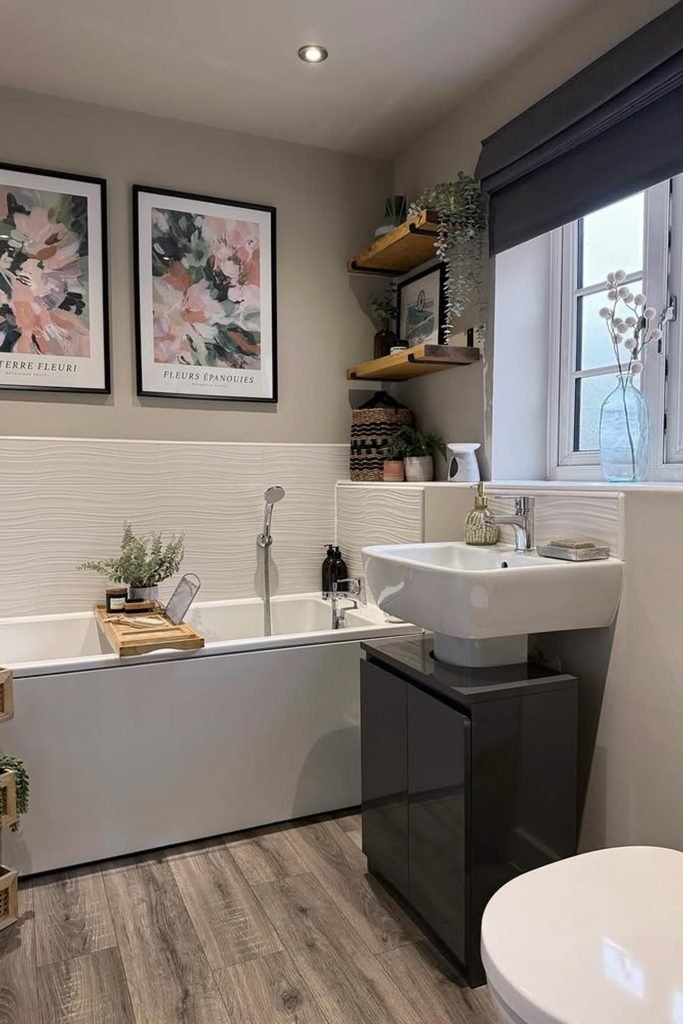
Soft Mosaic
Use small taupe mosaic tiles around the bath when you want gentle color variation without letting one large surface dominate the room.
Pair them with a white freestanding tub and bold marble panel, so the smaller tiles soften the stronger stone movement nearby.
This works especially well in bright bathrooms, where natural light can reveal the subtle beige and gray shifts across each tile.
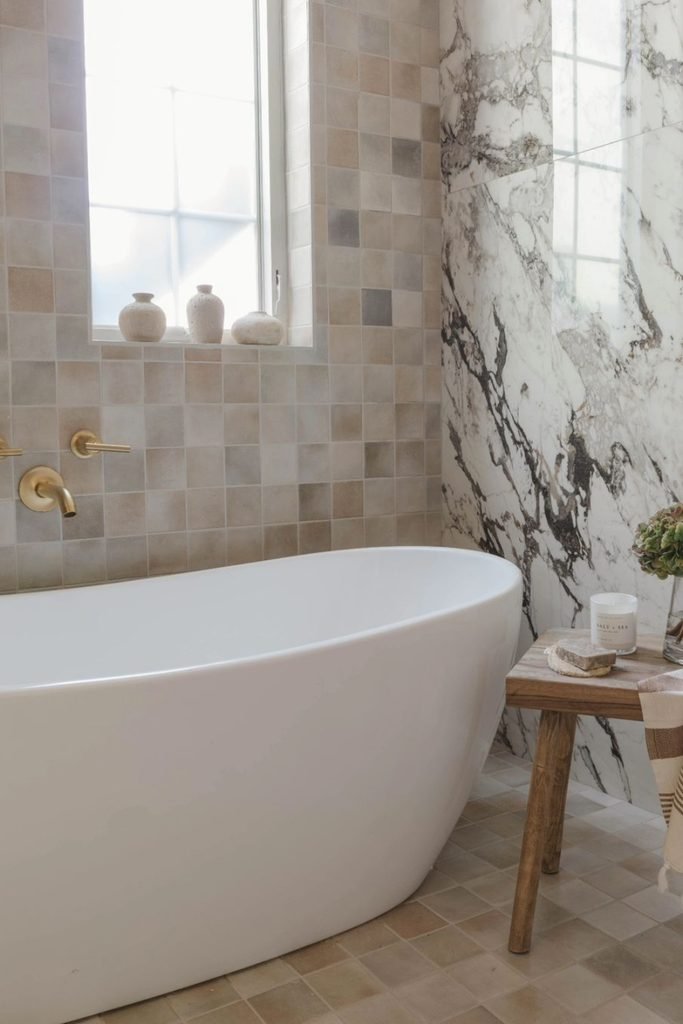
Dark Contrast
Bring in dark wood cabinetry when pale taupe walls need structure, because the deeper finish gives a narrow bathroom more visual balance.
Keep the shower light and simple, then repeat black through the frame, radiator, and fixtures to connect the darker details.
This setup suits modern bathrooms with clean lines, where one strong wood tone can add depth without making the room feel crowded.
Classic Taupe
Choose warm taupe paint with traditional wall molding when you want the bathroom to feel settled, soft, and slightly more formal.
Add a light wood vanity and pale stone top so the room keeps its warmth without becoming too dark or overly matched.
This approach works beautifully in bathrooms with tall windows, because natural light helps the taupe walls feel rich rather than heavy.

Plaster Shower
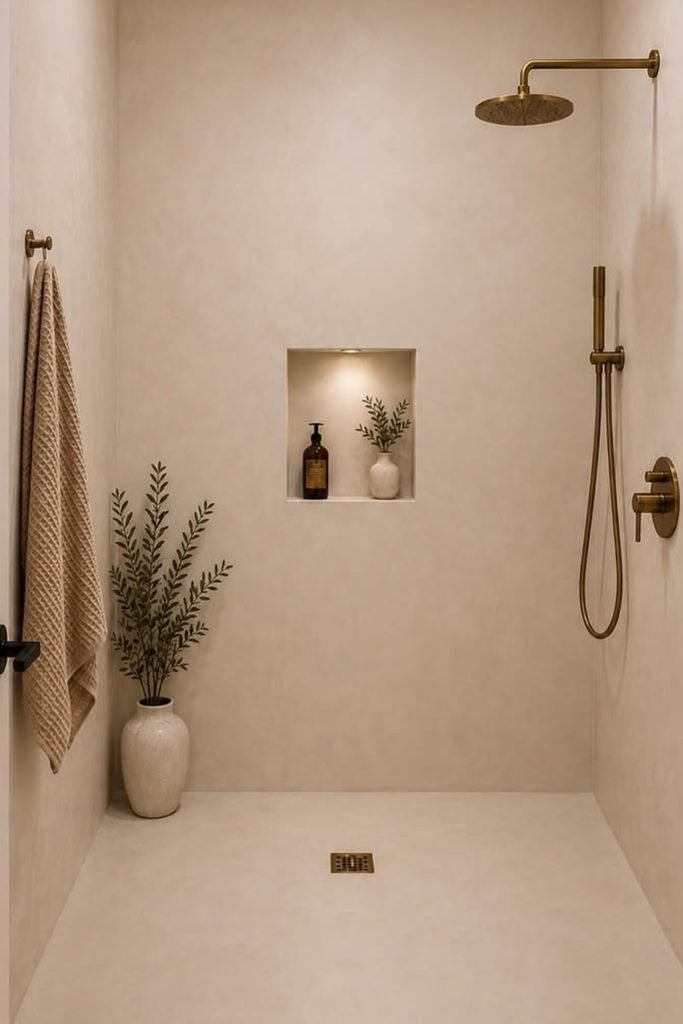
Use a seamless plaster-style taupe finish in the shower when you want fewer grout lines and a softer, more continuous look.
Keep the walls almost bare, then let aged brass fixtures and one recessed niche add warmth without breaking the calm surface.
This idea works best in walk-in showers, where a simple palette can make the enclosure feel larger, quieter, and easier to maintain.
Cocooning Stone
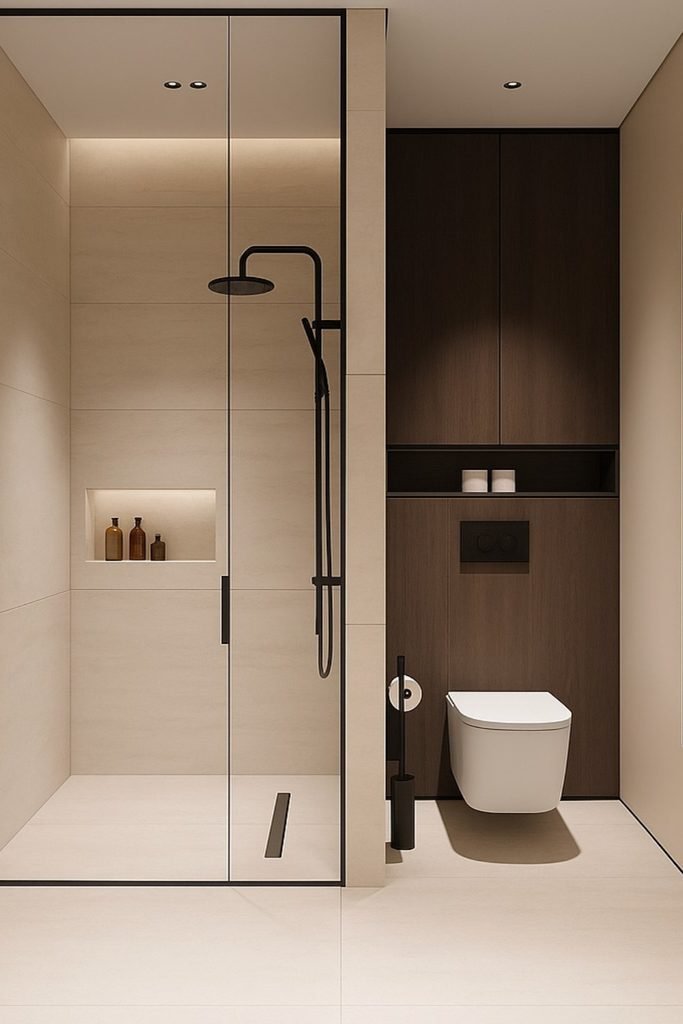
Use deeper taupe stone across walls and floor when you want a compact bathroom to feel cocooned instead of visually chopped up.
Break the darkness with warm wood cabinetry, woven pendant lights, and soft niche lighting so the room still feels welcoming.
Black shower framing works here because it disappears into the darker palette, while a white toilet and rug add needed relief.

Tailored Taupe
Choose a taupe vanity with classic paneling when you want warmth in a bright bathroom without losing the clean white base.
Pair it with white marble and brass hardware, letting the cabinetry carry the color while the surrounding surfaces stay light.
This works especially well in traditional or transitional bathrooms, where an arched opening and simple molding can support the softer taupe finish.

FAQs
Does Taupe Work in Small Bathrooms?
Yes, but lighter taupe shades usually work better because they keep the room warm without making narrow walls feel too heavy or closed.
Use larger tiles, simple grout lines, and good lighting to keep the surfaces connected, especially when the bathroom has little natural daylight.
If you want more depth, add darker taupe through the vanity or accessories instead of covering every wall with the deeper shade.
How Do You Keep Taupe From Looking Dated?
Start by avoiding too many yellow-beige finishes together, because that combination can push taupe toward an older builder-style bathroom look.
Use cleaner lines, larger tiles, warm wood, simple hardware, and one or two contrasting finishes to make the neutral palette feel current.
If existing taupe tile must stay, update the paint, mirror, lighting, and vanity first because those changes can shift the whole room quickly.
