
22 Butter Yellow Kitchen Ideas
Butter yellow brings just enough color to make a kitchen feel warm, sunny, and full of character.
You can pair it with natural wood, stone, soft whites, or deeper accents to shape anything from a modern kitchen to a cozy cottage look.
In this article, you’ll find butter yellow kitchen ideas and practical ways to use this soft shade throughout your space.
Let’s jump in!
Which Color Compliments Butter Yellow?
Warm white is the easiest match because it keeps butter yellow soft and stops the kitchen from feeling too busy.
If you want more contrast, pair it with sage green, muted blue, burgundy, or a deeper brown for a stronger, more balanced look.
Natural wood also works well because it adds warmth without competing with the yellow, especially if you are using the color on cabinets.
For a cleaner kitchen, bring in marble, light stone, or soft gray finishes to break up the warmth and keep everything looking fresh.
Choose your second color after checking the flooring, counters, and lighting because these finishes can make butter yellow look warmer, cooler, or more muted.
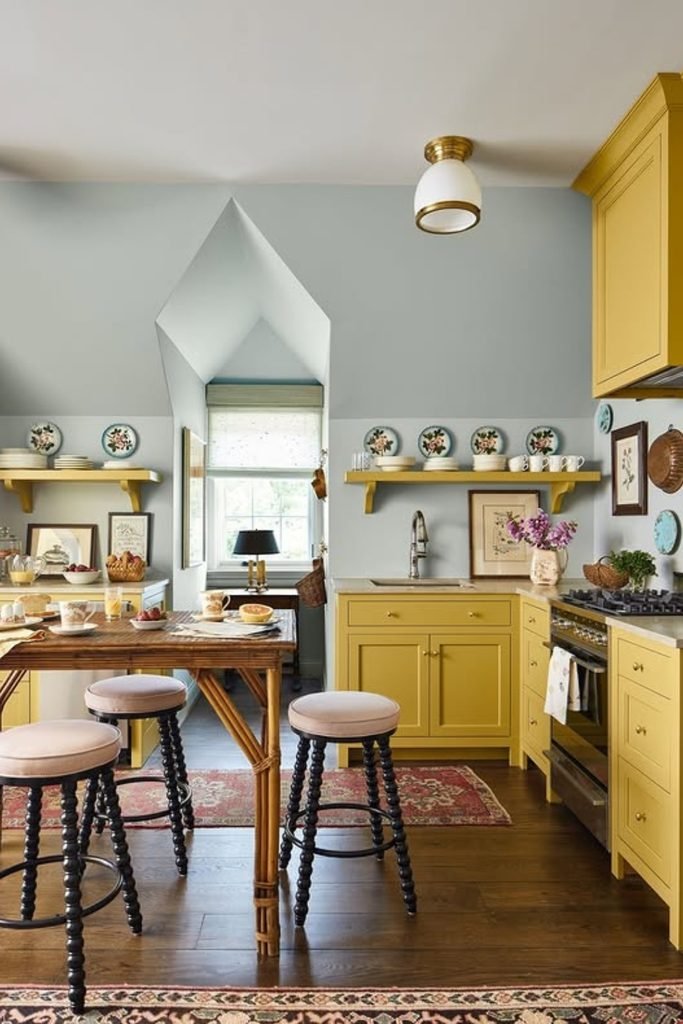
Blue Balance
Cool blue-gray walls can calm a stronger butter yellow, giving traditional cabinets room to feel warm without making the whole kitchen heavy.
Use dark wood furniture and patterned rugs when you want extra depth, especially in older kitchens with detailed cabinetry and brass fittings.
Keep open shelves simple and repeat the cabinet color sparingly, so the yellow feels connected across the room rather than overly dominant.
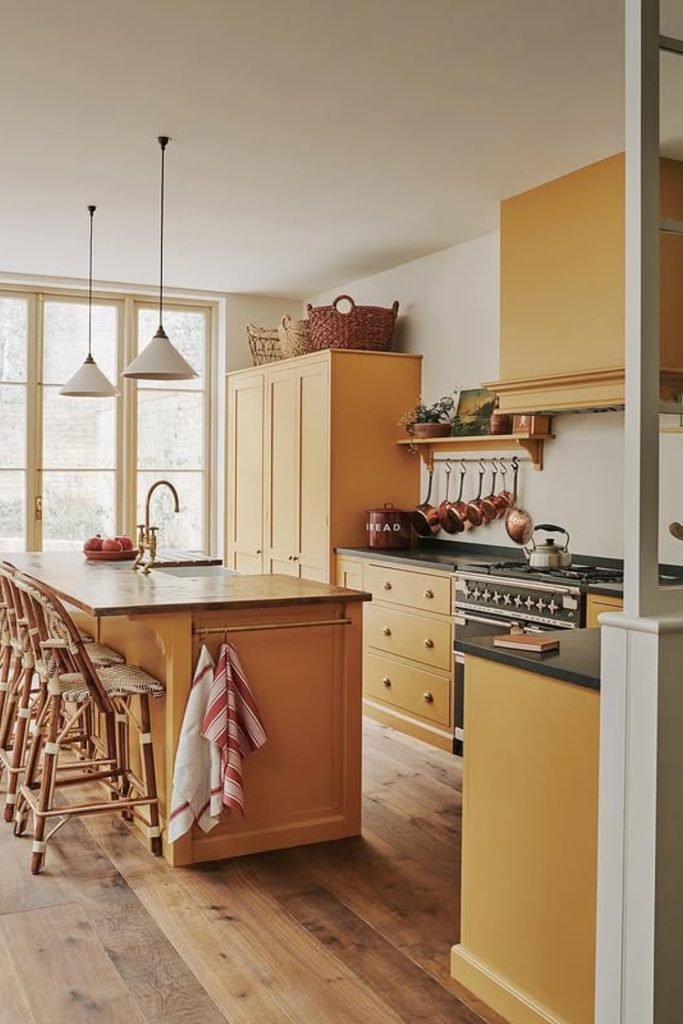
Terracotta Island
If full yellow cabinetry feels too one-note, bring a deeper terracotta island into the center to create warmth with stronger visual contrast.
Natural wood floors and woven stools soften both colors, making this combination especially useful in large kitchens with plenty of daylight.
Choose dark counters around the range to ground the palette, then keep nearby walls light so the warmer finishes never start competing.
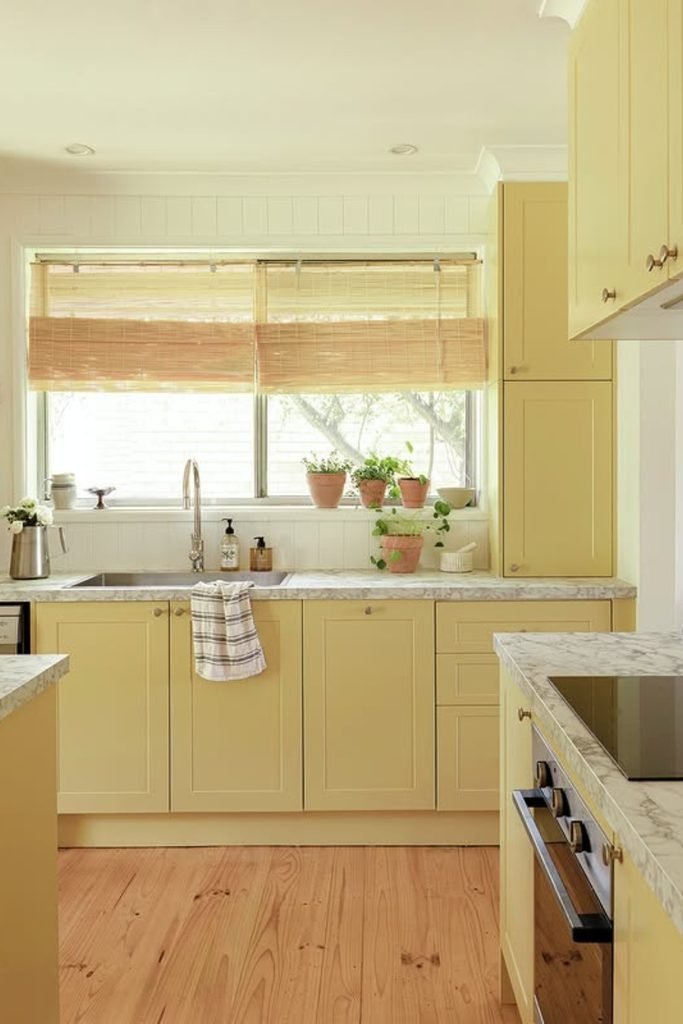
Marble Lightness
A pale butter shade works beautifully in bright kitchens because sunlight keeps the color fresh while the softer tone avoids looking overly sharp.
Pair it with lightly veined marble when you want a clean finish that still has movement, rather than adding another strong kitchen color.
Warm timber floors and woven blinds finish the look gently, making this approach ideal for relaxed kitchens that need color without heaviness.
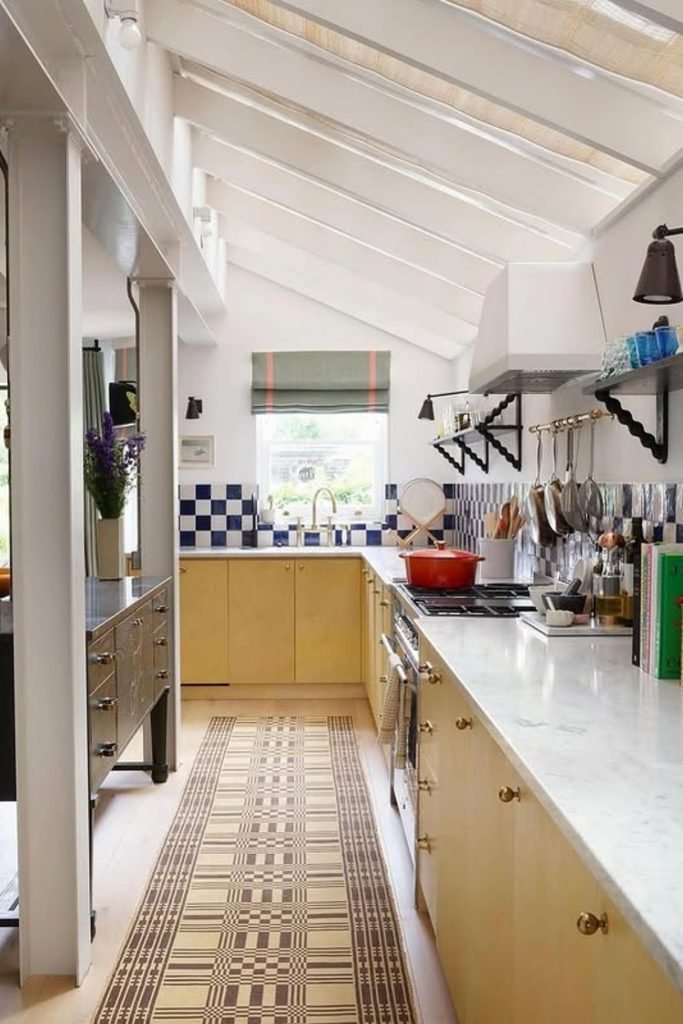
Checker Contrast
In a narrow galley, butter yellow can add warmth without shrinking the space when you balance it with crisp white counters overhead.
A blue-and-white checker backsplash brings cooler contrast and keeps the cabinetry from reading too creamy, especially under strong skylight or window light.
Finish with dark shelving and small brass details for definition, then use one bright accent to keep the long layout feeling lively.
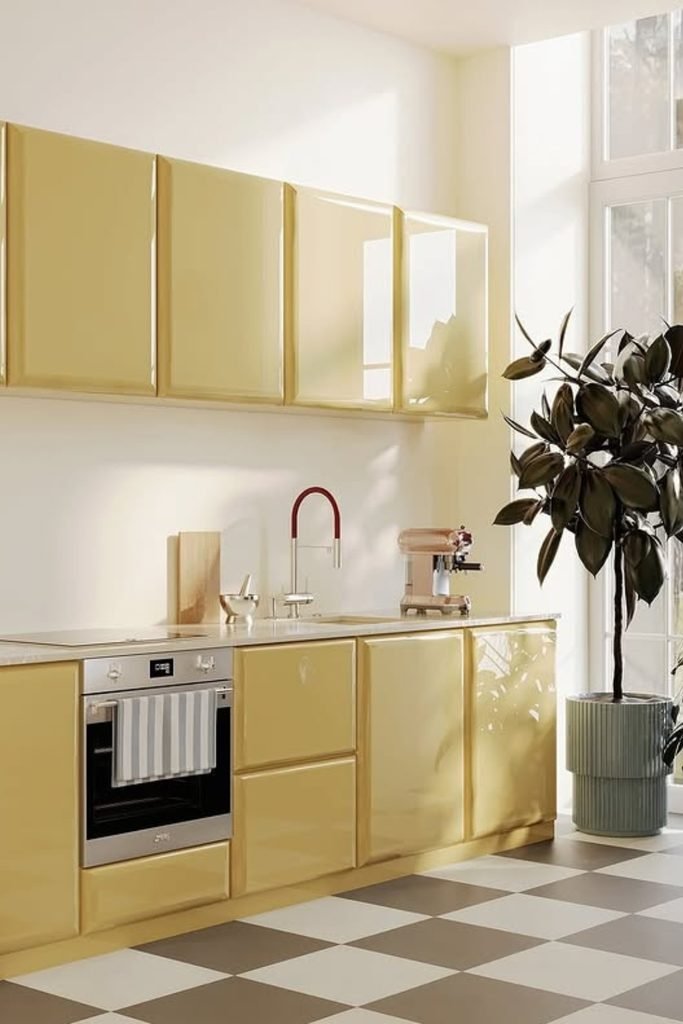
Glossy Butter
Glossy butter yellow cabinets give a compact kitchen a cleaner, more modern edge, especially when you want color without traditional detailing.
Pair the reflective finish with a simple checker floor and pale walls, then let one red accent stop the palette feeling overly sweet.
This approach suits bright kitchens best, where daylight can bounce across the cabinet fronts and keep the yellow looking crisp rather than heavy.
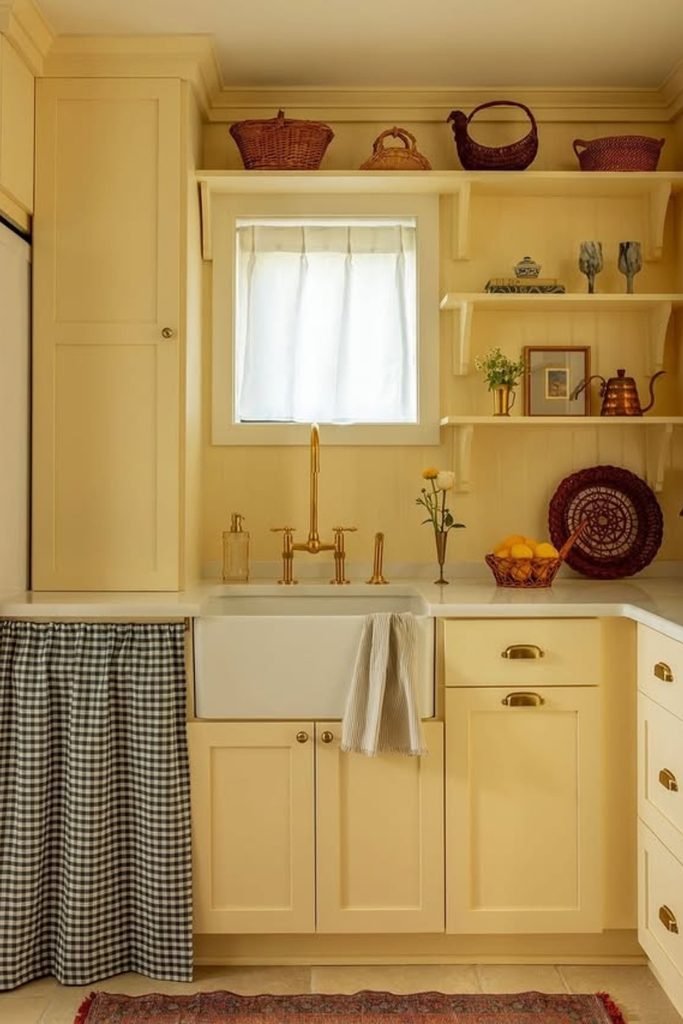
Cottage Butter
For a softer cottage look, carry butter yellow across cabinetry and walls so the room feels warm, settled, and intentionally wrapped in color.
Break up the yellow with a white apron sink, gingham fabric, and brass hardware, which add contrast without disturbing the gentle palette.
Wicker baskets and open shelves make this treatment feel especially natural in smaller traditional kitchens where storage also needs to look decorative.
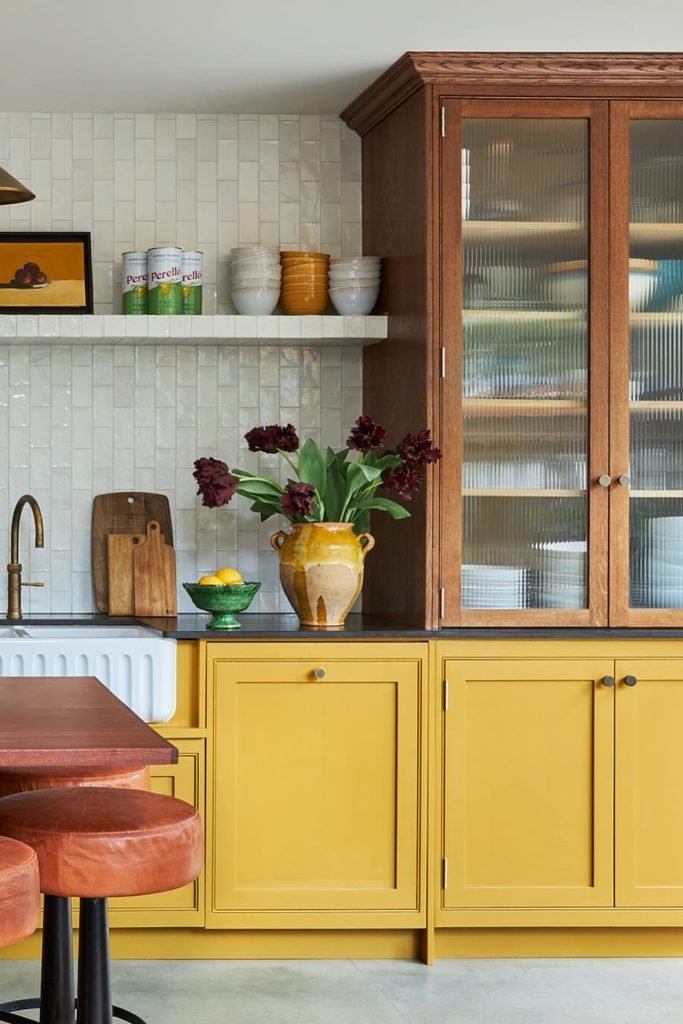
Walnut Contrast
Use deeper butter yellow on the lower cabinets when you want stronger color, then bring walnut above to give the room more weight.
White handmade tile keeps the darker wood and yellow from closing in, while black counters sharpen the transition between both cabinet finishes.
This mix works well in larger kitchens or open plans, where rich wood, yellow paint, and rust-toned seating can balance each other comfortably.
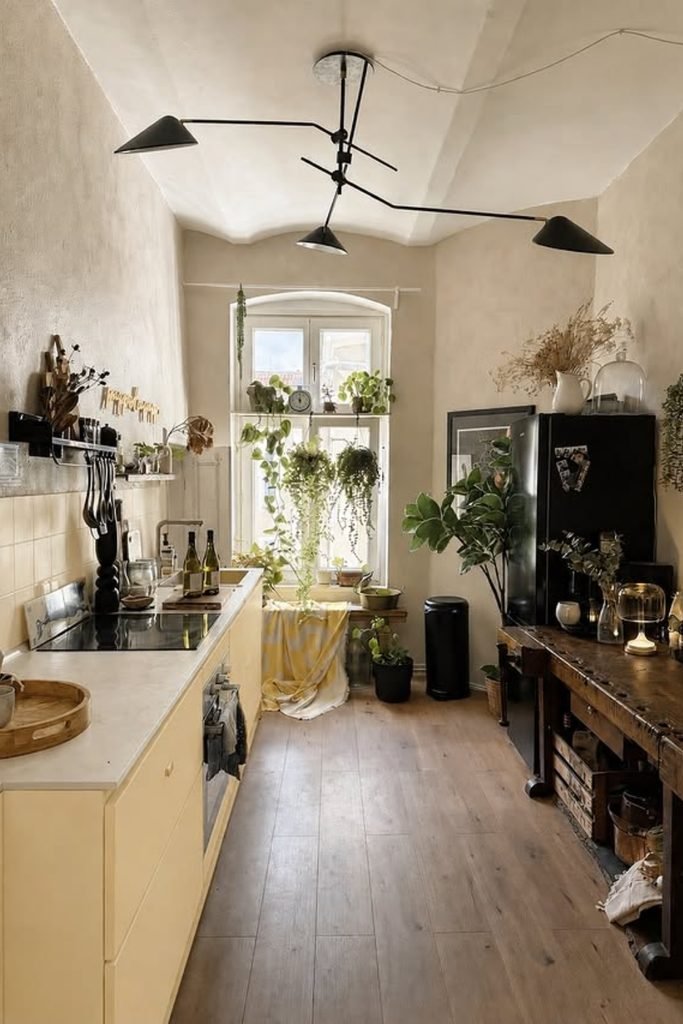
Narrow Balance
A narrow kitchen can handle butter yellow beautifully when you keep the cabinetry pale and let darker furniture provide the stronger visual anchor.
Choose simple flat fronts and quiet counters so the yellow stays understated, then use black lighting and appliances to add needed definition.
Plants and aged wood soften the contrast, making this combination ideal for older homes where modern cabinetry still needs to feel relaxed.
Copper Warmth
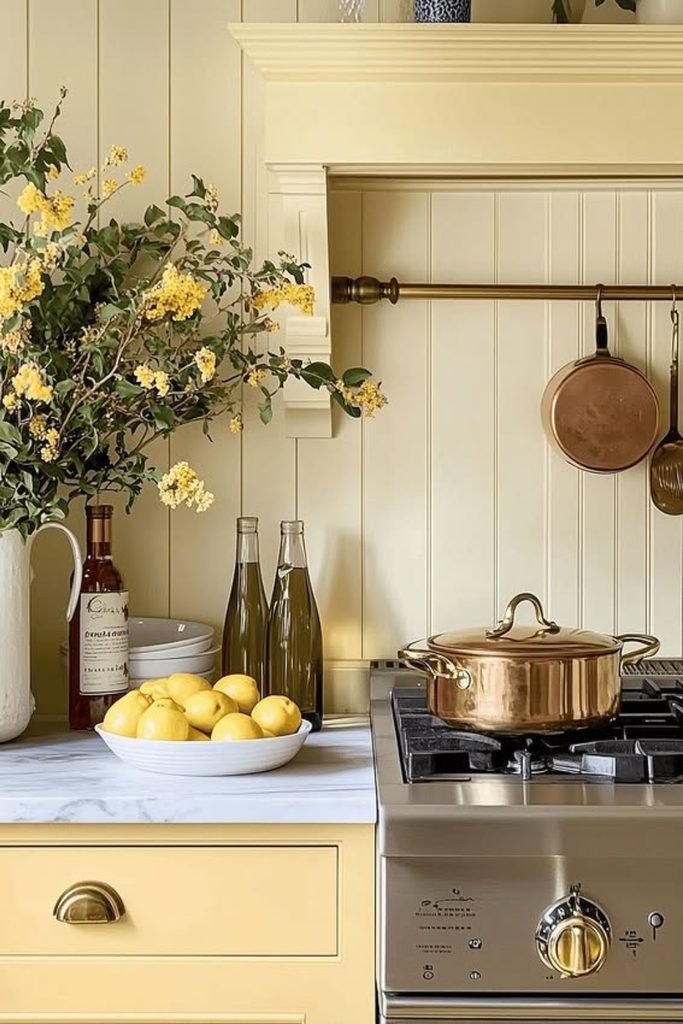
Let butter yellow lean traditional by pairing it with warm metals, especially copper and brass, which deepen the color without making it harsh.
Use white marble or another pale stone beside the cabinetry to keep the palette fresh while still supporting that soft, collected feeling.
This approach works especially well in classic kitchens where beadboard, pot rails, and simple hardware can add character without crowding the color.
Stone Cooling
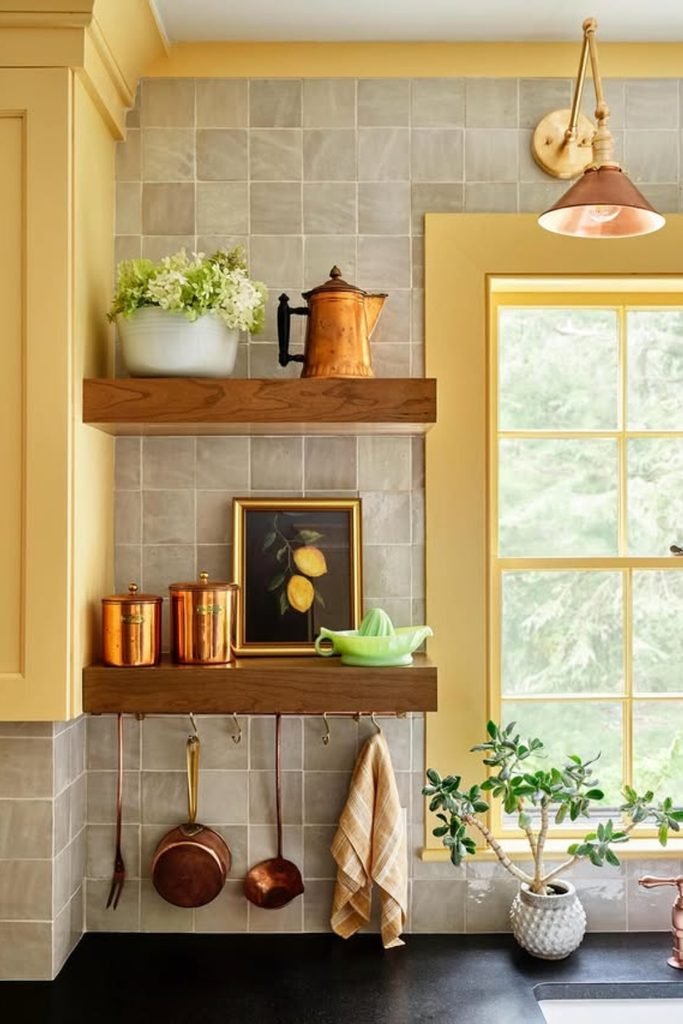
If your butter yellow feels too warm, a soft gray tile backsplash can cool it down without pushing the kitchen into stark contrast.
Add natural wood shelves and a few copper pieces to bring warmth back in, so the gray never makes the space feel flat.
This balance suits sunny kitchens especially well because strong daylight can intensify yellow, while muted stone keeps the overall palette controlled.
Patterned Lift
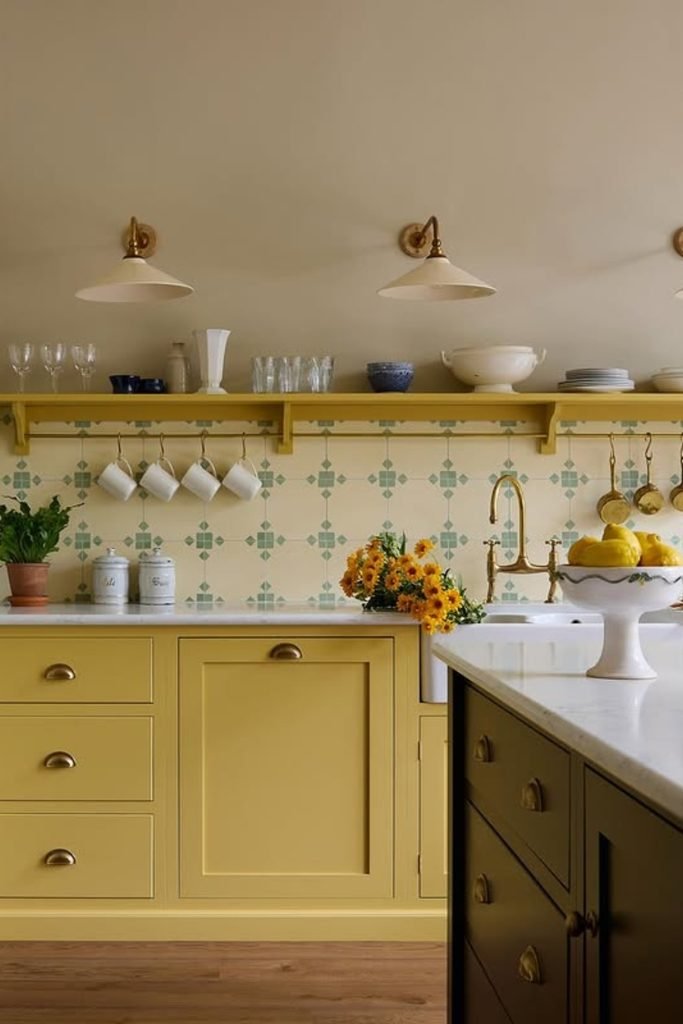
Patterned tile can give butter yellow more personality when plain white feels too safe, especially in kitchens with traditional cabinet fronts.
Choose a small-scale green or blue motif, then repeat that color lightly through plants, ceramics, or textiles instead of adding another bold surface.
Keep the counters simple and let the backsplash carry the detail, which stops the room from feeling busy once yellow cabinetry is already present.
Terracotta Edge
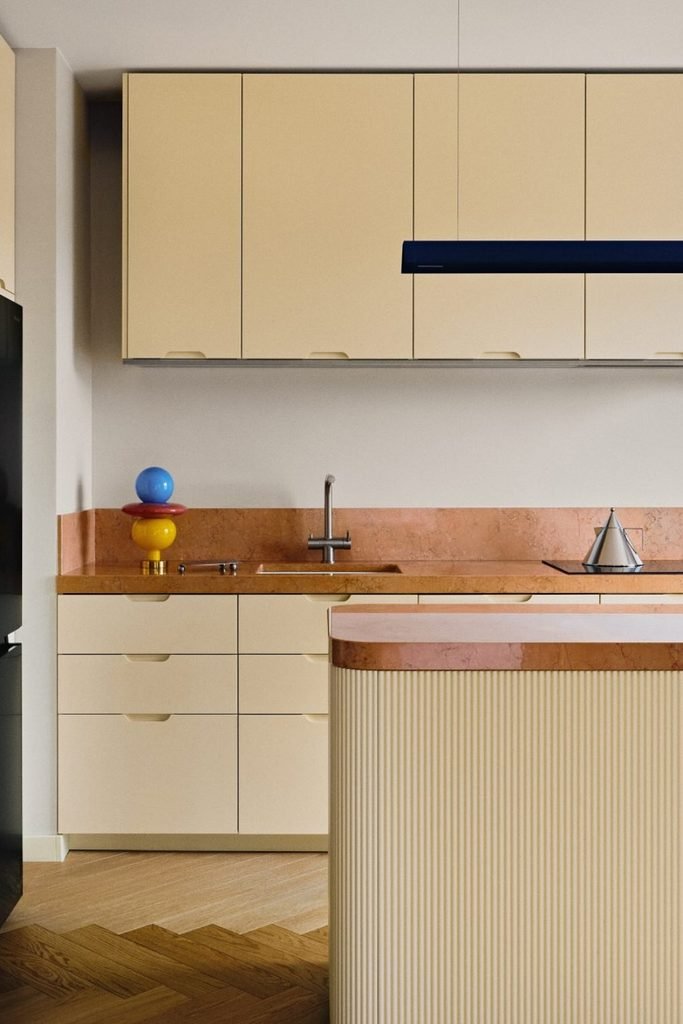
For a more modern butter yellow kitchen, pair flat-front cabinets with terracotta stone so the palette feels warm without becoming overly traditional.
Black appliances or lighting add a sharp break between the creamy cabinets and peachy surfaces, giving the room a cleaner, more graphic look.
This works best when the cabinetry stays simple, because the stone already brings enough movement and color to carry the design on its own.
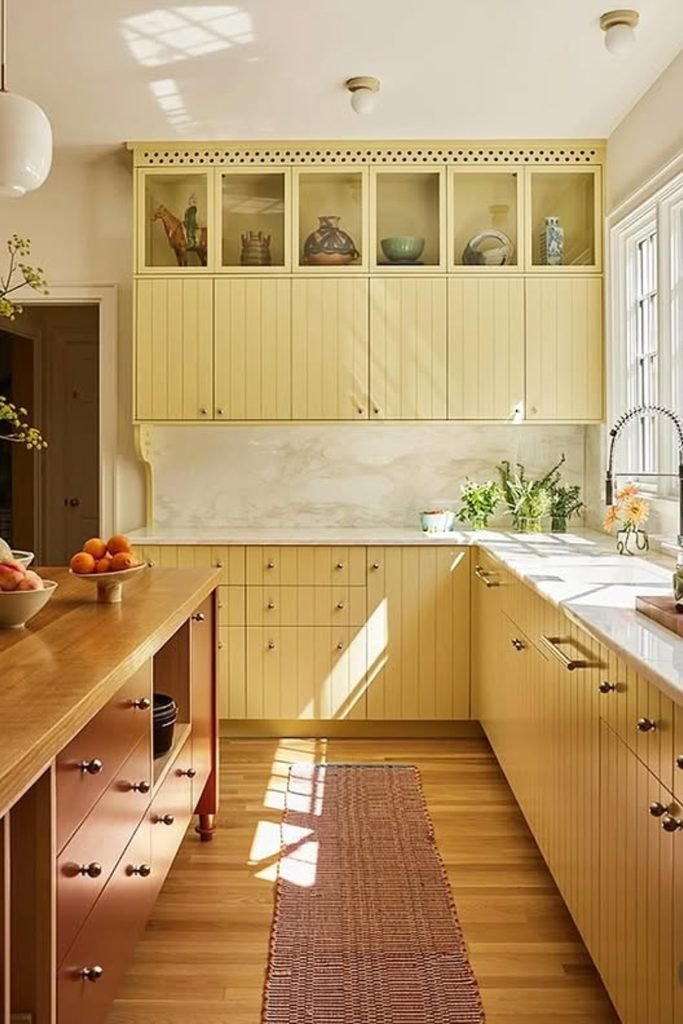
Rust Island
Break up a full run of butter yellow with a rust-toned island when you want warmth without making every cabinet match.
Keep the perimeter pale, then use marble and light wood nearby so the deeper center color feels grounded rather than heavy.
Beadboard fronts add cottage character here, making this mix especially useful in bright kitchens that need texture as much as color.
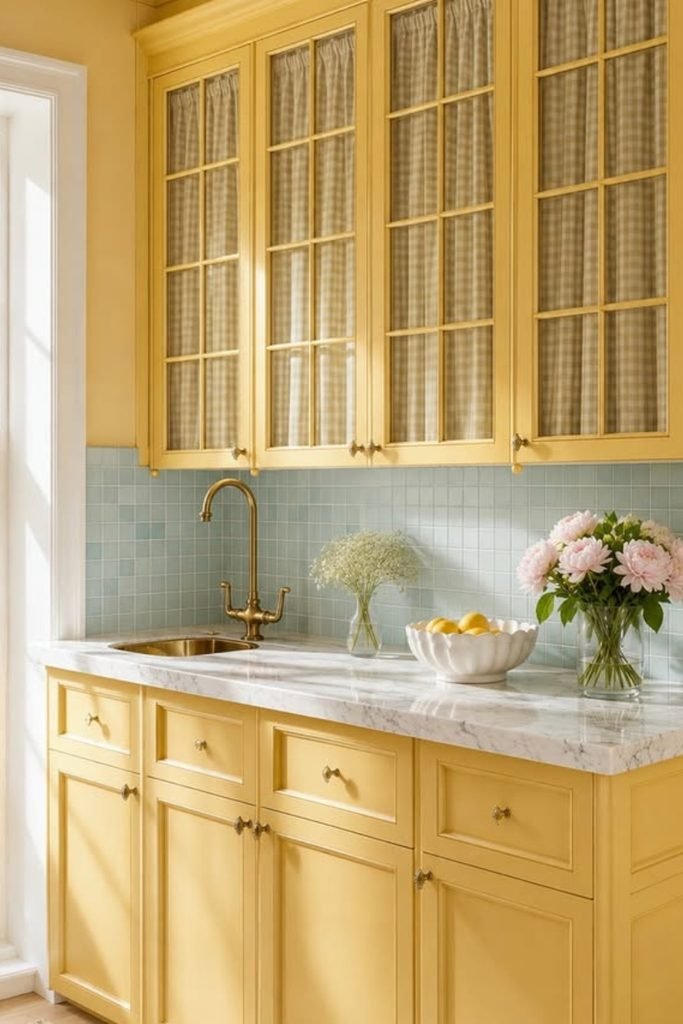
Blue Relief
Soft blue tile is a smart partner for butter yellow when you want contrast that cools the palette without feeling sharp.
Use marble between both colors, then repeat brass in the faucet and hardware so the kitchen still feels warm and connected.
Curtains behind glass cabinet doors soften the formal millwork, making this idea perfect for cottage kitchens that need hidden everyday storage.
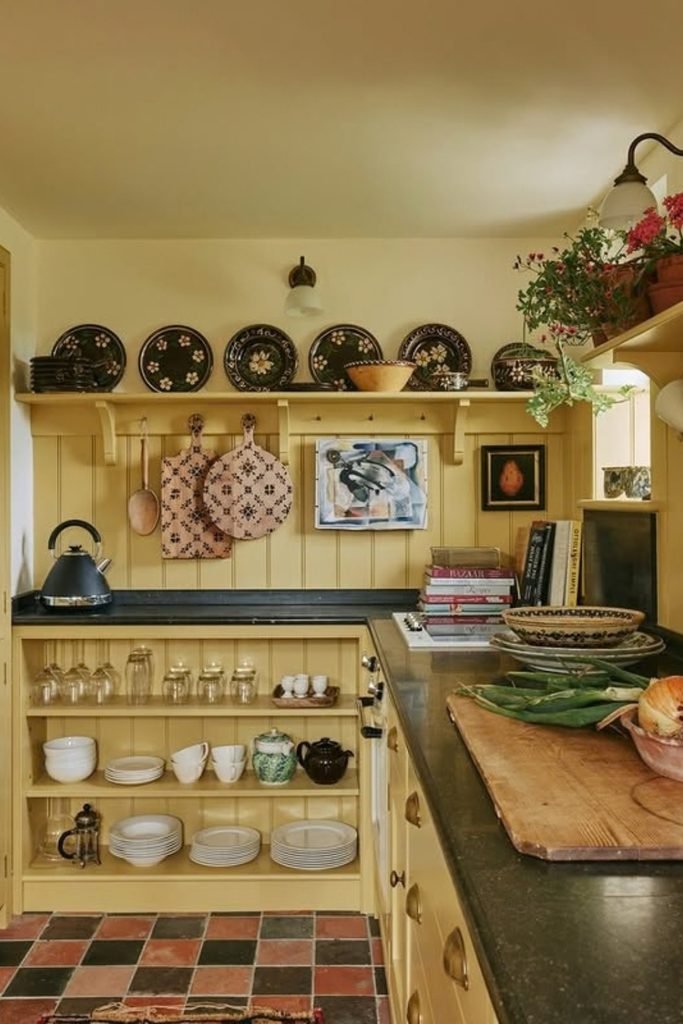
Heritage Checker
Let darker counters and a terracotta checker floor ground butter yellow when you want a country kitchen with more depth and character.
Open shelves work best here because everyday dishes, dark pottery, and plants break up the painted surfaces without adding another cabinet color.
This setup suits compact kitchens especially well, where layered textures can make the room feel collected rather than crowded or overly coordinated.
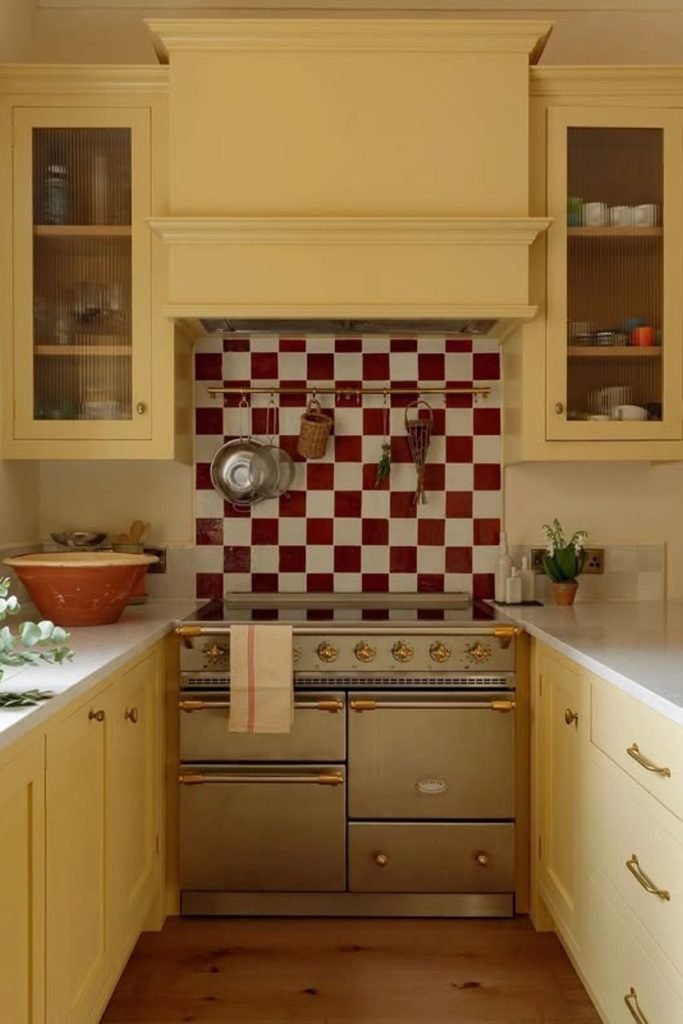
Red Checker
A red checker backsplash can make butter yellow feel bolder, especially when the rest of the kitchen stays simple and light.
Keep counters pale and hardware warm so the backsplash becomes the main contrast, instead of competing with several strong finishes at once.
This pairing works beautifully around a range, where one concentrated pattern can create a focal point without covering every wall in color.
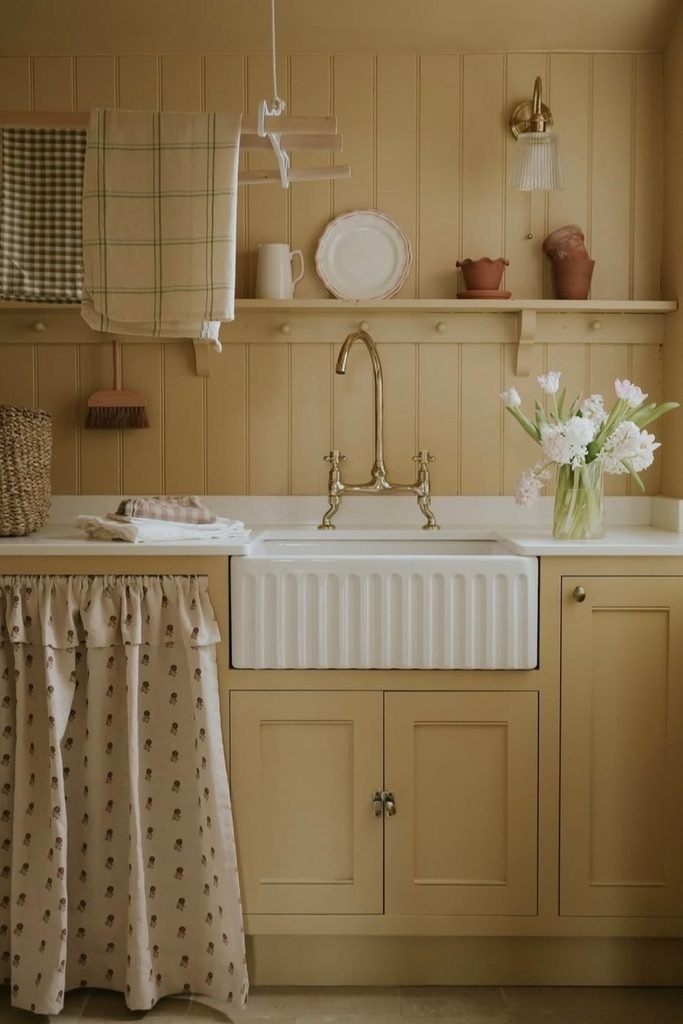
Skirted Storage
Use a fabric curtain under the counter when you want butter yellow cabinetry to feel softer, more relaxed, and less built-in.
A floral or gingham print adds pattern without another hard surface, while beadboard and brass keep the kitchen rooted in cottage style.
This idea is especially useful in small kitchens, where concealed storage can still feel decorative instead of looking like another solid cabinet.
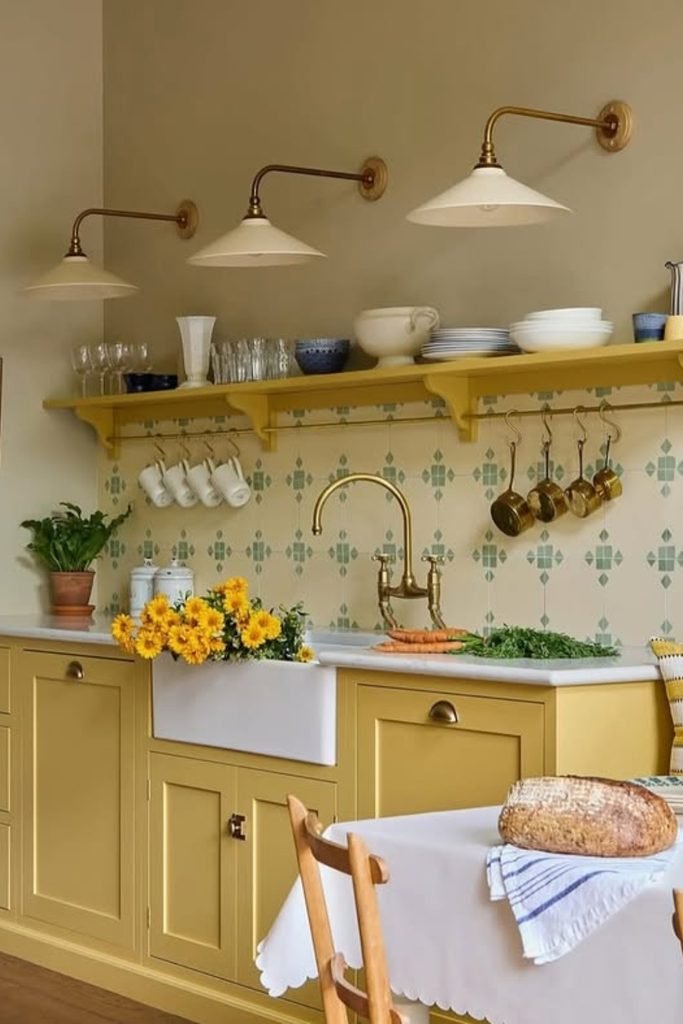
Green Motif
Small green patterns can freshen butter yellow without cooling it too much, making the palette feel cheerful but still easy to live with.
Repeat the yellow on open shelving, then keep dishes mostly white so the backsplash pattern remains visible and the room stays balanced.
A farmhouse sink and brass taps suit this combination well, especially if you want a traditional kitchen that still feels light and lively.
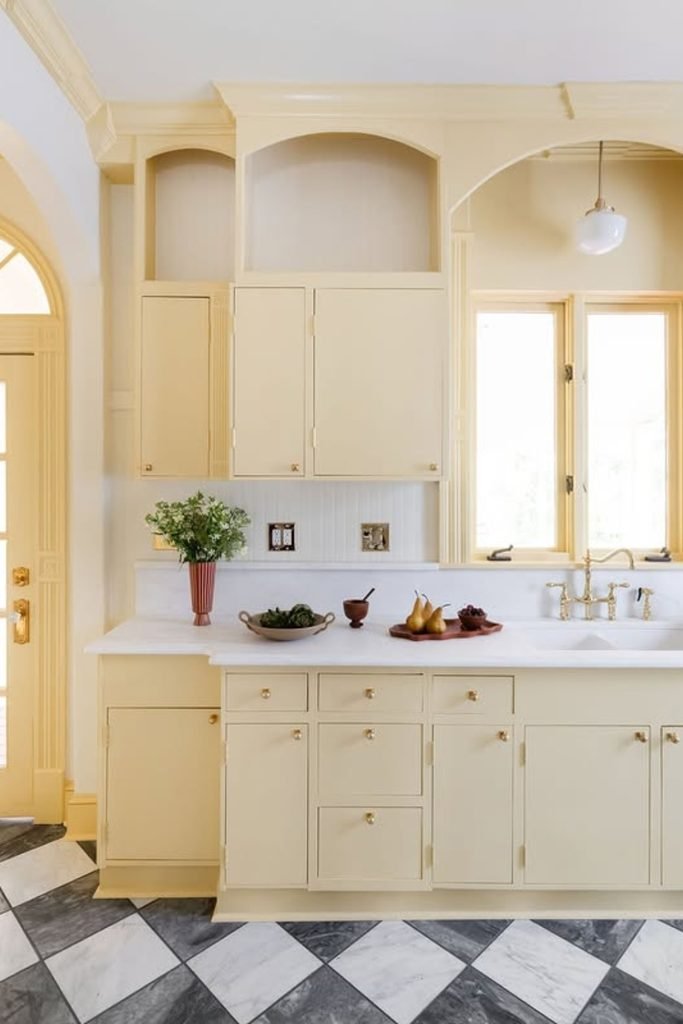
Marble Geometry
If your butter yellow is very pale, use a graphic floor underneath it so the cabinetry still has enough definition.
Black and white marble adds contrast without introducing another wall color, which keeps ornate trim and arched details feeling clean.
This works especially well in traditional kitchens where soft yellow can otherwise disappear against cream walls, pale counters, and bright daylight.
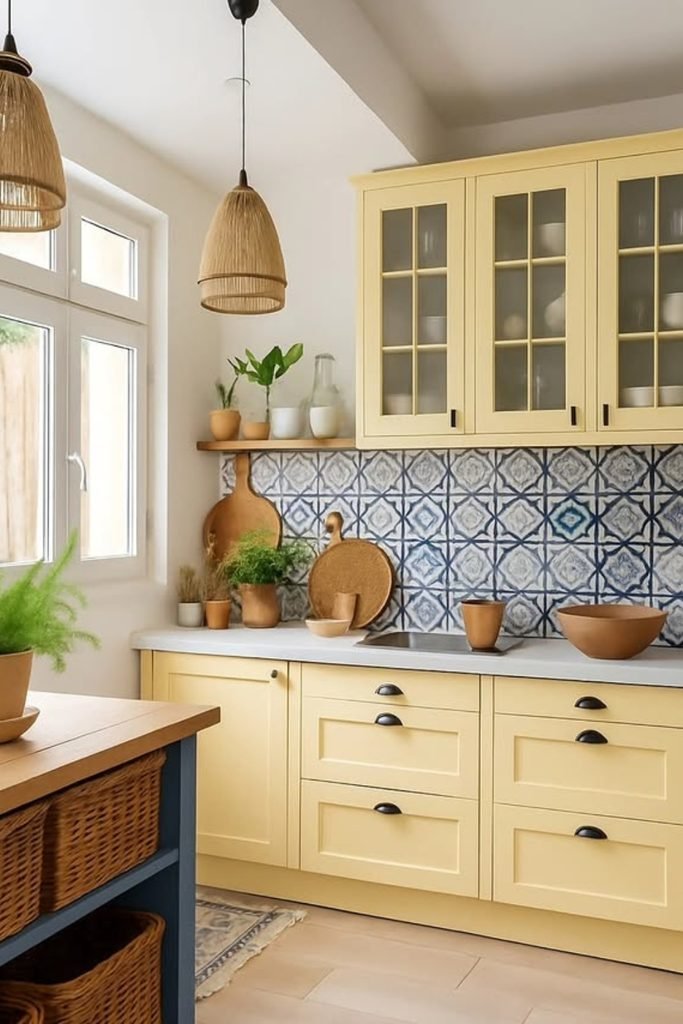
Blue Pattern
Let a blue patterned backsplash do the cooling when butter yellow cabinets start feeling too warm beside wood, wicker, and natural light.
Keep the cabinet shape simple and repeat black only through hardware, so the pattern stays lively without making the room visually restless.
This pairing suits casual modern kitchens, especially when open shelves, baskets, and plants already bring plenty of texture into the space.
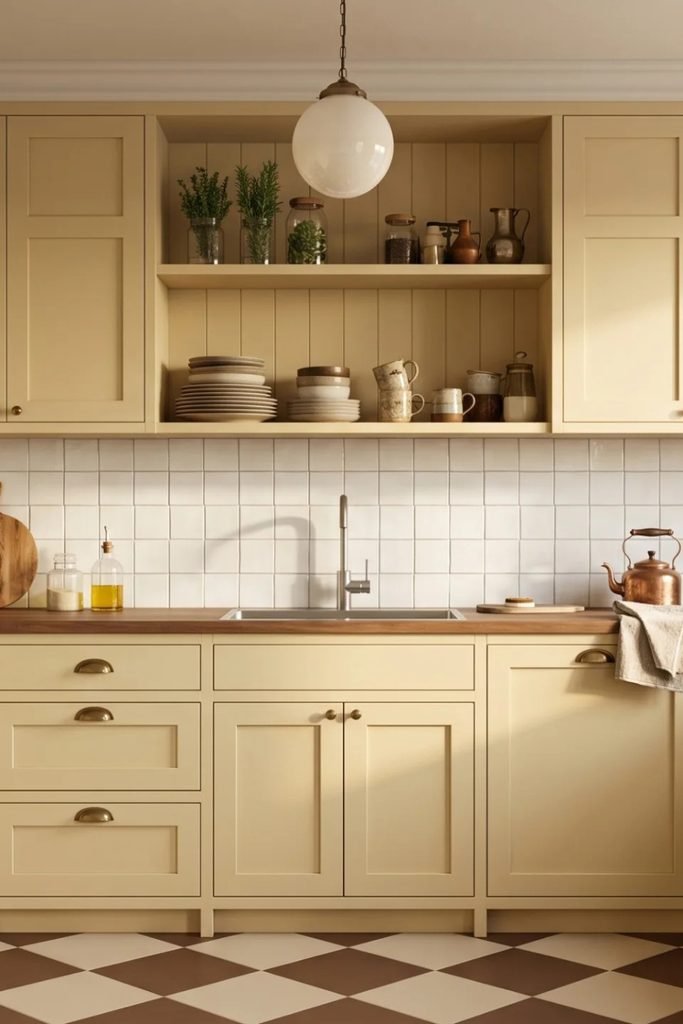
Quiet Checker
Choose a softer butter yellow if you want full-height cabinetry, because muted color handles large surfaces better than a brighter yellow.
White square tile and wood counters give the eye two quiet breaks, keeping the room warm without letting one finish dominate.
A brown-and-cream checker floor adds structure at ground level, which is useful when upper cabinets and open shelving share the same tone.
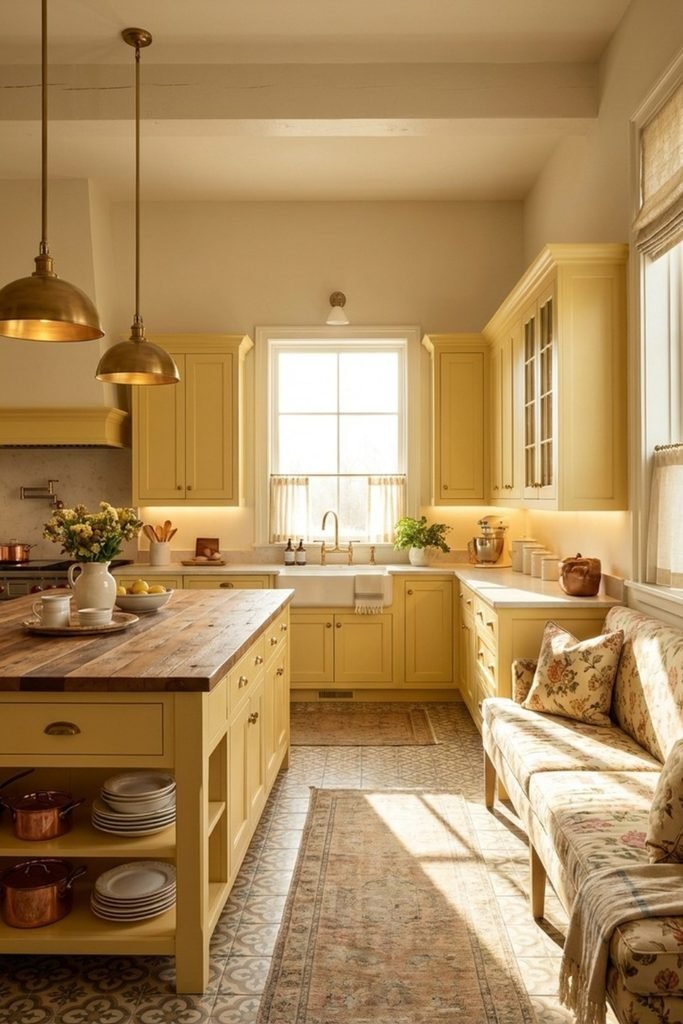
Cozy Banquette
Butter yellow can feel surprisingly relaxed when you pair it with a wood-topped island and soft seating instead of more hard cabinetry.
Use floral upholstery or a small bench in a larger kitchen to soften long cabinet runs and make the space feel lived-in.
Brass pendants, runners, and warm wood should repeat the yellow’s warmth gently, while pale walls keep the whole room from turning golden.
FAQs
Does butter yellow make a kitchen look dated?
Butter yellow does not automatically make a kitchen look dated; cabinet style, hardware, counters, flooring, and overall color balance matter more.
If you want a fresher look, choose a muted shade and pair it with simple cabinetry, natural stone, or darker wood.
Avoid stacking too many nostalgic details together unless you want a vintage result, because styling usually determines how the yellow reads.
What countertop works best with butter yellow cabinets?
White marble is an easy choice because it lightens butter yellow, while gray veining adds enough cool contrast to control warmth.
For a softer look, cream quartz works well; for more depth, try walnut, soapstone, or another darker surface beside pale cabinets.
Check the countertop sample against your cabinet color first, since undertones can shift the yellow toward cream, green, gold, or beige.
