
18 Scandinavian Kitchen Ideas
A Scandinavian kitchen can look beautiful in photos, but copying that clean style often leaves a real kitchen feeling too white.
Natural textures, streamlined cabinetry, warm timber tones, and layered lighting are what give this style its relaxed, lived-in character.
In this article, you’ll find Scandinavian kitchen ideas that help you create a warm, functional space.
Let’s jump in!
What Is A Scandinavian Style Kitchen?
A Scandinavian kitchen keeps things simple, useful, and warm instead of filling the room with heavy cabinets, bold colors, or unnecessary decor.
You’ll usually see light or natural wood, soft whites, simple cabinet fronts, clean counters, and plenty of practical storage.
If you use too much bright white without adding wood, texture, or warm lighting, the kitchen can quickly start feeling cold.
The goal is to keep everyday clutter under control while still making the room comfortable enough for cooking, eating, and spending time together.
Think calm and uncluttered, but never empty – every material and storage choice should make daily life easier.
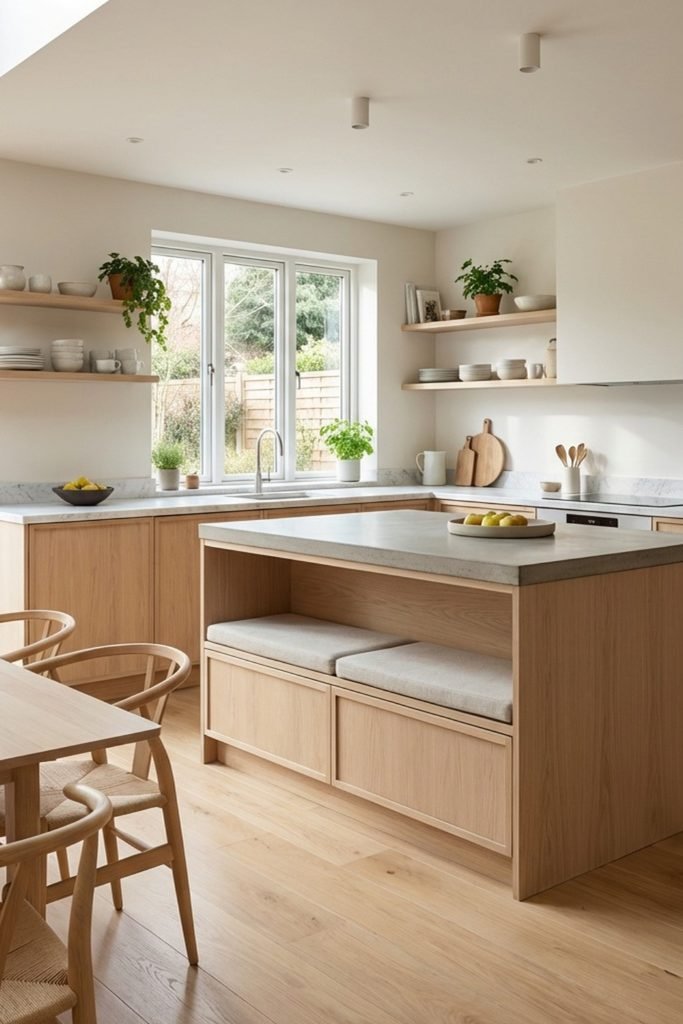
Warm Oak
If your kitchen feels too stark, carry pale oak across cabinets, flooring, and furniture to build warmth without losing Scandinavian simplicity.
Keep the island large enough for prep, but add tucked-in bench seating when you want casual meals without extra stools crowding walkways.
Open shelves work best here when everyday dishes stay limited, while tall closed cabinets handle bulkier items and keep counters clear.
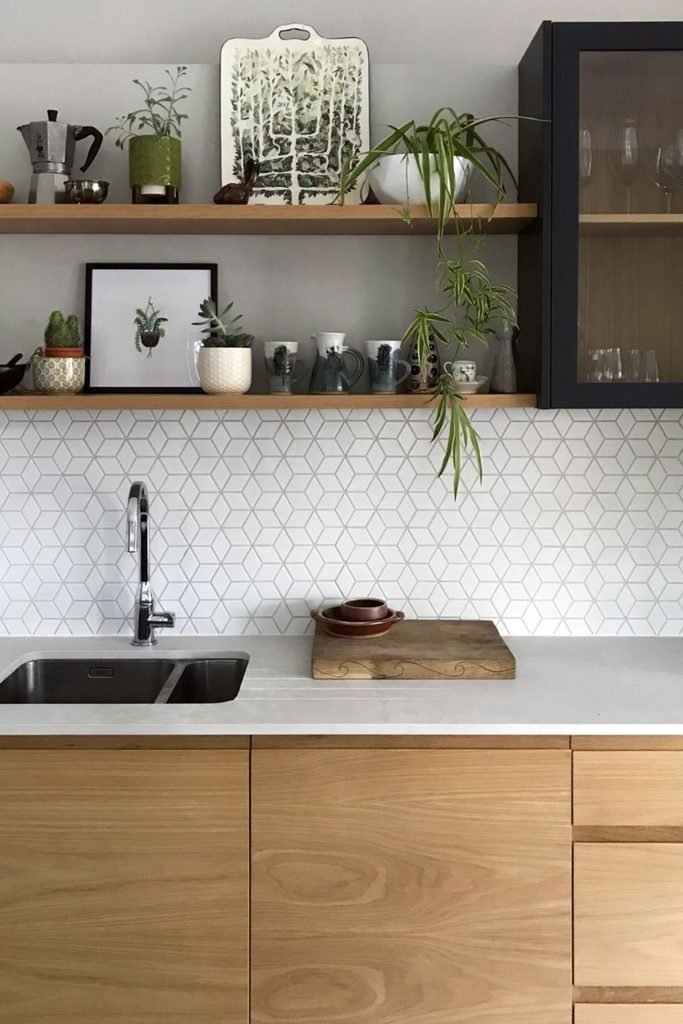
Shelf Contrast
Open shelving can soften a compact kitchen, but balance it with one closed cabinet so glassware and messier essentials still have cover.
Use warm oak below and a dark upper cabinet above if you want contrast without making the whole room feel heavy.
A simple geometric backsplash adds enough pattern for personality, while plants and everyday ceramics keep the shelves useful rather than overly styled.
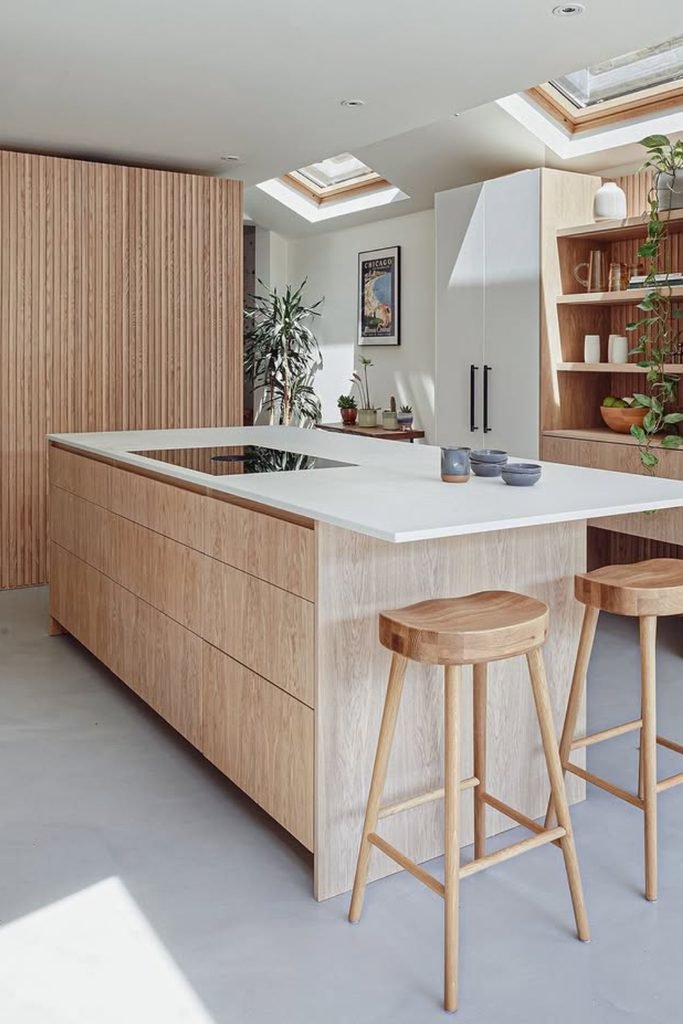
Slatted Oak
Let one slatted oak wall become the feature when your kitchen needs texture, then keep the surrounding cabinets flat and quietly detailed.
Skylights suit this look beautifully because natural light brings out the grain and stops a wood-heavy scheme from feeling boxed in.
Finish with a slim white worktop and simple stools, so the island stays practical while the timber remains the main visual focus.
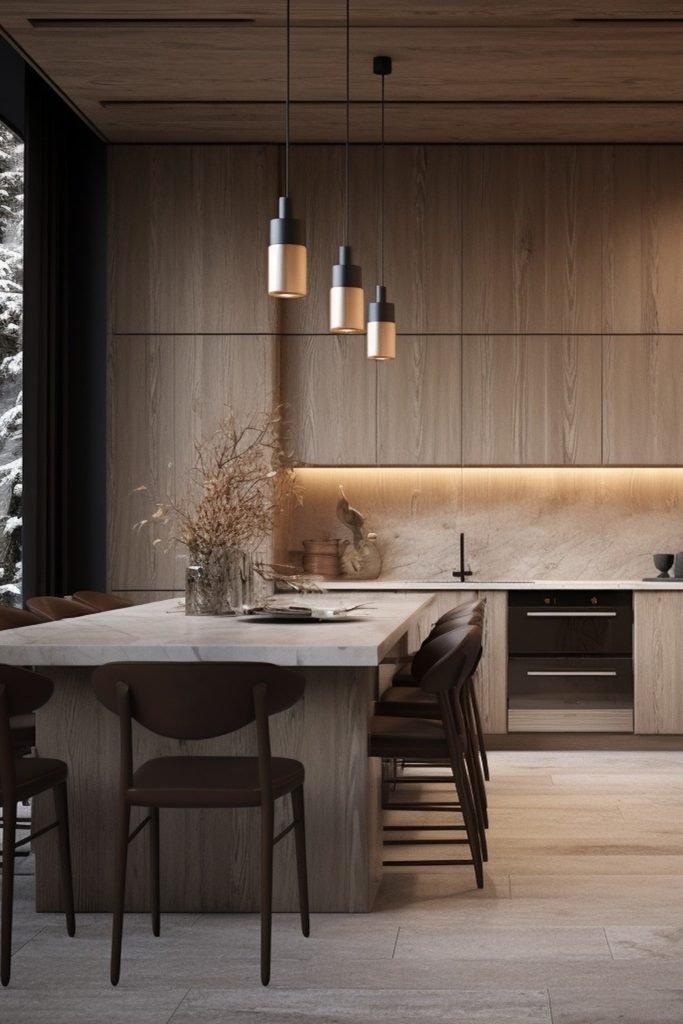
Moody Timber
Scandinavian does not have to mean pale, especially when dark timber is paired with warm lighting, simple cabinetry, and soft stone surfaces.
Use full-height wood fronts to hide storage, then run under-cabinet lighting across the worktop so the darker finish never feels flat.
This approach suits larger or naturally bright kitchens best, where deep wood tones can feel cozy without stealing too much visual space.
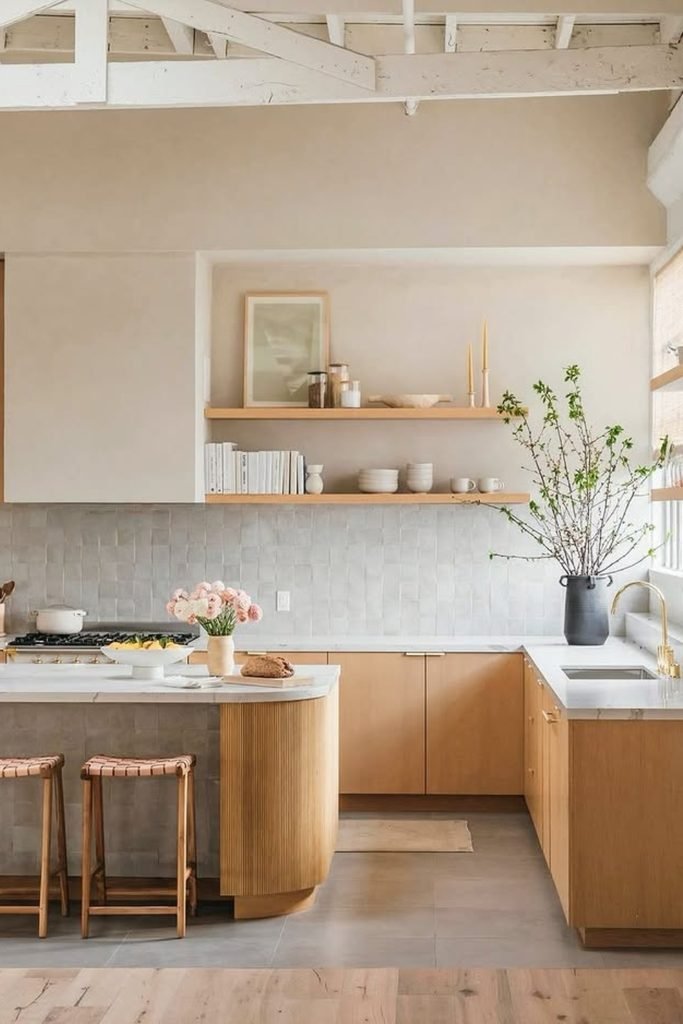
Rounded Peninsula
A rounded peninsula is a smart choice when you want extra prep space without letting a sharp corner interrupt an open kitchen.
Keep the cabinetry in warm oak and repeat that tone on shelves or stools, so the curve feels connected rather than decorative.
This layout works especially well in family kitchens, where softer edges improve movement and still leave plenty of usable counter surface.
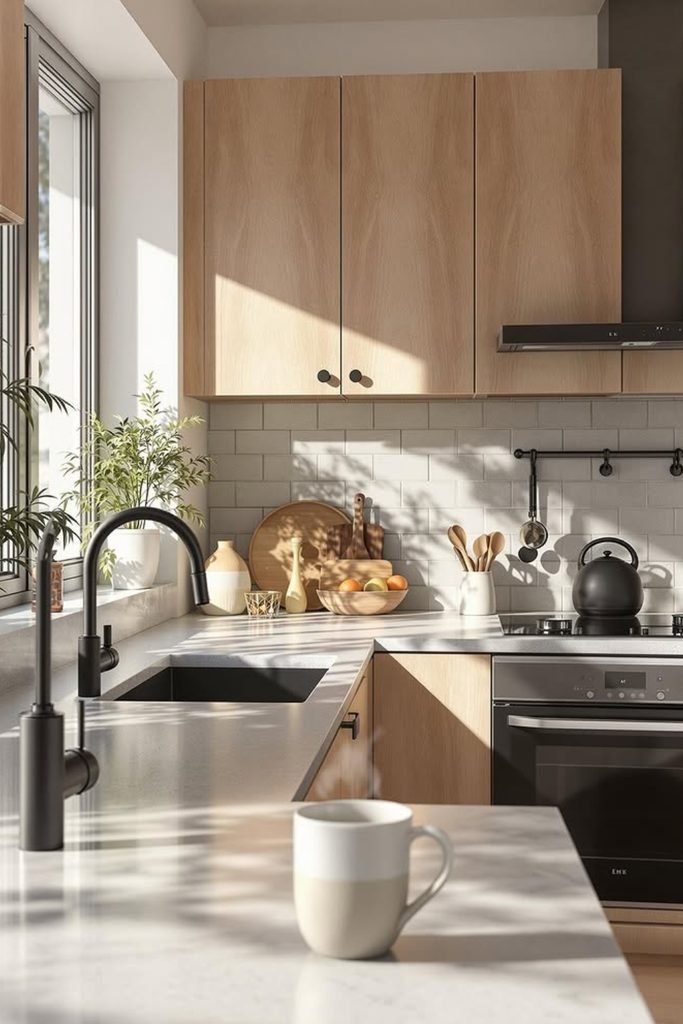
Black Accents
If pale wood and white feel too soft together, a few matte black fittings can give the kitchen a cleaner visual edge.
Limit the dark finish to the faucet, handles, hood, or cookware, because too much black can overpower a small Scandinavian kitchen.
Use simple oak fronts and a plain tile backsplash underneath, letting sunlight and natural grain do most of the decorating.
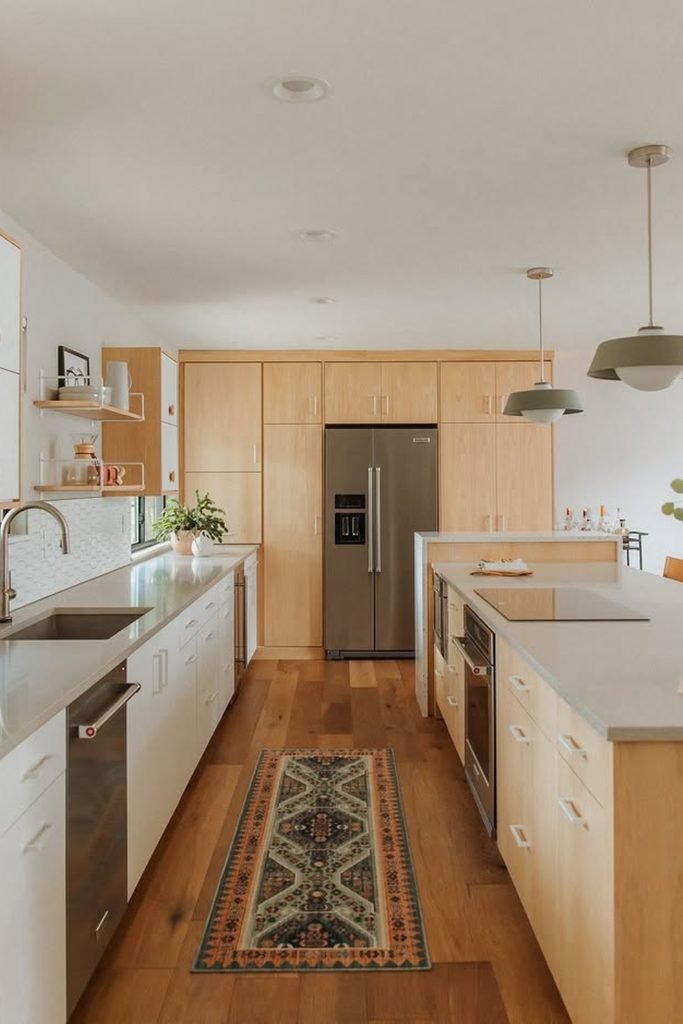
Pantry Wall
A full-height pantry wall can hide bulk storage beautifully, especially when your main kitchen cabinets need to stay light and visually quiet.
Wrap the refrigerator with matching wood cabinetry to make the appliance feel built in, then keep everyday drawers closer to the worktop.
This trick suits long or narrow kitchens because concentrating tall storage at one end leaves the cooking area brighter and less crowded.
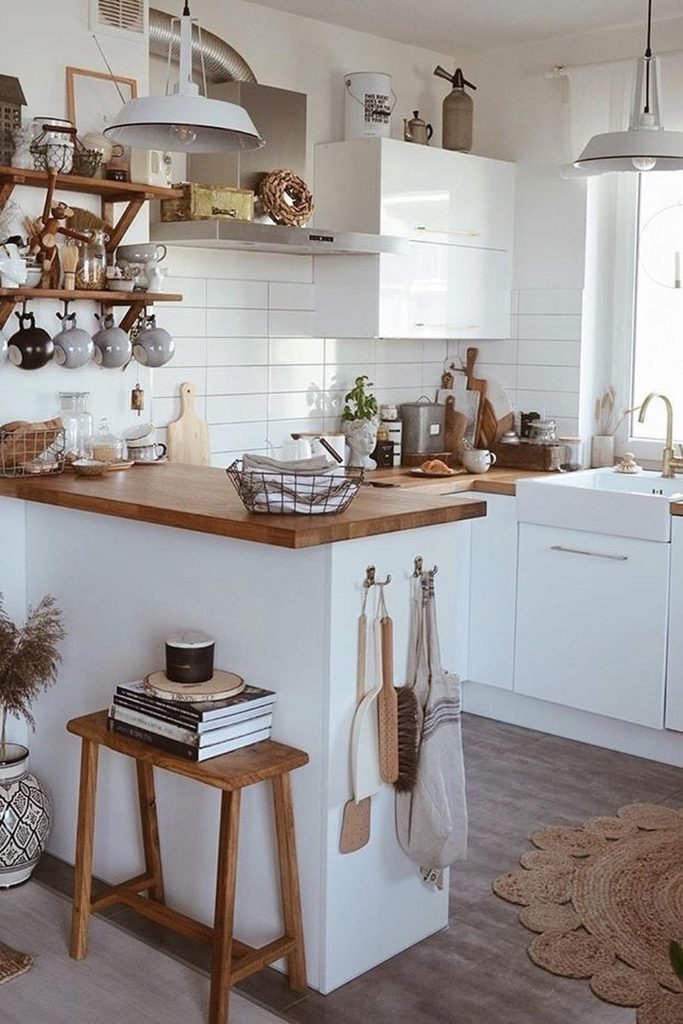
Vintage Scandi
White Scandinavian kitchens feel far less clinical when you bring in aged wood, woven texture, and a few useful pieces with character.
Choose a timber worktop and simple open shelf for warmth, but keep the cabinet fronts plain so the room still feels calm.
This mix works well in older homes, where vintage accessories and farmhouse details can soften modern cabinetry without turning the kitchen overly rustic.
Display Island
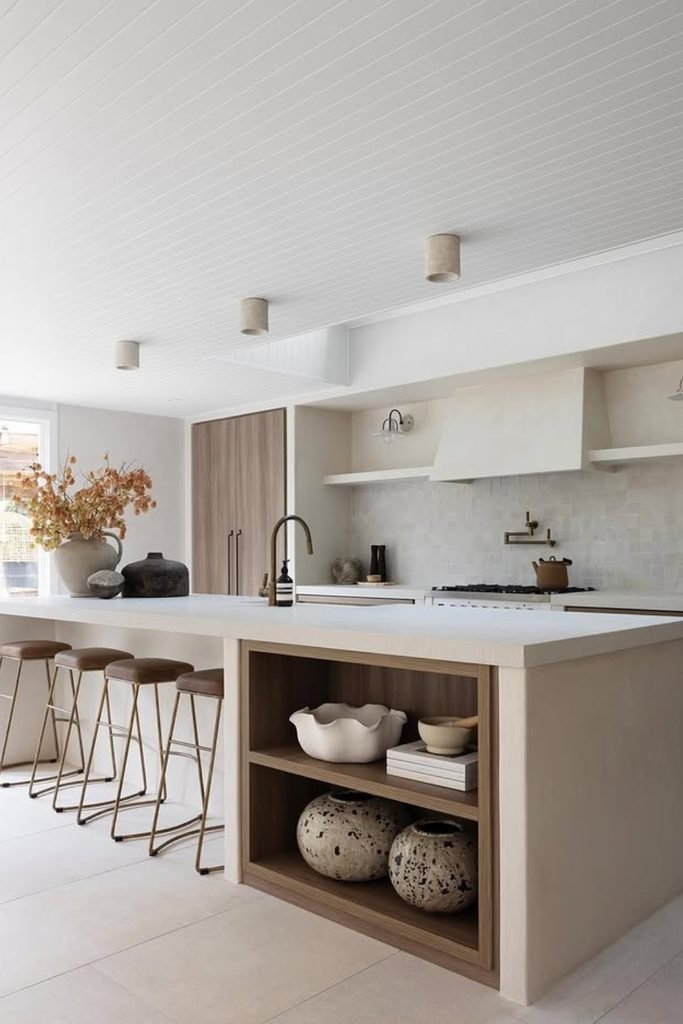
Turn the end of your island into open storage when you want display space without sacrificing the working side of your kitchen.
Keep the shelves deep enough for bowls and cookbooks, then repeat nearby wood tones so the feature feels built into the cabinetry.
This works best in larger kitchens where the island already has enough drawers, leaving one end free for useful styling.
Chrome Pendants
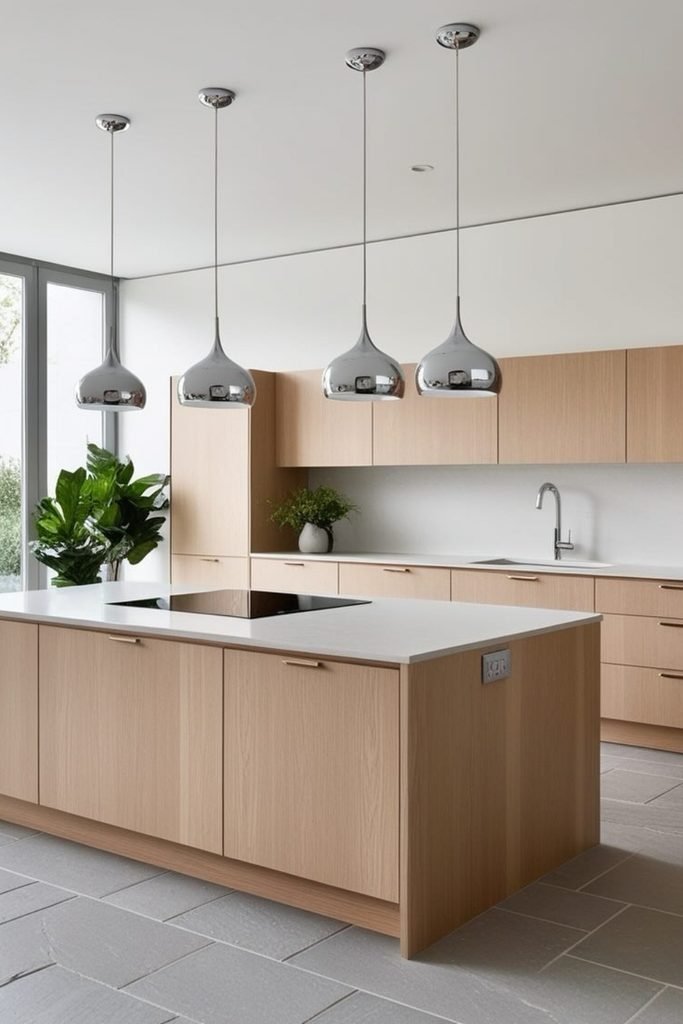
Chrome pendants can sharpen a pale oak kitchen when the room needs contrast but you want to avoid heavy black fixtures.
Choose simple reflective shapes above the island, because polished metal bounces daylight around and keeps the overall kitchen feeling light and open.
Keep cabinet hardware slim and quiet underneath, so the lighting becomes the stronger accent without competing with the natural wood grain.
Wood Counters
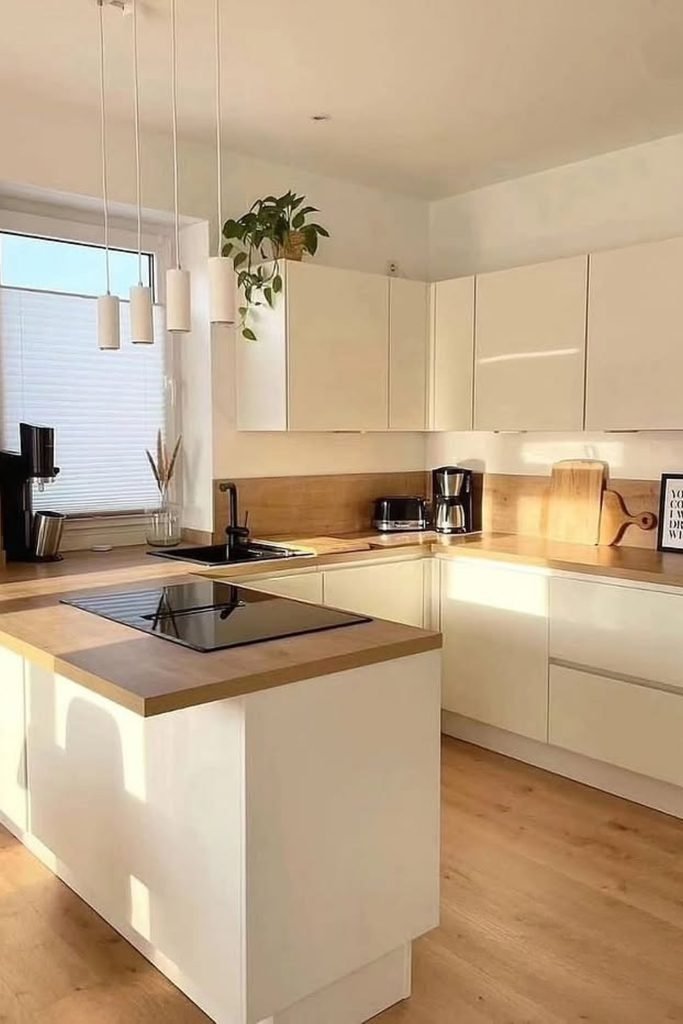
Warm wood counters are an easy way to stop white Scandinavian cabinets from feeling flat, especially in smaller kitchens with limited color.
Run the same timber across the peninsula and back counter to connect both work zones and make the room feel more settled.
If you cook heavily, protect the busiest prep areas carefully or mix wood with a tougher surface where heat and water collect.
Wood Niche
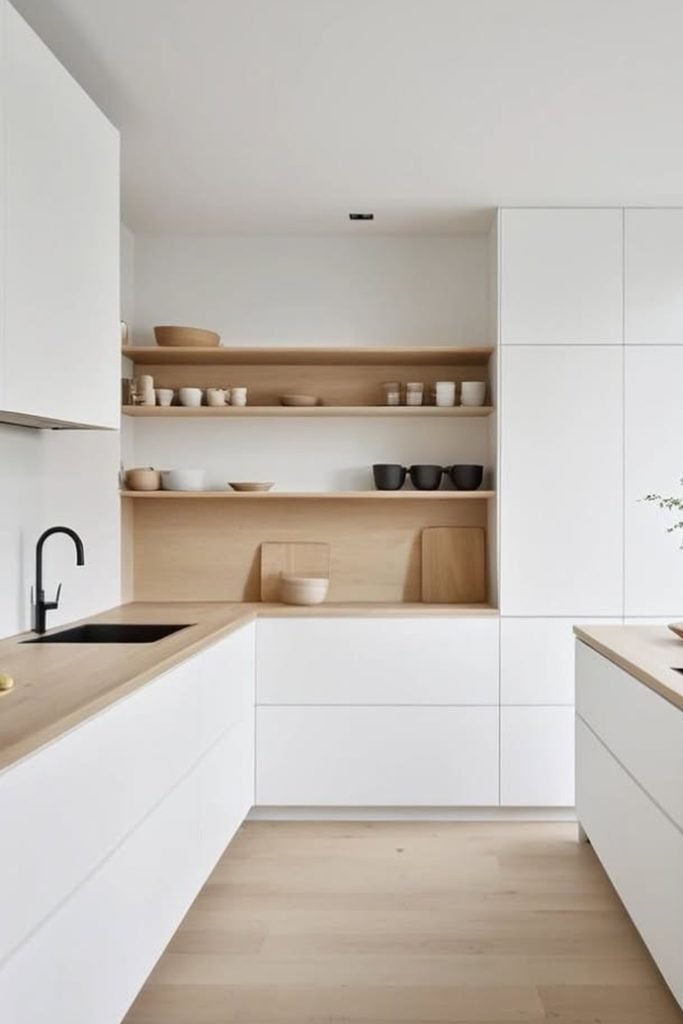
A built-in wood niche gives an all-white kitchen somewhere to breathe, while still keeping the main storage clean and closed.
Use the recess for everyday bowls, cups, or cutting boards, then leave enough empty space so it never turns into clutter.
This idea suits narrow kitchens especially well, because the warm center breaks up tall cabinetry without reducing useful floor or counter space.
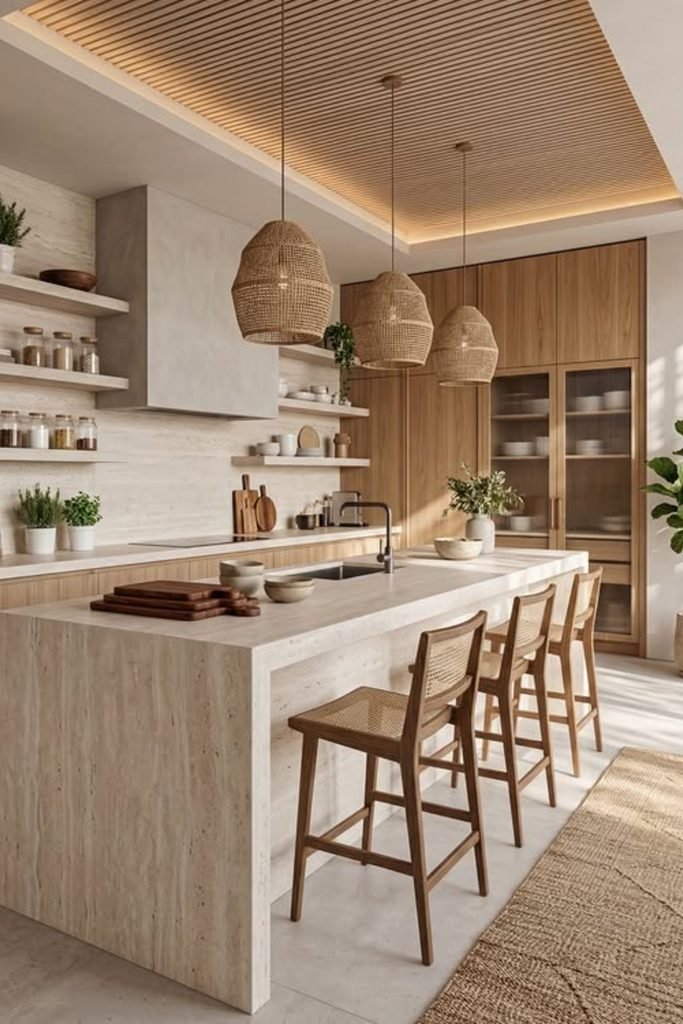
Woven Warmth
When a wood-heavy kitchen starts feeling flat, woven pendants and a slatted ceiling can add texture without introducing another strong color.
Keep the island in pale stone and repeat oak across tall cabinets, shelving, and stools so every warm element feels connected.
This works beautifully in larger kitchens where natural materials can soften the room while hidden storage keeps the overall look calm.
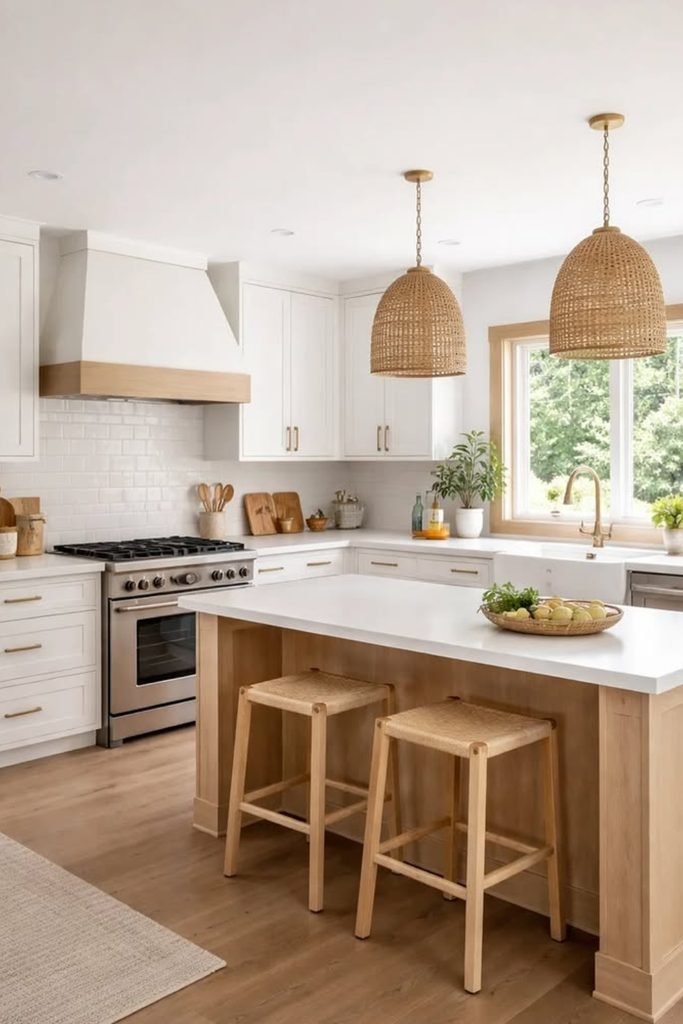
Soft Contrast
White cabinets feel much warmer when the island switches to natural wood, especially if you want contrast without making the kitchen dark.
Choose woven pendants and simple brass hardware to carry that warmth upward, while keeping counters and backsplash light enough to stay airy.
This setup suits family kitchens well because the island becomes a casual gathering point without losing the clean Scandinavian structure.
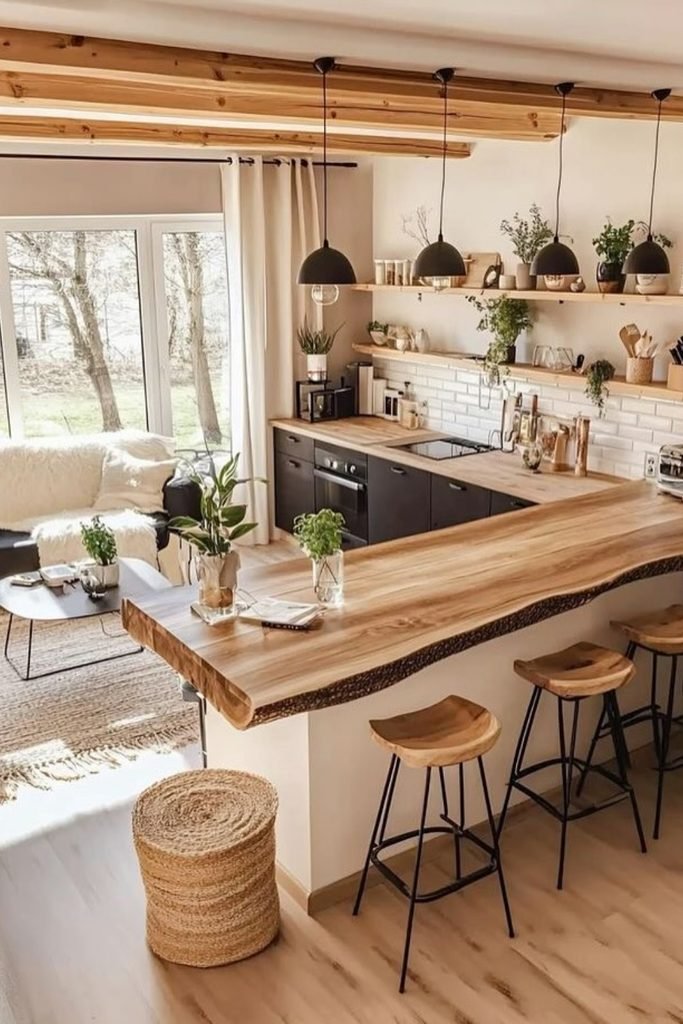
Live Edge
A live-edge wood counter can make a Scandinavian kitchen feel more relaxed, especially when sleek black cabinets start looking too sharp.
Let the timber stay visibly rustic, then balance it with simple pendants, plain tile, and open shelves instead of adding more decoration.
This idea works best in open-plan spaces where the counter can bridge kitchen and living areas while still giving you useful seating.
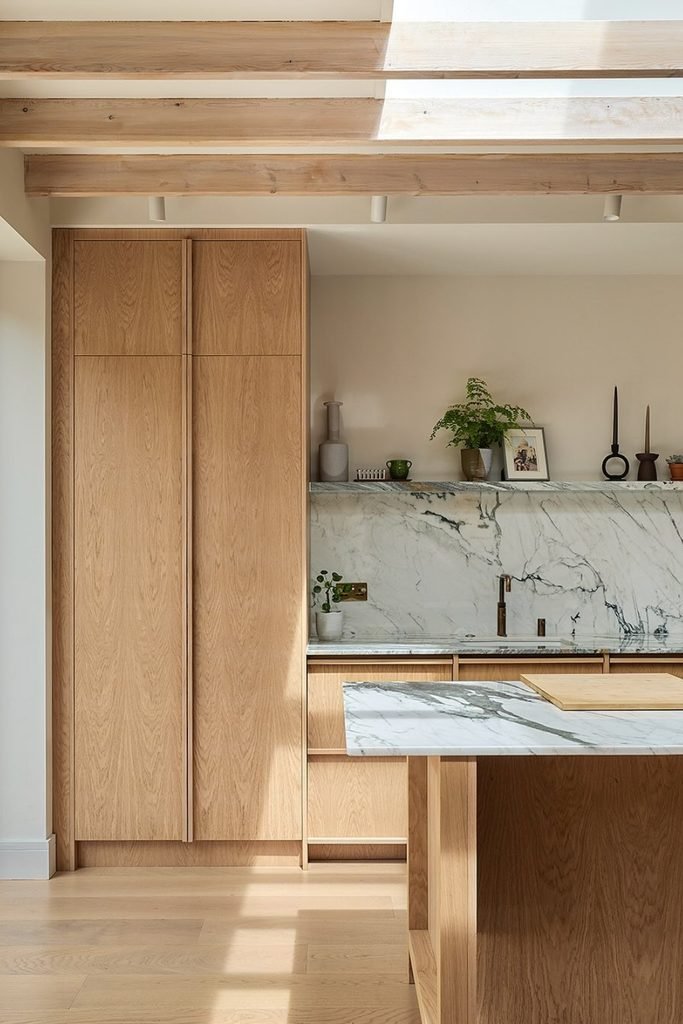
Marble Focus
If you want oak cabinetry to feel more polished, use one dramatic marble across the backsplash and island instead of layering several finishes.
Keep the tall cabinets simple and full height, so the stone gets attention while bulky pantry storage disappears into one clean wall.
Skylights and pale timber beams help this richer material mix stay bright, making it especially useful for modern extensions or rear kitchens.
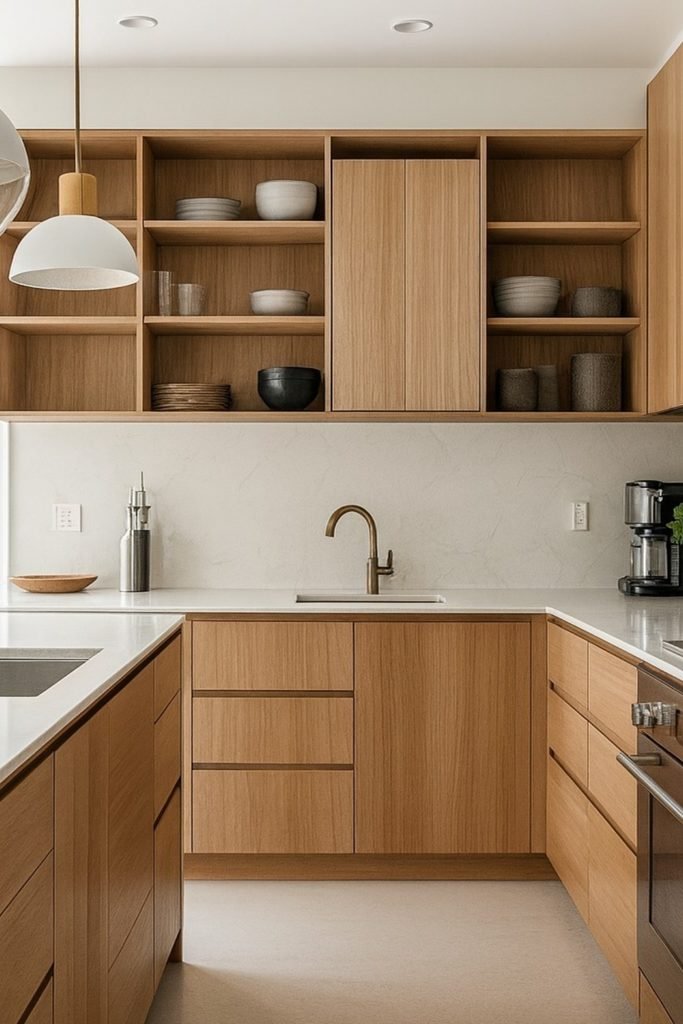
Open Cubby
Open cubbies can make a compact oak kitchen feel lighter, especially when you reserve them for everyday bowls, plates, and glassware.
Keep the surrounding cabinets closed so less attractive storage stays hidden, and use matching wood to make the wall feel continuous.
This setup works well in U-shaped kitchens, where open sections can reduce visual weight without giving up much practical storage.
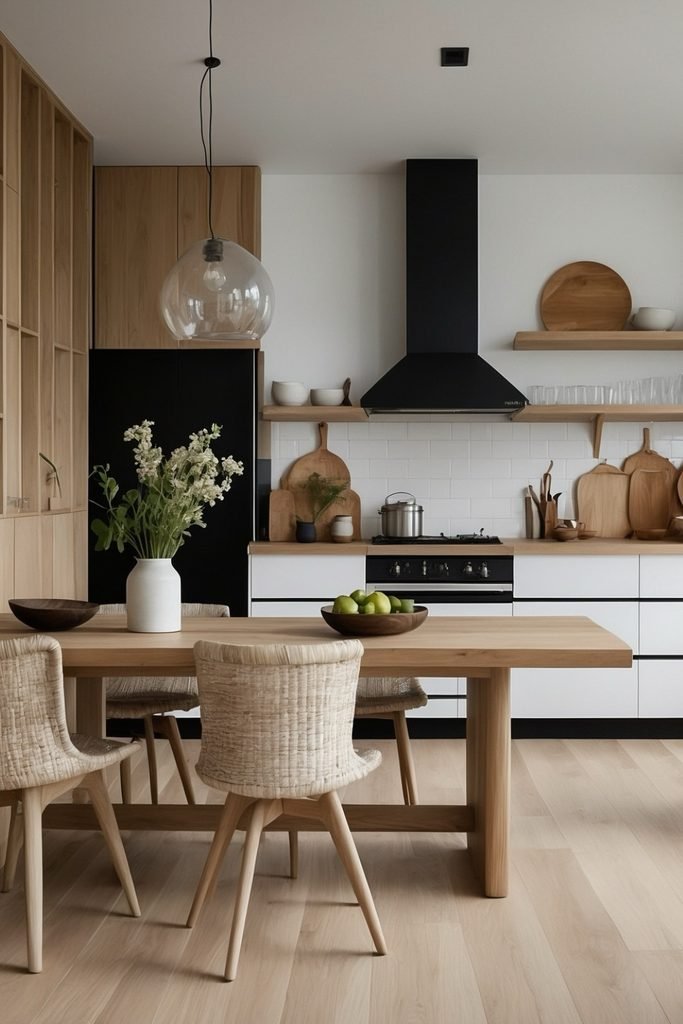
Dining Connection
A dining table placed directly beside the kitchen can make a small open-plan room work harder without forcing in a bulky island.
Repeat the same pale wood across shelves, flooring, and furniture so the cooking and eating zones feel connected rather than separate.
Black details around the hood and windows add definition, while white lower cabinets keep the room bright and easy on the eye.
FAQs
What colors work best in a Scandinavian kitchen?
Warm whites, soft beige, pale gray, muted green, and natural wood tones work best because they keep the kitchen calm without feeling cold.
If you use white cabinets, pair them with oak, stone, or warm metal finishes so the room still feels welcoming.
For more color, choose dusty sage, clay, or taupe instead of bright shades that can overpower the simple Scandinavian look.
Can Scandinavian kitchens work in small spaces?
Yes, Scandinavian design works especially well in small kitchens because simple cabinets, light finishes, and smart storage reduce visual clutter.
Use full-height cabinets for bulky items, then keep counters mostly clear so the room feels open without losing useful storage.
Skip an oversized island if circulation is tight, and consider a peninsula or compact table that gives you function without crowding.
